

Synopsis
Covers the whole plot, including the ending.
- Difficulty
- Medium
- Pacing
- Moderate
- Mood
- Introspective, Suspenseful, Melancholy, Legal
- Read it if
- You enjoy complex legal thrillers with deep character psychological explorations, and appreciate detailed courtroom drama.
- Skip it if
- You prefer fast-paced action over intricate legal maneuvering and character introspection, or are looking for a straightforward mystery.
The Burden of Proof Plot Summary
Covers the whole plot, including the ending.
The Suicide of Clara Stern
The novel begins with Sandy Stern, a respected defense attorney, returning home to find his wife, Clara, dead by suicide in their garage. She left a note hinting at financial problems and asking him to care for her brother, Dixon Hartnell. Devastated, Sandy struggles to process his grief and the shock. Among her belongings, he finds a key to a safe deposit box she kept secret. This immediately raises questions about Clara's life and secrets, starting Sandy's search into her final days and the real reasons for her suicide. His children, Marta and Peter, arrive, adding to the family's emotional distress and shared grief.
The Discovery of the Safe Deposit Box Contents
Needing to understand Clara's actions, Sandy retrieves the contents of her safe deposit box. Inside, he finds documents revealing Clara's deep involvement in a complex, illegal money laundering scheme. These documents detail her transactions and connections to various illicit accounts and people. The discovery shatters Sandy's view of his wife, forcing him to accept that Clara had a secret life and was involved in activities far from the respectable image he held. This shifts his focus from grief to a determined effort to uncover the full extent of her hidden life and its impact on his family.
Dixon Hartnell and the FBI Investigation
As Sandy investigates, he learns that Dixon Hartnell, Clara's brother and a well-known commodities broker, is the main target of a federal investigation into the money laundering scheme. The FBI, led by Assistant U.S. Attorney Lucia Ramos, believes Dixon is the mastermind. Sandy, bound by Clara's last wish and family loyalty, takes on Dixon's defense, despite the ethical issues and his personal connection to the case. This decision puts Sandy directly against the federal government, forcing him to fight a legal battle while grieving his wife and uncovering her secrets. The investigation directly involves Clara, making Sandy's role as Dixon's attorney even more difficult.
The Grand Jury Proceedings
Sandy represents Dixon during the grand jury proceedings, where federal prosecutors, especially Lucia Ramos, aggressively seek an indictment. Dixon, known for his eccentric behavior and history of mental instability, is a difficult client, often making impulsive decisions and hiding information. Sandy must manage Dixon's unpredictable nature while trying to protect him from the federal government. The proceedings also reveal more details about Clara's involvement, further complicating Sandy's emotional state and professional duties. He struggles with the ethical problem of defending a man who may be guilty, while also protecting his deceased wife's reputation and his family's legacy.
The Revelation of Clara's Motivation
Through careful investigation and piecing together clues from Clara's documents and talks with Dixon, Sandy uncovers the truth about Clara's reasons. He learns that Clara got involved in the money laundering scheme mainly to protect Dixon, who had fallen deep into debt and faced ruin due to his gambling and bad financial choices. Clara, driven by strong family loyalty and a wish to shield her brother from the consequences, started using her financial skills to help him move illegal funds. This revelation adds a layer of tragic self-sacrifice to Clara's story, changing her from a secretive participant in crime to a desperate sister trying to save her brother, making Sandy's grief even more complex.
Dixon's Erratic Behavior and Confession
As pressure increases, Dixon's mental state becomes more unstable. He suffers from paranoia and manic behavior, making it hard for Sandy to build a clear defense. During a clearer moment, Dixon confesses to Sandy that he was indeed involved in the money laundering scheme, but insists that Clara's role was only to help him, not to start or profit from it. This confession, while providing some clarity, also puts Sandy in an ethically difficult position, as he must now defend a client he knows is guilty, while still trying to lessen the damage and protect his wife's memory. Dixon's instability threatens to ruin the entire defense strategy.
The Trial and Sandy's Defense Strategy
Dixon is indicted, and the case goes to trial. Sandy, facing a difficult fight against the prosecution, creates a defense strategy that is both legally sound and personally painful. He aims to show Dixon as a troubled person manipulated by more powerful figures, while subtly hinting at Clara's protective reasons without fully exposing her illegal activities publicly. Sandy's courtroom performance is skilled, but he constantly battles his own grief and the moral ambiguity of his position. He uses his understanding of human nature and legal details to cast doubt on the prosecution's story and highlight the complexities of family loyalty.
The Verdict and Aftermath
The trial ends, and after intense discussion, the jury gives a verdict. While the specific outcome for Dixon is important, the greater impact is on Sandy and his family. The trial exposed their private lives and Clara's secrets to public view, forcing them to face difficult truths. Sandy, having successfully navigated the legal and emotional challenges, is forever changed. He has not only defended his brother-in-law but has also come to a deeper, though painful, understanding of his wife and her sacrifices. The ending leaves Sandy with a strong sense of the 'burden of proof'—not just legally, but in the ongoing challenge of understanding truth, love, and loyalty in his own life.
Reconciliation with Family
After the trial, Sandy focuses on rebuilding his relationships with his children, Marta and Peter. The revelations about Clara have deeply affected them, forcing them to rethink their view of their mother and family history. Sandy openly discusses Clara's motivations and the complexities of her actions, aiming to build understanding and healing rather than continued secrecy. He admits his own shortcomings in not fully knowing his wife. This period involves difficult conversations, shared grief, and a gradual process of reconciliation as the family tries to integrate the painful truths into their shared memory and move forward, finding a new basis for their relationships.
Sandy's Personal Reckoning
After the trial and revelations, Sandy goes through a personal reckoning. He comes to understand that he never truly knew Clara, or perhaps chose not to see certain parts of her. He thinks about their marriage, his career, and the compromises and secrets in human relationships. The experience forces him to re-evaluate his values, his definition of justice, and the burden of proof he carries in his own life, not just in court. He accepts the complexity of human motivation and the lasting power of love and loyalty, even when they lead to tragic results, finding some peace in his new understanding.
Principal Figures
Sandy Stern
Protagonist
A brilliant, aging defense attorney grappling with his wife's suicide and a family scandal.
Sandy Stern is a highly respected and intellectually formidable defense attorney in Kindle County, known for his meticulous preparation and sharp legal mind. He is a man of deep integrity, but also one who has perhaps become somewhat complacent in his personal life, taking his marriage for granted. His world is shattered by Clara's suicide, forcing him to confront not only his grief but also the painful reality that his wife harbored profound secrets. He is driven by a need for truth and a fierce loyalty to his family, even when that loyalty complicates his professional ethics.
Relationships: Clara Stern (Deceased wife, whose secrets drive the plot); Dixon Hartnell (Brother-in-law and client; Clara's brother); Marta Stern (Daughter); Peter Stern (Son); Lucia Ramos (Opposing prosecutor, professional adversary)
Clara Stern
Central Figure (Deceased)
Sandy's deceased wife, whose suicide and secret life unravel the plot.
Clara Stern is Sandy's deceased wife, whose suicide acts as the catalyst for the entire narrative. Though she is never seen alive, her presence dominates the story as Sandy uncovers the layers of her secret life. She is revealed to be a woman of great intelligence and fierce loyalty, particularly towards her brother, Dixon. Her involvement in a complex money laundering scheme stems not from greed, but from a desperate desire to protect Dixon from financial ruin. She is a tragic figure, making immense sacrifices and keeping profound secrets out of love and a misguided sense of duty.
Relationships: Sandy Stern (Husband, whom she kept secrets from); Dixon Hartnell (Brother, for whom she orchestrated financial crimes)
Dixon Hartnell
Supporting Character / Client
Clara's erratic brother, a commodities broker and the target of a federal investigation.
Dixon Hartnell is Clara's brother, a successful but unstable commodities broker with a history of gambling addiction and mental health issues. He is the central figure in the federal money laundering investigation and becomes Sandy's client. Dixon is charming but also impulsive, unreliable, and prone to grandiosity and paranoia. His erratic behavior and reluctance to fully cooperate complicate Sandy's defense strategy. Despite his flaws, he elicits a strong sense of loyalty from Clara, which ultimately drives her actions. He carries the 'burden of proof' for his own guilt.
Relationships: Clara Stern (Sister, who protected him); Sandy Stern (Brother-in-law and defense attorney)
Lucia Ramos
Antagonist / Supporting
The ambitious Assistant U.S. Attorney prosecuting Dixon Hartnell.
Lucia Ramos is the sharp, ambitious Assistant U.S. Attorney leading the prosecution against Dixon Hartnell. She is a formidable legal opponent for Sandy, intelligent, tenacious, and determined to secure a conviction. Ramos represents the relentless force of the federal government, driven by a desire for justice and a keen understanding of legal strategy. She is not portrayed as purely villainous, but rather as a highly competent professional doing her job, making her a compelling foil for Sandy. Her pursuit of the truth, however, often clashes with Sandy's personal motivations.
Relationships: Sandy Stern (Professional adversary in the courtroom)
Marta Stern
Supporting Character
Sandy and Clara's strong-willed, observant daughter.
Marta Stern is Sandy and Clara's daughter, a thoughtful and perceptive individual. She is deeply affected by her mother's suicide and the subsequent revelations, struggling to reconcile the mother she knew with the secrets that emerge. Marta often acts as a sounding board for Sandy, offering insights and questioning the family's past. Her grief is profound, and she seeks to understand the truth of her mother's actions, often pushing Sandy to be more open. She represents the younger generation grappling with the legacy of their parents' choices.
Relationships: Sandy Stern (Father, with whom she shares a bond of grief and inquiry); Clara Stern (Deceased mother); Peter Stern (Brother)
Peter Stern
Supporting Character
Sandy and Clara's son, a more reserved and emotionally guarded individual.
Peter Stern is Sandy and Clara's son, who reacts to his mother's death and the ensuing scandal with a more reserved and internal struggle than Marta. He is more emotionally guarded, sometimes appearing detached, but his pain is evident beneath the surface. He represents a different facet of the family's grief and confusion, often struggling with anger and disbelief at the secrets Clara kept. Peter's journey involves coming to terms with the disillusionment caused by his mother's hidden life and finding his own way to process the family's changed reality.
Relationships: Sandy Stern (Father); Clara Stern (Deceased mother); Marta Stern (Sister)
Judge Lillian Horgan
Supporting Character
The presiding judge in Dixon Hartnell's trial.
Judge Lillian Horgan presides over Dixon Hartnell's trial. She is portrayed as a fair but firm judge, maintaining order and applying the law judiciously. Her presence underscores the formal legal framework within which Sandy must operate, even as his personal life unravels. She is a symbol of the impartial justice system, even though the human elements of the case often push against its boundaries. Her rulings and demeanor significantly impact the flow and outcome of the proceedings.
Relationships: Sandy Stern (Defense attorney in her courtroom); Lucia Ramos (Prosecutor in her courtroom)
Emmet "Sonny" Stern
Mentioned Character
Sandy's younger brother, a former prosecutor who provides advice.
Emmet, known as Sonny, is Sandy's younger brother. A former prosecutor, he offers Sandy advice and perspective on the legal proceedings, particularly from the prosecution's viewpoint. Sonny represents a different legal philosophy, more aligned with the pursuit of conviction, which sometimes contrasts with Sandy's defense-oriented approach. He provides a sounding board and a practical, if sometimes cynical, voice for Sandy during his personal and professional crisis.
Relationships: Sandy Stern (Brother)
Themes & Insights
The Burden of Proof (Personal and Legal)
The title theme appears on many levels. Legally, it means the prosecution must prove guilt beyond a reasonable doubt, a main challenge for Lucia Ramos against Sandy's defense of Dixon. Personally, Sandy carries the burden of proving to himself and his children that he truly knew his wife, and later, the burden of understanding Clara's reasons and the truth behind her actions. He must reconcile his view of Clara with the evidence of her secret life, a deeply personal 'proof' he struggles to establish. This theme is clear in Sandy's relentless investigation into Clara's safe deposit box and his internal struggle to accept the truth about her involvement in illegal activities.
“The law demands proof. But life demands understanding.”
Secrets and Deception within Family
The novel explores the deep impact of secrets kept within a family, especially those Clara hid from Sandy and their children. Clara's entire secret life, her involvement in money laundering, and her true reasons were hidden from her husband for years. These deceptions shatter Sandy's view of his marriage and force his children to rethink their mother. The theme shows how even in the closest relationships, people can have hidden lives and how these secrets, once revealed, can destroy trust and change family bonds. Clara's safe deposit box contents are a physical representation of these hidden truths.
“How could you know someone so intimately, share a bed for decades, and still be so utterly blind to who they truly were?”
Love and Loyalty vs. Justice
A main tension in the novel is the conflict between personal loyalty and the demands of legal and moral justice. Clara's actions were driven by a strong love and loyalty for her brother, Dixon, leading her to commit crimes to protect him. Sandy, in turn, is torn between his loyalty to Clara's memory, his duty to defend his brother-in-law, and his personal search for truth, which might reveal painful realities. This theme is clearly shown as Sandy struggles to defend Dixon while also uncovering truths about Clara that could incriminate her, forcing him to balance family devotion against his professional and personal pursuit of what is right.
“Sometimes, love itself was the greatest burden, compelling you to acts you could never have imagined.”
The Elusiveness of Truth
The novel consistently shows how hard it is to find objective truth, especially in human motivation and personal history. Sandy's journey is a search for the 'truth' about Clara's suicide and her secret life, but he discovers that truth is often complex, colored by perception, and shaped by individual loyalties and biases. What seems like a clear motive initially becomes a complex web of self-sacrifice and desperation. The legal system itself, with its opposing nature, highlights how truth is built and argued rather than simply found. This theme is seen in the different interpretations of Clara's actions by Sandy, Dixon, and the prosecution.
“There was no single truth, only the stories we told ourselves and others, hoping they might add up to something coherent.”
Plot Devices & Literary Techniques
The Safe Deposit Box
A physical object that serves as a Pandora's Box, revealing Clara's hidden life.
Clara's safe deposit box is a crucial plot device. It is discovered by Sandy immediately after her death and contains the initial clues to her secret financial dealings. This box functions as a literal and metaphorical Pandora's Box, holding the secrets that unravel Sandy's perception of his wife and propel the entire narrative. Its contents are the 'proof' that initiate Sandy's investigation and force him to confront the uncomfortable truths about his marriage and Clara's life. Without this device, Sandy would have had no starting point for his quest for understanding.
Posthumous Revelation
The plot's central mystery unfolds through the discovery of a deceased character's hidden life.
The entire mystery revolves around Clara Stern's life and motivations, which are revealed only after her death. This device allows the author to build suspense and surprise as Sandy, and by extension the reader, pieces together Clara's past through documents, testimonies, and Sandy's own recollections. It creates a powerful sense of dramatic irony, as Sandy's grief is constantly intertwined with shocking discoveries about the person he thought he knew best. The 'truth' of Clara's character is constructed entirely through her absence and the evidence she left behind.
The Unreliable Narrator (Emotional)
Sandy Stern's grief and personal bias influence his interpretation of events and Clara's character.
While Sandy Stern is the primary point-of-view character, his deep emotional connection to Clara and his profound grief make him an 'emotionally unreliable' narrator. His initial idealization of Clara and his subsequent shock and disbelief color his interpretation of the evidence he uncovers. He struggles to accept the truth of her actions, often trying to find justifications or alternative explanations. This device highlights the subjective nature of truth and the difficulty of unbiased judgment, even for a seasoned legal mind, when personal stakes are so high.
The Legal Thriller Framework
Using a courtroom drama to frame and propel a personal mystery.
The novel employs the structure of a legal thriller, with grand jury proceedings and a full trial, to drive a deeply personal mystery. The external pressure of Dixon's federal case forces Sandy to actively investigate and confront the truths about Clara, rather than allowing him to retreat into private grief. The courtroom serves as a public arena where private secrets are exposed and debated, intensifying the stakes for Sandy and his family. This framework provides both a narrative engine and a thematic counterpoint to the more intimate explorations of family and loyalty.
The Burden of Proof Quotes
“The law, like a house, has many rooms, and a good lawyer knows how to navigate them all, even the ones that are dark and dusty.”
“In the end, you're always alone with your conscience. That's the only jury that truly matters.”
“The truth is a stubborn thing, and it has a way of coming out, no matter how many layers of lies you try to bury it under.”
“Grief is a strange country, and everyone travels through it differently.”
“There's a difference between what you know and what you can prove. That's the burden.”
“Trust is a fragile commodity, easily broken, and almost impossible to repair completely.”
“Sometimes the greatest mysteries are found not in what people hide, but in what they reveal without realizing it.”
“Memory is a trickster, playing games with the past, shaping it to fit our present needs.”
“Every secret has a weight, and eventually, that weight becomes unbearable.”
“The past isn't dead; it's not even past. It just keeps circling back, waiting for its moment.”
“Justice isn't always about fairness; sometimes it's about making the best of a bad situation.”
“The most dangerous lies are the ones we tell ourselves.”
“You can't choose your family, but you can choose how you deal with them.”
“Even the most carefully constructed lives can unravel with a single, unexpected thread.”
Quiz
10 questions on the plot and the characters. Each answer comes with a short explanation.
Question 1
What is the initial, shocking event that sets Sandy Stern's personal crisis in motion at the beginning of the novel?
- His wife, Clara, files for divorce.
- His daughter, Kate, is arrested for a serious crime.
- His wife, Clara, commits suicide.
- He is disbarred from practicing law.
Show answer
C. His wife, Clara, commits suicide. The novel opens with the devastating news of Sandy Stern's wife, Clara, committing suicide, which is the catalyst for the entire story.
Question 2
Who is Dixon Hartnell in relation to Sandy Stern?
- Sandy's law partner.
- Clara Stern's brother and Sandy's brother-in-law.
- The prosecuting attorney in a major case Sandy is handling.
- A key witness in Clara's suicide investigation.
Show answer
B. Clara Stern's brother and Sandy's brother-in-law. Dixon Hartnell is Clara Stern's brother, making him Sandy's brother-in-law and a central figure in the family drama.
Question 3
What is the primary legal issue Sandy Stern becomes involved with concerning his late wife's affairs?
- Defending her estate against a wrongful death lawsuit.
- Investigating the possibility of murder rather than suicide.
- Dealing with her involvement in a commodities trading scandal and potential embezzlement.
- Challenging the validity of her will.
Show answer
C. Dealing with her involvement in a commodities trading scandal and potential embezzlement. Sandy discovers that Clara was involved in a complex commodities trading scheme, with significant financial irregularities and potential criminal activity, leading him to defend her estate against these accusations.
Question 4
What is the name of the federal prosecutor who initiates an investigation into Clara Stern's financial dealings?
- Tommy Molto
- Nico Della Penna
- Raymond Horgan
- Rusty Sabich
Show answer
B. Nico Della Penna Nico Della Penna is the tenacious federal prosecutor who begins to investigate Clara's financial activities and ultimately serves Sandy with a subpoena.
Question 5
What key piece of evidence does Sandy find among Clara's belongings that hints at her secret life?
- A hidden diary detailing her affair.
- A series of coded letters to an unknown associate.
- A ledger showing large, unexplained cash transactions.
- A safe deposit box key and a secret bank account statement.
Show answer
D. A safe deposit box key and a secret bank account statement. Sandy discovers a key to a safe deposit box and a statement for a secret bank account, which are crucial in uncovering Clara's hidden financial dealings.
Question 6
What is the central theme explored through Sandy Stern's personal journey in the novel?
- The corruption inherent in the legal system.
- The difficulty of truly knowing even those closest to us.
- The pursuit of justice at any cost.
- The power dynamics within wealthy families.
Show answer
B. The difficulty of truly knowing even those closest to us. A major theme is Sandy's realization that despite decades of marriage, he barely knew the complex, secretive life his wife Clara led, highlighting the challenge of true intimacy and understanding.
Question 7
What is the nature of Dixon Hartnell's business that becomes entangled with Clara's activities?
- Real estate development.
- A large-scale manufacturing company.
- A commodities brokerage firm.
- An international shipping enterprise.
Show answer
C. A commodities brokerage firm. Dixon Hartnell runs a successful commodities brokerage firm, and Clara's involvement in trading through his firm is at the heart of the financial scandal.
Question 8
What specific legal maneuver does Sandy Stern employ to try and protect Clara's estate and family from the federal investigation?
- He attempts to get the case dismissed on a technicality.
- He invokes attorney-client privilege regarding Clara's past discussions with him.
- He tries to negotiate an immunity deal for Dixon Hartnell.
- He files a countersuit against the federal government.
Show answer
B. He invokes attorney-client privilege regarding Clara's past discussions with him. Sandy attempts to use attorney-client privilege to shield information about Clara's financial dealings, arguing that she had consulted him as her lawyer, leading to a complex legal battle over the scope of this privilege.
Question 9
What revelation about Clara's past, particularly her relationship with Dixon, deeply impacts Sandy's understanding of his marriage?
- She had a secret child with Dixon before marrying Sandy.
- She was deeply in love with Dixon and resented marrying Sandy.
- She and Dixon were involved in a long-standing incestuous relationship.
- Dixon had secretly embezzled money from Clara's inheritance.
Show answer
C. She and Dixon were involved in a long-standing incestuous relationship. One of the most shocking and painful discoveries for Sandy is the truth about Clara's incestuous relationship with her brother, Dixon, which had been a dark secret throughout her life and marriage.
Question 10
By the end of the novel, what is the ultimate fate of Dixon Hartnell regarding the financial scandal?
- He is acquitted of all charges.
- He commits suicide to avoid prosecution.
- He makes a deal with the prosecution and testifies.
- He flees the country to avoid arrest.
Show answer
C. He makes a deal with the prosecution and testifies. Ultimately, Dixon Hartnell, facing overwhelming evidence and pressure, makes a deal with the federal prosecutor, Nico Della Penna, agreeing to testify in exchange for a lighter sentence.
The Burden of Proof FAQ
What is the central mystery that Sandy Stern must unravel in 'The Burden of Proof'?
The central mystery revolves around the sudden death of Sandy Stern's wife, Clara, who apparently commits suicide. Sandy is left to grapple not only with his grief but also with the myriad of unanswered questions surrounding her final moments and the secrets she kept, which begin to surface after her death.
Who is Dixon Hartnell and what is his significance to Sandy Stern?
Dixon Hartnell is Clara Stern's brother and a prominent, somewhat enigmatic commodities broker. His significance to Sandy grows as Sandy investigates Clara's death, uncovering Dixon's deep involvement in Clara's financial affairs and the illicit dealings that may have contributed to her distress and ultimate demise.
How does Sandy Stern's professional life as a defense attorney intersect with his personal crisis?
Sandy's professional life becomes intertwined with his personal crisis as he effectively takes on the role of an investigator, using his legal acumen and understanding of human nature to uncover the truth behind Clara's death. His legal background helps him navigate the complex financial and personal relationships that emerge, much like a lawyer preparing a case.
What role do the Stern children play in the narrative?
The Stern children, particularly Peter and Marta, are deeply affected by their mother's death and react in various ways, adding layers to Sandy's emotional burden. Their perspectives and reactions, from Peter's stoicism to Marta's more overt grief and questioning, reflect the differing impacts of the tragedy on the family.
What is the primary setting for 'The Burden of Proof' and how does it influence the story?
The primary setting is Kindle County, a recurring fictional location in Turow's novels, and specifically Sandy Stern's affluent suburban home and the legal and financial circles he inhabits. This setting allows for a detailed exploration of upper-middle-class life, its hidden pressures, and the potential for scandal beneath a polished surface.
Are there any subtle allusions or connections to 'Presumed Innocent' that sharp readers might notice?
While 'The Burden of Proof' largely stands alone, sharp readers will recognize Sandy Stern as Rusty Sabich's defense attorney from 'Presumed Innocent'. The novel subtly references Sandy's past legal triumphs and his established reputation, grounding him in the same fictional universe without relying on direct plot continuation.
What is the significance of the 'Burden of Proof' title beyond its legal meaning?
Beyond its legal definition, the title 'The Burden of Proof' signifies Sandy's personal burden to prove to himself, his family, and the world what truly happened to Clara. It also reflects the emotional weight of proving the truth of his own marriage and the choices made within it, a deeply personal and often unarticulated burden.
What specific details about Clara Stern's life prior to her death hint at her underlying struggles?
Prior to her death, Clara exhibited signs of increasing reclusiveness and a subtle withdrawal from her usual social activities, which Sandy initially dismisses as typical marital ebb and flow. The revelation of her secret financial dealings with her brother, Dixon, and her involvement in the commodities market, are the most significant hints at her hidden struggles.
How does Sandy's relationship with his long-time associate, Alejandro 'Grave' Stern, evolve during the crisis?
Sandy's relationship with Grave, his cousin and law partner, becomes a crucial source of support and conflict. Grave provides practical assistance and a sounding board, but his own perspectives and sometimes critical observations challenge Sandy, forcing him to confront uncomfortable truths about his marriage and his own character.
How does Sandy Stern's experience with grief influence his perception of justice?
Sandy's profound grief over Clara's death profoundly personalizes his quest for justice, shifting it from abstract legal principles to a deeply emotional need for understanding and accountability. His personal pain makes him question the neatness of legal resolutions and highlights the enduring human need for truth, even if it brings further suffering.
What psychological impact does the uncovering of Clara's secrets have on Sandy's self-identity?
The uncovering of Clara's extensive secrets, particularly her involvement in shady financial dealings and her hidden life, shatters Sandy's perception of his marriage and, by extension, his own identity as a husband and a man of insight. He is forced to confront his own blindness and the limitations of his understanding of the person closest to him.
How does the novel explore the psychology of secrets within a family unit?
The novel meticulously explores how secrets, even seemingly benign ones, can fester and create profound emotional distances within a family. Clara's secrets, along with Dixon's, illustrate how individuals can live parallel lives, and how the eventual revelation of these secrets can unleash a torrent of suppressed emotions and reshape family dynamics.
Discuss the psychological motivations behind Dixon Hartnell's actions throughout the novel.
Dixon Hartnell's actions are driven by a complex mix of loyalty to his sister, Clara, a desire for financial success, and a willingness to operate in ethically ambiguous zones. He seems to genuinely care for Clara but his protective instincts and his own involvement in illicit schemes complicate his motivations, making him both a potential ally and an antagonist.
What is the central psychological conflict Sandy faces regarding his marriage to Clara?
Sandy's central psychological conflict is reconciling the image of the wife he thought he knew with the woman revealed by her secrets and her death. He grapples with feelings of betrayal, guilt over his perceived failures as a husband, and the painful realization that he may have been complicit in Clara's unhappiness through his own inattention.
Is Clara Stern's suicide purely a result of her financial troubles, or are there deeper factors at play?
While Clara's financial troubles and her involvement in Dixon's schemes are significant catalysts, the novel strongly suggests deeper factors. Her suicide appears to be the culmination of a long-standing personal struggle with depression, a sense of unfulfillment, and the emotional weight of living a life that was increasingly out of her control, exacerbated by the financial pressure.
How does the ending of the novel resolve Sandy's personal journey, and does it offer true closure?
The ending of the novel provides Sandy with a clearer understanding of the circumstances surrounding Clara's death and the extent of her secrets. While it offers a form of intellectual resolution, true emotional closure remains elusive. Sandy is left to live with the profound grief and the altered perception of his past, suggesting that some wounds never fully heal.
To what extent is Sandy Stern responsible for Clara's unhappiness and ultimate fate?
The novel invites readers to consider Sandy's degree of responsibility. While not directly causing her death, his preoccupation with his career, his occasional emotional distance, and his failure to fully perceive Clara's distress contribute to a marriage where she felt isolated. He bears a measure of indirect responsibility for the emotional environment that may have led to her despair.
Does the novel ultimately portray Dixon Hartnell as a villain, a victim, or something more nuanced?
Dixon Hartnell is portrayed as a nuanced character. While his actions are ethically questionable and contribute to Clara's distress, he is not a one-dimensional villain. He is driven by complex motives, including a misguided sense of loyalty and a desire to succeed. He is arguably a victim of his own ambition and the pressures of his financial world, making him a morally ambiguous figure.
What broader commentary does 'The Burden of Proof' offer on the nature of truth and perception?
'The Burden of Proof' offers a profound commentary on the subjective nature of truth and the fallibility of perception, even within intimate relationships. It illustrates that the 'truth' about a person or an event is often a mosaic of perspectives, secrets, and unspoken realities, challenging the idea of a single, objective truth, especially in personal matters.
About the author

Scott Turow is an American author and attorney known for his legal thrillers. His notable works include "Presumed Innocent," which explores the complexities of a murder trial, and "The Burden of Proof," a sequel that delves into themes of guilt and redemption. Turow's writing often reflects his background in law and has garnered significant attention in the genre.
Similar books
- Presumed Innocent
Scott Turow
4.1 (107k) average on GoodreadsThrillerShares a protagonist (Sandy Stern) and features similar legal and psychological depth within a mystery/thriller framework.
- The Firm
John Grisham
4.1 (43k) average on GoodreadsThrillerA legal thriller involving a lawyer uncovering a dark conspiracy within his professional life.
- A Time to Kill
John Grisham
4.1 (703k) average on GoodreadsThrillerFeatures intense courtroom drama and a lawyer fighting for a difficult client against overwhelming odds.
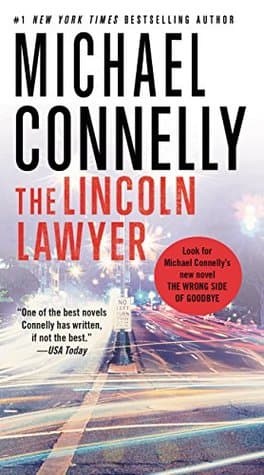
- The Lincoln Lawyer
Michael Connelly
4.2 (193k) average on GoodreadsThrillerConnelly's 'The Lincoln Lawyer' (2005) provides a compelling, street-smart look at defense strategy from an unconventional perspective. Turow's novel delves deeper into the societal and personal implications of the legal system, often focusing on the profound impact of legal processes on human lives, rather than just the mechanics of defense.
- Angels & Demons
Dan Brown
3.9 (2.7M) average on GoodreadsThrillerA Harvard symbologist races through Rome's ancient sites, deciphering cryptic clues to unmask the Illuminati and stop a vengeful plot to destroy the Vatican with a stolen antimatter weapon.
- Gone Girl
Gillian Flynn
4.1 (2.3M) average on GoodreadsThrillerA wife's sudden disappearance on her fifth anniversary reveals a web of lies and psychological warfare, exposing the secrets within a seemingly perfect marriage.




Enjoyed the summary?
A summary gives you the shape of the book. The book itself has the detail, the examples and the voice.
Find The Burden of Proof on AmazonAs an Amazon Associate, BookBrief earns from qualifying purchases. How we're funded