
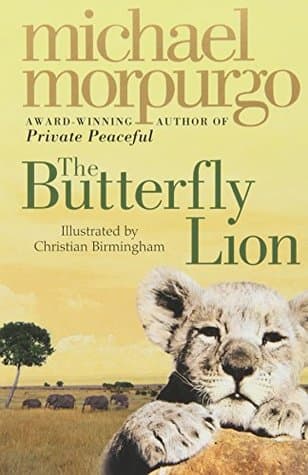
Synopsis
Covers the whole plot, including the ending.
- Difficulty
- Easy
- Pacing
- Moderate
- Mood
- Nostalgic, Heartwarming, Melancholy, Hopeful
- Read it if
- You enjoy heartwarming stories about unique friendships, animal companionship, and historical settings with a touch of magic and melancholy.
- Skip it if
- You prefer fast-paced plots, complex character development, or stories without any sad elements.
The Butterfly Lion Plot Summary
Covers the whole plot, including the ending.
A Boy Discovers a Hidden Story
The story begins with a young boy named Michael, unhappy at his new boarding school, running away and finding himself near a large, old house. He climbs over a wall and encounters an elderly woman, Millie, tending her garden. Instead of scolding him, Millie invites him in for tea and begins to tell him a story, sensing his sadness. She introduces him to a small, wooden lion she keeps on her mantelpiece, carved with butterflies, and explains that it represents a lifelong friendship she witnessed. This chance encounter sets the stage for Millie to recount the tale of Bertie and his white lion.
Bertie's Childhood in Africa
Millie begins her story by introducing Bertie, a young boy growing up on a farm in colonial Africa. Bertie often feels lonely, as his parents are busy with the farm and he has no siblings or close friends. One day, while exploring the veld, he discovers two newborn white lion cubs, one of whom is injured and abandoned after its mother is shot by a local farmer. Bertie, against his father's initial wishes, takes the cub home and nurses it back to health. He names the cub 'Charlie' and they quickly become inseparable, sharing a deep, unspoken bond as Charlie grows from a tiny cub into a young lion.
Separation and a Promise
As Bertie grows older, his parents decide he must go to boarding school in England to receive a proper education. This news devastates Bertie, as it means leaving his beloved lion, Charlie. To make matters worse, Bertie's father, fearing the fully grown lion's danger and unable to keep it, sells Charlie to a French circus owner. Bertie is heartbroken and makes a promise to Charlie that he will find him again. The separation is painful for both boy and beast, marking a significant turning point in their lives.
Life in England and a Chance Encounter
Bertie struggles to adjust to life at his English boarding school, often feeling out of place and longing for Africa and his lion. He finds solace in drawing pictures of Charlie and dreaming of their reunion. During his school holidays, he often stays with an elderly woman, Miss Carter, a family friend. It is during one of these holidays, while walking in the countryside, that he first encounters a young Millie. They become friends, and Bertie shares his story of Charlie with her, confiding his hope of finding his lion again. Millie is captivated by his tale and his loyalty.
The Lion's Escape and Journey
Meanwhile, the white lion, Charlie, now part of a traveling French circus, lives a life of captivity and performance. He never forgets Bertie. One day, during a storm, Charlie escapes from the circus. Driven by instinct and a deep-seated memory, he begins a long journey across the European landscape, avoiding humans and surviving on his own. His travels are marked by a quiet determination, symbolizing his longing for freedom and, perhaps, for his original companion.
A Miraculous Reunion in France
Years pass, and Bertie, now a young man, serves as a soldier in the trenches of World War I in France. The horrors of war weigh heavily on him. One day, during a lull in fighting, he hears a familiar roar. Against all odds, he discovers Charlie, emaciated and scarred but unmistakably his lion, living wild in a nearby forest. Their reunion is emotional and miraculous. Bertie secretly visits Charlie whenever he can, bringing him food and comfort, rekindling their powerful bond amidst the devastation of war.
Millie's Role and the Lion's Passing
Millie, now living in France as a Red Cross nurse, is reunited with Bertie by chance. Bertie confides in her about Charlie, and Millie, an understanding friend, helps him keep the lion a secret, bringing him food when Bertie cannot. After the war ends, Bertie and Millie manage to bring Charlie back to England. They find a secluded farm where Charlie can live out his days in peace and freedom, hidden from the public. He lives a long, contented life, always close to Bertie and Millie, until his natural passing.
The Butterfly Lion's Legacy
After Charlie's death, Bertie is heartbroken but filled with gratitude for their friendship. To commemorate his beloved lion, Bertie carves a wooden lion, covered with butterflies. The butterflies represent Charlie's gentle nature, his quiet strength, and perhaps his spirit soaring freely. This 'butterfly lion' becomes a cherished keepsake, a tangible symbol of a bond that transcended continents, war, and time. It is this carving that Millie shows to Michael, bringing the story full circle.
Bertie and Millie's Shared Life
Bertie and Millie remain lifelong companions. They eventually marry and live a quiet, happy life in the old house with the beautiful garden. Though Charlie is gone, his memory lives on through the butterfly lion carving and the stories they share. They often speak of him, keeping his spirit alive in their hearts. Their love for each other is intertwined with their shared love and memory of the white lion, forming the foundation of their peaceful existence. Millie, now an old woman, cherishes these memories deeply.
Michael's Transformation and Departure
Millie concludes her story, which has captivated young Michael. She explains that the old man who lived in the house, Bertie, was her husband, and she has kept their story alive. Michael, moved by the tale of loyalty, friendship, and enduring love, feels his own sadness lift. He no longer feels so alone or unhappy about boarding school. He thanks Millie, promises to return, and walks back to his school, carrying the lessons of Bertie and Charlie's story with him, forever changed by the 'butterfly lion'.
The Butterfly Lion Characters
Michael
Protagonist (frame story)
A lonely boy at boarding school who discovers Bertie's story
Michael is a young boy who runs away from his new boarding school, feeling unhappy and isolated. He represents the reader's entry into the main narrative. Initially sad and rebellious, he becomes captivated by Millie's story, which profoundly impacts his outlook. He is sensitive and open to the magic of storytelling, allowing the tale of Bertie and the white lion to change his perspective on friendship, loyalty, and finding one's place.
Relationships: Millie (storyteller and confidante); Bertie (the subject of the story, a source of inspiration)
Millie
Supporting (frame story) / Primary Narrator
The kind old woman who tells Michael the story of Bertie and the white lion
Millie is an elderly, gentle woman who lives in an old house with a beautiful garden. She is the primary narrator of the central story, recounting the life of her late husband, Bertie, and his white lion. She possesses great wisdom, kindness, and a deep understanding of human and animal bonds. Her ability to connect with Michael, a lonely boy, demonstrates her compassionate nature. She was also a nurse in WWI, showing her resilience and caring spirit.
Relationships: Michael (storyteller to a receptive listener); Bertie (lifelong friend and wife); Charlie (the white lion) (caring friend and protector)
Bertie
Protagonist (main story)
A boy who forms an unbreakable bond with a white lion
Bertie is a sensitive and compassionate boy who grows up on a farm in Africa. He feels a deep connection to nature and animals, especially after finding and raising an orphaned white lion cub, Charlie. His defining characteristic is his unwavering loyalty and love for Charlie, enduring separation, boarding school, and the horrors of WWI with the hope of reunion. He is quiet but determined, and his friendship with Charlie shapes his entire life.
Relationships: Charlie (the white lion) (lifelong, inseparable companion); Millie (lifelong friend and wife); Bertie's Parents (distant but ultimately loving)
Charlie (the white lion)
Supporting / Central Figure
The magnificent white lion, Bertie's loyal and gentle companion
Charlie is the white lion cub rescued and raised by Bertie. Despite being a wild animal, he displays intelligence, loyalty, and a remarkably gentle nature, especially towards Bertie. He endures separation, captivity in a circus, and a long journey across Europe, driven by an instinctual desire for freedom and, implicitly, a reunion with his human friend. He is a symbol of wild beauty, enduring friendship, and the profound connection possible between humans and animals.
Relationships: Bertie (lifelong, inseparable companion); Millie (caring friend and protector)
Bertie's Father
Supporting
Strict but ultimately pragmatic African farmer
Bertie's father is a practical man, focused on running his farm in Africa. He initially disapproves of Bertie keeping the lion cub due to its wild nature and potential danger. He makes the difficult decision to sell Charlie to a circus when Bertie goes to boarding school, believing it to be the most responsible course of action. While seemingly stern, his actions are driven by what he perceives as necessary for his son's future and safety, though he underestimates the depth of Bertie's bond with Charlie.
Relationships: Bertie (father-son, often strained by differing views); Bertie's Mother (husband-wife)
Bertie's Mother
Supporting
More sympathetic than Bertie's father, but still supports sending Bertie to England
Bertie's mother is somewhat more understanding and sympathetic than his father, particularly regarding Bertie's attachment to Charlie. However, she ultimately agrees with the decision to send Bertie to boarding school in England for his education, prioritizing his future. She represents the parental love that, while present, cannot always prevent painful separations or fully comprehend unique bonds like Bertie's with his lion.
Relationships: Bertie (mother-son); Bertie's Father (husband-wife)
Circus Owner (Monsieur Dubois)
Mentioned / Antagonist
The man who buys Charlie and keeps him in captivity
The circus owner is the man who buys Charlie from Bertie's father and takes him to France. He represents the forces of captivity and commercial exploitation, treating Charlie as an attraction rather than a living being with deep emotional connections. While not explicitly malicious, his actions lead to Charlie's suffering and separation from Bertie, making him an antagonist in the story of their bond.
Relationships: Charlie (the white lion) (captor-captive)
Miss Carter
Supporting
Elderly family friend who provides Bertie with a home during school holidays
Miss Carter is an kind, elderly woman who takes Bertie in during his school holidays in England. She provides him with a safe and comforting home away from boarding school, offering a sense of stability and warmth. She is a compassionate figure who listens to Bertie's stories and understands his quiet longing for Africa and his lion, providing a much-needed maternal presence when he is far from his parents.
Relationships: Bertie (caretaker/guardian during holidays)
The Butterfly Lion Themes
Friendship and Loyalty
The core theme of the book is the lifelong friendship between Bertie and Charlie, the white lion. Their bond transcends species, distance, and the ravages of war. Bertie's promise to find Charlie, and Charlie's instinctual journey back to Bertie, show loyalty. Millie's enduring friendship with Bertie and her commitment to preserving their story further reinforces steadfast relationships. The narrative shows that true friendship can overcome any obstacle.
“All my life I'll think of you, I promise I will. I won't ever forget you.”
Loss and Separation
The story is filled with the pain of loss and separation. Bertie experiences the initial loss of his lion when he is sent to boarding school and Charlie is sold. This separation is traumatic for both of them. The backdrop of World War I further shows themes of loss, as Bertie faces the horrors of war and the loss of innocence. Even the framing story begins with Michael feeling lost and unhappy. However, the narrative also shows how hope and the promise of reunion can sustain one through difficult times.
“He held the tiny carving in his hand, and I knew then that his heart had broken, just like mine.”
The Wild and Civilization
The book explores the tension between the wild, represented by Charlie and the African veld, and the demands of human civilization, such as education (boarding school) and war. Charlie's captivity in the circus shows the unnaturalness of confining wild creatures. Bertie's struggle to bridge these two worlds – his wild heart longing for Africa and his life in England – is central. The eventual return of Charlie to a peaceful, secluded life in England, overseen by Bertie and Millie, suggests a harmonious, if fragile, coexistence.
“A white lion in the veld is a miracle. A white lion in a cage is a tragedy.”
Memory and Storytelling
The entire narrative is framed by Millie telling Michael the story of Bertie and Charlie. This shows the importance of memory and storytelling in preserving history, love, and identity. Millie acts as a keeper of memories, ensuring that Bertie's life and his bond with Charlie are not forgotten. The wooden butterfly lion itself is a symbol of a cherished memory. Through storytelling, Michael's own sadness is alleviated, showing the power of shared narratives to heal and inspire.
“Some stories, she said, were too important to be forgotten.”
Hope and Resilience
Despite numerous setbacks and sadness, the characters show hope and resilience. Bertie never gives up hope of finding Charlie, even through the despair of war. Charlie, too, shows resilience in escaping the circus and surviving his long journey. Millie's support and her ability to keep the story alive for decades also speak to enduring hope. The book suggests that even in the darkest times, hope and the promise of love can sustain individuals.
“He had promised he would find him, and Bertie never broke a promise.”
Plot Devices & Literary Techniques
Frame Story
A story within a story, providing context and emotional depth
The novel uses a frame story structure, where the main narrative of Bertie and the white lion is told by an elderly Millie to a young, unhappy boy named Michael. This device allows for a reflective and nostalgic tone, as Millie recounts past events from a position of wisdom. It also serves to immediately engage the reader by presenting a mystery (the butterfly lion) and allows Michael's emotional journey to mirror the reader's, as he learns valuable life lessons through the tale.
Symbolism of the White Lion
Represents uniqueness, wildness, and an extraordinary bond
The white lion is a powerful symbol throughout the book. Its rarity emphasizes the uniqueness of Bertie's bond with Charlie. It represents a connection to the wild, untamed spirit of Africa, contrasting with the constraints of human society and war. Charlie also symbolizes purity, innocence, and an almost mythical quality of friendship. His survival and journey against all odds underscore the extraordinary nature of his loyalty and resilience.
The Butterfly Lion Carving
A tangible symbol of enduring love, memory, and freedom
The small, wooden lion carving adorned with butterflies is a central symbolic object. It encapsulates the entire story: the lion for Charlie, and the butterflies representing his gentle spirit, his freedom after captivity, and perhaps the delicate yet beautiful nature of the bond he shared with Bertie. It serves as a physical manifestation of memory and a testament to a love that transcends death, acting as a portal for Millie to share her story with Michael.
Foreshadowing (The Promise)
Bertie's promise to find Charlie creates anticipation and drives the plot
Bertie's solemn promise to Charlie, 'I won't ever forget you,' made at the moment of their painful separation, acts as a significant piece of foreshadowing. It establishes the central goal of Bertie's life and creates a strong sense of anticipation for their eventual reunion. This promise drives Bertie's actions and thoughts throughout his adolescence and into adulthood, assuring the reader that their paths will cross again despite the immense obstacles.
The Butterfly Lion Quotes
“The butterfly lion was a symbol of hope, a promise that life could be beautiful again.”
“He was not just a lion; he was a friend, a companion through the darkest times.”
“In the end, it is the memories that keep us alive, that give us strength.”
“The white lion was like a ghost, a beautiful, silent ghost in the bush.”
“We made a pact, the lion and I, to always remember each other.”
“War changes everything, but some things, like love, remain unchanged.”
“The chalk lion on the hillside was our secret, a message to the world.”
“Sometimes, the bravest thing is to let go, to trust that love will find a way.”
“Life is a circle, and we are all connected, like the butterflies on the lion.”
“He taught me that true friendship knows no boundaries, not even species.”
“The lion's roar was not just a sound; it was a call to freedom, to home.”
“In the silence of the night, I could still feel his presence, guiding me.”
“We carved our story into the land, so it would never be forgotten.”
“The butterfly lion was a miracle, a reminder that magic exists in the world.”
Quiz
10 questions on the plot and the characters. Each answer comes with a short explanation.
Question 1
Where does Bertie first find the white lion cub?
- In a circus in England
- On the African veld
- At his boarding school
- In a city zoo
Show answer
B. On the African veld Bertie rescues the orphaned white lion cub from the African veld, which is the open grassland in Africa where they first meet.
Question 2
Why are Bertie and the lion separated?
- Bertie moves to a different country for school
- The lion runs away into the wild
- Bertie's family sells their farm
- The lion is given to a zoo
Show answer
A. Bertie moves to a different country for school Bertie is sent to boarding school in England, and while he is away, the lion is sold to a circus, leading to their separation.
Question 3
What does Bertie promise the lion when they are separated?
- He will buy the lion back
- He will write letters to the lion
- He will never forget the lion and they will meet again
- He will visit the circus every year
Show answer
C. He will never forget the lion and they will meet again Bertie swears that he will never forget the lion and that one day they will see each other again, as mentioned in the book's description.
Question 4
What happens to the lion after Bertie leaves for England?
- It is released back into the wild
- It is sold to a circus
- It stays with Bertie's family on the farm
- It is given to a wildlife sanctuary
Show answer
B. It is sold to a circus While Bertie is at boarding school in England, the lion is sold to a circus, which is a key event that drives the story's conflict.
Question 5
What is the 'butterfly lion' in the story?
- A type of butterfly that lives near lions
- A sculpture or memorial made of butterflies
- A nickname for Bertie's lion
- A mythical creature in African folklore
Show answer
B. A sculpture or memorial made of butterflies The butterfly lion is a creation that ensures Bertie and the lion's friendship is never forgotten, often depicted as a memorial involving butterflies, central to the book's title and theme.
Question 6
How does the story emphasize the theme of lifelong friendship?
- Through Bertie's promise to remember the lion and their eventual reunion
- By showing Bertie making many new friends in England
- Through the lion's adventures in the circus
- By focusing on Bertie's family relationships
Show answer
A. Through Bertie's promise to remember the lion and their eventual reunion The book highlights lifelong friendship through Bertie's unwavering promise to the lion and their enduring bond, despite separation and time, as reflected in the butterfly lion symbol.
Question 7
What role does the setting of Africa play in the story?
- It is just a backdrop with no significant impact
- It symbolizes freedom and the origin of Bertie's friendship with the lion
- It is where Bertie goes to school
- It is the main location for the circus scenes
Show answer
B. It symbolizes freedom and the origin of Bertie's friendship with the lion Africa represents the wild, open spaces where Bertie and the lion's friendship begins, contrasting with the confined life in England and the circus, emphasizing themes of freedom and connection.
Question 8
Why might the butterfly lion be considered a symbol in the book?
- It represents the lion's transformation into a butterfly
- It symbolizes the enduring memory of Bertie and the lion's friendship
- It is a literal lion that eats butterflies
- It represents Bertie's love for art
Show answer
B. It symbolizes the enduring memory of Bertie and the lion's friendship The butterfly lion serves as a powerful symbol for how memories and friendships can be preserved and celebrated, even after separation or loss, tying into the book's emotional core.
Question 9
How does the book's structure, with illustrations by Christian Birmingham, enhance the story?
- It distracts from the text with too many pictures
- It provides visual depth to the emotional and scenic elements, like the African veld and the butterfly lion
- It is only for decorative purposes and does not add meaning
- It replaces key parts of the narrative
Show answer
B. It provides visual depth to the emotional and scenic elements, like the African veld and the butterfly lion Christian Birmingham's illustrations complement Michael Morpurgo's lyrical prose by visually capturing the beauty of Africa, the lion's plight, and the symbolic butterfly lion, enriching the reader's experience.
Question 10
What might be a key message about separation and reunion in 'The Butterfly Lion'?
- That separation always leads to forgetting
- That true friendships can withstand distance and time through memory and hope
- That animals and humans can never truly reunite
- That boarding school is the best solution for children
Show answer
B. That true friendships can withstand distance and time through memory and hope The book conveys that even when physically apart, bonds of friendship can remain strong through promises, memories, and symbolic acts like the butterfly lion, offering a hopeful perspective on reunion.
The Butterfly Lion FAQ
What is 'The Butterfly Lion' about?
'The Butterfly Lion' follows Bertie, a boy growing up in Africa who rescues and befriends an orphaned white lion cub. Their bond is tested when Bertie is sent to boarding school in England and the lion is sold to a circus, but Bertie vows to reunite with him, leading to a lifelong connection symbolized by the butterfly lion.
Why should I read 'The Butterfly Lion'?
This book offers a touching exploration of friendship, loyalty, and memory through a simple yet profound story. With lyrical prose and Christian Birmingham's evocative illustrations, it appeals to both children and adults, blending historical elements with emotional depth in a quick, memorable read.
What is the background/setting of 'The Butterfly Lion'?
The story spans early 20th-century Africa, where Bertie lives on the veld, and England, where he attends boarding school. The African setting highlights the wild, natural bond with the lion, while England represents separation and longing, with the circus serving as a contrasting, confined environment.
What are the most memorable quotes from 'The Butterfly Lion'?
Key quotes include Bertie's promise, 'All my life I’ll think of you, I promise I will. I won’t ever forget you,' and descriptions of the butterfly lion as a symbol of enduring friendship. The lion's sale to the circus also yields poignant lines about loss and hope.
What writing style does Michael Morpurgo use in 'The Butterfly Lion'?
Morpurgo employs a lyrical, accessible narrative with simple language suited for children, yet rich in emotional resonance. The story is told in a reflective, almost fable-like tone, enhanced by vivid descriptions of nature and inner feelings, making it both engaging and thought-provoking.
What minor details add significant meaning in 'The Butterfly Lion'?
Details like the white lion's unique coloration symbolize purity and rarity, while the butterfly imagery represents transformation and memory. The boarding school letters Bertie writes hint at his persistent hope, and the circus setting underscores themes of captivity versus freedom.
What are some subtle foreshadowing moments in 'The Butterfly Lion'?
Early scenes of Bertie caring for the lion cub foreshadow his lifelong commitment, and mentions of the African veld's vastness hint at eventual separation. The butterfly motif is introduced subtly before becoming central, suggesting how memory can bridge distance and time.
What unexpected character connections exist in 'The Butterfly Lion'?
The connection between Bertie and the lion transcends species, mirroring human friendships. Later, the butterfly lion—a chalk drawing that attracts real butterflies—links Bertie's childhood in Africa to his adult life, showing how art and nature intertwine to preserve bonds.
What are unspoken character motivations in 'The Butterfly Lion'?
Bertie is driven by a deep-seated need for companionship and belonging, especially after being uprooted to England. The lion's loyalty stems from an instinctual trust, while secondary characters like the circus owners are motivated by profit, contrasting with Bertie's selfless love.
What psychological complexities do characters exhibit in 'The Butterfly Lion'?
Bertie grapples with loneliness and resilience, clinging to memories as a coping mechanism. The lion displays animal loyalty mixed with confusion upon separation, reflecting themes of innocence versus experience. Their bond highlights how emotional connections can defy logical boundaries.
What are the major emotional turning points in 'The Butterfly Lion'?
Key moments include Bertie rescuing the lion cub, their forced separation when Bertie leaves for school, the lion's sale to the circus, and the eventual revelation of the butterfly lion. Each event deepens the themes of loss, hope, and the enduring power of friendship.
How do relationship dynamics evolve in 'The Butterfly Lion'?
Bertie and the lion's relationship shifts from caretaker and dependent to equals separated by circumstance, yet spiritually united. Bertie's interactions with adults, like his parents or circus staff, show conflicts between duty and desire, emphasizing how true bonds persist despite external pressures.
Which parts of 'The Butterfly Lion' remain ambiguous or open-ended?
The exact fate of the lion after the circus is left somewhat vague, inviting readers to imagine his later life. The butterfly lion's magical realism—whether it's a literal or symbolic creation—is open to interpretation, blending reality and memory in a way that encourages personal reflection.
What are controversial scenes or decisions in 'The Butterfly Lion'?
Some readers might debate Bertie's parents' decision to send him away and sell the lion, viewing it as a betrayal of trust. The lion's captivity in the circus raises ethical questions about animal treatment, though the story focuses more on emotional impact than moral judgment.
'The Butterfly Lion' ending explained: how it ends & what it means
The story concludes with Bertie creating a chalk lion drawing that attracts butterflies, forming a 'butterfly lion' that symbolizes his unbroken bond with the real lion. This ending suggests that friendship and memory can transcend physical separation, offering a hopeful message about legacy and love.
About the author

Michael Morpurgo is a British author known for his children's fiction, often exploring themes of war and nature. His notable works include "War Horse," "Private Peaceful," "The Butterfly Lion," "An Elephant in the Garden," "The Amazing Story of Adolphus Tips," and "Born to Run." Morpurgo's storytelling often combines historical events with imaginative narratives.
Similar books
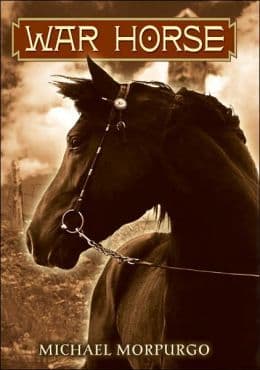
- War Horse
Michael Morpurgo
4.1 (42k) average on GoodreadsChildren'sExplores the deep bond between a boy and an animal during wartime, with a strong emotional core.
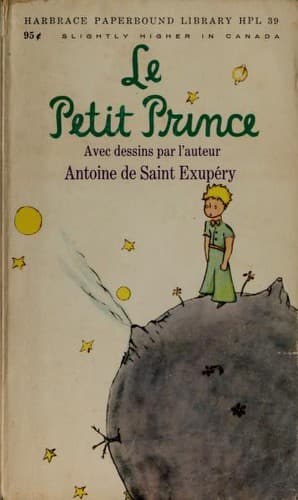
- The Little Prince
Antoine De Saint Exupéry
A poignant, philosophical tale about friendship, loss, and the importance of seeing with the heart.
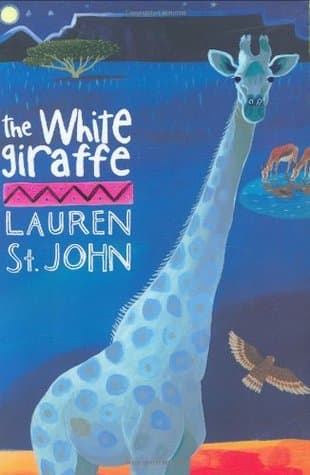
- The White Giraffe
Lauren St. John
4.0 (6k) average on GoodreadsFantasyBoth set in Southern Africa with a child-animal bond. St John's is more adventure-focused with conservation themes and active protagonists. Morpurgo's is more reflective, internal, and focuses on emotional journeys and the passage of time, with a deeper exploration of melancholic themes.
- The Hobbit, or There and Back Again
J.R.R. Tolkien
4.3 (2.9M) average on GoodreadsFantasyBoth explore journeys, character development through adversity, and friendship. However, Tolkien's is high fantasy with external quests and mythical creatures, while Morpurgo's is historical fiction grounded in a tangible world, focusing on internal longing and the human-animal bond amidst human conflict.
- Harry Potter and the Sorcerer's Stone
J.K. Rowling
4.5 (7M) average on GoodreadsFantasyRescued from a miserable life under the stairs, an orphaned boy discovers he's a wizard destined for a magical school, where he uncovers a dangerous secret tied to the dark wizard who murdered his parents.
- Harry Potter and the Goblet of Fire
J.K. Rowling
4.6 (2.6M) average on GoodreadsFantasyA bewildered Harry Potter, underage and thrust into a deadly Triwizard Tournament, must brave dragons, mermaids, and a resurgent dark magic to survive a year that will forever alter the wizarding world.



Enjoyed the summary?
A summary gives you the shape of the book. The book itself has the detail, the examples and the voice.
Find The Butterfly Lion on AmazonAs an Amazon Associate, BookBrief earns from qualifying purchases. How we're funded