

Synopsis
Covers the whole plot, including the ending.
- Difficulty
- Medium
- Pacing
- Slow
- Mood
- Dark, Suspenseful, Macabre, Vengeful
- Read it if
- You enjoy classic tales of psychological horror and meticulous revenge, and appreciate rich, atmospheric prose.
- Skip it if
- You prefer fast-paced action or stories with clear moral protagonists.
The Cask of Amontillado Plot Summary
Covers the whole plot, including the ending.
The Insult and the Vow
Montresor, the narrator, starts by saying Fortunato caused him 'a thousand injuries,' but a recent 'insult' made him vow revenge. He planned his revenge carefully, ensuring Fortunato would suffer, but Montresor himself would face no consequences. Montresor pretended to be Fortunato's friend, smiling even as he thought of his death. He waited for the right moment to trick Fortunato, making sure no one suspected his true intentions.
Carnival Festivities
Montresor chose Carnival, a time of celebration and drunkenness, to carry out his plan. The city was full of masked people, and Montresor, wearing a cloak and black silk mask, saw Fortunato. Fortunato, a wine expert, was dressed as a jester. He was already quite drunk, which Montresor noted with satisfaction, as it would make his task easier. Montresor approached Fortunato with an exaggerated show of concern and friendship, setting up his deception.
The Bait: Amontillado
Montresor told Fortunato he bought a barrel of what he thought was Amontillado, a rare and expensive sherry, but doubted its authenticity. He pretended to worry he might have been cheated and wanted Fortunato's expert opinion. Knowing Fortunato's pride in his wine knowledge and his rivalry with Luchesi, another wine expert, Montresor mentioned he was about to ask Luchesi. This immediately sparked Fortunato's interest and vanity, making him eager to prove his superior judgment and dismiss Luchesi.
Descent into the Catacombs
Fortunato, despite his cough and the damp night air, insisted on going with Montresor to taste the Amontillado. Montresor led him to his palace and then down into the vast, dark, winding catacombs of the Montresor family. These catacombs were both a burial place and storage for their wine. As they went deeper, Montresor repeatedly pretended to worry about Fortunato's health, urging him to turn back, knowing each protest would only make Fortunato more determined.
Warning Signs and Deceptions
As they went deeper, the air grew damp and filled with nitre, making Fortunato's cough worse. Montresor kept offering him Médoc wine, supposedly to warm him, but actually to keep him drunk and less aware. Fortunato toasted the dead around them, and Montresor, with dark humor, toasted Fortunato's 'long life.' Fortunato made a Masonic gesture Montresor did not recognize, showing their different social circles and Montresor's exclusion. Montresor then showed a trowel, claiming to be a Mason, further confusing Fortunato.
The Niche
Montresor led Fortunato through several rooms, past piles of human bones, until they reached a very deep crypt. At the end of this crypt was a smaller recess, about four feet deep, three feet wide, and six or seven feet high. Montresor claimed the Amontillado was in this spot. Fortunato, eager to taste the wine, stepped into the small space, expecting to find the rare sherry. The recess was just big enough for one person to stand, making it a perfect trap.
Chaining Fortunato
As Fortunato stepped into the recess, Montresor quickly pulled out a short chain and padlocks from under his cloak. Before Fortunato could react or understand, Montresor quickly fastened him to staples in the granite wall. Fortunato was too shocked and drunk to resist effectively. His bells jingled faintly as he was secured, a chilling sound in the silent catacombs.
The Wall Begins
Montresor began to wall up the entrance to the recess with stones and mortar he had prepared. He worked fast and carefully, laying the first layer of stones. Fortunato, at first silent from shock, began to moan as he realized his terrible situation. Montresor paused to enjoy the sounds of Fortunato's growing despair. He enjoyed the irony of Fortunato's jester costume, its bells now making a sad sound instead of a festive one.
Desperate Cries
As the wall rose, Fortunato's moans turned into desperate, angry screams. Montresor, instead of stopping, happily echoed Fortunato's cries, making his own shrieks louder. He wanted Fortunato to know his tormentor was there and enjoying his suffering. Fortunato then tried to appeal to Montresor's reason, crying out 'For the love of God, Montresor!' Montresor chillingly repeated the phrase back to him, savoring the finality of his act.
The Last Stone
Montresor finished laying the wall, leaving only one stone to place. Through the small opening, he heard a final, faint jingle of Fortunato's bells, then silence. He called Fortunato's name, but there was no reply. Satisfied that his revenge was complete and Fortunato was entombed, Montresor pushed the last stone into place and sealed it, closing the recess completely. He felt a brief 'sickness' but blamed it on the dampness of the catacombs, refusing to feel guilt for his terrible act.
Fifty Years Later
Montresor ends his story by saying fifty years have passed since Fortunato's burial, and no one has disturbed the bones. Fortunato's skeleton, still chained in its spot, remains untouched. Montresor finishes with the Latin phrase 'In pace requiescat!' ('May he rest in peace!'), a final, ironic statement that highlights his complete lack of guilt and his belief that he committed the perfect, unpunished crime. He achieved his goal of revenge without consequence.
Principal Figures
Montresor
Protagonist/Narrator
A calculating and vengeful nobleman.
Montresor is the narrator and central figure of the story, a member of an old, noble, but possibly decaying Italian family. He is highly intelligent, cunning, and deeply resentful, harboring a profound sense of injury from Fortunato. He is meticulous in his planning and execution of revenge, displaying a chilling lack of empathy or remorse. His pride in his family name and his desire for absolute impunity drive his actions. He presents himself as a wronged individual, justifying his horrific act as a necessary restoration of honor.
Relationships: Fortunato (Victim of Montresor's revenge; Montresor feigns friendship to lure him to his death.)
Fortunato
Antagonist/Victim
A proud and respected wine connoisseur.
Fortunato is a well-known, respected, and feared wine connoisseur, particularly proud of his judgment and expertise. He is a man of considerable ego, susceptible to flattery and easily provoked by professional rivalry, especially regarding Luchesi. He is also described as a 'quack' in other areas, suggesting his expertise is narrow. His love for wine, combined with his vanity and a significant degree of drunkenness during Carnival, makes him an easy target for Montresor's manipulation. He is oblivious to Montresor's true intentions until it is too late, highlighting his fatal flaw of overconfidence.
Relationships: Montresor (Believes Montresor is a friend, unaware of his murderous intent.); Luchesi (Professional rival in wine tasting; Fortunato sees him as inferior.)
Luchesi
Mentioned
A rival wine expert.
Luchesi is a fellow wine connoisseur mentioned by Montresor as a rival to Fortunato. Montresor cleverly uses Luchesi's name to manipulate Fortunato's pride and competitive spirit, knowing that Fortunato will be eager to prove his superior knowledge of wine. By suggesting he will ask Luchesi to taste the Amontillado, Montresor ensures Fortunato's immediate and insistent desire to accompany him, thus initiating his journey into the catacombs. Luchesi never appears in the story but serves as a crucial catalyst for the plot.
Relationships: Fortunato (Professional rival in wine tasting.)
Themes & Insights
Revenge
The main theme is the careful planning and execution of revenge. Montresor's detailed plan comes from a deep desire to punish Fortunato for 'a thousand injuries' and a specific 'insult.' He defines perfect revenge as one done without punishment, where the victim knows who is hurting them, and the punisher avoids consequences. This theme is clear from Montresor's opening lines, 'I must not only punish but punish with impunity,' and ends with his satisfaction fifty years later that his crime is still hidden.
“I must not only punish but punish with impunity. A wrong is unredressed when retribution overtakes its redresser. It is equally unredressed when the avenger fails to make himself felt as such to him who has done the wrong.”
Deception and Manipulation
Montresor is skilled at deception, using flattery, false concern, and Fortunato's weaknesses against him. He keeps a friendly face, smiling at Fortunato even as he plans his death. He uses Fortunato's pride in his wine knowledge and his rivalry with Luchesi to trick him into the catacombs. His repeated fake worries about Fortunato's cough and the dampness are ironic, only making Fortunato more determined. This theme is central to the plot, as Montresor's ability to deceive makes his revenge possible, as shown when he offers Fortunato Médoc to keep him drunk and less aware.
“I was so pleased to see him, that I thought I should never have done wringing his hand.”
Pride and Vanity
Both Montresor and Fortunato show great pride, which drives the story. Fortunato's pride in his expertise and his vanity about his wine taste make him fall for Montresor's bait of the Amontillado. He cannot resist proving himself better than Luchesi. Montresor is also driven by wounded pride from perceived insults to his family's honor. His desire for 'impunity' in his revenge is part of his pride, confirming his superiority and cleverness. This theme is clear when Fortunato dismisses Luchesi's abilities, saying 'Luchesi cannot tell Amontillado from Sherry.'
“He prided himself on his connoisseurship in wine.”
Mortality and Burial
The story is full of images and ideas of death, especially through the catacombs setting. The entire journey happens among the bones of Montresor's ancestors, creating a chilling mood and foreshadowing Fortunato's end. Being buried alive within a wall is a horrific death Poe often wrote about. The constant mentions of nitre, dampness, and skeletal remains serve as a grim reminder of death and the irreversible nature of Fortunato's coming doom, emphasizing the finality of his burial.
“We had passed through walls of piled bones, with casks and puncheons intermingling, into the inmost recesses of the catacombs.”
Social Class and Status
While not directly stated, underlying tensions about social class and status contribute to Montresor's motive. The Montresor family motto, 'Nemo me impune lacessit' ('No one assails me with impunity'), shows a deep sense of honor tied to their noble background. Fortunato, despite his expertise, might represent social climbing or an offense to Montresor's old aristocracy. Montresor's view of Fortunato as 'rich, respected, admired, beloved,' yet someone who has 'ventured upon insult,' suggests a clash of status where Montresor feels his ancient dignity was disrespected by Fortunato's perceived arrogance.
“The Montresors, I replied, were a great and numerous family.”
Plot Devices & Literary Techniques
Unreliable Narrator
Montresor's biased account shapes the reader's perception.
Montresor is the sole narrator, recounting events from his perspective fifty years after they occurred. His account is entirely subjective and self-serving, portraying Fortunato as deserving of his fate and himself as a justified avenger. The reader is given no other perspective, forcing them to question Montresor's motives and the truth of his claims about Fortunato's 'thousand injuries' and 'insult.' This device creates suspense and moral ambiguity, as the reader must discern the reality of the situation through a murderer's biased lens.
Irony
Contradictions between appearance and reality, and expectation and outcome.
Irony permeates the story. Fortunato's name, meaning 'the fortunate one,' is tragically ironic given his gruesome end. His jester costume, symbolic of folly, foreshadows his foolish trust in Montresor. Montresor's feigned concern for Fortunato's health and his toasts to Fortunato's 'long life' are deeply ironic, as he is actively leading his 'friend' to his death. The family motto, 'Nemo me impune lacessit,' is also ironic, as Montresor believes Fortunato has assailed him with impunity, and he plans to return the favor with chilling literalness.
Foreshadowing
Hints and clues that suggest future events.
Poe uses numerous instances of foreshadowing. The setting in the catacombs, filled with bones and dampness, immediately suggests death and decay. Montresor's family motto, 'Nemo me impune lacessit' ('No one assails me with impunity'), directly foreshadows his vengeful act. His revealing of a trowel to Fortunato, claiming to be a Mason, is a dark hint of the masonry work he will soon perform to wall Fortunato in. Fortunato's cough and the nitre-laden air repeatedly warn of danger, which he dismisses, oblivious to his impending doom.
Symbolism
Objects and elements representing deeper meanings.
Key symbols include Fortunato's jester costume, representing his ultimate foolishness and the irony of his fate. The Amontillado itself symbolizes Montresor's lure and Fortunato's fatal weakness. The catacombs symbolize death, burial, and the hidden, dark aspects of human nature. The Montresor family crest, depicting a foot crushing a serpent whose fangs are embedded in the heel, symbolizes the nature of Montresor's revenge: a seemingly injured party (Montresor) strikes back lethally, even at risk to himself (the serpent's fangs).
The Cask of Amontillado Quotes
“The thousand injuries of Fortunato I had borne as I best could, but when he ventured upon insult I vowed revenge.”
“I was skillful in the Italian vintages myself, and bought largely whenever I could.”
“I perceive you have an excellent general idea of the Italian vintages.”
“Nemo me impune lacessit.”
“For the love of God, Montresor!”
“I drink to your long life.”
“My heart grew sick—on account of the dampness of the catacombs.”
“True, true. But some people have a knack of it.”
“I had told him that I had received a pipe of what passes for Amontillado, and I had my doubts.”
“And to your health! I will drink to you, Montresor.”
“It is farther on. But observe the white web-work which gleams from these cavern walls.”
“I placed my hand upon the solid fabric of the catacombs, and felt satisfied.”
“A succession of loud and shrill screams, bursting suddenly from the throat of the chained form, seemed to thrust me violently back.”
“My heart grew sick—but the wine was of a dry vintage.”
“In pace requiescat!”
Quiz
10 questions on the plot and the characters. Each answer comes with a short explanation.
Question 1
What is the narrator's stated motivation for seeking revenge on Fortunato?
- Fortunato stole his fortune.
- Fortunato insulted him 'a thousand times'.
- Fortunato betrayed a business deal.
- Fortunato publicly humiliated him.
Show answer
B. Fortunato insulted him 'a thousand times'. Montresor explicitly states at the beginning of the story that Fortunato had ventured upon insult, and he had borne it as best he could, but when he ventured upon insult, he vowed revenge.
Question 2
What skill is Fortunato especially proud of, which Montresor uses to lure him into the catacombs?
- His knowledge of ancient languages.
- His connoisseurship in wine.
- His ability to compose poetry.
- His talent for playing musical instruments.
Show answer
B. His connoisseurship in wine. Montresor knows Fortunato's weakness is his pride in his wine connoisseurship and uses the 'Amontillado' as bait.
Question 3
What is the meaning of Montresor's family motto, 'Nemo me impune lacessit'?
- Fortune favors the bold.
- No one attacks me with impunity.
- My word is my bond.
- Always seek justice.
Show answer
B. No one attacks me with impunity. The motto, 'Nemo me impune lacessit,' which translates to 'No one provokes me with impunity' or 'No one attacks me with impunity,' perfectly encapsulates Montresor's philosophy of revenge.
Question 4
What specific alcoholic drink does Montresor claim to have acquired, which he uses to entice Fortunato?
- A vintage Bordeaux.
- A rare Madeira.
- A pipe of Amontillado.
- A hogshead of Sherry.
Show answer
C. A pipe of Amontillado. Montresor tells Fortunato he has acquired a 'pipe of what passes for Amontillado,' knowing this particular Sherry would pique Fortunato's interest.
Question 5
What is Fortunato wearing when Montresor encounters him during the carnival?
- A black cloak and mask.
- A jester's motley and cap.
- An elegant nobleman's attire.
- A simple tunic and sandals.
Show answer
B. A jester's motley and cap. Fortunato is dressed in a 'motley' (a jester's costume) and a conical cap with bells, which ironically highlights his role as a fool in Montresor's scheme.
Question 6
As they descend into the catacombs, what does Montresor repeatedly offer Fortunato that Fortunato declines?
- A light for the damp passage.
- A chance to turn back due to his cough.
- More wine to drink.
- A warning about the crypt's dangers.
Show answer
B. A chance to turn back due to his cough. Montresor feigns concern for Fortunato's worsening cough, suggesting they turn back, knowing Fortunato's pride will compel him to continue.
Question 7
What is the ultimate method Montresor uses to kill Fortunato?
- Poisoning his wine.
- Stabbing him with a dagger.
- Imprisoning him alive behind a brick wall.
- Suffocating him in a crypt.
Show answer
C. Imprisoning him alive behind a brick wall. Montresor chains Fortunato to a niche in the catacombs and then walls him in, burying him alive.
Question 8
What does the story's ending reveal about Montresor's crime?
- He was caught and punished for his actions.
- He confessed his crime to a priest.
- His crime remained undiscovered for fifty years.
- He was haunted by Fortunato's ghost.
Show answer
C. His crime remained undiscovered for fifty years. The final line, 'For the half of a century no mortal has disturbed them,' indicates that Montresor's crime has remained undiscovered for fifty years.
Question 9
What literary device is most prominently featured in Fortunato's name and costume?
- Alliteration.
- Hyperbole.
- Irony.
- Metaphor.
Show answer
C. Irony. Fortunato's name (suggesting 'fortunate') and his jester's costume are highly ironic, as he is anything but fortunate and is made a fool of by Montresor.
Question 10
What is Montresor's primary concern regarding his revenge, as stated in the opening paragraph?
- That he will be discovered and punished.
- That Fortunato will realize who is enacting the revenge.
- That the revenge must be carried out with impunity and Fortunato must know he is the avenger.
- That Fortunato suffers greatly before dying.
Show answer
C. That the revenge must be carried out with impunity and Fortunato must know he is the avenger. Montresor's opening lines establish his criteria for perfect revenge: the avenger must not be punished, and the victim must know 'who strikes him.'
The Cask of Amontillado FAQ
What is the primary motivation behind Montresor's revenge on Fortunato?
Montresor claims Fortunato has committed 'a thousand injuries' and, more importantly, 'ventured upon insult.' While the exact nature of these affronts is never specified, the story implies they are deeply personal and have wounded Montresor's pride and family honor, driving his meticulous plan for retribution.
How does Montresor successfully lure Fortunato into the catacombs?
Montresor exploits Fortunato's vanity and connoisseurship in wine by fabricating a story about acquiring a pipe of Amontillado, a rare sherry, and feigning doubt about its authenticity. He then suggests consulting a rival, Luchesi, knowing Fortunato's pride would compel him to prove his superior wine expertise.
What role does the setting of the carnival play in Montresor's plan?
The carnival provides the perfect chaotic backdrop for Montresor's scheme. With everyone in a state of revelry and disguised, Fortunato's sudden disappearance would go unnoticed, and Montresor's own actions would be less scrutinized. The festive atmosphere also ensures Fortunato is already somewhat inebriated, lowering his guard.
What are the key elements Montresor uses to ensure his revenge is undetected?
Montresor carefully sends his servants away for the night, ensuring no witnesses. He also plays on Fortunato's pride and the dark, labyrinthine nature of the catacombs, which are far removed from public view. The final immurement within a niche ensures the body remains hidden for decades.
What is the significance of the Montresor family motto, 'Nemo me impune lacessit'?
The motto, meaning 'No one provokes me with impunity' or 'No one attacks me unpunished,' perfectly encapsulates Montresor's vengeful philosophy. It foreshadows his cold, calculated retribution against Fortunato, emphasizing that any insult to his honor will be met with severe consequences, upholding his family's legacy of unwavering pride.
How does Fortunato's cough contribute to the narrative's irony and Montresor's manipulation?
Fortunato's persistent cough and Montresor's feigned concern for his health ('We will go back; your health is precious') serve as a cruel irony. Montresor pretends to care while actively leading Fortunato to his death, using the cough as an excuse to offer more wine, further intoxicating his victim and dulling his suspicions.
What is implied by the 'dampness of the catacombs' and the niter on the walls?
The 'dampness' and 'niter' (potassium nitrate) symbolize the decaying environment and Fortunato's impending doom. They represent the literal and metaphorical descent into death and oblivion. Montresor also uses the niter as a pretense to offer Fortunato more wine, further intoxicating him and accelerating his demise.
What is the significance of the jester's costume Fortunato wears?
Fortunato's jester's costume, with its cap and bells, symbolizes his foolishness and how easily he is made a fool by Montresor. It highlights his unsuspecting nature and his ultimate role as the tragic joke in Montresor's elaborate, deadly prank, underscoring his obliviousness to the danger.
How does Montresor display psychopathic tendencies throughout the story?
Montresor exhibits classic psychopathic traits: a lack of empathy, a grandiose sense of self-worth (seen in his need for 'perfect' revenge), manipulative behavior, and a chillingly calm demeanor while committing a heinous act. He derives pleasure from Fortunato's suffering and shows no remorse, even after fifty years.
What psychological effect does Montresor's meticulous planning have on the reader?
Montresor's meticulous planning creates a sense of dread and suspense, as the reader is made privy to his sinister intentions from the outset. This allows the reader to experience the psychological horror of the trap unfolding, making them complicit witnesses to the calculated cruelty rather than surprised observers.
How does Montresor rationalize his actions, and what does this reveal about his mental state?
Montresor rationalizes his actions by framing them as necessary retribution for 'insults' and 'injuries,' believing he is justly upholding his family honor. This reveals a deeply disturbed mental state where his perception of justice is twisted and disproportionate, prioritizing his wounded pride above human life and morality.
To what extent is Fortunato complicit in his own demise from a psychological perspective?
Fortunato's vanity, pride, and desire to assert his connoisseurship make him psychologically vulnerable to Montresor's manipulation. His inability to perceive danger, even as Montresor leads him deeper into the catacombs, stems from his overconfidence and his singular focus on the promised Amontillado, blinding him to the sinister reality.
Is Montresor a reliable narrator, and how does this affect our understanding of the 'insults'?
Montresor is an unreliable narrator; he is clearly unhinged and biased. We only hear his perspective, and the 'thousand injuries' and 'insult' Fortunato supposedly inflicted are never detailed, leading readers to question if they were real or merely figments of Montresor's paranoid or vengeful imagination.
What is the deeper symbolic meaning of the Amontillado itself?
The Amontillado symbolizes the bait that lures Fortunato to his death, representing his fatal flaw of pride and his insatiable desire for rare luxuries. It also serves as a symbol of Montresor's deceptive cunning, as the promise of the wine is merely a ruse for his true, murderous intent.
How does the story explore the theme of revenge, and what statement does it make about it?
The story explores revenge as a meticulously planned, cold-blooded act driven by wounded pride, rather than justice. It suggests that revenge, when taken to extremes, is a destructive and morally corrupting force, reducing the avenger to a monstrous figure who finds satisfaction in the suffering of others, as Montresor does.
What is the significance of the final line, 'In pace requiescat!' (Rest in peace!)?
The final line is deeply ironic and chilling. Montresor utters it 50 years after the murder, suggesting he has lived with his secret undisturbed and feels no remorse. It implies Fortunato has indeed 'rested in peace' within the catacombs, while Montresor has achieved his 'perfect' revenge without consequence, highlighting his ultimate triumph.
Could Fortunato have been saved, and what missed opportunities were there?
Fortunato had several opportunities to save himself, primarily by heeding Montresor's feigned concerns about his cough and the dampness, or by questioning the increasingly suspicious path deeper into the catacombs. His pride and desire for the Amontillado blinded him to these warnings, making him unwilling to turn back.
What is the role of irony in 'The Cask of Amontillado'?
Irony is central to the story, operating on multiple levels. Fortunato's name, meaning 'the fortunate one,' is ironic given his tragic end. Montresor's repeated expressions of concern for Fortunato's health while leading him to death are dramatic irony. The jester costume further emphasizes the ironic fate of the 'expert' being made a fool.
About the author
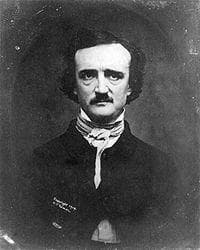
Edgar Allan Poe was an American writer, poet, editor, and literary critic who is best known for his poetry and short stories, particularly his tales of mystery and the macabre. He is widely regarded as a central figure of Romanticism in the United States, and of American literature. He was one of the country's earliest practitioners of the short story, and is considered the inventor of the detective fiction genre, as well as a significant contributor to the emerging genre of science fiction. He is the first well-known American writer to earn a living through writing alone, resulting in a financially difficult life and career.
Similar books
- Rebecca
Daphne du Maurier
4.2 (450k) average on GoodreadsThrillerCreates a strong sense of dread and suspense within a gothic setting, though focuses on psychological torment rather than physical immurement.
- A Study in Scarlet
Arthur Conan Doyle
4.2 (324k) average on GoodreadsHistorical FictionDoyle's work, a foundational text of the detective genre, focuses on the solving of a crime through logical deduction and investigation by Sherlock Holmes, aiming for justice and resolution. In stark contrast, 'The Cask of Amontillado' offers no investigation; it is a confession from the perpetrator, placing the reader as a complicit witness to an unpunished crime, exploring the psychology of the murderer rather than the process of detection.
- Angels & Demons
Dan Brown
3.9 (2.7M) average on GoodreadsThrillerA Harvard symbologist races through Rome's ancient sites, deciphering cryptic clues to unmask the Illuminati and stop a vengeful plot to destroy the Vatican with a stolen antimatter weapon.
- Gone Girl
Gillian Flynn
4.1 (2.3M) average on GoodreadsThrillerA wife's sudden disappearance on her fifth anniversary reveals a web of lies and psychological warfare, exposing the secrets within a seemingly perfect marriage.
- The Girl on the Train
Paula Hawkins
3.9 (2.1M) average on GoodreadsThrillerA woman’s fascination with a seemingly perfect couple she watches from her daily train commute leads her into a dark investigation when she witnesses something that shatters their idyllic image.
- The Lovely Bones
Alice Sebold
3.8 (2M) average on GoodreadsFantasyA murdered teenage girl watches from the afterlife as her family struggles with grief and her killer remains free, wanting to bridge the gap between worlds to bring him to justice.






Enjoyed the summary?
A summary gives you the shape of the book. The book itself has the detail, the examples and the voice.
Find The Cask of Amontillado on AmazonAs an Amazon Associate, BookBrief earns from qualifying purchases. How we're funded