

Synopsis
Covers the whole plot, including the ending.
- Difficulty
- Medium
- Pacing
- Moderate
- Mood
- Atmospheric, Suspenseful, Dark, Gritty
- Read it if
- You enjoy dark, atmospheric crime thrillers with a strong forensic element and a damaged protagonist.
- Skip it if
- You are sensitive to graphic descriptions of human remains or find slow-burn mysteries frustrating.
The Chemistry of Death Plot Summary
Covers the whole plot, including the ending.
A Gruesome Discovery in Manham
Dr. David Hunter, a former forensic anthropologist now a GP in the isolated Norfolk village of Manham, is called to remote marshland by PC Henry Maitland. A dog walker found the decomposing body of a young woman, partially buried with a rare bird's wing sewn into her chest. This detail suggests a ritual. Hunter, despite trying to distance himself from his past in forensic pathology after his wife and daughter's deaths, gets drawn into the investigation due to his skills. The local community, close-knit and wary of outsiders, watches him, especially the victim's family, the Pendletons.
Reluctant Involvement and Growing Suspicion
As DI Ward leads the police investigation, Hunter's forensic background quickly becomes clear, making him a valuable, though unwilling, consultant. He identifies the victim as Sally Palmer, a local woman missing for weeks. Hunter's detailed analysis of the body's decomposition gives important information about the time and cause of death. However, his involvement also brings him under scrutiny from wary villagers, including the victim's father, Sam Palmer. Manham's isolation and lack of obvious suspects create paranoia, with Hunter himself becoming a person of interest to some locals who dislike his outsider status.
The Disappearance of Jenny Gray
Tension in Manham rises sharply when Jenny Gray, a local teacher and friend of David Hunter's, disappears. Jenny is the only person in Manham who has truly connected with Hunter emotionally, and her disappearance makes the case deeply personal for him. The police, still struggling with leads from Sally Palmer's murder, now face the possibility of a serial killer. Hunter, desperate to find Jenny alive, commits fully to the investigation, racing against time and the growing despair in the village.
A Macabre Discovery and Forensic Clues
After Jenny's disappearance, Hunter helps in the search, leading to the discovery of a makeshift grave with a third victim, identified as a transient woman. This confirms a serial killer is at work. Hunter's forensic skills become vital as he carefully examines the remains, finding a unique pattern of injuries and post-mortem mutilations linking the victims. He notes the killer's precise, almost clinical methods, suggesting a high level of organization and possibly a medical background. These findings point to a killer who is violent but also has specific knowledge of human anatomy and decomposition.
The Suspect Pool Narrows
As the investigation continues, several local figures become suspects. Ben Carter, a reclusive gamekeeper with odd behavior and deep knowledge of the local marshlands, becomes a main suspect due to his secretive nature and proximity to the crime scenes. Other villagers, including the Pendletons and the local vicar, also face scrutiny. Hunter, while helping Ward, constantly evaluates those around him, using his medical and forensic insights to see beyond appearances. Pressure mounts as the possibility of Jenny's fate mirroring the other victims grows.
Hunter's Personal Crisis and Past Trauma
The brutal nature of the murders, especially Jenny's disappearance, forces David Hunter to confront the unresolved grief from his past—the car accident that killed his wife and daughter. The similarities between his senseless loss and the current tragedy in Manham are emotionally overwhelming. He struggles with nightmares and flashbacks, finding solace only in his work, which both distracts and triggers him. This personal crisis strengthens his resolve to find the killer, not just for Jenny, but to regain some control over a world that feels increasingly chaotic.
A Breakthrough in the Killer's Modus Operandi
Through careful analysis of the victims' remains and crime scenes, Hunter identifies a consistent, disturbing pattern in the killer's actions. The specific mutilations, choice of burial sites, and symbolic elements like the bird's wing all point to a killer with a twisted understanding of decomposition and the natural world. Hunter realizes the killer is not just disposing of bodies but experimenting with them, observing their decay. This breakthrough suggests a killer driven by a grotesque scientific curiosity rather than simple rage or sexual deviance, narrowing the psychological profile.
The Killer Revealed: Ben Carter's Dark Obsession
The evidence, gathered by Hunter, eventually points to Ben Carter. Carter, the reclusive gamekeeper, is shown to have a dark obsession with death, decay, and nature, stemming from a traumatic childhood. His isolated life in the marshes gave him the perfect cover and laboratory for his horrific experiments. Hunter, with Maitland, tracks Carter to a hidden, makeshift lab deep in the marsh, a place filled with gruesome remnants of his victims and his tools. The confrontation is tense and dangerous, as Carter is cunning and disturbed.
Jenny's Ordeal and a Desperate Rescue
Upon finding Carter's lair, Hunter discovers Jenny Gray alive, but barely. She has been held captive, terrorized, but not yet killed. Carter, driven by his warped scientific curiosity, intended to observe her decomposition while alive. Hunter, despite his own injuries and the psychological toll, fights Carter. Maitland arrives to help, and together they subdue the deranged gamekeeper. The rescue is harrowing, with Jenny near death, showing the extreme danger she faced and the narrow chance for her survival.
Aftermath and Lingering Shadows
With Ben Carter caught and Jenny rescued, Manham slowly begins to process the horrors it has endured. The community is deeply scarred, its sense of safety broken by the revelation of a local monster. Hunter, though physically and emotionally exhausted, finds hope in Jenny's survival and the case's closure. The experience forces him to confront his past trauma, realizing that running from his forensic identity was not a solution. He begins to accept his unique skills and their role, hinting at a possible return to his former profession, with a new perspective on life and loss.
Principal Figures
Dr. David Hunter
Protagonist
A forensic anthropologist haunted by tragedy, now a country doctor.
David Hunter is a brilliant forensic anthropologist who fled London and his profession after a horrific car accident claimed his wife and daughter. He now works as a GP in the quiet village of Manham, seeking anonymity and an escape from his past. He is intelligent, methodical, and deeply empathetic, but also emotionally withdrawn and burdened by immense grief. The murders in Manham force him to confront his past and utilize the skills he tried to abandon, becoming both a reluctant investigator and a prime suspect in the eyes of some villagers. He carries a profound sense of loss that shapes his interactions and motivations.
Relationships: Jenny Gray (Developing romantic interest, close friend.); DI Ward (Professional colleague, initially wary, later trusting.); PC Henry Maitland (Professional colleague, supportive, local liaison.); Ben Carter (Antagonist, the serial killer.)
Jenny Gray
Supporting
A local teacher and David Hunter's burgeoning love interest.
Jenny Gray is a kind, intelligent, and compassionate local schoolteacher who becomes a source of connection and hope for David Hunter. She is one of the few people in Manham who genuinely reaches out to him, seeing past his guarded exterior. Her warmth and resilience stand in stark contrast to the village's general suspicion. Her disappearance and subsequent captivity become a major catalyst for Hunter's full immersion into the investigation, making the case deeply personal for him. She represents the fragile beauty and vulnerability of life in the face of the killer's darkness.
Relationships: Dr. David Hunter (Developing romantic interest, close friend.); DI Ward (Victim in the case.)
DI Ward
Supporting
The lead police detective, initially skeptical but ultimately reliant on Hunter.
DI Ward is the experienced but somewhat rigid police detective assigned to the Manham murders. He is a professional by-the-book officer, initially skeptical of David Hunter's civilian involvement and wary of his past. He represents the traditional police force, often clashing with Hunter's more intuitive and forensic approach. However, as the case progresses and Hunter's expertise proves invaluable, Ward comes to respect and rely on him, recognizing the unique insights Hunter brings. He is dedicated to solving the case and bringing justice to the victims.
Relationships: Dr. David Hunter (Professional colleague, lead investigator.); PC Henry Maitland (Subordinate officer.)
PC Henry Maitland
Supporting
A local constable who acts as Hunter's liaison and confidant.
PC Henry Maitland is a local Manham constable, familiar with the village and its inhabitants. He is less rigid than DI Ward and serves as a crucial link between Hunter and the local community, often providing context and local insights. Maitland is initially the one who calls Hunter to the first crime scene and remains a supportive, if sometimes overwhelmed, presence throughout the investigation. He respects Hunter's abilities and helps him navigate the complex social dynamics of the isolated village, often acting as Hunter's sounding board.
Relationships: Dr. David Hunter (Professional colleague, supportive.); DI Ward (Superior officer.)
Ben Carter
Antagonist
A reclusive gamekeeper and the serial killer responsible for the murders.
Ben Carter is a reclusive gamekeeper living in the marshlands surrounding Manham. He is a solitary figure, known for his deep knowledge of the local wildlife and his somewhat eccentric behavior. Beneath his quiet exterior lies a deeply disturbed individual with a perverse obsession with death, decay, and the natural processes of decomposition. His motives are not driven by typical serial killer urges but by a chillingly detached, pseudo-scientific curiosity, treating his victims as subjects for his macabre experiments. He is cunning, manipulative, and adept at blending into his environment, making him a formidable and terrifying antagonist.
Relationships: Dr. David Hunter (Antagonist, the object of Hunter's investigation.); Sally Palmer (Victim.); Jenny Gray (Victim.)
Sam Palmer
Supporting
The grieving father of the first victim, suspicious of outsiders.
Sam Palmer is the father of Sally Palmer, the first murder victim. He is a gruff, protective, and deeply grieving man, representative of the tight-knit, insular community of Manham. His initial suspicion falls on David Hunter due to his outsider status and his unusual profession. Palmer's grief and anger fuel his distrust of the police and anyone he perceives as an outsider, making him a challenging figure for Hunter to navigate. His character highlights the community's insularity and the impact of the tragedy on local residents.
Relationships: Sally Palmer (Daughter, victim.); Dr. David Hunter (Initially suspicious of Hunter.)
Sally Palmer
Mentioned
The first murder victim, her death ignites the investigation.
Sally Palmer is the first victim whose body is discovered, sparking the entire investigation. She is a local young woman from Manham. Her murder is brutal and ritualistic, setting the tone for the chilling nature of the killer's methods. Though she is only seen in death, her memory and the circumstances of her murder are central to the plot, driving the police and Hunter to seek justice and prevent further atrocities. Her death reveals the darkness lurking beneath the idyllic surface of the village.
Relationships: Sam Palmer (Father.); Ben Carter (Killer.)
Themes & Insights
Grief and Trauma
The novel explores the lasting impact of grief and trauma. David Hunter is broken by the loss of his wife and daughter, leading him to leave his career and seek refuge in an isolated village. The murders in Manham force him to face his unresolved pain, as the senseless violence mirrors his own past tragedy. His nightmares, flashbacks, and emotional numbness are constant reminders of his trauma, but his dedication to saving Jenny and solving the case also helps him heal. This theme is clear when Hunter sees similarities between the victims' families' suffering and his own, driving him to prevent further loss.
“Death was a constant in my life, a shadow that clung to me, but I had never learned to live with it.”
The Nature of Evil
The book explores the unsettling nature of evil, showing it not as simple malice but as a twisted, almost scientific curiosity. Ben Carter's motives are not from passion or revenge, but from a detached, morbid fascination with decomposition and death. This 'scientific' evil is more chilling than typical villainy because it lacks a human element. The killer's careful methods and symbolic mutilations suggest a deep psychological disturbance, showing how an ordinary person can hide extraordinary darkness. This theme appears in Hunter's forensic analysis, where he sees the killer's 'experimentation' on the bodies.
“It wasn't just about killing. It was about what came after. The process. The decay. He wanted to watch it happen.”
Isolation and Community Suspicion
Manham, a remote, close-knit village, represents themes of isolation and community suspicion. Outsiders like David Hunter are immediately distrusted, and villagers stick to their insular ways. This creates an atmosphere where secrets fester and suspicion can easily fall on the innocent. The fear from the murders increases this dynamic, as neighbors turn on each other, and the community's initial resistance to outside help hinders the investigation. The isolation also provides perfect cover for the killer, allowing him to operate undetected within the familiar landscape. Sam Palmer's immediate distrust of Hunter shows this theme.
“In a place like Manham, everyone knows everyone, and that means everyone knows your business. Or thinks they do.”
The Conflict Between Science and Emotion
A main tension in the story is the conflict between scientific objectivity and human emotion. David Hunter, a forensic anthropologist, is trained to view death with a detached, analytical eye. However, his personal trauma and the emotional impact of the Manham murders constantly challenge this professional distance. He struggles to stay objective when Jenny, someone he cares for, becomes a victim. The novel explores how his scientific knowledge, while crucial for solving the case, often conflicts with the overwhelming grief, fear, and personal connection he feels, forcing him to balance his professional identity with his humanity.
“My job was to read the dead, to understand their final moments. But how could I do that when my own heart was screaming?”
Plot Devices & Literary Techniques
The Unreliable Narrator (Emotional State)
Hunter's grief and trauma subtly color his perception and interactions.
David Hunter narrates the story, and his deep-seated grief, trauma, and emotional detachment from his past make him a subtly unreliable narrator. While factually accurate in his forensic observations, his emotional state influences his interpretations of events and people, sometimes leading him to misjudge intentions or overthink situations. His past tragedy is a constant filter through which he views the present, adding layers of psychological depth to his perspective and raising questions about his judgment in highly charged emotional moments, especially concerning Jenny Gray.
Red Herrings
Misleading clues and suspicious characters distract from the true killer.
The novel employs several red herrings to build suspense and mislead the reader. Various villagers, including the Pendletons and other locals with odd behaviors or grudges, are introduced as potential suspects, diverting attention from Ben Carter. These misdirections create a sense of paranoia within the village and among the investigators, making the true killer's identity more shocking when revealed. For example, local feuds and the insular nature of the community frequently point fingers at individuals who ultimately have no connection to the murders, highlighting the danger of jumping to conclusions based on superficial evidence.
Forensic Detail as Exposition and Clue
Detailed scientific analysis of human remains drives the plot and reveals the killer's methods.
The extensive and accurate forensic detail serves as both exposition and a primary source of clues. Hunter's expertise in taphonomy (the study of decomposition) allows him to 'read' the bodies, providing vital information about the time of death, manner of death, and the killer's methods. The descriptions of the bodies' states of decay, insect activity, and specific injuries are not merely gruesome but are critical to understanding the killer's unique 'signature' and psychological profile. This device grounds the mystery in scientific reality and makes Hunter's role indispensable.
Isolated Setting
The remote Norfolk marshlands intensify the sense of dread and entrapment.
The isolated setting of Manham and the surrounding Norfolk marshlands is a crucial plot device. The remote, often bleak landscape, with its treacherous bogs and dense foliage, not only provides the killer with ideal places to hide bodies and operate unseen but also amplifies the psychological tension. The sense of being cut off from the outside world intensifies the villagers' fear and suspicion, creating a claustrophobic atmosphere. This isolation makes escape difficult for victims and creates a feeling of entrapment for Hunter, who came there seeking refuge but finds himself ensnared in a new nightmare.
The Chemistry of Death Quotes
“The dead don’t go away, Dr Hunter. Not truly. They leave a part of themselves behind, a residue that clings to the living.”
“It was the smell that always got to him first. The sweet, cloying odour of decay, a smell that burrowed into your sinuses and stayed there, long after you’d left the scene.”
“The truth was a slippery thing, always just out of reach, always threatening to twist and contort itself into something unrecognisable.”
“Sometimes, the most dangerous things are the ones you can’t see.”
“The past, he knew, was never truly past. It was a shadow that followed you, always there, always waiting to catch up.”
“Every body tells a story, if you know how to listen.”
“Fear was a cold, hard knot in his stomach, a constant companion in this desolate place.”
“The silence here was different. It wasn’t peaceful, but heavy, suffocating, as if the air itself was holding its breath.”
“Trust was a fragile commodity, easily broken, almost impossible to repair.”
“He’d learned long ago that the most ordinary people were often capable of the most extraordinary evil.”
“The landscape seemed to echo the bleakness of his own thoughts, a mirroring of internal and external desolation.”
“There was a fine line between curiosity and obsession, and he felt himself teetering on it.”
“Death was not an end, but a transformation, a change of state.”
“Even in the darkest places, there were always traces of humanity, if you looked hard enough.”
Quiz
10 questions on the plot and the characters. Each answer comes with a short explanation.
Question 1
Why did David Hunter initially move to the rural village of Manham, Norfolk?
- To open a new forensic pathology lab in the countryside.
- To escape his past as a forensic anthropologist in London and a personal tragedy.
- To be closer to his family who lived in Manham.
- He was assigned there by the medical board after a complaint.
Show answer
B. To escape his past as a forensic anthropologist in London and a personal tragedy. David Hunter moved to Manham to leave behind his former life as a forensic anthropologist in London and to cope with the tragedy of losing his wife and daughter.
Question 2
What is David Hunter's profession in Manham when the first body is discovered?
- Police detective
- Forensic anthropologist
- Country doctor
- Village priest
Show answer
C. Country doctor Despite his background in forensics, David is working as a simple country doctor in Manham.
Question 3
What specific detail about the first victim's body indicates a macabre sign from the killer?
- The body was posed in a ritualistic manner.
- A specific object was placed on or near the body.
- A message was carved into the victim's skin.
- The victim's clothes were arranged in a symbolic way.
Show answer
B. A specific object was placed on or near the body. The description mentions 'a macabre sign from her killer decorating her body,' implying a specific object or alteration rather than just a pose or carving.
Question 4
Why does David Hunter become a suspect in the murders early in the investigation?
- He had a known history of violence.
- He was the last person seen with the first victim.
- He is a newcomer to the tight-knit village.
- His medical bag was found near the crime scene.
Show answer
C. He is a newcomer to the tight-knit village. The text states, 'As a newcomer, Dr. Hunter is immediately a suspect,' highlighting the suspicion directed at outsiders in the close-knit community.
Question 5
What prompts David Hunter to reluctantly join the police investigation despite his desire to remain uninvolved?
- He was blackmailed by the lead detective.
- His past expertise in analyzing human remains makes him invaluable.
- He discovered a personal connection to the first victim.
- He wanted to prove his innocence by helping the police.
Show answer
B. His past expertise in analyzing human remains makes him invaluable. David's background as an expert in analyzing human remains makes him uniquely qualified to assist, despite his reluctance to return to that world.
Question 6
What makes the disappearance of the second woman 'personal' for David Hunter?
- She was his estranged sister.
- She was a patient he had been treating for a serious illness.
- She was someone he knew and had developed feelings for.
- She had information about his past tragedy.
Show answer
C. She was someone he knew and had developed feelings for. The text explicitly states, 'Because this time she is someone David knows, someone who has managed to penetrate the icy barrier around his heart,' indicating a personal connection and emotional investment.
Question 7
What is the primary theme explored through David Hunter's character arc in the novel?
- The struggle for power within a small community.
- The difficulty of escaping one's past and confronting trauma.
- The corruption inherent in rural law enforcement.
- The healing power of nature and isolation.
Show answer
B. The difficulty of escaping one's past and confronting trauma. David's entire motivation for moving to Manham is to escape his past and a tragedy. The unfolding events force him to confront the very skills and experiences he tried to leave behind, making the struggle to escape and confront trauma a central theme.
Question 8
What atmospheric element is repeatedly emphasized as contributing to the malevolent feeling in Manham?
- The constant heavy rainfall and flooding.
- The quiet summer countryside turning malevolent and brooding suspicion.
- The oppressive heat and humidity.
- The constant sound of church bells.
Show answer
B. The quiet summer countryside turning malevolent and brooding suspicion. The text mentions 'the quiet summer countryside that had been David’s refuge has turned malevolent—and suddenly there is no place to hide' and 'a brooding countryside beset with suspicion,' emphasizing the setting's shift.
Question 9
What kind of clues does David Hunter have to follow to solve the case?
- Financial records and digital footprints.
- Eyewitness testimonies from villagers.
- A macabre trail of clues, likely related to the killer's bizarre methods and human remains.
- Ancient local legends and folklore.
Show answer
C. A macabre trail of clues, likely related to the killer's bizarre methods and human remains. The text states David 'must follow a macabre trail of clues,' which, given his background and the nature of the killings, points to forensic evidence and the killer's twisted methods.
Question 10
What is the overarching feeling or 'darkness' that David Hunter perceives gathering around him as the investigation progresses?
- The threat of a major storm approaching Manham.
- The return of his past trauma, the malevolence of the killer, and the increasing danger to those he cares about.
- The disapproval of the local church community.
- The impending loss of his medical license.
Show answer
B. The return of his past trauma, the malevolence of the killer, and the increasing danger to those he cares about. The phrase 'David can feel the darkness gathering around him' encapsulates the personal resurfacing of his past trauma, the immediate threat from the killer, and the danger to the woman he has come to care for, all within a suspicious environment.
The Chemistry of Death FAQ
What prompts Dr. David Hunter to move to the secluded village of Manham, Norfolk?
Dr. David Hunter moves to Manham to escape a personal tragedy in London: the death of his wife and daughter in a car accident. He abandons his career as a forensic anthropologist, seeking a simpler life as a country doctor to cope with his grief and avoid anything related to his past profession.
How does the discovery of the first body impact David's new life in Manham?
The discovery of Sally Palmer's mutilated body shatters David's carefully constructed peaceful existence. It forces him to confront his past as a forensic anthropologist, as the details of the crime scene inevitably draw him back into the world of death investigation he desperately tried to leave behind.
Who is the primary police investigator in Manham, and what is their initial relationship with David?
Detective Inspector Ward is the primary police investigator in Manham. Initially, Ward views David with suspicion due to his status as a newcomer and his past profession, which seems too convenient given the nature of the murders. Their relationship is tense and marked by distrust.
What makes the disappearance of Jenny special to David, and how does it complicate the investigation?
Jenny is special to David because she is the first person in Manham to truly penetrate his emotional barriers, hinting at a potential new relationship. Her disappearance makes the case deeply personal for him, increasing his urgency and emotional investment, while also potentially clouding his professional judgment.
What is the significance of the 'macabre sign' mentioned in the description, decorating the first victim's body?
The 'macabre sign' on Sally Palmer's body is a specific, gruesome mutilation that points to the killer's ritualistic or symbolic intent. It is a key piece of forensic evidence that hints at the killer's disturbed psychology and signature, drawing David's expertise into focus.
How do David's dreams of his lost wife and daughter tie into the present-day events in Manham?
David's dreams of his lost wife and daughter serve as a constant reminder of his past trauma and his motivation for seclusion. They highlight his internal struggle and the emotional cost of his involvement in the Manham murders, as the new horrors threaten to reawaken his grief.
Are there any subtle clues early in the narrative that hint at the true killer's identity or motives?
Subtle clues include the killer's detailed knowledge of the local terrain, the specific type of mutilation which suggests a particular background or obsession, and certain characters' reactions or alibis that might seem slightly off upon re-reading, hinting at their deeper involvement or secrets.
What role does the isolated, tight-knit community of Manham play in hindering or aiding the investigation?
The isolated, tight-knit community of Manham both hinders and aids the investigation. Its insular nature means outsiders like David are viewed with suspicion, making information difficult to obtain. However, the close connections also mean that everyone knows everyone else's secrets, which can eventually lead to breakthroughs.
How does David's past experience as a forensic anthropologist influence his approach to the Manham case, beyond just identifying remains?
David's past as a forensic anthropologist allows him to 'read' the crime scenes in a way others cannot, understanding not just the physical evidence but also the killer's methodology and psychology. He can reconstruct events and infer motives from subtle details, giving him a unique perspective that aids the investigation significantly.
Discuss the psychological impact of David's grief on his ability to perform his duties during the investigation.
David's unresolved grief makes him vulnerable and emotionally volatile. While it fuels his determination to catch the killer, especially after Jenny's disappearance, it also blurs the lines between professional detachment and personal involvement, potentially compromising his objectivity and increasing his personal risk.
How does the killer's 'bizarre and twisted methods' reflect a specific psychological profile?
The killer's 'bizarre and twisted methods,' including the specific mutilations, suggest a highly organized but deeply disturbed individual. This profile often points to a killer who seeks control, ritual, and derives gratification from the desecration of the body, possibly linked to past trauma or a warped sense of justice.
How does the novel explore themes of isolation and community through David's experiences?
The novel explores isolation through David's self-imposed exile and his initial status as an outsider in Manham. Conversely, it explores community through the villagers' initial suspicion and eventual, reluctant acceptance, highlighting how both isolation and tight-knit bonds can be sources of both comfort and danger.
What is the symbolic significance of the 'brooding countryside beset with suspicion' in the narrative?
The 'brooding countryside beset with suspicion' symbolizes the internal darkness and hidden dangers within the seemingly idyllic setting. It reflects the pervasive fear and distrust among the villagers, mirroring the decay and corruption that the killer brings to the community, making the landscape itself a character.
In what ways does 'The Chemistry of Death' challenge or uphold typical thriller tropes?
'The Chemistry of Death' upholds tropes like the reluctant hero and the isolated setting, but challenges others by focusing deeply on forensic detail and the protagonist's psychological state. It delves into the science of death in a gritty, realistic way, rather than relying solely on high-octane action.
How does the title, 'The Chemistry of Death,' relate to the book's central themes and David Hunter's character?
The title 'The Chemistry of Death' directly relates to David Hunter's expertise in forensic anthropology, where he studies the decomposition and chemical processes of human remains. Metaphorically, it also refers to the 'chemistry' of the human psyche under duress—the emotional and psychological reactions to death, grief, and fear that permeate the story and define David's character.
What is the ultimate 'horrifying conclusion' that David must face, both personally and professionally?
The ultimate 'horrifying conclusion' for David is not just catching the killer, but confronting the deep-seated darkness within humanity and the devastating personal cost of his involvement. He faces the brutal reality of the killer's motives and the loss or trauma associated with Jenny's fate, forcing him to re-evaluate his own path.
How does the author use the Norfolk setting to enhance the mood and tension of the story?
The author uses the remote and often bleak Norfolk setting, with its isolated woods and tight-knit villages, to create a pervasive sense of dread and claustrophobia. The stark landscape and unpredictable weather mirror the psychological tension and the feeling of being trapped, amplifying the story's overall suspense and atmosphere.
What internal conflict does David experience regarding his return to forensic work?
David experiences a profound internal conflict. He is torn between his professional obligation and expertise, which are desperately needed to solve the murders, and his deep-seated desire to avoid the painful memories and emotional toll that forensic work entails, especially after his family's tragedy.
Is there a moral dilemma David faces in deciding how deeply to involve himself in the investigation?
Yes, David faces a significant moral dilemma. He initially tries to remain uninvolved, but his conscience and unique skills compel him to act. This leads to a struggle between his desire for peace and his responsibility to the victims and the community, especially as Jenny's disappearance makes it personal.
Similar books
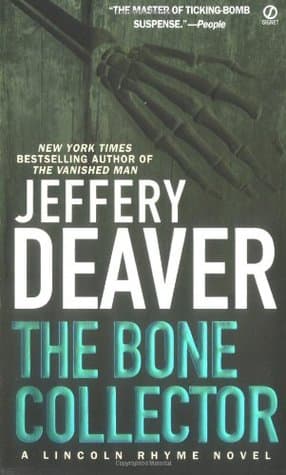
- The Bone Collector
Jeffery Deaver
4.2 (158k) average on GoodreadsThrillerA forensic expert protagonist using unconventional methods to track a serial killer.
- Déjà Dead
Kathy Reichs
3.9 (133k) average on GoodreadsThrillerBoth 'The Chemistry of Death' and 'Déjà Dead' feature forensic anthropologists as protagonists (Dr. David Hunter and Dr. Temperance Brennan, respectively) who are deeply involved in gruesome murder investigations. Beckett's work is often praised for its similar meticulous forensic detail and scientific accuracy, echoing Reichs' own background. However, Beckett's protagonist, Hunter, tends to be more internally conflicted and haunted by his past, lending a darker, more melancholic tone compared to Brennan's often more assertive and independent demeanor. While Reichs' series also explores personal struggles, Beckett places Hunter's trauma more centrally to the narrative's emotional core.
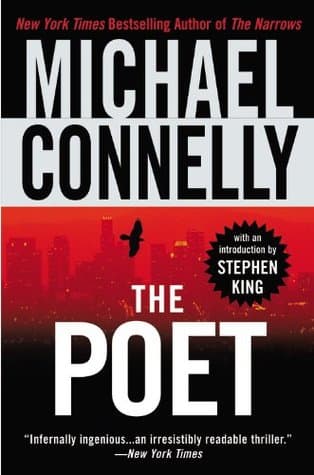
- The Poet
Michael Connelly
4.2 (82k) average on GoodreadsThrillerConnelly's 'The Poet' also plunges its protagonist, crime reporter Jack McEvoy, into a macabre investigation involving serial killings, much like Beckett's Hunter. Both novels excel at building suspense and revealing the dark psychology of their killers. However, 'The Poet' typically features a faster, more propulsive plot driven by journalistic investigation and the hunt for a cunning serial killer, often involving more direct action and less internal brooding from the protagonist. Beckett's 'The Chemistry of Death,' while thrilling, allows more space for Hunter's internal monologue and the scientific process of decomposition, creating a slightly more contemplative, albeit still intense, reading experience compared to Connelly's often relentless pacing.
- Angels & Demons
Dan Brown
3.9 (2.7M) average on GoodreadsThrillerA Harvard symbologist races through Rome's ancient sites, deciphering cryptic clues to unmask the Illuminati and stop a vengeful plot to destroy the Vatican with a stolen antimatter weapon.
- Gone Girl
Gillian Flynn
4.1 (2.3M) average on GoodreadsThrillerA wife's sudden disappearance on her fifth anniversary reveals a web of lies and psychological warfare, exposing the secrets within a seemingly perfect marriage.
- The Girl on the Train
Paula Hawkins
3.9 (2.1M) average on GoodreadsThrillerA woman’s fascination with a seemingly perfect couple she watches from her daily train commute leads her into a dark investigation when she witnesses something that shatters their idyllic image.




Enjoyed the summary?
A summary gives you the shape of the book. The book itself has the detail, the examples and the voice.
Find The Chemistry of Death on AmazonAs an Amazon Associate, BookBrief earns from qualifying purchases. How we're funded