
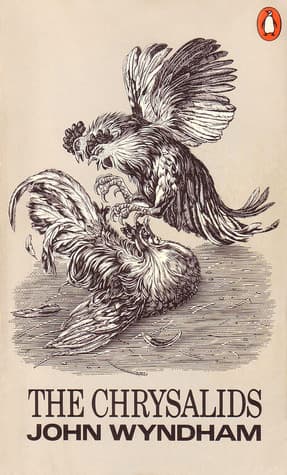
Synopsis
Covers the whole plot, including the ending.
- Difficulty
- Medium
- Pacing
- Moderate
- Mood
- Dystopian, Suspenseful, Thought-provoking, Bleak
- Read it if
- you enjoy classic dystopian science fiction, stories about prejudice and survival, or tales of telepathy and unique abilities in a hostile world.
- Skip it if
- you prefer fast-paced action over philosophical exploration, or find themes of genetic purity and religious extremism too bleak.
The Chrysalids Plot Summary
Covers the whole plot, including the ending.
David's Telepathic Secret and Sophie's Deformity
Ten-year-old David Strorm lives in Waknuk, a post-apocalyptic society where genetic purity, as defined by Nicholson's Repentances, is most important. Deviations from the 'true image' of man are considered blasphemies and are either sterilized or killed. David discovers he has a telepathic ability, letting him communicate mentally with a small group of others, including his cousins Rosalind and Petra. He keeps this a strict secret, understanding the severe results of being discovered as a 'deviant'. One day, while playing, David meets Sophie Wender, a girl his age with six toes on each foot—a severe physical deviation. He becomes her friend, promising to keep her secret from the rigid Waknuk community, especially his fundamentalist father, Joseph Strorm.
Sophie's Discovery and Exile
David's promise to Sophie breaks when his younger sister, Petra, falls into a river. While rescuing her, David removes Sophie's shoes, showing her six toes to another boy, Alan Ervin. Alan reports Sophie's deviation to the authorities. The Wender family, including Sophie, are questioned and tortured. To escape the brutal purification process, they flee Waknuk, becoming 'Fringes people'—outcasts living in the dangerous, mutated territories beyond the settled lands. This event deeply affects David, making his fear of discovery stronger and showing him the harsh reality of Waknuk's laws about deviations. He struggles with the unfairness of Sophie's situation and the hypocrisy of a society that claims to follow God's will yet inflicts such cruelty.
Growing Up with a Shared Secret
As David grows into adolescence, his telepathic group includes Michael, Rachel, Sally, Katherine, and Mark. They learn to communicate silently, developing a complex system of mental conversation that lets them share thoughts, feelings, and information instantly, much faster than spoken language. They understand the great danger they are in; any hint of their 'thought-shapes' could lead to their immediate sterilization or execution. They are very careful, never using their ability when others are present or when there's a risk of being overheard. They rely on Michael, the most intelligent and practical of the group, to guide their survival strategies and to understand the world beyond Waknuk through books he secretly reads.
The Threat of Discovery and Uncle Axel's Wisdom
The group faces a new danger when Katherine and Sally are caught and questioned because they are suspected of being 'deviants' after their thought-shapes are accidentally detected. Katherine is tortured, but the group hopes she won't betray them. David's Uncle Axel, a former sailor who has seen the world beyond Waknuk, becomes David's confidant. Axel, though not a telepath, is open-minded and intelligent. He advises David on society and the certainty of change, encouraging him to question Waknuk's strict rules. Axel understands the danger the group is in and warns David that their unique abilities might be the next stage of human evolution, an idea directly against Waknuk's beliefs.
Petra's Powerful Telepathy and Unforeseen Consequences
David's youngest sister, Petra, develops a very powerful and uncontrolled telepathic ability. Her 'thought-shapes' are so strong they can be detected across long distances, alerting not only the other telepaths but also possibly others. This uncontrolled power becomes a big problem, as it could expose the entire group. When Petra is lost in the woods, her panicked mental cries reach David and Rosalind with overwhelming force. They rush to find her, accidentally attracting the attention of non-telepaths who see their unusual urgency. This event shows the two sides of Petra's gift: a possible signal for others like them, but also a call to their persecutors.
The Hunt Begins
Petra's powerful distress signal is detected not only by the group but also by government inspectors using special equipment. This leads to the capture of Sally and Katherine, who are tortured. Under pressure, Katherine reveals information about the group, specifically mentioning Mark and Michael. With the authorities now actively hunting them, the remaining telepaths—David, Rosalind, and Petra—must flee Waknuk. They make a desperate escape into the Fringes, the lawless, mutated territories beyond the settlements, hoping to avoid Joseph Strorm and the Inspector, who are leading the chase. Uncle Axel helps them prepare for their dangerous journey, giving supplies and advice.
Into the Fringes and a Reunion
David, Rosalind, and Petra, guided by Petra's strong telepathy, go into the dangerous Fringes. They meet dangerous mutated animals and hostile Fringes people, who are also outcasts from Waknuk. During their dangerous journey, they are captured by a group of Fringes men. To David's surprise, their leader is Gordon, a severely mutated man whom David recognizes as his Uncle Gordon, Joseph Strorm's brother, who was cast out years ago for his 'deviation'. Gordon, full of bitterness and a desire for revenge against Joseph, recognizes David and plans to use him and Rosalind to get back at his brother. He says he intends to keep Rosalind as his 'woman'.
The Arrival of the Sealanders
While held captive in the Fringes, Petra's strong telepathic signals are finally answered by a woman from a distant, highly advanced telepathic society known as Sealand (New Zealand). The Sealand woman, named Mary, communicates with the group, explaining that they have been looking for other telepaths for a long time. She says that Sealand is a society made entirely of telepaths, who are the next evolutionary stage of humanity. She promises to send help to rescue David, Rosalind, and Petra from the Fringes, offering them a new home where they will be accepted and understood, free from persecution. This contact offers hope in their terrible situation.
Clash in the Fringes
A brutal three-way conflict starts in the Fringes. Joseph Strorm and the Waknuk purifiers arrive, determined to eliminate David, Rosalind, and Petra. At the same time, Gordon's Fringes group, seeking revenge and survival, fights with the Waknuk forces. Amidst the chaos, the Sealanders arrive in a technologically advanced aircraft, using a powerful web-like weapon that disables both the Waknuk and Fringes fighters without killing them. Joseph Strorm is killed during the battle. The Sealand woman, Mary, and her team quickly secure David, Rosalind, and Petra, showing their superior technology and their commitment to protecting their own kind.
Escape to Sealand and a New Beginning
With the Fringes and Waknuk forces stopped, David, Rosalind, and Petra are safely brought aboard the Sealand aircraft. They are joined by Michael, who escaped Waknuk and met with the Sealanders. The Sealand woman explains their idea: that change is certain and needed for survival, and that Waknuk's strict adherence to an old 'true image' will eventually destroy itself. As they fly towards Sealand, David looks back at the ruined landscape of Waknuk and the Fringes, understanding that he and his companions are part of a new era of humanity. They are heading towards a future where their abilities are accepted, not condemned, and where they can finally belong.
Principal Figures
David Strorm
Protagonist
A young boy with telepathic abilities living in a fundamentalist society.
David is the central narrator and protagonist, a thoughtful and empathetic boy who struggles to reconcile the harsh doctrines of his society with his own experiences and telepathic abilities. He is deeply affected by the persecution of 'deviants' like Sophie and constantly fears discovery. He possesses a strong moral compass and questions the rigid beliefs of his father and community. His journey is one of self-discovery and survival, as he seeks a place where he and others like him can exist without fear.
Relationships: Joseph Strorm (Strict, fundamentalist father); Sophie Wender (Childhood friend, fellow 'deviant'); Rosalind Morton (Telepathic cousin, eventual partner); Petra Strorm (Younger sister, powerful telepath); Uncle Axel (Mentor and confidant)
Rosalind Morton
Supporting
David's telepathic cousin and love interest, known for her strong will.
Rosalind is one of the original members of the telepathic group and David's cousin. She is practical, resourceful, and possesses a strong, determined personality, especially when it comes to protecting Petra. She shares a deep bond with David, and their telepathic connection allows for profound intimacy and understanding. She is pregnant with David's child during their escape, adding another layer of urgency and hope to their journey. Her loyalty to the group and her fierce protective instincts make her a crucial figure in their survival.
Relationships: David Strorm (Telepathic cousin, love interest, partner); Petra Strorm (Cousin, protective figure)
Joseph Strorm
Antagonist
David's fundamentalist father and a leader in Waknuk's repressive society.
Joseph Strorm is David's father and a prominent, unyielding figure in Waknuk society. He is a devout follower of Nicholson's Repentances, believing absolutely in the 'true image' and the eradication of all deviations. He is rigid, unforgiving, and quick to condemn, embodying the oppressive nature of Waknuk's puritanical laws. His strictness and intolerance create a constant source of fear and conflict for David, who must hide his true nature from his own father. Joseph's character represents the extreme dangers of dogmatic belief.
Relationships: David Strorm (Son, object of his strict discipline); Uncle Gordon (Spider-man) (Mutated brother, whom he cast out); Emily Strorm (Wife)
Uncle Axel
Supporting
David's worldly and wise uncle, who offers guidance and a broader perspective.
Uncle Axel is David's maternal uncle and a former sailor who has travelled beyond Waknuk. He is open-minded, intelligent, and pragmatic, serving as David's confidant and mentor. Unlike the rest of Waknuk, Axel questions the rigid interpretations of the 'true image' and understands that change is a natural part of evolution. He provides David with a broader perspective on the world, warning him about the dangers of fundamentalism and encouraging him to think critically. Axel is instrumental in helping David and the others survive, offering practical advice and moral support.
Relationships: David Strorm (Nephew, confidant, and mentor)
Sophie Wender
Supporting
David's first friend, whose physical deviation leads to her family's exile.
Sophie is David's first friend outside his family, a sweet and innocent girl with six toes on each foot – a physical 'deviation' in Waknuk's eyes. Her discovery and subsequent exile with her family into the Fringes deeply impact David, serving as his first direct experience with the harsh consequences of Waknuk's laws. Her story highlights the arbitrary cruelty of the society and the tragedy of those deemed 'unfit'. Later, David encounters her again in the Fringes, where she has become hardened by her life as an outcast.
Relationships: David Strorm (Childhood friend); Mrs. Wender (Mother, protective)
Petra Strorm
Supporting
David's younger sister, possessing an exceptionally powerful and uncontrolled telepathic ability.
Petra is David's youngest sister and a crucial character due to her immensely powerful, albeit initially uncontrolled, telepathic ability. Her 'thought-shapes' are far stronger than any other telepath in the group, capable of reaching vast distances. This power makes her both a dangerous liability, as it threatens to expose the group, and ultimately their salvation, as it allows her to make contact with the advanced telepathic society of Sealand. Her innocence and raw power drive much of the plot in the latter half of the book, forcing David and Rosalind into their desperate flight.
Relationships: David Strorm (Older brother, protector); Rosalind Morton (Cousin, protector)
Michael
Supporting
The most intelligent and pragmatic member of the telepathic group, acting as their strategist.
Michael is the most intelligent and level-headed member of the telepathic group. He is the group's unofficial leader in terms of strategy and intellect, often providing practical advice and analysis. He secretly attends school and reads books, bringing valuable knowledge of the outside world and critical thinking to the group. Michael's rational approach and his ability to understand the motivations of both Waknuk and the wider world make him indispensable. He ultimately escapes Waknuk and joins David and Rosalind on their journey to Sealand.
Relationships: David Strorm (Fellow telepath, friend); Rachel (Fellow telepath, love interest)
The Sealand Woman (Mary)
Supporting
A telepath from an advanced society, who offers salvation to David's group.
The Sealand Woman, later identified as Mary, is a representative from a highly advanced telepathic society located in what was once New Zealand. She makes contact with Petra through her powerful thought-shapes, offering rescue and a new home to David's group. She embodies the 'next stage' of human evolution, possessing not only telepathy but also a more evolved philosophy of tolerance and adaptation. Her arrival signifies hope and the promise of a future where telepaths are not persecuted but thrive, leading to the climax and resolution of the story.
Relationships: David Strorm (Rescuer and guide); Petra Strorm (The telepath she initially contacts)
Gordon Strorm (Spider-man)
Mentioned
Joseph Strorm's mutated brother, leader of a Fringes group, seeking revenge.
Gordon Strorm is Joseph Strorm's brother, who was cast out into the Fringes due to his severe mutation (long, spidery limbs and a misshapen body). He is a bitter and vengeful man, driven by his desire for retribution against his brother and the society that condemned him. He becomes a leader of a group of Fringes people, embodying the resentment and desperation of those rejected by Waknuk. He captures David, Rosalind, and Petra, planning to use Rosalind for procreation and to spite Joseph.
Relationships: Joseph Strorm (Brother, object of his hatred); David Strorm (Nephew, captive)
Themes & Insights
Identity and Self-Discovery
The novel explores how individuals define themselves in a society that demands a rigid 'true image' of humanity. David and the other telepaths must deal with their unique identities, which Waknuk calls 'deviant' and monstrous. Their journey is about self-acceptance and finding a community where their true selves are not just tolerated but celebrated. This theme is central to David's personal growth and his questioning of his father's firm beliefs, ending with his acceptance of a new evolutionary path.
“And God created man in His own image. And God gave man dominion over all the earth, and over the fish of the sea, and over the fowl of the air, and over every living thing that moveth upon the earth.”
Fear of the Unknown and Intolerance
Waknuk society is driven by an intense fear of genetic mutation, from a past 'Tribulation'. This fear results in extreme intolerance and a strict adherence to dogma, leading to the persecution and destruction of anything called 'deviant'. The novel shows how fear can lead to cruelty and stagnation, as the community refuses to adapt or question its beliefs. This fear is seen in characters like Joseph Strorm, who sees any difference as an 'abomination' to be removed, directly contrasting with the Sealanders' idea of embracing change.
“The Old People were given a lot of things we haven't got, but they were not given the true image. They made Deviations, and they were punished.”
Evolution and Adaptation
A core theme is the idea of evolution as a continuous process, challenging Waknuk's belief in a fixed 'true image'. The telepaths are the next stage of human development, better suited to their post-apocalyptic world. The novel suggests that societies that resist change and cling to old dogmas will fail, while those that embrace adaptation and new forms of being will succeed. The Sealanders clearly state this idea, showing the cyclical nature of life and the need for progress, even if it means replacing previous forms.
“The pattern of life is a threadbare thing, and it changes. It must change. You are the beginning of the change, just as we are the beginning of the change that is to come.”
The Nature of Humanity and Morality
The book questions what it means to be human and the basis of morality. Waknuk defines humanity by physical conformity, leading to inhumane treatment of 'deviants'. However, the telepaths, though physically 'normal', are considered monsters, while the Fringes people, though mutated, show complex human emotions like love, loyalty, and revenge. The novel makes the reader consider whether true humanity is in physical form, mental ability, or moral conduct, ultimately arguing for compassion and understanding over rigid, fear-driven definitions.
“But the Wenders were good people. They were kind. They were just like us. Only Sophie had an extra toe.”
Prejudice and Discrimination
Prejudice and discrimination are common in Waknuk, where any genetic 'deviation' is met with fear, hatred, and often violence. The novel shows the results of such intolerance, from Sophie's exile to the relentless hunt for the telepaths. It illustrates how societal norms, when based on irrational fear and religious dogma, can justify extreme cruelty and dehumanization. The Fringes people, because of this discrimination, are forced into a brutal existence, creating a cycle of resentment and violence.
“And the wrath of God shall be upon those who are not in His image.”
Plot Devices & Literary Techniques
The Tribulation
A past apocalyptic event that reshaped the world and its societies.
The Tribulation is a cataclysmic event, implied to be a nuclear war, that occurred in the past, leading to widespread radiation and genetic mutation. It serves as the foundational myth and cautionary tale for Waknuk society. The fear of another Tribulation and the belief that genetic purity will prevent it drives Waknuk's rigid laws against 'deviations'. This device provides a powerful justification for the society's oppressive nature and explains the mutated landscape and inhabitants of the Fringes, shaping the entire world of the novel.
Nicholson's Repentances
The religious text that forms the legal and moral backbone of Waknuk.
Nicholson's Repentances is the sacred text of Waknuk, dictating the 'true image' of humanity and condemning all 'deviations' as blasphemies. It is a fictional religious doctrine that combines biblical-like pronouncements with strict genetic purity laws. This device functions as the primary source of conflict for the telepaths and other 'deviants', as it provides the absolute moral authority for their persecution. It highlights the dangers of dogmatic interpretation and how religious texts can be twisted to justify intolerance and oppression.
Telepathy (Thought-Shapes)
The primary 'deviation' and evolutionary advantage of the protagonists.
Telepathy, or 'thought-shapes' as David calls it, is the central plot device and the unique ability shared by the protagonists. It is presented as a natural evolutionary development, allowing for instantaneous and profound communication, fostering empathy and unity among the group. This ability is simultaneously their greatest asset and their greatest danger in Waknuk. It drives the plot forward by creating a shared secret, enabling their escape, and ultimately connecting them to the advanced Sealand society, representing the future of humanity.
The Fringes
The mutated, lawless territories surrounding Waknuk, where 'deviants' are exiled.
The Fringes are the wild, dangerous, and mutated territories beyond the settled lands of Waknuk. They serve as a physical and symbolic dumping ground for all 'deviations' – people, animals, and plants. This device represents the consequences of Waknuk's intolerance and provides a stark contrast to their supposed 'purity'. It is a place of both despair and desperate survival, where David encounters the hardened Sophie and his vengeful Uncle Gordon. The Fringes are a crucial setting for the climax, as they become the battleground between the old world and the new.
The Sealanders' Arrival
A 'Deus ex machina' that provides rescue and a new future.
The arrival of the Sealanders in their advanced aircraft, facilitated by Petra's powerful telepathy, functions as a form of 'Deus ex machina'. While subtly foreshadowed by Uncle Axel's tales of distant lands, their sudden, decisive intervention at the climax provides a clear resolution to the immediate conflict and offers a new, accepting home for the telepaths. This device represents hope, the inevitability of evolution, and the triumph of adaptability over rigid dogma, ensuring the survival and future of the new human species.
The Chrysalids Quotes
“The strong have always preyed on the weak.”
“The more you try to make people the same, the more you will find they are different.”
“And God, in His infinite wisdom, had made a world of variety, not a world of sameness.”
“A thing is not a man just because it looks like one.”
“The essential quality of life is its ability to adapt and to change.”
“We are the new people, the people of the future.”
“Like a tree that has been pruned, it will grow again, stronger and with new branches.”
“There are no monsters, only people who are afraid.”
“It is not for us to judge what God wills.”
“We have to be what we are, and we cannot be anything else.”
“Ignorance is not strength, it is weakness.”
“The world is full of change, and if you don't change with it, you'll be left behind.”
“What is a man? A man is a creature made in the image of God.”
“Fear is the only thing that makes men do evil.”
Quiz
10 questions on the plot and the characters. Each answer comes with a short explanation.
Question 1
What is the name of the main protagonist in 'The Chrysalids'?
- Joseph Strorm
- David Strorm
- Michael Strorm
- Walter Strorm
Show answer
B. David Strorm David Strorm is the central character through whose perspective the story of Waknuk and the telepaths unfolds.
Question 2
What is the common term used in Waknuk for any living thing that deviates from the 'true image'?
- Anomaly
- Mutation
- Blasphemy
- Deviation
Show answer
C. Blasphemy In Waknuk, any genetic deviation is considered an 'offence' or 'abomination' and is commonly referred to as a 'Blasphemy' against God's true image.
Question 3
What is the primary reason the people of Waknuk are so strict about genetic purity?
- To maintain a superior gene pool for future generations.
- They believe it is God's will to restore the 'true image' after the Tribulation.
- Fear of the 'Fringes' people invading their lands.
- To prevent the spread of diseases caused by mutations.
Show answer
B. They believe it is God's will to restore the 'true image' after the Tribulation. The society of Waknuk is deeply religious, believing that the 'Tribulation' (nuclear apocalypse) was divine punishment for past sins, and strict adherence to genetic purity is their way of preventing a recurrence and fulfilling God's design.
Question 4
What special ability do David and his group of friends possess?
- Enhanced physical strength and agility
- The ability to communicate telepathically
- Control over minor weather patterns
- An innate understanding of ancient technology
Show answer
B. The ability to communicate telepathically David and his friends, including Rosalind and Petra, share the unique ability to communicate through 'thought-shapes' or telepathy, which they keep secret from the rest of Waknuk.
Question 5
Who is Uncle Axel and what role does he play in David's life?
- He is David's strict father who enforces the rules of Waknuk.
- He is a compassionate uncle who advises David and questions Waknuk's dogma.
- He is a member of the Fringes who tries to recruit David.
- He is a government official who investigates deviations.
Show answer
B. He is a compassionate uncle who advises David and questions Waknuk's dogma. Uncle Axel is David's confidant and a voice of reason, having travelled beyond Waknuk. He encourages David to think critically and helps him understand the wider world and the nature of their society's beliefs.
Question 6
What is the significance of the 'Tribulation' in the world of 'The Chrysalids'?
- It was a natural disaster that reshaped the landscape.
- It refers to a period of severe economic depression.
- It was a catastrophic event, likely a nuclear war, that caused widespread mutation.
- It was a religious awakening that led to the founding of Waknuk.
Show answer
C. It was a catastrophic event, likely a nuclear war, that caused widespread mutation. The Tribulation is the cataclysmic event, strongly implied to be a nuclear war, that led to the widespread genetic mutations and the subsequent creation of the post-apocalyptic societies like Waknuk, which are obsessed with purity.
Question 7
How does Sophie Wender's deviation differ from David's and his group's?
- Sophie has a physical mutation (six toes), while David's group has a mental mutation (telepathy).
- Sophie has telekinesis, while David's group has telepathy.
- Sophie's deviation is visible, while David's group's is not.
- Sophie is a 'blasphemy' and David's group are 'mutants'.
Show answer
A. Sophie has a physical mutation (six toes), while David's group has a mental mutation (telepathy). Sophie's 'difference' is a physical one – she has six toes on each foot. This is a visible 'offence' in Waknuk, whereas David and his group possess a mental mutation (telepathy) which is invisible and therefore easier to conceal.
Question 8
What is the ultimate fate of the telepathic group from Waknuk when they flee to the Fringes?
- They are captured and purified by the Waknuk authorities.
- They establish a new, independent settlement in the Fringes.
- They are rescued by people from Sealand (New Zealand) who also possess telepathy.
- They perish in a conflict with the Fringes people.
Show answer
C. They are rescued by people from Sealand (New Zealand) who also possess telepathy. After fleeing into the Fringes and facing danger from both the Fringes people and Waknuk, David, Rosalind, and Petra are eventually rescued by a highly advanced telepathic society from Sealand (New Zealand), led by the Woman.
Question 9
The Woman from Sealand argues that the 'true image' is not static but constantly evolving. How does this challenge Waknuk's core belief?
- It suggests that Waknuk's concept of God is incorrect.
- It implies that their strict adherence to the past is hindering progress and survival.
- It validates the existence of the Fringes as a necessary part of the ecosystem.
- It proves that the Tribulation was a natural, not divine, event.
Show answer
B. It implies that their strict adherence to the past is hindering progress and survival. The Woman from Sealand's philosophy directly counters Waknuk's rigid dogma. She argues that evolution is a continuous process and that those who resist change (like Waknuk) are doomed to extinction, while those who embrace new forms (like the telepaths) are the true inheritors of the future.
Question 10
What is the ultimate irony of Joseph Strorm's fervent dedication to eradicating 'Blasphemies'?
- He himself secretly harbors a mutation.
- His own children, David and Petra, are 'deviations' with telepathic abilities.
- He is eventually exiled to the Fringes for a minor transgression.
- He discovers that the 'true image' described in the Repentances is a lie.
Show answer
B. His own children, David and Petra, are 'deviations' with telepathic abilities. Joseph Strorm, David's father, is perhaps the most zealous puritan in Waknuk, dedicated to rooting out all deviations. The cruel irony is that two of his own children, David and Petra, are telepaths – a form of 'blasphemy' that he would condemn if he knew.
The Chrysalids FAQ
What is 'The Chrysalids' about?
'The Chrysalids' is set in a post-apocalyptic future, many generations after a devastating global catastrophe referred to as Tribulation. The story follows David Strorm, a young boy living in a highly religious, isolated farming community called Waknuk, where genetic purity is paramount and any deviation from the 'true image of man' is considered blasphemous and must be destroyed or banished.
Why should I read 'The Chrysalids'?
You should read 'The Chrysalids' for its thought-provoking exploration of prejudice, fear of the unknown, and the definition of humanity. It offers a compelling narrative through David's eyes as he navigates a society obsessed with genetic purity, forcing readers to question societal norms and the consequences of intolerance.
What is the background/setting of 'The Chrysalids'?
The story takes place in the region of Labrador, Canada, centuries after a global nuclear war (Tribulation) that irradiated much of the world, leading to widespread genetic mutations. Society has regressed to a pre-industrial, agrarian state, governed by strict religious dogma that interprets mutations as 'Blasphemies' and 'Deviations' from God's design.
What are the most memorable quotes?
One memorable quote is, 'The thing that makes a man is a man that can think.' Another significant quote, often attributed to the Sealand Woman, is 'Life is change, that is how it differs from the rocks.' These quotes encapsulate the novel's themes of intelligence, adaptability, and the dangers of rigid dogma.
What writing style does the author use?
John Wyndham employs a clear, accessible, and somewhat understated prose style, often using David's first-person perspective to build a sense of innocence and gradual disillusionment. His writing is characterized by its ability to create a believable, oppressive atmosphere through subtle details and character interactions, rather than overt exposition.
What minor details add significant meaning?
The repeated mention of the 'Old People' and their advanced but destructive civilization subtly highlights the cyclical nature of history and humanity's capacity for both creation and destruction. The meticulous rules for inspecting crops and livestock for 'deviations' underscore the pervasive fear and control within Waknuk society, making the threat feel ever-present.
What are some subtle foreshadowing moments?
Early on, David's own 'deviation' (telepathy) is introduced almost casually, foreshadowing the immense danger he and his family face. The whispers about the 'Fringes' and the 'Badlands' also subtly prepare the reader for the harsh realities that exist outside Waknuk's perceived safety, and where the telepaths eventually seek refuge.
What unexpected character connections exist?
An unexpected connection is the bond between David and Sophie Wender, a 'deviant' with six toes. Their childhood friendship, despite the severe societal taboo, highlights David's inherent sense of empathy that clashes with Waknuk's rigid rules. Also, David's Uncle Axel, initially a strict figure, becomes a crucial confidante and protector, revealing his own hidden doubts about Waknuk's dogma.
What are unspoken character motivations?
Joseph Strorm's extreme zealotry is motivated by a deep-seated fear and a desire to maintain order and purity, believing he is doing God's will to prevent another Tribulation. Conversely, David's mother, though outwardly compliant, shows unspoken maternal love and protection for Petra, quietly defying her husband's harshness when it comes to her children's safety.
What psychological complexities do characters exhibit?
David grapples with internal conflict, torn between his love for his family and the oppressive beliefs of his society, and his growing understanding of his own 'deviation' and the injustice it represents. Michael, another telepath, exhibits the complexity of an intellectual forced to conform, using his intelligence to navigate and protect the group while outwardly appearing loyal to Waknuk.
What are the major emotional turning points?
A major emotional turning point is the discovery of Sophie's six toes, which shatters David's innocent view of his world and introduces him to the harsh reality of prejudice. Another is the tragic death of Anne, one of the telepaths, which underscores the desperation and danger faced by the group, pushing them towards a more decisive escape.
How do relationship dynamics evolve?
David's relationship with his father, Joseph Strorm, devolves from childhood awe to fear and eventual defiance as David increasingly questions his father's rigid beliefs. The dynamic among the telepaths evolves from a secret, comforting bond into a desperate alliance for survival, culminating in their reliance on the Sealand Woman for rescue and guidance.
Which parts remain ambiguous or open-ended?
The full extent of the world beyond Sealand, and the future of humanity, remains somewhat ambiguous. While the Sealanders offer a vision of progress through psionic abilities, the novel leaves open the question of whether their society will truly avoid the mistakes of the 'Old People' or if new forms of prejudice might arise.
What are controversial scenes or decisions?
The decision by the Sealanders to use their advanced technology and psionic abilities to eliminate the Fringes people and the Waknuk pursuers is controversial. While presented as necessary for the survival of the telepaths, it mirrors the very intolerance and destruction that Waknuk practiced, raising ethical questions about the nature of 'progress' and survival.
'The Chrysalids' ending explained: how it ends & what it means
The novel ends with David, Petra, and Rosalind being rescued by the Sealand Woman and her people, who possess advanced psionic abilities and technology. They are flown to Sealand (New Zealand), a society that embraces mutation as a form of evolution. The ending signifies the triumph of adaptation and intelligence over rigid dogma, suggesting that true humanity lies in the capacity for change and understanding, rather than strict physical conformity.
About the author
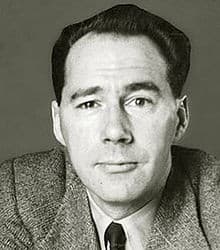
John Wyndham Parkes Lucas Beynon Harris was an English science fiction writer best known for his works published under the pen name John Wyndham, although he also used other combinations of his names, such as John Beynon and Lucas Parkes. Some of his works were set in post-apocalyptic landscapes. His best known works include The Day of the Triffids (1951), filmed in 1962, and The Midwich Cuckoos (1957), which was filmed in 1960 as Village of the Damned, in 1995 under the same title, and again in 2022 in Sky Max under its original title.
Similar books
- Brave New World
Aldous Huxley
4.0 (1.4M) average on GoodreadsFantasyExplores a dystopian society with rigid social stratification and control over human nature.
- The Giver
Lois Lowry
4.1 (1.8M) average on GoodreadsFantasyFeatures a young protagonist in a seemingly utopian, but ultimately oppressive, community who discovers a hidden truth.
- On the Beach
Nevil Shute
3.9 (35k) average on GoodreadsScience FictionShute's novel focuses on the slow, inevitable extinction of humanity post-nuclear war, emphasizing external environmental threats and a sense of resigned despair. The Chrysalids, in contrast, focuses on the internal reconstruction of society under extreme ideological constraints, exploring how survivors build new social structures and belief systems, and the internal conflicts arising from them.
- Lord of the Flies
William Golding
3.7 (2.3M) average on GoodreadsYoung AdultGolding's work explores the inherent savagery and breakdown of civilization when humans are isolated from societal rules. The Chrysalids offers a different perspective, suggesting that humanity's greatest threat often comes from its own rigid adherence to perceived purity and the fear of difference, rather than an innate capacity for evil. The 'monstrosity' in Wyndham's novel is a social construct, whereas in Golding's, it is an internal human failing.
- Harry Potter and the Sorcerer's Stone
J.K. Rowling
4.5 (7M) average on GoodreadsFantasyRescued from a miserable life under the stairs, an orphaned boy discovers he's a wizard destined for a magical school, where he uncovers a dangerous secret tied to the dark wizard who murdered his parents.
- The Hunger Games
Suzanne Collins
4.3 (6.4M) average on GoodreadsFantasyIn a future where children fight to the death on live television, Katniss Everdeen volunteers for the arena, turning a death sentence into a fight for survival and a spark of rebellion.





Enjoyed the summary?
A summary gives you the shape of the book. The book itself has the detail, the examples and the voice.
Find The Chrysalids on AmazonAs an Amazon Associate, BookBrief earns from qualifying purchases. How we're funded