
Synopsis
Covers the whole plot, including the ending.
- Difficulty
- Easy
- Pacing
- Moderate
- Mood
- Heartbreaking, Hopeful, Resilient, Reflective
- Read it if
- You want a poignant story about resilience, family, and the impact of war on children, set against the backdrop of the Cambodian refugee crisis.
- Skip it if
- You prefer fast-paced action or stories without significant emotional hardship and separation.
The Clay Marble Plot Summary
Covers the whole plot, including the ending.
The Journey to Nong Chan
Dara, a spirited twelve-year-old Cambodian girl, her mother, and older brother, Sarun, must leave their home village. They join many other refugees, traveling by ox-cart and on foot, facing hardship and danger. Their goal is Nong Chan, a large refugee camp on the Thai-Cambodian border, said to be safe and where food is given out. During the hard journey, Dara's family meets other displaced villagers, including the kind Uncle Neang, his wife, and their young son, Jantu, who becomes Dara's closest friend. The journey is full of fear of soldiers and the constant threat of hunger and sickness, but the hope of safety keeps them moving.
Arrival at the Refugee Camp
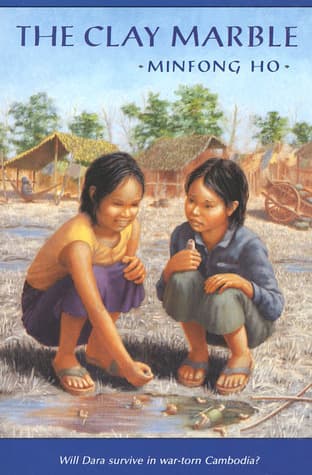
When they arrive at Nong Chan, Dara and her family are overwhelmed by the many people and the camp's temporary nature. They quickly build a simple shelter from found materials. Despite the poor conditions and constant hunger, a community starts to form among the refugees. Dara finds comfort and joy in her friendship with Jantu, a girl her age who is creative and strong. Jantu teaches Dara to make beautiful clay marbles, putting wishes and dreams into them, a small act of creation in the destruction. Sarun, Dara's brother, struggles with losing their home and the responsibility he feels for his family, often arguing with his mother.
The Friendship with Jantu
Dara and Jantu spend their days exploring the camp, collecting scraps, and sharing their hopes for the future. Jantu, with her imagination, creates a magical world around their clay marbles, each one holding a wish or memory. She teaches Dara to find beauty and hope even in their difficult situation. They often talk about going home, a dream that seems far away. Sarun, meanwhile, becomes more withdrawn, burdened by the need to protect his family and the shame of their poverty. He tries to find work, often without success, and struggles with feeling helpless, unlike Dara and Jantu's more hopeful view.
Sarun's Despair and Departure
As conditions in Nong Chan worsen, Sarun's despair grows. He sees no future for his family in the camp and feels a strong duty to provide for them. Despite his mother's pleas and Dara's sadness, Sarun decides to leave Nong Chan. He hopes to find work or join a group that promises a way to rebuild their lives, perhaps even get their family's cow, which they left in their village. His leaving makes Dara and her mother feel even more vulnerable and alone. Dara holds the clay marble Jantu made for her, a symbol of her brother's hope and her own wish for his safe return. His mother constantly worries about his safety.
The Return of the Soldiers
Just as the refugees start to get used to life in Nong Chan, the distant sound of artillery fire signals more conflict. Soldiers, both Cambodian and Thai, fight near the border, causing panic in the camp. The sound of gunfire gets closer, and the camp falls into chaos as people quickly gather their few belongings and try to run again. Dara, her mother, and Jantu's family are caught in the rush. The fear and confusion are huge, like their first flight from their village. The camp, once thought safe, becomes a new battleground, and the refugees are again displaced.
Separation and Loss
In the chaos of the camp's evacuation, Dara gets separated from her mother and Jantu. In the crowd, she loses sight of them and finds herself alone, swept along by the terrified people. The experience is frightening and confusing. She calls out for her mother, but her voice is lost in the noise. Holding her one clay marble, Dara must travel the dangerous, war-torn land by herself, feeling a deep loss and loneliness. She sees the horrors of war, including wounded soldiers and destroyed land. Her survival instincts take over as she tries to find a safe place.
Dara's Journey Alone
Alone and scared, Dara starts a desperate search for her mother and Jantu. She wanders through the damaged land, meeting other lost and frightened refugees, but no familiar faces. Her journey is full of danger: she avoids soldiers, finds food, and endures the harsh weather. The clay marble, a gift from Jantu, becomes her most important possession, a link to her lost friend and a symbol of hope. She remembers Jantu's stories and her strength, getting courage from their bond. Dara's resourcefulness and determination are tested as she faces the realities of survival in a war zone, always holding onto the hope of reunion.
Meeting Chnay and the Cow
During her solitary journey, Dara finds a familiar sight: her family's cow, which they had left in their village. To her surprise, a young boy named Chnay, also a refugee, is taking care of the animal. Chnay is careful around Dara at first, but they soon form an alliance. Dara realizes that Chnay has been using the cow to carry goods and survive. The cow, once a symbol of their lost home, now represents a way to survive and a connection to her family. Dara and Chnay decide to travel together, each with their own reasons for protecting the cow.
The Search for Sarun
Dara learns that Sarun, her brother, might be at a different refugee camp, further into Thailand. With Chnay and the cow, she begins another difficult journey, driven by the renewed hope of finding her brother. Their journey is slow and dangerous, but the shared care of the cow and their mutual wish for safety create a bond between them. Dara tells Chnay about her family and Jantu, and he shares some of his own story. The cow is important for their survival, giving milk and transport. They face challenges from the environment and other desperate refugees, but their shared goal keeps them moving.
Reunion with Sarun
After a long and dangerous journey, Dara and Chnay reach the new refugee camp. To Dara's great relief, she finds Sarun. But the reunion is mixed. Sarun is thinner, hardened by his experiences, and at first does not want to acknowledge Dara, perhaps from shame or the emotional toll of his journey. He has been working with a group, trying to make a life for himself. Dara, however, is happy to see him and tells him about their mother and the cow. She shares her clay marble, a symbol of their past and her lasting hope. The reunion is emotionally complex, as both siblings deal with the trauma they have faced.
The Promise of a New Start
Dara slowly helps Sarun reconnect with their past and the hope of finding their mother. The cow, a link to their home, helps bridge the emotional distance between them. Sarun, seeing Dara's strength and the cow's survival, begins to soften. They start a small life in the new camp, working together. Dara keeps holding onto the clay marble, a symbol of Jantu's spirit and her own belief in hope and family. They live with constant worry for their mother, but the reunion of the siblings offers a hint of a new beginning amid the ongoing uncertainty of their refugee lives.
The Clay Marble Characters
Dara
Protagonist
A resilient and hopeful Cambodian girl, navigating the chaos of war.
Dara is a twelve-year-old girl, initially somewhat naive but possesses an incredible inner strength and optimism. She is deeply attached to her family and her friend Jantu. Despite the horrors of war and displacement, she maintains a hopeful spirit, finding beauty in small things and holding onto the belief that her family will be reunited. Her journey forces her to mature quickly, developing resourcefulness and courage. She is observant and compassionate, often reflecting on the human condition amidst suffering. Her most prized possession is the clay marble from Jantu, symbolizing hope and connection.
Relationships: Sarun (Younger sister, deeply cares for him despite his moods.); Mother (Loving daughter, dependent on her mother's guidance and protection.); Jantu (Best friend, shares a deep bond of imagination and mutual support.); Chnay (Travel companion and friend, forms an alliance for survival.)
Sarun
Supporting
Dara's older brother, burdened by responsibility and the trauma of war.
Sarun is Dara's older brother, a young man who feels the immense pressure of protecting his family after their displacement. He is initially strong and responsible but becomes increasingly withdrawn, despairing, and hardened by their circumstances. He struggles with feelings of inadequacy and the shame of their poverty, leading him to make difficult decisions, such as leaving the camp to find work. His experiences make him emotionally distant, but he still cares deeply for his family. He represents the emotional toll war takes on young men trying to maintain traditional roles.
Relationships: Dara (Older brother, protective but often distant due to his own struggles.); Mother (Son, feels responsible for her well-being but also frustrated by their situation.)
Jantu
Supporting
Dara's imaginative and optimistic best friend.
Jantu is Dara's best friend in the Nong Chan refugee camp. She is imaginative, spirited, and resilient, possessing a remarkable ability to find beauty and magic in their harsh surroundings. She teaches Dara how to make clay marbles, each imbued with a wish or a dream, providing a vital source of hope and creative expression. Jantu's optimism and resourcefulness serve as a powerful influence on Dara, even after their separation. She embodies the innocence and enduring spirit of children caught in conflict, creating a world of wonder to escape the harsh reality.
Relationships: Dara (Best friend, shares a deep, transformative bond.)
Dara's Mother
Supporting
A loving and resilient mother, focused on her children's survival.
Dara's mother is a strong, traditional Cambodian woman who prioritizes the safety and well-being of her children above all else. She endures the hardships of displacement with quiet dignity and unwavering love. She provides comfort and guidance to Dara and tries to keep Sarun from despair. Her separation from Dara is a driving force for Dara's journey, and her presence (or absence) deeply impacts both her children. She represents the enduring strength of maternal love and the devastating impact of war on families.
Relationships: Dara (Mother, provides comfort, wisdom, and protection.); Sarun (Mother, worries for his safety and tries to guide him.)
Chnay
Supporting
A resourceful and independent refugee boy who helps Dara.
Chnay is a young refugee boy Dara encounters during her journey alone. He is initially wary and independent, having survived by his wits and by caring for Dara's family cow. He is practical and resourceful, focused on immediate survival. Despite his initial gruffness, he forms an alliance with Dara, and his shared journey with her slowly reveals a deeper compassion and sense of companionship. He represents the countless displaced children forced to grow up quickly and adapt to harsh realities.
Relationships: Dara (Travel companion and friend, forms an alliance for survival.)
Uncle Neang
Supporting
A kind and wise elder, Jantu's father.
Uncle Neang is Jantu's father and a kind, supportive figure to Dara and her family during their initial journey and time in Nong Chan. He offers practical advice and emotional support, embodying the community spirit that emerges among refugees. He is a source of wisdom and calm amidst the chaos, reflecting the resilience of the Cambodian people and their ability to maintain dignity in the face of adversity. His family's presence provides a temporary sense of security for Dara's family.
Relationships: Dara (Friendly elder, offers guidance and support.); Jantu (Father, cares deeply for his daughter.)
The Clay Marble Themes
The Resilience of the Human Spirit
Despite great loss, displacement, and constant danger, characters like Dara and Jantu show a strong capacity for hope, adapting, and finding joy in small moments. Dara's search for her family and her ability to make new friends, even after trauma, show this theme. Jantu's creation of the clay marbles, filling them with wishes, shows an act of hope and imagination in despair. Even Sarun, after his initial sadness, starts to reconnect and find purpose, showing the human will to survive and rebuild.
“Even in the midst of sorrow, there is always hope, like a tiny seed waiting for the rain.”
The Power of Family and Friendship
The novel shows how important family and friends are as anchors in a chaotic world. Dara's love for her mother and Sarun, and her friendship with Jantu, are central to her motivation and survival. The pain of being separated from her family drives her journey, and the reunion with Sarun, though complicated, is very important. The bond between Dara and Jantu, shown by the clay marble, provides comfort and strength, showing how human connection can help people through the hardest parts of war and displacement.
“The marble was more than just clay. It was a wish, a promise, a piece of Jantu.”
Loss and Displacement
The story is shaped by the theme of loss, including the loss of home, safety, innocence, and loved ones. The refugees are always fleeing, losing their possessions, their way of life, and their sense of belonging. Dara experiences the trauma of being separated from her mother and best friend, and Sarun deals with losing his family's honor and stability. The novel shows the psychological and emotional impact of being uprooted, how people mourn not just others, but also the world they once knew, and the struggle to find a new identity in a foreign land.
“The war had taken everything, even the memories of what peace felt like.”
The Search for Identity and Belonging
As refugees, the characters lose their old identities and must redefine themselves in a new, uncertain place. Sarun struggles with losing his traditional role and the shame of their poverty. Dara, though young, also deals with her place in the world, relying on her memories and the few connections to her past. The journey itself is not just physical but also a search for a new sense of belonging, whether in a refugee camp or in the imagined return to their homeland. The cow, a symbol of their past, becomes a link to their roots, helping them keep a sense of self amid displacement.
“Where was home now? Was it a place, or was it the people you loved?”
Plot Devices & Literary Techniques
The Clay Marble
A tangible symbol of hope, friendship, and cherished memories.
The clay marble, made by Jantu and given to Dara, serves as a powerful symbol throughout the novel. It represents Jantu's imaginative spirit, the enduring bond of friendship, and the persistent hope for a better future. When Dara is separated from her family, the marble becomes her most precious possession, a tangible link to her lost friend and a reminder of the dreams they shared. It provides comfort and strength, embodying the resilience and magic that can be found even in the bleakest circumstances. Its small, fragile nature contrasts with the overwhelming destruction of war, highlighting the power of small acts of creation and hope.
The Family Cow
A symbol of home, tradition, and a means of survival.
The family cow, initially left behind in their village, reappears later in the story, becoming a crucial plot device. It symbolizes the characters' lost home and their connection to their agricultural past. Its rediscovery and subsequent journey with Dara and Chnay provide a tangible link to their roots and a practical means of survival through its milk and transport capabilities. The cow's presence also acts as a catalyst for interaction between Dara and Chnay, and later helps to bridge the emotional distance between Dara and Sarun, grounding them in a shared past and offering a glimmer of future stability.
The Refugee Camps (Nong Chan and others)
Settings that represent both temporary sanctuary and ongoing vulnerability.
The refugee camps, particularly Nong Chan, serve as critical settings that are both places of temporary sanctuary and stark reminders of the characters' vulnerability. They represent the collective experience of displacement, offering a sense of community amidst shared hardship, but also exposing the refugees to overcrowding, scarcity, and the ever-present threat of renewed conflict. The camps highlight the precariousness of their existence, as even these supposed safe zones can quickly become dangerous. They force characters to adapt, form new social structures, and confront the harsh realities of their new lives, constantly living on the edge of hope and despair.
The Clay Marble Quotes
“The wind always blew the smoke from our cooking fires into our faces, no matter which way we turned.”
“It was just a piece of clay, but it was my brother.”
“War makes everyone a child again, in a way. You have to depend on others, and you're afraid of the dark.”
“Even in the midst of everything, there was still beauty. A butterfly landing on a wilting flower, a child's laughter.”
“Sometimes, the smallest things held the biggest memories.”
“We had lost our homes, our fields, our peace. But we still had each other.”
“The jungle was both a protector and a threat.”
“Fear was a constant companion, a shadow that never left us.”
“It was hard to remember what a normal life felt like, before the war.”
“The taste of freedom was sweeter than any food.”
“Even when you think you've lost everything, there's always something left to fight for.”
“The stories we tell each other keep us alive.”
“Children, even in war, still find ways to play. It's how they cope.”
“The clay marble was a piece of home, a piece of hope, a piece of him.”
Quiz
10 questions on the plot and the characters. Each answer comes with a short explanation.
Question 1
What is the name of the main character in 'The Clay Marble'?
- Sok
- Jantu
- Dara
- Nea
Show answer
C. Dara Dara is the young protagonist of the story, who gets separated from her family.
Question 2
In what country does Dara's family initially seek refuge?
- Vietnam
- Laos
- Thailand
- China
Show answer
C. Thailand Dara's family, along with many other refugees, flees to a settlement on the Thailand border.
Question 3
What significant item does Dara create from clay, which gives the book its title?
- A small doll
- A clay marble
- A miniature house
- An animal figurine
Show answer
B. A clay marble Dara makes a clay marble, which becomes a symbol of hope and connection throughout her journey.
Question 4
What causes Dara to become separated from her mother and brother?
- She gets lost while foraging for food.
- A sudden attack and eruption of fighting at the refugee camp.
- Her family sends her to look for her aunt.
- She is taken by soldiers during an inspection.
Show answer
B. A sudden attack and eruption of fighting at the refugee camp. The outbreak of fighting at the refugee settlement causes the chaotic separation of Dara from her family.
Question 5
Who is Jantu, and what is her relationship with Dara?
- Jantu is Dara's older sister, who helps her escape.
- Jantu is a new friend Dara makes at the refugee camp, who becomes like a sister.
- Jantu is a kind aid worker who helps Dara find her family.
- Jantu is Dara's cousin, whom she reunites with by chance.
Show answer
B. Jantu is a new friend Dara makes at the refugee camp, who becomes like a sister. Jantu is a girl Dara meets and befriends in the refugee camp; their bond becomes central to Dara's survival and emotional support.
Question 6
What is the significance of the 'clay marble' beyond being a toy?
- It is a valuable item they can trade for food.
- It represents Dara's lost childhood and innocence.
- It symbolizes hope, resilience, and the possibility of finding family and home.
- It is a charm believed to protect against evil spirits.
Show answer
C. It symbolizes hope, resilience, and the possibility of finding family and home. The clay marble becomes a powerful symbol of enduring hope, the strength of human connection, and the dream of returning to a peaceful life.
Question 7
What skill does Dara learn from Jantu that becomes crucial for their survival?
- How to read and write in Thai.
- How to set snares and traps for small animals.
- How to navigate using the stars.
- How to barter goods at the market.
Show answer
B. How to set snares and traps for small animals. Jantu teaches Dara practical survival skills, including how to set snares, which helps them find food during their journey.
Question 8
How does Dara eventually reunite with her family?
- She is found by a search party organized by aid workers.
- She follows a trail of clues left by her brother.
- She finds them by chance in a different refugee camp, recognized by her clay marble.
- Her mother and brother return to the original camp and find her there.
Show answer
C. She finds them by chance in a different refugee camp, recognized by her clay marble. Dara eventually finds her family in another camp, and the clay marble she made helps in their recognition and reunion.
Question 9
What overarching theme about war and its impact on children is conveyed through Dara's experiences?
- War primarily leads to a loss of national identity.
- War forces children to mature quickly and adapt to harsh realities, often losing their innocence but gaining resilience.
- War inevitably destroys all hope and human connection.
- War makes children forget their past and embrace new cultures.
Show answer
B. War forces children to mature quickly and adapt to harsh realities, often losing their innocence but gaining resilience. Dara's journey highlights how war thrusts children into survival mode, forcing them to confront immense challenges, yet also showcasing their remarkable resilience and capacity for hope and connection.
Question 10
What is the historical context of the story, set in 1980?
- The Vietnam War.
- The Cambodian-Vietnamese War and the ongoing conflict and refugee crisis in Cambodia.
- The Cold War.
- The Cambodian Civil War of the early 1970s.
Show answer
B. The Cambodian-Vietnamese War and the ongoing conflict and refugee crisis in Cambodia. The story is set during the aftermath of the Khmer Rouge regime and the Cambodian-Vietnamese War, leading to a significant refugee crisis on the Thai-Cambodian border around 1980.
The Clay Marble FAQ
What is the central conflict Dara faces at the beginning of 'The Clay Marble'?
At the story's outset, Dara and her family are forced to flee their village in Cambodia due to the escalating war between the Vietnamese and Khmer Rouge forces. They embark on a perilous journey to the Khao-I-Dang refugee camp on the Thai border, seeking safety and sustenance amidst widespread displacement and violence.
Who are the key members of Dara's immediate family in the story?
Dara travels with her mother, who is a source of quiet strength and traditional wisdom, and her older brother, Sarun. Sarun is initially protective but later struggles with his own identity and the harsh realities of war, leading to a significant character arc.
How does Nea, Dara's older cousin, influence Dara's journey and understanding of the world?
Nea, Sarun's fiancée, represents a more modern and practical perspective compared to Dara's traditional upbringing. She encourages Dara's independence and resourcefulness, teaching her practical skills like trading, which proves vital when Dara is separated from her family.
What significant event leads to Dara's separation from her family in the refugee camp?
During a fierce battle that erupts near the Khao-I-Dang camp, causing chaos and panic, Dara gets separated from her mother, Sarun, and Nea. This traumatic event forces her to navigate the dangerous borderlands alone, relying on her wits and newfound courage.
What is the significance of the 'clay marble' that Dara carries throughout her journey?
The clay marble is a small, seemingly insignificant toy that Dara makes early in the story. It symbolizes her connection to home, family, and a sense of normalcy, serving as a tangible reminder of what she has lost and a source of comfort and determination during her darkest moments.
How does the author subtly introduce the political complexities of the Cambodian conflict beyond just the immediate fighting?
The author hints at the broader political landscape through conversations among adults about different factions, the presence of various aid organizations, and the refugees' differing hopes for the future of Cambodia. These details, though not always fully understood by Dara, paint a picture of a nation deeply divided and influenced by external powers.
What role do the aid workers and international organizations play in the refugee camp, and how is this depicted?
Aid workers are shown providing essential services like food, medicine, and shelter, which are crucial for the refugees' survival. However, the narrative also subtly portrays the challenges and limitations of aid, such as the impersonal nature of distributions and the occasional misunderstandings between aid workers and the Cambodian people.
Are there any symbolic recurring motifs or objects besides the clay marble that add depth to the story?
The motif of 'rice' frequently appears, representing not just sustenance but also hope, survival, and the desire for a stable future. The constant search for and sharing of rice underscores the precariousness of life as a refugee and the importance of community.
How does Dara's perspective on her brother, Sarun, evolve from the beginning to the end of the book?
Initially, Dara views Sarun as her strong, protective older brother. As the story progresses, she witnesses his struggles with disillusionment, his brief alliance with a group of soldiers, and his eventual return to his family, leading her to understand his vulnerabilities and the immense pressures he faces.
What psychological impact does the constant threat of war and displacement have on Dara?
Dara experiences profound fear, loss, and loneliness, but also develops remarkable resilience and resourcefulness. The constant uncertainty forces her to mature quickly, adapting to new situations and making difficult decisions that challenge her childlike innocence.
How does the story explore the themes of identity and belonging for the Cambodian refugees?
The refugees grapple with losing their homes, their traditions, and their sense of self in the camps. Sarun's struggle to find purpose and his brief flirtation with joining a fighting faction highlight the search for identity, while Dara's unwavering connection to her family and the clay marble shows a different path to belonging.
What coping mechanisms do Dara and other children in the camp employ to deal with their trauma?
Dara finds solace in her imagination and the symbolic comfort of her clay marble. Other children are shown playing games, forming friendships, and performing small acts of kindness, all of which serve as vital ways to maintain a sense of normalcy and connection amidst their harsh realities.
Is 'The Clay Marble' primarily a story about survival, or does it delve deeper into themes of hope and rebuilding?
While survival is a dominant theme, the book ultimately emphasizes hope and the resilience of the human spirit. Dara's journey, her unwavering belief in finding her family, and the eventual reunion suggest that even in the darkest times, the possibility of rebuilding lives and communities persists.
How does the ending of the book offer a sense of closure, despite the ongoing political instability?
The ending provides emotional closure by reuniting Dara with her family, signifying the restoration of her personal world. While the broader political conflict remains unresolved, the family's shared determination to return to Cambodia and rebuild their lives offers a powerful message of enduring hope and commitment to their homeland.
What message does the author convey about the strength of family bonds in times of extreme adversity?
The author strongly emphasizes that family bonds are paramount and a crucial source of strength. Despite separations, disagreements, and the overwhelming challenges of war, the desire to reunite and support one another remains the driving force for Dara and her family, highlighting the enduring power of kinship.
How does Dara's growth from a naive child to a resourceful young girl challenge traditional gender roles in Cambodian society?
Dara's journey forces her to take on responsibilities typically associated with adults or even boys, like navigating dangerous territories and making independent decisions. Her resourcefulness and courage demonstrate that girls, even in traditional societies, can exhibit immense strength and capability when faced with extraordinary circumstances.
Could Sarun's brief involvement with the soldiers be interpreted as a necessary rite of passage for him, given the circumstances?
Sarun's decision can be seen as a desperate attempt to find meaning and agency in a world where he feels powerless, perhaps a distorted rite of passage. While misguided, it reflects the psychological toll of war on young men and their struggle to define their role amidst chaos, ultimately leading him back to his family.
What is the significance of Dara's eventual decision to share her clay marble with another child?
Dara sharing her treasured clay marble signifies her profound growth from a child clinging to personal comfort to someone capable of empathy and sharing hope. It represents her understanding that connection and shared resilience are more powerful than individual possessions, embodying the spirit of community and healing.
Similar books
- Harry Potter and the Sorcerer's Stone
J.K. Rowling
4.5 (7M) average on GoodreadsFantasyRescued from a miserable life under the stairs, an orphaned boy discovers he's a wizard destined for a magical school, where he uncovers a dangerous secret tied to the dark wizard who murdered his parents.
- The Hobbit, or There and Back Again
J.R.R. Tolkien
4.3 (2.9M) average on GoodreadsFantasyA comfort-loving hobbit named Bilbo Baggins is whisked away by a mischievous wizard and a band of dwarves on an unexpected journey to reclaim stolen treasure from a fearsome dragon, discovering courage and a magical ring along the way.
- Harry Potter and the Goblet of Fire
J.K. Rowling
4.6 (2.6M) average on GoodreadsFantasyA bewildered Harry Potter, underage and thrust into a deadly Triwizard Tournament, must brave dragons, mermaids, and a resurgent dark magic to survive a year that will forever alter the wizarding world.
- Harry Potter and the Order of the Phoenix
J.K. Rowling
4.5 (2.5M) average on GoodreadsFantasyIn a year of oppressive secrets and the threat of Voldemort, Harry Potter and Dumbledore's Army secretly train for war, shown through Jim Kay and Neil Packer's dark illustrations.
- The Lightning Thief
Rick Riordan
4.3 (2M) average on GoodreadsFantasyThrust into a world of mythological monsters and divine treachery, an ordinary boy discovers he's the son of Poseidon and must embark on a perilous quest across modern America to prevent an Olympian war.
- The Giver
Lois Lowry
4.1 (1.8M) average on GoodreadsFantasyIn a world where everyone is the same, a young boy named Jonas learns about true memory, forcing him to see the cost of his community's peaceful ignorance.






Enjoyed the summary?
A summary gives you the shape of the book. The book itself has the detail, the examples and the voice.
Find The Clay Marble on AmazonAs an Amazon Associate, BookBrief earns from qualifying purchases. How we're funded