
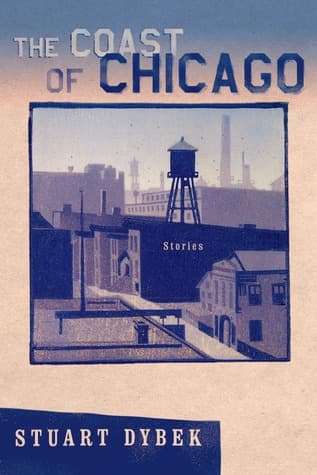
Synopsis
Covers the whole plot, including the ending.
- Difficulty
- Medium
- Pacing
- Slow
- Mood
- Atmospheric, Melancholy, Lyrical, Nostalgic, Evocative
- Read it if
- You appreciate literary short stories that blend realism with poetic, dreamlike elements, focusing on character and atmosphere over plot.
- Skip it if
- You prefer fast-paced, plot-driven narratives or clear-cut resolutions.
The Coast of Chicago Plot Summary
Covers the whole plot, including the ending.
Chopin in Winter
The story introduces a young Polish-American boy in a crowded Chicago apartment building. He is drawn to the sad piano music, often Chopin, that comes from a mysterious woman's apartment upstairs. He imagines her life, beauty, and sorrow, comparing it to his family's daily struggles and his neighborhood's active street life. The music becomes a sign of a more refined world beyond his reach, but it deeply shapes his inner world and his understanding of human feelings, especially loss and longing. He often sees an older man, Mr. Czernek, who also seems drawn to the music, creating a silent, shared experience among the building's residents.
Hot Ice
A young narrator tells about his experiences with older boys who steal small items, mainly hubcaps and car parts. He joins their world, excited by the thrill and danger, but also uneasy about their casual cruelty and unclear morals. The story ends with a dramatic scene where the boys try to steal 'hot ice' – actual ice from a delivery truck – on a hot summer day. This seemingly childish act holds surprising weight and reveals the harsh realities of their lives and the subtle line between play and misbehavior. The narrator sees the vulnerability and desperation beneath the older boys' tough act, especially their leader, Fats.
The Coast of Chicago
The main story follows a young boy's imaginative and real journeys through Chicago's varied, often surreal, settings. He explores the city's hidden places, from industrial areas to the lakefront, seeing them with wonder and growing understanding. The 'coast' refers not just to Lake Michigan but to the distinct, almost mythical quality of the city's urban environment, where everyday objects and scenes become very important. He meets various unusual characters and watches the quiet dramas of city life, strengthening his connection to the place and its mix of grit and magic. The story focuses on the boy's inner world, where reality and imagination blur.
The Field
This story centers on a specific baseball field in a working-class Chicago neighborhood, a place where many generations of boys and men have played, dreamed, and found their identities. The field is more than just grass; it holds memories, successes, and failures. It becomes a special place, seeing life's milestones and the quiet dramas of ordinary lives. The story combines tales of various players, their quirks and legends, and the lasting power of the game to unite and define the community. The story also touches on the bittersweet passing of time and the changes that might erase such cherished places, showing the field's role in keeping a sense of history and belonging.
Breeze
A young man, perhaps in his late teens or early twenties, meets a beautiful and mysterious woman in a bar or by chance. Their interaction is brief but full of unspoken desire and a feeling of brief possibility. The woman, named Breeze, embodies an appealing freedom and mystery that captivates the narrator. Their connection is more about atmosphere than clear details, leaving him with a deep sense of longing and a feeling of a life he might have had or a connection that almost happened. The story looks at missed chances, the power of attraction, and how certain meetings can leave a lasting mark on one's imagination, even if they never become a full relationship.
Death of the Right Fielder
A seemingly ordinary right fielder for a local team dies suddenly and unexpectedly during a game, hit by a stray bullet from a distant, unrelated event. His death, sudden and meaningless, turns him from an average player into a legendary figure, a martyr to the game and the neighborhood. The community struggles with the randomness of his death, projecting their own hopes, fears, and interpretations onto his memory. The story explores how communities create myths and meaning when faced with tragedy, and how a person's life, no matter how ordinary, can become very important in death, especially when it relates to a shared passion like baseball. His death becomes a focus for the neighborhood's grief and shared identity.
Pet Milk
The narrator, an adult man, remembers a specific, clear memory from his youth involving a girl he loved and a simple can of Pet Milk. This memory, seemingly unimportant, becomes a strong link to his past, bringing up deep feelings of nostalgia, loss, and the bittersweet nature of young love. The specific details – the taste of the milk, the girl's presence, the setting – are filled with intense emotional meaning. The story explores how certain sensory details can bring back many memories, and how the past continues to shape the present, even when relationships have long ended. It is a moving reflection on the fragility of happiness and the lasting weight of first loves.
Nighthawks
Inspired by Edward Hopper's painting, this story follows a young man's observations of Chicago's nightlife, especially the lonely people and quiet dramas in late-night diners and streets. He becomes a detached observer, thinking about the loneliness, connections, and hidden lives of the city's residents. The story captures a sense of urban sadness and the subtle beauty found in ordinary and overlooked things. He projects his own feelings and imaginings onto the strangers he sees, creating a picture of connected, yet isolated, lives. The story creates a mood of quiet thought and a search for meaning in the city's anonymity after dark.
The Woman Who Fainted
A young boy sees a woman faint dramatically in a public place, possibly a church or a store. This seemingly small event deeply affects him, stirring his imagination and a sense of wonder about the hidden lives and weaknesses of adults. He guesses about the woman's reasons, her inner world, and the sudden, public showing of her fragility. The incident becomes a trigger for his growing understanding of human complexity, life's unexpectedness, and the mysteries beneath everyday appearances. It highlights how seemingly small events can leave a lasting impression on a child's developing mind and view of the world.
Neighborhood Drunk
The story shows a young boy's observations and interactions with the neighborhood drunk, a familiar and often sad figure. The boy's feelings are a mix of fear, curiosity, and a beginning understanding of the man's suffering. He witnesses the man's public struggles, the community's reactions, and the quiet dignity the man sometimes keeps despite his condition. The story explores themes of compassion, judgment, and the complex realities of poverty and addiction within a close community. The boy's view offers a nuanced perspective, moving beyond simple disapproval to a more empathetic, though still child-like, grappling with human weakness and life's harshness.
Principal Figures
The Narrator (various iterations)
Protagonist
A young, imaginative boy growing into a reflective man in Chicago.
The central consciousness across many stories, often a young Polish-American boy from a working-class Chicago neighborhood. He is highly observant, imaginative, and sensitive, internalizing the sights, sounds, and dramas of his urban environment. His curiosity drives him to explore the city's hidden corners and the complexities of human behavior. He grapples with innocence and experience, constantly seeking meaning in the mundane and the extraordinary. He is often a witness to events rather than a direct participant, processing the world through a poetic, slightly melancholic lens.
Relationships: His Family (Loving but sometimes distant, representing stability and tradition.); Neighborhood Kids (Peers and friends, sometimes leading him into mischief, representing the raw energy of youth.); Mysterious Woman (Chopin in Winter) (An object of fascination and romanticized sorrow.); Breeze (Breeze) (A fleeting, desired romantic connection.)
Fats
Supporting
The leader of a group of older boys involved in petty crime.
Fats is an older, more street-hardened boy who leads the narrator and other younger kids into small acts of delinquency, like stealing hubcaps. He embodies a blend of bravado, cunning, and underlying vulnerability. He is a product of his tough urban environment, navigating it with a mix of defiance and a desire for control. While he instigates mischief, there's often a glimpse of the pressures and responsibilities he carries, making him a complex figure rather than a simple antagonist. He represents the allure and danger of the streets for the younger boys.
Relationships: The Narrator (Mentor/leader figure in petty crime.); Other Boys (His followers and accomplices.)
The Mysterious Woman (Chopin in Winter)
Supporting
An enigmatic pianist whose music fills the tenement airshaft.
She is primarily a figure of imagination and projection for the young narrator. Her identity is largely unknown, but her piano music, often Chopin, profoundly impacts the boy. She symbolizes beauty, sorrow, and a world of refined emotion that contrasts with the grittiness of the tenement. She is a catalyst for the boy's burgeoning understanding of art and human suffering, representing a romanticized ideal of feminine mystery and artistic expression. Her presence, though mostly heard, is deeply felt and shapes the atmosphere of the building.
Relationships: The Narrator (Object of fascination and inspiration.); Mr. Czernek (Shared, silent listener to her music.)
Mr. Czernek
Supporting
An older neighbor who shares a silent appreciation for the piano music.
Mr. Czernek is an older, quiet man who lives in the same tenement as the narrator in 'Chopin in Winter.' He is often seen listening to the mysterious woman's piano music, sharing a silent, unspoken bond with the narrator through their mutual appreciation. He represents the older generation, carrying the weight of experience and perhaps a similar sense of longing or nostalgia. His presence reinforces the idea of shared human experience and the subtle connections that exist between strangers in close quarters.
Relationships: The Narrator (Shared appreciation for music, unspoken understanding.); Mysterious Woman (Listener to her music.)
Breeze
Supporting
A captivating woman encountered by a young man, representing fleeting desire.
Breeze is a beautiful and enigmatic woman whom the narrator meets briefly in the story 'Breeze.' She embodies an alluring sense of freedom, mystery, and unfulfilled desire. Her presence is fleeting but intensely memorable, leaving a lasting impression on the narrator. She represents a 'what if' moment, a potential romantic connection that never fully materializes, highlighting the ephemeral nature of certain encounters and the enduring power of memory and longing. She is less a fully developed character and more a symbol of elusive beauty and missed opportunity.
Relationships: The Narrator (Brief, intense romantic interest.)
The Right Fielder
Supporting
An ordinary baseball player whose accidental death makes him a neighborhood legend.
Initially an unremarkable player, his sudden, tragic death by a stray bullet during a baseball game transforms him into a mythic figure for the community in 'Death of the Right Fielder.' He becomes a symbol of arbitrary fate, the fragility of life, and the way communities create meaning and heroes out of tragedy. His personal history is less important than the collective memory and interpretations that surround his death, making him a catalyst for the neighborhood's grief and shared identity. He represents the ordinary individual elevated to extraordinary status by circumstance.
Relationships: The Community (A shared symbol of tragedy and remembrance.)
The Girl (Pet Milk)
Supporting
The narrator's first love, a vivid memory from his youth.
She is the object of the narrator's youthful affection and a central figure in his poignant memory in 'Pet Milk.' While her individual personality isn't deeply explored, her presence in the narrator's past is powerful and enduring. She represents first love, innocence, and the bittersweet passage of time. Her interaction with the narrator, particularly their shared moment with the can of Pet Milk, becomes a touchstone for his adult reflections on love, loss, and the nature of memory. She is a symbol of a cherished, irretrievable past.
Relationships: The Narrator (First love and a cherished memory.)
The Neighborhood Drunk
Supporting
A tragic figure observed by a young boy, embodying human frailty.
A familiar, often pitiable figure in the neighborhood, the drunk is observed by the young narrator in 'Neighborhood Drunk.' He represents the harsh realities of addiction, poverty, and the human capacity for suffering. The community's reactions to him vary, from disdain to a grudging tolerance. Through the boy's eyes, he is seen not just as a stereotype but as a complex individual capable of moments of quiet dignity or profound sadness. He serves as a lesson for the boy about compassion, judgment, and the difficult truths of adult life.
Relationships: The Narrator (Object of observation and nascent empathy.); The Community (A marginalized but present figure.)
Themes & Insights
The Power of Imagination and Memory
Dybek's stories show how imagination turns ordinary reality into something magical or deep, and how memory shapes what we see. The young narrators often create detailed inner worlds for their surroundings, making bottle caps into tombstones ('The Coast of Chicago') or a woman's piano music into a story of sorrow ('Chopin in Winter'). Memories, like the can of Pet Milk, become vivid and real, and adult narrators re-examine them, showing their lasting emotional weight and how the past continues to influence the present, often with a bittersweet nostalgia. This theme suggests that reality is as much created internally as it is experienced externally.
“What does a man remember? Not the grand statements, but the details: the taste of Pet Milk, the color of a girl's dress, the way the light fell on a summer afternoon.”
The Urban Landscape as a Dreamscape
Chicago itself is a character in Dybek's collection, but it is often shown not just as a city, but as a space where the ordinary blends with the surreal. Apartment buildings, industrial areas, and even baseball fields take on mythical qualities. The 'coast' of Chicago is both real (Lake Michigan) and symbolic, representing the fluid boundary between reality and the subconscious. Everyday details, like the cold mist from an ice truck ('Hot Ice') or music from an airshaft ('Chopin in Winter'), become very important, turning the gritty urban environment into a place of wonder, mystery, and deep emotional meaning. This theme highlights the city's power to inspire both harsh reality and poetic escape.
“The city was always there, a presence, a kind of weather, changing its face with the seasons, but always the same underneath.”
Loss of Innocence and the Weight of Experience
Many stories follow the slow loss of childhood innocence as young narrators face the difficulties of the adult world. This is not always a dramatic fall, but a subtle gathering of observations and experiences: seeing small crimes ('Hot Ice'), dealing with tragedy ('Death of the Right Fielder'), or understanding others' quiet suffering ('Neighborhood Drunk'). The boys move from pure imagination to a more complex understanding of human weakness, morals, and death. This theme explores the bittersweet shift from childhood wonder to the sadder wisdom of adulthood, where beauty and sadness often mix.
“There was a time when everything was a game, even the dangerous things. And then, without knowing how, the games became real.”
The Search for Connection and Belonging
Despite the narrators' often solitary observations, a deep desire for connection runs through the collection. Characters are often drawn to others, whether through shared experiences (like listening to piano music in 'Chopin in Winter'), shared passions (the community bond of 'The Field'), or brief romantic meetings ('Breeze'). Even in anonymity, there is a sense of shared humanity among the city's residents. The stories explore the subtle ways people connect, or fail to connect, in a city, showing the longing for closeness and a place within a community, even when that connection is unspoken or only imagined.
“Sometimes, in the city, you felt alone even in a crowd, but other times, a shared glance, a phrase overheard, could make you feel part of something vast and ancient.”
Plot Devices & Literary Techniques
Sensory Details and Imagery
Vivid descriptions that immerse the reader in the physical and emotional landscape.
Dybek employs rich, evocative sensory details – the smell of pierogies, the sound of Chopin filtering through an airshaft, the taste of Pet Milk, the feel of hot asphalt. These details don't just describe; they imbue the setting and events with emotional weight, making the stories incredibly tactile and immediate. They serve to ground the often dreamlike narratives in a tangible reality, enhancing both the realism and the poetic quality of the prose. This device is crucial for creating the distinctive atmosphere of Chicago and for making the characters' internal experiences resonate deeply with the reader, often triggering a sense of nostalgia or recognition.
First-Person Perspective (Child/Adolescent Narrator)
Stories often told through the eyes of a young, imaginative protagonist.
Many of Dybek's stories are narrated by a young boy or adolescent, offering a unique, often unfiltered, and highly imaginative lens through which to view the world. This perspective allows for a blend of innocence and burgeoning understanding, where everyday events can take on mythic proportions and observations are imbued with a child's wonder and curiosity. It also allows for a gradual unveiling of the complexities and harsh realities of adult life, as the narrator's understanding evolves. The first-person perspective fosters intimacy and allows the reader to experience the world as a process of discovery and emotional growth.
Symbolism and Metaphor
Everyday objects and places are imbued with deeper, often poetic, meaning.
Dybek frequently uses symbolism to elevate mundane elements into profound representations. The 'coast of Chicago' itself is a metaphor for a liminal space between reality and imagination. A can of Pet Milk symbolizes lost love and the enduring power of memory ('Pet Milk'). A baseball field becomes a sacred ground for community and history ('The Field'). These symbols enrich the narratives, adding layers of meaning and inviting readers to contemplate the deeper, often universal, themes beneath the surface of specific events. This device transforms the specific experiences of working-class Chicago into resonant reflections on the human condition.
Non-Linear Narrative / Flashback
Stories often shift between past and present, blurring chronological time.
While not strictly non-linear in every story, many narratives feature an adult narrator reflecting on childhood memories, or a series of vignettes that are thematically linked rather than strictly chronological. This device emphasizes the role of memory in shaping identity and understanding. It allows Dybek to explore the lasting impact of past events on present consciousness and to weave together disparate moments into a cohesive emotional tapestry. The fluid movement through time contributes to the dreamlike quality of the collection, mirroring how memories often surface and intertwine in the mind.
The Coast of Chicago Quotes
“The wind off the lake carried the smell of popcorn and something else, something metallic and sweet, like blood.”
“The past was like a dream you kept trying to remember, but it kept slipping away, leaving only a feeling.”
“There were moments when the city seemed to breathe, a great mechanical beast exhaling its exhaust and its secrets.”
“Every street corner held a story, every alley a whispered confession.”
“The summer air was thick with the scent of hot asphalt and blooming jasmine, a strange and potent perfume.”
“You could almost hear the rustle of all the lives lived there, a collective sigh of longing and regret.”
“Childhood was a country you could never truly leave, no matter how far you traveled.”
“The city was a palimpsest, layers of history written over each other, never fully erased.”
“Sometimes the most ordinary things held the greatest magic, if you only knew how to look.”
“The blues wasn't just music; it was the sound of the city's soul, wailing its joys and its sorrows.”
“He carried the weight of the past like a worn-out coat, familiar and comforting, yet heavy.”
“The lake was a constant, a vast blue mirror reflecting the ever-changing sky and the unchanging city.”
“Even in the darkest corners, there was always a flicker of something beautiful, something resilient.”
“Time moved differently here, a slow, viscous current carrying moments along like fallen leaves.”
Quiz
10 questions on the plot and the characters. Each answer comes with a short explanation.
Question 1
In the story 'Chopin in Winter,' what instrument does the music heard through the airshaft come from?
- Violin
- Piano
- Clarinet
- Accordion
Show answer
B. Piano The story 'Chopin in Winter' explicitly mentions Chopin's music, which is primarily composed for piano, heard drifting through the airshaft.
Question 2
What common childhood item does the collection's description transform into 'tombstones of a graveyard'?
- Marbles
- Baseball cards
- Bottle caps
- Stones
Show answer
C. Bottle caps The book's description states, 'A child's collection of bottle caps becomes the tombstones of a graveyard,' highlighting the imaginative transformation of everyday objects.
Question 3
What is a prominent theme explored in many of Dybek's stories in 'The Coast of Chicago'?
- The mundane reality of suburban life
- The transformation of reality into the dreamlike and otherworldly
- The challenges of corporate ambition
- Historical events of the American Civil War
Show answer
B. The transformation of reality into the dreamlike and otherworldly The overarching theme described is how 'The stolid landscape of Chicago suddenly turns dreamlike and otherworldly,' blending reality with imagination.
Question 4
In the story 'The Coast of Chicago,' what specific body of water is frequently referenced or implied as a symbolic backdrop?
- Mississippi River
- Lake Michigan
- Chicago River
- Atlantic Ocean
Show answer
B. Lake Michigan The title itself, 'The Coast of Chicago,' directly refers to Lake Michigan, which forms Chicago's eastern border and is a significant geographical and symbolic presence in many of Dybek's Chicago-based stories.
Question 5
The death of a 'lowly rightfielder' in one of the stories leads to him becoming what?
- A forgotten player
- A subject of a police investigation
- A martyr to baseball
- A cautionary tale for young athletes
Show answer
C. A martyr to baseball The description explicitly states, 'A lowly rightfielder's inexplicable death turns him into a martyr to baseball,' highlighting the collection's blend of reality and myth-making.
Question 6
What literary style is 'The Coast of Chicago' primarily associated with, given its blend of 'homely detail and heartbreakingly familiar voices with grand leaps of imagination'?
- Realism
- Postmodernism
- Magical Realism
- Naturalism
Show answer
C. Magical Realism The description's emphasis on blending 'homely detail' with 'grand leaps of imagination' and turning the 'stolid landscape' into 'dreamlike and otherworldly' aligns perfectly with the characteristics of Magical Realism.
Question 7
In 'The Coast of Chicago,' the concept of memory is often portrayed as:
- A factual, linear recounting of past events.
- A fluid, imaginative force that reshapes and reinterprets the past.
- An unreliable burden that characters try to escape.
- A purely nostalgic longing for a lost golden age.
Show answer
B. A fluid, imaginative force that reshapes and reinterprets the past. Dybek's work, as described, takes 'homely detail' and transforms it with 'grand leaps of imagination,' suggesting that memory is not merely recall but an active, creative process that imbues the past with new meaning and dreamlike qualities.
Question 8
The 'mysterious anthem of loss' derived from Chopin's music in the tenement airshaft suggests a pervasive emotional tone. What specific type of loss is most strongly implied?
- Loss of financial stability
- Loss of innocence and the fleeting nature of childhood
- Loss of a specific historical battle
- Loss of religious faith
Show answer
B. Loss of innocence and the fleeting nature of childhood Given the collection's focus on childhood experiences, imaginative transformations, and a sense of longing, the 'mysterious anthem of loss' often resonates with the fading of childhood's magic and the bittersweet passage of time.
Question 9
While the collection is set in Chicago, the specific neighborhood or cultural background frequently depicted by Dybek is most often associated with:
- The affluent North Shore suburbs
- The bustling downtown Loop business district
- Working-class, often immigrant, neighborhoods
- Rural farmlands surrounding the city
Show answer
C. Working-class, often immigrant, neighborhoods Dybek is renowned for his evocative portrayal of working-class Chicago neighborhoods, particularly those with a strong Polish-American influence, where 'homely detail and heartbreakingly familiar voices' are found.
Question 10
The transformation of the 'stolid landscape of Chicago' into something 'dreamlike and otherworldly' implies a narrative perspective that often:
- Relies heavily on objective, journalistic reporting.
- Filters reality through the subjective lens of imagination, particularly that of childhood.
- Prioritizes historical accuracy above all else.
- Employs a detached, omniscient narrator with little emotional involvement.
Show answer
B. Filters reality through the subjective lens of imagination, particularly that of childhood. The core characteristic of Dybek's style, as highlighted in the description, is the imaginative transformation of reality, which is often achieved through the subjective and wondrous perspective of children or those reflecting on their youth.
The Coast of Chicago FAQ
What is the overarching theme connecting the diverse stories in 'The Coast of Chicago'?
The collection consistently explores the transformation of mundane Chicago life into something mythical or dreamlike through the lens of memory and imagination. Ordinary objects or events, like bottle caps or a baseball game, are imbued with profound symbolic meaning, often reflecting themes of loss, longing, and the resilience of the human spirit amidst urban decay.
How does Dybek use the setting of Chicago to enhance the narrative's themes?
Chicago acts as more than just a backdrop; it's a character itself, with its tenements, airshafts, and baseball fields becoming conduits for the fantastical. The city's grit and realism ground the stories, making the sudden shifts into the otherworldly even more striking and emphasizing the contrast between everyday struggle and profound inner life.
Can you describe the narrative style and its impact on the reader?
Dybek's style is characterized by lyrical prose, vivid imagery, and a blend of gritty realism with magical realism. This combination creates a sense of profound nostalgia and wonder, often leaving the reader with a feeling of melancholy beauty as familiar experiences are recontextualized into something larger than life.
What kind of characters populate these stories?
The characters are often working-class Chicagoans, frequently children or young men, who grapple with poverty, loss, and the challenges of urban life. They are typically introspective and imaginative, finding solace or meaning in their internal worlds when external reality proves harsh or unyielding.
What is the significance of the bottle cap graveyard in one of the stories?
The bottle cap graveyard, created by a child, symbolizes the profound way children process death and memory, transforming discarded objects into sacred markers. It highlights the imaginative capacity to find meaning and ritual in the most unlikely places, turning personal grief into a tangible, if miniature, monument.
How does the 'inexplicable death' of the rightfielder elevate him to a martyr?
The rightfielder's death, rather than being tragic, becomes an almost religious event for the community, especially baseball fans. His sudden, mysterious demise transforms him from an ordinary player into a symbol of dedication and sacrifice to the game, blurring the lines between sport and spiritual devotion.
What is the deeper meaning behind the Chopin music floating down the airshaft?
The Chopin music, heard through the thin walls of a tenement, transcends its origin as mere background noise to become an 'anthem of loss.' It represents shared human experience and emotional resonance, connecting disparate lives through a poignant, unseen melody that evokes collective sorrow and beauty.
Are there recurring symbols or motifs that link seemingly disparate stories?
Yes, recurring motifs include water (the lake, rain, floods), music, death and memory, and the transformation of the ordinary into the extraordinary. These elements often reappear in different contexts, creating a subtle thematic web that reinforces the collection's focus on memory, longing, and the power of imagination.
How do the protagonists cope with loss and hardship in their lives?
The protagonists primarily cope through imagination and internalizing their experiences, transforming harsh realities into rich inner narratives. They often retreat into their own minds, creating elaborate fantasies or imbuing mundane objects with profound significance as a way to process grief, poverty, and the passage of time.
What psychological impact does the urban environment have on the characters?
The dense, often bleak urban environment fosters a deep sense of introspection and a rich inner life among the characters. The anonymity and confinement of city living seem to push them towards imaginative escapes and a heightened awareness of their own thoughts and feelings, turning external drabness into internal vibrancy.
How does Dybek explore the psychology of memory and nostalgia?
Dybek delves into memory as an active, transformative force, not merely a passive recollection of the past. He shows how nostalgia can reshape events, imbuing them with a mythic quality and often softening the edges of hardship, making the past feel simultaneously distant and intensely present.
Are the characters' fantastical experiences genuine or products of their imagination?
Dybek deliberately blurs this line, suggesting that the distinction is less important than the emotional truth conveyed. Whether objectively 'real' or purely imagined, these fantastical elements are deeply real to the characters and serve as their primary means of understanding and navigating their world, making the internal external.
Is 'The Coast of Chicago' ultimately a hopeful or melancholic collection?
The collection carries a strong undercurrent of melancholy due to themes of loss, poverty, and the passage of time, but it is not without hope. The enduring power of imagination, the beauty found in unlikely places, and the resilience of the human spirit offer a quiet, persistent hope that transcends the hardships depicted.
How does the title 'The Coast of Chicago' encapsulate the book's themes?
The title is deeply symbolic, suggesting a liminal space where the familiar city meets something vast, unknown, and perhaps imaginary, like a dreamscape or the subconscious. It evokes the idea of Chicago as a place both grounded in reality and bordering on the mythical, much like the stories themselves.
Does Dybek critique or celebrate the working-class experience in Chicago?
Dybek does both. He unflinchingly portrays the hardships and limitations of working-class life, but he also celebrates the resilience, imagination, and deep emotional lives of his characters. It's a nuanced portrayal that avoids romanticization while highlighting the profound humanity found within these communities.
What is the significance of children often being central figures in these stories?
Children's perspectives are crucial because they possess an uninhibited capacity for imagination and wonder, allowing Dybek to explore the magical realism inherent in their view of the world. Their innocence and nascent understanding of life and death provide a fresh lens through which to examine profound themes.
How does Dybek's use of language contribute to the book's unique atmosphere?
Dybek's language is often poetic and evocative, rich with sensory details and unexpected metaphors that transform the mundane into the extraordinary. This lyrical quality creates a dreamlike, almost hypnotic atmosphere, drawing the reader into the characters' subjective experiences and blurring the lines between reality and fantasy.
What role does the supernatural or magical realism play in the collection?
Magical realism is central, serving not as escapism but as a means to deepen the emotional and psychological reality of the characters. It allows Dybek to explore internal states, memories, and the subconscious in a tangible way, making the ordinary feel extraordinary and giving voice to unspoken truths.
Similar books
- Tenth of December
George Saunders
4.0 (62k) average on GoodreadsLiterary FictionExplores the lives of ordinary people with a blend of realism and unique stylistic flair, often with underlying poignancy.
- Pastoralia
George Saunders
4.1 (18k) average on GoodreadsLiterary FictionFeatures a collection of short stories that combine the mundane with the absurd, revealing deeper truths about human nature.
- Dubliners
James Joyce
3.9 (123k) average on GoodreadsLiterary FictionA collection of stories offering a naturalistic depiction of Irish middle-class life, focusing on moments of epiphany and stagnation.
- Empire Falls
Richard Russo
3.9 (110k) average on GoodreadsLiterary FictionWhile both Dybek and Russo explore working-class American life, Russo's narratives are typically more plot-driven and character-focused, utilizing a more direct and often humorous prose style, contrasting with Dybek's lyrical, atmospheric, and more melancholic approach.
- The Old Man and the Sea
Ernest Hemingway
3.8 (831k) average on GoodreadsLiterary FictionA Cuban fisherman's long struggle with a giant marlin becomes a story of endurance and dignity, now retold for young adults with illustrations, phonetic guides, and writing prompts in Traditional Chinese.
- One Hundred Years of Solitude
Gabriel García Márquez
4.1 (753k) average on GoodreadsLiterary FictionThrough the multi-generational story of the Buendía family, a mythical town deals with the repeating patterns of time, love, and solitude, as the extraordinary mixes with the ordinary.




Enjoyed the summary?
A summary gives you the shape of the book. The book itself has the detail, the examples and the voice.
Find The Coast of Chicago on AmazonAs an Amazon Associate, BookBrief earns from qualifying purchases. How we're funded