
Synopsis
Covers the whole plot, including the ending.
- Difficulty
- Easy
- Pacing
- Moderate
- Mood
- Lyrical, Hopeful, Resonant, Cultural, Inspiring
- Read it if
- You enjoy lyrical, character-driven stories about finding your voice, the power of community, and the beauty of the Dominican Republic, perfect for young readers exploring themes of social justice and artistic expression.
- Skip it if
- You prefer fast-paced, plot-heavy narratives or stories without a strong cultural and historical focus.
The Color of My Words Plot Summary
Covers the whole plot, including the ending.
Ana Rosa's Passion for Words and the Island's Beauty
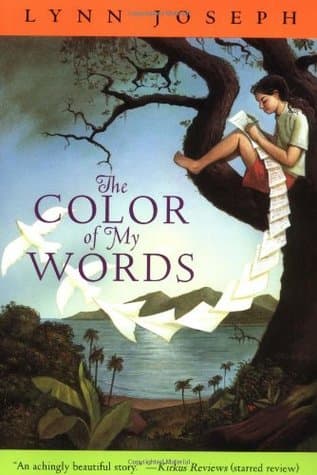
Ana Rosa, a twelve-year-old girl on a Caribbean island, loves words and the world around her. She observes, feels, and writes in her secret blue notebook. She keeps her writing a secret because her family believes only boys should write. Her older brother, Guario, often teases her, and her mother worries about her being 'different.' Ana Rosa finds comfort and inspiration in her island home's natural beauty, often climbing her favorite mango tree to write. She feels a connection to the land, seeing stories in the wind, the sea, and her community's faces. Her grandmother, Mami Taina, seems to understand her spirit and encourages her in small ways.
Guario's Departure and Ana Rosa's Growing Resolve
Ana Rosa's older brother, Guario, decides to leave their village to find work and a better life in Santo Domingo. His departure is a big event for the family, with both hope and worry. Ana Rosa feels sad but also inspired. She starts to write a story about Guario's journey, imagining his experiences and challenges. Writing helps her process her feelings and strengthens her commitment to her craft. She continues to hide her notebook, fearing her family's disapproval, but her resolve to write grows. She sees Guario's courage in leaving as similar to her own quiet rebellion through words.
Meeting Angel and the Secret Writing Spot
One day, while exploring, Ana Rosa meets Angel, a new boy in the village. Angel is kind and observant, and he notices Ana Rosa's thoughtful nature. They become friends, and Ana Rosa, feeling a rare connection, tells him about her writing. Angel is supportive and encourages her, becoming her first confidant. He doesn't dismiss her dreams, which is a big relief for Ana Rosa. She takes him to her favorite writing spot under the mango tree, sharing her blue notebook and some of her stories. Their friendship grows, giving Ana Rosa much-needed validation and a sense of belonging for her artistic self. Angel's presence helps her feel less isolated.
The Threat of the Resort and the Village Meeting
Rumors begin to spread about a foreign developer who plans to build a large resort on their island. This could displace many villagers from their homes. The news causes much worry in the community. Ana Rosa's family, like many others, fears losing their land and way of life. A village meeting is called to discuss the threat, and Ana Rosa, despite her young age, insists on attending. She listens as the adults voice their concerns and frustrations, feeling their fear. The meeting is tense, showing the community's vulnerability and their feeling of powerlessness against outside forces. Ana Rosa observes everything, internalizing the emotions and injustice, which makes her want to use her words for something important.
Ana Rosa Writes Her First Story for the Community
Ana Rosa is moved by the possible loss of their homes and island beauty. She feels she must write a story that captures their struggle and community spirit. She puts her heart into the words, describing the land, the sea, and the villagers' connected lives. With new courage, encouraged by Angel and her grandmother, she decides to read her story aloud at the next village gathering. She is hesitant at first, but her voice grows stronger as she reads, captivating the audience. Her words connect with the villagers, expressing their shared fears and hopes in a way no one else has. This is an important moment, as Ana Rosa publicly accepts being a writer and uses her gift to speak for her community.
The Developer's Agent and the Community's Resistance
Soon after Ana Rosa reads her story, an agent for the foreign developer arrives in the village. He tries to convince the villagers to sell their land, offering what he thinks is fair payment. The villagers know it is not enough for their heritage. However, Ana Rosa's story has sparked something in the community. Her words have reminded them of their land's value and their shared identity, making them more determined to resist. Instead of being easily swayed, the villagers stand united, refusing to sell. Ana Rosa sees her words' power in action, realizing that writing can be a form of protest and a tool for empowerment. The agent meets stronger, more organized opposition than he expected.
The Mango Tree and the Act of Defiance
In an act of intimidation, the developer's men arrive and cut down Ana Rosa's mango tree. This tree is her writing spot and a symbol of her dreams and the island's spirit. Ana Rosa is devastated, watching in horror as the tree falls. This destruction feels like a personal attack, a violation of her sanctuary and artistic soul. The felling of the tree is a clear reminder of the forces they face and greed's destructive power. The community is also deeply affected, seeing it as an attack on their shared heritage. However, this act of violence, instead of breaking their spirit, only strengthens their resolve to fight for their land and way of life.
The Community's Strength and a New Beginning
Despite the heartbreak of the mango tree, the community does not give up. They find a legal way or take collective action to secure their land against the developer's plans. The details of their victory are less important than their unity and success in protecting their homes. Ana Rosa, though still mourning her tree, understands that its sacrifice was not in vain. She continues to write, finding new inspiration in her people's resilience and the life that still thrives around her. She learns that even in loss, there is growth and the chance for new stories. Her blue notebook stays with her, filled with her words and the lasting spirit of her island.
Guario's Return and Family Acceptance
Eventually, Guario returns from Santo Domingo. He found work but also gained a new view on life away from their village. His return brings a sense of completeness to the family. He sees the changes in Ana Rosa, the confidence she gained through her writing, and the respect she earned from the community. The family, seeing the impact of Ana Rosa's stories and her dedication, slowly begins to accept her passion. Her mother, who once worried about her being 'different,' starts to see the strength and beauty in Ana Rosa's gift. While traditional expectations still exist, there is growing understanding and pride in Ana Rosa's abilities, marking a shift in her family's view of her.
Ana Rosa's Future as a Writer
By the end of the story, Ana Rosa has fully accepted being a writer. She understands that her words are not just for her own pleasure but are a tool for connection, preservation, and change. She continues to fill her blue notebook, finding stories everywhere – children's laughter, elders' wisdom, the sea's rhythm, and the memory of her mango tree. Her journey taught her to find her voice and use it to speak for herself and her community. She looks forward to a future where she can continue to tell her island's stories, ensuring its beauty and people's spirit are never forgotten. She is a writer in every sense.
The Color of My Words Characters
Ana Rosa
Protagonist
A twelve-year-old Dominican girl with a secret passion for writing.
Ana Rosa is a sensitive and observant twelve-year-old girl living on a Caribbean island. She possesses an innate love for words and finds deep meaning in the natural world around her. Driven by an intense desire to write, she secretly fills a blue notebook with her observations, poems, and stories, fearing her family's traditional views that writing is not for girls. She is courageous and determined, eventually finding the strength to share her words with her community and become a voice for them. Her deep connection to her land and her people fuels her artistic spirit.
Relationships: Mami (mother) (loving but initially concerned about Ana Rosa's 'difference'); Papi (father) (supportive but traditional); Guario (brother) (initially teasing, later understanding and proud); Mami Taina (grandmother) (wise and subtly encouraging); Angel (first friend and confidant, supportive of her writing)
Guario
Supporting
Ana Rosa's older brother who seeks work in the city.
Guario is Ana Rosa's older brother, initially depicted as somewhat teasing and dismissive of Ana Rosa's quiet nature. He represents the aspirations of many young men on the island, leaving their village to find work and opportunity in Santo Domingo. His journey provides a narrative thread for one of Ana Rosa's early stories. While he embodies a more traditional masculine path, his experiences in the city broaden his perspective, leading him to a greater understanding and appreciation of Ana Rosa's unique gifts upon his return.
Relationships: Ana Rosa (brother-sister, initially teasing, later understanding); Mami and Papi (son, seeking their approval and contributing to the family)
Mami Taina
Supporting
Ana Rosa's wise and intuitive grandmother.
Mami Taina is Ana Rosa's grandmother, a revered elder in the family and community. She is a figure of quiet wisdom and deep intuition. Unlike others, Mami Taina seems to understand Ana Rosa's unique spirit and her love for words without needing to be told explicitly. She offers subtle encouragement and validation, acting as a spiritual guide for Ana Rosa. Her presence provides a sense of grounding and connection to the island's traditions and history, which Ana Rosa often draws upon in her writing.
Relationships: Ana Rosa (grandmother-granddaughter, a deep spiritual bond); Mami (daughter) (mother-daughter)
Angel
Supporting
Ana Rosa's friend and first confidant for her writing.
Angel is a boy who moves to Ana Rosa's village and quickly becomes her first true friend and confidant. He is kind, observant, and possesses a gentle understanding that allows Ana Rosa to share her secret passion for writing with him. His unwavering support and encouragement are crucial for Ana Rosa's development as a writer, providing her with the validation she desperately needs outside of her family. He represents acceptance and the power of true friendship.
Relationships: Ana Rosa (close friends, mutually supportive)
Mami (Ana Rosa's Mother)
Supporting
Ana Rosa's mother, who initially worries about her daughter's unconventional nature.
Ana Rosa's mother loves her daughter deeply but is also bound by traditional expectations of women in their society. She initially worries about Ana Rosa being 'different' and views her quiet, contemplative nature and her interest in writing with a mixture of concern and a desire for her daughter to conform to societal norms. Her worry stems from a place of wanting to protect Ana Rosa from hardship. Over the course of the story, witnessing Ana Rosa's courage and the positive impact of her words, Mami's perspective gradually shifts to one of acceptance and pride.
Relationships: Ana Rosa (mother-daughter, initially concerned, later proud); Papi (wife)
Papi (Ana Rosa's Father)
Supporting
Ana Rosa's father, a hardworking and supportive presence.
Ana Rosa's father is a hardworking and generally supportive figure in her life. While he holds traditional views, he is less overtly concerned about Ana Rosa's writing than her mother. He provides a sense of stability for the family and is deeply connected to the land and his community. He respects the traditions but is also open to recognizing the value of his daughter's unique talents, especially when her words prove beneficial to the entire village. He represents the quiet strength and resilience of the men in the community.
Relationships: Ana Rosa (father-daughter, quietly supportive); Mami (husband)
The Developer's Agent
Antagonist
The representative of the foreign developer threatening the village.
The developer's agent is a nameless character who represents the external forces of modernization and economic exploitation threatening Ana Rosa's village. He is portrayed as a detached figure, focused solely on acquiring land for the resort, without understanding or respecting the deep cultural and historical ties the villagers have to their homes. His actions, particularly the felling of the mango tree, are symbolic of the destructive impact of unchecked development. He serves as the primary external antagonist, challenging the community's way of life and indirectly prompting Ana Rosa to use her voice.
The Villagers
Supporting
The collective community of Ana Rosa's island home.
The villagers are a collective character representing the close-knit community of Ana Rosa's island home. They embody the traditions, fears, and resilience of people facing the threat of displacement. Their shared struggles and their eventual unity against the developer highlight the importance of community and collective action. They are the audience for Ana Rosa's first public story, and their positive reception validates her talent and strengthens their resolve. Their stories and way of life are what Ana Rosa seeks to preserve through her writing.
Relationships: Ana Rosa (community, her audience and inspiration); Each other (interconnected neighbors, family, and friends)
The Color of My Words Themes
Identity and Self-Discovery
Ana Rosa's journey is about understanding who she is and accepting herself as a writer. Despite family and societal expectations that discourage girls from writing, Ana Rosa secretly follows her passion. Her blue notebook becomes a private place for expression. Her decision to share her words with her community, and the recognition she gets, makes her identity clear. The cutting down of her mango tree, a symbol of her secret self, forces her to find a new, more public way to express herself. This leads to her becoming a voice for her people. This journey shows the struggle and success of finding one's place in the world.
“My words were like the sun on the water, dancing, always dancing.”
The Power of Words and Storytelling
This theme is central to the novel. It highlights words' ability to inspire, unite, and even cause change. Ana Rosa's writing is initially a private refuge, but it becomes a tool for her community. Her story about the island and its people motivates the villagers against the developer. It gives voice to their fears and strengthens their resolve. The book, through Ana Rosa's narrative, shows how stories can preserve history, culture, and identity. It proves that even a young girl's words can have a big impact.
“I knew that words were like seeds, and when I wrote them, they grew into stories that had a life of their own.”
Community and Belonging
The novel explores the strong bonds within Ana Rosa's village and the collective strength found in community. Initially, Ana Rosa feels isolated because of her passion for writing. However, as the community faces the threat of displacement, she finds her place by using her words to express their shared experiences and fears. Her story unites them, reminding them of their common heritage and inspiring them to act. The villagers' collective resistance against the developer, spurred by Ana Rosa's voice, shows the power of unity and the importance of belonging to a supportive community with shared values.
“We were all colors, all shades, but we were one family, one island.”
Loss and Resilience
The story deals with different kinds of loss, from the potential loss of homes and land to the actual destruction of Ana Rosa's mango tree. Guario's departure for Santo Domingo also represents a personal loss for Ana Rosa. However, these losses are met with resilience. The community's determination to protect their land, even after the developer's intimidation, shows their lasting spirit. Ana Rosa, sad about losing her tree, finds new inspiration and a deeper purpose for her writing. The theme suggests that while loss is unavoidable, it can also lead to growth, strength, and new ways to adapt and succeed.
“Even when the tree was gone, its roots were still deep in the earth, and so were ours.”
The Beauty and Spirit of the Dominican Republic
The natural landscape and culture of the Dominican Republic are not just a setting but an important part of the story. Ana Rosa's descriptions of the sea, the wind, the mango tree, and her village's life give the story a strong sense of place. The island's beauty inspires Ana Rosa's writing and is what the community fights to protect. The traditions, daily rhythms, and warmth of the people are celebrated throughout the book. This creates a rich picture that highlights the spirit and cultural heritage of the Dominican Republic.
“The island was alive, breathing with the wind and the sea, and I was part of its song.”
Plot Devices & Literary Techniques
First-Person Narrative
Told from Ana Rosa's perspective, offering intimate insights.
The story is told entirely from Ana Rosa's first-person perspective, allowing readers direct access to her thoughts, feelings, and observations. This narrative choice immerses the reader in her emotional world and her unique way of seeing the world through a writer's eyes. It highlights her internal struggle with secrecy and her eventual triumph in finding her voice. The intimacy of her perspective makes her journey of self-discovery and her connection to her community deeply personal and resonant.
Symbolism of the Blue Notebook
Represents Ana Rosa's secret dreams, voice, and evolving identity.
Ana Rosa's blue notebook is a powerful symbol throughout the novel. Initially, it symbolizes her secret world, her hidden dreams, and her nascent voice, a private sanctuary for her words that she dares not share. As the story progresses and she gains confidence, the notebook transforms into a symbol of her courage and her public identity as a writer. It represents the tangible manifestation of her artistic spirit and the power of her words, eventually becoming a record of her community's struggle and triumph.
Symbolism of the Mango Tree
Represents Ana Rosa's sanctuary, inspiration, and the island's natural beauty.
The mango tree is a central symbol for Ana Rosa's creativity, her personal sanctuary, and the enduring spirit of the island itself. It is under this tree that she finds peace, inspiration, and a secret place to write. Its eventual felling by the developer's men is a brutal act of destruction, symbolizing the threat to Ana Rosa's dreams and the island's natural heritage. However, its loss also catalyzes her to find a more public voice, demonstrating that even when a physical symbol is destroyed, the spirit it represents can live on and even grow stronger.
Poetic Prose
Lyrical language and imagery that blurs the line between prose and poetry.
Lynn Joseph employs a distinctive poetic prose style, characterized by rich imagery, sensory details, and lyrical language. Ana Rosa's narration often reads like poetry, with metaphors and similes used to describe her observations and emotions. This style reflects Ana Rosa's own artistic sensibility and deep connection to the beauty of her surroundings. It enhances the thematic focus on words and storytelling, making the narrative itself an example of the power and beauty of language, mirroring Ana Rosa's own passion.
The Color of My Words Quotes
“Words have colors, you know. They paint pictures in your mind.”
“In the Dominican Republic, words are not free. They are like birds in a cage.”
“I am a writer. I will write the truth, even if my words are the color of blood.”
“The sea holds all our stories, the ones we tell and the ones we keep inside.”
“Sometimes the quietest people have the loudest thoughts.”
“A poem is a whisper that everyone can hear.”
“We are like the anacahuita tree—our roots go deep, even when the wind tries to blow us down.”
“The color of my words is the color of my island—green and blue and gold.”
“Fear is a thief. It steals your voice before you even open your mouth.”
“Every story is a seed. Plant it, and it might grow into something beautiful.”
“The truth has many colors, but lies are always gray.”
“My notebook is my best friend. It listens without judging.”
“In a world of whispers, a shout can change everything.”
“The heart remembers what the mind forgets.”
Quiz
10 questions on the plot and the characters. Each answer comes with a short explanation.
Question 1
What is the name of the 12-year-old protagonist who dreams of becoming a writer?
- Ana Rosa
- María
- Isabel
- Carmen
Show answer
A. Ana Rosa Ana Rosa is the main character, a 12-year-old girl living in the Dominican Republic who loves writing and faces challenges in expressing herself in a society where words are feared.
Question 2
Where does the story take place?
- Puerto Rico
- Cuba
- Dominican Republic
- Mexico
Show answer
C. Dominican Republic The book is set in the Dominican Republic, reflecting its culture, landscape, and political context, which shapes Ana Rosa's experiences.
Question 3
What form does Ana Rosa's writing often take in the book?
- Short stories
- Novels
- Poetry
- Journal entries
Show answer
C. Poetry The book interweaves poetry and prose, with Ana Rosa expressing her thoughts and emotions through lyrical poems that highlight her journey as a writer.
Question 4
Why are words feared in Ana Rosa's country according to the book?
- Because they can spread lies
- Because of government censorship and political repression
- Because they are considered sinful
- Because they cause arguments in families
Show answer
B. Because of government censorship and political repression The story is set against a backdrop of political tension in the Dominican Republic, where writing and speaking out can be dangerous due to censorship and repression, making Ana Rosa's desire to write a risky pursuit.
Question 5
What significant event involving her brother deeply affects Ana Rosa?
- He moves to another country
- He becomes a writer like her
- He is killed for political activism
- He forbids her from writing
Show answer
C. He is killed for political activism Ana Rosa's brother, Guario, is involved in political activism and is killed, which is a traumatic event that influences her understanding of the power and danger of words in her society.
Question 6
How does Ana Rosa initially share her writing with others?
- By publishing in a newspaper
- By reading it aloud to her family
- By posting it on walls in her village
- By sending it to a contest
Show answer
B. By reading it aloud to her family Ana Rosa often reads her poems to her family, especially her mother and brother, as a way to express herself and connect with them, despite the risks associated with writing.
Question 7
What does the 'color of my words' metaphor primarily represent in the book?
- The visual appearance of written text
- The emotional and personal essence of Ana Rosa's writing
- The political messages hidden in words
- The different languages spoken in the Dominican Republic
Show answer
B. The emotional and personal essence of Ana Rosa's writing The title symbolizes how Ana Rosa's words carry her unique voice, emotions, and experiences, reflecting her inner world and struggles as she finds her identity through writing.
Question 8
Which character supports Ana Rosa's writing dreams despite the dangers?
- Her father
- Her teacher
- Her mother
- A government official
Show answer
C. Her mother Ana Rosa's mother encourages her writing, understanding its importance to her daughter, even though she is aware of the risks in their repressive society.
Question 9
What role does the mango tree play in Ana Rosa's life?
- It is where she hides her writings
- It serves as a symbol of growth and a place for reflection and writing
- It is cut down by the government as a warning
- It provides fruit that her family sells for income
Show answer
B. It serves as a symbol of growth and a place for reflection and writing The mango tree is a recurring symbol in the book; Ana Rosa often sits in it to think, dream, and write, representing her personal growth and connection to her environment.
Question 10
How does the book blend different narrative styles?
- By alternating between first-person and third-person perspectives
- By including letters and diary entries
- By seamlessly interweaving poetry and prose
- By using flashbacks and non-linear storytelling
Show answer
C. By seamlessly interweaving poetry and prose As noted in the book description, Lynn Joseph combines poetry and prose to tell Ana Rosa's story, with poems highlighting her inner voice and prose advancing the plot, creating a lyrical and immersive narrative.
The Color of My Words FAQ
What is 'The Color of My Words' about?
The novel follows Ana Rosa, a 12-year-old girl in the Dominican Republic who dreams of becoming a writer despite living in a society where free expression is dangerous. Through her poetic observations, she documents her family's struggles, her community's fight against government land seizure, and her personal journey to find her voice amidst political oppression.
Why should I read 'The Color of My Words'?
This Américas Award-winning novel offers a beautifully crafted coming-of-age story that blends poetry and prose to explore themes of artistic expression, family loyalty, and social justice. Lynn Joseph's lyrical writing immerses readers in Dominican culture while addressing universal questions about finding one's voice against oppression.
What is the background/setting of 'The Color of My Words'?
The story is set in a small coastal village in the Dominican Republic during the 1990s, where the community faces threats from government-backed developers seeking to seize their land. This historical context reflects real struggles in Caribbean communities where ordinary people fought against displacement by powerful interests.
What are the most memorable quotes?
Key quotes include Ana Rosa's realization 'Words are like seeds... they grow inside you' and her declaration 'I want to write the color of my words.' Another powerful moment comes when her brother Guario tells her 'Some words are too dangerous to write down,' highlighting the political tension surrounding free expression.
What writing style does the author use?
Lynn Joseph employs a unique hybrid style that seamlessly blends prose narrative with Ana Rosa's original poems. The prose sections advance the plot while the poems (titled as chapters like 'The Gri Gri Tree') provide emotional depth and lyrical insight into Ana Rosa's inner world and observations.
What minor details add significant meaning?
The recurring image of the gri gri tree where Ana Rosa writes represents both her creative sanctuary and her connection to her community's land. The color yellow appears throughout - in mangoes, butterflies, and sunlight - symbolizing hope and creativity amidst the darkness of political oppression.
What are some subtle foreshadowing moments?
Early mentions of government men watching the village foreshadow the land seizure conflict. Ana Rosa's mother warning her that 'words can be dangerous' anticipates the political consequences of her writing. The tension between Ana Rosa's desire to write and her family's fear subtly builds toward the novel's climactic confrontation.
What unexpected character connections exist?
Ana Rosa's teacher Señor Orlando, who initially seems like a minor character, becomes crucial in validating her talent and providing her with writing materials. The community's collective resistance reveals how seemingly ordinary neighbors - like the fisherman Papi and market women - become united activists against the land developers.
What are unspoken character motivations?
Ana Rosa's mother discourages her writing not from lack of belief in her talent, but from deep fear of political retaliation that could endanger the family. Guario's protective behavior stems from his awareness of how dangerous truth-telling can be in their society, creating internal conflict between supporting his sister and keeping her safe.
What psychological complexities do characters exhibit?
Ana Rosa experiences the dual consciousness of being both a observant child and an emerging artist, constantly negotiating between her private creative world and public family responsibilities. Her brother Guario embodies the conflict between revolutionary ideals and practical survival, wanting to fight injustice while protecting his family from harm.
What are the major emotional turning points?
Key emotional moments include Ana Rosa's first poem being published in the newspaper (validation), discovering the government's land seizure plans (awakening to injustice), her brother Guario's death during protests (devastating loss), and her decision to write about the truth despite dangers (empowerment through art).
How do relationship dynamics evolve?
Ana Rosa's relationship with her mother transforms from one of restriction (her mother hiding her notebooks) to understanding as her mother recognizes writing as Ana Rosa's essential form of survival. Her bond with Guario shifts from typical sibling rivalry to profound mutual respect as both fight for their community in different ways.
Which parts remain ambiguous or open-ended?
The novel doesn't specify whether the community ultimately wins their land battle, focusing instead on Ana Rosa's personal victory in claiming her voice. The fate of other villagers after the protests remains uncertain, emphasizing how individual artistic triumph can exist alongside unresolved collective struggles.
What are controversial scenes or decisions?
Guario's decision to join violent protests rather than pursue safer resistance methods sparks debate about effective activism. Ana Rosa's choice to publish her writing despite knowing it could endanger her family raises ethical questions about artistic responsibility versus personal safety in oppressive environments.
'The Color of My Words' ending explained: how it ends & what it means
The novel ends with Ana Rosa continuing to write after her brother's death, using her words to preserve his memory and their community's story. This represents a triumph of artistic resilience - she chooses to transform grief into creation rather than silence, suggesting that writing becomes both personal healing and political resistance.
How does the political context shape Ana Rosa's development?
The threat of land seizure forces Ana Rosa to recognize writing as more than personal expression - it becomes documentation of injustice and preservation of community memory. Her poems evolve from observations of daily life to conscious acts of witness, showing how political oppression can accelerate artistic maturation.
What role does Dominican culture play in the story?
Cultural elements like merengue music, mango harvesting, fishing traditions, and family structures aren't just background - they're essential to Ana Rosa's identity and writing. The communal values of her village directly contrast with the individualistic greed of the developers, creating the central moral conflict of the novel.
How does the structure (poetry + prose) enhance the themes?
The alternating structure mirrors Ana Rosa's dual existence - prose for the external world of family and politics, poetry for her internal creative consciousness. This formal choice demonstrates how art emerges from life experience while also showing writing as an active process of making meaning from chaos.
What does the title 'The Color of My Words' symbolize?
The title represents Ana Rosa's unique artistic vision - her desire to capture the vivid sensory experiences of her world (yellow mangoes, blue sea, green leaves) through language. It also suggests that words have emotional and moral 'colors,' with some being bright with hope and others dark with painful truths.
How does the novel address childhood versus adulthood?
Ana Rosa's journey shows how political violence forces premature adulthood while her writing preserves childhood's observational purity. Her poems maintain childlike wonder about natural beauty even as she documents adult tragedies, creating tension between innocence lost and artistic vision retained.
Similar books
- Harry Potter and the Sorcerer's Stone
J.K. Rowling
4.5 (7M) average on GoodreadsFantasyRescued from a miserable life under the stairs, an orphaned boy discovers he's a wizard destined for a magical school, where he uncovers a dangerous secret tied to the dark wizard who murdered his parents.
- The Hobbit, or There and Back Again
J.R.R. Tolkien
4.3 (2.9M) average on GoodreadsFantasyA comfort-loving hobbit named Bilbo Baggins is whisked away by a mischievous wizard and a band of dwarves on an unexpected journey to reclaim stolen treasure from a fearsome dragon, discovering courage and a magical ring along the way.
- Harry Potter and the Goblet of Fire
J.K. Rowling
4.6 (2.6M) average on GoodreadsFantasyA bewildered Harry Potter, underage and thrust into a deadly Triwizard Tournament, must brave dragons, mermaids, and a resurgent dark magic to survive a year that will forever alter the wizarding world.
- Harry Potter and the Order of the Phoenix
J.K. Rowling
4.5 (2.5M) average on GoodreadsFantasyIn a year of oppressive secrets and the threat of Voldemort, Harry Potter and Dumbledore's Army secretly train for war, shown through Jim Kay and Neil Packer's dark illustrations.
- The Lightning Thief
Rick Riordan
4.3 (2M) average on GoodreadsFantasyThrust into a world of mythological monsters and divine treachery, an ordinary boy discovers he's the son of Poseidon and must embark on a perilous quest across modern America to prevent an Olympian war.
- The Giver
Lois Lowry
4.1 (1.8M) average on GoodreadsFantasyIn a world where everyone is the same, a young boy named Jonas learns about true memory, forcing him to see the cost of his community's peaceful ignorance.






Enjoyed the summary?
A summary gives you the shape of the book. The book itself has the detail, the examples and the voice.
Find The Color of My Words on AmazonAs an Amazon Associate, BookBrief earns from qualifying purchases. How we're funded