

Estimated read time: 6 min read
One Sentence Summary
A visionary anarchist manifesto advocating for a society based on principles of mutual aid and cooperation rather than hierarchy and exploitation.
Table of Contents
Introduction
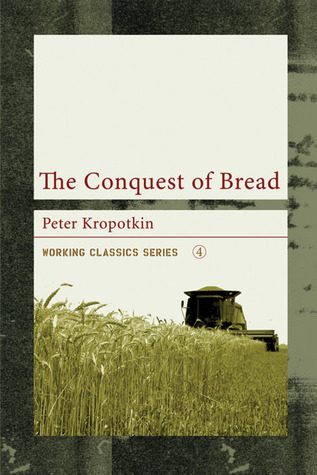
In "The Conquest of Bread" by Pyotr Kropotkin, published in 1892, the author discusses the concept of an anarchist society and presents his vision of a future utopia where social and economic inequalities are eliminated. Kropotkin argues for the necessity of a society based on mutual aid, cooperation, and common ownership of resources. This influential book explores the flaws of capitalism and advocates for a system that prioritizes the needs of all individuals.
Brief Synopsis
"The Conquest of Bread" is set in a time of great social and economic inequality. Kropotkin describes a society where wealth is concentrated in the hands of a few, while the majority of people struggle to meet their basic needs. The book presents a critique of capitalism and highlights the inherent flaws of a system that perpetuates poverty and exploitation.
Kropotkin envisions a society where cooperation and mutual aid are the foundations of social organization. He argues that the means of production should be owned collectively, and resources should be distributed according to the needs of individuals rather than their ability to pay. In this anarchist society, Kropotkin believes that people would be free from the constraints of wage labor and would have the opportunity to pursue their passions and interests.
Main Characters
| Character | Description |
|---|---|
| N/A | "The Conquest of Bread" does not have specific characters as it is a philosophical work. |
Summary of Different Story Points over Chapters
"The Conquest of Bread" is divided into several chapters, each addressing a different aspect of Kropotkin's vision for a society based on mutual aid and common ownership. Here is a summary of the main points covered in each chapter:
| Chapter | Summary |
|---|---|
| Chapter 1: Our Riches | Kropotkin argues that nature provides an abundance of resources to sustain all individuals, and it is only the faulty distribution system of capitalism that leads to poverty and scarcity. |
| Chapter 2: Well-Being for All | The author discusses the importance of meeting the basic needs of all individuals, including food, shelter, and education. He emphasizes the role of society in ensuring the well-being of its members. |
| Chapter 3: Anarchist Communism | Kropotkin outlines the principles of anarchist communism, which advocates for the abolition of private property and the establishment of a society based on voluntary cooperation and mutual aid. |
| Chapter 4: Expropriation | The author explores the concept of expropriation, arguing that the means of production should be taken away from the ruling class and placed under the control of the workers. He discusses the need for revolutionary action to achieve this goal. |
| Chapter 5: Food | Kropotkin examines the issue of food production and distribution, proposing methods to ensure that everyone has access to nutritious and sufficient food. He emphasizes the importance of agricultural cooperation and sustainable practices. |
| Chapter 6: Dwellings | The author discusses the need for adequate housing for all individuals and presents ideas for communal living and the construction of affordable and comfortable dwellings. |
| Chapter 7: Clothing | Kropotkin explores the production and distribution of clothing, advocating for the elimination of sweatshops and the establishment of cooperative garment industries. |
| Chapter 8: Means of Communication and Exchange | The author discusses the importance of efficient communication and transportation systems in a society based on mutual aid. He presents ideas for the development of cooperative networks and the elimination of monopolies. |
| Chapter 9: Free Agreement | Kropotkin emphasizes the importance of voluntary agreements in an anarchist society, where individuals freely associate and cooperate based on their own interests and needs. |
| Chapter 10: Science and Anarchism | The author explores the relationship between science and anarchism, arguing that scientific progress should be used to benefit all of humanity rather than serving the interests of a privileged few. |
Main Events
"The Conquest of Bread" does not follow a traditional narrative structure with specific main events. Instead, it presents a series of arguments and proposals for a future society based on anarchist principles. The main events can be considered as the concepts and ideas presented in each chapter, which collectively form Kropotkin's vision of a society free from exploitation and inequality.
Themes and Insights
"The Conquest of Bread" addresses several themes and provides valuable insights into the flaws of capitalism and the potential benefits of an anarchist society. Some of the key themes and insights include:
- Inequality and Exploitation: Kropotkin highlights the inherent inequalities and exploitative nature of capitalism, where wealth is concentrated in the hands of a few while the majority struggle to meet their basic needs.
- Mutual Aid and Cooperation: The author argues that cooperation and mutual aid are essential for the well-being of society. He presents examples from nature and history to support his belief that humans are naturally inclined to help and support each other.
- Common Ownership of Resources: Kropotkin advocates for the collective ownership and management of resources, arguing that they should be used to meet the needs of all individuals rather than being controlled for profit.
- Voluntary Association: The book emphasizes the importance of voluntary association and the freedom of individuals to cooperate based on their own interests and needs. Kropotkin argues that a society based on free agreement would be more harmonious and just.
- Sustainable Practices: The author promotes sustainable practices in food production, housing, and other areas, emphasizing the need for environmentally friendly approaches that take into account the long-term well-being of the planet.
Reader's Takeaway
"The Conquest of Bread" is a thought-provoking book that challenges the prevailing economic and social systems. It offers a compelling vision of a society based on mutual aid, cooperation, and common ownership. Readers will gain insights into the flaws of capitalism and will be prompted to consider alternative ways of organizing society that prioritize the well-being of all individuals.
Conclusion
"The Conquest of Bread" by Pyotr Kropotkin is a seminal work that presents a compelling vision of an anarchist society based on mutual aid and common ownership. Through a series of arguments and proposals, Kropotkin critiques the flaws of capitalism and advocates for a system that prioritizes the needs of all individuals. This influential book provides valuable insights into the potential benefits of an anarchist society and challenges readers to consider alternative ways of organizing society.
The Conquest of Bread FAQ
What is 'The Conquest of Bread' about?
The Conquest of Bread is a book written by Pyotr Kropotkin that outlines his anarchist communist theory of mutual aid and a decentralized, self-governing society.
Who is Pyotr Kropotkin?
Pyotr Kropotkin was a Russian anarchist, philosopher, and scientist who advocated for a society based on mutual aid and cooperation. He was a prominent figure in the anarchist movement.
When was 'The Conquest of Bread' first published?
'The Conquest of Bread' was first published in 1892.
Is 'The Conquest of Bread' still relevant today?
Yes, 'The Conquest of Bread' is still considered a significant work in anarchist literature and continues to inspire and influence political and social movements today.
What are the main ideas discussed in 'The Conquest of Bread'?
The main ideas discussed in 'The Conquest of Bread' include the necessity of abolishing private property, the importance of mutual aid and cooperation, the critique of wage labor and capitalism, and the vision of a society based on voluntary associations and decentralized decision-making.
Who is the target audience for 'The Conquest of Bread'?
'The Conquest of Bread' is primarily targeted towards individuals interested in anarchist theory, political philosophy, and alternative models of society and governance.
Are there any criticisms of 'The Conquest of Bread'?
Yes, like any other influential work, 'The Conquest of Bread' has received criticisms. Some critics argue that the book's vision of a society without government and hierarchy is unrealistic or impractical.
Are there any other notable works by Pyotr Kropotkin?
Yes, Pyotr Kropotkin has written several other notable works, including 'Mutual Aid: A Factor of Evolution' and 'Fields, Factories, and Workshops'.
Where can I purchase a copy of 'The Conquest of Bread'?
You can purchase a copy of 'The Conquest of Bread' from various online retailers, as well as from local bookstores.
Is there an audiobook version of 'The Conquest of Bread' available?
Yes, there are audiobook versions of 'The Conquest of Bread' available. They can be found on platforms like Audible.


