
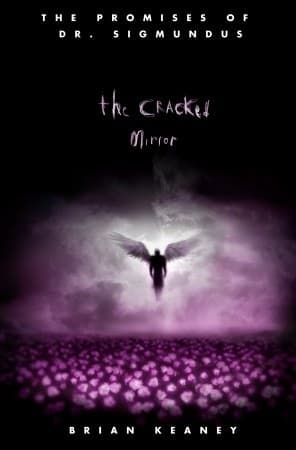
Synopsis
Covers the whole plot, including the ending.
- Difficulty
- Medium
- Pacing
- Fast
- Mood
- Dark, Suspenseful, Mysterious, Urgent
- Read it if
- You enjoy dark, atmospheric YA fantasy with sci-fi elements, a strong sense of urgency, and a memorable villain.
- Skip it if
- You prefer lighthearted adventures or stories with definitive resolutions at the end of each book.
The Cracked Mirror Plot Summary
Covers the whole plot, including the ending.
The Aftermath and the Escape
After the factory where the Hollow People were made is destroyed, Victor and Lena flee. The city is in chaos, with Dr. Sigmundus's enforcers, the 'Collectors,' hunting them. They avoid capture, moving through the ruined streets and among frightened people. Lena, recovering from being a Hollow Person and past trauma, struggles with her identity and Sigmundus's lingering control. Victor, responsible for protecting her and aware of Sigmundus's power, leads them toward the city's edge, hoping to find safety from surveillance. Their escape is filled with close calls and the constant threat of the Collectors.
Journey to the Outlands
Victor and Lena go into the desolate Outlands, a barren area beyond the city walls where a resistance movement is rumored to be. The journey is hard, with bad weather and few supplies. Lena's health varies, and she sometimes has unsettling flashbacks of her time as a Hollow Person, making her question her humanity. Victor, though tired, stays strong, finding food and shelter. They meet other refugees and cautious travelers, some of whom warn them about the Outlands' dangers and Dr. Sigmundus's reach. Their goal is to find the hidden base of the 'Whisperers,' a group fighting Sigmundus, hoping for allies and answers.
Arrival at the Whisperers' Enclave
After days of dangerous travel, Victor and Lena find a hidden Whisperer enclave, a resistance group led by 'The Oracle.' The enclave is a network of underground tunnels and hidden shelters, unlike Sigmundus's clean city. The Whisperers are careful at first but see the urgency of Victor and Lena's situation and their knowledge of Sigmundus. Full trust is not given immediately, especially to Lena, because of her past as a Hollow Person. Victor must prove their loyalty and the truth of their claims, telling a skeptical council of elders about Sigmundus's experiments and the Hollow People's true nature.
Lena's Struggle with Identity
Safe in the Whisperers' enclave, Lena faces the trauma of her transformation into a Hollow Person. She has vivid flashbacks, seeing the world through Sigmundus's altered programming. These episodes are frightening, making her wonder if she is truly free or if Sigmundus still controls a part of her. The Whisperers, especially a kind healer named Elara, try to help her, but the psychological scars are deep. Lena fears she might fall back or accidentally betray the resistance. Victor gives her constant support, reminding her of her humanity and strength, but even he struggles to understand her full internal struggle.
The Oracle's Prophecy
The Oracle, the Whisperers' leader, can see glimpses of the future. In a private meeting, The Oracle tells Victor and Lena a disturbing prophecy about the 'Cracked Mirror' and Lena's key role in its activation. The prophecy speaks of a broken artifact with great power, for both creation and destruction. It suggests Lena's unique state—being both human and a former Hollow Person—makes her a crucial, though risky, key to its potential. The Oracle warns that the mirror is linked to Sigmundus's ultimate plan, and its activation, by them or Sigmundus, will decide their world's fate. This revelation puts a heavier burden on Lena, making her feel like a pawn in a larger, cosmic game.
Intelligence Gathering and Infiltration Plans
With The Oracle's prophecy, the Whisperers, led by Victor, plan to infiltrate Dr. Sigmundus's main stronghold, the 'Citadel.' Their goal is to learn more about the Cracked Mirror, its location, and Sigmundus's plans. They know a direct attack is impossible. Instead, they plan a stealth mission, using Victor's knowledge of the city and Lena's unique, though dangerous, ability to sometimes mimic the Hollow People's 'blankness' to avoid detection. The risks are huge, as the Citadel is said to have advanced security and many Collectors and perfected Hollow People, making it almost impossible to enter.
The Citadel Infiltration
Victor, Lena, and a small, skilled team of Whisperers begin the dangerous mission to enter the Citadel. They use old city maps, hidden sewer paths, and timed distractions to get past the outer defenses. Inside the Citadel, the place is clean and unsettling, with the quiet presence of emotionless Hollow People patrolling the halls. Lena's ability to sometimes blend in by hiding her feelings is very helpful, but also deeply disturbing for her. Victor's leadership and quick thinking are constantly tested as they navigate traps and avoid patrols. Their main goal is to reach Sigmundus's private research labs, believing the answers about the Cracked Mirror are there.
Discovery of Sigmundus's True Goal
Deep inside the Citadel's hidden labs, Victor and Lena discover Dr. Sigmundus's horrifying true goal for the Cracked Mirror. They find plans and journals detailing his plan to use the mirror not just to control, but to *remake* reality, shaping it to his perfect vision, without emotion or free will. He intends to use the mirror to strengthen his control over the Hollow People, turning them into a single, unthinking mind, and eventually spread this influence to the whole world. The mirror is a link, a path to a new, sterile existence. They also learn that Lena's unique state, her 'cracked' nature, makes her a crucial, unwilling part of the mirror's full activation—a fate Sigmundus carefully planned.
Confrontation and Capture
Their discovery is cut short as Dr. Sigmundus, expecting their arrival, traps Victor and Lena in his lab. Sigmundus, calm and chillingly clear, reveals his full understanding of their actions and his manipulation of events. He explains that Lena's escape and her connection to Victor were all part of his plan, a necessary step to bring her close to the fully charged Cracked Mirror. A brief, desperate fight happens, but Sigmundus's perfected Hollow People and advanced technology quickly overpower them. Victor fights hard to protect Lena, but they are both subdued. Sigmundus, with a cold smile, says Lena is now exactly where she needs to be for the final stage of his plan, leaving Victor helpless and captured.
Lena's Imprisonment and the Mirror's Activation
Lena is imprisoned in the Citadel, undergoing unsettling preparations for the mirror's activation. Sigmundus explains that her unique 'cracked' essence, a mix of her original humanity and the remaining Hollow Person programming, is the perfect catalyst for the mirror to connect dimensions and reshape reality. Victor is held in a nearby cell, forced to watch on a monitor as Lena is placed before the pulsing, dark Cracked Mirror. The device hums with a dark energy, its broken surface reflecting distorted images of their world. Sigmundus begins the activation, believing he is about to gain absolute power, while Lena struggles against her restraints, her mind filled with fear and defiance, and Victor desperately searches for a way to act.
The Crack Widens
As Sigmundus continues the activation, the Cracked Mirror glows more intensely. The air in the chamber crackles with energy, and the reality around the mirror seems to twist and ripple. Lena, connected to the mirror, screams as she feels a huge, strange power flow through her. The reflections in the mirror become more chaotic and terrifying, showing glimpses of other worlds, other possibilities, all merging into a grotesque image. Alarms sound throughout the Citadel as the energy becomes unstable. Sigmundus, at first triumphant, shows a hint of worry as the mirror's power exceeds his calculations. The final scene shows the mirror's surface fracturing further, not just reflecting, but actively *shattering* the reality around it, leaving Victor in despair and the fate of Lena and their world dangerously uncertain, a catastrophic cliffhanger.
The Cracked Mirror Characters
Victor
Protagonist
A resourceful and determined teenager fighting for freedom and his loved ones.
Victor is a brave and pragmatic teenager, driven by a fierce loyalty to Lena and a deep-seated desire to dismantle Dr. Sigmundus's oppressive regime. He is quick-witted and adaptable, often relying on his street smarts and a surprising capacity for leadership. While he carries the weight of responsibility and the trauma of seeing his world corrupted, he rarely succumbs to despair, always seeking a path forward. His love for Lena is a primary motivator, pushing him to take risks and endure hardships. He is not a natural fighter but learns to defend himself and others when necessary.
Relationships: Lena (Deeply protective and loving; a bond forged through shared trauma and mutual reliance.); Dr. Sigmundus (Sworn enemy; represents everything Victor fights against.); The Oracle (Respectful alliance; seeks guidance and collaboration.); Elara (Trusting ally; values her healing skills and compassion.)
Lena
Protagonist
A girl recovering from being a Hollow Person, struggling with her identity and a unique connection to the mirror.
Lena is a complex and vulnerable character, grappling with the profound psychological and physical scars of her transformation into a Hollow Person. She experiences periods of emotional numbness and disturbing flashbacks, making her question her own humanity and free will. Despite her trauma, she possesses an underlying resilience and a growing sense of defiance against Sigmundus. Her unique 'cracked' state, a blend of her original self and the residual programming, makes her a crucial, albeit unwilling, component in Sigmundus's plan for the Cracked Mirror. She yearns for true freedom and to reclaim her lost identity.
Relationships: Victor (Deeply reliant and loving; he is her anchor to humanity.); Dr. Sigmundus (Her tormentor and manipulator; the source of her trauma.); The Oracle (A figure of fear and destiny; her prophecy burdens Lena.); Elara (A compassionate caregiver and confidante.)
Dr. Sigmundus
Antagonist
The manipulative and brilliant scientist seeking to reshape reality through the Cracked Mirror.
Dr. Sigmundus is the chillingly intelligent and utterly ruthless antagonist. He views emotion and free will as imperfections, believing he can create a 'perfect' world devoid of chaos and suffering by stripping humanity of its individuality. He is a master manipulator, orchestrating events to serve his grand design, and possesses an uncanny ability to anticipate his opponents' moves. His calm demeanor and reasoned arguments for his atrocities make him particularly unsettling. He sees Lena not as a person, but as a crucial instrument for his ultimate goal: the activation of the Cracked Mirror to reshape reality itself.
Relationships: Victor (A persistent irritant and obstacle to his plans.); Lena (A valuable, albeit unwilling, tool for his grand experiment.); Hollow People (His creations, extensions of his will, devoid of individuality.)
The Oracle
Supporting
The enigmatic leader of the Whisperers, possessing prophetic abilities.
The Oracle is the wise and mysterious leader of the Whisperers, the resistance movement. Possessing a unique ability to glimpse fragments of the future, The Oracle provides crucial, albeit often cryptic, guidance to Victor and Lena. Their counsel is respected and often feared within the resistance, as their prophecies frequently come with grave implications. The Oracle sees the larger patterns at play and understands the cosmic significance of the Cracked Mirror and Lena's role. They are a figure of hope and despair, offering glimpses of what might be, but also the heavy burden of destiny.
Relationships: Victor (A source of guidance and strategic insight.); Lena (The subject of a critical prophecy; holds the key to the future.); Whisperers (Their respected and revered leader.)
Elara
Supporting
A compassionate healer within the Whisperers, aiding Lena's recovery.
Elara is a kind and empathetic healer among the Whisperers. She plays a crucial role in tending to Lena's physical and psychological wounds, offering comfort and understanding where others might only see a former Hollow Person. Elara's gentle nature and practical medical knowledge make her an invaluable asset to the resistance, providing a counterpoint to the harsh realities of their fight. She believes in the inherent goodness of people and is dedicated to restoring those who have been harmed by Sigmundus.
Relationships: Lena (Caring healer and confidante; helps Lena cope with her trauma.); Victor (Trusted ally; shares a common goal of protecting Lena.)
Collectors
Antagonist
Dr. Sigmundus's relentless, emotionless enforcers.
The Collectors are Dr. Sigmundus's primary enforcers, a menacing force of highly trained individuals devoid of emotion and driven by an unwavering loyalty to their creator. They are relentless in their pursuit of targets, operating with cold efficiency and brutality. Their appearance is often uniform and intimidating, designed to instill fear. They represent the oppressive reach of Sigmundus's power and the constant threat to freedom. They are not merely soldiers, but an extension of Sigmundus's will, embodying his desire for order and control.
Relationships: Dr. Sigmundus (Unquestioningly loyal servants.); Victor (Hunters and pursuers.); Lena (Targets for recapture.)
Hollow People
Mentioned
Humanoids stripped of emotion and free will by Dr. Sigmundus.
The Hollow People are the tragic creations of Dr. Sigmundus, once human, now devoid of emotion, individuality, and free will. They serve as a chilling testament to Sigmundus's power and his twisted vision of a 'perfect' society. They are often seen performing menial tasks or acting as silent, unfeeling guards within the city and the Citadel. Lena's past as a Hollow Person highlights the horror of their existence and the struggle to regain one's true self after such a transformation. They represent the ultimate loss of humanity.
Relationships: Dr. Sigmundus (Their creator and master.); Lena (Represents her past and the trauma she overcame.)
The Cracked Mirror Themes
Identity and Humanity
This theme is key to Lena's story as she tries to make sense of her past as a Hollow Person and her new self. Sigmundus's lingering programming makes her question what it means to be human, to feel, and to have free will. Her inner struggle contrasts with Victor's firm belief in her humanity. The Hollow People themselves show what happens when identity is lost and how precious human essence is. Scenes where Lena has flashbacks or tries to mimic the Hollow People's 'blankness' directly explore this theme.
“Am I still me, Victor? Or am I just a cracked reflection of what I once was?”
Freedom vs. Control
The book's entire conflict is about Dr. Sigmundus's desire for total control versus the resistance's fight for freedom and self-rule. Sigmundus believes emotion and free will lead to chaos, offering a 'perfect,' controlled life instead. The Whisperers, especially Victor, defend the right to choose, to feel, and to live authentically. This theme is clear in the escape from the city, the Whisperers' hidden life, and the discovery of Sigmundus's plan to use the Cracked Mirror to control reality itself.
“He wants to erase choice, to make us all echoes of his own barren perfection.”
The Power of Memory and Truth
Memory, both personal and shared, is very important. Lena's broken memories of her past and her time as a Hollow Person are vital to understanding Sigmundus's methods and her unique nature. The resistance relies on finding the truth about Sigmundus's experiments and plans to fight him. Sigmundus, conversely, tries to erase or change memories to keep control. Finding Sigmundus's journals and plans in the Citadel highlights how important it is to uncover hidden truths to fight oppression.
“The past is not just what happened, Victor. It's the weapon they use against us, and the key to our freedom.”
Destiny and Free Will
The Oracle's prophecy introduces the powerful theme of destiny, especially for Lena and her link to the Cracked Mirror. This raises questions about whether their actions are set or if they have the free will to change their future. While the prophecy points to a specific outcome, the characters' choices and struggles show their ability to act. Lena's inner fight against Sigmundus's lingering control and her efforts to defy the mirror's intended purpose show the tension between a foretold destiny and individual will.
“The mirror shows what will be, child, but it is your hands that must turn the page, or rip it out entirely.”
Plot Devices & Literary Techniques
The Cracked Mirror
A mysterious, powerful artifact central to Dr. Sigmundus's plans.
The Cracked Mirror is the eponymous and most significant plot device. It is an ancient, enigmatic artifact that Dr. Sigmundus seeks to fully activate. Initially hinted at as a source of immense power, it is revealed to be a conduit for reshaping reality itself. Its 'cracked' nature suggests imperfection or a fractured connection to something greater. The mirror serves as the ultimate goal for Sigmundus and the ultimate threat to the world, driving the entire narrative. Lena's unique connection to it makes her the unwilling key to its activation, creating a direct link between the protagonist and the central conflict.
The Oracle's Prophecies
Foreshadowing and guidance from the resistance leader.
The Oracle's prophecies serve as a crucial plot device, providing both guidance and ominous foreshadowing. They reveal key information about the Cracked Mirror and Lena's destiny, pushing the plot forward and raising the stakes. While often cryptic, these prophecies give Victor and Lena a sense of purpose and direction, even as they instill fear. They also introduce the theme of destiny versus free will, forcing the characters to grapple with whether they can change a foreseen future. The prophecies act as a narrative compass, hinting at upcoming challenges and the ultimate confrontation.
Lena's 'Cracked' State
The lingering effects of being a Hollow Person, giving her a unique connection to the mirror.
Lena's 'cracked' state refers to her unique condition of having been a Hollow Person but retaining aspects of her original humanity. This dual nature is a powerful plot device. It makes her both vulnerable to Sigmundus's control and uniquely essential to his plans for the Cracked Mirror. Her ability to sometimes mimic the Hollow People's 'blankness' allows for infiltration, while her internal struggle provides deep character conflict. This 'cracked' identity is the very reason Sigmundus needs her, making her the focal point of the antagonist's machinations and the key to the mirror's power.
The Citadel
Dr. Sigmundus's heavily guarded fortress and research facility.
The Citadel functions as the primary antagonist's stronghold and a symbolic representation of his power and control. It is a heavily fortified, sterile environment filled with advanced technology and emotionless Hollow People, making it a near-impenetrable fortress. As a plot device, it serves as the ultimate destination for Victor and Lena's infiltration mission, housing the secrets of the Cracked Mirror and Sigmundus's true intentions. Its formidable defenses create suspense and tension, highlighting the immense risks involved in confronting the antagonist directly and providing a tangible objective for the resistance.
The Cracked Mirror Quotes
“The mirror was not merely a looking-glass; it was a window, and sometimes, a door.”
“Every reflection holds a truth, but not every truth is what you expect to see.”
“Fear is a powerful shadow, but it only has power if you let it obscure your light.”
“The cracks were not flaws; they were pathways, showing where the world had been stretched thin.”
“To truly see, you must sometimes look beyond what is directly in front of you.”
“The past is a echo, the future a whisper, but the present is where the magic happens.”
“Even the smallest shard can reflect the greatest light, if you know how to look.”
“The greatest journeys are not always to distant lands, but sometimes into the depths of oneself.”
“What is real and what is imagined? Sometimes the line is as thin as a mirror's surface.”
“Trust your instincts, for they are often the voice of your truest self.”
“The world is full of wonders, if you only open your eyes to them, and sometimes, your heart.”
“A broken thing can still be beautiful, and sometimes, even more powerful for its scars.”
“The truest magic is not in what you can do, but in what you choose to be.”
Quiz
10 questions on the plot and the characters. Each answer comes with a short explanation.
Question 1
Which genre combination does the Bulletin Review specifically highlight for 'The Hollow People'?
- Mystery, Thriller, and Fantasy
- Science Fiction, Horror, and Fantasy
- Historical Fiction, Drama, and Science Fiction
- Romance, Adventure, and Thriller
Show answer
B. Science Fiction, Horror, and Fantasy The Bulletin Review explicitly states that 'Brian Keaney’s concoction of science fiction, horror, and fantasy is remarkably effective'.
Question 2
What role does Dr. Sigmundus play in the first book, 'The Hollow People'?
- He is the wise mentor to the protagonists.
- He is the main villain, described as 'worthy and memorable'.
- He is a neutral scientist observing events.
- He is a minor character with little impact.
Show answer
B. He is the main villain, described as 'worthy and memorable'. The review states, 'Sigmundus is a worthy and memorable villain that will haunt readers,' indicating his antagonist role.
Question 3
What is the primary motivation for the teenage hero and heroine in 'The Cracked Mirror'?
- To accumulate wealth and power.
- To escape their responsibilities and live peacefully.
- To fight for freedom and self-determination.
- To explore new magical realms.
Show answer
C. To fight for freedom and self-determination. The synopsis mentions, 'its teenage hero and heroine must endure more risk, make riskier choices, and sacrifice their very lives in the cause of freedom and self determination.'
Question 4
What does the Bulletin Review imply about the ending of 'The Hollow People'?
- It provides a clear resolution to all conflicts.
- It leaves readers with a cliffhanger, ensuring their return.
- It was disappointing and poorly executed.
- It focuses on a new set of characters.
Show answer
B. It leaves readers with a cliffhanger, ensuring their return. The review states, 'the cliffhanger ending all but guarantees return readers,' indicating an unresolved conclusion.
Question 5
What kind of world is 'The Cracked Mirror' set in, as described in the summary?
- A utopian, technologically advanced society.
- A bustling, modern urban environment.
- A moody, fantastical world.
- A desolate, post-apocalyptic wasteland.
Show answer
C. A moody, fantastical world. The summary describes 'The Cracked Mirror' as continuing its chronicle of 'a moody, fantastical world'.
Question 6
How does 'The Cracked Mirror' escalate the stakes for its protagonists compared to the first book?
- They face less dangerous challenges and easier choices.
- They must endure more risk, make riskier choices, and potentially sacrifice their lives.
- They primarily focus on diplomatic negotiations rather than direct conflict.
- Their challenges are internal and emotional, not physical.
Show answer
B. They must endure more risk, make riskier choices, and potentially sacrifice their lives. The synopsis highlights that the hero and heroine 'must endure more risk, make riskier choices, and sacrifice their very lives'.
Question 7
What is the ultimate event 'The Cracked Mirror' is setting the stage for?
- A grand celebration of peace.
- The ultimate showdown, a battle between good and evil.
- The discovery of a new magical artifact.
- A political election within their world.
Show answer
B. The ultimate showdown, a battle between good and evil. The text states, 'This haunting installment keeps the pages turning, setting the stage for the ultimate showdown, a battle between good and evil'.
Question 8
Given the description, what literary device is strongly implied by the title 'The Cracked Mirror' in the context of a moody, fantastical world and a battle between good and evil?
- Anachronism, suggesting something out of time.
- Metaphor, representing a distorted reality or a broken sense of self/truth.
- Hyperbole, exaggerating the state of the world.
- Allusion, referencing a specific historical event.
Show answer
B. Metaphor, representing a distorted reality or a broken sense of self/truth. A 'cracked mirror' often symbolizes fragmentation, a distorted view of reality, or imperfections, which aligns with a 'moody, fantastical world' and a struggle between good and evil.
Question 9
The Bulletin Review calls Dr. Sigmundus 'memorable'. What characteristic makes a villain 'memorable' in a series, particularly one with a cliffhanger ending?
- Their ability to be easily defeated and forgotten.
- Their compelling motivations, sinister effectiveness, and lasting impact on the protagonists/plot.
- Their lack of presence in the story.
- Their quick conversion to the side of good.
Show answer
B. Their compelling motivations, sinister effectiveness, and lasting impact on the protagonists/plot. A memorable villain typically possesses depth, a strong presence, and poses a significant, ongoing threat that affects the narrative and protagonists, making them 'haunt readers' and ensuring their return.
Question 10
The summary mentions 'The Cracked Mirror' is 'setting the stage for the ultimate showdown, a battle between good and evil coming in fall 2009'. What does this detail reveal about the publication strategy for the series?
- The series was intended to be a standalone book.
- It indicates a planned, sequential release schedule with a clear conclusion in mind.
- The author prefers to release books without prior announcement.
- The series ended unexpectedly after the second book.
Show answer
B. It indicates a planned, sequential release schedule with a clear conclusion in mind. Stating that the 'ultimate showdown' is 'coming in fall 2009' implies a planned third installment and a structured release schedule for the series.
The Cracked Mirror FAQ
What is the central conflict in 'The Cracked Mirror'?
'The Cracked Mirror' centers on the ongoing struggle of its teenage protagonists against Dr. Sigmundus and his oppressive regime, which seeks to control or eliminate individuals deemed 'hollow.' The heroes must navigate a dangerous world, making increasingly difficult choices to fight for freedom and self-determination against a powerful, manipulative villain.
Who are the main protagonists in 'The Cracked Mirror'?
The book features a teenage hero and heroine, whose names are not explicitly mentioned in the synopsis but are the central figures in the fight against Dr. Sigmundus. They are described as moody and are forced to make significant sacrifices for their cause.
How does 'The Cracked Mirror' build upon the events of 'The Hollow People'?
As a continuation of 'The Hollow People,' 'The Cracked Mirror' deepens the narrative by presenting the hero and heroine with greater risks and more perilous choices. It expands on the world established in the first book, further developing the conflict with Dr. Sigmundus and moving closer to an ultimate confrontation.
What kind of world do the characters inhabit in 'The Cracked Mirror'?
The characters reside in a moody, fantastical world that blends elements of science fiction, horror, and fantasy. This setting is characterized by danger and oppression under Dr. Sigmundus's influence, requiring constant vigilance and difficult decisions from those who oppose him.
What is the significance of the 'Cracked Mirror' title?
The 'Cracked Mirror' likely symbolizes a distorted reality, broken perceptions, or perhaps a flaw within Dr. Sigmundus's seemingly perfect control. It could also represent the protagonists' struggle to see truth amidst deception or their own fractured identities under duress, hinting at deeper psychological themes.
Are there specific magical artifacts or technologies introduced in 'The Cracked Mirror'?
While the synopsis doesn't detail specific artifacts, given the blend of science fiction and fantasy, it's highly probable that new technologies or magical elements are introduced. These could be tools used by Dr. Sigmundus to control the 'hollow people' or resources discovered by the protagonists to aid their fight for freedom.
How does the concept of 'hollow people' evolve in this installment?
In 'The Cracked Mirror,' the concept of 'hollow people' likely becomes more central and complex. It might explore the origins of this condition, reveal hidden characteristics, or introduce new categories of 'hollow' individuals, adding layers to Dr. Sigmundus's motivations and methods of control.
What hidden connections might exist between Dr. Sigmundus and the protagonists?
Given the depth of Dr. Sigmundus's character, there might be a hidden, personal connection between him and one or both of the protagonists. This could manifest as a past relationship, a shared secret, or even a familial link that complicates the hero's journey and adds emotional weight to their conflict.
How do the protagonists' 'moody' dispositions contribute to their psychological profiles?
The protagonists' 'moody' nature suggests they grapple with significant emotional burdens, possibly from trauma, the weight of their mission, or the moral ambiguities of their choices. This internal struggle likely makes them more complex and relatable, reflecting the psychological toll of fighting an oppressive regime.
What psychological tactics does Dr. Sigmundus employ against his adversaries?
Dr. Sigmundus, being a 'memorable villain,' likely uses sophisticated psychological manipulation, fear, and propaganda to control the population and destabilize his enemies. His methods might include gaslighting, creating internal divisions, or exploiting the fears and weaknesses of the 'hollow people' and the protagonists.
How do the 'riskier choices' impact the protagonists' mental and emotional states?
The necessity of making 'riskier choices' undoubtedly places immense psychological strain on the protagonists, leading to anxiety, guilt, and moral dilemmas. These decisions likely force them to confront their own limits and values, potentially causing internal conflict and growth.
In what ways might the protagonists experience identity crises due to their sacrifices?
As the protagonists are called to 'sacrifice their very lives,' they likely face profound identity crises, questioning who they are outside of their role as rebels. The constant threat and the demands of their mission could strip away their former selves, forcing them to forge new identities defined by their struggle and resilience.
Does 'The Cracked Mirror' present a nuanced view of good and evil, or a clear dichotomy?
While the synopsis mentions an 'ultimate showdown, a battle between good and evil,' the 'moody' world and the 'riskier choices' suggest a more nuanced portrayal. The protagonists might encounter moral ambiguities, forcing them to question their own actions and the true nature of 'good' in a desperate fight.
How might the 'cliffhanger ending' of the first book influence the narrative structure of 'The Cracked Mirror'?
The 'cliffhanger ending' of 'The Hollow People' would directly propel the plot of 'The Cracked Mirror,' likely picking up immediately where the first left off or exploring the immediate consequences. This structure creates urgency and maintains a high level of tension throughout the second installment.
What philosophical questions about freedom and self-determination does the book explore?
The book deeply explores what it means to be free and self-determined in the face of absolute control. It questions the cost of these ideals, the sacrifices required to attain them, and the nature of individual autonomy when an entity like Dr. Sigmundus seeks to dictate existence.
Could Dr. Sigmundus be interpreted as more than just a villain, perhaps a distorted reflection of societal fears?
Dr. Sigmundus, described as 'memorable,' could be interpreted as a symbolic representation of societal fears regarding control, conformity, and the loss of individuality. His actions might reflect anxieties about scientific manipulation, authoritarianism, or the pressures to suppress non-conformity in society.
How does the blend of science fiction, horror, and fantasy contribute to the book's overall message?
The genre blend enhances the book's message by using science fiction to explore societal control and technology's dark side, horror to evoke a sense of dread and the grotesque nature of oppression, and fantasy to provide a rich, imaginative backdrop for the struggle for freedom and self-discovery.
What is the potential impact of the 'ultimate showdown' being set for a later book?
Setting the 'ultimate showdown' for a later book allows 'The Cracked Mirror' to focus on character development, world-building, and escalating the stakes without the pressure of immediate resolution. This builds anticipation and ensures the final confrontation is deeply impactful, having been thoroughly prepared for.
Similar books
- The Giver
Lois Lowry
4.1 (1.8M) average on GoodreadsFantasyExplores a dystopian society with a young protagonist uncovering dark truths and facing difficult choices.
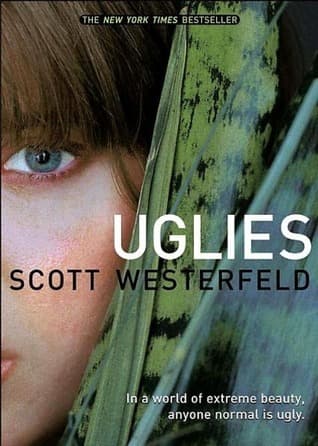
- Uglies
Scott Westerfeld
3.9 (560k) average on GoodreadsFantasyFeatures a young protagonist in a controlled society, questioning identity and leading a rebellion.
- The Hunger Games
Suzanne Collins
4.3 (6.4M) average on GoodreadsFantasyWhile both books feature a young protagonist rebelling against an oppressive system, The Cracked Mirror lacks the intricate socio-political commentary and visceral realism that makes the world of Panem so compelling and critically acclaimed. Keaney's world, though engaging, is less developed in its societal structures.
- Harry Potter and the Sorcerer's Stone
J.K. Rowling
4.5 (7M) average on GoodreadsFantasyRescued from a miserable life under the stairs, an orphaned boy discovers he's a wizard destined for a magical school, where he uncovers a dangerous secret tied to the dark wizard who murdered his parents.
- 1984
George Orwell
4.2 (3.1M) average on GoodreadsPoliticsIn a future where surveillance and thought control are absolute, a man's search for truth clashes with the Party, showing that hope can be a form of rebellion.
- Divergent
Veronica Roth
4.2 (2.9M) average on GoodreadsFantasyIn a society divided by virtues, a sixteen-year-old's difference from the norm starts a rebellion that threatens her world.





Enjoyed the summary?
A summary gives you the shape of the book. The book itself has the detail, the examples and the voice.
Find The Cracked Mirror on AmazonAs an Amazon Associate, BookBrief earns from qualifying purchases. How we're funded