
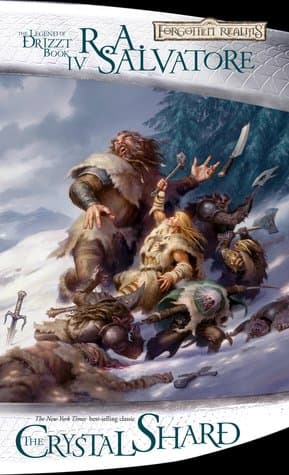
Synopsis
Covers the whole plot, including the ending.
- Difficulty
- Easy
- Pacing
- Moderate
- Mood
- Heroic, Adventurous, Action-packed, Traditional Fantasy
- Read it if
- You enjoy classic high fantasy with clear heroes and villains, a focus on character development through mentorship, and exciting battle sequences.
- Skip it if
- You prefer morally ambiguous characters, complex political intrigue, or a magic system that isn't focused on a single powerful artifact.
The Crystal Shard Plot Summary
Covers the whole plot, including the ending.
Akar Kessel's Betrayal and the Crystal Shard's Awakening
Akar Kessel, a timid apprentice mage, plots against his master. During a barbarian ambush, Kessel betrays his master, hoping for power. The barbarians then turn on him, leaving him for dead in the Spine of the World mountains. While fleeing, Kessel finds Crenshinibon, the sentient Crystal Shard, buried in a glacier. The Shard, a powerful evil artifact, immediately corrupts Kessel, giving him strong magic. It turns him into its puppet, beginning its quest to control the region.
Bruenor Battlehammer's Discovery and Wulfgar's Indenture
King Bruenor Battlehammer, the dwarf king of Mithral Hall, is on a prospecting trip near Ten-Towns. He finds a young barbarian, Wulfgar, after a fight between his tribe and Ten-Towns. Wulfgar, the son of chieftain Heafstaag, is hurt and alone. Bruenor sees Wulfgar's potential and a chance to end the violence between their peoples. He takes Wulfgar in, offering him a choice: death or five years of service in his smithy, where he promises to teach him a trade and a better life. Wulfgar, at first defiant, accepts, starting his change.
Wulfgar's Transformation and Bruenor's Mentorship
For five years, Wulfgar lives with the dwarves in Bruenor's smithy, at first struggling with the confinement and new tasks. Bruenor acts as a strict but caring mentor, teaching Wulfgar smithing, hard work, and community. Wulfgar learns to respect the dwarves, shedding some of his barbarian biases. He forms a strong bond with Bruenor, seeing him as a father, and begins to understand that strength is not just from battle, but also from skill and friendship. This period helps Wulfgar become more thoughtful and disciplined.
Drizzt Do'Urden's Arrival and Wulfgar's Training
As Wulfgar's five years of service end, Bruenor wants to further improve the barbarian's skills. He asks Drizzt Do'Urden, a dark elf who lives in the region, for help. Drizzt, a master swordsman with strong morals, takes Wulfgar as his student. He trains Wulfgar in combat and weapon skills, and also in strategy, discipline, and the ethics of war. Drizzt challenges Wulfgar's barbarian impulsiveness, teaching him to fight with both mind and body, making him a strong warrior capable of independent thought.
Crenshinibon's Rise and Kessel's Army
Under Crenshinibon's influence, Akar Kessel begins to gather an army. The Crystal Shard changes the environment, creating a large, crystal fortress called Cryshal-Tirith in the Spine of the World. Kessel, empowered by the Shard, uses its magic to summon and control creatures like goblins, orcs, ogres, and frost giants. His ambition grows, driven by the Shard's evil will, and he plans to conquer the surrounding lands, especially Ten-Towns, which he sees as a key stronghold for his empire. The threat to the region becomes clear.
The First Assault on Ten-Towns
Akar Kessel, guided by Crenshinibon, starts his conquest by attacking Ten-Towns. His army, much larger than the local militias, sweeps through the unprepared settlements. The people of Ten-Towns, including fishers and merchants, are surprised and suffer heavy losses. Bruenor, Drizzt, and Wulfgar, with other heroes, bravely defend the towns, showing their fighting skill and leadership. While they repel some attacks and save many lives, the size of Kessel's forces makes it clear that more decisive action is needed to stop him.
The Council of Ten-Towns and the Call to Arms
After the first attacks, the surviving leaders of Ten-Towns meet in a desperate council. They acknowledge the serious threat from Akar Kessel and his army. Bruenor Battlehammer, Drizzt Do'Urden, and Wulfgar help rally the people. They argue for a united front and an attack on Cryshal-Tirith before Kessel's power becomes too great. Despite their fears, the people of Ten-Towns, inspired by the heroes, agree to combine their forces and march on Kessel's fortress, knowing their survival depends on it.
The March to Cryshal-Tirith
The combined army of Ten-Towns, led by Bruenor, Drizzt, and Wulfgar, journeys to Cryshal-Tirith. The march is dangerous, as Kessel's patrols harass them, and the harsh environment of the Spine of the World takes its toll. The heroes must keep morale high and strategize constantly. During this journey, the bonds between Bruenor, Drizzt, and Wulfgar grow stronger. Their individual strengths and leadership are tested. They learn to trust each other completely as they approach Kessel's fortress.
The Battle for Cryshal-Tirith
The battle for Cryshal-Tirith begins as the allied forces storm the fortress. Kessel's army, strengthened by the Shard's magic, defends the stronghold fiercely. The battle is brutal, with many casualties. Drizzt's swordsmanship, Wulfgar's strength and tactics, and Bruenor's leadership and dwarven fighting skill are vital in breaking Kessel's defenses. The heroes fight through goblins, orcs, and giants, pushing into the fortress, determined to confront Akar Kessel and destroy the Crystal Shard.
Confrontation with Kessel and the Shard's Destruction
Bruenor, Drizzt, and Wulfgar finally confront Akar Kessel inside Cryshal-Tirith. Kessel, twisted and mad from power, uses immense magic from Crenshinibon. The battle against Kessel is fierce. Through cleverness and teamwork, the heroes outmaneuver him. In a desperate act, Bruenor, with Wulfgar's help, shatters Crenshinibon. This causes a massive magical reaction that destroys the Shard and its influence. Kessel, without his power, dies quickly, and Cryshal-Tirith begins to crumble, ending the Crystal Shard's terror.
The Aftermath and New Beginnings
With Crenshinibon destroyed and Kessel defeated, the threat to Ten-Towns is gone. The remaining monster forces, without a leader and the Shard's influence, scatter or are easily defeated. The allied forces, tired but victorious, celebrate. Bruenor, Drizzt, and Wulfgar emerge as heroes, their friendship forged in battle. While the immediate danger is over, the experience has changed them, and they know new adventures await. The foundation for their fellowship, the Companions of the Hall, is set.
Principal Figures
Akar Kessel
Antagonist
A weak-willed apprentice mage consumed by a powerful magical artifact.
Akar Kessel begins as a resentful and ambitious apprentice mage, deeply insecure and yearning for power. He lacks inherent magical talent or moral fortitude, making him easily susceptible to corruption. His defining characteristic is his cowardice and his lust for unearned power, which leads him to betray his master and ultimately fall under the complete sway of Crenshinibon. The Crystal Shard amplifies his worst traits, transforming him into a megalomaniacal and ruthless sorcerer, a puppet for its will, driven by a desire for dominion and destruction. He represents the corrupting influence of unchecked power.
Relationships: Crenshinibon (The Crystal Shard) (Master/Puppet – Kessel is controlled and empowered by the Shard); Archmage of Palishchuk (Master/Apprentice – Kessel betrays his master)
Bruenor Battlehammer
Protagonist/Supporting
The gruff but honorable dwarf king of Mithral Hall, a fierce warrior and loyal friend.
Bruenor Battlehammer is the quintessential dwarf king: stubborn, proud, and fiercely loyal to his friends and his people. He is a skilled warrior and a master smith, possessing a deep love for his ancestral home, Mithral Hall, which he longs to reclaim. Beneath his gruff exterior lies a compassionate heart, as evidenced by his decision to take Wulfgar under his wing. He acts as a mentor and father figure to Wulfgar, teaching him discipline and a sense of belonging. Bruenor is driven by honor, a desire for justice, and an unwavering commitment to those he considers family.
Relationships: Wulfgar (Father figure/Mentor); Drizzt Do'Urden (Close friend and trusted ally); Catti-brie (Adopted daughter (implied in later books, but their bond starts here))
Wulfgar
Protagonist
A young barbarian transformed from a savage warrior into a thoughtful hero.
Wulfgar begins as a proud, fierce, and impulsive barbarian warrior, deeply rooted in the traditions of his tribe. He is physically powerful but lacks discipline and a broader understanding of the world beyond his people's conflicts. His five years of servitude with Bruenor Battlehammer, followed by combat training with Drizzt Do'Urden, profoundly change him. He learns humility, craftsmanship, strategic thinking, and the value of friendship and community. Wulfgar struggles with his barbarian nature, striving to reconcile his primal instincts with the new moral code he adopts, ultimately becoming a hero who fights with both brawn and intelligence.
Relationships: Bruenor Battlehammer (Adopted father/Mentor); Drizzt Do'Urden (Combat instructor/Close friend); Heafstaag (Biological father/Chieftain (adversarial at first, then Wulfgar surpasses him))
Drizzt Do'Urden
Protagonist/Supporting
A renegade dark elf ranger, master swordsman, and moral compass.
Drizzt Do'Urden is a drow elf, an outcast from his evil subterranean society due to his strong moral code and refusal to embrace the wickedness of his kin. He is a master of two scimitars, a skilled ranger, and a deep thinker who constantly grapples with his identity and the prejudice he faces from the surface world. Drizzt is calm, disciplined, and possesses an unwavering sense of justice and compassion. He acts as a mentor to Wulfgar, teaching him not just combat but also philosophy and the importance of fighting for good. His presence provides a unique perspective on heroism and the struggle against prejudice.
Relationships: Wulfgar (Combat instructor/Close friend); Bruenor Battlehammer (Close friend and trusted ally); Guenhwyvar (Magical companion (panther summoned from the astral plane))
Heafstaag
Supporting/Mentioned
Chieftain of the Elk Tribe barbarians and Wulfgar's biological father.
Heafstaag is the proud and traditional chieftain of the Elk Tribe barbarians. He embodies the fierce, often brutal, values of his people, prioritizing strength, honor in battle, and loyalty to the tribe above all else. He initially views Ten-Towns as enemies and leads his people in raids. His relationship with Wulfgar is complicated; he is Wulfgar's biological father but also a rival for leadership, and he struggles to understand Wulfgar's new path. Heafstaag represents the old ways that Wulfgar must move beyond to become the hero he is destined to be.
Relationships: Wulfgar (Biological father/Chieftain (initially adversarial, then a source of Wulfgar's internal conflict))
Catti-brie
Supporting
Bruenor's adopted human daughter, a spirited and capable young woman.
Catti-brie is Bruenor Battlehammer's adopted human daughter, a spirited and independent young woman who grew up among the dwarves and the people of Ten-Towns. She is practical, resourceful, and possesses a strong sense of loyalty. While not a primary combatant in this book, she displays courage and an unwavering commitment to her family and friends. Her presence provides a human perspective amidst the more fantastical characters and serves as a emotional anchor for Bruenor. She is observant and often provides insightful commentary, showcasing her sharp mind.
Relationships: Bruenor Battlehammer (Adopted father); Wulfgar (Friend (developing romantic interest in later books)); Drizzt Do'Urden (Friend)
Guenhwyvar
Supporting
Drizzt Do'Urden's magical panther companion summoned from the Astral Plane.
Guenhwyvar is Drizzt Do'Urden's loyal and formidable companion, a magical black panther summoned from the Astral Plane through an onyx figurine. She is highly intelligent, stealthy, and possesses immense strength and agility. Guenhwyvar is more than just an animal; she understands Drizzt's commands and emotions, acting as a true partner in battle and a source of silent companionship. Her presence highlights Drizzt's unique nature and provides a powerful, non-human ally in their struggles against evil. She is a symbol of Drizzt's connection to the wild and his rejection of drow society.
Relationships: Drizzt Do'Urden (Magical companion and inseparable partner)
Regis
Supporting
A halfling rogue and gem thief, known for his love of comfort and quick wit.
Regis is a portly halfling with a penchant for fine food, comfortable living, and the acquisition of precious gems, often through less-than-legal means. He is not a fighter by nature, preferring to use his wit, charm, and stealth to navigate dangerous situations. Despite his roguish tendencies and occasional selfishness, Regis possesses a good heart and a surprising capacity for loyalty to his friends. He often provides comic relief but can also demonstrate surprising courage when those he cares about are in danger. He represents a more mundane, yet endearing, aspect of the adventuring party.
Relationships: Drizzt Do'Urden (Friend); Bruenor Battlehammer (Friend); Wulfgar (Friend)
Themes & Insights
The Corrupting Influence of Power
This theme is clear with Akar Kessel and the Crystal Shard. Kessel, a weak and ambitious apprentice, is consumed by Crenshinibon's power. The Shard not only gives magic but also increases his worst traits—insecurity, jealousy, and desire for control—turning him into a tyrant. This shows how unchecked power, especially in someone without morals, leads to tyranny and self-destruction. The Shard itself is a sentient example of this corruption, its existence bending others to its will, proving power can be destructive.
“The Crystal Shard had not merely granted Kessel power; it had stripped away his very soul, leaving only a vessel for its own dark will.”
Redemption and Transformation
Wulfgar's story is the main part of this theme. He starts as a barbarian, driven by tribal loyalties and a desire for battle. His five years of service with Bruenor and training with Drizzt change him. He learns discipline, craftsmanship, strategy, and the value of friendship and community. This change is not easy; Wulfgar constantly fights his barbarian instincts. His story shows that people can overcome their origins and past actions through mentorship, self-reflection, and good relationships, choosing honor and heroism over inherited prejudice.
“He fought like a barbarian, but he thought like a man who had seen beyond the confines of his tribe.”
The Power of Friendship and Found Family
The growing relationship between Bruenor, Drizzt, and Wulfgar (and later Catti-brie and Regis) is a core part of the novel. Bruenor takes Wulfgar in, Drizzt trains him, and together they form a strong bond that goes beyond race, culture, and past conflicts. Their loyalty to each other is their greatest strength, helping them overcome challenges no one could face alone. This theme shows that chosen family, built through shared experiences and respect, can be stronger than blood ties and is important for dealing with adversity and finding belonging. Their combined strengths and different views make them a strong force.
“It was not by blood, but by fire and shared peril, that they had become a family.”
Prejudice and Acceptance
Drizzt Do'Urden's presence is central to this theme. As a dark elf, he faces suspicion and fear from surface dwellers, who link his race with evil. Despite his good character and heroic actions, he must constantly prove himself trustworthy. This highlights how common prejudice is and how hard it is to overcome biases. However, his friendships with Bruenor and Wulfgar show that true connection and judging people by their actions, not their race, can lead to acceptance and strong alliances. The story asks readers to look past surface differences.
“My skin may be dark, but my heart beats with the light.”
Plot Devices & Literary Techniques
The MacGuffin: Crenshinibon (The Crystal Shard)
A powerful, sentient magical artifact that drives the primary conflict.
Crenshinibon is the central MacGuffin of the story, a sentient crystal that grants immense magical power to its wielder while simultaneously corrupting them. It serves as the catalyst for Akar Kessel's villainy and the primary threat the heroes must overcome. The Shard's sentience and malevolent will mean it is not merely an object, but an active antagonist, manipulating Kessel and shaping the plot through its desire for conquest. Its destruction marks the climax and resolution of the main conflict, making it the focal point around which all major plot points revolve.
The Mentor Figure
Characters who guide and train the protagonist, fostering their development.
Both Bruenor Battlehammer and Drizzt Do'Urden serve as mentor figures for Wulfgar. Bruenor takes Wulfgar from a savage state, teaching him discipline, the value of work, and the importance of community. Drizzt refines Wulfgar's combat skills, but more importantly, teaches him strategic thinking, self-control, and a moral code beyond brute strength. These mentors are crucial for Wulfgar's transformation from a barbarian into a thoughtful hero, providing the guidance and knowledge he needs to fulfill his potential and become a worthy adversary to Kessel.
The Training Montage (Implied)
A period of intense character development and skill acquisition.
Wulfgar's five years of servitude with Bruenor and his subsequent training with Drizzt, while not explicitly a 'montage' in the cinematic sense, function as a crucial plot device. This period is largely summarized but represents a significant passage of time dedicated to Wulfgar's physical, mental, and moral development. It allows the narrative to quickly establish his transformation from a raw barbarian to a skilled warrior and a more nuanced individual, justifying his capabilities when facing Kessel's forces without detailing every single training session. It provides the necessary background for his heroic actions.
The Unlikely Alliance
Diverse characters from disparate backgrounds uniting against a common foe.
The formation of the core group—a dwarf, a dark elf, and a barbarian—is a classic example of an unlikely alliance. Their individual races and backgrounds are traditionally at odds, representing deep-seated prejudices within the fantasy world. However, the shared threat of Akar Kessel and the Crystal Shard forces them to overcome these differences. This device highlights themes of unity and acceptance, showing that common goals and personal character can transcend societal divisions. Their varied skills and perspectives are essential for their success, proving that diversity can be a strength against overwhelming evil.
The Crystal Shard Quotes
“Drizzt Do'Urden, a dark elf, a drow, was an anomaly, a champion of justice in a world that expected him to be evil.”
“It was the only way to truly live, to face the darkness within and without, and still choose the light.”
“The shard pulsed with a malevolent energy, a whisper of power that promised greatness to those who dared embrace its darkness.”
“There are no easy answers, only choices, and the consequences that follow.”
“For every shadow, there is a light, and it is in the struggle between them that true heroes are forged.”
“He fought not for glory, but for the simple right to exist, to protect those who could not protect themselves.”
“The wind howled a mournful song across the Spine of the World, a testament to the harsh beauty of the frozen north.”
“Even the mightiest of warriors can be brought low by a single moment of doubt.”
“To truly know peace, one must first understand the nature of conflict.”
“The goblins were a tide of green, a chittering, malevolent force bent on destruction.”
“He had found a home, not in a place, but in the hearts of his friends.”
“Magic was a tool, neither good nor evil in itself, but made so by the hands that wielded it.”
“The weight of expectation can be a heavier burden than any sword.”
“Sometimes, the greatest strength lies not in fighting, but in enduring.”
Quiz
10 questions on the plot and the characters. Each answer comes with a short explanation.
Question 1
What is the name of the magical artifact that Akar Kessel discovers and uses to gain power?
- The Orb of Dragonkind
- The Crystal Shard
- The Staff of Magi
- The Amulet of Akar
Show answer
B. The Crystal Shard Akar Kessel's rise to power is directly linked to his discovery and manipulation of the sentient magical artifact known as the Crystal Shard.
Question 2
Which character is a renegade dark elf (drow) who aids Bruenor and Wulfgar?
- Catti-brie
- Regis
- Drizzt Do'Urden
- Montolio DeBrouchee
Show answer
C. Drizzt Do'Urden Drizzt Do'Urden, a renegade dark elf, becomes a crucial ally and friend to Bruenor and Wulfgar, helping to train Wulfgar.
Question 3
What is the initial agreement between Bruenor Battlehammer and Wulfgar after Bruenor rescues him?
- Wulfgar must join Bruenor's army for 10 years.
- Wulfgar must serve Bruenor for 5 years.
- Wulfgar must help Bruenor reclaim Mithral Hall.
- Wulfgar must pay a large sum of gold.
Show answer
B. Wulfgar must serve Bruenor for 5 years. Bruenor rescues Wulfgar from the ruins of Ten-Towns and, rather than killing him, demands 5 years of service, which eventually blossoms into friendship.
Question 4
What is the primary motivation of the Crystal Shard (Crenshinibon) itself?
- To bring peace and order to the North.
- To find a worthy wielder to destroy all evil.
- To expand its own power and influence by creating an empire of ice and darkness.
- To locate other magical artifacts and combine its power with them.
Show answer
C. To expand its own power and influence by creating an empire of ice and darkness. Crenshinibon, the Crystal Shard, is a sentient artifact with its own malevolent will, primarily driven by a desire to dominate the world and create an empire of ice.
Question 5
Where does Bruenor Battlehammer initially find Wulfgar?
- In the depths of Mithral Hall.
- Leading a barbarian raid on Bryn Shander.
- Amidst the ruins of Ten-Towns after a barbarian attack.
- Lost in the Spine of the World mountains.
Show answer
C. Amidst the ruins of Ten-Towns after a barbarian attack. Bruenor discovers Wulfgar as a young barbarian warrior in the aftermath of a devastating raid on Ten-Towns, specifically in the ruins.
Question 6
What significant change does Wulfgar undergo during his 5 years with Bruenor and Drizzt?
- He learns to wield arcane magic.
- He abandons his barbarian heritage to become a merchant.
- He transforms from a brutish barbarian into a skilled warrior with intellect and compassion.
- He becomes a master craftsman, specializing in dwarven metalwork.
Show answer
C. He transforms from a brutish barbarian into a skilled warrior with intellect and compassion. Through Bruenor's guidance and Drizzt's training, Wulfgar evolves from a savage barbarian into a more thoughtful, skilled, and compassionate warrior.
Question 7
Which of the following creatures are NOT among the forces raised by Akar Kessel and the Crystal Shard?
- Goblins and Orcs
- Frost Giants
- Mind Flayers
- White Dragons
Show answer
C. Mind Flayers Akar Kessel, empowered by Crenshinibon, raises an army composed of goblins, orcs, giants, and even white dragons to attack Ten-Towns, but not Mind Flayers.
Question 8
What is Akar Kessel's ultimate fate at the end of the novel?
- He is captured and imprisoned by the heroes.
- He escapes with the Crystal Shard to plot his return.
- He is consumed by the power of the Crystal Shard and perishes in the battle against the heroes.
- He repents and joins the heroes in their fight against other evils.
Show answer
C. He is consumed by the power of the Crystal Shard and perishes in the battle against the heroes. Akar Kessel, having been utterly corrupted and his sanity eroded by the Crystal Shard's influence, is ultimately destroyed along with the shard in the climax of the battle.
Question 9
What is the name of the dwarven kingdom Bruenor Battlehammer dreams of reclaiming, a recurring theme throughout his character arc?
- Gauntlgrym
- Citadel Adbar
- Mithral Hall
- Sundabar
Show answer
C. Mithral Hall Bruenor Battlehammer's enduring dream and driving motivation is to reclaim his ancestral home, the lost dwarven kingdom of Mithral Hall.
Question 10
How does the Crystal Shard (Crenshinibon) specifically influence Akar Kessel beyond just granting him magical power?
- It grants him immense physical strength and durability.
- It subtly manipulates his thoughts and desires, making him increasingly paranoid and cruel.
- It allows him to communicate telepathically with all living creatures.
- It provides him with a detailed history of the world and its magic.
Show answer
B. It subtly manipulates his thoughts and desires, making him increasingly paranoid and cruel. The Crystal Shard is a sentient, malevolent artifact that not only grants Akar Kessel magical power but also corrupts his mind, twisting his ambitions and eroding his sanity, making him a puppet for its own will.
The Crystal Shard FAQ
What is the central conflict that drives the plot of 'The Crystal Shard'?
The central conflict revolves around the awakened power of Crenshinibon, the titular Crystal Shard, which corrupts the weak-willed mage Akar Kessel and grants him immense power to conquer Icewind Dale. The primary protagonists, Bruenor Battlehammer, Wulfgar, and Drizzt Do'Urden, must unite to stop Kessel's expanding army of goblins, orcs, and frost giants from destroying Ten-Towns and enslaving the region.
Who is Akar Kessel and how does he come to wield the power of Crenshinibon?
Akar Kessel is a disgraced and cowardly apprentice mage from the Academy of arcane arts in Luskan, banished for his ineptitude and treachery. While exiled in the Spine of the World mountains, he stumbles upon the buried Crenshinibon, a sentient artifact of immense magical power. The shard, recognizing his ambition and weakness, corrupts him and grants him control over its abilities, allowing him to raise an army and construct the fortress of Cryshal-Tirith.
How does Wulfgar, the barbarian, come to be an ally of Bruenor Battlehammer and Drizzt Do'Urden?
Wulfgar is initially a young barbarian from the Tribe of the Elk, captured by Bruenor Battlehammer during a raid on Ten-Towns. Instead of execution, Bruenor offers him five years of service in Mithral Hall, forging a deep bond of friendship and mentorship. Drizzt Do'Urden later takes Wulfgar under his wing, training him in refined combat techniques and strategy, transforming him into a formidable warrior and a crucial member of their trio.
What role does Drizzt Do'Urden play in the unfolding events, given his background as a dark elf?
Drizzt Do'Urden, a renegade drow (dark elf) from the Underdark, acts as a moral compass and skilled warrior for the protagonists. Having abandoned the evil ways of his people, he brings unparalleled combat prowess with his scimitars and a deep understanding of strategy. He is instrumental in training Wulfgar and is a key figure in the defense of Ten-Towns against Akar Kessel's forces, despite the prejudice he often faces.
What is the significance of Mithral Hall in the story, even though it's not directly featured as a current location?
Mithral Hall represents Bruenor Battlehammer's ancestral home and his ultimate goal, a driving motivation for many of his actions and a symbolic beacon of his dwarven heritage. Though it lies abandoned and overrun by a shadow dragon during the events of 'The Crystal Shard,' Bruenor's desire to reclaim it is a constant theme, foreshadowing future adventures and establishing his deep-seated purpose beyond just defending Ten-Towns.
Beyond its obvious magical power, what is Crenshinibon's true nature and purpose, as revealed or hinted at?
Crenshinibon is not merely a powerful magical device but a sentient artifact, a creation of the demon Errtu, imbued with a will to dominate and corrupt. It seeks to bring about an age of everlasting winter and reshape the world according to its own icy, tyrannical vision. Its power extends beyond mere spellcasting, influencing minds and drawing upon the negative emotions of its wielder to fuel its destructive capabilities.
Are there any subtle connections or foreshadowing regarding other characters or future events in the wider Forgotten Realms lore?
Yes, the presence of Drizzt Do'Urden himself, a well-established character, immediately connects the story to broader Forgotten Realms lore. The mention of Luskan and its mages, the Tribe of the Elk, and the nature of the drow hint at a larger world. Bruenor's obsession with Mithral Hall explicitly sets up the plot for future books, indicating that the companions' adventures will continue beyond the defeat of Akar Kessel.
How does Akar Kessel's transformation reflect the corrupting influence of absolute power on a weak individual?
Akar Kessel's transformation is a stark illustration of how absolute power corrupts. Initially a pathetic and cowardly mage, Kessel becomes arrogant, cruel, and megalomaniacal once imbued with Crenshinibon's power. He loses all semblance of his former self, driven solely by the shard's will and his own amplified desire for conquest and dominion, demonstrating that power can amplify existing flaws rather than create new ones.
Analyze the psychological journey of Wulfgar from barbarian raider to a disciplined warrior and friend.
Wulfgar's journey is one of profound psychological growth, moving from a youth steeped in the 'might makes right' philosophy of his barbarian tribe to embracing honor, discipline, and loyalty. His servitude to Bruenor instills a sense of responsibility and friendship, while Drizzt's mentorship teaches him strategic thinking and controlled aggression. This transformation is marked by his internal struggle to reconcile his wild instincts with his newfound values.
How does Drizzt Do'Urden's internal conflict regarding his drow heritage influence his actions and relationships?
Drizzt's internal conflict as a drow who rejects his evil heritage constantly shapes his interactions. He carries the burden of his people's reputation, often facing prejudice and suspicion, which makes him wary but also fiercely determined to prove his goodness. This conflict fuels his compassion for others and strengthens his bond with Bruenor and Wulfgar, who see past his race to his true character, affirming his chosen path.
What is the psychological impact of living in Icewind Dale on its inhabitants, particularly the people of Ten-Towns?
Living in Icewind Dale instills a rugged resilience and a strong sense of community among its inhabitants. The harsh climate and constant threats from barbarians and monstrous creatures force them to be self-reliant yet deeply interdependent. This challenging environment fosters practicality, courage, and a fierce protectiveness of their homes and livelihoods, making them unwilling to yield easily to external threats like Akar Kessel's army.
Is Akar Kessel truly evil, or is he merely a puppet of Crenshinibon, and what does this imply about free will?
This is debatable; while Kessel's initial character flaws (cowardice, ambition) make him susceptible, Crenshinibon's sentient and manipulative nature undeniably amplifies and directs his evil. He becomes a puppet to its will, losing much of his free will. This implies that while individuals have inherent tendencies, powerful external forces can utterly dominate and redefine one's moral agency, raising questions about culpability when under such influence.
How does the friendship between Bruenor, Wulfgar, and Drizzt defy traditional fantasy tropes of racial animosity?
The friendship between Bruenor (dwarf), Wulfgar (human barbarian), and Drizzt (dark elf) is a powerful subversion of traditional fantasy tropes, where these races are often portrayed as enemies. Their bond transcends racial animosity, built on mutual respect, shared values, and loyalty forged through battle. It highlights that character and actions, rather than heritage, define true companionship and heroism, offering a message of unity.
What deeper themes about nature versus civilization are explored through the conflict in Icewind Dale?
The conflict explores themes of nature versus civilization through the juxtaposition of the wild, untamed wilderness of Icewind Dale and the nascent, struggling communities of Ten-Towns. Akar Kessel's attempt to impose an unnatural, frozen order with Crenshinibon represents a perversion of both. The heroes, representing a balance of wildness (Wulfgar) and civilized order (Bruenor's dwarven craft, Drizzt's refined fighting), fight to preserve a natural equilibrium and the right for communities to thrive.
Does the ending provide a definitive resolution, or does it leave room for future adventures and challenges for the protagonists?
While the immediate threat of Akar Kessel and Crenshinibon is resolved, the ending definitively leaves room for future adventures. Bruenor's quest to reclaim Mithral Hall remains unfulfilled, and the bonds forged between the companions clearly indicate their journey together is far from over. The defeat of Kessel is a victory, but the world of the Forgotten Realms is vast, ensuring new challenges await the trio.
How does the magic system, particularly Crenshinibon's abilities, differ from typical spellcasting in fantasy?
Crenshinibon's magic is distinct from typical spellcasting, which often relies on learned incantations and gestures. The shard is a sentient entity that grants raw, intuitive power, allowing Akar Kessel to reshape the landscape, conjure creatures, and project immense energy with little effort, almost like an extension of its will. This direct, potent, and corrupting power bypasses traditional magical study, making it terrifyingly effective and dangerous.
What is the significance of the weapon Aegis-fang, and how does Wulfgar acquire it?
Aegis-fang is Wulfgar's signature weapon, a magnificent warhammer crafted by Bruenor Battlehammer himself. It symbolizes Bruenor's deep affection and respect for Wulfgar, given to him as a gift upon the completion of his five years of service and friendship. The hammer is not just a powerful weapon, but a physical manifestation of their bond and Wulfgar's transformation into a true hero.
How do the various races in Icewind Dale (dwarves, humans, barbarians, drow) interact and perceive each other, and how does this evolve?
Initially, interactions are fraught with prejudice: humans of Ten-Towns distrust barbarians, and all fear drow. Dwarves like Bruenor are more isolationist but pragmatic. However, under the threat of Akar Kessel, these perceptions begin to evolve. The shared struggle forces cooperation, leading to a grudging respect among the humans and barbarians, and ultimately, the formation of an unbreakable bond between a dwarf, a barbarian, and a drow, showcasing unity in adversity.
About the author
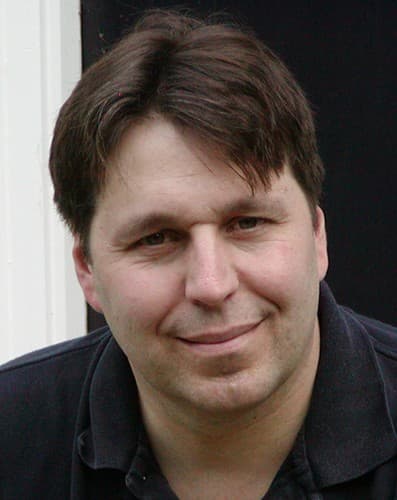
R.A. Salvatore is an American author primarily known for his fantasy novels. His notable works include "Homeland," "The Crystal Shard," "The Two Swords," and "The Highwayman," which often explore themes of adventure and heroism within richly developed worlds. Salvatore's writing is particularly associated with the Dungeons & Dragons universe and the Forgotten Realms setting.
Similar books
- The Hobbit, or There and Back Again
J.R.R. Tolkien
4.3 (2.9M) average on GoodreadsFantasyFeatures a group of unlikely heroes on a quest against a clear evil, with themes of courage and unexpected friendships.
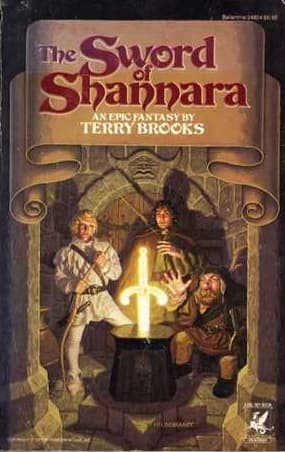
- The Sword of Shannara
Terry Brooks
3.8 (86k) average on GoodreadsFantasyClassic quest fantasy with a young protagonist discovering his destiny and fighting an ancient evil.
- The Eye of the World
Robert Jordan
4.2 (392k) average on GoodreadsFantasyWhile both "The Crystal Shard" and Jordan's "The Eye of the World" (1990) are foundational books in long-running fantasy series, they differ significantly in scope and narrative ambition. Salvatore's novel is more focused on a localized threat and character-driven action, with a relatively contained cast and clear-cut good-versus-evil conflict. Jordan's work, by contrast, immediately introduces a vast, intricate world with complex political systems, a sprawling prophecy, and a much larger ensemble cast. "The Eye of the World" prioritizes detailed world-building and a slow-burn narrative, whereas "The Crystal Shard" opts for a quicker pace and more immediate gratification through combat and character interaction. Jordan delves deeper into magical systems and moral ambiguities from the outset, appealing to readers who prefer epic scale and political intrigue over Salvatore's more straightforward adventure.
- Harry Potter and the Sorcerer's Stone
J.K. Rowling
4.5 (7M) average on GoodreadsFantasyRescued from a miserable life under the stairs, an orphaned boy discovers he's a wizard destined for a magical school, where he uncovers a dangerous secret tied to the dark wizard who murdered his parents.
- The Hunger Games
Suzanne Collins
4.3 (6.4M) average on GoodreadsFantasyIn a future where children fight to the death on live television, Katniss Everdeen volunteers for the arena, turning a death sentence into a fight for survival and a spark of rebellion.
- 1984
George Orwell
4.2 (3.1M) average on GoodreadsPoliticsIn a future where surveillance and thought control are absolute, a man's search for truth clashes with the Party, showing that hope can be a form of rebellion.





Enjoyed the summary?
A summary gives you the shape of the book. The book itself has the detail, the examples and the voice.
Find The Crystal Shard on AmazonAs an Amazon Associate, BookBrief earns from qualifying purchases. How we're funded