

Synopsis
Covers the whole plot, including the ending.
- Difficulty
- Medium
- Pacing
- Variable
- Mood
- Dark, Suspenseful, Epic, Terrifying, Philosophical
- Read it if
- You want a sprawling, epic sci-fi horror thriller that blends ancient mythology with modern science, exploring deep-earth mysteries and a terrifying alien civilization.
- Skip it if
- You prefer fast-paced, action-only thrillers or are sensitive to graphic descriptions of body horror and large-scale conflict.
The Descent Plot Summary
Covers the whole plot, including the ending.
The Himalayan Discovery
The story opens with Ike, an experienced Sherpa guide, leading an expedition in the Himalayas. While exploring an uncharted cave system, he finds a gruesome discovery: a self-mutilated body, seemingly a Western explorer, surrounded by cryptic symbols and a chilling message scrawled in blood: 'Satan exists.' The scene is one of horror and inexplicable terror, suggesting a force beyond human understanding. Ike's attempts to report the findings are met with skepticism and dismissal, but the encounter leaves a lasting mark on his mind, hinting at a hidden world beneath the Earth and a malevolent presence that defies rational explanation.
The Kalahari Anomaly
At the same time, in the Kalahari Desert, Sister Mary, an archaeologist and nun, leads a dig that unearths astonishing evidence. Her team discovers fossilized remains of a previously unknown proto-human species, alongside artifacts and symbols that point to a sophisticated, ancient culture. They find references to a deity or entity known as 'Older-than-Old' and indications of a vast, subterranean dwelling place. Sister Mary's findings challenge established anthropological theories, suggesting a parallel line of human-like evolution rooted deep within the Earth. Her research connects myths and legends of underworld beings across various cultures, giving scientific weight to the idea of a hidden world.
The Bosnian Atrocities and the Unseen Predator
After the Bosnian War, a team of forensic anthropologists, including Dr. Ali Zafar, excavates mass graves. They find disturbing anomalies: bodies with strange, non-human bite marks and evidence of organs meticulously removed. The predation pattern is unlike anything known to science, suggesting a highly intelligent, non-human entity. Local people whisper tales of 'devils' or 'demons' emerging from the earth, preying on the dead and the living. These gruesome discoveries in Bosnia provide direct, terrifying evidence of a physical, predatory presence, linking folklore to a tangible, biological threat from below.
The Convergence of Evidence
As reports of these inexplicable phenomena accumulate from various global hotspots—the Himalayas, the Kalahari, Bosnia, and other locations—intelligence agencies, particularly a clandestine American operation led by Colonel John Stone, begin to connect the dots. They realize that these seemingly unrelated events point to a single, horrifying truth: a vast, interconnected geological labyrinth exists beneath the Earth's surface, inhabited by an ancient, non-human race. The 'devils' and 'demons' of legend are real, and they are beginning to interact with the surface world. Stone's team starts a top-secret project to understand and potentially counter this emergent threat.
The First Descent
Driven by the accumulating evidence and the escalating threat, Colonel Stone assembles an elite, multidisciplinary team for a covert mission: to descend into the newly identified subterranean world. The team includes experts like Ike, Sister Mary, Dr. Zafar, and a specialized military unit. Their primary objective is reconnaissance—to map the labyrinth, understand its inhabitants, and assess the true scale of the danger. The descent is full of peril, navigating treacherous geological formations, extreme environmental conditions, and the psychological strain of entering an unknown, alien environment. This marks humanity's first deliberate foray into the 'Underworld'.
Encounters with the 'Hadals'
Deep within the Earth, the expedition team finally encounters the inhabitants of the underworld, whom they eventually call the 'Hadals' (referencing the deepest oceanic trenches). These beings are far from mythological demons; they are a highly evolved, intelligent, and deeply unsettling species. Their physiology is adapted to the extreme conditions of the deep Earth, and their culture is ancient and complex, yet utterly alien to human understanding. The first encounters involve fear, awe, and a desperate struggle for survival as the Hadals demonstrate both their advanced capabilities and their predatory nature, leading to initial losses for the human team.
Unveiling the Hadal Civilization
Through observation, limited interaction, and the interpretation of Hadal artifacts and structures, the team begins to piece together the history and nature of these subterranean beings. They discover that the Hadals are not merely monsters but a species with their own complex society, language, and belief systems. They learn that the Hadals view humanity not just as prey, but as a long-lost, surface-dwelling offshoot of their own lineage, or perhaps a competing species. Ancient texts and carvings suggest a forgotten, cataclysmic war between surface and subterranean dwellers, explaining the Hadals' deep-seated animosity and their 'harvesting' of humanity.
The True Nature of 'Satan'
As the team delves deeper, they realize that the Hadals are the source of humanity's ancient myths of devils, demons, and the underworld. The 'Satan' mentioned in the Himalayan cave is not a singular entity but a collective or perhaps a dominant Hadal faction. The Hadals’ predatory nature, their appearance in the dark, and their advanced, often terrifying technology have been misinterpreted through millennia as supernatural evil. The expedition uncovers the Hadals' methods of psychological manipulation and their ability to induce profound fear, which they exploit to control and harvest surface dwellers, blurring the lines between science fiction and religious horror.
Escalation and Betrayal
The mission becomes increasingly perilous as the Hadals actively resist the human intrusion. The team faces not only direct attacks but also psychological warfare, as the Hadals exploit their fears and vulnerabilities. Internal tensions rise within the human team due to the immense pressure, the alien environment, and the terrifying nature of their adversaries. Suspicions of betrayal emerge, and lines of command blur. Some team members succumb to the Hadals' influence or their own despair, highlighting the profound psychological toll of confronting such an ancient and powerful enemy. The mission's integrity begins to crumble under the weight of the underworld's horrors.
The Hadal Incursion
The Hadals, now fully aware of humanity's presence and intentions, escalate their activities. They begin to launch targeted incursions onto the surface world through various subterranean access points. These attacks are swift, brutal, and technologically advanced, demonstrating their superior understanding of the Earth's hidden passages. Cities and remote outposts are targeted, leading to widespread panic and chaos. The Hadal threat becomes undeniable to the global community, forcing humanity to confront the existence of this hidden enemy and the terrifying reality that the 'underworld' is no longer a myth but an active, hostile frontier.
A Desperate Alliance
Faced with an existential threat, the world's nations are forced into an uneasy alliance. Colonel Stone's team, despite their losses, becomes crucial in understanding the Hadals' tactics and weaknesses. The remnants of the expedition, including characters like Ike and Sister Mary, provide invaluable intelligence from their descent. Humanity mobilizes its resources, attempting to develop countermeasures against the Hadals' advanced technology and their ability to strike from below. The focus shifts from exploration to survival, as the surface world grapples with the terrifying reality of a hidden war on multiple fronts.
The War for the Surface
The novel culminates in a full-scale, global war between humanity and the Hadals. Battles erupt in subterranean passages, in remote wildernesses, and within major cities as Hadal forces emerge. The conflict is brutal and technologically advanced, with humanity struggling to adapt to an enemy that operates with alien logic and possesses devastating capabilities. The Hadals are adept at psychological warfare, exploiting human fears and divisions. The fate of humanity hangs in the balance, as both sides inflict heavy casualties, and the Earth itself becomes a battleground for two ancient, rival species.
Sacrifices and Hard Choices
Throughout the war, several key characters make profound sacrifices. Some, like Ike, use their intimate knowledge of the Earth's depths to guide humanity's defenses, often at great personal risk. Others, like Sister Mary, grapple with the theological implications of the Hadals' existence, challenging their faith while contributing their scientific expertise. Colonel Stone makes difficult strategic decisions, weighing the lives of his soldiers against the survival of the species. These sacrifices highlight the immense stakes of the conflict and the moral complexities of engaging in a war against an ancient, alien intelligence.
An Uneasy Truce or Lingering Threat
The novel concludes not with a definitive victory, but with an ambiguous and often unsettling resolution. While humanity manages to push back the immediate Hadal incursions and secure some safety, the threat is not entirely eliminated. An uneasy truce might be established, or the Hadals might retreat to their depths, leaving humanity forever changed by the revelation of their existence. The surface world is left to contend with the psychological, social, and political ramifications of knowing that a powerful, ancient, and hostile civilization exists beneath their feet, forever altering humanity's place in the universe and its understanding of itself.
Principal Figures
Ike
Supporting
A seasoned Sherpa guide haunted by an encounter with the underworld.
Ike is a pragmatic and experienced Sherpa guide, intimately familiar with the treacherous mountain ranges of the Himalayas. His initial discovery of the self-mutilated body and the chilling 'Satan exists' warning profoundly impacts him, transforming him from a simple guide into a reluctant witness and later, a crucial asset in understanding the subterranean world. He possesses an innate connection to the Earth and a deep, almost instinctual, understanding of hidden passages and natural dangers. His resilience and resourcefulness are invaluable to the human expedition into the underworld.
Relationships: Colonel John Stone (Initially a reluctant participant, later a trusted member of Stone's expedition team.); Sister Mary (Shares a bond of shared terror and discovery in the underworld.)
Sister Mary
Supporting
An archaeologist and nun whose discoveries challenge both science and faith.
Sister Mary is a brilliant and devout archaeologist whose work in the Kalahari unearths evidence of a proto-human species and a subterranean civilization. Her scientific curiosity is matched by her deep spiritual conviction, leading her to grapple with the theological implications of the Hadals' existence. She is intelligent, analytical, and courageous, providing crucial insights into the ancient history of the underworld. Her struggle to reconcile scientific fact with religious belief forms a significant internal conflict, as the 'devils' of scripture become biological entities.
Relationships: Colonel John Stone (A key scientific advisor and member of his team.); Dr. Ali Zafar (Collaborates on anthropological and biological analysis of the Hadals.)
Colonel John Stone
Protagonist
The pragmatic and driven leader of the covert operation against the Hadals.
Colonel John Stone is a seasoned military intelligence officer tasked with leading humanity's first organized response to the Hadal threat. He is a man of immense resolve, strategic brilliance, and a willingness to make difficult, often morally ambiguous, decisions for the greater good. Stone is initially skeptical but quickly grasps the existential danger posed by the Hadals. He is responsible for assembling the diverse team for the descent and coordinating global efforts against the underworld inhabitants. His leadership is pivotal in humanity's fight for survival, though he carries the heavy burden of command and its consequences.
Relationships: Ike (Relies on Ike's unique skills and knowledge of the Earth.); Sister Mary (Depends on her scientific and historical expertise.); Dr. Ali Zafar (Utilizes Zafar's biological and forensic insights.)
Dr. Ali Zafar
Supporting
A forensic anthropologist who uncovers the Hadals' predatory nature.
Dr. Ali Zafar is a forensic anthropologist whose initial work in the Bosnian mass graves reveals the horrifying, non-human predation patterns of the Hadals. He is meticulous, scientific, and initially struggles to accept the supernatural implications of his findings. Zafar provides crucial biological and forensic analysis of the Hadals' physiology, their hunting methods, and their interaction with human victims. His expertise helps the team understand the physical threat posed by the underworld inhabitants, moving beyond mere folklore to scientific fact. He is deeply disturbed by the horrors he uncovers.
Relationships: Colonel John Stone (A key scientific expert on Stone's team.); Sister Mary (Collaborates on the scientific understanding of the Hadals.)
The Hadals
Antagonist
An ancient, subterranean race, the true 'devils' and 'demons' of human myth.
The Hadals are the primary antagonists of the novel, an ancient, highly evolved, and deeply unsettling species inhabiting a vast labyrinth beneath the Earth. They are not supernatural demons but biological entities adapted to extreme conditions, possessing advanced technology and a complex, alien culture. They view humanity as either prey, a resource, or a long-lost, surface-dwelling relative. Their motivations are rooted in an ancient history of conflict with surface dwellers, and they are capable of both immense physical power and sophisticated psychological manipulation. Their existence shatters human understanding of history, religion, and evolution.
Relationships: Humanity (Predator/prey relationship, evolving into an existential war.)
The 'Older-than-Old'
Mentioned
An ancient deity or entity referenced in Hadal mythology.
The 'Older-than-Old' is a mysterious entity or concept referenced in the ancient texts and artifacts discovered by Sister Mary. It appears to be a central figure or force within Hadal mythology, possibly a progenitor, a ruling deity, or an abstract principle of their existence. Its exact nature remains ambiguous, but it suggests a deep spiritual or philosophical dimension to the Hadal civilization, hinting at a history and worldview far more complex than mere monstrous predation. The concept adds a layer of cosmic horror and ancient mystery to the Hadals' characterization.
Relationships: The Hadals (A revered or foundational figure/concept in their culture.)
Dr. Aris Thorne
Supporting
A scientist involved in the early stages of Hadal research, often skeptical.
Dr. Aris Thorne is a scientist, often portrayed as initially skeptical or resistant to the more outlandish theories regarding the Hadals. He represents the scientific establishment's initial reluctance to accept evidence that defies conventional understanding. As more proof emerges, Thorne is forced to confront the impossible, grappling with the implications for established scientific paradigms. His role often involves providing technical expertise and a grounding in traditional science, even as he is forced to expand his worldview.
Relationships: Colonel John Stone (Provides scientific consultation, initially with reservations.); Sister Mary (Engages in scientific debate and collaboration.)
Sergeant Major Rodriguez
Supporting
A tough and loyal soldier under Colonel Stone's command.
Sergeant Major Rodriguez is a highly disciplined and loyal military professional, serving as a key member of Colonel Stone's security detail and the initial descent team. He embodies the grit and resilience of the soldiers facing the unprecedented horrors of the underworld. Rodriguez is practical, courageous, and fiercely protective of his team, often providing a cynical but steadying presence amidst the chaos. He represents the human military's direct confrontation with the Hadals, showcasing their training and determination against an overwhelming enemy.
Relationships: Colonel John Stone (Loyal subordinate and trusted team member.)
Themes & Insights
The Nature of Evil
The novel challenges conventional notions of evil by portraying 'devils' and 'demons' not as supernatural entities, but as an ancient, biological species. The Hadals, while terrifying and predatory, operate according to their own evolutionary imperatives and cultural history, rather than purely malevolent intent. This forces characters like Sister Mary to re-evaluate theological concepts of Satan and sin, moving from a spiritual understanding to a scientific, yet still horrifying, reality. The fear they instill is a product of their alien nature and long-standing conflict with humanity, blurring the lines between what is truly evil and what is simply 'other.' The self-mutilation and 'Satan exists' warning in the Himalayan cave highlight humanity's primal fear projected onto this alien species.
“What we called 'Satan' was just a name for a truth we couldn't comprehend, a truth that burrowed deep beneath our feet, waiting.”
Humanity's Place in the Universe
The discovery of the Hadals fundamentally shifts humanity's understanding of its own origins and its place in the universe. No longer are humans the sole intelligent species on Earth; they are one of two, with a shared, violent history. This theme explores the existential shock and humility that comes with realizing humanity is not at the top of the evolutionary ladder, or that its history is incomplete. It forces characters to confront the possibility that human myths and religions are distorted memories of ancient conflicts, rather than divine revelations. The idea that humanity might be an offshoot or a 'harvest' for another species is a profound blow to human-centered views.
“We were not alone. We had never been alone. And the others had been here first, waiting for us to remember them.”
The Duality of Science and Faith
The novel explores the tension and eventual convergence between scientific inquiry and religious belief. Sister Mary, a nun and archaeologist, is central to this theme, as her discoveries challenge both her scientific understanding and her spiritual convictions. The Hadals, once 'demons' of folklore, become biological entities for scientific study, forcing a re-evaluation of scripture and myth. The book suggests that ancient religious texts might contain distorted truths about the physical world and its hidden inhabitants, offering a way for science and faith to inform each other in the face of the unknown. The initial dismissal of Ike's findings by authorities also highlights the conflict between established scientific/rational thought and unexplainable phenomena.
“The devil was real, not a spirit, but flesh and bone, and the Bible was just a poorly translated field guide.”
Fear of the Unknown and the Subterranean
A core theme is humanity's primal fear of the dark, the deep, and the unknown lurking beneath the Earth. The novel taps into archetypal fears of the underworld, hell, and hidden monsters. The geological labyrinth itself becomes a character, a vast, oppressive, and alien environment that psychologically wears down the human characters. The Hadals exploit this fear, using darkness, claustrophobia, and psychological manipulation as weapons. This theme is evident from the initial discoveries in the dark caves of the Himalayas and the deep mass graves of Bosnia, emphasizing that humanity's deepest fears are rooted in a very real, physical threat from below.
“The Earth was not a solid, safe foundation, but a thin crust over an abyss of ancient, hungry things.”
Plot Devices & Literary Techniques
The Unreliable Narrative of History
Ancient myths and religious texts are revealed as distorted accounts of real events.
This device functions by recontextualizing human history and mythology. What were once considered fantastical tales of devils, demons, and the underworld are presented as fragmented, misinterpreted historical accounts of encounters with the Hadals. This device serves to heighten the sense of dread and realism, suggesting that humanity has been willfully ignorant or simply forgotten a crucial part of its past. It also allows for the integration of diverse cultural folklore into a single, cohesive, scientific explanation, making the global threat feel more pervasive and deeply rooted in human consciousness. Sister Mary's work in particular exemplifies this, bridging ancient texts with modern archaeology.
Converging Global Discoveries
Disparate events across the world are revealed to be connected, building a unified threat.
The narrative strategically introduces seemingly unrelated incidents from different parts of the world (Himalayas, Kalahari, Bosnia). This device creates a sense of escalating mystery and a slow, horrifying realization. By showing isolated pockets of inexplicable phenomena, the author gradually builds a case for a larger, interconnected threat. When intelligence agencies finally link these events, the impact is more profound than if the threat had been immediately apparent. This technique emphasizes the global scale of the danger and the difficulty humanity faces in recognizing a threat that operates from hidden depths across the planet, slowly revealing the 'big picture'.
Sensory Deprivation and Psychological Warfare
The subterranean environment and Hadal tactics exploit human fears and senses.
This device is used to immerse the reader in the terrifying experience of the underworld. The deep Earth environment is characterized by extreme darkness, claustrophobia, and crushing pressure, inherently disorienting and terrifying to humans. The Hadals themselves are masters of psychological warfare, often using silence, unexpected movements, and exploiting individual fears to break down their victims. This goes beyond physical combat, highlighting the mental toll of confronting an enemy that understands and manipulates human psychology, making the Hadals a more insidious and formidable foe. The self-mutilation witnessed by Ike is a prime example of this psychological impact.
The Descent Quotes
“Beneath the surface of the world, there are other worlds. Older worlds. Worlds we've forgotten.”
“The darkness wasn't just an absence of light; it was a presence, a living, breathing thing.”
“They were not monsters born of myth, but creatures evolved in a different crucible, under a different sun.”
“Every secret place holds a danger. The deeper you go, the older the secret, the greater the peril.”
“Humanity's true history was not written on the surface, but carved into the very bones of the Earth.”
“Fear is a tool. Use it, don't let it use you.”
“The echoes down here... they aren't just sound. They're memories. Whispers of what was.”
“We are not alone. Never have been. The only question is, what does that mean for us?”
“The greatest discoveries often demand the greatest sacrifices.”
“Sanity is a luxury you can't afford when you're staring into the abyss.”
“They built their world in the dark, and we, in our sunlit ignorance, never even knew.”
“There are places on this Earth where the rules are different, where the very fabric of reality is thin.”
“The world above is a distraction. The real world... the true world... is down here.”
“Sometimes, the only way out is further in.”
Quiz
10 questions on the plot and the characters. Each answer comes with a short explanation.
Question 1
What warning does the guide discover with the self-mutilated body in the Himalayas?
- Beware the darkness
- Satan exists
- The end is near
- Do not enter
Show answer
B. Satan exists The synopsis explicitly states that the guide finds a warning with the body: 'Satan exists'.
Question 2
What does the nun unearth in the Kalahari Desert?
- Ancient religious texts
- Evidence of a lost civilization
- Evidence of a proto-human species and a deity called Older-than-Old
- A new mineral deposit
Show answer
C. Evidence of a proto-human species and a deity called Older-than-Old The synopsis mentions the nun unearthing 'evidence of a proto-human species and a deity called Older-than-Old' in the Kalahari Desert.
Question 3
In which location is 'something' described as feeding upon the dead in a mass grave?
- The Himalayas
- The Kalahari Desert
- Bosnia
- An unknown cavern
Show answer
C. Bosnia The synopsis states, 'In Bosnia, something has been feeding upon the dead in a mass grave.'
Question 4
What is the nature of the underworld revealed in the book?
- A mythical realm of spirits
- A vast geological labyrinth populated by another race of beings
- A series of ancient, uninhabited tunnels
- A futuristic underground city
Show answer
B. A vast geological labyrinth populated by another race of beings The synopsis describes the underworld as 'a vast geological labyrinth populated by another race of beings.'
Question 5
What do some people call the race of beings inhabiting the underworld?
- Ancestors
- Aliens
- Devils or demons
- Subterranean folk
Show answer
C. Devils or demons The synopsis explicitly states that 'Some call them 'devils' or 'demons.''
Question 6
What is the overarching 'shocking realization' mankind faces in the book?
- That ancient myths are true
- That the underworld is a vast geological labyrinth populated by another race of beings
- That humanity is on the brink of extinction
- That extraterrestrial life has arrived
Show answer
B. That the underworld is a vast geological labyrinth populated by another race of beings The synopsis states, 'So begins mankind’s most shocking realization: that the underworld is a vast geological labyrinth populated by another race of beings.'
Question 7
What is the primary action these underworld beings are described as doing?
- Building a new civilization
- Waiting for us to find them
- Seeking to communicate with humanity
- Attempting to escape the underworld
Show answer
B. Waiting for us to find them The final line of the synopsis clearly states, 'And they are waiting for us to find them…'
Question 8
How does the discovery in the Himalayas relate to the overall theme of hidden threats?
- It suggests a human cult is active.
- It introduces the concept of malevolent, non-human entities through a cryptic warning.
- It points to a simple case of madness.
- It is an isolated incident with no connection to other events.
Show answer
B. It introduces the concept of malevolent, non-human entities through a cryptic warning. The 'Satan exists' warning with the self-mutilated body in the Himalayas serves as an early, chilling hint that the threats are supernatural or non-human, aligning with the eventual revelation of the underworld race.
Question 9
The discovery of a 'proto-human species and a deity called Older-than-Old' in the Kalahari suggests what about the underworld beings?
- They are a recent evolutionary offshoot.
- They have a deep, ancient connection to human or pre-human evolution and possibly a religious significance.
- They are simply another species of animal.
- They originated from an extraterrestrial source.
Show answer
B. They have a deep, ancient connection to human or pre-human evolution and possibly a religious significance. Linking a 'proto-human species' with a 'deity called Older-than-Old' implies a profound, ancient, and possibly foundational connection between these underworld entities and the very origins or spiritual understanding of humanity, rather than just being a separate species.
Question 10
Considering the disparate global locations of the initial incidents (Himalayas, Kalahari, Bosnia), what does this imply about the presence or influence of the underworld beings?
- Their activity is confined to specific continents.
- Their presence or influence is widespread and global, hinting at a vast, interconnected underworld network.
- These are unrelated events that coincidentally happen at the same time.
- Only remote, isolated regions are affected.
Show answer
B. Their presence or influence is widespread and global, hinting at a vast, interconnected underworld network. The fact that significant, unsettling events are occurring in vastly different parts of the world (Asia, Africa, Europe) suggests that the underworld and its inhabitants are not localized but have a global reach or influence, indicating a vast subterranean system.
The Descent FAQ
What is the central premise of 'The Descent'?
The core premise of 'The Descent' revolves around the shocking discovery that the Earth's underworld is a vast, interconnected geological labyrinth inhabited by a separate, ancient species, often perceived as 'devils' or 'demons.' This realization forces humanity to confront its place in the universe and the true nature of evil.
Who are some of the main characters driving the initial discoveries?
Key characters include Dr. Ali 'Doc' Kazami, the guide who finds the 'Satan exists' body in the Himalayas; Sister Agnes Deva, the nun who unearths proto-human evidence and the concept of 'Older-than-Old' in the Kalahari; and General Mike "Mac" MacNamara, who investigates strange occurrences in Bosnian mass graves, all contributing to the overarching mystery.
What is the significance of the phrase 'Satan exists' found in the Himalayan cave?
The phrase 'Satan exists,' scrawled by a self-mutilated body in a Himalayan cave, serves as one of the initial, unsettling clues that something profoundly malevolent and real lurks beneath the surface. It hints at a tangible, rather than purely metaphorical, source of evil, directly challenging conventional religious and scientific interpretations.
How does the novel connect disparate global events to a single underlying threat?
The novel expertly weaves together seemingly unrelated events—a mysterious death in the Himalayas, ancient proto-human findings in the Kalahari, and gruesome feeding habits in Bosnian mass graves—by revealing they are all manifestations or consequences of the same subterranean species. This connection forces the world's leading minds to collaborate on understanding and confronting this unified threat.
What is the nature of the 'Other' race encountered in the underworld?
The 'Other' race, often called 'devils' or 'demons,' are a highly intelligent, ancient, and physically adapted species that have evolved in the Earth's deep geological labyrinth. They possess advanced sensory abilities, a unique form of communication, and a predatory nature, viewing humanity as a food source or an intrusion.
What is the 'Older-than-Old' concept introduced by Sister Agnes?
The 'Older-than-Old' is a deity or primordial entity described in ancient texts discovered by Sister Agnes in the Kalahari. It represents a deep, pre-human understanding of the subterranean species, suggesting that humanity's ancestors had prior, perhaps traumatic, encounters with these beings, influencing early mythologies and religious beliefs.
Are there any subtle clues early in the book that hint at the true nature of the 'devils' beyond mere superstition?
Yes, subtle clues include the consistent physical descriptions of the creatures across different cultures and eras, the geological anomalies found in conjunction with their presence, and the consistent, though often misinterpreted, warnings in ancient texts. These details suggest a biological reality rather than just folklore.
How does the author use geological and scientific details to ground the fantastical elements?
Jeff Long integrates extensive geological and scientific details, such as descriptions of vast cave systems, specific rock formations, and the physiological adaptations of subterranean life, to lend a strong sense of realism to the fantastical premise. This grounding makes the existence of the 'Other' species feel plausible within the Earth's hidden depths.
What is the significance of the 'echo' or 'whisper' phenomena experienced by some characters?
The 'echo' or 'whisper' phenomena experienced by certain characters, particularly those who venture deep into the underworld, hints at the 'Other' species' unique form of communication or psionic influence. It suggests a non-verbal, perhaps telepathic, way they interact with their environment and potentially even human minds, blurring the lines between perception and reality.
How do characters like General MacNamara cope with the revelation that their understanding of reality is fundamentally wrong?
General MacNamara, a military man grounded in logic and combat, struggles significantly with the revelation. He initially tries to apply conventional warfare strategies, but the sheer alienness and scale of the threat force him to confront the limitations of human knowledge, leading to moments of profound existential crisis and adaptation.
What psychological impact does prolonged exposure to the underworld have on the human explorers?
Prolonged exposure to the underworld's sensory deprivation, constant danger, and the 'Other' species' psychological influence leads to severe psychological distress among human explorers. They experience paranoia, hallucinations, a breakdown of social cohesion, and a questioning of their sanity, often resulting in madness or a profound change in perspective.
How does the concept of 'Satan' or 'demons' evolve in the characters' minds throughout the book?
Initially, 'Satan' and 'demons' are seen as religious or mythical figures. As characters encounter the 'Other' species, these concepts transform into a tangible, biological threat, forcing them to reconcile ancient beliefs with scientific reality. The 'devils' become less a spiritual evil and more a predatory, intelligent species that has shaped human fear and mythology for millennia.
What role does fear play in the human response to the 'Other' species?
Fear is a central driving force, paralyzing some and spurring others to desperate action. It's not just fear of physical harm, but existential fear—the terror of realizing humanity is not alone, not dominant, and has been unknowingly coexisting with a terrifying, ancient intelligence. This fear often leads to irrational decisions and heightened aggression.
Is the 'Other' species inherently evil, or are they simply acting on their natural instincts?
This is a key point of debate. While their actions are horrific from a human perspective (feeding on humans, causing terror), the book suggests they are operating on their own ancient instincts and survival imperatives, evolved in a vastly different environment. Whether this constitutes 'evil' or merely a different form of life is left open to interpretation, challenging human-centric morality.
Does the book offer any hope for coexistence or understanding between humanity and the 'Other'?
The book presents a grim outlook on coexistence. While some characters attempt to understand or even communicate, the fundamental biological differences, predatory nature of the 'Other,' and humanity's violent reaction make true peace seem unlikely. The narrative often leans towards a struggle for survival rather than harmonious integration.
How does 'The Descent' challenge traditional religious and mythological frameworks?
By providing a biological and geological explanation for 'devils' and 'hell,' 'The Descent' radically recontextualizes traditional religious and mythological frameworks. It suggests that these ancient stories were not mere fables, but distorted memories or warnings of actual encounters with a subterranean species, thus grounding the supernatural in a terrifying reality.
What is the ultimate message or warning the author conveys about humanity's place in the universe?
The author's ultimate message is a stark warning about human hubris and anthropocentrism. Humanity is not alone, not at the top of the food chain, and has been oblivious to a vast, ancient world beneath its feet. The book suggests that our perceived dominance is fragile, and we are just one species among many, some far older and more formidable.
Could the 'Other' species be seen as a metaphor for humanity's own repressed fears or unconscious drives?
While presented as a literal biological entity, the 'Other' can also be interpreted metaphorically as humanity's repressed fears, the primal darkness within, or the consequences of ignoring the unknown. Their subterranean existence mirrors the subconscious, and their predatory nature reflects the darker aspects of existence humanity often tries to deny.
Similar books
- Sphere
Michael Crichton
3.8 (167k) average on GoodreadsThrillerExploration of an unknown, potentially hostile entity in an isolated, claustrophobic setting.
- Blindsight
Peter Watts
4.0 (27k) average on GoodreadsFantasyFirst contact with a profoundly alien and dangerous intelligence that challenges human perception.
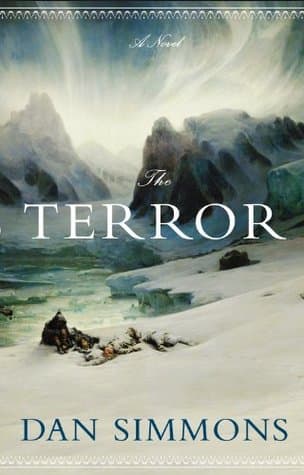
- The Terror
Dan Simmons
4.1 (43k) average on GoodreadsThrillerBoth The Descent and The Terror explore isolated groups facing an ancient, implacable, and supernatural-tinged predator in an extreme environment. Simmons' novel is more focused on historical fiction and psychological horror within a contained setting (the Arctic), meticulously detailing the crew's decline and the folklore surrounding the creature. Long's work is broader in scope, global in its impact, and leans more into speculative fiction with a fully realized subterranean civilization, making its horror more about cosmic revelation than historical dread. While both build intense suspense, The Terror prioritizes character study and historical accuracy alongside its horror, whereas The Descent prioritizes world-building and the grand scale of its threat.
- Angels & Demons
Dan Brown
3.9 (2.7M) average on GoodreadsThrillerA Harvard symbologist races through Rome's ancient sites, deciphering cryptic clues to unmask the Illuminati and stop a vengeful plot to destroy the Vatican with a stolen antimatter weapon.
- Gone Girl
Gillian Flynn
4.1 (2.3M) average on GoodreadsThrillerA wife's sudden disappearance on her fifth anniversary reveals a web of lies and psychological warfare, exposing the secrets within a seemingly perfect marriage.
- The Girl on the Train
Paula Hawkins
3.9 (2.1M) average on GoodreadsThrillerA woman’s fascination with a seemingly perfect couple she watches from her daily train commute leads her into a dark investigation when she witnesses something that shatters their idyllic image.





Enjoyed the summary?
A summary gives you the shape of the book. The book itself has the detail, the examples and the voice.
Find The Descent on AmazonAs an Amazon Associate, BookBrief earns from qualifying purchases. How we're funded