

Synopsis
Covers the whole plot, including the ending.
- Difficulty
- Easy
- Pacing
- Slow
- Mood
- Humorous, Satirical, Lighthearted, Observational
- Read it if
- You enjoy humorous social satire, character-driven narratives, and a lighthearted look at cultural quirks and class distinctions.
- Skip it if
- You prefer serious literary fiction, fast-paced plots, or find superficial characters irritating.
The Diary of a Social Butterfly Plot Summary
Covers the whole plot, including the ending.
Introduction to Butterfly's World
The story begins with Butterfly introducing herself, a self-described fixture of Pakistani high society, especially in Lahore. She writes about her daily life, which centers entirely on social events: coffee mornings, lunches, dinners, parties, and shopping. Her diary entries are marked by her unique, often wrong, perspective and her distinct 'Lahori English' way of speaking. Early entries show her surface-level concerns, such as the newest designer clothes, the quality of appetizers, and the social standing of her friends. She mentions global events like 9/11, but only in how they inconvenience her travel plans or affect the availability of imported goods, showing her deep separation from the wider world's realities.
The Perils of Social Climbing
Butterfly's diary often details her efforts to keep and raise her social status. She is obsessed with 'who's important' and 'who's not.' She carefully records who attended which party, who wore what designer, and who is considered 'old money' versus 'new money.' Her entries are full of hidden criticisms and gossip about her rivals, especially those she thinks are trying to take her place. She is very sensitive to insults, real or imagined, and often sees social interactions as competition. For example, she tells how she strategically avoids certain people at events or subtly criticizes their fashion choices to her friends.
Family Life and Domestic Concerns
While her social life is most important, Butterfly sometimes mentions her family. Her husband, Janoo, is always there, though often in the background. She often complains about his lack of interest in her social life, his preference for staying home, and his perceived stinginess about her shopping trips. Their relationship is shown as comfortable, if not romantic, co-existence, with Janoo mostly letting her have her way. Her children, especially her daughter, are mentioned mainly in terms of their possible marriage prospects or their occasional demands for attention that interrupt her social schedule. She often dismisses their worries as unimportant compared to her own.
The Impact of Political Upheaval
As Pakistan goes through significant political instability, including military coups, protests, and the killing of Benazir Bhutto, Butterfly's diary entries show these events, though filtered through her self-centered view. She often misunderstands or misinterprets the seriousness of situations, focusing instead on how they affect her ability to attend parties, travel, or buy luxury items. For example, curfews are an inconvenience preventing her from meeting friends, and political rallies cause traffic jams. The killing of Benazir Bhutto is a shocking event, but her main concern is the cancellation of social events and the general 'sadness' that might lower her spirits.
Shopping and Materialism
Shopping, both locally and internationally, is a main part of Butterfly's life. Her diary is full of detailed accounts of her purchases: designer handbags, shoes, clothes, and jewelry. She is obsessed with brand names and the status she thinks they give. She often talks about the quality of 'do number ka maal' (fake goods) versus real items, always aiming for the real ones. Her shopping trips to Dubai, London, or even local high-end shops are described with excitement usually saved for major life events, showing her deep materialism and the role consumerism plays in her identity and social standing within her elite group.
Health Scares and Cosmetic Fixes
Butterfly is very concerned with her appearance and getting older. She often talks about her 'problem areas,' such as wrinkles, weight gain, or sagging skin. Her diary entries detail her visits to skin doctors, plastic surgeons, and beauty salons for various cosmetic procedures, including Botox, fillers, and elaborate facials. These procedures are often discussed with a mix of excitement and worry, always aiming to keep a young and socially acceptable image. She shares her experiences with friends, often recommending or criticizing different clinics and treatments, showing the pressure to meet beauty standards within her social group.
The World of Domestic Staff
Butterfly's home is run by a team of household staff, including cooks, drivers, and maids. Her interactions with them often show a bossy, yet demanding, attitude. She often complains about their competence, their perceived laziness, or their occasional 'cheek' (rudeness). However, she also relies heavily on them for her daily life and social events to run smoothly. Her entries sometimes reveal a surprising, though brief, moment of concern for a staff member, quickly overshadowed by her own needs or a new social event. These interactions subtly show the large class divide in Pakistani society.
Social Faux Pas and Misunderstandings
A main source of humor in the diary comes from Butterfly's frequent social errors and her general misunderstanding of various ideas. She misuses English phrases, misinterprets common sayings, and is often unaware of the true meaning of news or conversations. For instance, she confuses 'S&M' with 'SMS' and 'GT' with 'Get-Together.' These instances show her sheltered life and her lack of involvement with anything beyond her immediate social bubble. Her innocent yet outrageous misunderstandings often lead to funny situations, which she records without irony, further highlighting her unique perspective.
The 'Parallel Universe' of the Elite
Throughout the diary, Butterfly's world is presented as a 'separate universe,' clearly distinct from the realities faced by most Pakistanis. Her concerns—designer clothes, exclusive parties, gourmet food—are very different from the political, economic, and social struggles happening in the country. She lives in a bubble of privilege, where national crises are simply inconveniences that might disrupt her social calendar. This consistent portrayal highlights the significant socio-economic differences and the isolation of the elite class, as seen through Butterfly's unquestioning, self-focused view.
Reflections and Continuations
As the diary continues through various years and events, Butterfly's basic character remains mostly the same. She continues her constant pursuit of social engagements, gossip, and luxury goods. While she occasionally expresses brief concern or 'sadness' over national tragedies, these feelings are quickly overshadowed by her next party invitation or shopping opportunity. The book ends with Butterfly's life continuing in much the same way, suggesting a repeating pattern to her existence and the lasting, though superficial, nature of her social world. Her final entries often hint at upcoming events, reinforcing the idea that her search for social importance is never-ending.
The Diary of a Social Butterfly Characters
Butterfly
Protagonist
A Lahore socialite obsessed with parties, fashion, and gossip.
Butterfly is the central character and narrator of the diary. She is a middle-aged, upper-class Pakistani woman whose life revolves around social engagements, designer clothes, and maintaining her status within Lahore's elite. She is charmingly naive, often misinformed, and speaks in a distinctive 'Lahori English' dialect filled with mispronunciations and malapropisms. Despite her superficiality and self-absorption, she possesses an unwitting wit and an acute, if skewed, observational power regarding her social milieu. Her primary motivation is to be seen, to be invited, and to be considered 'in' with the right crowd.
Relationships: Janoo (Husband; often a source of mild irritation or a financial provider.); Babloo (Close friend and confidante, often shares gossip and social anxieties with Butterfly.); Mummy (Butterfly's mother, occasionally mentioned for advice or family matters.); Various socialites (Friends, rivals, and acquaintances within her elite social circle.)
Janoo
Supporting
Butterfly's long-suffering, pragmatic husband.
Janoo is Butterfly's husband, a more grounded and less socially driven individual. He often serves as a foil to Butterfly's extravagance, preferring to stay home, read the newspaper, or watch television rather than attend parties. He is generally patient with Butterfly's whims, often indulging her shopping sprees, though he occasionally expresses mild exasperation at her social antics. He represents a quieter, more traditional aspect of the elite, focused on business or home life rather than relentless socializing. He provides a financial backbone for Butterfly's lifestyle.
Relationships: Butterfly (Husband; tolerant and financially supportive.)
Babloo
Supporting
Butterfly's best friend and fellow socialite.
Babloo is Butterfly's closest friend and confidante, sharing many of her social aspirations and anxieties. She is often the recipient of Butterfly's gossip and joins her on shopping trips and at social events. Babloo serves as a mirror to Butterfly, reflecting many of the same superficial concerns and societal pressures. Their friendship is built on shared experiences within the high society bubble, and they often commiserate over social slights or fashion dilemmas. She provides moral support and validation for Butterfly's lifestyle.
Relationships: Butterfly (Best friend; shares social life and gossip.)
Mummy
Supporting
Butterfly's mother, occasionally offering traditional advice.
Mummy is Butterfly's mother, a figure representing a slightly older generation of Pakistani high society. She is occasionally mentioned, usually when Butterfly seeks advice or recounts family anecdotes. Mummy often offers more traditional or pragmatic views, sometimes subtly contrasting with Butterfly's more modern, consumerist outlook. Her presence reinforces the generational aspect of elite culture and the enduring influence of family ties, even if Butterfly often dismisses her advice in favor of her own social imperatives.
Relationships: Butterfly (Mother; offers advice, sometimes ignored.)
The Domestic Staff
Supporting
The various household employees who enable Butterfly's lifestyle.
This collective refers to the cooks, drivers, maids, and other household help employed by Butterfly. They are largely unseen but essential to Butterfly's daily life, facilitating her social engagements and maintaining her lavish home. Butterfly's interactions with them highlight the vast class divide and her often imperious, yet dependent, relationship with her subordinates. They are often the subject of her complaints about competence or 'cheek,' but also the silent witnesses to her privileged existence. They represent the unseen labor that supports the elite's lifestyle.
Relationships: Butterfly (Employer; demanding and reliant.)
The Socialites
Mentioned
The vast network of friends, rivals, and acquaintances in Butterfly's social circle.
This group encompasses the numerous named and unnamed individuals who populate Butterfly's diary entries. They are the attendees of parties, the subjects of gossip, and the benchmarks against whom Butterfly measures her own social standing. They represent the collective consciousness and pressures of Lahore's high society, dictating fashion trends, acceptable behaviors, and social hierarchies. Their opinions and actions profoundly influence Butterfly's decisions and anxieties, making them a crucial, if diffuse, presence in the narrative.
Relationships: Butterfly (Peers, competitors, and sources of social validation.)
The Diary of a Social Butterfly Themes
The Insularity of the Elite
The novel clearly shows the deep separation between Pakistan's wealthy elite and the realities faced by most of the country. Butterfly's diary entries consistently show her unawareness of political unrest, economic hardship, or social issues, focusing instead on her immediate, privileged concerns. For example, national curfews are simply an inconvenience stopping her from attending a dinner party, and the killing of a major political figure is mainly a reason for social events to be canceled. This theme is central to the satire, highlighting how a part of society can exist in a 'separate world,' untouched and mostly unaffected by the struggles of their fellow citizens.
“What to do? Everyone is so depressed about the Benazir thing. All the parties are cancelled, even Salma's birthday. It's too much, baba. I mean, what is the point if we can't even enjoy?”
Materialism and Consumerism
A main force in Butterfly's life is her strong desire for luxury goods and designer brands. Her diary records shopping trips, fashion choices, and the pursuit of the newest expensive items, from handbags to shoes. This theme shows how material possessions are not just desired objects but also markers of social status and identity within her group. Butterfly's detailed accounts of 'do number ka maal' (fake goods) versus real items, and her constant concern with looking fashionable, illustrate the superficiality that can come with extreme wealth. The search for external approval through buying things is always present.
“I mean, what is the point of going to Dubai if you don't even buy a new Birkin? Such a waste of plane ticket, baba.”
The Absurdity of High Society
The novel makes fun of the customs, ranks, and concerns of Lahore's high society. Through Butterfly's unquestioning view, the absurdity of endless coffee mornings, elaborate dinners, and competitive socializing is revealed. The constant gossip, the subtle attempts to outdo others, and the obsession with guest lists and seating arrangements show a world where appearances and social standing are most important. Butterfly's own mistaken words and misinterpretations of common phrases (e.g., 'S&M' for 'SMS') further highlight the inherent silliness and self-importance of this exclusive world, often without her realizing the humor.
“Everyone knows me. All of Lahore, all of Karachi, all of Isloo—oho, baba, Islamabad—half of Dubai, half of London and all of Khan Market and all the nice, nice bearers in Imperial Hotel also...”
Identity and Self-Perception
Butterfly's identity is closely tied to her social status and how she sees herself as a key figure in high society. Her diary entries constantly assert her relevance and importance, even as her actual understanding of the world around her is limited. Her self-image is carefully built through her fashion choices, her social engagements, and her perceived connections to influential people. This theme explores how people in certain social classes get their sense of self from external approval and the constant performance of a particular role, rather than from inner thought or engagement with wider societal issues.
“No ball, no party, no dinner, no coffee morning, no funeral, no GT —Get-Together, baba—is complete without me.”
Plot Devices & Literary Techniques
First-Person Diary Narration
The story is told entirely through Butterfly's personal diary entries.
This device allows the reader direct access to Butterfly's thoughts, opinions, and unique voice. The informal, stream-of-consciousness style, complete with misspellings and malapropisms, is integral to creating her character and the comedic tone. It provides an unfiltered, albeit highly subjective, view of her world, allowing the satire to emerge through her unwitting observations and self-absorbed perspective. The diary format also emphasizes the insularity of her world, as her entries rarely extend beyond her personal experiences and social sphere.
Satire and Irony
The author uses humor and exaggeration to criticize Pakistani high society.
The novel employs satire as its primary comedic and critical tool. Butterfly's character, with her exaggerated concerns and profound obliviousness, is a satirical representation of a certain segment of the elite. The irony lies in Butterfly's earnest recounting of her trivial concerns against the backdrop of significant national and global events. The reader understands the gravity of the situations, while Butterfly remains blissfully unaware, creating a humorous yet pointed critique of social detachment and materialism. The humor is derived from the contrast between what Butterfly perceives and what the reader understands.
Malapropisms and Lahori English
Butterfly's distinctive, often incorrect, use of English.
Butterfly's language is a key plot device, serving both comedic and character-defining functions. Her frequent malapropisms (e.g., 'S&M' for 'SMS,' 'GT' for 'Get-Together') and her unique blend of English and Urdu phrases, often referred to as 'Lahori English,' highlight her charming naiveté and her limited understanding of the world beyond her social bubble. This linguistic style is central to her identity and the novel's humor, allowing the author to subtly comment on issues of class, education, and cultural identity within the Pakistani elite. It makes her voice instantly recognizable and memorable.
Juxtaposition
Placing trivial concerns against significant national events.
The novel frequently juxtaposes Butterfly's mundane, often superficial, concerns with major political and social upheavals in Pakistan and the world. For example, her worries about a chipped manicure or a cancelled party are placed alongside mentions of 9/11, military coups, or Benazir Bhutto's assassination. This stark contrast emphasizes the insularity and self-absorption of the elite class, highlighting their detachment from the realities faced by most citizens. This device is crucial for the novel's satirical effect, underscoring the 'parallel universe' theme.
The Diary of a Social Butterfly Quotes
“Oh, my dears, the things one has to put up with in this country! Load shedding, water shortage, and now this new fashion of everyone being a political pundit.”
“One must always be prepared for any eventuality, especially when it comes to social climbing. A new dress, a clever remark, and a well-placed 'darling' can go a long way.”
“I mean, what is the point of having a designer lawn suit if you can't even get decent pictures taken for your Instagram? It's a travesty, I tell you!”
“My husband, Janoo, bless his cotton socks, is absolutely clueless about anything beyond his golf handicap and the stock market. But he is a good provider, and that, my dears, is what truly matters.”
“The problem with democracy is that it gives everyone a voice. And frankly, some voices are just not meant to be heard.”
“One simply cannot survive in Lahore without a reliable driver, a good cook, and a steady supply of gossip.”
“Oh, the drama! The sheer, unadulterated drama of it all! One simply lives for these little moments of delicious scandal.”
“I always say, if you're going to do something, do it with flair. Or don't do it at all. Especially when it comes to throwing a dinner party.”
“These new money types, they just don't understand the nuances, do they? All flash and no substance. It's truly tragic.”
“One must always maintain one's composure, even when faced with the most vulgar of situations. A raised eyebrow, a subtle sigh, and a well-timed exit are usually sufficient.”
“The youth of today, with their iPhones and their selfies and their complete disregard for tradition. It's a different world, my dears, a very different world.”
“Sometimes, one simply needs a good cup of chai and a sympathetic ear to complain about the state of the nation. And the price of mangoes.”
“Oh, the sheer exhaustion of being fabulous all the time! But someone has to do it, my dears, someone has to keep up appearances.”
Quiz
10 questions on the plot and the characters. Each answer comes with a short explanation.
Question 1
Which major global event does Butterfly mention early in her diary, demonstrating her unique perspective on world affairs?
- The fall of the Berlin Wall
- The 9/11 attacks in the USA
- The Gulf War
- The assassination of JFK
Show answer
B. The 9/11 attacks in the USA The synopsis explicitly states, 'As her country faces tribulations – from 9/11 to the assassination of Benazir Bhutto—Butterfly glides through her world.'
Question 2
What is Butterfly's preferred term for Islamabad?
- Isloo
- Isly
- Islamabad City
- The Capital
Show answer
A. Isloo In her self-introduction, Butterfly clarifies, 'All of Lahore, all of Karachi, all of Isloo—oho, baba, Islamabad—'
Question 3
What common communication method does Butterfly comically misinterpret as 'S & M'?
- Fax
- SMS
- MMS
Show answer
C. SMS The synopsis states, 'In her world, SMS becomes S & M'.
Question 4
Which of the following phrases best describes Butterfly's general attitude towards the significant political and social upheavals happening around her?
- Deeply concerned and actively involved
- Unfazed, untouched, and largely focused on her social life
- Critically analytical and politically astute
- Anxious and withdrawn from public life
Show answer
B. Unfazed, untouched, and largely focused on her social life The synopsis clearly states, 'Butterfly glides through her world, unfazed, untouched, and stopped short only by the chip in her manicure.'
Question 5
What kind of cakes does Butterfly mention people eat, contrasting them with 'do number ka maal'?
- Two-tier cakes
- Three-tiara cakes
- Chocolate fudge cakes
- Designer cakes
Show answer
B. Three-tiara cakes The synopsis mentions, 'people eat 'three tiara cakes' while shunning 'do number ka maal'.' This highlights her unique vocabulary and focus on perceived status.
Question 6
Beyond Lahore, Karachi, and Islamabad, which two international cities does Butterfly claim to be known in?
- Paris and New York
- Dubai and London
- Singapore and Hong Kong
- Delhi and Mumbai
Show answer
B. Dubai and London Butterfly boasts, 'half of Dubai, half of London and all of Khan Market and all the nice, nice bearers in Imperial Hotel also...'
Question 7
What is the primary theme explored through Butterfly's 'unwittingly acute observation' of Pakistani high society?
- The deep political divisions within Pakistan
- The resilience of the Pakistani common person
- The superficiality and detachment of the elite from national realities
- The struggle for women's rights in conservative societies
Show answer
C. The superficiality and detachment of the elite from national realities The synopsis describes her as an 'unwittingly acute observer of Pakistani high society' and notes how she 'glides through her world, unfazed, untouched' by national tribulations, giving a 'delicious glimpse into the parallel universe of the have-musts'. This points to the theme of elite detachment.
Question 8
What specific minor personal mishap is highlighted as being more impactful to Butterfly than major national events?
- Losing her favorite designer handbag
- A chip in her manicure
- Being uninvited to a high-profile party
- Her car breaking down on the way to a GT
Show answer
B. A chip in her manicure The synopsis states she is 'stopped short only by the chip in her manicure', emphasizing her trivial concerns over significant events.
Question 9
The phrase 'What cheeks!' is used by Butterfly. What does this likely convey in her social context?
- Admiration for someone's beauty
- Shock or disapproval at someone's audacity or impudence
- A compliment about someone's healthy glow
- A comment on the temperature of a room
Show answer
B. Shock or disapproval at someone's audacity or impudence The phrase 'What cheeks!' is introduced after describing her world where people eat 'three tiara cakes' and shun 'do number ka maal', implying it's a reaction to perceived social transgressions or impudence, which aligns with the common English idiom 'to have some cheek' meaning to be impudent.
Question 10
The book is described as giving a 'delicious glimpse into the parallel universe of the have-musts'. What does 'have-musts' imply about the social class Butterfly inhabits?
- They are people who are forced to have certain things due to their circumstances.
- They are the extremely wealthy elite who believe they are entitled to everything and must possess the latest trends.
- They are individuals who feel a strong moral obligation to help others.
- They represent the rising middle class struggling to acquire possessions.
Show answer
B. They are the extremely wealthy elite who believe they are entitled to everything and must possess the latest trends. The term 'have-musts' is a clever play on 'have-nots' and 'haves', suggesting a class that not only 'has' everything but feels they 'must' have it, indicative of extreme privilege, materialism, and a sense of entitlement, fitting the description of high society.
The Diary of a Social Butterfly FAQ
Who is Butterfly and what is her primary occupation?
Butterfly is the eponymous protagonist, a Lahore-based socialite who dedicates her life to attending parties, coffee mornings, and other social gatherings. Her 'occupation' is essentially maintaining her social standing and participating in the exclusive events of Pakistan's elite, meticulously documenting her experiences in her diary.
What significant global and national events does Butterfly witness, and how do they impact her?
Butterfly lives through major events like 9/11, the assassination of Benazir Bhutto, and various political upheavals in Pakistan. However, these events largely remain distant background noise for her, often only impacting her if they disrupt a planned party or result in a temporary shortage of imported goods, demonstrating her insulated existence.
Who are some of the key recurring characters in Butterfly's social circle?
Key recurring characters include her husband, Janoo; her daughter, Kulchoo; her friends like the 'Polo-playing crowd' and other socialites. These characters primarily serve as companions for her social outings, sources of gossip, or occasional irritants, reflecting the superficial nature of her relationships.
How does Butterfly's unique language and misspellings contribute to the book's humor?
Butterfly's 'inspired misspellings' and malapropisms, such as 'S & M' for SMS or 'three tiara cakes,' are central to the book's comedic tone. They highlight her lack of formal education and her obliviousness, while also creating a distinct, charmingly naive voice that endears her to the reader despite her foibles.
What is 'do number ka maal' and why does Butterfly shun it?
'Do number ka maal' refers to counterfeit or illicit goods, often implying lower quality or illegal origin. Butterfly shuns it because, as a member of the elite, she prides herself on owning genuine, imported, and expensive items, seeing 'do number ka maal' as beneath her status and a sign of poor taste.
Are there any subtle indications that Butterfly's wealth might not be entirely self-made or ethically sourced?
While not explicitly stated, there are subtle hints, particularly regarding Janoo's business dealings and the lavish lifestyle enjoyed without obvious productive work. The casual mentions of 'connections' and the ease with which certain luxuries are acquired, contrasted with the struggles of the general populace, suggest an underlying system that benefits the elite, possibly through means not always transparent.
Does Butterfly ever show genuine empathy or concern for those outside her immediate social circle?
Rarely, and usually in a fleeting or superficial manner. Her concern often stems from how a situation might inconvenience her or her friends, rather than a deep understanding of others' suffering. For example, she might lament a power outage more for spoiling a party than for its impact on the poor.
What is the significance of the 'chip in her manicure' as the only thing that stops her short?
The chip in her manicure symbolizes Butterfly's utterly superficial concerns and her detachment from reality. It underscores that her personal aesthetic and minor inconveniences are paramount to her, even when her country faces severe crises, highlighting her self-absorption and the triviality of her world.
How does Butterfly's social media usage (or lack thereof, given the era) reflect her character?
While the book predates widespread social media as we know it, Butterfly's use of SMS (which she misinterprets as 'S & M') and her focus on gossip and appearances are precursors to modern social media behavior. Her diary itself functions as a personal 'feed,' documenting her curated life and seeking validation, mirroring contemporary online personas.
To what extent is Butterfly aware of her own ridiculousness, or is she genuinely oblivious?
Butterfly appears genuinely oblivious to her own ridiculousness. Her diary entries are presented without irony from her perspective; she believes her observations are astute and her social life is of utmost importance. The humor arises from the stark contrast between her self-perception and the reader's understanding of her naivety.
What psychological defense mechanisms does Butterfly employ to maintain her worldview?
Butterfly primarily uses denial and selective attention. She denies the gravity of political and social issues, focusing instead on trivial matters. She selectively attends to information that reinforces her privileged lifestyle and ignores anything that challenges her comfortable, insulated reality, effectively creating her 'parallel universe'.
How does Butterfly's relationship with Janoo reflect her need for security and status?
Her relationship with Janoo seems largely transactional and based on mutual convenience. Janoo provides the financial means and social access that enable Butterfly's lifestyle, while Butterfly fulfills the role of a trophy wife who enhances his social standing. Love, if present, is secondary to maintaining their elite status.
Is Butterfly's constant need for social engagement a form of escapism?
Yes, her relentless pursuit of social engagements can be interpreted as a form of escapism. By constantly filling her schedule with parties and gossip, she avoids confronting the harsh realities of her country and the potential emptiness of her own life, creating a perpetual distraction from deeper introspection.
Does Butterfly ever experience moments of introspection or doubt about her lifestyle?
Moments of genuine introspection are rare and usually short-lived. If she does experience doubt, it's often related to a social faux pas or a temporary disruption to her routine, rather than a profound questioning of her values or the broader societal implications of her lifestyle. She quickly reverts to her usual concerns.
Is the book primarily a satire of Pakistani high society, or does it offer a more complex critique?
While primarily a biting satire of Pakistani high society's superficiality, materialism, and detachment, the book also offers a more complex critique. It implicitly questions the ethics of extreme wealth disparity and the psychological toll of living in a bubble, even as it entertains with Butterfly's antics.
Could Butterfly be seen as a sympathetic character despite her flaws?
Many readers find Butterfly sympathetic due to her childlike innocence, her unwavering optimism, and the sheer joy she derives from her simple pleasures. Her obliviousness, while a source of satire, also makes her endearing, as she lacks malicious intent and is genuinely happy in her unique world.
What is the author's message about the 'parallel universe of the have-musts'?
The author's message highlights the extreme disconnect between the elite and the general populace in Pakistan. It critiques the 'have-musts' for their materialism, their insulated existence, and their moral blindness to the suffering and political turmoil around them, while also acknowledging the absurdity and sometimes charm of their world.
How does the setting of Pakistan, with its political instability, enhance the satirical elements of the book?
The backdrop of a politically turbulent Pakistan dramatically enhances the satire. The contrast between Butterfly's trivial concerns (e.g., a chip in her manicure) and the serious national crises (e.g., Benazir Bhutto's assassination) amplifies her obliviousness and the absurdity of her privileged existence, making the critique sharper.
Does the book offer any hope for change or reconciliation between the 'parallel universes'?
The book does not explicitly offer hope for change or reconciliation. It primarily serves as a snapshot of a particular social stratum. While it implicitly critiques the divide, it doesn't suggest solutions, instead leaving the reader to reflect on the nature of such 'parallel universes' and their implications.
Similar books
- Bridget Jones's Diary
Helen Fielding
3.8 (881k) average on GoodreadsRomanceBoth feature a relatable, often clueless, female protagonist chronicling her life in diary format with humorous observations and social anxieties.
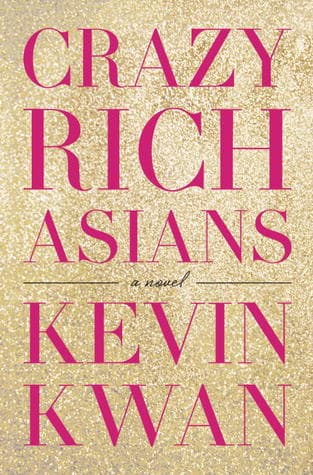
- Crazy Rich Asians
Kevin Kwan
3.9 (335k) average on GoodreadsRomanceExplores the opulent and often outlandish lives of the extremely wealthy elite in an Asian setting with a satirical tone.
- A Confederacy of Dunces
John Kennedy Toole
3.9 (231k) average on GoodreadsLiterary FictionFeatures a highly eccentric and self-absorbed protagonist whose unique worldview provides much of the novel's humor and social commentary.
- Nineteen Eighty-Four
George Orwell
4.2 (5.5M) average on GoodreadsFictionWinston Smith dreams of truth and rebellion in a world where Big Brother watches all, but he confronts the terrifying power of a regime that controls not just actions, but thoughts.
- The Frozen River
Ariel Lawhon
4.4 (600k) average on GoodreadsFictionIn 1789 Maine, a heroic midwife's diary helps her expose a murder and get justice in a town that wants to silence her.
- A Man Called Ove
Fredrik Backman
4.4 (569k) average on GoodreadsFictionA stubborn widower, who lives by strict rules, finds his quiet world changed by a lively new family next door, making him face his past and find happiness in human connection.





Enjoyed the summary?
A summary gives you the shape of the book. The book itself has the detail, the examples and the voice.
Find The Diary of a Social Butterfly on AmazonAs an Amazon Associate, BookBrief earns from qualifying purchases. How we're funded