
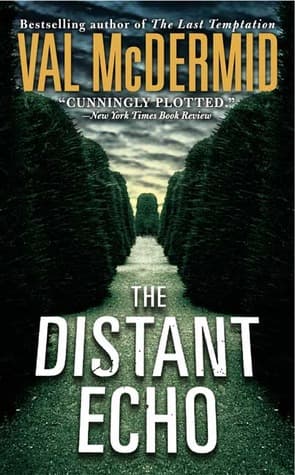
Synopsis
Covers the whole plot, including the ending.
- Difficulty
- Medium
- Pacing
- Moderate
- Mood
- Atmospheric, Suspenseful, Dark, Melancholic
- Read it if
- You enjoy intricate cold case mysteries with a strong sense of place, psychological depth, and a focus on how past events haunt present lives.
- Skip it if
- You prefer fast-paced, action-driven thrillers over character-focused, investigative mysteries, or are sensitive to detailed descriptions of murder and its aftermath.
The Distant Echo Plot Summary
Covers the whole plot, including the ending.
The Discovery in the Cemetery
In the winter of 1978, four Dundee University students — Alex Gilbey, Kenny Martin, Jimmy Higgins, and Davey Burnside — take a shortcut through a snowy cemetery after a night of drinking. They find the brutally murdered body of Rosie Duff, a young barmaid from their local pub. Panicked and covered in her blood from trying to check for life, they become the main suspects in the investigation led by Detective Inspector Graham Murray. Despite intense questioning and the circumstantial evidence of their location and the blood on their clothes, no clear evidence links them to the murder. The case eventually goes cold, leaving a lasting mark on their lives.
Twenty-Five Years Later: The Cold Case Reopens
Twenty-five years later, in 2003, the Cold Case Review Unit, led by the now Detective Chief Inspector Graham Murray, decides to re-examine Rosie Duff's unsolved murder. This news affects Alex, Kenny, Jimmy, and Davey. They have all moved on with careers and families, but never truly escaped the past. The reopened case makes them face the traumatic memories of that night and the police scrutiny, bringing back old fears and suspicions.
Kenny Martin's Suspicious Death
Soon after the cold case is reopened, Kenny Martin, one of the four friends, dies in a fall from a cliff. It is initially called an accident, but the timing and situation are suspicious, especially with the new interest in Rosie Duff's murder. Alex and the others are disturbed, wondering if Kenny's death is connected to the past. The police, including Murray, investigate but find no clear proof of foul play. The friends are left with a growing feeling that someone might be targeting them.
Jimmy Higgins's Apparent Suicide
The feeling of unease turns to terror when Jimmy Higgins, another of the original four, is found dead in his home, seemingly by suicide. However, the police and Alex quickly see that Jimmy was murdered and his death staged. This confirms their worst fears: someone is systematically targeting them, seeking revenge for Rosie Duff's death. Alex, now truly scared for his life and his family's safety, knows he must find the truth.
Alex's Investigation Begins
With two friends dead, Alex Gilbey, a successful academic, feels he must find Rosie Duff's real killer before he and Davey are next. He starts his own investigation, revisiting old places in Dundee and contacting people who knew Rosie or were part of the original inquiry. He looks into the past, trying to put together the events of that night and the days before it. He hopes to find a detail the police missed or a motive not fully explored. His search is dangerous, as the killer is watching.
Davey Burnside's Disappearance and Rescue
The killer's plan tightens when Davey Burnside, the last remaining friend besides Alex, disappears. Alex, through his investigation and a race against time, finds Davey. Davey has been drugged and is held captive by the killer. Alex confronts the killer, stopping Davey's murder in a tense standoff. This direct meeting with the killer strengthens Alex's resolve and brings him face-to-face with the person who has been killing his friends.
The Killer's Identity and Motivation Revealed
The killer is Hamish, a former police officer who was somewhat involved in the first Rosie Duff investigation. Hamish loved Rosie and believed the four students killed her. He felt a strong sense of injustice that they were never charged. He planned his revenge for over two decades, waiting for the cold case to reopen as his signal. His plan was to make their deaths look like accidents or suicides, reflecting the perceived lack of justice for Rosie.
Unraveling Rosie's True Story
As Alex investigates further, he learns a more complex and sad truth about Rosie Duff's life. Rosie was involved with several men, some of whom were powerful and connected in Dundee. She was pregnant when she died, and the father's identity was a secret. Alex learns Rosie planned to leave Dundee and expose the father of her child, which led to her death. Her life was more entangled and dangerous than the initial police investigation suggested.
The Real Murderer is Exposed
Working with DI Murray, who has also found new leads, Alex connects the facts. Rosie's real killer was not one of the four students, nor was it Hamish. It was Arthur, a prominent, respectable local businessman who was the father of Rosie's unborn child. Rosie threatened to expose him, which would have ruined his reputation and marriage. In a desperate act to silence her, he killed her and left her body in the cemetery, knowing the students would likely find her and become easy scapegoats.
Justice Served and Aftermath
With Alex and the police working together, Arthur is confronted with clear evidence and confesses to Rosie Duff's murder. Hamish, the avenging killer, is also arrested. The truth about Rosie's murder and the subsequent targeting of Alex and his friends finally comes out. Alex, having faced his past and brought the real killer to justice, can begin to heal from the trauma that has affected him and his friends for twenty-five years. He finds peace, knowing Rosie's death has finally been avenged and his own innocence proven.
Principal Figures
Alex Gilbey
Protagonist
The central character, haunted by the past, who ultimately uncovers the truth.
Alex Gilbey is one of the four students who discovered Rosie Duff's body in 1978. Now a successful academic, he lives with the lingering trauma and suspicion of the unsolved murder. When his friends start dying, he is forced to confront his past and initiate his own dangerous investigation, driven by a desire to protect his family and clear his name. He is intelligent, observant, and resilient, evolving from a passive victim of circumstance to an active seeker of truth. His journey is one of self-discovery and a quest for justice.
Relationships: Kenny Martin (Close university friend); Jimmy Higgins (Close university friend); Davey Burnside (Close university friend); Graham Murray (Investigating officer, later collaborator); Rosie Duff (Victim, a catalyst for his life's trauma)
Rosie Duff
Victim (Central to the plot)
The young barmaid whose brutal murder drives the entire narrative.
Rosie Duff is the 18-year-old barmaid whose body is found in the cemetery in 1978. Although deceased, her life and death are central to the entire narrative. She is initially portrayed as a somewhat promiscuous but ultimately vulnerable young woman. As the investigation unfolds, a more complex picture emerges: she was pregnant, involved with powerful men, and planning to expose the father of her child, which ultimately led to her demise. Her story is slowly unraveled through the memories and investigations of others, revealing her hidden struggles and ambitions.
Relationships: Alex Gilbey, Kenny, Jimmy, Davey (Acquaintances from the pub); Hamish (Obsessed admirer/lover); Arthur (Secret lover and father of her child)
Graham Murray
Supporting
The original detective in charge, who reopens the cold case as a DCI.
Graham Murray is the Detective Inspector who initially investigated Rosie Duff's murder in 1978. Twenty-five years later, he is a Detective Chief Inspector heading the Cold Case Review Unit and reopens Rosie's file, driven by a professional commitment to justice and a personal lingering doubt about the original investigation. He is a diligent, methodical, and ultimately fair officer, initially suspicious of the four friends but later willing to consider new evidence and work with Alex to uncover the truth. He represents the official arm of justice.
Relationships: Alex Gilbey (Initial suspect, later reluctant collaborator); Rosie Duff (Victim in his unsolved case)
Kenny Martin
Supporting
One of the four friends, whose death marks the beginning of the new killings.
Kenny Martin is one of Alex's university friends who found Rosie Duff's body. In 2003, he is the first of the four friends to die under suspicious circumstances, officially ruled an accident but suspected by Alex and the reader to be murder. His death serves as the catalyst for Alex's investigation and highlights the danger the remaining friends are in. He is a reminder of the lasting impact of the original trauma.
Relationships: Alex Gilbey (Close university friend); Jimmy Higgins (Close university friend); Davey Burnside (Close university friend)
Jimmy Higgins
Supporting
Another of the four friends, whose murder confirms a killer is targeting them.
Jimmy Higgins is the second of Alex's university friends to be murdered, his death staged to look like a suicide. His murder definitively proves that someone is targeting the group and confirms Alex's fears. Jimmy's fate underscores the escalating threat and motivates Alex to intensify his own search for the killer. He is a victim who reinforces the chilling reality of the revenge plot.
Relationships: Alex Gilbey (Close university friend); Kenny Martin (Close university friend); Davey Burnside (Close university friend)
Davey Burnside
Supporting
The last surviving friend besides Alex, who is kidnapped by the killer.
Davey Burnside is the fourth member of the group of friends who found Rosie's body. He is the last target before Alex, kidnapped and nearly killed by Hamish. His abduction and Alex's rescue of him lead to the direct confrontation with Hamish and provide crucial pieces of the puzzle. Davey's vulnerability emphasizes the immediate danger Alex is in and brings the killer's plot to a head.
Relationships: Alex Gilbey (Close university friend); Kenny Martin (Close university friend); Jimmy Higgins (Close university friend)
Hamish
Antagonist
A former police officer and Rosie's obsessed lover, who seeks revenge on the four friends.
Hamish is revealed to be the avenging killer targeting Alex and his friends. A former police officer who was deeply, even obsessively, in love with Rosie Duff, he believed the four students were responsible for her murder and felt a profound injustice when they were never charged. He meticulously planned his revenge for twenty-five years, seeing the reopening of the cold case as his opportunity. He is cunning, patient, and driven by a distorted sense of justice, making him a formidable and dangerous foe.
Relationships: Rosie Duff (Obsessed lover); Alex Gilbey, Kenny, Jimmy, Davey (Targets of his revenge)
Arthur
Antagonist
A prominent local businessman and the true murderer of Rosie Duff.
Arthur is the true murderer of Rosie Duff, a fact uncovered late in the investigation. He is a seemingly respectable and powerful local businessman who had a secret affair with Rosie and was the father of her unborn child. Fearing exposure, which would ruin his reputation and marriage, he killed Rosie to silence her. He represents the hidden darkness beneath a veneer of respectability and is the ultimate antagonist responsible for the initial tragedy.
Relationships: Rosie Duff (Secret lover and victim); Alex Gilbey (The protagonist who uncovers his secret)
Themes & Insights
The Enduring Impact of Unsolved Crime
The novel shows how an unsolved murder can affect the lives of everyone involved, even decades later. Alex, Kenny, Jimmy, and Davey are forever changed by finding Rosie's body and the police suspicion. Their lives are shaped by the trauma, the unanswered questions, and the lingering feeling of injustice. The reopened cold case brings back old pain, showing that true closure is hard to get until the truth is known. It also shows how memory can change or keep the past.
“Twenty-five years ago, four young men found a body in the snow. They thought they'd forgotten all about it. They were wrong.”
Justice and Revenge
Justice versus revenge is a main theme. DI Murray and Alex seek official justice for Rosie Duff, but Hamish takes matters into his own hands, believing the system failed. His actions, driven by a personal and obsessive sense of injustice, show how dangerous and destructive private revenge is. The novel compares the methodical, legal pursuit of truth with violent, personal retribution. It argues that the legal path is the only way to real resolution, even while acknowledging the human desire for revenge.
“Revenge is a dish best served cold, but this was a meal that had been freezing for twenty-five years.”
Memory and Perception
The novel relies on the idea that memory is flawed and selective. As Alex looks back at the past, he realizes how his own memories, and those of his friends, have changed over time. Different characters remember the same events and people (especially Rosie) in very different ways, influenced by their own biases, guilt, or emotions. This theme is important for figuring out the true story of Rosie's murder. Alex must sort through subjective memories and old secrets to find objective truth, showing how collective memory can hide reality.
“Memories were like photographs, fading at the edges, losing their sharpness, but still holding the core of a moment.”
Social Class and Hypocrisy
The book explores social class in Dundee, especially regarding Rosie Duff's life and death. Rosie, a working-class barmaid, is easily dismissed and judged, making her an easier victim and her case less prioritized by some. The true killer, Arthur, is a wealthy and influential businessman whose status allowed him to avoid suspicion for decades. The story shows how society protects its powerful members while ignoring the vulnerable, and how class differences can impact justice.
“Rosie Duff was just another working-class girl, easily forgotten, easily dismissed. Until she wasn't.”
Friendship and Loyalty
The bond between Alex, Kenny, Jimmy, and Davey, formed in their youth and tested by the traumatic discovery, is an emotional core of the novel. Despite their different life paths, the shared secret of Rosie's murder creates a strong, though sometimes strained, connection. The murders of his friends push Alex to find the truth, driven by loyalty and a need to protect the last remaining friend. The story examines how shared trauma can both connect and burden friendships, showing the deep impact of their shared past.
“They were brothers, in a way, bound by blood not their own, but blood nonetheless.”
Plot Devices & Literary Techniques
Dual Timeline Narrative
Alternating between 1978 and 2003 to reveal the past and present.
The novel employs a dual timeline structure, alternating chapters or sections between the original 1978 investigation and the present-day cold case reopening in 2003. This device allows the reader to gradually piece together the events of Rosie's murder and its immediate aftermath, while simultaneously experiencing the escalating tension and new investigations in the present. It effectively builds suspense, reveals character development over time, and highlights the enduring impact of the past on the present.
Cold Case Reopening
The catalyst for the present-day murders and renewed investigation.
The reopening of Rosie Duff's cold case by DI Murray's unit serves as the central plot device that ignites the present-day narrative. It provides a credible reason for the original suspects to be re-examined and for the killer to emerge from the shadows. This device not only allows for a fresh look at old evidence but also creates the perfect environment for Hamish's revenge plot to unfold, as it brings his targets back into the public eye and forces them to confront their shared past.
Unreliable Memory/Subjective Recollections
Different characters' varying memories of Rosie and the events of 1978.
McDermid uses the concept of unreliable memory as a key plot device. As Alex interviews various characters who knew Rosie or were involved in the original case, their recollections often conflict or are incomplete. This forces Alex, and the reader, to actively participate in sifting through subjective accounts to discern the objective truth. It adds layers of complexity to the mystery, demonstrating how personal biases, trauma, and the passage of time can distort perceived reality and mislead investigations.
The Cemetery as a Recurring Motif
The site of the murder, symbolizing death, secrets, and the past.
The cemetery where Rosie Duff's body is found in 1978, and where Alex frequently revisits in 2003, functions as a powerful recurring motif. It symbolizes death, buried secrets, and the inescapable presence of the past. It is a place of both discovery and contemplation, a physical manifestation of the trauma that haunts the characters. Its desolate, cold imagery reinforces the grim nature of the crime and the lingering chill it casts over the lives of the survivors.
The Distant Echo Quotes
“The past is a foreign country; they do things differently there.”
“Sometimes the truth is too inconvenient to be true.”
“Grief was a thief, stealing not just the person, but parts of yourself too.”
“Memories, like old photographs, faded and distorted with time, but never truly disappeared.”
“The greatest lies are often told in silence.”
“There was a fine line between curiosity and obsession, and he'd long since crossed it.”
“Justice wasn't about right or wrong, sometimes it was just about who had the loudest voice.”
“Every secret had its own echo, reverberating through time until someone finally heard it.”
“The past wasn't just behind them; it was woven into the fabric of who they were.”
“Fear was a primal thing, stripping away the veneer of civilization.”
“Nobody really knew what went on behind closed doors, not even those who lived there.”
“The truth was rarely simple, and never convenient.”
“Forgiveness was a luxury some couldn't afford, and others didn't deserve.”
“Sometimes the greatest monsters wore the most ordinary faces.”
Quiz
10 questions on the plot and the characters. Each answer comes with a short explanation.
Question 1
In what year was the body of Rosie Duff initially discovered?
- 1975
- 1978
- 1982
- 1998
Show answer
B. 1978 The book states that Rosie Duff's body was discovered on a winter morning in 1978, which is the starting point for the mystery.
Question 2
What was Rosie Duff's profession at the time of her murder?
- Student
- Librarian
- Barmaid
- Nurse
Show answer
C. Barmaid The synopsis clearly identifies Rosie Duff as a young barmaid whose body was found in the snow banks.
Question 3
Who are the initial suspects in Rosie Duff's murder?
- Local police officers
- Alex Gilbey and his three best friends
- A group of strangers passing through town
- Rosie Duff's colleagues from the bar
Show answer
B. Alex Gilbey and his three best friends The four young men who found her body, including Alex Gilbey, were the only suspects due to her blood being on their hands, as stated in the synopsis.
Question 4
How many years later is Rosie Duff's Cold Case file reopened?
- 10 years
- 15 years
- 25 years
- 30 years
Show answer
C. 25 years The investigation into Rosie Duff's murder is reopened twenty-five years after the initial event, bringing the past back to haunt Alex and his friends.
Question 5
What is the primary reason Alex Gilbey and his friends were considered suspects in the original investigation?
- They had a known motive to harm Rosie Duff.
- They were found with Rosie Duff's blood on their hands.
- They confessed to the crime under duress.
- Eyewitnesses placed them at the scene of the crime.
Show answer
B. They were found with Rosie Duff's blood on their hands. The book explicitly states, 'With no evidence but her blood on their hands,' indicating this was the key factor in their suspicion, even though no one was ever charged.
Question 6
What new threat emerges for Alex and his friends when the Cold Case is reopened?
- New evidence implicating them directly.
- A stranger seeking his own form of justice and revenge.
- Public outcry and media scrutiny.
- The original detective returning to harass them.
Show answer
B. A stranger seeking his own form of justice and revenge. The synopsis reveals that 'a stranger has emerged from the shadows with his own ideas about justice. And revenge,' indicating a new, active threat.
Question 7
What event signals to Alex that he and his family are in danger?
- He receives anonymous threatening letters.
- His house is broken into and vandalized.
- Two of his friends die under suspicious circumstances.
- The police formally charge him with the murder.
Show answer
C. Two of his friends die under suspicious circumstances. The text states, 'When two of Alex's friends die under suspicious circumstances, Alex knows that he and his innocent family are the next targets.'
Question 8
What is Alex's ultimate goal to protect his family?
- To move his family to a new, secret location.
- To cooperate fully with the police cold case team.
- To uncover the truth about the original murder and identify the avenging killer.
- To confront the stranger directly and eliminate the threat.
Show answer
C. To uncover the truth about the original murder and identify the avenging killer. Alex realizes, 'there's only way to save them: return to the cold-blooded past and uncover the startling truth about the murder. For there lies the identity of an avenging killer.'
Question 9
What is the primary theme explored by the reopening of the Cold Case for Alex and his friends?
- The challenges of modern police procedural work.
- The enduring impact of past secrets and unresolved trauma.
- The difficulty of maintaining friendships over long periods.
- The effectiveness of legal systems in delivering justice.
Show answer
B. The enduring impact of past secrets and unresolved trauma. The synopsis highlights that the investigation 'opened old wounds, haunting memories-and new fears,' directly pointing to the theme of the past's lingering influence and unresolved trauma.
Question 10
In what specific location was Rosie Duff's body discovered?
- Abandoned warehouse
- Scottish cemetery
- Forest clearing
- Riverbank
Show answer
B. Scottish cemetery The book explicitly states her body was 'discovered in the snow banks of a Scottish cemetery,' providing a key detail about the crime scene.
The Distant Echo FAQ
What is 'The Distant Echo' about?
'The Distant Echo' follows Alex Gilbey and his three friends who, in 1978, discovered the murdered body of barmaid Rosie Duff. Though suspects, no one was ever charged due to lack of evidence. Twenty-five years later, the cold case is reopened, forcing them to revisit the traumatic past as a new avenger targets them, believing they are guilty.
Why should I read 'The Distant Echo'?
You should read 'The Distant Echo' for its masterful blend of past and present mystery, the psychological depth of its characters grappling with a decades-old trauma, and the relentless suspense as Alex Gilbey races against time to uncover the truth and protect his family from a vengeful killer. It offers a gripping look at how an unsolved crime can echo through generations.
What is the background/setting of 'The Distant Echo'?
The story is set primarily in Scotland, shifting between the initial murder investigation in 1978 and the reopened cold case twenty-five years later. The bleak, snow-covered Scottish cemetery where Rosie Duff's body was found provides a chilling backdrop to the original crime, contrasting with the protagonists' present-day lives as the past relentlessly intrudes.
What writing style does the author use?
Val McDermid employs a dual-timeline narrative, seamlessly weaving between the 1978 investigation and the present-day cold case. Her writing is characterized by its gritty realism, keen psychological insight into her characters' anxieties and guilt, and a steady build of suspense that keeps the reader guessing until the very end.
What minor details add significant meaning?
The recurring motif of snow and cold isn't just atmospheric; it symbolizes the freezing of the case for 25 years and the emotional chill that has settled over Alex and his friends. Rosie Duff's distinctive scarf, found near her body, becomes a crucial, albeit misleading, piece of evidence that haunts the men for decades.
What are some subtle foreshadowing moments?
Early descriptions of the strained relationships between Alex and his friends, even before the cold case is reopened, subtly hint at underlying resentments and unshared secrets that will later come to light. The initial lack of a clear motive for Rosie's murder, despite the immediate suspicion on the four men, foreshadows a much more complex and hidden truth.
What unexpected character connections exist?
The most significant unexpected connection is revealed through the identity of the avenging killer, who turns out to have a deeply personal and tragic link to Rosie Duff, far beyond what the initial investigation ever considered. This connection completely reframes the motivations behind the present-day murders and the original crime.
What are unspoken character motivations?
Beyond self-preservation, Alex Gilbey is driven by a deep, unspoken guilt over his inability to protect Rosie or uncover her killer in 1978, which manifests in his fierce determination to save his family now. His friends, too, carry their own burdens of complicity and fear, influencing their actions and the secrets they keep from each other.
What psychological complexities do characters exhibit?
Alex Gilbey exhibits survivor's guilt, paranoia, and a profound sense of responsibility, often questioning his own memories and the loyalty of his friends. His friends grapple with varying degrees of denial, fear, and the psychological weight of being perpetual suspects, which has shaped their lives and relationships over decades.
What are the major emotional turning points?
A major emotional turning point is when Alex realizes that the new deaths of his friends are not random but targeted, confirming his deepest fears that someone believes they are guilty. Another is his confrontation with the true killer, forcing him to reconcile the past's hidden truths with his present understanding.
How do relationship dynamics evolve?
The once-strong bond between Alex and his three friends is severely tested and ultimately fractured by the reopening of the case and the subsequent murders. Trust erodes, old resentments surface, and they are forced to confront the secrets they've kept from each other, leading to a painful re-evaluation of their friendships.
Which parts remain ambiguous or open-ended?
While the primary mystery of Rosie Duff's murder and the avenging killer is resolved, the lasting psychological scars on Alex Gilbey and his surviving family members are left somewhat open-ended. The full extent of their recovery from such a traumatic ordeal is not explicitly detailed, leaving room for reflection on long-term impact.
What are controversial scenes or decisions?
One controversial aspect is the initial decision by the police to focus solely on the four friends as suspects, despite a lack of concrete evidence, which left the true killer free for decades. The avenging killer's method of dispensing 'justice' through targeted murders also sparks debate about the ethics of revenge versus official legal processes.
'The Distant Echo' ending explained: how it ends & what it means
The ending reveals that Rosie Duff's murder was not committed by Alex or his friends, but by someone else entirely, connected to a deeper, darker secret in the community. The avenging killer, driven by a personal connection to Rosie and a desire for justice, is unmasked. Alex manages to uncover the truth and stop the killer, bringing a painful closure to the decades-old trauma, though not without significant personal cost. It means that justice, though delayed, can eventually be found, but also highlights the devastating ripple effects of an unsolved crime.
About the author
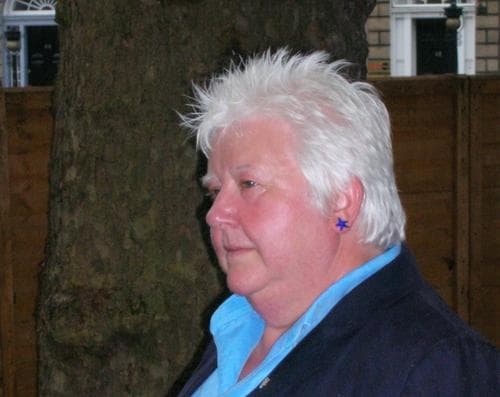
Val McDermid is a Scottish author known for her contributions to the crime fiction genre. Her book "The Distant Echo" explores themes of murder and the impact of past events on the present. McDermid's work often delves into psychological complexity and has garnered significant recognition in literary circles.
Similar books
- The Cuckoo's Calling
Robert Galbraith
3.9 (482k) average on GoodreadsThrillerFeatures a cold case investigation, complex characters, and a focus on uncovering hidden truths.
- The Black Echo
Michael Connelly
4.1 (155k) average on GoodreadsThrillerA police procedural with a deep dive into a past crime affecting the present, and a strong sense of justice seeking.
- Knots and Crosses
Ian Rankin
3.8 (42k) average on GoodreadsThrillerRankin's debut Rebus novel offers a more immediate and visceral serial killer plot, focusing on contemporary Edinburgh's grittier aspects. McDermid's The Distant Echo delves into the slow burn of cold case re-evaluation, emphasizing historical evidence and the fallibility of memory, with a different, more academic setting in St Andrews.
- Angels & Demons
Dan Brown
3.9 (2.7M) average on GoodreadsThrillerA Harvard symbologist races through Rome's ancient sites, deciphering cryptic clues to unmask the Illuminati and stop a vengeful plot to destroy the Vatican with a stolen antimatter weapon.
- Gone Girl
Gillian Flynn
4.1 (2.3M) average on GoodreadsThrillerA wife's sudden disappearance on her fifth anniversary reveals a web of lies and psychological warfare, exposing the secrets within a seemingly perfect marriage.
- The Girl on the Train
Paula Hawkins
3.9 (2.1M) average on GoodreadsThrillerA woman’s fascination with a seemingly perfect couple she watches from her daily train commute leads her into a dark investigation when she witnesses something that shatters their idyllic image.





Enjoyed the summary?
A summary gives you the shape of the book. The book itself has the detail, the examples and the voice.
Find The Distant Echo on AmazonAs an Amazon Associate, BookBrief earns from qualifying purchases. How we're funded