

Synopsis
Covers the whole plot, including the ending.
- Difficulty
- Medium
- Pacing
- Moderate
- Mood
- Witty, Romantic, Humorous, Dramatic
- Read it if
- You enjoy classic comedies of manners, witty dialogue, and stories about forbidden love and social dilemmas.
- Skip it if
- You prefer modern, realistic plots and dislike elaborate schemes or farcical elements.
The Dog in the Manger Plot Summary
Covers the whole plot, including the ending.
A Countess's Dilemma
The play opens in Naples at the palace of Countess Diana, a beautiful and wealthy noblewoman. Diana's lady-in-waiting, Marcela, is engaged in a secret love affair with Teodoro, Diana's secretary. However, Diana discovers a love letter from Teodoro to Marcela and, in a fit of jealousy, realizes she herself is attracted to Teodoro. Her pride as a countess prevents her from openly pursuing a relationship with a man of lower social standing. This initial conflict establishes Diana's central dilemma: her heart desires Teodoro, but her societal position dictates otherwise, leading to an emotional struggle that drives much of the play's action.
Teodoro's Conflicted Heart
Teodoro, initially devoted to Marcela, finds himself caught in Diana's web of affection and disdain. Diana's erratic behavior—alternately showing him favor and then harshly dismissing him—confuses and entices him. He is ambitious, and the Countess's attention, despite its capriciousness, represents a significant social advancement. This strains his relationship with Marcela, who becomes increasingly suspicious and heartbroken by Teodoro's shifting loyalties. Teodoro's internal conflict between genuine affection and social climbing becomes a key element of his character arc.
Marcela's Heartbreak and Betrayal
Marcela, deeply in love with Teodoro, experiences pain and confusion as Diana begins to interfere. She observes Diana's possessive and manipulative behavior towards Teodoro, which actively sabotages their engagement. Marcela confronts Teodoro, expressing her hurt and demanding clarity, but Teodoro, dazzled by Diana's status and attention, struggles to commit to Marcela. Her pleas and accusations highlight the destructive nature of Diana's 'dog in the manger' attitude, where she neither wants Teodoro for herself nor allows him to be happy with another.
Fabio and Tristán's Schemes
Fabio, Diana's steward, also has feelings for Marcela, adding another layer of complexity to the romantic entanglements. Meanwhile, Tristán, Teodoro's cunning and loyal servant, observes the unfolding drama and quickly identifies Diana's true feelings. Tristán is a key character, advising Teodoro and eventually devising a grand scheme to resolve the social dilemma. He understands the societal constraints preventing Diana and Teodoro's union and begins to formulate a plan that could elevate Teodoro's status, making him a more suitable match for the Countess.
The Proposal and the Rejection
Driven by a moment of clarity or perhaps exasperation with Diana's indecision, Teodoro decides to commit to Marcela and proposes marriage. However, the news of their impending union reaches Diana, who, consumed by jealousy, immediately intervenes. She subtly, yet effectively, discourages Teodoro, making him doubt his choice and once again drawing him back into her orbit. This scene illustrates Diana's 'dog in the manger' nature—she cannot have him, but she also cannot bear the thought of anyone else having him, particularly a woman of her own household.
Tristán's Devious Plan
Realizing the impossibility of Diana and Teodoro marrying due to their social disparity, Tristán devises an elaborate and audacious plan. He proposes that Teodoro pretend to be the long-lost son of Count Ludovico, a powerful and childless nobleman. Tristán believes that if Teodoro gains a noble title, Diana will be free to marry him without compromising her social standing. This scheme highlights Tristán's loyalty to Teodoro and his pragmatic understanding of the societal rules governing love and marriage in their world. He is willing to go to great lengths to ensure his master's happiness and advancement.
The Fabrication of Identity
Tristán skillfully executes his plan, approaching Count Ludovico and presenting fabricated evidence and a convincing narrative that Teodoro is indeed his long-lost son, kidnapped in infancy. Ludovico, desperate for an heir and easily swayed by Tristán's persuasive storytelling, accepts Teodoro as his son with great joy and relief. This deception elevates Teodoro's social status overnight, transforming him from a humble secretary into a nobleman, and thus, a seemingly acceptable suitor for Countess Diana. The success of this ruse sets the stage for the play's climax.
Diana's Acceptance and Teodoro's Confession
With Teodoro now recognized as Count Ludovico's son, Countess Diana can finally acknowledge her love for him without social stigma. She expresses her willingness to marry him, seemingly resolving their conflict. However, Teodoro, plagued by guilt and perhaps a desire for honesty in their relationship, confesses the truth of Tristán's deception to Diana. He reveals that his noble lineage is a fabrication, and he is still, in essence, a man of humble birth. This confession throws their future once again into uncertainty, presenting Diana with a renewed social dilemma.
The Ultimate Dilemma
Upon learning the truth, Diana is faced with a social dilemma. She loves Teodoro, but accepting him now, knowing his lack of noble birth, would mean a significant compromise of her status and reputation. The countess grapples with the implications of this revelation, weighing her personal happiness against the rigid expectations of her aristocratic society. This moment encapsulates the central theme of the play: the conflict between love and honor, and the powerful influence of social class on individual choices and destinies. Her decision will determine the fate of both herself and Teodoro.
The Resolution and Marriage
After much internal struggle, Diana ultimately chooses love. She agrees to marry Teodoro, accepting him despite his true humble origins, effectively prioritizing her personal happiness over strict social conventions. To maintain appearances and avoid scandal, they agree to keep Tristán's deception a secret. Marcela, having been spurned by Teodoro, finds comfort and a new suitor in Fabio, Diana's steward, who has always admired her. The play concludes with two marriages, signifying a resolution where love, albeit with a touch of artifice, triumphs over the rigid social structures of the time.
The Dog in the Manger Characters
Countess Diana
Protagonist
The beautiful and wealthy Countess of Belflor, torn between love and social status.
Diana is a complex and proud noblewoman. She possesses intelligence, wit, and a strong sense of her aristocratic position. Her fatal flaw is her inability to openly pursue Teodoro due to his lower social standing, leading her to torment him and herself with indecision. She is often seen as the 'dog in the manger' – unwilling to have Teodoro herself, but also unwilling to let anyone else have him. Despite her capriciousness, her actions stem from a genuine, albeit conflicted, love.
Relationships: Teodoro (Forbidden love interest, her secretary); Marcela (Lady-in-waiting, rival for Teodoro's affection)
Teodoro
Protagonist/Love Interest
Diana's intelligent and ambitious secretary, caught between two women and social advancement.
Teodoro is a man of humble birth but sharp intellect and ambition. He is initially genuinely in love with Marcela but is easily swayed by Diana's attention and the promise of social elevation. He is somewhat passive, allowing himself to be drawn into Diana's games, and struggles with integrity when faced with the opportunity for advancement. He is not entirely mercenary, as his confession to Diana shows, but his desires are clearly influenced by the societal advantages offered by the Countess.
Relationships: Countess Diana (His employer, object of his ambition and eventual love); Marcela (His initial love interest, later rejected); Tristán (His loyal and cunning servant)
Tristán
Supporting
Teodoro's clever and resourceful servant, the architect of the play's main deception.
Tristán is the comedic and pragmatic mastermind of the play. He is loyal to Teodoro and possesses an astute understanding of human nature and societal mechanics. He is not bound by the same social conventions as his master and mistress, allowing him to devise the audacious plan to fabricate Teodoro's noble lineage. His wit and cunning drive much of the plot's resolution, providing both humor and a practical solution to the lovers' dilemma. He embodies the 'gracioso' archetype common in Golden Age Spanish theater.
Relationships: Teodoro (His master, whom he serves loyally and strategically)
Marcela
Supporting
Diana's lady-in-waiting and Teodoro's initial love interest, who suffers from Diana's jealousy.
Marcela is a kind and loving woman, deeply devoted to Teodoro. She represents the innocent victim of Diana's capricious jealousy and Teodoro's ambition. Her heartbreak and confusion highlight the emotional cost of Diana's 'dog in the manger' behavior. Despite her suffering, she eventually finds happiness with Fabio, demonstrating resilience and a capacity for moving on. She serves as a foil to Diana's complex and often cruel nature.
Relationships: Teodoro (Her initial fiancé, who abandons her); Countess Diana (Her mistress and rival); Fabio (Her eventual husband)
Fabio
Supporting
Diana's loyal steward, who eventually marries Marcela.
Fabio is a steady and honorable character, serving as Diana's steward. He harbors a quiet affection for Marcela throughout the play. Unlike Teodoro, he is not driven by ambition to climb the social ladder through romantic entanglement, but rather by genuine affection. His eventual marriage to Marcela provides a more conventional and stable happy ending for her, contrasting with the more elaborate and socially transgressive union of Diana and Teodoro.
Relationships: Marcela (His love interest and eventual wife); Countess Diana (His employer)
Count Ludovico
Supporting
A wealthy and childless nobleman, deceived into believing Teodoro is his long-lost son.
Count Ludovico is an elderly and somewhat naive nobleman, desperate for an heir. He is easily manipulated by Tristán's cunning plan to 'discover' Teodoro as his lost son. His desire for a successor makes him vulnerable to the deception, and his joy at finding Teodoro is genuine, even if based on a lie. He serves as the unwitting instrument through which Teodoro's social status is elevated, making the marriage to Diana possible.
Relationships: Teodoro (His 'long-lost son' through deception)
Octavio
Mentioned
A nobleman who briefly seeks Diana's hand in marriage.
Octavio represents another suitor of noble birth who is deemed suitable for Diana by society. His presence briefly highlights the conventional options available to Diana and underscores her rejection of them in favor of her true feelings for Teodoro. He is a minor character, serving primarily to emphasize Diana's unique dilemma and her resistance to politically advantageous but emotionally unfulfilling unions.
Relationships: Countess Diana (A suitor for her hand)
The Dog in the Manger Themes
Love vs. Social Status
This is the central conflict of the play. Countess Diana's love for Teodoro is constantly at odds with the rigid social hierarchy of 17th-century Spain. Her pride and the societal expectations placed upon her as a noblewoman prevent her from openly pursuing a relationship with her secretary. This theme is clear when Diana discovers Teodoro's letter to Marcela, sparking her jealousy and realization of her own feelings, yet she cannot act on them directly. The entire plot, especially Tristán's elaborate scheme, shows the lengths people will go to reconcile love with the demands of social standing.
“I love him, but I cannot make him mine, because he is not of my rank.”
Jealousy and Indecision
Diana's character embodies the destructive nature of jealousy and indecision. She cannot bear the thought of Teodoro with Marcela, yet her pride prevents her from claiming him for herself. This 'dog in the manger' behavior causes suffering for Teodoro and Marcela. Her constant shifts between affection and disdain for Teodoro, as seen when she alternately encourages and then dismisses his advances, create a tumultuous emotional state. This theme explores how unaddressed emotions and societal pressures can lead to manipulative and hurtful actions.
“I want him not, but I will not let you have him.”
Appearance vs. Reality
The play relies on the distinction between how things appear and how they truly are. Tristán's elaborate deception, where Teodoro is presented as the long-lost son of Count Ludovico, is the most prominent example. This fabrication allows Diana and Teodoro to marry, but it is built on a lie. The resolution of the play, where they agree to maintain the secret, shows that social acceptance and happiness can sometimes be achieved through carefully constructed appearances, rather than outright truth. This theme critiques the superficiality of social structures that value lineage over genuine worth.
“The world is a stage, and we are all actors.”
The Role of Servants
Servants, particularly Tristán, play a significant and often subversive role in the play. While ostensibly of lower status, Tristán's intelligence and cunning far surpass many of the noble characters. He is the true architect of the plot's resolution, manipulating events and people to achieve his master's happiness. This highlights how those on the fringes of society can often see its flaws more clearly and act more effectively than those bound by its rules. Tristán’s actions demonstrate that wit and loyalty can be more powerful than inherited status.
“A clever servant can untangle knots that perplex his master.”
Plot Devices & Literary Techniques
The 'Dog in the Manger' Motif
A literary device describing Diana's possessive and destructive indecision.
This motif, from which the play derives its title, perfectly encapsulates Countess Diana's primary character flaw. Like the dog that neither eats the hay nor allows the ox to eat it, Diana neither fully accepts Teodoro as her lover due to his lower social status, nor does she allow him to pursue a relationship with Marcela. This behavior drives much of the conflict, creating a cycle of hope and despair for Teodoro and Marcela, and highlighting Diana's internal struggle between her heart and her pride.
Deus ex Machina (Tristán's Scheme)
An unexpected, artificial, or improbable character or device introduced suddenly in a work of fiction or drama to resolve a situation or untangle a plot.
While not a literal 'god from the machine,' Tristán's elaborate scheme to fabricate Teodoro's noble lineage functions as a dramatic equivalent. It is an ingenious, yet highly improbable, solution that suddenly resolves the seemingly insurmountable social barrier between Diana and Teodoro. This device allows for a happy ending that would otherwise be impossible within the strict social conventions of the time, demonstrating the play's comedic and somewhat fantastical nature in its resolution of conflict.
Mistaken Identity / Fabricated Identity
The central deception where Teodoro is presented as someone he is not.
The core of Tristán's plot relies on the device of fabricated identity. By convincing Count Ludovico that Teodoro is his long-lost son, Tristán effectively changes Teodoro's social standing overnight. This manipulation of identity is crucial for overcoming the class barriers that initially prevent Diana and Teodoro's union. It highlights the arbitrary nature of social status and the power of perception in shaping reality, especially in the context of marriage and inheritance.
Dramatic Irony
The audience is aware of the truth of Teodoro's identity, while many characters are not.
Dramatic irony is prevalent, particularly concerning Teodoro's fabricated noble birth. The audience is privy to Tristán's deception from its inception, which creates tension and humor as other characters, like Count Ludovico and eventually Diana (before Teodoro's confession), react to Teodoro's 'new' identity. This device allows the audience to appreciate the cleverness of the scheme and the social critique embedded within the play, as noble characters are easily fooled by a well-crafted lie.
The Dog in the Manger Quotes
“Love, and a woman, are two things that make a man lose his reason.”
“Who could imagine that a lady would fall in love with her secretary?”
“It is a strange thing that a woman, who has so many suitors, should not choose one of them.”
“The dog in the manger neither eats the hay nor lets the ox eat it.”
“Happy is he who finds a friend, but happier still is he who finds a true love.”
“A woman's 'no' is often a 'yes' in disguise.”
“To love and not be loved in return is a torment worse than death.”
“Fortune is blind, and love is blinder still.”
“One must climb to great heights to fall with a great crash.”
“There are no secrets that time does not reveal.”
“Honor is a fragile thing, easily broken, hard to mend.”
“Suspicion is a poison that corrupts the heart.”
“To live without love is not to live at all.”
“A lady's whim is a law unto itself.”
Quiz
10 questions on the plot and the characters. Each answer comes with a short explanation.
Question 1
What is the name of the Countess who is in love with her secretary?
- Diana
- Teodoro
- Marcela
- Fabio
Show answer
A. Diana The Countess's name is Diana, and she is the central figure caught in the romantic dilemma.
Question 2
Who is the secretary that Countess Diana falls in love with?
- Tristán
- Fabio
- Teodoro
- Ricardo
Show answer
C. Teodoro Teodoro is the secretary, a man of lower social standing, with whom Countess Diana is infatuated.
Question 3
What is the central dilemma Countess Diana faces regarding her love for Teodoro?
- He is already married to another woman.
- He is of a lower social class, making marriage impossible without scandal.
- Her father disapproves of him because he is a foreigner.
- Teodoro doesn't return her feelings of love.
Show answer
B. He is of a lower social class, making marriage impossible without scandal. The core conflict stems from Teodoro's lower social status, which makes a marriage to the high-born Countess Diana socially unacceptable.
Question 4
Which character frequently acts as a go-between or confidant for Teodoro and Diana, often with his own schemes?
- Fabio
- Marcela
- Tristán
- Lirano
Show answer
C. Tristán Tristán, Teodoro's servant, is a clever and opportunistic character who devises the plan to elevate Teodoro's social standing.
Question 5
What false identity does Teodoro assume to make himself a suitable match for Countess Diana?
- A wealthy merchant from Venice.
- A renowned military hero.
- The long-lost son of Count Ludovico.
- A visiting ambassador from a foreign court.
Show answer
C. The long-lost son of Count Ludovico. To overcome the social barrier, Teodoro, with Tristán's help, pretends to be the long-lost son of Count Ludovico.
Question 6
What is the primary theme explored by the play's title, 'The Dog in the Manger'?
- The importance of loyalty and friendship.
- The destructive nature of unrequited love.
- The inability to have something oneself, while also preventing others from having it.
- The struggle between duty and personal desire.
Show answer
C. The inability to have something oneself, while also preventing others from having it. The idiom 'dog in the manger' perfectly encapsulates Diana's behavior: she cannot marry Teodoro due to his low status, but she also prevents him from marrying anyone else, particularly Marcela.
Question 7
Initially, who is Teodoro engaged to before Countess Diana's interference?
- Dorotea
- Marcela
- Anarda
- Leonora
Show answer
B. Marcela Teodoro is in love with and engaged to Marcela, one of Diana's ladies-in-waiting, before Diana's jealousy and affection disrupt their plans.
Question 8
What is the ultimate consequence for Teodoro after he admits his deception about his parentage?
- He is banished from Naples and cannot marry Diana.
- Countess Diana, valuing love over status, marries him despite the truth.
- He is forced to marry Marcela and leave Diana's service.
- He is imprisoned for fraud.
Show answer
B. Countess Diana, valuing love over status, marries him despite the truth. Despite the admission of deception, the play ends with Diana choosing to marry Teodoro, effectively overcoming the social barrier through the created pretense and her own will.
Question 9
Which character is responsible for devising the elaborate scheme to present Teodoro as Count Ludovico's son?
- Countess Diana
- Fabio
- Tristán
- Ricardo
Show answer
C. Tristán Tristán, Teodoro's quick-witted servant, is the mastermind behind the plan to elevate Teodoro's social standing to make him a suitable match for Diana.
Question 10
How does the play resolve the conflict between love and social class, particularly for Countess Diana?
- Diana ultimately chooses to marry a nobleman of her own class, sacrificing her love for Teodoro.
- Teodoro genuinely discovers he is of noble birth, removing the barrier.
- Through a clever deception, Teodoro is given a false noble identity that allows Diana to marry him without losing face.
- Both Diana and Teodoro decide to abandon society and live together in secret.
Show answer
C. Through a clever deception, Teodoro is given a false noble identity that allows Diana to marry him without losing face. The play uses the ruse of Teodoro being Count Ludovico's lost son to circumvent the rigid social class system, allowing Diana to marry him while maintaining her status and dignity.
The Dog in the Manger FAQ
What is the central conflict driving the plot of 'The Dog in the Manger'?
The central conflict revolves around Countess Diana's love for her secretary, Teodoro, a man far beneath her social standing. Her aristocratic pride and fear of scandal prevent her from openly pursuing him, yet she also cannot tolerate him loving anyone else, particularly her lady-in-waiting, Marcela. This creates a 'dog in the manger' situation where she neither takes him for herself nor allows him to be happy with another.
Who are the primary romantic interests for Teodoro at various points in the play?
Initially, Teodoro is deeply in love with Marcela, one of Countess Diana's ladies-in-waiting, and they plan to marry. However, as Countess Diana's capricious affections turn towards him, he becomes entangled in her web, oscillating between his genuine feelings for Marcela and the allure of social advancement and the Countess's powerful attention. Ultimately, his fate becomes intertwined with Diana.
How does Tristán, Teodoro's servant, attempt to resolve the social disparity between Teodoro and Countess Diana?
Tristán devises a clever, albeit risky, scheme to elevate Teodoro's social standing. He invents a story that Teodoro is the long-lost son of Count Ludovico, a noble statesman, who had lost a child to pirates. This deception allows Teodoro to appear as a suitable match for Countess Diana, temporarily bypassing the rigid social barriers that separate them.
What is the 'social dilemma' Countess Diana faces after Teodoro admits his deception?
After Teodoro confesses that he is not Count Ludovico's son, Countess Diana is faced with a profound social dilemma. She still loves him but marrying a mere secretary would bring immense scandal and disgrace upon her noble house. The revelation shatters the convenient facade that allowed their union to be publicly acceptable, forcing her to confront the true implications of their class difference.
How do the other noble suitors, Ricardo and Federico, react to Countess Diana's fluctuating affections and Teodoro's rise?
Ricardo and Federico, the two noblemen vying for Countess Diana's hand, are initially frustrated and confused by her coldness and her sudden interest in Teodoro. They become suspicious of Teodoro's sudden elevation and even plot against him, as they see him as an unwelcome rival who has usurped their rightful place in Diana's affections and threatened their own social ambitions.
What is the significance of the play's title, 'The Dog in the Manger'?
The title directly refers to Countess Diana's behavior. Like the proverbial dog in the manger, she cannot (or will not) have Teodoro for herself due to social constraints, but she also prevents him from being happy with Marcela. Her jealousy and pride create an impasse, denying happiness to both herself and others, embodying the core of the idiom.
Are there any subtle hints early in the play that suggest Tristán's plan might be successful or that Teodoro's true origins might be ambiguous?
While there are no explicit hints about Teodoro's true origins being ambiguous, Tristán's quick wit and resourcefulness are established early on, suggesting his capability for audacious schemes. The ease with which Count Ludovico accepts the story, perhaps due to his own longing for a lost son, subtly hints at the plausibility of such a deception within the play's world, despite its outlandish nature.
How does Lope de Vega use the character of Marcela to highlight Diana's cruelty and Teodoro's opportunism?
Marcela serves as a direct foil to Diana and a victim of her caprice. Her genuine love for Teodoro and their initial plans for marriage throw Diana's possessiveness and jealousy into stark relief. Teodoro's wavering affections and eventual abandonment of Marcela for the promise of social advancement with Diana underscore his opportunism and the pressures of class, making Diana's actions seem even more selfish.
What role does the play's setting in Naples play in understanding the social dynamics and power structures?
While not explicitly detailed, the setting in Naples, a vibrant and somewhat cosmopolitan city under Spanish rule, provides a backdrop where strict aristocratic hierarchies are still paramount, but perhaps also where a clever ruse might gain traction. The courtly environment emphasizes the importance of reputation, lineage, and the public perception that Countess Diana is so concerned with maintaining.
Analyze Countess Diana's internal conflict between her love for Teodoro and her aristocratic pride.
Countess Diana is torn between her powerful attraction to Teodoro and the rigid demands of her noble status. Her pride and fear of social ostracism constantly battle her genuine affection, leading to erratic behavior – drawing Teodoro close, then pushing him away, or punishing him for loving someone else. This internal struggle is the engine of much of the play's dramatic tension and psychological depth, making her a complex, if frustrating, character.
How does Teodoro's ambition influence his choices and potentially compromise his integrity?
Teodoro's ambition is a primary driver of his actions. While he genuinely loves Marcela, the opportunity to rise in status by attracting Countess Diana proves too strong to resist. He repeatedly sacrifices his integrity, abandoning Marcela and later accepting Tristán's lie, all for the promise of social elevation and the prestige that comes with being favored by the Countess. His ambition makes him both a sympathetic figure trapped by circumstance and a morally ambiguous one.
Discuss the psychological impact of Diana's capricious behavior on Teodoro.
Diana's unpredictable affections create immense psychological turmoil for Teodoro. He is constantly hopeful, then despairing, unsure of her true feelings or intentions. This emotional rollercoaster leaves him in a state of anxiety and confusion, making him susceptible to Tristán's elaborate scheme as a desperate means to stabilize his position and secure Diana's love without the constant emotional whiplash. He becomes a pawn in her emotional games.
To what extent is Tristán a loyal servant versus a manipulative mastermind?
Tristán embodies both loyalty and manipulation. He is fiercely loyal to Teodoro, devising the elaborate ruse primarily to secure his master's happiness and advancement. However, his methods are undeniably manipulative, involving deceit and exploiting others' vulnerabilities. His actions, while ultimately beneficial to Teodoro, blur the lines between devoted service and clever, amoral strategizing, highlighting the pragmatism often found in 'gracioso' characters.
Is the ending of 'The Dog in the Manger' truly a happy one for Diana and Teodoro, or does it carry underlying ironies?
The ending is ambiguously happy. While Diana and Teodoro are united, it's under false pretenses, as Teodoro's true identity as Count Ludovico's son is a fabrication. This introduces an underlying irony, suggesting their happiness is built on a lie and remains vulnerable. It also raises questions about whether Diana truly loves Teodoro or the idea of him as a suitable noble, and whether Teodoro's ambition has truly been satisfied or merely appeased.
Does the play ultimately satirize or uphold the social conventions of the Spanish Golden Age?
The play both satirizes and, in a way, upholds the social conventions. It satirizes the absurdity of strict class barriers and the hypocrisy of those who prioritize lineage over genuine feeling. However, by ultimately resolving the conflict through a fabricated noble identity for Teodoro, it also implicitly acknowledges that these conventions were so powerful that they could only be circumvented, not truly overcome, for a happy ending to occur within that society's framework.
How does the play's 'comedy' aspect contribute to its deeper themes of love, class, and identity?
The comedic elements, particularly Diana's dramatic mood swings, Tristán's clever plotting, and the farcical nature of the deception, serve to lighten the tone while simultaneously highlighting the absurdity and pain of the underlying themes. The humor makes the rigid social structures and the characters' struggles more accessible, allowing the audience to laugh at the folly of human nature while still recognizing the serious implications of class, ambition, and the messy realities of love.
Could Countess Diana be interpreted as a proto-feminist character, defying expectations, or is she merely a product of her time's aristocratic constraints?
Diana presents a complex case. Her defiance of traditional expectations by falling for her secretary and her strong will could be seen as proto-feminist. However, her ultimate inability to marry him without a fabricated noble lineage, and her cruel manipulation of others, suggests she is still very much constrained by and a product of her time's aristocratic values. She challenges the norms with her heart but succumbs to them with her actions, making her a figure of both potential and limitation.
What message does the play convey about the nature of true love versus societal expectations?
The play suggests that true love often clashes violently with societal expectations, particularly those of class and status. While Diana and Teodoro's love appears genuine, it can only flourish when disguised or elevated to meet societal approval. This implies that while love can transcend barriers, society's rigid structures often force individuals to compromise their integrity or invent new realities to allow such love to be publicly acknowledged, questioning whether 'true love' can ever truly exist free from external pressures.
How does the play's ending reflect Lope de Vega's typical approach to resolving conflicts in his comedies?
Lope de Vega often resolves conflicts in his comedies through clever deceptions, mistaken identities, and fortunate coincidences, leading to a generally harmonious, albeit sometimes morally ambiguous, conclusion. The resolution of 'The Dog in the Manger' through Tristán's elaborate lie and the convenient acceptance of a fabricated identity is highly characteristic of his style, prioritizing a satisfying, socially acceptable ending over strict realism or moral rectitude, allowing for a happy marriage that might otherwise be impossible.
About the author
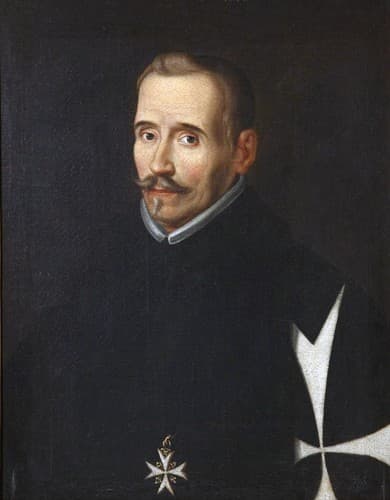
Lope de Vega was a Spanish playwright and poet of the Golden Age, known for his significant contributions to Spanish literature. His notable work, "The Dog in the Manger," showcases his skill in blending comedy and drama. De Vega is recognized for his prolific output and influence on the development of Spanish theater.
Similar books
- Twelfth Night
William Shakespeare
4.0 (3k) average on GoodreadsHistorical FictionFeatures mistaken identities, love triangles, and witty banter in a comedic setting.
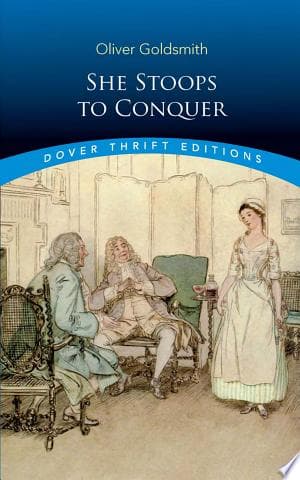
- She Stoops to Conquer
Oliver Goldsmith
3.6 (12k) average on GoodreadsA classic comedy of errors with a focus on social status and romantic misunderstandings.
- Nineteen Eighty-Four
George Orwell
4.2 (5.5M) average on GoodreadsFictionWinston Smith dreams of truth and rebellion in a world where Big Brother watches all, but he confronts the terrifying power of a regime that controls not just actions, but thoughts.
- The Frozen River
Ariel Lawhon
4.4 (600k) average on GoodreadsFictionIn 1789 Maine, a heroic midwife's diary helps her expose a murder and get justice in a town that wants to silence her.
- A Man Called Ove
Fredrik Backman
4.4 (569k) average on GoodreadsFictionA stubborn widower, who lives by strict rules, finds his quiet world changed by a lively new family next door, making him face his past and find happiness in human connection.
- The Art of Racing in the Rain
Garth Stein
4.2 (452k) average on GoodreadsFictionThrough the eyes of Enzo, a wise and observant dog, a race car driver's family navigates a journey of love, loss, and resilience, learning that life's most important lessons often come in the curves, not just on the straightaways.





Enjoyed the summary?
A summary gives you the shape of the book. The book itself has the detail, the examples and the voice.
Find The Dog in the Manger on AmazonAs an Amazon Associate, BookBrief earns from qualifying purchases. How we're funded