

Synopsis
Covers the whole plot, including the ending.
- Difficulty
- Medium
- Pacing
- Moderate
- Mood
- Humorous, Romantic, Witty, Playful, Comedic
Twelfth Night Plot Summary
Covers the whole plot, including the ending.
A Shipwreck and a New Identity
The play starts with Duke Orsino expressing his sadness over his unrequited love for Countess Olivia. Meanwhile, off the coast of Illyria, Viola's ship wrecks, and she believes her twin brother, Sebastian, has drowned. With the Captain's help, Viola decides to dress as a young man named Cesario and work for Duke Orsino. Her immediate goal is to survive and remain anonymous in a foreign land, but her disguise begins a series of mistaken identities and romantic problems. Orsino quickly accepts her into his household, impressed by her wit and charm, and she becomes his trusted confidant and messenger.
Orsino's Messenger of Love
Duke Orsino, obsessed with Olivia, asks his new page, Cesario (Viola), to deliver his passionate declarations of love to the Countess. Olivia has promised to mourn her brother's death for seven years, rejecting all suitors, including Orsino. Despite her initial reluctance to see any messengers, she eventually grants Cesario an audience. Viola, disguised as a man, eloquently argues Orsino's case, but her genuine charm and intelligence unintentionally captivate Olivia, who finds herself drawn to the young 'man.' This sets up a classic love triangle.
Olivia's Sudden Affection
After Cesario's visit, Olivia is completely smitten. Overwhelmed by her unexpected feelings, she invents an excuse to send her steward, Malvolio, after Cesario with a ring, claiming Cesario left it behind. This is a clear attempt to make more contact and express her growing affection. Cesario (Viola) is confused by this, realizing her awkward position: she loves Orsino, Orsino loves Olivia, and now Olivia loves her male disguise. This complex web of unrequited and misdirected love is the main comedic conflict.
Malvolio's Grand Delusions
Meanwhile, in Olivia's house, Sir Toby Belch, Olivia's uncle, and Sir Andrew Aguecheek, a foolish suitor, drink and cause trouble, much to the annoyance of Malvolio, Olivia's strict and self-important steward. Maria, Olivia's clever waiting-gentlewoman, plans a prank to humiliate Malvolio. She forges a love letter in Olivia's handwriting, telling Malvolio to wear yellow stockings, cross-gartered, smile constantly, and be rude to Sir Toby's friends—all behaviors Olivia dislikes. The conspirators, including the clown Feste, look forward to Malvolio's public humiliation.
Sebastian's Survival and Arrival
Unknown to Viola, her twin brother, Sebastian, survived the shipwreck. He is rescued by a kind sea captain named Antonio, who becomes very fond of him. Sebastian, believing Viola is lost, travels to Illyria, unaware his sister is already there in a complicated romantic mess. Antonio, despite being wanted in Illyria due to a past conflict with Orsino's forces, insists on accompanying Sebastian, showing his strong loyalty. Their arrival adds more potential confusion and resolution to the unfolding plot.
Malvolio's Humiliation
Malvolio, completely fooled by the forged letter, follows its instructions precisely. He appears before Olivia in ridiculous yellow stockings, cross-gartered, and with a constant, foolish smile, while also being rude to Sir Toby and Feste. Olivia, bewildered and worried about his sanity, thinks he has gone mad. The conspirators use this chance to torment him further, convincing Olivia he is possessed. They then lock him in a dark room, treating him as a lunatic, to Malvolio's distress and the conspirators' delight.
A Duel and a Case of Mistaken Identity
Sir Andrew Aguecheek, encouraged by Sir Toby, becomes jealous of Olivia's affection for Cesario and is persuaded to challenge 'him' to a duel. Both Cesario (Viola) and Sir Andrew are reluctant fighters, resulting in a comically clumsy fight. At this moment, Antonio, seeing Cesario and mistaking 'him' for Sebastian, steps in to protect 'his' friend. When officers arrive to arrest Antonio for past offenses, he asks Cesario for money, thinking it is Sebastian. Viola, knowing nothing of Antonio, is confused, and Antonio feels betrayed, showing the increasing confusion caused by the twins' resemblance.
Sebastian's Confusion and Marriage
Sebastian, wandering through Illyria, is approached by Feste and Sir Toby, who mistake him for Cesario. After a brief scuffle, Olivia appears and, also mistaking Sebastian for Cesario, expresses her intense love and invites him to marry her. Sebastian, confused but charmed by Olivia's beauty and sudden proposal, and with no reason to refuse such a good match, readily agrees. A priest is quickly brought, and Olivia and Sebastian are secretly married, further complicating the already tangled romantic web and setting the stage for the climactic revelations.
The Twins Reunited
The final act brings all the characters together. Orsino, Olivia, Cesario (Viola), and Sebastian are all present. Orsino arrives at Olivia's house, demanding an explanation for her continued rejection. Olivia, believing Cesario is her husband, calls 'him' husband, shocking Orsino. The confusion reaches its peak when Sebastian appears, leading to complete bewilderment. When Viola and Sebastian finally stand side-by-side, their identical appearance resolves all the mistaken identities. They joyfully recognize each other, confirming their survival and revealing Viola's true gender.
Resolutions and Marriages
With Viola's identity revealed, the love triangles untangle. Orsino, realizing he has fallen in love with Viola during her time as Cesario, proposes to her, and she accepts. Olivia is happily married to Sebastian. Sir Toby marries Maria, acknowledging her cleverness in the Malvolio prank. Malvolio is released from his imprisonment, and upon learning of the trick, vows revenge, though his pleas are largely dismissed amidst the general merriment. The play ends with a sense of restored order and happiness, celebrating love's triumph and the resolution of all misunderstandings.
Twelfth Night Characters
Viola
Protagonist
A shipwrecked noblewoman who disguises herself as a man.
Viola is intelligent, resourceful, and deeply emotional. After being shipwrecked and believing her twin brother Sebastian to be dead, she bravely adopts the disguise of a young man, Cesario, to secure employment in Illyria. Her quick wit and eloquence make her an effective messenger for Duke Orsino, but her secret identity places her in a complex love triangle. She is capable of both deep love and practical cunning, navigating her predicament with grace and humor.
Relationships: Sebastian (Twin sibling); Duke Orsino (Master, beloved); Countess Olivia (Object of unrequited love (from Olivia), unrequited love (from Viola, as Cesario))
Duke Orsino
Protagonist
The lovesick Duke of Illyria, obsessed with Olivia.
Duke Orsino is a romantic and somewhat self-indulgent nobleman, initially consumed by a theatrical and idealized love for Countess Olivia. He is prone to melancholy and dramatic pronouncements about love, often more in love with the idea of being in love than with Olivia herself. He finds great comfort and companionship in his page, Cesario (Viola), appreciating 'his' wit and loyalty, ultimately realizing his true affection lies with Viola.
Relationships: Countess Olivia (Object of unrequited love); Viola (as Cesario) (Trusted page, beloved)
Countess Olivia
Protagonist
A wealthy countess who vows to mourn, but falls for Cesario.
Olivia is a beautiful and wealthy countess who initially vows to mourn her brother for seven years, rejecting all suitors, including Duke Orsino. Despite her initial resolve, she is quickly captivated by the charm and eloquence of Cesario (Viola in disguise). Her sudden and passionate love for Cesario is sincere, if misdirected, highlighting her capacity for deep emotion and her independence in choosing a partner, even if by mistake.
Relationships: Duke Orsino (Suitor (rejected)); Viola (as Cesario) (Object of intense love); Sebastian (Husband)
Sebastian
Supporting
Viola's twin brother, believed lost in the shipwreck.
Sebastian is Viola's identical twin brother, who also survives the shipwreck but believes his sister has drowned. He is brave, honorable, and somewhat bewildered by the events that unfold in Illyria. His striking resemblance to Viola (as Cesario) is the primary source of the play's mistaken identity plot. He is practical and adaptable, readily accepting Olivia's sudden proposal of marriage, which ultimately helps to resolve the romantic complications.
Relationships: Viola (Twin sibling); Antonio (Loyal friend and rescuer); Countess Olivia (Wife)
Malvolio
Antagonist
Olivia's pompous and puritanical steward.
Malvolio is Olivia's chief steward, a self-important, puritanical, and humorless man who despises revelry and believes himself to be superior to others. His ambition is to rise in social status by marrying Olivia, and his self-love makes him susceptible to flattery and delusion. He becomes the target of a cruel prank orchestrated by Sir Toby, Maria, and Feste, which leads to his public humiliation and imprisonment, serving as a cautionary tale about pride and social aspiration.
Relationships: Countess Olivia (Employer, object of ambition); Sir Toby Belch (Antagonist, tormentor); Maria (Antagonist, architect of his prank)
Sir Toby Belch
Supporting
Olivia's boisterous, drunken uncle.
Sir Toby Belch is Olivia's uncle, a jovial, hedonistic, and perpetually drunk knight who loves revelry, practical jokes, and exploiting his foolish friend, Sir Andrew Aguecheek. He embodies the festive spirit contrasting with Malvolio's puritanism. He is quick-witted and enjoys chaos, particularly when it comes at the expense of those he dislikes. Despite his flaws, he has a certain charm and loyalty to his friends, especially Maria, whom he eventually marries.
Relationships: Countess Olivia (Niece); Sir Andrew Aguecheek (Friend, victim of exploitation); Maria (Co-conspirator, wife)
Maria
Supporting
Olivia's witty and mischievous waiting-gentlewoman.
Maria is Olivia's clever, sharp-tongued, and resourceful waiting-gentlewoman. She is quick-witted and shares Sir Toby's love for mischief, particularly when it involves deflating Malvolio's ego. She is the mastermind behind the forged letter prank, demonstrating her intelligence and her ability to outmaneuver even the most arrogant characters. Her cleverness and spirit are admired by Sir Toby, leading to their eventual marriage.
Relationships: Countess Olivia (Mistress); Sir Toby Belch (Co-conspirator, husband); Malvolio (Antagonist, victim of prank)
Feste
Supporting
Olivia's wise and witty clown.
Feste is Olivia's professional fool, a wise and observant character who uses his wit, songs, and puns to comment on the actions and follies of others. He is not merely a jester but a keen observer of human nature, often providing insightful commentary that underscores the play's themes. He moves freely between households and social classes, offering a unique perspective on the events, and plays a key role in the torment of Malvolio.
Relationships: Countess Olivia (Employer); Sir Toby Belch (Companion in revelry); Malvolio (Tormentor)
Sir Andrew Aguecheek
Supporting
A foolish knight attempting to woo Olivia.
Sir Andrew Aguecheek is a wealthy but dim-witted knight, a friend and constant companion of Sir Toby Belch. He is a pathetic suitor for Olivia, easily manipulated by Sir Toby, who exploits his money and encourages his foolish behavior. He fancies himself a great dancer and swordsman but is cowardly and easily flustered. His ineptitude and vanity provide much of the play's physical comedy.
Relationships: Countess Olivia (Object of unrequited affection); Sir Toby Belch (Friend, exploiter)
Antonio
Supporting
A loyal sea captain who rescues Sebastian.
Antonio is a sea captain who rescues Sebastian after the shipwreck and develops a deep, selfless devotion to him. He risks his own safety by entering Illyria, where he is a wanted man due to past conflicts with Duke Orsino's forces. His loyalty to Sebastian is unwavering, leading to moments of confusion and betrayal when he mistakes Viola (as Cesario) for Sebastian. He represents true friendship and self-sacrifice.
Relationships: Sebastian (Rescued friend, beloved)
Twelfth Night Themes
Love and Its Various Forms
The play explores the many forms of love, from passionate obsession (Orsino's initial love for Olivia) to genuine affection (Orsino's eventual love for Viola), and from self-love (Malvolio) to sibling love (Viola and Sebastian). It shows how love can be blind, mistaken, unrequited, or deeply life-changing. The play ultimately favors a more mature and mutual form of love, where real connection overcomes superficial attraction or self-delusion. It suggests that true love often comes from unexpected places and through shared experience.
“If music be the food of love, play on; Give me excess of it, that, surfeiting, The appetite may sicken, and so die.”
Mistaken Identity and Deception
Mistaken identity, mainly through Viola's disguise as Cesario and the identical appearance of the twins, drives the comedic plot. This device creates confusion, humor, and dramatic irony, allowing characters to express feelings they otherwise wouldn't. The deception shows how easily appearances can mislead and how superficial judgments can be. It makes characters look beyond outward forms to recognize true affection and character, leading to a clearer understanding of themselves and others once the disguises are gone.
“Disguise, I see, thou art a wickedness, Wherein the pregnant enemy does much.”
Social Order and Class
The play examines social hierarchies and the desire to rise above one's station. Malvolio's strict nature and his wish to marry Olivia stem from his ambition for social advancement and his scorn for those below him. His humiliation is a warning against excessive pride and disrupting established social norms. Conversely, Viola, though disguised as a low-ranking page, shows a noble character that goes beyond her assumed status. This suggests that true worth is more than inherited titles or wealth.
“I may command where I adore.”
Folly and Wisdom
Twelfth Night contrasts characters who act foolishly (Sir Andrew, Sir Toby when drunk, Malvolio in his self-delusion) with those who have real wisdom, often surprisingly found in the 'fool' Feste. Feste's witty observations and songs often offer deep insights into the human condition, showing the irrationality of love, the vanity of pride, and the fleeting nature of joy and sorrow. The play suggests that true wisdom often comes from a detached, observational view, rather than from strictly following rules or being self-important.
“Better a witty fool than a foolish wit.”
Gender and Performance
Viola's disguise as Cesario is central to the exploration of gender roles and how they are performed. By acting as a man, Viola gains a unique perspective on male privilege and the dynamics of courtship, while also revealing how gender itself is a performance. Her disguise allows her to form deep emotional connections that go beyond traditional gender expectations. The play playfully suggests that gender can be fluid and that outward appearances do not always reflect inner identity, leading to both comedic confusion and genuine self-discovery.
“I am not what I am.”
Plot Devices & Literary Techniques
Disguise
Viola's male disguise as Cesario.
Viola's disguise as the eunuch 'Cesario' is the primary engine of the plot, creating the central love triangle and all the subsequent mistaken identities. It allows Viola to enter Orsino's service and observe the world from a male perspective, while simultaneously generating dramatic irony and comedic confusion as Olivia falls in love with 'him' and Orsino unknowingly confides his love for Olivia to the woman who loves him. The disguise ultimately serves to untangle the romantic knots when it is finally removed.
Mistaken Identity
The identical appearance of the twins, Viola and Sebastian.
The identical appearance of the separated twins, Viola and Sebastian, is a classic comedic device that fuels the play's central conflicts. It leads to Olivia's proposal to Sebastian (mistaking him for Cesario), Antonio's confusion and feeling of betrayal, and the general bewilderment of the characters. This device creates hilarious misunderstandings and heightens the dramatic tension, ultimately serving as the key to resolving all the romantic entanglements and bringing about the happy ending.
The Forged Letter
Maria's prank letter to Malvolio.
The forged letter, written by Maria in Olivia's hand, is a crucial plot device used to humiliate Malvolio. It exploits his vanity and ambition, leading him to adopt ridiculous behaviors (yellow stockings, cross-gartered, constant smiling) that Olivia despises. This device not only provides much of the play's low comedy but also serves to expose Malvolio's hypocrisy and self-importance, ultimately leading to his imprisonment and further solidifying the bond between the conspirators.
Soliloquy
Characters revealing inner thoughts to the audience.
Characters like Viola and Malvolio frequently deliver soliloquies, directly addressing the audience and revealing their inner thoughts, feelings, and secret plans. This device provides crucial exposition (Viola's realization of Olivia's love), builds dramatic irony (Malvolio's delusional fantasies), and allows the audience to understand motivations that are hidden from other characters, thereby enhancing the comedic effect and emotional depth of the play. It deepens the audience's connection to the characters' plights and triumphs.
Quiz
10 questions on the plot and the characters. Each answer comes with a short explanation.
Question 1
What is the primary genre of "Twelfth Night" as described in the text?
- Historical Fiction
- Mystery
- Romance
- Tragedy
Show answer
C. Romance The text explicitly lists Romance as one of the genres, and the plot description centers around romantic entanglements.
Question 2
Who is the Countess that attracts Duke Orsino?
- Viola
- Olivia
- Maria
- Sebastian
Show answer
B. Olivia The text states, 'The Countess Olivia, a woman with her own household, attracts Duke (or Count) Orsino.'
Question 3
What event causes Viola and Sebastian to be separated?
- A duel
- A shipwreck
- A political upheaval
- A misunderstanding
Show answer
B. A shipwreck The text mentions, 'Caught in a shipwreck, each thinks the other has drowned.'
Question 4
How does Viola disguise herself?
- As a servant
- As a noblewoman
- As a male page
- As a jester
Show answer
C. As a male page The text states, 'Viola disguises herself as a male page and enters Orsino’s service.'
Question 5
Who falls in love with Viola while she is disguised as a page?
- Duke Orsino
- Malvolio
- Sir Andrew Aguecheek
- Countess Olivia
Show answer
D. Countess Olivia The text says, 'Orsino sends her as his envoy to Olivia—only to have Olivia fall in love with the messenger.'
Question 6
Which character is described as Olivia's pretentious steward?
- Sebastian
- Malvolio
- Antonio
- Fabian
Show answer
B. Malvolio The text identifies Olivia's suitors as 'her pretentious steward, Malvolio, and Sir Andrew Aguecheek.'
Question 7
What does the title "Twelfth Night" refer to?
- The number of days of celebration after Christmas
- The night of the winter solstice
- The final night of the Christmas season
- A specific date in January
Show answer
C. The final night of the Christmas season The text explains, 'Named for the twelfth night after Christmas, the end of the Christmas season.'
Question 8
The play's plot is characterized by:
- A straightforward and simple love story
- Constant conflict and battles
- Intricate relationships that become tangled and then resolved
- A single protagonist overcoming external obstacles
Show answer
C. Intricate relationships that become tangled and then resolved The text states, 'The play complicates, then wonderfully untangles, these relationships.'
Question 9
Which of the following characters is NOT explicitly mentioned as a suitor to Olivia in the provided text?
- Malvolio
- Sir Andrew Aguecheek
- Duke Orsino
- Viola (as Cesario)
Show answer
C. Duke Orsino While Orsino is attracted to Olivia and sends Viola to her, and Olivia falls for Viola, the text lists Malvolio and Sir Andrew Aguecheek as 'would-be suitors.' Orsino is the one *attracted to* Olivia, not listed as a direct suitor in the same way as Malvolio and Aguecheek. However, the question asks who is NOT explicitly mentioned as a suitor. Viola, in disguise, becomes a messenger whom Olivia falls for, making her an indirect object of affection and thus involved in the courtship, even if not a traditional 'suitor.' Orsino is the one who *initiates* courtship towards Olivia, making him a suitor. The most accurate interpretation based on the direct phrasing is that Viola and Sebastian are twins separated by a shipwreck, and Viola disguises herself as a male page. Orsino loves Olivia. Malvolio and Sir Andrew Aguecheek are Olivia's suitors. Olivia falls in love with Viola (as Cesario). Therefore, Orsino is not listed as one of Olivia's suitors in the same vein as Malvolio and Aguecheek. Re-evaluating: The text says 'attracts Duke (or Count) Orsino'. This implies Orsino is attracted to Olivia. The text also says 'Two other would-be suitors are her pretentious steward, Malvolio, and Sir Andrew Aguecheek.' It then says Olivia falls in love with the messenger (Viola). So, Orsino is attracted to Olivia, and Olivia is attracted to Viola. Malvolio and Aguecheek are suitors to Olivia. The question is 'NOT explicitly mentioned as a suitor'. Orsino is mentioned as being attracted to Olivia, which makes him a suitor. Viola is not mentioned as a suitor, but rather as a messenger who becomes the object of Olivia's affection. Therefore, Viola is the best answer for someone NOT explicitly mentioned as a suitor.
Question 10
What is the fundamental conflict or driving force in the play's relationships, as suggested by the text?
- A quest for revenge
- Misunderstandings and mistaken identities related to love
- A struggle for political power
- A battle against an external enemy
Show answer
B. Misunderstandings and mistaken identities related to love The text highlights the twins' separation, Viola's disguise, Olivia falling for the disguised Viola, and the overall entanglement and untangling of relationships, all pointing to themes of mistaken identity and complicated love.
Twelfth Night FAQ
What is the plot of Twelfth Night?
Twelfth Night is a romantic comedy by William Shakespeare involving twins, Viola and Sebastian, separated by a shipwreck. Viola disguises herself as a man named Cesario and enters the service of Duke Orsino, who is in love with Countess Olivia. The plot thickens when Olivia falls in love with Cesario, leading to a series of mistaken identities and romantic entanglements.
Who are the main characters in Twelfth Night?
The main characters include the twins Viola and Sebastian, Duke Orsino, Countess Olivia, Malvolio (Olivia's steward), Sir Toby Belch (Olivia's uncle), Maria (Olivia's gentlewoman), and Sir Andrew Aguecheek (a suitor to Olivia).
What is the significance of the title Twelfth Night?
The title refers to the twelfth night after Christmas, traditionally a time for revelry and celebration, often marked by the end of the Christmas season. This festive atmosphere mirrors the play's themes of revelry, disguise, and the inversion of social order.
What are the main themes in Twelfth Night?
Key themes in Twelfth Night include love (both requited and unrequited), mistaken identity, disguise, madness, gender roles, and the contrast between appearance and reality. The play explores the complexities and often humorous consequences of these themes.
Is Twelfth Night a comedy or a tragedy?
Twelfth Night is classified as a comedy. Despite moments of melancholy and emotional turmoil, the play ultimately resolves with marriages and a restoration of order, characteristic of Shakespearean comedies.
What is the role of disguise in Twelfth Night?
Disguise is a central plot device, particularly Viola's transformation into the page Cesario. This disguise allows her to navigate the social structures of Illyria, interact with male characters in ways she couldn't as a woman, and ultimately drives the romantic complications of the play.
How does Twelfth Night explore social hierarchy?
The play satirizes social hierarchy through characters like the pretentious Malvolio, who aspires to a status above his own, and through the general revelry that temporarily blurs social distinctions. The arrival of Viola in disguise also allows for a critique of how gender and social standing influence perception.
What is the historical context of Twelfth Night?
Written around 1601-1602, Twelfth Night reflects Elizabethan society's fascination with disguise, gender fluidity, and the festive traditions of the time, such as those celebrated on Twelfth Night itself. It was likely performed for courtly audiences.
Where does the play Twelfth Night take place?
The play is set in the mythical land of Illyria, a coastal region in the Balkans. This setting provides a backdrop for the romantic intrigue and allows for the shipwreck that separates the twins.
What is the relationship between Orsino and Olivia?
Duke Orsino is deeply infatuated with Countess Olivia and sends his messenger, Cesario (Viola in disguise), to woo her for him. However, Olivia rejects Orsino's advances and unexpectedly falls in love with Cesario instead.
About the author
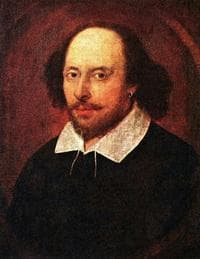
William Shakespeare was an English playwright, poet and actor. He is widely regarded as the greatest writer in the English language and the world's pre-eminent dramatist. He is often called England's national poet and the "Bard of Avon". His extant works, including collaborations, consist of some 39 plays, 154 sonnets, three long narrative poems, and a few other verses, some of uncertain authorship. His plays have been translated into every major living language and are performed more often than those of any other playwright. Shakespeare remains arguably the most influential writer in the English language, and his works continue to be studied and reinterpreted.
Similar books
- A Midsummer Night's Dream
William Shakespeare
4.0 (443k) average on GoodreadsFantasyBoth 'Twelfth Night' and 'A Midsummer Night's Dream' are Shakespearean comedies that heavily rely on mistaken identity and complex romantic entanglements. However, 'Twelfth Night' grounds its mistaken identities in human disguise (Viola as Cesario), leading to more psychological and social commentary, whereas 'A Midsummer Night's Dream' introduces supernatural elements (Puck's magic love potion) to create its comedic chaos. 'Twelfth Night' feels more contained within human societal structures, exploring the follies of human love and ambition, while 'A Midsummer Night's Dream' has a more fantastical, dream-like quality that transcends everyday reality. The humor in 'Twelfth Night' is often more verbally sophisticated and satirical, whereas 'A Midsummer Night's Dream' frequently employs broader physical comedy and slapstick, particularly with the Mechanicals.
- Much Ado About Nothing
William Shakespeare
4.1 (215k) average on GoodreadsRomance'Twelfth Night' and 'Much Ado About Nothing' are both celebrated romantic comedies by Shakespeare, but they approach the theme of love and deception differently. 'Twelfth Night' uses disguise as its primary engine for romantic confusion and self-discovery, with Viola's assumed male identity creating a compelling internal and external conflict. 'Much Ado About Nothing', while also featuring deception, centers more on verbal wit, eavesdropping, and the 'merry war' between Beatrice and Benedick, where their initial disdain masks true affection. The 'mystery' element in 'Much Ado' is more akin to a malicious plot (Don John's slander of Hero) that threatens the central romance, creating a darker dramatic tension than anything in 'Twelfth Night'. 'Twelfth Night's' comedy is often gentler and more focused on the delightful absurdity of love, while 'Much Ado' blends its brilliant verbal sparring with moments of genuine anguish and near-tragedy before its comedic resolution.
- To Kill a Mockingbird
Harper Lee
4.3 (4.5M) average on GoodreadsHistorical FictionIn the 1930s Jim Crow South, Harper Lee writes about racial injustice, moral growth, and the quiet courage of a lawyer father, Atticus Finch, as seen through his young daughter's eyes.
- The Great Gatsby
F. Scott Fitzgerald
3.9 (3.8M) average on GoodreadsHistorical FictionIn the opulent Roaring Twenties, a mysterious millionaire's lavish parties hide his desperate, tragic pursuit of a lost love, exposing the emptiness within the American Dream.
- Pride and Prejudice
Jane Austen
4.3 (3M) average on GoodreadsHistorical FictionIn a society focused on status and money, Elizabeth Bennet navigates love and pride, challenging Mr. Darcy and social expectations to find true affection.
- Angels & Demons
Dan Brown
3.9 (2.7M) average on GoodreadsThrillerA Harvard symbologist races through Rome's ancient sites, deciphering cryptic clues to unmask the Illuminati and stop a vengeful plot to destroy the Vatican with a stolen antimatter weapon.






Enjoyed the summary?
A summary gives you the shape of the book. The book itself has the detail, the examples and the voice.
Find Twelfth Night on AmazonAs an Amazon Associate, BookBrief earns from qualifying purchases. How we're funded