

Synopsis
Covers the whole plot, including the ending.
- Difficulty
- Medium
- Pacing
- Variable
- Mood
- Atmospheric, Suspenseful, Thought-provoking, Poignant
- Read it if
- You enjoy literary mysteries that blend psychological depth with a compelling plot, and are open to a surprising, thought-provoking twist.
- Skip it if
- You prefer straightforward narratives without significant plot twists or find themes of mental illness and trauma too heavy.
The Double Bind Plot Summary
Covers the whole plot, including the ending.
The Assault on the Bike Path
Laurel Estabrook, a sophomore at the University of Vermont, cycles on scenic back roads near Burlington. One afternoon, she is ambushed by two men. They drag her into the woods, where she is raped and left for dead. The attack shatters her security and affects her life, leaving her with deep psychological trauma. The police investigation yields no immediate arrests, and Laurel struggles to cope, withdrawing from college life and dealing with fear and shame.
Volunteering at the Homeless Shelter
Several years after the assault, Laurel works at a Burlington homeless shelter as part of her social work studies. Here, she meets Bobbie Crocker, an elderly and eccentric resident with a history of mental illness. Bobbie is often disoriented, but in his clearer moments, he speaks of a past life as a successful professional photographer, claiming to have photographed musicians and celebrities. Laurel initially finds his stories hard to believe, attributing them to his mental state, but she is drawn to his gentle nature and the glimpses of a more coherent man. She develops a quiet connection with him, intrigued despite her skepticism.
Bobbie's Death and the Discovery of the Photos
Bobbie Crocker's health declines, and he eventually dies at the shelter. Following his death, a box of his personal belongings is found. Among them, Laurel discovers a collection of photographs and negatives. To her astonishment, these are not amateur snapshots but professional-quality images of well-known figures from the 1950s and 60s, including jazz musicians and celebrities. The discovery confirms Bobbie's claims about his past and deeply fascinates Laurel, sparking her curiosity about how such an accomplished person could have ended up homeless and mentally ill. She feels a strong pull to uncover his story.
Laurel's Obsession with Bobbie's Past
Driven by a growing obsession, Laurel dedicates herself to unraveling the mystery of Bobbie Crocker's life. She meticulously studies the photographs, examining every detail for clues. She uses the internet, library resources, and her own investigative skills to identify the people and places in the images. This quest becomes a main focus in her life, consuming her thoughts and time. She sees it as a way to honor Bobbie's memory and understand the man behind the illness, a project that distracts her from her own unresolved trauma.
Connections to Laurel's Own Past
As Laurel looks deeper into Bobbie's photographic archives, she starts to notice unsettling connections. Some of the images show locations and social circles that resemble her own affluent Long Island upbringing. She recognizes specific landmarks, types of parties, and the general atmosphere of the wealthy suburban world she grew up in. These unexpected overlaps create unease and curiosity, making Bobbie's story feel more personal and connected to her own history than she first imagined. The boundaries between her investigation and her past begin to blur.
The Great Gatsby Parallels
Laurel, a literature student, recognizes parallels between Bobbie Crocker's life and F. Scott Fitzgerald's 'The Great Gatsby'. The themes of elusive desire, unrequited love, class distinctions, and the tragic pursuit of an idealized past, which are central to Gatsby, seem to echo in Bobbie's photographs and fragments of his story. She begins to interpret Bobbie's life, and perhaps even her own, through Fitzgerald's classic, seeing him as a modern-day Gatsby figure, haunted by a lost love and a vanished golden age. This literary framework deepens her understanding and emotional connection to Bobbie's situation.
The Elusive Woman in the Photographs
Among Bobbie's collection, Laurel repeatedly finds photographs of a beautiful, enigmatic woman. This woman appears in various settings, always with an air of sophisticated melancholy. Laurel deduces that this woman was very important to Bobbie, possibly the love of his life, and that her story is central to understanding his decline. Her quest to identify this woman and uncover her relationship with Bobbie becomes a driving force in her investigation, believing that finding her will unlock the secrets of Bobbie's past and explain his tragic path from successful photographer to homeless man.
Unraveling the Double Bind
As Laurel pieces together more clues, she uncovers a complex and disturbing narrative about Bobbie's life. She learns about betrayals, mental health struggles, and the devastating impact of societal expectations and family dynamics on his well-being. The 'double bind' of the title begins to appear in the psychological traps Bobbie faced, caught between conflicting demands and expectations. Laurel realizes his story is far more intricate and tragic than she first imagined, showing how easily a life can unravel despite apparent success and talent. The revelations are emotionally taxing for her.
The Final Revelation and its Impact
In a stunning twist, the novel reveals that Laurel's entire investigation into Bobbie Crocker's life is a construct within her own mind, a complex coping mechanism. Bobbie Crocker and his story are largely a delusion. The 'photographs' are images Laurel downloaded from the internet, and her 'investigation' is an elaborate fantasy she created to process the trauma of her brutal rape. The men who attacked her were never caught, and Laurel has been suffering from a severe dissociative disorder, constructing an alternate reality to escape the unbearable pain and lack of closure from her assault. The 'double bind' refers to her psychological state, trapped between reality and delusion.
Coping with Reality
The revelation forces Laurel to confront the true extent of her psychological damage. Her doctors and family help her understand that her elaborate construction of Bobbie Crocker's life was a brilliant, yet ultimately self-deceptive, way for her mind to process the horror of her rape. The 'mystery' of Bobbie's life was a safer, more manageable problem than the unresolved trauma of her own. She begins the arduous journey of therapy and self-acceptance, slowly dismantling the intricate world she built and attempting to reintegrate with reality, acknowledging the pain she had suppressed for so long.
The Double Bind Characters
Laurel Estabrook
Protagonist
A college student who creates a fantasy to cope with trauma.
Laurel is a seemingly ordinary college student whose life is irrevocably altered by a brutal sexual assault. Initially a bright and independent young woman, she becomes withdrawn and deeply traumatized. She develops a sophisticated dissociative disorder, constructing an elaborate fantasy world centered around Bobbie Crocker and his photographs as a coping mechanism. Her intelligence and literary background allow her to weave a complex, convincing narrative, even to herself. She is driven by a subconscious need for control and meaning in the face of overwhelming chaos and injustice.
Relationships: Bobbie Crocker (A figment of her imagination, representing a displaced mystery and trauma.); Her family (Supportive but initially unaware of the depth of her dissociation.)
Bobbie Crocker
Figment of Imagination/Catalyst
An elderly, homeless man, largely a construct of Laurel's mind.
Bobbie Crocker is presented as an elderly, mentally ill, homeless man whom Laurel meets at a shelter. He claims to have been a successful photographer in his past. His character serves as the central mystery Laurel investigates, embodying themes of lost potential, mental illness, and societal neglect. Ultimately, Bobbie is revealed to be a largely fictional character created by Laurel's dissociative mind, a composite of real-world homeless individuals and her own projections. He functions as a safe, external mystery that allows her to avoid confronting her own internal trauma.
Relationships: Laurel Estabrook (The object of Laurel's investigative obsession, a psychological projection.)
The Enigmatic Woman in Photos
Symbolic Figure/Catalyst
A recurring figure in Bobbie's 'photographs', representing lost love and unattainable desire.
This beautiful, sophisticated woman appears repeatedly in the 'photographs' Laurel attributes to Bobbie Crocker. She is portrayed as Bobbie's great love, a Daisy Buchanan-esque figure who embodies the lost golden age and the unattainable desires that supposedly led to Bobbie's downfall. She is a symbol within Laurel's constructed narrative, representing the profound emotional core of Bobbie's 'story' and fueling Laurel's investigation. Like Bobbie himself, she is a product of Laurel's imagination, drawing on literary archetypes to create a compelling, tragic backstory.
Relationships: Bobbie Crocker (His imagined great love and source of his 'tragedy'.)
Laurel's Therapist (unnamed)
Supporting
The professional who helps Laurel unravel her dissociation.
Though not a prominent character in terms of page time, Laurel's therapist plays a crucial role in the narrative's resolution. This character represents the voice of psychological expertise and reality. The therapist patiently guides Laurel towards understanding her dissociative state and the true nature of her 'investigation'. Their interventions are key to the revelation of the novel's central twist, helping Laurel to slowly and painfully confront the truth of her trauma and begin the process of genuine healing. The therapist embodies the path back to sanity and self-awareness.
Relationships: Laurel Estabrook (Professional therapeutic relationship.)
Laurel's Parents
Supporting
Supportive but initially unaware of the depth of Laurel's mental state.
Laurel's parents are portrayed as loving and concerned, providing her with a stable home environment after her assault. They are present in her life, offering support and encouraging her to pursue therapy and studies. However, they are initially unaware of the intricate fantasy world Laurel has constructed to cope with her trauma. Their presence highlights the contrast between Laurel's internal world and the external reality, and their eventual understanding and support are crucial to her recovery process once her dissociation is revealed. They represent a grounding force in her life.
Relationships: Laurel Estabrook (Parent-child relationship, deeply concerned and supportive.)
The Double Bind Themes
The Power and Peril of Narrative
The novel explores how individuals create narratives, consciously and subconsciously, to make sense of their experiences. Laurel's elaborate fantasy about Bobbie Crocker and his past is a prime example, as she creates a compelling, literary-infused story to process her own overwhelming trauma. This theme highlights narrative's ability to provide meaning and escape, but also its potential to obscure reality and delay genuine healing. The entire structure of the book, presenting Laurel's 'investigation' as real before the reveal, shows this theme directly.
“We construct our own stories, don’t we? To make sense of the chaos, to find a pattern in the noise.”
Trauma and Dissociation
A central theme is the complex impact of trauma, especially sexual assault, on the human mind. Laurel's experience leads to severe dissociation, where she creates an alternate reality as a protective mechanism. The novel portrays the psychological intricacies of this condition, showing how the mind can compartmentalize unbearable pain and invent elaborate coping strategies. It sheds light on the often-invisible wounds of trauma and the lengths the mind goes to survive, even if it means constructing a double bind of reality and fantasy.
“The mind, when confronted with the unbearable, can build a fortress around itself, brick by brick, until the truth is buried deep beneath.”
The Illusion of Reality
The novel plays with the reader's perception of reality, mirroring Laurel's own fractured understanding. It challenges the audience to question what is real and what is perceived, creating unease and suspense. The detailed 'evidence' of Bobbie's life, from photographs to historical research, reinforces the illusion, making the eventual reveal all the more shocking. This theme forces a re-evaluation of everything presented, emphasizing how easily our perceptions can be manipulated, both externally and internally, and how compelling a well-constructed illusion can be.
“Sometimes, the most vivid truths are the ones we invent for ourselves.”
Social Invisibility and Mental Illness
While primarily a psychological thriller, the novel also touches on homelessness and mental illness, initially through the character of Bobbie Crocker. Before the twist, Bobbie is a poignant representation of how talented individuals can fall through societal cracks, becoming invisible and stigmatized. His 'story' highlights the human dignity often overlooked in those experiencing homelessness and mental health crises, suggesting that everyone has a complex past. Even as a fantasy, Bobbie's character draws attention to these issues, prompting reflection on empathy and societal responsibility.
“We tend to stigmatize the homeless and blame them for their plight. We are oblivious to the fact that most had lives as serious as our own before everything fell apart.”
Literary Allusion and Intertextuality
The novel uses F. Scott Fitzgerald's 'The Great Gatsby' as a framework for Laurel's fantasy, creating a rich layer of intertextuality. Laurel interprets Bobbie Crocker's 'life' through the lens of Gatsby's tragic pursuit of an idealized past, drawing parallels between the characters, themes of lost love, class, and the American Dream. This literary device not only enriches the narrative but also serves as a crucial clue to Laurel's psychological state, demonstrating her educated mind's attempt to impose order and meaning on chaos by framing her trauma within a familiar literary structure.
“It was all there, the green light, the unattainable dream, the fragile beauty of a lost world.”
Plot Devices & Literary Techniques
Unreliable Narrator
Laurel Estabrook's perspective is revealed to be deeply flawed and dissociative.
The novel is told primarily from Laurel Estabrook's first-person perspective, which is initially presented as credible. However, the shocking twist reveals that Laurel is an unreliable narrator, having constructed an elaborate fantasy to cope with her trauma. This device is central to the entire narrative structure, leading the reader down a path of false assumptions and making the eventual revelation profoundly impactful. It forces a re-evaluation of every detail presented, highlighting the subjective nature of truth and memory, especially in the face of extreme psychological distress.
Red Herring
The mystery of Bobbie Crocker's past serves as a distraction from the true plot.
The entire elaborate story of Bobbie Crocker's life as a successful photographer who fell into homelessness, and Laurel's obsessive investigation into his past, functions as a massive red herring. This detailed, compelling 'mystery' distracts both Laurel and the reader from the true, underlying plot: Laurel's unresolved trauma and severe dissociative disorder. The red herring is meticulously crafted with 'evidence' like photographs and historical research, making the misdirection highly effective and contributing to the novel's stunning twist.
In Media Res (Psychological)
The story begins with Laurel already in a dissociative state, unbeknownst to the reader.
While the story doesn't literally start in the middle of an action sequence, it begins 'in media res' psychologically. The reader is introduced to Laurel's life years after her assault, and her 'investigation' into Bobbie Crocker is already underway. We are plunged into her constructed reality without realizing it's a construct. This device immediately immerses the reader in Laurel's dissociative state, making her fantasy feel like reality and setting the stage for the profound reveal that the 'present' narrative is a coping mechanism rather than straightforward chronology.
Framing Device (Literary Allusion)
The Great Gatsby provides a literary lens for Laurel's constructed reality.
F. Scott Fitzgerald's 'The Great Gatsby' serves as a significant framing device within Laurel's fantasy. She consciously and subconsciously uses its themes, characters, and narrative structure to interpret and build Bobbie Crocker's story. This literary allusion provides a familiar and compelling framework for her invented narrative, lending it depth and emotional resonance. For the reader, it initially appears to be a sophisticated intertextual element, but it ultimately becomes a key indicator of Laurel's intellectual and emotional attempt to order her chaotic internal world through a well-known tragic narrative.
The Double Bind Quotes
“The thing about secrets, even the ones you tell yourself you'll take to your grave, is that they have a way of seeping out.”
“Sometimes the most dangerous thing you can do is to believe what you want to believe.”
“Memory is a funny thing. It plays tricks on you, especially when you need it most.”
“Grief is a landscape you never truly leave, only learn to navigate differently.”
“Every family has its stories, the ones they tell and the ones they keep locked away.”
“The truth is rarely simple, and often, it's not what you expect it to be.”
“We build our lives on assumptions, and sometimes, those assumptions are the first things to crumble.”
“There's a fine line between protecting someone and keeping them in the dark.”
“The past isn't just behind us; it's a part of what we carry forward.”
“Sometimes, the hardest thing to forgive is yourself.”
“Silence can be louder than any scream, especially when it's full of unsaid things.”
“We all have our masks, the faces we show the world, and the ones we keep for ourselves.”
“The greatest mysteries are often found not in the grand gestures, but in the quiet, forgotten details.”
“Love, in its purest form, is also a kind of vulnerability.”
Quiz
10 questions on the plot and the characters. Each answer comes with a short explanation.
Question 1
What significant event does Laurel Estabrook experience on a bike ride toward the beginning of the novel?
- She discovers a hidden treasure map.
- She suffers a savage assault.
- She witnesses a car accident.
- She meets Bobbie Crocker for the first time.
Show answer
B. She suffers a savage assault. The synopsis clearly states that Laurel suffers a 'savage assault' toward the end of one of her bike rides, which is a pivotal event for her character.
Question 2
How does Laurel Estabrook first come to know Bobbie Crocker?
- They were childhood friends on Long Island.
- She meets him through her work at a Burlington homeless shelter.
- He was a professor at her college in Vermont.
- He was the detective assigned to her assault case.
Show answer
B. She meets him through her work at a Burlington homeless shelter. Laurel comes to know Bobbie Crocker through her work at a Burlington homeless shelter 'in the years subsequent to the attack.'
Question 3
What key detail about Bobbie Crocker's past is revealed through his moments of lucidity?
- He was a renowned classical musician.
- He was a successful photographer who chronicled musicians and celebrities.
- He was a successful businessman who lost everything.
- He was a famous author with mental health struggles.
Show answer
B. He was a successful photographer who chronicled musicians and celebrities. Bobbie alludes to his earlier life as a successful photographer, having 'chronicled the lives of musicians and celebrities.'
Question 4
What object discovered among Bobbie's possessions after his death provides crucial evidence for Laurel's investigation?
- A diary detailing his daily life.
- A collection of rare stamps.
- A box of photographs and negatives.
- A will naming Laurel as his sole heir.
Show answer
C. A box of photographs and negatives. After Bobbie's death, 'a box of photographs and negatives discovered among Bobbie's meager possessions' lends credence to his tale and fuels Laurel's obsession.
Question 5
What classic novel is explicitly linked to Bobbie Crocker's past and Laurel's investigation?
- To Kill a Mockingbird
- The Catcher in the Rye
- The Great Gatsby
- Moby Dick
Show answer
C. The Great Gatsby The synopsis mentions 'links to the earlier world of F. Scott Fitzgerald's The Great Gatsby,' drawing parallels in themes and characters.
Question 6
Beyond the mystery, what social issues does Chris Bohjalian's novel primarily engage with?
- Environmental conservation and climate change.
- Homelessness and mental illness.
- Political corruption and social justice.
- Technological advancement and its impact on society.
Show answer
B. Homelessness and mental illness. The novel 'engages issues of homelessness and mental illness by evoking the humanity that inhabits the core of both.'
Question 7
What is the 'double bind' suggested by the title, based on the provided synopsis?
- The conflict between Laurel's past trauma and her present career.
- The contrast between Bobbie's successful past and his destitute present, and Laurel's struggle to reconcile her own past with her present investigation.
- The simultaneous allure and danger of the Vermont back roads.
- The challenge of balancing family life with professional ambition.
Show answer
B. The contrast between Bobbie's successful past and his destitute present, and Laurel's struggle to reconcile her own past with her present investigation. While not explicitly defined in the synopsis, the 'double bind' implicitly refers to the stark contrast between Bobbie's former life and his current state, and the way Laurel's pursuit of his past intertwines with her own 'painful pursuit' and the 'fleeting truths' of life, suggesting a complex intertwining of two disparate realities or burdens.
Question 8
What is the real-world inspiration behind the character of Bobbie Crocker and the photographs in the book?
- A famous Vermont author who struggled with mental illness.
- A homeless musician whose story inspired the author.
- A photographer named Bob 'Soupy' Campbell, who went from photographing luminaries to homelessness.
- An elderly man Laurel met during her own childhood on Long Island.
Show answer
C. A photographer named Bob 'Soupy' Campbell, who went from photographing luminaries to homelessness. The 'Behind The Double Bind' section clearly states that 'Bob 'Soupy' Campbell... had gone from photographing luminaries from the 1950s and 1960s to winding up at a homeless shelter in northern Vermont,' inspiring Bobbie Crocker.
Question 9
According to the author's note, what common societal tendency does the book aim to challenge regarding the homeless?
- The tendency to ignore their artistic contributions.
- The tendency to romanticize their struggles.
- The tendency to stigmatize them and blame them for their plight, overlooking their past lives.
- The tendency to provide too much support without accountability.
Show answer
C. The tendency to stigmatize them and blame them for their plight, overlooking their past lives. Bohjalian writes, 'We tend to stigmatize the homeless and blame them for their plight... We are oblivious to the fact that most had lives as serious as our own before everything fell apart.'
Question 10
How does Laurel's personal history, specifically her Long Island childhood, connect to Bobbie Crocker's past?
- Bobbie was her childhood photography teacher.
- Bobbie's photographs provide 'links to the rich neighborhoods of her own Long Island childhood,' suggesting a shared social world or unexpected connections.
- Bobbie was a family friend who disappeared years ago.
- Laurel discovers Bobbie photographed her family without their knowledge.
Show answer
B. Bobbie's photographs provide 'links to the rich neighborhoods of her own Long Island childhood,' suggesting a shared social world or unexpected connections. Laurel's investigation into Bobbie's photographs reveals 'links to the rich neighborhoods of her own Long Island childhood,' indicating an unexpected connection between their disparate pasts.
The Double Bind FAQ
What is the central mystery Laurel Estabrook investigates in 'The Double Bind'?
Laurel becomes obsessed with uncovering the past of Bobbie Crocker, an elderly homeless man with mental illness she met at a shelter. She tries to understand how he, a once-successful photographer of celebrities, fell into destitution, using a box of his old photographs as her primary clues.
How does Laurel Estabrook's past trauma connect to her interest in Bobbie Crocker?
Laurel suffered a brutal sexual assault while biking in Vermont as a college sophomore. This traumatic event profoundly shapes her life, leading her to work at a homeless shelter years later, where she encounters Bobbie Crocker and becomes fixated on his life story, perhaps as a way to process her own unresolved pain and search for meaning.
What role do Bobbie Crocker's photographs play in the narrative?
Bobbie's photographs and negatives, discovered after his death, are the key to unlocking his past. Laurel meticulously studies them, using the images of musicians, celebrities, and various scenes to track down leads, identify people, and piece together the fragmented life of the once-accomplished photographer.
How does F. Scott Fitzgerald's 'The Great Gatsby' influence the story?
'The Great Gatsby' is a significant literary parallel, informing Laurel's interpretation of Bobbie's world and her own. The novel's themes of elusive desires, haunting sorrows, and larger-than-life characters in rich neighborhoods resonate with Bobbie's hidden past and Laurel's Long Island childhood, creating a framework for her investigation.
Who is Bob 'Soupy' Campbell and what is his connection to the book?
Bob 'Soupy' Campbell was a real-life photographer whose work inspired Chris Bohjalian. Campbell, like the fictional Bobbie Crocker, had photographed luminaries in the 1950s and 60s before ending up in a homeless shelter. The actual photographs featured in the book are Campbell's work, providing a tangible link to the story's themes.
What is the 'double bind' referenced in the title, beyond the obvious literary allusion?
The 'double bind' refers to the impossible situation Laurel finds herself in regarding her perception of reality and her past trauma. It's a psychological paradox where no matter what she does, she cannot escape a negative outcome or reconcile contradictory impulses, particularly concerning her memories and the truth about Bobbie.
Are all the photographs in the book genuinely taken by Bob 'Soupy' Campbell, or are some fictional additions?
According to the author's note, the photographs that appear in the book are indeed real and were taken by Bob 'Soupy' Campbell. This detail blurs the line between fiction and reality, lending authenticity to Bobbie Crocker's backstory and the themes of homelessness and lost potential.
How does Laurel's perception of reality become distorted throughout her investigation?
As Laurel delves deeper into Bobbie's past, her own memories and perceptions become increasingly unreliable, particularly concerning the assault. The intense focus on interpreting photographs and piecing together a life from fragments leads her to construct a narrative that may not align with objective reality, blurring the lines between truth and her own psychological needs.
What psychological impact does the assault have on Laurel's relationships and worldview?
The assault leaves Laurel deeply scarred, affecting her ability to trust and form intimate connections. Her worldview is colored by the trauma, leading her to seek control and understanding through her obsession with Bobbie's past, and potentially projecting her own experiences onto his life story, impacting her sense of self and others.
How does the novel explore the psychology of mental illness through Bobbie Crocker?
Through Bobbie Crocker, the novel explores the devastating effects of mental illness, showing how it can strip an individual of their former life, identity, and social standing. His moments of lucidity contrasted with his instability highlight the profound challenges faced by those with mental health issues and the stigma they endure.
How does Laurel's obsession with Bobbie's past serve as a coping mechanism for her own trauma?
Laurel's relentless pursuit of Bobbie's history functions as a profound coping mechanism. By immersing herself in someone else's fragmented life story, she attempts to regain a sense of control and find meaning in chaos, deflecting from the direct confrontation of her own painful memories and the unresolved questions surrounding her assault.
What is the ultimate 'breathtaking surprise' in the novel's final pages?
The ultimate surprise reveals that Laurel's memory of her assault is deeply intertwined with Bobbie Crocker's life, but not in the way she imagined. It is revealed that Bobbie was her actual assailant, and her investigation of his past was a subconscious, fragmented attempt to confront the trauma and the identity of her attacker.
How does the novel challenge reader assumptions about memory and truth?
The novel consistently challenges reader assumptions by presenting Laurel's unreliable narration and fragmented memories. It demonstrates how trauma can distort perception, making 'truth' subjective and malleable, forcing readers to question what they believe and the reliability of a narrator's internal world.
What is the author's broader message about homelessness and mental illness?
Bohjalian's broader message is that homelessness and mental illness often hide rich, complex pasts and human potential. He aims to destigmatize these conditions by showing that individuals experiencing them had lives 'as serious as our own' before everything fell apart, urging readers to see the humanity at their core.
Is Laurel a reliable narrator? Why or why not?
Laurel is ultimately an unreliable narrator, though this is only fully revealed at the novel's climax. Her trauma profoundly affects her memory and perception, leading her to construct a narrative about Bobbie Crocker that serves her psychological needs rather than reflecting objective truth, blurring the lines between reality and her subjective experience.
How does the ending reframe the entire narrative for the reader?
The ending entirely reframes the narrative by revealing that Laurel's prolonged investigation into Bobbie Crocker's past was a disguised psychological journey to uncover the identity of her own assailant, who was Bobbie himself. This twist recontextualizes every detail, making the entire book an exploration of repressed memory and trauma.
What does the title 'The Double Bind' ultimately signify in the context of Laurel's final realization?
In light of the ending, 'The Double Bind' signifies Laurel's inescapable psychological dilemma: she was drawn to investigate the man who traumatized her, unknowingly seeking answers from the source of her pain. It represents the paradox of her mind trying to heal by confronting a truth it simultaneously repressed, creating an impossible situation.
About the author

Chris Bohjalian is a prolific author known for his gripping novels that often explore complex moral and ethical dilemmas. His works, including the bestselling 'Midwives,' 'The Double Bind,' and 'The Guest Room,' have garnered critical acclaim and a dedicated readership. Bohjalian's writing is often characterized by its suspenseful plots, well-developed characters, and insightful social commentary.
Similar books
- The Girl on the Train
Paula Hawkins
3.9 (2.1M) average on GoodreadsThrillerFeatures an unreliable narrator and a mystery intertwined with personal trauma.
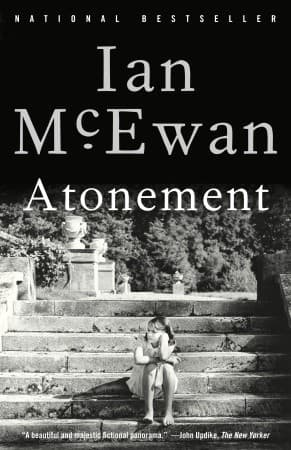
- Atonement
Ian McEwan
4.4 (70) average on GoodreadsExplores complex psychological themes and features a significant, reality-altering twist.
- Still Alice
Lisa Genova
4.3 (296k) average on GoodreadsPsychologyDeals with the impact of mental decline and the human element behind illness.
- Gone Girl
Gillian Flynn
4.1 (2.3M) average on GoodreadsThrillerWhile both are psychological mysteries, 'Gone Girl' excels in relentless tension, unreliable narration, and shocking twists, which 'The Double Bind' sometimes lacks in its more reflective and character-driven approach. Flynn's novel is arguably more successful in maintaining a high level of suspense and subverting reader expectations.
- The Lovely Bones
Alice Sebold
3.8 (2M) average on GoodreadsFantasyBoth novels delve into the aftermath of violence and the search for closure. However, Sebold's 'The Lovely Bones' achieves a more profound and consistent emotional resonance through its unique narrative perspective and lyrical prose, whereas Bohjalian's 'The Double Bind' sometimes sacrifices emotional depth for plot progression and intertextual complexity.
- The Old Man and the Sea
Ernest Hemingway
3.8 (831k) average on GoodreadsLiterary FictionA Cuban fisherman's long struggle with a giant marlin becomes a story of endurance and dignity, now retold for young adults with illustrations, phonetic guides, and writing prompts in Traditional Chinese.




Enjoyed the summary?
A summary gives you the shape of the book. The book itself has the detail, the examples and the voice.
Find The Double Bind on AmazonAs an Amazon Associate, BookBrief earns from qualifying purchases. How we're funded