
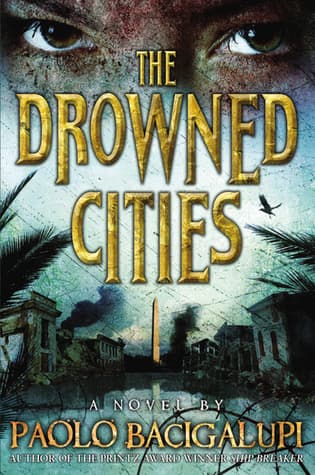
Synopsis
Covers the whole plot, including the ending.
- Difficulty
- Medium
- Pacing
- Fast
- Mood
- Gritty, Suspenseful, Bleak, Action-packed
- Read it if
- You enjoy dystopian YA with strong survival themes, bioengineered characters, and morally complex choices in a post-apocalyptic setting.
- Skip it if
- You prefer lighter reads, or stories without intense violence and a bleak atmosphere.
The Drowned Cities Plot Summary
Covers the whole plot, including the ending.
The Jungle Sanctuary
Mahlia, a 'half-breed' abandoned by her mother, and Mouse, a small, mute boy, live in a fragile jungle sanctuary near the Drowned Cities. They scavenge for food and avoid the constant dangers of warring groups. Mahlia cares for Mouse, seeing him as her only family. They navigate the dangerous landscape, marked by old war remnants and the threat of soldiers. They are self-sufficient, relying on their wits and knowledge of the terrain to survive, always hiding from militias. Their existence demands constant watchfulness, and trust is a luxury.
Discovery of Tool
While scavenging, Mahlia and Mouse find a severely wounded 'half-man,' a bioengineered super-soldier named Tool. He is large and powerful, but gravely injured. Mahlia, against her initial judgment and Mouse's fear, decides to help him. She tends to his wounds with her limited herbal knowledge, and Tool slowly recovers. His presence adds a new danger to their already uncertain lives, as such creatures are valuable to military groups.
Tool's Recovery and Revelation
As Tool recovers, Mahlia learns more about him. He is a genetically engineered soldier, a 'loosed' weapon designed for war but now a rogue asset. He explains he was part of a unit but became independent after a traumatic event. His former masters, the Army of the Drowned Cities, hunt him, especially a soldier named Cutter. Tool's presence attracts unwanted attention, and Mahlia realizes the immense danger they are in. His powerful, yet sometimes childlike, personality slowly endears him to Mahlia and Mouse, despite the risks.
Mouse's Capture
Cutter's soldiers, relentlessly pursuing Tool, eventually find them. In a brutal ambush, the children are separated from Tool. Mouse, small and vulnerable, is captured. Mahlia sees the horrific event, feeling despair and helplessness. Tool, despite his strength, is cornered and wounded again, barely escaping. Mouse's capture shatters Mahlia's world, forcing her to face their grim reality and impossible choices. Her focus shifts from survival to rescuing her friend.
Mahlia's Desperate Plan
After Mouse's capture, Mahlia is desperate to save him. Tool, still recovering, tries to talk her out of it, explaining the danger of confronting armed soldiers. He suggests they flee, but Mahlia's loyalty to Mouse is strong. She refuses to abandon him, seeing him as her only family. She begins to form a reckless plan, despite her own fear and lack of combat experience. Love and a fierce sense of responsibility drive her into a direct confrontation with the forces she has always avoided.
Infiltrating the Camp
Mahlia, aided by a reluctant but loyal Tool, sets out to infiltrate Cutter's guarded military camp. Tool, with his knowledge of military tactics and strength, proves essential. They navigate the dangerous perimeter, avoiding patrols and traps. Inside, they see the harsh realities of the soldier boys' lives, their brutality, and the despair of their captives. Mahlia's courage is tested as she faces the threat of discovery and death. Their stealthy approach is vital, as a direct fight would be suicidal.
The Rescue Attempt and Discovery
Mahlia and Tool find Mouse, imprisoned and traumatized, but alive. As they prepare for the rescue, they make a shocking discovery: Mouse is not just a boy; he is a 'bio-bomb,' a weaponized child engineered to explode. This changes everything, adding an urgent, terrifying dimension to their mission. Cutter plans to detonate Mouse as a weapon. The rescue now involves freeing Mouse and preventing a catastrophic explosion. This discovery forces Mahlia to grapple with the true nature of the war and the horrific methods used.
Escape and Pursuit
With the shocking truth of Mouse revealed, Mahlia and Tool execute a desperate escape. They free Mouse, but their presence is detected, and Cutter and his soldiers chase them. The jungle becomes a deadly maze as they try to outmaneuver their pursuers. Tool uses his combat skills to protect Mahlia and Mouse, fighting in brutal skirmishes. The stakes are incredibly high, as Mouse's detonation would kill him and devastate a wide area. Their flight is a desperate race against time and overwhelming odds.
The Confrontation with Cutter
The pursuit ends in a brutal confrontation between Tool and Cutter. Cutter, driven by a personal vendetta against Tool and the desire to retrieve his weapon, fights Tool fiercely. The battle is savage, showing the raw power of the bioengineered soldier against the cunning of the human commander. Tool, despite his injuries, fights with primal fury, fueled by his bond with Mahlia and Mouse. Mahlia watches, helpless but determined, as her protector fights for their lives, understanding Tool's immense personal sacrifice.
Sacrifice and Resolution
In a climactic act, Tool makes a sacrifice to ensure Mahlia and Mouse's escape and safety. He defeats Cutter, but not without severe, possibly fatal, injuries. His actions allow Mahlia and Mouse to get away from the immediate threat. Mahlia, now burdened by Tool's sacrifice and Mouse's true nature, guides Mouse towards an uncertain future. They head towards a rumored safe haven, the 'Free Towns,' hoping to find peace and a chance at a normal life, changed forever by their experiences and the bonds they formed.
Principal Figures
Mahlia
Protagonist
A resilient 'half-breed' girl driven by loyalty and a fierce will to survive.
Mahlia is a young, resourceful girl, a 'half-breed' of mixed ethnicity, making her an outcast in the Drowned Cities. Abandoned by her mother, she lives a precarious existence, scavenging and surviving by her wits in the jungle. She is fiercely protective of Mouse, seeing him as her only family. Despite her fear and lack of power, she possesses immense courage and an unwavering moral compass. Her journey forces her to confront the brutal realities of war and make impossible choices, highlighting her deep capacity for love and sacrifice.
Relationships: Mouse (Adoptive sister/protector); Tool (Reluctant ally, then trusted protector/friend)
Mouse
Supporting
A small, mute bioengineered boy, central to the conflict.
Mouse is a small, mute boy cared for by Mahlia. He is initially portrayed as a vulnerable, innocent child, but is later revealed to be a 'bio-bomb,' a weaponized human designed to explode. His muteness and small stature make him seem helpless, yet his very existence is a powerful catalyst for the plot. He represents the ultimate innocence corrupted by war and the horrific extent of human cruelty in the Drowned Cities. His quiet presence is a constant reminder of the stakes of Mahlia's quest.
Relationships: Mahlia (Adoptive brother/protected); Tool (Protected by Tool)
Tool
Protagonist/Supporting
A bioengineered 'half-man' super-soldier, haunted by his past.
Tool is a 'half-man,' a powerful, genetically engineered beast soldier, a creation of the Drowned Cities' military. He is immensely strong, resilient, and possesses heightened senses, but also carries the psychological scars of his past as a weapon of war. He is a 'loosed' asset, hunted by his former masters. Initially cynical and focused on self-preservation, his interactions with Mahlia and Mouse reawaken his humanity and capacity for loyalty and sacrifice. He is a complex character, embodying both the horror and the potential for redemption within the bioengineered soldiers.
Relationships: Mahlia (Reluctant ally, then trusted friend/protected); Mouse (Protector); Cutter (Former comrade, now sworn enemy)
Cutter
Antagonist
A ruthless and vengeful soldier pursuing Tool and Mouse.
Cutter is a high-ranking soldier of the Army of the Drowned Cities and the primary antagonist. He is relentless, brutal, and utterly devoid of mercy. He embodies the destructive nature of the war and the dehumanizing effects it has on its participants. Cutter's primary motivation is to retrieve Tool, whom he views as his property and a valuable weapon, and to utilize Mouse as a bio-bomb. He represents the institutionalized violence and moral decay of the Drowned Cities, acting as a direct threat to Mahlia and her companions.
Relationships: Tool (Former comrade, now sworn enemy); Mahlia (Adversary)
Nail
Supporting
A young, disillusioned soldier boy who questions the war.
Nail is a young soldier boy, one of Cutter's subordinates, who shows glimpses of humanity and doubt amidst the brutal reality of his life. He is a product of the Drowned Cities' child soldier system, forced into violence from a young age. Despite his hardened exterior, he occasionally questions the ruthlessness of his superiors and the endless cycle of war. His character provides a nuanced perspective on the soldiers, suggesting that not all are entirely irredeemable, and highlights the tragic circumstances that lead children to become instruments of war.
Relationships: Cutter (Superior officer); Mahlia (Brief interaction/adversary)
Doc Eye
Mentioned
A mysterious figure involved in the creation of bioengineered weapons.
Doc Eye is a shadowy, influential figure mentioned as being responsible for the creation of bioengineered soldiers like Tool and the weaponized children like Mouse. He represents the scientific and ethical depravity behind the Drowned Cities' warfare, highlighting the manipulation of life for destructive purposes. While never directly encountered, his influence permeates the story, underscoring the horrific origins of the conflict's most dangerous elements and the advanced, yet morally bankrupt, technology at play.
General Caroa
Mentioned
A high-ranking military leader in the Drowned Cities.
General Caroa is a high-ranking military leader within the Drowned Cities, representing the overarching authority and strategic command of the forces. She is mentioned in the context of commanding operations and deploying weapons like Mouse. Her character symbolizes the impersonal, detached nature of the war's leadership, where human lives are merely assets or casualties in a larger conflict. Her decisions have far-reaching consequences, directly impacting the lives of characters like Mahlia and Mouse.
Themes & Insights
The Dehumanizing Nature of War
The novel shows how war strips people of their humanity, turning children into soldiers (like Nail) and weapons (like Mouse). Constant violence and scarcity force characters to make difficult moral choices, blurring the lines of right and wrong. Tool, an engineered weapon, struggles with his identity, while Mahlia fights to keep her empathy amid the brutality. The Drowned Cities themselves show this theme, once lively places now ruins from endless conflict.
“They made us to kill. They made us to fight. They made us to be tools.”
Loyalty and Sacrifice
At its core, the story explores strong loyalty forged in extreme situations. Mahlia's devotion to Mouse drives her dangerous journey, making her risk everything for her friend. Similarly, Tool, initially cynical, develops deep loyalty to Mahlia and Mouse, leading to his ultimate sacrifice for their survival. These acts of loyalty contrast with the widespread betrayal and self-interest in the war-torn world, showing the lasting power of human connection.
“You don’t abandon family. Not ever.”
Identity and Otherness
Mahlia, as a 'half-breed,' and Tool, as a 'half-man,' both deal with being outsiders. Dominant groups see them as 'other,' leading to prejudice and danger. Tool's struggle to accept his engineered nature while developing humanity is central to his story. Mouse's identity as a weaponized child further complicates this theme, as his existence is defined by a horrific purpose. The novel explores what it means to be human in a world that defines individuals by their usefulness or perceived difference.
“I am not like them. I am not human. I am a tool.”
Hope and Survival
Despite the grim setting and constant threats, the story offers a glimmer of hope for a better future. Mahlia and Mouse's search for a safe haven, the 'Free Towns,' symbolizes this hope. Their ability to survive against great odds, to find compassion and connection amid desolation, shows the resilience of the human spirit. The story suggests that even in the darkest times, the will to live, to protect loved ones, and to seek a better world can endure.
“There are places, Mahlia, where the war doesn’t touch. Where people live free.”
Plot Devices & Literary Techniques
The Bio-Bomb (Mouse)
A seemingly innocent child revealed to be a weapon of mass destruction.
Mouse's true nature as a bio-bomb is a major plot twist that dramatically raises the stakes of the narrative. It transforms him from a vulnerable ward into a ticking time bomb, forcing Mahlia and Tool to not only rescue him but also prevent a catastrophic detonation. This device amplifies the dehumanizing aspect of the war, where even children are weaponized, and creates intense suspense as the characters race against time to disarm or escape the threat.
The Drowned Cities
A post-apocalyptic setting that serves as a constant backdrop of ruin and conflict.
The Drowned Cities themselves function as a significant plot device. Their ruined, waterlogged landscape, filled with the debris of past wars and the active conflict of the present, creates a hostile and dangerous environment. This setting constantly reminds the characters and reader of the futility and destruction of war, influencing their decisions and limiting their options. It also provides a unique, treacherous terrain that complicates travel and escape, adding to the challenges Mahlia and Tool face.
Tool's Genetic Engineering
The bioengineered nature of Tool, providing unique abilities and internal conflict.
Tool's status as a genetically engineered 'half-man' is a crucial plot device. His enhanced strength, resilience, and sensory perception provide the practical means for Mahlia and Mouse to survive and fight back against their adversaries. However, his engineered nature also creates internal conflict, as he grapples with his identity as a weapon versus his developing humanity. This device allows for exploration of themes of identity, purpose, and the ethical implications of advanced biotechnology in warfare.
The Drowned Cities Quotes
“Mahout was the real deal. Not a man. A force. A storm.”
“The world was a place of hunger and violence. It always had been.”
“Sometimes you have to break things to make them better.”
“It’s not about what you are, it’s about what you do.”
“Hope was a dangerous thing, but it was also the only thing.”
“The past was a ghost, always there, always watching.”
“You can’t run from who you are. Not forever.”
“The cities were just bones now, picked clean by the tides and time.”
“Life found a way, even in the ruins. Especially in the ruins.”
“Every choice had a price. Every alliance a hidden cost.”
“The world had drowned, but the people hadn’t.”
“He moved like a shadow, a whisper of violence.”
“Sometimes the only way to save something is to let it go.”
“The future wasn't written. It was built, brick by broken brick.”
Quiz
10 questions on the plot and the characters. Each answer comes with a short explanation.
Question 1
Which two young refugees manage to escape into the jungle outskirts from the war-torn Drowned Cities?
- Nail and Lua
- Mahlia and Mouse
- Tool and Mahlia
- Mouse and Kwin
Show answer
B. Mahlia and Mouse The synopsis explicitly states that 'young refugees Mahlia and Mouse have managed to leave behind the war-torn lands of the Drowned Cities by escaping into the jungle outskirts.'
Question 2
What kind of creature is Tool, whom Mahlia and Mouse discover wounded?
- A mutated jungle animal
- A bioengineered war beast, referred to as a 'half-man'
- A human soldier from a rival faction
- An ancient, mythical guardian of the jungle
Show answer
B. A bioengineered war beast, referred to as a 'half-man' The text describes Tool as 'a wounded half-man--a bioengineered war beast'.
Question 3
What immediate consequence do Mahlia and Mouse face after discovering Tool?
- They are immediately given safe passage to a new city.
- Their fragile existence quickly collapses, and one is taken prisoner.
- They find a hidden treasure map leading to the Drowned Cities.
- Tool pledges to protect them and leads them to a new home.
Show answer
B. Their fragile existence quickly collapses, and one is taken prisoner. The synopsis states that 'when they discover a wounded half-man... their fragile existence quickly collapses. One is taken prisoner by merciless soldier boys'.
Question 4
What physical characteristics are noted about the 'soldier boys' in the opening description?
- They wore elaborate uniforms and carried flags.
- They had guns, bullet bandoliers, scars, and 'ugly brands' on their faces.
- They were clean-shaven and wore bright, new armor.
- They were unarmed and wore simple, tattered clothes.
Show answer
B. They had guns, bullet bandoliers, scars, and 'ugly brands' on their faces. The first paragraph details: 'Guns gleamed dully. Bullet bandoliers and scars draped their bare chests. Ugly brands scored their faces.'
Question 5
What is the central dilemma faced by the remaining refugee after one is taken prisoner?
- Whether to join the soldier boys or fight against them.
- Whether to risk everything to save a friend or flee to seek freedom.
- Whether to return to the Drowned Cities or explore further into the jungle.
- Whether to betray Tool to the soldiers or protect him at all costs.
Show answer
B. Whether to risk everything to save a friend or flee to seek freedom. The synopsis presents the choice as: 'Risk everything to save a friend, or flee to a place where freedom might finally be possible.'
Question 6
The setting of the story is described as a 'dark future America'. What are some pervasive elements of this future?
- Advanced technology, peace, and prosperity.
- Violence, terror, and grief.
- Environmental recovery and community rebuilding.
- Strict social order and widespread contentment.
Show answer
B. Violence, terror, and grief. The text explicitly states: 'In a dark future America where violence, terror, and grief touch everyone...'
Question 7
What is the primary motivation mentioned for the 'soldier boys' coming to the location of the protagonists?
- To recruit new members for their army.
- To capture the bioengineered war beast, Tool.
- To find supplies and resources in the jungle.
- To establish a new outpost in the Drowned Cities.
Show answer
B. To capture the bioengineered war beast, Tool. The first paragraph states, 'She knew why these soldier boys had come. She knew what they sought, and she knew, too, that if they found it, her best friend would surely die.' This is directly linked to Tool being hunted by a 'vengeful band of soldiers'.
Question 8
The story is described as a 'companion' to another of Bacigalupi's works. Which book is it a companion to?
- The Windup Girl
- Ship Breaker
- Pump Six and Other Stories
- The Water Knife
Show answer
B. Ship Breaker The final sentence of the synopsis states: 'This thrilling companion to Paolo Bacigalupi's highly acclaimed Ship Breaker...'
Question 9
What overarching theme is highlighted by the difficult choice one refugee faces regarding their captured friend?
- The futility of resistance against overwhelming odds.
- The conflict between personal freedom and loyalty to others.
- The importance of seeking revenge for past wrongs.
- The inevitable triumph of good over evil.
Show answer
B. The conflict between personal freedom and loyalty to others. The core dilemma is 'Risk everything to save a friend, or flee to a place where freedom might finally be possible,' directly highlighting the theme of loyalty versus the pursuit of individual freedom.
Question 10
The term 'Drowned Cities' suggests a specific environmental catastrophe. What kind of event does this title most strongly imply?
- Widespread volcanic eruptions.
- Desertification and extreme drought.
- Rising sea levels or severe flooding.
- Nuclear fallout making cities uninhabitable.
Show answer
C. Rising sea levels or severe flooding. The name 'Drowned Cities' directly implies that these urban areas are submerged or largely underwater, which would be caused by rising sea levels or extensive flooding.
The Drowned Cities FAQ
What is the central conflict that kicks off the plot for Mahlia and Mouse?
The central conflict begins when Mahlia and Mouse discover a severely wounded half-man, Tool, in the jungle. This discovery immediately puts them in danger, as Tool is being hunted by the soldier boys of the Unified Mainland Command (UMC), leading to Mahlia's capture and Mouse's desperate decision.
Who is Tool, and what is his significance to the narrative?
Tool is a genetically engineered 'half-man' super-soldier, a chimera created for war by the UMC. He is significant because his unique abilities and past experiences provide a different perspective on the conflict, and his bond with Mahlia becomes a driving force for their survival against the UMC.
Where do Mahlia and Mouse live at the beginning of the story, and what does it reveal about their past?
At the beginning, Mahlia and Mouse live in the precarious jungle outskirts, having escaped the war-torn Drowned Cities. This setting immediately establishes their refugee status and the constant threat of violence they live under, hinting at their traumatic experiences and the fragility of their current existence.
What is the Unified Mainland Command (UMC), and what role do they play?
The Unified Mainland Command (UMC) is the dominant military and political power in the region, characterized by its brutal soldier boys and advanced weaponry. They are the primary antagonists, responsible for the ongoing war, the creation of half-men like Tool, and the relentless pursuit of their enemies, including Mahlia and Tool.
How does Mahlia end up being taken prisoner, and by whom?
Mahlia is taken prisoner by the UMC soldier boys shortly after she and Mouse discover Tool. They are searching for Tool, and Mahlia's presence with him makes her an immediate target, leading to her capture and subsequent imprisonment in a UMC camp.
What specific 'ugly brands' are mentioned on the soldier boys' faces, and what do they signify?
The soldier boys bear specific 'ugly brands' on their faces, likely tribal or factional markings that signify their allegiance to the UMC and their identity as hardened warriors. These brands serve as a visual indicator of their brutal culture and their detachment from conventional humanity.
Are there any subtle connections or references to 'Ship Breaker' within 'The Drowned Cities'?
While 'The Drowned Cities' is a companion novel, it shares the same post-apocalyptic world and themes of survival and environmental decay as 'Ship Breaker'. The Drowned Cities themselves are a direct consequence of rising sea levels, a theme explored in 'Ship Breaker', and the general technological level and societal breakdown are consistent, hinting at a shared universe.
What is the exact nature of Tool's 'half-man' bioengineering, beyond just enhanced strength?
Tool's 'half-man' bioengineering encompasses more than just enhanced strength; he possesses advanced regenerative capabilities, heightened senses, and an ingrained obedience to his former handlers, a mental conditioning that he struggles to overcome. These traits make him a formidable fighter but also a complex, internally conflicted character.
What does Mouse's 'impossible decision' reveal about her character and her relationship with Mahlia?
Mouse's 'impossible decision'—to risk everything for Mahlia or flee to safety—reveals her deep loyalty and love for her best friend. Despite the overwhelming danger, her choice to attempt a rescue underscores the strength of their bond and her courageous, albeit perhaps naive, determination.
How does Mahlia's resilience manifest psychologically during her captivity?
During her captivity, Mahlia's resilience manifests psychologically through her unwavering hope for escape and her refusal to break under interrogation. She draws strength from her memories of Mouse and her determination to survive, often employing cunning and observation to look for opportunities rather than succumbing to despair.
Explore the psychological impact of the 'Drowned Cities' environment on the characters' worldview.
The 'Drowned Cities' environment instills a deeply ingrained sense of scarcity, danger, and transience in the characters' worldview. They are constantly aware of resource limitations, the ever-present threat of violence, and the impermanence of any 'safe' haven, leading to a pragmatic, often cynical, but resilient mindset focused on immediate survival.
How does Tool's struggle with his programmed obedience versus his developing free will reflect a broader theme?
Tool's internal struggle between his programmed obedience and his burgeoning free will reflects a broader theme of dehumanization and the search for identity in a war-torn world. His journey highlights the capacity for sentience and morality even in creatures designed for brutality, questioning the nature of humanity itself.
Is the ending of the book optimistic, or does it leave a sense of lingering despair for the future?
The ending of the book offers a cautiously optimistic resolution for the protagonists, suggesting a path towards freedom and a new beginning. However, it simultaneously leaves a lingering sense of despair for the wider world, as the underlying conflicts and environmental devastation of the Drowned Cities remain unresolved, implying that their personal victory is an exception rather than a solution.
What is the author's message about the nature of loyalty and friendship in a brutal world?
The author's message about loyalty and friendship emphasizes their profound importance and redemptive power in a brutal world. The unbreakable bond between Mahlia and Mouse, and Mahlia's developing trust in Tool, demonstrate that these connections are not just comforting but essential for survival and maintaining one's humanity amidst widespread violence and despair.
How does the novel critique military power and the use of bioengineered soldiers?
The novel critiques military power by portraying the UMC as ruthlessly efficient but morally bankrupt, highlighting the destructive cycle of war and the dehumanizing effects on both soldiers and civilians. It condemns the use of bioengineered soldiers like Tool, exposing the ethical horrors of creating sentient beings solely for combat and then discarding them.
Could Tool be considered a truly 'good' character, given his past, or is he morally ambiguous?
Tool is best considered a morally ambiguous character. While he ultimately acts to protect Mahlia and develops a sense of loyalty, his past actions as a weapon of war and his ingrained brutal instincts mean he is not inherently 'good' in a conventional sense. His journey is one of struggling towards moral choice rather than inherent virtue.
What role does the 'Drowned Cities' setting play beyond just being a backdrop?
The 'Drowned Cities' setting acts as a powerful character in itself, symbolizing humanity's failure to address climate change and the destructive consequences of unchecked conflict. It creates a pervasive atmosphere of decay, danger, and lost potential, constantly reminding the characters and readers of the high stakes and the harsh realities of their world.
Is the novel primarily a commentary on environmental disaster, or human nature?
The novel functions as a commentary on both environmental disaster and human nature, with the former serving as a stark backdrop that exacerbates the latter. While the Drowned Cities illustrate the catastrophic impact of ecological collapse, the core narrative explores the resilience, cruelty, and capacity for connection inherent in human (and human-made) nature, suggesting that even in ruin, these traits persist.
About the author

Paolo Bacigalupi is an American author known for his speculative fiction that often explores themes of environmentalism and societal collapse. His notable works include "Ship Breaker," which delves into a dystopian future shaped by climate change, "The Water Knife," a thriller set in a water-scarce America, and "The Drowned Cities," a companion novel to "Ship Breaker." Bacigalupi's writing has received several awards, including the Hugo and Nebula Awards.
Similar books
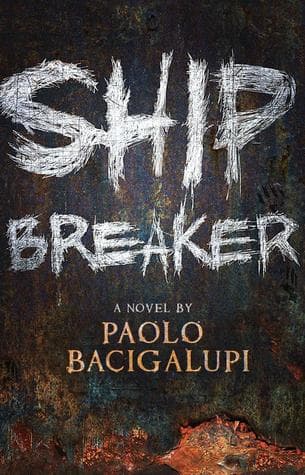
- Ship Breaker
Paolo Bacigalupi
3.7 (40k) average on GoodreadsFantasyCompanion novel in the same universe, exploring similar themes of survival and a harsh future.
- The Hunger Games
Suzanne Collins
4.3 (6.4M) average on GoodreadsFantasyFeatures young protagonists in a brutal, dystopian world fighting for survival against oppressive forces.
- Divergent
Veronica Roth
4.2 (2.9M) average on GoodreadsFantasyYoung adult dystopian setting with themes of rebellion, loyalty, and dangerous choices.
- The Road
Cormac McCarthy
4.0 (716k) average on GoodreadsScience Fiction"The Drowned Cities" shares thematic commonalities with "The Road" in its depiction of a bleak, post-apocalyptic landscape and the fierce bond between two characters (father and son in "The Road," Mahlia and Mouse here) as they navigate extreme danger. However, Bacigalupi's novel, being YA, is generally more accessible in its prose and narrative structure, and while grim, it doesn't reach the same level of existential despair and philosophical minimalism found in McCarthy's work. Literary critics like Richard Gray have praised McCarthy for his stark realism, which Bacigalupi adapts for a younger audience with more overt action and a clearer narrative arc.
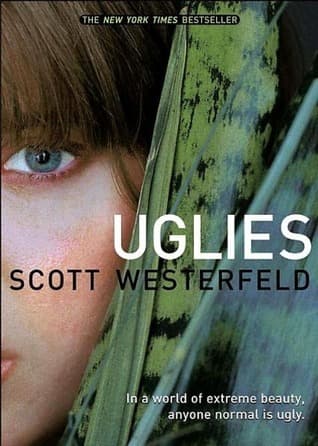
- Uglies
Scott Westerfeld
3.9 (560k) average on GoodreadsFantasyBoth "The Drowned Cities" and Westerfeld's "Uglies" series explore themes of technological control and societal manipulation, particularly concerning human bodies and identity. "Uglies" focuses on aesthetic surgery and enforced conformity, while "The Drowned Cities" examines bio-engineered soldiers ('half-men') and the ethical implications of creating sentient weapons. While "Uglies" offers a more direct critique of beauty standards and social engineering, "The Drowned Cities" provides a grittier, war-focused perspective on human alteration, moving beyond superficial changes to fundamental biological re-engineering, as discussed by critics exploring posthumanism in YA literature.
- Harry Potter and the Sorcerer's Stone
J.K. Rowling
4.5 (7M) average on GoodreadsFantasyRescued from a miserable life under the stairs, an orphaned boy discovers he's a wizard destined for a magical school, where he uncovers a dangerous secret tied to the dark wizard who murdered his parents.




Enjoyed the summary?
A summary gives you the shape of the book. The book itself has the detail, the examples and the voice.
Find The Drowned Cities on AmazonAs an Amazon Associate, BookBrief earns from qualifying purchases. How we're funded