
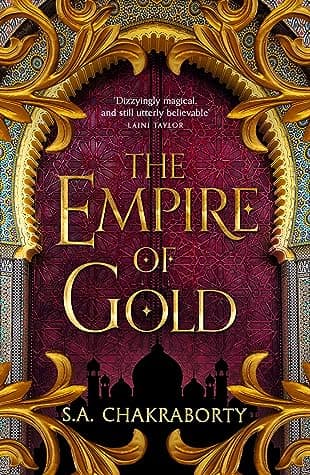
Synopsis
Covers the whole plot, including the ending.
- Difficulty
- Medium
- Pacing
- Variable
- Mood
- Epic, Suspenseful, Emotional, Sweeping, Dark
- Read it if
- You love intricate world-building, morally gray characters, high-stakes political intrigue, and epic fantasy with a strong romantic undercurrent.
- Skip it if
- You prefer standalone stories, dislike lengthy books, or are looking for a light, low-conflict read.
The Empire of Gold Plot Summary
Covers the whole plot, including the ending.
Exile in Cairo and the Weight of Daevabad's Fall
After Daevabad falls to Manizheh and Dara, Nahri and Ali are in Cairo. Nahri, without her magic because of Manizheh's rituals, finds comfort in human medicine. She works with her old mentor, a Jewish physician, and enjoys her human life. Even so, she feels guilty about her friends and the people she left in Daevabad, especially Jamshid and Muntadhir. Ali struggles with losing his family and the city he couldn't protect. He wants to free Daevabad from Manizheh's rule and save his remaining family, so he secretly looks for allies and a way back to the magical world, believing he must fight for his home.
Dara's Descent and the Unraveling Alliance
In Daevabad, Dara is troubled by his past cruel acts and losing Nahri, which has brought out his worst side. He finds it hard to balance his loyalty to Manizheh with her increasingly harsh leadership. She takes power by force, persecuting shafit and those loyal to the Al-Qahtanis. Manizheh, wanting to restore the nahid and get rid of the shafit, relies on Dara's military skill, but their alliance is strained by their different ideas and Dara's growing doubt. His memories of the old war and his part in the marid tribe massacre weigh on him, pushing him to a breaking point as he sees the suffering under Manizheh's new rule.
Ali's Marid Heritage and the Search for Allies
Wanting to get back to Daevabad, Ali goes to the hidden marid city of Qais, asking his mother's people for help. There, he learns about his marid ancestry, finding his connection to water magic is much stronger and older than he thought. He meets his marid grandmother, who first doubts him but then sees his potential. Ali learns about the history of the marid-djinn conflict and the old seals that hold strong marid magic. He starts training with marid warriors, improving his skills and understanding his great power, a power that could challenge Manizheh's forces but also risks corrupting him.
Nahri's Discovery and the Return to Daevabad
In Cairo, Nahri continues her medical studies but is worried about news from Daevabad and her visions of suffering there. She finds old texts and forgotten stories that suggest a deeper link between the shafit and the djinn, and a possible solution to the nahid's infertility. More importantly, she learns the truth about her own family: she is not only shafit but also from the old, strong Peris. This fact could be key to bringing balance. Realizing she cannot just watch her friends and innocent people suffer, Nahri decides to leave Cairo and return to Daevabad, knowing the great danger but believing she is the only one who can help.
Dara's Rebellion and the Djinn Tribes' Resistance
Dara, unable to stand Manizheh's cruel acts any longer, leaves her. He seeks out the remaining djinn tribes – the Ifriqis, the divs, and other oppressed groups – who have gone into hiding or rebelled. He tries to form an uneasy alliance with them, facing his own dark history and his role in their suffering during the old wars. He must deal with the results of his past actions and earn the trust of those he once scared. This alliance, though weak, offers hope for fighting Manizheh, even as Dara battles his inner problems and the guilt of his long life.
The Siege of Daevabad and the Unveiling of Secrets
Ali, now a strong marid warrior, returns to Daevabad with his new marid and shafit allies, ready to take back his city. Nahri, with Jamshid whom she rescued, also returns, bringing important knowledge about the nahid curse and the Peris. Their forces meet in Daevabad, joining Dara's group of rebellious djinn tribes. A big siege happens, with harsh fighting between Manizheh's forces and the combined resistance. During the chaos, old secrets are revealed, including the Peris' role in djinn history and the real cause of the infertility curse, shaking Manizheh's beliefs.
The Clash of Ideologies and Manizheh's Desperation
Manizheh, increasingly desperate and fixed on her goal to restore the nahid and get rid of the shafit, uses all her power. She believes she is close to reversing the infertility curse and bringing back her people's old glory. Her fight with Nahri is very intense, as Nahri tells her the truth about the Peris and the curse, trying to reason with her. Manizheh, however, is too far gone, blinded by revenge and a twisted idea of justice. She tries to use old, forbidden magic that could destroy Daevabad itself, convinced that ultimate power is the only way to reach her goals, even if it means many lives are lost.
The Ultimate Sacrifice and the Price of Power
As Manizheh's ritual threatens to destroy Daevabad, Nahri, Ali, and Dara must make a hard choice. They realize that to stop Manizheh and prevent the city's destruction, a big sacrifice is needed. Dara, wanting to make up for his past, makes the ultimate sacrifice, using his old power to counter Manizheh's destructive magic, ending his own troubled life. His sacrifice stops the city from collapsing but costs everyone greatly. The battle ends with Manizheh's defeat, but the city is damaged and its people are hurt by the war and loss.
Rebuilding and New Beginnings
After the war, Daevabad is in ruins, but the immediate danger is gone. Nahri, now fully accepting her Peri heritage and her role as a healer, works to rebuild the city and fix its broken society. She works hard to create a council that includes all djinn tribes and the shafit, aiming for a fair government. Ali, having accepted his marid power and his place among the djinn, helps Nahri, using his diplomatic skills and new wisdom to encourage peace. The process is long and hard, but a new time of hope and cooperation begins in Daevabad.
The Future of Daevabad and Its Leaders
With Daevabad slowly getting better, Nahri and Ali strengthen their partnership, both as rulers and as a couple. Nahri, having found the real way to heal the nahid infertility by using Peri magic, starts making changes so all djinn can do well. Ali, now a respected leader and a link between the djinn and marid worlds, works to ensure justice and equality for everyone, especially the long-oppressed shafit. While problems remain, they face the future together, committed to building a Daevabad where all tribes can live peacefully. The past's effects still linger, but the city is moving towards real agreement and lasting peace under their joint leadership.
Principal Figures
Nahri
Protagonist
A Cairo con-woman turned healer and reluctant leader of Daevabad.
Nahri is a resourceful and compassionate shafit with a mysterious past, initially a street-smart con artist in 18th-century Cairo. Throughout the series, she discovers her true heritage as a descendant of the powerful Peris and the last living member of the Nahid royal line. In 'The Empire of Gold,' she is stripped of her magic but embraces her healing abilities, using her medical knowledge and newfound understanding of ancient lore to uncover the truth behind the nahid curse. She is driven by a deep sense of responsibility for the people of Daevabad, despite her initial reluctance to lead. Her journey is one of self-discovery, leadership, and finding a balance between her human and magical identities.
Relationships: Ali (Romantic partner, co-ruler, intellectual equal); Dara (Complicated protector, former captor, tragic figure); Manizheh (Biological mother, ideological adversary); Jamshid (Half-brother, loyal friend); Zaynab (Trusted friend and mentor in Cairo)
Prince Alizayd al-Qahtani (Ali)
Protagonist
An idealistic djinn prince, devout and powerful, who bridges the djinn and marid worlds.
Ali is the second son of King Ghassan al-Qahtani, a devout and idealistic warrior prince from the Banu Nahid tribe. He is fiercely principled and deeply committed to justice for the shafit and all oppressed peoples of Daevabad. In 'The Empire of Gold,' Ali grapples with the fall of his family and city, finding strength in his previously hidden marid heritage. He travels to the marid homeland, mastering his powerful water magic and embracing his identity as a bridge between two worlds. His faith is tested, but ultimately strengthened, as he seeks to liberate Daevabad and establish a just society.
Relationships: Nahri (Romantic partner, co-ruler, intellectual equal); Muntadhir (Older brother, complex and often strained relationship); Ghassan al-Qahtani (Father, whose ideals he both respects and challenges); Hatset (Marid grandmother, mentor); Jamshid (Ally and friend)
Dara
Antagonist/Redeemed Anti-Hero
An ancient, tormented Daeva warrior bound by loyalty and seeking redemption.
Dara is an ancient Daeva warrior, fiercely loyal to the Nahid and bound by a blood oath. He is centuries old, a veteran of the ancient wars, and carries the heavy burden of countless atrocities committed in the name of his people. In 'The Empire of Gold,' he serves Manizheh after his resurrection but is increasingly tormented by his past and Manizheh's growing ruthlessness. His love for Nahri and his deep-seated guilt lead him to question his allegiances and ultimately rebel. He seeks redemption for his centuries of violence, culminating in a final, selfless act.
Relationships: Nahri (Complicated protector, object of his devotion, tragic figure); Manizheh (Liege, former lover, ideological adversary); Ghassan al-Qahtani (Enemy, whom he killed); Afrin (His ancient queen, whose memory haunts him)
Banu Manizheh
Antagonist
Nahri's mother and the fanatical leader of the Nahid rebellion.
Manizheh is Nahri's biological mother and the zealous leader of the Nahid rebellion, driven by a profound desire to restore her people to their former glory and eradicate the shafit, whom she blames for their decline. She is a powerful sorceress, skilled in nahid rituals, and utterly ruthless in her pursuit of power. Her fanaticism blinds her to reason, leading her to commit horrific acts of violence and ultimately jeopardize Daevabad itself. She represents the destructive force of vengeance and an inability to adapt to a changing world.
Relationships: Nahri (Daughter, ideological rival); Dara (Commander, former lover, eventually betrayed); Ghassan al-Qahtani (Sworn enemy, whom she deposed and killed)
Prince Muntadhir al-Qahtani
Supporting
The eldest al-Qahtani prince, burdened by responsibility and loss.
Muntadhir is King Ghassan's eldest son and Ali's older brother. He is a pragmatic and often cynical ruler, deeply loyal to his family and Daevabad. Following the fall of the city, he is captured and subjected to Manizheh's cruelties, enduring immense suffering. He is forced to make difficult choices to protect his people and survive. Despite his flaws, he demonstrates resilience and a deep love for his city, ultimately aiding in its liberation and recovery, though forever changed by his experiences.
Relationships: Ali (Younger brother, initially strained but eventually reconciled); Nahri (Sister-in-law, complex alliance); Ghassan al-Qahtani (Father, whose legacy he struggles to uphold); Jamshid (Former lover, complex and tragic relationship)
Jamshid
Supporting
Nahri's half-brother, a skilled healer and loyal companion.
Jamshid is Nahri's half-brother, a kind and gentle healer with a deep knowledge of medicine and plants. He is loyal to Nahri and deeply cares for Muntadhir, his former lover. He is initially captured and imprisoned by Manizheh but escapes and plays a crucial role in supporting Nahri's efforts to heal and understand the ancient magic. His compassion and medical expertise are invaluable in the aftermath of the war, as he helps tend to the wounded and rebuild the city's infrastructure. He represents hope and healing amidst the devastation.
Relationships: Nahri (Half-brother, loyal friend); Muntadhir (Former lover, complex and enduring bond)
King Ghassan al-Qahtani
Mentioned
The deceased King of Daevabad, whose legacy profoundly impacts his sons.
King Ghassan was the powerful and often ruthless ruler of Daevabad, father to Muntadhir and Ali. Though deceased by the start of 'The Empire of Gold,' his influence is deeply felt throughout the narrative. His reign was marked by a complex mix of stability and oppression, particularly towards the shafit and other djinn tribes. His decisions and actions, both good and bad, shape the political landscape and the characters' motivations, particularly Ali's drive for justice and Muntadhir's burden of leadership.
Relationships: Ali (Son, whose ideals often clashed with his father's pragmatism); Muntadhir (Son, groomed for leadership); Manizheh (Former adversary, whom he imprisoned)
Hatset
Supporting
Ali's powerful and ancient marid grandmother, leader of the Qais marid.
Hatset is Ali's formidable marid grandmother, a powerful and ancient leader of the Qais marid. She initially views Ali with suspicion due to his djinn heritage but recognizes his immense potential and unique connection to both worlds. She trains Ali in marid magic and ancient lore, revealing the full extent of his capabilities. Hatset embodies the ancient power and wisdom of the marid, and her guidance is crucial for Ali to understand his identity and prepare for the battle for Daevabad. She is a stern but ultimately supportive figure.
Relationships: Ali (Grandson, mentee)
Kaveh
Supporting
A veteran Daeva warrior, initially loyal to Manizheh, later a conflicted ally.
Kaveh is an older, experienced Daeva warrior and one of Manizheh's most trusted commanders. He is initially loyal to her cause, believing in the restoration of the Nahid. However, he becomes increasingly disillusioned with Manizheh's brutality and fanaticism, particularly as she targets innocent shafit and other djinn tribes. He struggles with his conscience, eventually making the difficult decision to break from Manizheh and secretly aid Dara and the resistance, seeking a path towards a more just future for Daevabad. He represents the possibility of change even within the most entrenched loyalties.
Relationships: Manizheh (Liege, eventually betrayed); Dara (Fellow Daeva warrior, complex alliance)
Themes & Insights
Redemption and Sacrifice
'The Empire of Gold' looks at redemption and sacrifice, mostly through Dara. Troubled by centuries of violence and his part in old wars and Daevabad's fall, Dara feels much guilt. His final act of self-sacrifice to stop Manizheh's destructive ritual and save the city is his last, sad redemption. The book also mentions the sacrifices Nahri and Ali make, giving up their peace to fight for a better future for Daevabad, showing that true leadership often requires big personal costs.
“Dara closed his eyes, a familiar weariness settling deep in his bones. How many times had he walked this path, choosing duty over peace, violence over rest? But this time, it was different. This time, he was choosing to end it.”
Identity and Belonging
The novel explores identity, especially for Nahri and Ali. Nahri, a shafit with a hidden past, deals with her human upbringing, her djinn ancestry, and learning about her true Peri family. She tries to find her place in a world that often rejects mixed-bloods, finally accepting a complex identity that helps her connect different groups. Ali also faces his identity as a religious djinn prince who discovers and uses his strong marid heritage, making him balance his faith with his ancestral magic. Both characters find strength in accepting all parts of who they are rather than choosing one group over another.
“She was Nahri, a healer, a con artist, a shafit, a djinn, a Peri. And in all of it, she was finally, truly, herself.”
The Cycle of Vengeance and Hope for Reconciliation
A main theme is the cycle of revenge that has hurt Daevabad for centuries, seen in Manizheh's strong desire to get revenge for the Nahid and remove the shafit. The book shows how old complaints cause current fights, leading to endless bloodshed. In contrast, Nahri and Ali offer a new way: one of agreement, understanding, and forgiveness. Their work to build an inclusive Daevabad, where all tribes and shafit have a voice, gives a hopeful idea for breaking the cycle of violence and building a future based on respect instead of old hatreds.
“Vengeance was a fire that consumed everything, leaving only ash. It was time to build something new, something that could grow.”
Power and Its Corruption
The novel looks at how power can corrupt and the responsibility that comes with it. Manizheh's path to tyranny shows how absolute power, fueled by anger, can lead to terrible acts and self-destruction. Her desire to bring back the nahid's old power blinds her to others' suffering and Daevabad's real needs. In contrast, Nahri and Ali learn to use power not for themselves or revenge, but for everyone's good, understanding that true leadership means service and justice, not control. The book compares harsh rule with kind leadership.
“Power was a hungry beast. It promised salvation, but often delivered only ruin.”
Faith and Doubt
Ali's journey is shaped by his strong faith in Allah and Islamic principles, which are part of his identity as a djinn prince. However, his faith is tested by the terrible things he sees, his family's fall, and learning about his marid heritage, which some see as wrong. He struggles with doubt, questioning how a fair God could allow such suffering and if his old magic conflicts with his spiritual beliefs. In the end, he finds a way to combine his faith with his broader understanding of the world and his own power, showing that faith can change and grow.
“How could he reconcile the God of his prayers with the chaos he witnessed, with the power that now surged through his veins?”
Plot Devices & Literary Techniques
Dual Perspective Narrative
Alternating viewpoints provide a comprehensive understanding of the conflict.
The novel employs a dual (and sometimes triple) perspective narrative, primarily alternating between Nahri, Ali, and Dara. This allows the reader to gain deep insights into the motivations, struggles, and internal conflicts of each major character. This device is particularly effective in 'The Empire of Gold' as it highlights the ideological clashes and personal stakes from all sides of the conflict in Daevabad, providing a nuanced view of the war and making the characters' difficult choices more impactful and understandable. It prevents any single character from being an undisputed hero or villain until the very end.
Ancient Prophecies and Lore
Foreshadows events and reveals deeper historical truths about Daevabad.
Throughout the book, ancient prophecies, forgotten texts, and oral lore serve as crucial plot devices. They not only foreshadow future events but also progressively reveal the hidden history of Daevabad, the true origins of the djinn tribes, the nahid curse, and Nahri's Peri heritage. These ancient tales and prophecies guide the characters' actions, provide solutions to seemingly insurmountable problems, and ultimately explain the deep-seated conflicts that have plagued the magical world for centuries. Nahri's deciphering of these texts is key to understanding the path to healing Daevabad.
The Nahid Infertility Curse
A central mystery and driving force behind Manizheh's actions.
The infertility plaguing the nahid tribe is a critical plot device. It acts as Manizheh's primary motivation for her rebellion and her fanatical pursuit of ancient magic, believing it's the only way to save her people from extinction. The mystery of its origin and Nahri's eventual discovery of its true nature (linked to the Peris and the ancient sealing of magic) provides a vital turning point in the narrative. Solving this 'curse' is not just a medical problem but a magical and political one, requiring Nahri's unique heritage and knowledge to unravel and ultimately heal Daevabad.
The Marid's Hidden City (Qais) and Elemental Magic
A secret world that reveals Ali's true power and a new source of alliance.
The hidden marid city of Qais and the revelation of Ali's profound connection to elemental water magic serve as a significant plot device. Qais provides a sanctuary and training ground for Ali, allowing him to discover and master a powerful, ancient form of magic distinct from djinn fire. This new power not only makes Ali a formidable force in the fight for Daevabad but also introduces a new, previously neutral or hostile, faction into the conflict. The marid's history and their powerful magic become crucial in balancing the scales against Manizheh's forces and understanding the full scope of the magical world.
The Empire of Gold Quotes
“There are no monsters, only people who have been broken.”
“Power is a dangerous thing, even in the hands of the righteous.”
“History is written by the victors, but the truth remains, waiting to be uncovered.”
“Sometimes, the greatest strength lies in knowing when to yield.”
“Love, like magic, can be both a blessing and a curse.”
“The past is never truly gone; it merely waits for its moment to return.”
“Even the mightiest empires crumble from within, not from without.”
“Hope is a fragile thing, but it is all we have left.”
“To truly lead, one must first learn to serve.”
“The greatest battles are often fought not with swords, but with words.”
“Family is a bond that can either uplift you or drag you down to the deepest depths.”
“There is no freedom without sacrifice, no peace without struggle.”
“Sometimes, the only way to save what you love is to let it go.”
“The true measure of a person is not in their power, but in their choices.”
Quiz
10 questions on the plot and the characters. Each answer comes with a short explanation.
Question 1
What is Nahri's initial reaction to being in Cairo after escaping Daevabad?
- She immediately seeks ways to return to Daevabad.
- She dedicates herself to studying ancient magical texts.
- She finds peace in the old rhythms and familiar comforts of her human home.
- She isolates herself, mourning the loss of her powers.
Show answer
C. She finds peace in the old rhythms and familiar comforts of her human home. After the trauma of Daevabad, Nahri finds solace and peace in the familiar, human rhythms of Cairo, a stark contrast to the magical city she left behind.
Question 2
What is the primary goal of Ali after escaping Daevabad and finding refuge in Cairo?
- To sever all ties with the magical world and live a normal life.
- To return to rescue his city and the family that remains.
- To master new magical abilities he discovered in Cairo.
- To convince Nahri to abandon her connection to Daevabad.
Show answer
B. To return to rescue his city and the family that remains. Ali is driven by a strong sense of duty and loyalty to his family and Daevabad, determined to return and save them from the new tyranny.
Question 3
What specific challenge does Dara face concerning his past after Daevabad's fall?
- He struggles with a new magical ailment that threatens his life.
- He must confront the worst demons of his dark past unleashed by bloodletting and Nahri's loss.
- He is tasked with finding a lost artifact to restore his powers.
- He is forced to train new recruits for Manizheh's army.
Show answer
B. He must confront the worst demons of his dark past unleashed by bloodletting and Nahri's loss. The text states that 'the bloodletting and loss of his beloved Nahri have unleashed the worst demons of Dara’s dark past,' which he must confront.
Question 4
What unexpected discovery does Ali make about his heritage while seeking support in his mother's homeland?
- He is descended from a long line of human scholars.
- He has a deeper connection to the marid than he expected.
- He is not actually related to the royal family of Daevabad.
- His mother was secretly a powerful shafit.
Show answer
B. He has a deeper connection to the marid than he expected. Ali discovers his connection to the marid goes deeper than anticipated, which complicates his relationship with Nahri and his faith.
Question 5
Why is the alliance between Banu Manizheh and Dara described as 'fraying'?
- They disagree on the best method to restore Daevabad's magic.
- Manizheh discovers Dara has been secretly aiding Nahri.
- They struggle to stabilize a fractious, warring people after the conquest.
- Dara challenges Manizheh's leadership directly in front of her followers.
Show answer
C. They struggle to stabilize a fractious, warring people after the conquest. Despite their initial success in conquering Daevabad, they face the challenge of unifying a 'fractious, warring people,' which strains their partnership.
Question 6
What is a major thematic challenge Nahri, Ali, and Dara must face by the end of the trilogy?
- Mastering new and ancient forms of magic to defeat an external threat.
- Learning to trust each other completely despite their past conflicts.
- Fighting those they once loved and taking a stand for those they once hurt.
- Rebuilding the physical infrastructure of Daevabad after its destruction.
Show answer
C. Fighting those they once loved and taking a stand for those they once hurt. The synopsis explicitly states that 'in order to remake the world, they may need to fight those they once loved . . . and take a stand for those they once hurt,' highlighting a core thematic conflict.
Question 7
How does the fall of Daevabad specifically impact its magical capabilities?
- The city's magic is amplified, making it more dangerous.
- The city is stripped of its magic after a brutal conquest.
- The magic becomes unstable, causing unpredictable effects.
- Only certain types of magic can still be performed within its walls.
Show answer
B. The city is stripped of its magic after a brutal conquest. The opening sentence states that 'After a brutal conquest stripped the city of its magic,' indicating a complete loss of its magical essence.
Question 8
What is the core conflict that Ali's deeper connection to the marid threatens?
- His ability to wield fire magic effectively.
- His relationship with Nahri and his very faith.
- His standing among the royal family of Daevabad.
- His physical health and well-being.
Show answer
B. His relationship with Nahri and his very faith. The text clearly states this discovery 'threatens not only his relationship with Nahri, but his very faith,' indicating a profound personal crisis.
Question 9
Why does Dara consider putting himself 'at the mercy of those he once considered enemies'?
- He is captured and has no other choice for survival.
- He needs their help to rescue Nahri from captivity.
- It is necessary for him to face ugly truths about his history and vanquish his inner demons.
- Manizheh orders him to form alliances with former adversaries.
Show answer
C. It is necessary for him to face ugly truths about his history and vanquish his inner demons. To vanquish the demons of his past, Dara 'must face some ugly truths about his history and put himself at the mercy of those he once considered enemies.' This suggests a personal journey of atonement or reconciliation.
Question 10
How does Nahri's perception of her role shift while in Cairo, despite finding peace?
- She completely abandons her magical identity.
- She realizes her destiny lies in a different, non-magical kingdom.
- She is haunted by the knowledge that loved ones and people who considered her a savior are at the mercy of a new tyrant.
- She decides to train a new generation of human healers.
Show answer
C. She is haunted by the knowledge that loved ones and people who considered her a savior are at the mercy of a new tyrant. While Nahri finds peace in Cairo, she cannot ignore her past responsibilities, being 'haunted by the knowledge that the loved ones she left behind and the people who considered her a savior are at the mercy of a new tyrant.'
The Empire of Gold FAQ
What is "The Empire of Gold" about?
"The Empire of Gold" is the concluding novel in The Daevabad Trilogy, where the magical city of Daevabad has fallen under the brutal rule of Banu Manizheh and Dara. The story follows Nahri and Ali's journey in Cairo as they grapple with the decision to return and reclaim their city, while Dara confronts his dark past and the consequences of his actions. It's a tale of war, redemption, and the complex choices characters must make to save their world.
Why should I read "The Empire of Gold"?
You should read "The Empire of Gold" to experience the epic conclusion of a rich fantasy saga filled with intricate world-building, morally complex characters, and high stakes. It masterfully ties together years of character development and plot threads, offering satisfying resolutions while exploring themes of identity, sacrifice, and the true meaning of leadership amidst a magical civil war.
What is the background/setting of "The Empire of Gold"?
The primary settings are a conquered Daevabad, now under Manizheh's tyrannical rule, and Cairo, where Nahri and Ali seek refuge. The narrative also delves into the history of the marid and the founding of Daevabad, providing a deeper understanding of the magical world's origins and the ancient conflicts that shaped its present.
What are the most memorable quotes?
While specific quotes can be subjective, the book features powerful lines about the weight of leadership, the nature of sacrifice, and the enduring power of love and hope amidst despair. Many memorable lines revolve around Nahri's struggle to embrace her destiny, Ali's unwavering idealism, and Dara's agonizing quest for redemption, often highlighting the grey areas of morality.
What writing style does the author use?
S.A. Chakraborty employs a rich, descriptive writing style that immerses readers in the vibrant, detailed settings of the Middle East and its magical inhabitants. Her prose is evocative and balances intricate political intrigue with deep emotional character work, often switching between multiple character perspectives to provide a comprehensive view of the unfolding conflict.
What minor details add significant meaning?
The subtle references to ancient Daeva rituals and forgotten histories, especially those concerning the marid and the origins of Daevabad's magic, significantly deepen the lore. Ali's growing connection to his mother's marid heritage, initially a minor detail, becomes crucial to understanding his powers and the potential future of the magical world.
What are some subtle foreshadowing moments?
Early hints about the true nature of Dara's past and the extent of his manipulation by Manizheh, often presented through his fragmented memories and internal turmoil, subtly foreshadow his eventual, painful confrontation with his own history. Similarly, Nahri's recurring dreams and visions of ancient magic and powerful entities hint at her unique role as a descendant of Suleiman.
What unexpected character connections exist?
One unexpected connection is the deep, ancient bond between the marid and the founding of Daevabad, which directly links to Ali's ancestry and powers in ways he never fully understood. Also, the nuanced, often painful, relationships between characters like Dara and the Daeva he once fought alongside, reveal surprising loyalties and betrayals that complicate the war.
What are unspoken character motivations?
Dara's unspoken motivation often revolves around a desperate desire for absolution and a yearning for a purpose beyond destruction, which drives him to seek redemption even from those he once wronged. Manizheh's deeper motivations, beyond reclaiming her throne, stem from a profound sense of historical injustice and a desire to dismantle the hierarchy that oppressed her people for centuries.
What psychological complexities do characters exhibit?
Nahri exhibits complex internal conflict as she grapples with her identity as both a human con-woman and a powerful, destined queen, struggling with the weight of leadership and the sacrifices it demands. Dara showcases profound psychological trauma, battling his past atrocities and the monstrous actions he committed under duress, leading to a constant struggle for self-forgiveness.
What are the major emotional turning points?
A major emotional turning point is Nahri's decision to leave the relative safety of Cairo to return to Daevabad, fully embracing her role as a leader despite her fears. Another is Dara's confrontation with his own memories and the truth about his involvement in the Qaid's massacre, which forces him to choose a path of atonement over vengeance.
How do relationship dynamics evolve?
The relationship between Nahri and Ali evolves from a reluctant alliance to a deep partnership built on mutual respect and love, challenging traditional power dynamics. Dara's relationships with all characters, especially Nahri and Ali, are constantly shifting, moving from antagonist to uneasy ally, reflecting his journey of self-discovery and his struggle to earn trust.
Which parts remain ambiguous or open-ended?
While the main plotlines are resolved, some aspects concerning the long-term rebuilding of Daevabad and the complete integration of its diverse peoples remain open-ended, suggesting the ongoing challenges of creating lasting peace. The full implications of the newly established magical hierarchy and the role of the marid in the future of the world also offer room for interpretation.
What are controversial scenes or decisions?
Dara's past actions, particularly his role in the massacre of the Qaid, remain highly controversial and are central to much of the moral debate within the story. Manizheh's ruthless conquest and her subsequent tyrannical rule, despite her initial motivations, also spark debate about whether her ends justify her violent means.
"The Empire of Gold" ending explained: how it ends & what it means
The book culminates in a climactic battle for Daevabad, where Nahri, Ali, and Dara must make ultimate sacrifices to defeat Manizheh and bring about a new era. It ends with the establishment of a reformed Daevabad, ruled by a council, where Nahri embraces her role as a bridge between worlds, and Ali finds his place as a leader dedicated to justice. Dara, having found a measure of redemption, embarks on a new, solitary path, signifying that true atonement is an ongoing journey.
About the author

S.A. Chakraborty is a fantasy author known for her debut trilogy, which includes The City of Brass, The Kingdom of Copper, and The Empire of Gold. Her works are set in a richly imagined world inspired by Middle Eastern history and culture, blending magic and political intrigue. Chakraborty's storytelling has garnered significant attention within the fantasy genre.
Similar books
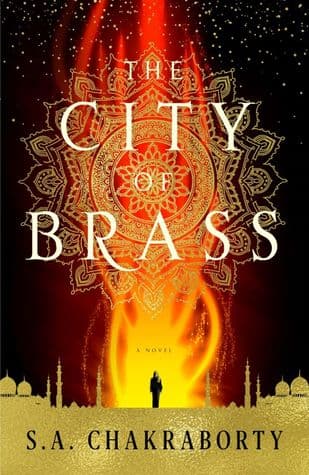
- The City of Brass
S.A. Chakraborty
4.1 (46k) average on GoodreadsFantasyFirst book in the same series, essential for context and world-building.
- The Priory of the Orange Tree
Samantha Shannon
4.2 (40k) average on GoodreadsFantasyAn epic, sprawling fantasy with multiple POVs, intricate lore, and a focus on grand conflicts.
- Harry Potter and the Sorcerer's Stone
J.K. Rowling
4.5 (7M) average on GoodreadsFantasyRescued from a miserable life under the stairs, an orphaned boy discovers he's a wizard destined for a magical school, where he uncovers a dangerous secret tied to the dark wizard who murdered his parents.
- The Hunger Games
Suzanne Collins
4.3 (6.4M) average on GoodreadsFantasyIn a future where children fight to the death on live television, Katniss Everdeen volunteers for the arena, turning a death sentence into a fight for survival and a spark of rebellion.
- 1984
George Orwell
4.2 (3.1M) average on GoodreadsPoliticsIn a future where surveillance and thought control are absolute, a man's search for truth clashes with the Party, showing that hope can be a form of rebellion.
- Divergent
Veronica Roth
4.2 (2.9M) average on GoodreadsFantasyIn a society divided by virtues, a sixteen-year-old's difference from the norm starts a rebellion that threatens her world.





Enjoyed the summary?
A summary gives you the shape of the book. The book itself has the detail, the examples and the voice.
Find The Empire of Gold on AmazonAs an Amazon Associate, BookBrief earns from qualifying purchases. How we're funded