
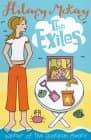
Synopsis
Covers the whole plot, including the ending.
- Difficulty
- Easy
- Pacing
- Moderate
- Mood
- Heartwarming, Humorous, Nostalgic, Gentle
- Read it if
- You enjoy heartwarming stories about quirky families, sibling dynamics, and the magic of books, with a touch of humor and intergenerational connection.
- Skip it if
- You prefer fast-paced, action-driven plots or stories without a strong focus on character development and everyday life.
The Exiles Plot Summary
Covers the whole plot, including the ending.
The Conroy Sisters and the Reading Addiction
Ruth, Naomi, Phoebe, and Rachel Conroy are four sisters who are always reading. Their parents worry about their lack of physical activity and social interaction, so they decide to send them to their maternal grandmother, Big Grandma, for the summer holidays. Big Grandma lives by the sea and is known for her practical approach to life. The parents hope that the new environment, along with Big Grandma's strict routine of fresh air and hard work, will stop the girls from constant reading and encourage them to engage with the real world.
Arrival at Big Grandma's
When they arrive at Big Grandma's seaside house, the Conroy sisters immediately notice how different it is from their own home. Big Grandma's house is clean, orderly, and, to their dismay, almost entirely without books. Their grandmother, a strong woman with a sharp mind, greets them with a list of chores and a stern talk about the benefits of hard work and fresh air. The girls, used to spending their days lost in stories, now face a summer of unfamiliar physical labor and the difficult prospect of boredom without their cherished books.
The Book Smuggling Operation
The lack of books quickly becomes unbearable for the Conroy sisters. Ruth, the oldest and most clever, plans to smuggle books into the house. They combine their pocket money and, during a trip to the local town with Big Grandma, manage to buy a few books from a second-hand shop, hiding them in their clothes. This secret operation starts their hidden reading life, as they find clever ways to hide their books and read them without Big Grandma knowing, often late at night under their blankets.
Chores and Discontent
Big Grandma's daily routine is strict. The girls are given various chores, from cleaning and cooking to gardening and fetching water. They find the work tiring and new, often doing their duties poorly or with complaints. Their initial dislike for Big Grandma grows, as they see her as a barrier to their happiness and their reading. They constantly long for the escape that books offer, viewing the physical labor as a punishment rather than a useful activity, which strengthens their desire to retreat into their imaginations.
The Discovery of the Old Shed
One afternoon, while exploring the overgrown garden, the Conroy sisters find a dusty, unused shed. Inside, they discover many forgotten objects: old furniture, unusual tools, strange fabrics, and various curiosities. This discovery sparks their imaginations in a new way, as they start to invent stories and histories for the items they find. The shed becomes a secret place, somewhere they can escape Big Grandma's watchful eye and enjoy a different kind of storytelling, using the objects as props for their shared narratives.
Big Grandma's Past
As the summer goes on, the sisters start to notice small hints about Big Grandma's past. They find old photographs, letters, and souvenirs tucked away in different parts of the house. These discoveries make them curious, leading them to guess about their grandmother's younger days and the life she led before they knew her. They begin to see her not just as a strict taskmaster, but as a person with her own history, experiences, and perhaps even her own hidden stories, softening their initial firm view of her.
The Play and the Performance
Using inspiration from the objects in the shed and their combined imagination, the Conroy sisters decide to write and perform a play. They carefully plan the plot, assign roles, and create costumes and props from the shed's contents. This collaborative project becomes a main focus of their summer, allowing them to use their storytelling instincts in a new, active way. Creating the play gives them a common goal and builds teamwork and creative expression that goes beyond their individual reading habits.
Big Grandma's Unexpected Reaction
The sisters work secretly on their play, rehearsing when they can. Eventually, Big Grandma discovers what they are doing. Fearing her disapproval, the girls prepare for a lecture. However, to their surprise, Big Grandma shows a strong interest in their project. She offers practical advice, helps them with costumes, and even suggests improvements to the script. This unexpected support from their grandmother begins to close the gap between them, showing a softer, more understanding side to her and surprising the girls with her enthusiasm.
The Performance and the Audience
The day of the performance arrives. The sisters present their play to Big Grandma and a few of her elderly friends, who make up a small but appreciative audience. The performance, though perhaps not perfect, is a great success in terms of effort and creativity. The girls put their hearts into their roles, and the audience is charmed by their enthusiasm and inventiveness. This public display of their talents is a moment of success for the Conroy sisters, validating their imaginative efforts and strengthening their bond with Big Grandma and each other.
A New Understanding
As the summer ends, the Conroy sisters think about their time with Big Grandma. They realize that while they still love reading, their experiences have broadened their perspectives. They've discovered the joy of physical activity, the satisfaction of creative collaboration, and a new appreciation for their grandmother. Big Grandma, in turn, has come to understand that storytelling and imagination are not only found in books. The summer has changed them all, creating a deeper, more complex relationship built on mutual respect and shared experiences, blending reading and living.
The Exiles Characters
Ruth Conroy
Protagonist
The eldest Conroy sister, resourceful and a natural leader.
Ruth is the eldest of the four Conroy sisters, characterized by her intelligence, practicality, and innate leadership qualities. She is the most outwardly responsible and often takes charge of her younger sisters, especially when it comes to their shared passion for reading. Ruth is quick-witted and resourceful, capable of devising plans, such as the book smuggling operation, to navigate the challenges presented by Big Grandma's book-free environment. Her love for stories is deep-seated, but she also possesses a pragmatic streak that allows her to adapt and find new ways to express her creativity.
Relationships: Naomi Conroy (Sister, often relies on Ruth's leadership); Phoebe Conroy (Sister, collaborative and imaginative); Rachel Conroy (Youngest sister, often looks up to Ruth); Big Grandma (Granddaughter, initially defiant but eventually develops mutual respect)
Naomi Conroy
Protagonist
The second Conroy sister, quiet and deeply empathetic.
Naomi is the second Conroy sister, often described as more thoughtful and sensitive than Ruth. She possesses a quiet strength and a deep empathy, making her observant of others' feelings, including Big Grandma's. While she shares her sisters' love for books, Naomi is also drawn to the beauty of the natural world and finds solace in quiet contemplation. She is often the one who notices subtle changes or emotions in those around her, contributing a gentler perspective to the sisters' collective adventures. Her imagination is vivid, though less outwardly expressed than Phoebe's.
Relationships: Ruth Conroy (Sister, looks to Ruth for guidance); Phoebe Conroy (Sister, shares imaginative play); Rachel Conroy (Sister, caring towards the youngest); Big Grandma (Granddaughter, slowly comes to understand and appreciate her grandmother)
Phoebe Conroy
Protagonist
The third Conroy sister, highly imaginative and dramatic.
Phoebe is the third Conroy sister, known for her boundless imagination and dramatic flair. She is often the instigator of their imaginative games and thrives on storytelling and make-believe. Phoebe is less concerned with practicality than Ruth and more focused on the creative possibilities of any situation. Her enthusiasm is infectious, and she often drives the sisters' collective storytelling efforts, such as the idea for the play. She is expressive and sometimes prone to exaggeration, but her vibrant inner world is a constant source of entertainment and inspiration for her siblings.
Relationships: Ruth Conroy (Sister, often follows Ruth's lead but brings her own ideas); Naomi Conroy (Sister, shares imaginative play); Rachel Conroy (Sister, encourages Rachel's participation in games); Big Grandma (Granddaughter, initially finds Big Grandma restrictive but later finds a common ground in creativity)
Rachel Conroy
Protagonist
The youngest Conroy sister, innocent and often perceptive.
Rachel is the youngest of the Conroy sisters, characterized by her innocence, sweet nature, and surprising perceptiveness. While she often follows the lead of her older sisters, Rachel has her own unique insights and a quiet way of observing the world. She is deeply attached to her family and contributes to their shared experiences with her simple yet profound observations. Rachel's love for stories is as strong as her sisters', and she eagerly participates in their adventures, often providing unexpected moments of clarity or humor. Her youth makes her particularly adaptable to the new environment.
Relationships: Ruth Conroy (Sister, looks up to Ruth); Naomi Conroy (Sister, feels cared for by Naomi); Phoebe Conroy (Sister, enjoys Phoebe's imaginative games); Big Grandma (Granddaughter, initially intimidated but grows fond of her grandmother)
Big Grandma
Supporting
The sisters' formidable and wise grandmother, who attempts to 'cure' them of reading.
Big Grandma is the maternal grandmother of the Conroy sisters, a strong-willed, no-nonsense woman who believes in hard work, fresh air, and practical skills. She initially appears stern and unyielding, intending to break the girls of their incessant reading habit by immersing them in chores and outdoor activities. However, beneath her gruff exterior lies a deep well of wisdom, a sharp wit, and a hidden appreciation for storytelling and imagination, which she eventually reveals. She represents a different generation and a different set of values, challenging the girls' preconceived notions of happiness and purpose.
Relationships: Ruth Conroy (Grandmother, initially clashes but develops a bond of respect); Naomi Conroy (Grandmother, Naomi's quiet observation helps bridge the gap); Phoebe Conroy (Grandmother, Phoebe's creativity sparks Big Grandma's interest); Rachel Conroy (Grandmother, shows a tender side towards the youngest)
Mrs. Conroy (Mother)
Mentioned
The girls' mother, who sends them to Big Grandma.
The girls' mother, Mrs. Conroy, is concerned about her daughters' sedentary lifestyle and their constant immersion in books. She orchestrates the summer trip to Big Grandma's, hoping the change of environment and her mother's strict regime will encourage the girls to be more active and engaged with the real world. She is loving but perhaps a bit overwhelmed by her daughters' intense reading habits, seeking a practical solution to what she perceives as an imbalance in their lives. Her role is primarily in setting up the central conflict of the story.
Relationships: Ruth, Naomi, Phoebe, Rachel Conroy (Mother, concerned for her daughters' well-being); Big Grandma (Daughter, trusts her mother to handle the girls)
Mr. Conroy (Father)
Mentioned
The girls' father, who supports the decision to send them away.
The girls' father, Mr. Conroy, shares his wife's concerns about their daughters' bookishness and supports the decision to send them to Big Grandma for the summer. He is a loving parent but, like his wife, believes that the girls need more balance in their lives. His role is minor, primarily serving to reinforce the parents' collective decision that drives the initial plot. He represents the typical parent's desire for their children to experience a well-rounded childhood, encompassing both intellectual and physical development.
Relationships: Ruth, Naomi, Phoebe, Rachel Conroy (Father, concerned for his daughters' development); Mrs. Conroy (Husband, shares parenting decisions)
The Exiles Themes
The Nature of Storytelling and Imagination
This theme explores how storytelling and imagination are not limited to reading books; they can appear in many forms. Initially, the Conroy sisters see imagination only through reading. However, Big Grandma's book-free home forces them to find new ways to be creative. Finding the old shed, full of forgotten objects, helps them transform creatively. They start to invent stories for these items, and later, work together to write and perform a play. This journey shows that imagination is a human quality that can be expressed through active creation, collaborative play, and even interpreting daily life, expanding their understanding beyond printed pages.
“Perhaps stories weren't just in books after all. Perhaps they were everywhere, waiting to be found and made.”
The Balance Between Intellectual and Physical Life
The main conflict of the story is balancing intellectual pursuits (reading) with physical activity and engaging with the real world. The Conroy parents send their daughters to Big Grandma because they believe the girls are too focused on books and neglecting physical and social development. Big Grandma's strict routine of chores and outdoor life initially feels like punishment to the girls. However, as the summer goes on, they begin to appreciate the satisfaction of physical work, the joy of fresh air, and the social connections made through shared activities like creating their play. The novel suggests that a full life requires a good mix of both mind and body.
“There was a lot to be said for fresh air, even if it did make your cheeks red and your hair wild.”
Intergenerational Understanding and Bridging Gaps
The relationship between the Conroy sisters and Big Grandma explores how different generations can understand each other. At first, there is a big gap: the girls see Big Grandma as a strict, old-fashioned person who does not understand their love for books, while Big Grandma sees them as too sedentary and impractical. Through shared experiences, especially creating the play, both sides begin to learn from each other. The girls discover Big Grandma's hidden depths and her own appreciation for creativity, while Big Grandma realizes that imagination is not only a passive activity. This mutual learning builds respect and affection, showing how different generations can connect and enrich each other's lives by finding common ground.
“Big Grandma had a different kind of story in her, one made of hard work and quiet knowing.”
The Power of Collaboration and Sibling Bonds
The Conroy sisters' journey highlights the strength of sibling bonds and the power of working together. Facing a challenging new environment, the sisters rely heavily on each other. Their shared love for books first unites them in their 'book smuggling' efforts. Later, finding the shed and deciding to create a play becomes a strong collaborative project. They combine their individual talents—Ruth's leadership, Naomi's empathy, Phoebe's dramatic flair, and Rachel's innocence—to bring their vision to life. This shared effort strengthens their sisterly bond, teaching them teamwork, compromise, and the joy of creating something together, proving that collective imagination can achieve more than individual pursuits.
“Four heads were definitely better than one, especially when those four heads were full of stories.”
Plot Devices & Literary Techniques
The Absence of Books
The deliberate removal of books from the girls' environment.
The absence of books at Big Grandma's house is the primary inciting incident and a crucial plot device. It forces the Conroy sisters out of their comfort zone and challenges their established way of life. This void compels them to seek alternative forms of entertainment and expression, leading to their exploration of the garden, the discovery of the shed, and ultimately, the creation of their play. It highlights the girls' dependence on books while simultaneously pushing them to discover new aspects of their own creativity and resourcefulness, demonstrating that stories exist beyond the written word.
The Old Shed
A forgotten outbuilding filled with intriguing, discarded items.
The old shed functions as a 'treasure chest' and a catalyst for the girls' creative transformation. Its contents — dusty objects, old clothes, forgotten tools — spark their imaginations, providing tangible prompts for storytelling and play-acting. It becomes a secret sanctuary where they can escape Big Grandma's watchful eye and indulge in a different kind of imaginative play, one that is active and collaborative rather than solitary and book-bound. The shed's discovery directly leads to the idea of the play, serving as a physical space for their creative development.
Big Grandma's Strict Regime
The grandmother's rules and daily chores.
Big Grandma's strict regime of chores and outdoor activities serves as an external antagonist, initially perceived as a barrier to the girls' happiness. However, it functions as a device for character development, forcing the girls to engage with the physical world and learn practical skills. The initial resentment it generates slowly gives way to a grudging appreciation and ultimately, a deeper understanding of the value of hard work and fresh air. It also provides the stark contrast against which the girls' imaginative pursuits stand out, making their eventual creative triumphs more impactful.
The Play
The collaborative theatrical production created by the sisters.
The creation and performance of the play is a central plot device that brings together all the themes and character arcs. It is the culmination of the sisters' newfound collaborative spirit and their expanded understanding of storytelling. The play allows them to channel their individual imaginative strengths into a shared, active project. Crucially, it also serves as the bridge between the sisters and Big Grandma, as her unexpected support for their endeavor fosters mutual respect and understanding, demonstrating that creativity can unite disparate generations.
The Exiles Quotes
“But it’s a lovely name,’ said Ruth. ‘It’s a name from a book. From a poem, even.”
“It’s all right,’ said Naomi. ‘It’s just… I wish I lived somewhere else. Somewhere… quieter.”
“You’re a book-eater, aren’t you?’ said Ruth. ‘I used to be a book-eater too.”
“But we’re not orphans,’ said Naomi. ‘We’ve got a mother and a father. And a dog.”
“It’s not fair,’ said Naomi. ‘They always get to do everything.”
“‘You can always tell a lot about people by the books they read,’ said Ruth.”
“‘It’s not just a story, it’s… it’s real to me,’ said Naomi.”
“Being an exile isn’t so bad,’ said Ruth. ‘It just means you have to make your own rules.”
“Sometimes,’ said Naomi, ‘I think the best stories are the ones you make up yourself.”
“It’s not about being perfect,’ said Ruth. ‘It’s about being brave.”
“We’re not going to be like ordinary people,’ said Naomi. ‘We’re going to be extraordinary.”
“A good book,’ said Ruth, ‘is like a door to another world.”
“It’s a good thing to be different,’ said Naomi. ‘It means you get to see things nobody else does.”
“You don’t have to go anywhere to have an adventure,’ said Ruth. ‘You just have to open a book.”
Quiz
10 questions on the plot and the characters. Each answer comes with a short explanation.
Question 1
What is Big Grandma's primary goal for the Conroy sisters during their summer visit?
- To teach them how to cook and clean.
- To break them of their reading habit.
- To enroll them in various seaside activities.
- To help them make new friends in the village.
Show answer
B. To break them of their reading habit. Big Grandma believes the girls spend too much time reading and wants them to experience fresh air and hard work instead.
Question 2
Which of the Conroy sisters is the youngest and known for her particularly voracious reading?
- Ruth
- Phoebe
- Naomi
- Miranda
Show answer
D. Miranda Miranda is the youngest sister and is often depicted as being completely absorbed in her books.
Question 3
What unusual item does Big Grandma possess that the girls initially find intriguing and later use?
- A talking parrot.
- A collection of antique dolls.
- A secret tunnel to the beach.
- A large, empty coffin.
Show answer
D. A large, empty coffin. Big Grandma keeps an old coffin in her house, which the girls eventually discover and use for their own purposes, including hiding books.
Question 4
How do the sisters manage to continue reading despite Big Grandma's efforts to confiscate their books?
- They sneak out to the local library every day.
- They borrow books from friendly neighbors.
- They hide books in various clever places and read in secret.
- Big Grandma eventually gives up and returns their books.
Show answer
C. They hide books in various clever places and read in secret. The girls become very resourceful, hiding books in the coffin, under floorboards, and even in their clothes, reading whenever Big Grandma isn't looking.
Question 5
What unexpected result does Big Grandma's 'no reading' rule have on the sisters?
- They become very athletic and enjoy outdoor sports.
- They develop a strong interest in gardening and farming.
- They begin writing their own stories and poems.
- They grow bored and spend most of their time complaining.
Show answer
C. They begin writing their own stories and poems. Deprived of reading, the sisters turn their creative energies towards writing their own imaginative stories, often based on their experiences and observations.
Question 6
Which sister often acts as the leader and primary planner for their schemes, especially those involving books?
- Phoebe
- Naomi
- Ruth
- Miranda
Show answer
C. Ruth Ruth, the eldest, often takes charge and devises the plans for the sisters, including how to outsmart Big Grandma and continue their reading.
Question 7
What is the name of the local boy who becomes a friend to the sisters and sometimes aids them?
- Tom
- Joe
- Tim
- Timmy
Show answer
D. Timmy Timmy is a local boy who befriends the Conroy sisters and occasionally gets involved in their adventures and schemes.
Question 8
What specific item does Big Grandma use to replace the girls' books, hoping to encourage outdoor activity?
- Fishing rods.
- Gardening tools.
- Beach toys.
- Art supplies.
Show answer
B. Gardening tools. Big Grandma gives the girls gardening tools and assigns them tasks in her garden to keep them busy and away from books.
Question 9
How does the theme of imagination and creativity manifest in the story, beyond just reading and writing?
- The girls frequently invent new games to play on the beach.
- They create elaborate costumes from Big Grandma's old clothes.
- They transform everyday objects and situations into fantastical narratives and adventures.
- They draw detailed maps of the local area, imagining hidden treasures.
Show answer
C. They transform everyday objects and situations into fantastical narratives and adventures. Even when deprived of books, the girls' imaginations run wild, turning mundane tasks or objects (like the coffin or the garden) into settings for grand adventures and stories they create together.
Question 10
What is the ultimate irony of Big Grandma's plan to deter the girls from reading?
- She herself secretly enjoys reading novels.
- Her efforts inadvertently foster the girls' own storytelling and writing abilities.
- The girls convince her to start a book club with them.
- The village library closes down, making books inaccessible anyway.
Show answer
B. Her efforts inadvertently foster the girls' own storytelling and writing abilities. By taking away their books, Big Grandma unintentionally pushes the sisters to become creators of stories themselves, illustrating that the love of narrative is deeply ingrained in them.
The Exiles FAQ
What is the basic premise of 'The Exiles'?
The four Conroy sisters – Ruth, Naomi, May, and Phoebe – are sent to spend the summer with their formidable grandmother, Big Grandma, at her seaside house. Big Grandma's primary goal is to cure them of their incessant reading habit, believing it makes them 'book-mad' and disconnected from reality, by enforcing a strict regimen of fresh air, manual labor, and outdoor activities.
Who are the four Conroy sisters, and what are their key characteristics?
Ruth is the eldest, practical and often exasperated but deeply caring. Naomi is the adventurous and sometimes mischievous one, always ready for a new scheme. May is the quiet, artistic, and observant sister, often lost in thought. Phoebe is the youngest, a sweet and imaginative child who often parrots what she hears and loves stories.
What is Big Grandma's main motivation for bringing the girls to the seaside?
Big Grandma is convinced that the girls are 'book-mad' and believes their constant reading is unhealthy, making them pale, unobservant, and impractical. Her main motivation is to 'cure' them of this habit by replacing books with fresh air, hard work, and outdoor activities, hoping to instill a more robust, practical approach to life.
How do the sisters initially react to Big Grandma's strict rules and lack of books?
Initially, the sisters are quite miserable and bewildered by Big Grandma's strictures. They find ways to sneak reading material, like labels or old newspapers, and are constantly trying to circumvent her rules. Their longing for their beloved books is a central theme in their early resistance.
What unexpected results does Big Grandma's 'cure' have on the girls?
Big Grandma's attempts to stop the girls from reading inadvertently lead them to create their own stories and adventures. They become more imaginative, resourceful, and develop a deeper bond with each other and their surroundings, often turning their chores into elaborate narratives, ultimately proving that their love for stories isn't diminished but transformed.
What is the significance of the 'Giant' in the sisters' imaginative play?
The 'Giant' is a recurring character in the elaborate stories and games the sisters invent to entertain themselves, particularly when performing chores or exploring. It represents their collective imagination and their way of transforming mundane tasks into exciting narratives, a direct consequence of being deprived of physical books.
How does the 'Lost Prince' story connect to the sisters' real-life experiences?
The 'Lost Prince' is a story Naomi tells Phoebe, and it subtly reflects their own feelings of being 'exiled' from their normal lives and books. While not a direct allegory, the themes of being displaced and finding new ways to cope resonate with their situation at Big Grandma's house, and their longing for their familiar comforts.
Are there any subtle hints that Big Grandma might not be as strict as she appears?
Yes, there are subtle hints throughout the book. Big Grandma occasionally shows moments of quiet amusement at the girls' antics, and she never truly punishes them severely for their transgressions. Her ultimate gift of books at the end, and her acceptance of their 'book-madness,' suggests a deeper understanding and affection she held for them all along.
What role does the seaside setting play beyond just a backdrop?
The seaside setting is crucial as it provides the environment for Big Grandma's 'cure' to take effect. The beach, cliffs, and sea become the stage for the girls' adventures, fostering their imaginative play and physical activity. It's a stark contrast to their usual indoor, bookish world, forcing them to engage with the natural environment.
How does 'The Exiles' explore the psychological impact of deprivation on creativity?
The book brilliantly shows that depriving the sisters of books doesn't stifle their creativity but redirects it. Their inherent love for stories manifests in inventing their own elaborate narratives, characters, and games, demonstrating that the human need for storytelling is resilient and adaptable, even under strict conditions.
What psychological journey do the sisters undergo from the beginning to the end of the summer?
The sisters transition from initial misery and resistance to developing resourcefulness, deeper bonds, and a newfound appreciation for their own imaginative capabilities. They learn to create their own entertainment and derive joy from their surroundings, ultimately becoming more self-reliant and creatively fulfilled.
How does Big Grandma's character evolve psychologically throughout the story?
Big Grandma initially appears as stern and unyielding, convinced of her righteous mission. However, through observing the girls, she gradually develops a grudging respect and even affection for their imaginative spirits. Her psychological journey culminates in her acceptance of their 'book-madness' and her eventual gift of books, showing a softening of her rigid beliefs.
What is the psychological significance of the sisters' shared storytelling?
Their shared storytelling serves as a coping mechanism, a form of escapism, and a powerful bonding tool. It allows them to process their experiences, make sense of their new environment, and maintain their individual identities while strengthening their collective sisterly bond, proving the intrinsic human need for narrative.
Is 'The Exiles' an argument for reading or against it?
Ultimately, 'The Exiles' is an argument *for* the power of stories and imagination, whether derived from books or created anew. While Big Grandma initially tries to curb reading, the book demonstrates that the love for narratives is innate and essential, suggesting that reading fosters imagination rather than hindering it, and that a balance with real-world experience is ideal.
What is the main message about childhood and imagination that the book conveys?
The book conveys that childhood is inherently imaginative and that children will always find ways to create stories and adventures, even in challenging circumstances. It celebrates the boundless nature of a child's mind and its ability to transform the mundane into the magical, highlighting imagination as a fundamental aspect of growth and joy.
How does the ending of the book challenge or confirm Big Grandma's initial beliefs?
The ending subtly challenges Big Grandma's initial belief that reading is inherently bad. By giving the girls books and acknowledging their imaginative spirit, she indirectly confirms that their 'book-madness' wasn't a flaw but a core part of who they are, and that stories, in all forms, enrich life, rather than detract from it. Her methods, while harsh, unintentionally fostered a deeper appreciation for stories.
Could Big Grandma be seen as a villain, or is her character more nuanced?
Big Grandma is far more nuanced than a simple villain. While her methods are strict and initially seem harsh, her intentions are rooted in a desire to 'improve' her granddaughters. Her eventual softening and understanding reveal her as a complex character who, despite her stern exterior, genuinely cares for the girls and ultimately respects their unique spirits, making her an antagonist who undergoes her own transformation.
What is the lasting legacy or impact of the summer on the Conroy sisters?
The summer leaves the Conroy sisters with a strengthened bond, enhanced imaginative abilities, and a deeper understanding of themselves and each other. They learn resilience, resourcefulness, and the joy of creating their own stories, lessons that will undoubtedly stay with them long after their 'exile' ends, enriching their future lives and reading experiences.
About the author

Hilary McKay is a British author known for her engaging children's and young adult fiction. Her notable works include "Caddy Ever After," which explores the complexities of friendship and family, and "The Exiles," a story about adventure and self-discovery. McKay's writing often features strong character development and relatable themes.
Similar books
- I Capture the Castle
Dodie Smith
4.0 (85k) average on GoodreadsHistorical FictionFeatures a strong, quirky female protagonist and family dynamics in an unusual setting.
- Harry Potter and the Sorcerer's Stone
J.K. Rowling
4.5 (7M) average on GoodreadsFantasyRescued from a miserable life under the stairs, an orphaned boy discovers he's a wizard destined for a magical school, where he uncovers a dangerous secret tied to the dark wizard who murdered his parents.
- The Hobbit, or There and Back Again
J.R.R. Tolkien
4.3 (2.9M) average on GoodreadsFantasyA comfort-loving hobbit named Bilbo Baggins is whisked away by a mischievous wizard and a band of dwarves on an unexpected journey to reclaim stolen treasure from a fearsome dragon, discovering courage and a magical ring along the way.
- Harry Potter and the Goblet of Fire
J.K. Rowling
4.6 (2.6M) average on GoodreadsFantasyA bewildered Harry Potter, underage and thrust into a deadly Triwizard Tournament, must brave dragons, mermaids, and a resurgent dark magic to survive a year that will forever alter the wizarding world.
- Harry Potter and the Order of the Phoenix
J.K. Rowling
4.5 (2.5M) average on GoodreadsFantasyIn a year of oppressive secrets and the threat of Voldemort, Harry Potter and Dumbledore's Army secretly train for war, shown through Jim Kay and Neil Packer's dark illustrations.
- The Lightning Thief
Rick Riordan
4.3 (2M) average on GoodreadsFantasyThrust into a world of mythological monsters and divine treachery, an ordinary boy discovers he's the son of Poseidon and must embark on a perilous quest across modern America to prevent an Olympian war.





Enjoyed the summary?
A summary gives you the shape of the book. The book itself has the detail, the examples and the voice.
Find The Exiles on AmazonAs an Amazon Associate, BookBrief earns from qualifying purchases. How we're funded