

Synopsis
Covers the whole plot, including the ending.
- Difficulty
- Medium
- Pacing
- Fast
- Mood
- Suspenseful, Gritty, Tense, Realistic
- Read it if
- You enjoy intense, realistic spy thrillers with complex protagonists and high stakes.
- Skip it if
- You prefer lighthearted reads or are sensitive to graphic violence and mature themes related to terrorism.
The Faithful Spy Plot Summary
Covers the whole plot, including the ending.
The Return of John Wells
John Wells, an American CIA operative, spent the last decade deep undercover with al-Qaeda, fully adopting their culture and faith. His handler, Jennifer Exley, is one of the few who thinks he has not 'turned.' Omar Khadri, a senior al-Qaeda leader, unexpectedly activates Wells and orders him to return to the United States. Khadri's order is unclear but suggests a major attack. Wells, who committed violence and lived as a devout Muslim for so long, struggles to return to his American identity and the moral questions of his mission. His return to Western intelligence is full of suspicion, both from his al-Qaeda contacts and his own agency.
Initial Debriefing and Suspicion
When he arrives in the United States, John Wells undergoes a strict debriefing by the CIA. Most agents, including Assistant Director of Operations, Ellis Shafer, doubt his loyalty, believing his long immersion compromised him. Only Jennifer Exley defends him, having kept in touch and understood him over the years. Wells provides important, though incomplete, information about Khadri's plans and a possible large-scale attack, but his information is met with distrust. He is in a difficult spot, caught between his former terrorist associates and a suspicious intelligence community.
The Montreal Connection
Following a lead, John Wells goes to Montreal, Canada, to investigate Tarik Durant, an estranged microbiologist with radical views. Durant lives a seemingly normal life with his wife but secretly develops a deadly biological agent in his home lab. Wells, using his al-Qaeda contacts and surveillance skills, infiltrates Durant's circle. He discovers that Khadri's network forces Durant to produce a highly virulent smallpox strain. This discovery raises the stakes, showing a more catastrophic plot than first feared. Wells must act fast to gather more evidence while keeping his cover.
Khadri's Master Plan Revealed
Wells's on-the-ground intelligence, combined with analysis by Jennifer Exley and her team, reveals Omar Khadri's master plan. Khadri intends to use Tarik Durant's weaponized smallpox to start a pandemic across the United States. His goal is not just a single attack, but widespread societal collapse and terror. The plan involves multiple operatives and a complex distribution network. Wells realizes he must stop this before it is too late, knowing failure would lead to unimaginable devastation. He is now key to preventing a global catastrophe, dealing with dangerous double-crosses and constant threats to his life.
The Smallpox Delivery
John Wells learns that the weaponized smallpox virus is being transported from Montreal into the United States. He begins a desperate race against time to intercept the shipment. Relying on his deep understanding of al-Qaeda's methods and his network of contacts, he tracks the couriers through secret routes. The CIA, driven by Exley's faith in Wells, provides limited support, but Wells bears the main burden. Tension builds as he nears the delivery, knowing one mistake could unleash the deadly pathogen. He faces direct confrontation with Khadri's operatives, fighting to keep the virus from its targets.
Confrontation and Capture
John Wells tracks the smallpox shipment to a remote location near the US border. He confronts the al-Qaeda couriers transporting the deadly pathogen. Using his combat training and years of experience in hostile environments, Wells neutralizes the immediate threat, securing the smallpox vials. The struggle is intense and dangerous, putting his life at extreme risk. He seizes the biological agent, preventing its dispersal, but not without injury. This act, while effective, further complicates his unclear standing with the CIA, as he operates mostly outside their direct control.
The Aftermath and Loose Ends
With the smallpox vials secured, the immediate threat of a biological attack is gone. However, Omar Khadri, the plot's mastermind, remains at large, vowing revenge and promising future attacks. John Wells, having saved countless lives again, finds himself in a familiar limbo. While Jennifer Exley's trust in him is confirmed, others within the CIA still view him with suspicion, questioning his methods and his decade-long immersion. Wells deals with the psychological toll of his mission, the trauma of his experiences, and the difficulty of returning to normal life. The ending leaves his future uncertain, suggesting more secret missions.
Exley's Dilemma
Throughout the ordeal, Jennifer Exley faces a deep professional and personal challenge. As John Wells's handler, she is his only consistent supporter within the CIA, constantly fighting to protect him from internal skepticism and bureaucracy. Her belief in him is strong, built on years of remote communication and understanding his character. However, her professional dedication mixes with a growing romantic attraction to Wells. She struggles to stay objective, realizing her feelings could compromise her judgment or put Wells at further risk. This inner conflict adds emotional complexity to her role, showing the personal sacrifices their dangerous work demands.
The Betrayal of Tarik Durant
Tarik Durant, a brilliant but troubled microbiologist, becomes a pawn in Omar Khadri's plan. Initially unwilling, he is blackmailed and forced to weaponize the smallpox virus in his basement lab in Montreal. His abusive past and desperate situation make him vulnerable to Khadri's manipulation. Wells discovers Durant's involvement but also his desperation and fear. Durant's story shows the human cost of terrorism, as an ordinary person is turned into an instrument of mass destruction. Khadri's network ultimately eliminates Durant to ensure his silence, a tragic end for a man caught in a web of terror beyond his control.
Internal CIA Politics
The story often reveals the internal political struggles and bureaucratic slowness within the CIA. Assistant Director Ellis Shafer represents the skeptical group, constantly questioning John Wells's loyalty and methods. Jennifer Exley must navigate these internal power struggles, fighting to get Wells the resources and trust he needs. This internal conflict often proves as difficult as the external threat, as time and resources are wasted proving Wells's credibility. The novel criticizes the intelligence community's inability to adapt quickly to unusual threats and its deep distrust of operatives who stray from standard protocol, even when successful.
The Faithful Spy Characters
John Wells
Protagonist
A CIA operative who spent ten years deep undercover with al-Qaeda.
John Wells is a highly skilled and resilient CIA operative, profoundly shaped by a decade spent living as a devout Muslim and committing acts of violence within al-Qaeda. He is a master of disguise, languages, and combat, but his long immersion has blurred the lines of his identity. He struggles with the moral compromises he's made and the psychological toll of his double life. Driven by a deep sense of duty and a desire to prevent mass casualties, he is fiercely independent and often operates outside established protocols, earning both respect and suspicion from his agency.
Relationships: Jennifer Exley (His handler and the only one who truly believes in him; a complex mix of professional trust, emotional dependency, and burgeoning romantic attraction.); Omar Khadri (His al-Qaeda superior, deeply suspicious of Wells, yet relying on him for the plot; a relationship of mutual deception and deadly antagonism.)
Jennifer Exley
Supporting
John Wells's steadfast CIA handler and his only true advocate.
Jennifer Exley is an intelligent, tenacious, and intuitively perceptive CIA analyst. She has been John Wells's handler for his entire ten-year deep cover operation, forming a unique bond of trust and understanding with him. She is fiercely loyal to Wells, consistently defending his integrity against a skeptical agency. Her professional dedication is paramount, but she also grapples with a growing personal and romantic interest in Wells, which complicates her professional judgment. She is the bridge between Wells's clandestine world and the bureaucratic reality of the CIA, often risking her career to protect him.
Relationships: John Wells (His handler and the only one who truly believes in him; a complex mix of professional trust, emotional dependency, and burgeoning romantic attraction.); Ellis Shafer (Her superior, with whom she frequently clashes over Wells's reliability and the agency's operational strategies.)
Omar Khadri
Antagonist
A cunning and ruthless al-Qaeda mastermind plotting a devastating attack.
Omar Khadri is a senior al-Qaeda leader, a brilliant and highly dangerous strategist. He is characterized by his intense paranoia, his deep-seated hatred for the West, and his unwavering commitment to inflicting maximum casualties. While he relies on John Wells for critical parts of his plan, he harbors deep suspicions about Wells's true allegiance, constantly testing him. Khadri is a master manipulator, capable of coercing individuals like Tarik Durant and orchestrating complex, multi-layered terrorist plots. He is the embodiment of the existential threat the protagonists face, a cold and calculating enemy with a vast network.
Relationships: John Wells (His al-Qaeda subordinate, whom he relies on but deeply distrusts; a relationship built on deception and mutual antagonism.); Tarik Durant (His coerced and manipulated pawn, used to develop the biological weapon.)
Tarik Durant
Supporting
A brilliant but troubled microbiologist coerced into creating a biological weapon.
Tarik Durant is a microbiologist with a dark past, including domestic abuse and radical leanings. He is intelligent but weak-willed, making him an easy target for Omar Khadri's manipulation. Blackmailed and threatened, Durant is forced to weaponize a deadly smallpox virus in his home laboratory. He is a tragic figure, caught between his scientific capabilities and his moral failings, ultimately becoming a pawn in a larger, more terrifying game. His story highlights the vulnerability of individuals to exploitation by terrorist organizations, and the devastating consequences of succumbing to fear and coercion.
Relationships: Omar Khadri (His manipulator and coercer, holding him captive through threats and blackmail.); John Wells (The operative who uncovers his involvement and tries to understand his predicament, ultimately witnessing his tragic end.)
Ellis Shafer
Supporting
Assistant Director of Operations at the CIA, skeptical of Wells.
Ellis Shafer is a high-ranking CIA official, representing the more conservative and skeptical elements within the agency. He is cautious, bureaucratic, and deeply distrustful of John Wells, believing that Wells has been compromised by his decade-long immersion in al-Qaeda. Shafer embodies the institutional resistance to unconventional methods and the difficulty of trusting operatives who operate beyond conventional oversight. His skepticism creates significant obstacles for Jennifer Exley and Wells, often delaying critical actions and diverting resources to internal investigations rather than external threats. He is driven by a desire for security and adherence to protocol, even if it blinds him to the bigger picture.
Relationships: Jennifer Exley (Her superior, with whom he frequently clashes over Wells's reliability and operational strategies.); John Wells (An operative he deeply distrusts and views as a potential liability or even a turned agent.)
David Barnes
Supporting
A junior CIA analyst working under Exley.
David Barnes is a relatively junior CIA analyst who works closely with Jennifer Exley. He is intelligent, diligent, and initially shares some of the agency's skepticism about John Wells. However, as he witnesses Exley's unwavering belief and the unfolding evidence, he gradually comes to trust Wells's intelligence. Barnes represents the potential for growth and open-mindedness within the intelligence community, and his support becomes increasingly valuable to Exley. He assists in piecing together the fragmented intelligence, providing crucial analytical support that helps connect the dots of Khadri's plot.
Relationships: Jennifer Exley (His superior, whom he respects and eventually supports wholeheartedly.); John Wells (Initially skeptical of him, but gradually comes to trust his intelligence and value his contributions.)
The Faithful Spy Themes
Identity and Loyalty
The novel explores how long-term deep cover affects an operative's sense of self and loyalty. John Wells, having lived as a Muslim and committed violent acts for a decade, struggles to align his American identity with his al-Qaeda persona. The CIA constantly questions his loyalty, showing the blurred lines between his pretense and his true self. This theme appears in Wells's thoughts about his faith and actions, and in conflicts with the agency that doubts his 'true blue' status, making him a man caught between two worlds.
“Ten years. He'd been with them for ten years. He'd killed for them, worshipped with them, lived with them. Was he still one of us?”
Trust and Suspicion
Trust is rare and valuable in 'The Faithful Spy.' Wells faces immense suspicion from his own agency, except for Jennifer Exley, who trusts him completely. This theme is central to the plot, as Wells's intelligence is doubted, and his actions are constantly watched. At the same time, Wells must navigate Omar Khadri's deep suspicion within al-Qaeda, always proving his loyalty to avoid detection and execution. The story shows how a lack of trust, both within an organization and between enemies, complicates operations and endangers lives, making intelligence gathering a dangerous dance of deception.
“Nobody trusted him. Not the terrorists, not the spooks. Only Exley. And sometimes, not even her.”
The Nature of Evil
The novel examines different forms of evil, from Omar Khadri's calculated, ideological extremism to the more common, coercive evil that traps Tarik Durant. Khadri's plot to unleash a smallpox epidemic is a chilling, indiscriminate form of terror. Durant's story, however, shows how ordinary people can be manipulated and forced into committing terrible acts, highlighting the insidious nature of coercion. The book explores not just large-scale terrorist plots but also the personal tragedies and moral compromises that allow them, suggesting that evil can be both grand and deeply personal.
“Khadri wanted chaos. He wanted the world to burn, and he was willing to light the match.”
The Sacrifices of Intelligence Work
The story vividly shows the personal and professional sacrifices required by intelligence work, especially deep cover operations. John Wells's decade-long immersion cost him his former life, relationships, and almost his sanity. Jennifer Exley sacrifices her personal life and risks her career to protect and support Wells. The constant threat of death, the psychological toll of deception, and the moral ambiguities of their actions weigh heavily on the characters. The novel emphasizes that fighting terrorism is not just a strategic battle but a deeply personal one, leaving lasting marks on those who fight it.
“He was a ghost, a shadow. Ten years had stripped him bare, leaving only the mission.”
Plot Devices & Literary Techniques
The Double Agent
A protagonist who secretly works for an opposing side.
John Wells functions as a classic double agent. He has infiltrated al-Qaeda for ten years, maintaining a convincing cover while secretly reporting to the CIA. This device creates intense suspense, as Wells must constantly deceive both his terrorist associates and his own agency, who largely distrust him. His dual loyalties and the constant threat of exposure drive much of the narrative, forcing him into morally ambiguous situations and testing his resolve. The device highlights the psychological strain of living a lie and the precarious balance an operative must maintain to survive.
The ticking clock
A time limit that creates urgency for the protagonist to act.
The impending smallpox attack serves as a relentless ticking clock. Once John Wells uncovers the nature of Omar Khadri's plot and the imminent delivery of the biological agent, the narrative shifts into a high-stakes race against time. This device ratchets up the tension, forcing Wells and Jennifer Exley to make rapid decisions and take extreme risks. The catastrophic potential of a smallpox pandemic ensures that every moment counts, creating a pervasive sense of urgency and danger that propels the plot towards its thrilling climax.
The Unreliable Ally
A character whose loyalty or effectiveness is questionable.
Both John Wells and the CIA, from each other's perspectives, act as unreliable allies. Wells is viewed by most of the CIA as potentially compromised, making his intelligence suspect and his actions unpredictable. Conversely, the CIA's internal politics and skepticism often make them an unreliable source of support for Wells, leaving him isolated and forced to operate independently. This device heightens the stakes and emphasizes the theme of trust, as the protagonists must navigate internal mistrust while battling an external enemy. It forces characters like Jennifer Exley to advocate fiercely, bridging the gap of doubt.
The Faithful Spy Quotes
“The problem with being a spy was that you were always working, always on, always looking for the angle, the weakness, the lie.”
“He understood then, with a cold certainty, that some lines, once crossed, could never be uncrossed.”
“Fear was a powerful motivator, but it was also a blinding one.”
“The truth was a luxury few could afford, especially in his line of work.”
“Sometimes the greatest betrayals came from those you trusted most.”
“He had learned that the human heart, even when broken, could still find a way to beat.”
“The world was a far more dangerous place than most people ever realized, and ignorance was often bliss.”
“There was a fine line between dedication and obsession, and he had long ago crossed it.”
“Every secret had a price, and eventually, that price had to be paid.”
“He was a ghost in the machine, a whisper in the dark, and that's exactly how he needed to stay.”
“The silence in the aftermath of violence was always the loudest sound.”
“To truly understand your enemy, you had to become them, even if just for a moment.”
“Justice was a concept, not a guarantee.”
“The greatest weapon wasn't a gun or a bomb, but information.”
Quiz
10 questions on the plot and the characters. Each answer comes with a short explanation.
Question 1
For how long has John Wells been undercover within al Qaeda at the beginning of 'The Faithful Spy'?
- Five years
- Seven years
- Ten years
- Twelve years
Show answer
C. Ten years John Wells has been deep undercover with al Qaeda for a decade, which is why many in the CIA doubt his loyalty.
Question 2
Which character is John Wells's only believer and CIA handler?
- Omar Khadri
- Jennifer Exley
- Tarik Durant
- Ahmed Al-Zawahiri
Show answer
B. Jennifer Exley Jennifer Exley is the lone voice in the CIA who still trusts John Wells, making her his crucial handler.
Question 3
What is Omar Khadri's primary objective that brings John Wells in from the cold?
- To assassinate a high-ranking U.S. official
- To recruit more operatives in Europe
- To plot a major strike in the United States
- To smuggle weapons across the border
Show answer
C. To plot a major strike in the United States Khadri orders Wells back into action specifically to execute a significant terrorist attack on American soil.
Question 4
Where does Tarik Durant conduct his illicit experiments and concoctions?
- A remote cabin in the woods
- A warehouse in Toronto
- His basement lab in Montreal
- An abandoned factory in New York
Show answer
C. His basement lab in Montreal Tarik Durant, the abusive husband, uses his basement in Montreal as a clandestine lab for his dangerous work.
Question 5
What is Omar Khadri's general attitude towards John Wells, despite ordering him to execute a plot?
- Complete trust and respect
- Suspicion and caution
- Indifference
- Admiration for his loyalty
Show answer
B. Suspicion and caution Even after ten years, Khadri remains suspicious of Wells, highlighting the precarious nature of Wells's undercover role.
Question 6
What is Jennifer Exley's personal connection to John Wells, beyond their professional relationship?
- They are estranged siblings
- They were former colleagues in another agency
- She is romantically intrigued by him
- She blames him for a past mission failure
Show answer
C. She is romantically intrigued by him Exley harbors a romantic interest in Wells, adding a layer of personal complexity to their high-stakes professional dynamic.
Question 7
What is the central theme explored by John Wells's decade-long infiltration of al Qaeda?
- The ease of maintaining a false identity
- The psychological toll and blurred lines of deep cover
- The efficiency of bureaucratic intelligence agencies
- The clear distinction between good and evil
Show answer
B. The psychological toll and blurred lines of deep cover Wells's long tenure undercover highlights the immense psychological burden and the blurring of his original identity with his cover.
Question 8
Which city is explicitly mentioned as the location where Tarik Durant is based?
- Toronto
- Vancouver
- Montreal
- Quebec City
Show answer
C. Montreal Tarik Durant, the abusive husband and basement chemist, operates out of Montreal.
Question 9
What is the primary conflict Jennifer Exley faces within the CIA regarding John Wells?
- Convincing them to give Wells a promotion
- Fighting widespread skepticism about his loyalty
- Getting approval for his retirement
- Securing additional funding for his operation
Show answer
B. Fighting widespread skepticism about his loyalty Exley's main challenge is convincing a skeptical CIA that Wells is still a 'true blue' American agent after a decade with al Qaeda.
Question 10
What dramatic irony is present concerning both Omar Khadri and Jennifer Exley's understanding of John Wells?
- Both believe he is completely compromised by the other side.
- Neither fully knows what Wells will do next, despite their assumptions.
- Both are secretly working together to manipulate Wells.
- Both underestimate his capabilities as an operative.
Show answer
B. Neither fully knows what Wells will do next, despite their assumptions. The text explicitly states that 'Neither Khadri, still suspicious, nor Exley, romantically intrigued, knows what to expect next' from Wells, creating dramatic irony around his true intentions and next moves.
The Faithful Spy FAQ
What is the core premise of 'The Faithful Spy'?
The Faithful Spy introduces John Wells, the sole American deep-cover agent inside al Qaeda for ten years. His loyalty is questioned by nearly everyone at the CIA, except his handler Jennifer Exley, as he is ordered by mastermind Omar Khadri to return to the United States to participate in a major terrorist attack.
Who is John Wells and what makes him unique among intelligence operatives?
John Wells is an American who has spent a decade living as a Muslim within al Qaeda, deeply immersed in their culture and ideology. This prolonged exposure has blurred the lines of his identity, making him distrusted by his own agency, yet uniquely positioned to understand the enemy from within.
What role does Jennifer Exley play in the narrative?
Jennifer Exley is John Wells's CIA handler and one of the very few who still believes in his loyalty after ten years undercover. She is crucial in advocating for him within the agency and develops a complex, romantically tinged relationship with him as the plot unfolds.
Who is Omar Khadri and what is his objective?
Omar Khadri is the malicious mastermind behind al Qaeda's plot to strike the United States. He is deeply suspicious of John Wells but orders him in from the cold to participate in the upcoming attack, using Wells's unique skills and knowledge to further his destructive goals.
What is Tarik Durant's involvement in the terrorist plot?
Tarik Durant is a character based in Montreal, an abusive husband who operates a basement lab. He is responsible for concocting the chemical components or devices necessary for Khadri's planned major strike in the United States, making him a critical operational link.
How does Wells's ten years undercover manifest physically and psychologically?
Wells has adopted the physical appearance and mannerisms of his al Qaeda persona, including growing a beard and speaking Arabic fluently. Psychologically, he struggles with his identity, feeling alienated from American society and deeply conflicted by the violence he has witnessed and participated in.
What specific details hint at Khadri's lingering suspicion of Wells despite giving him orders?
Khadri frequently tests Wells's loyalty, often through subtle interrogations or by placing him in situations designed to expose any wavering allegiances. He also assigns other trusted operatives to observe Wells, never fully trusting him even as he utilizes his skills for the plot.
Are there any subtle clues about the true nature or target of Khadri's 'major strike' early in the book?
The book drops hints about the scale and unconventional nature of the strike, often through discussions about specific chemical compounds Tarik Durant is working with or the logistical challenges Khadri's network faces. These details suggest a WMD or a highly disruptive attack rather than a conventional bombing.
How does Wells's identity crisis impact his decision-making during critical moments?
Wells's identity crisis makes him hesitant and internally conflicted, often second-guessing his own motives and loyalties. This struggle can lead to moments of indecision or extreme ruthlessness, as he grapples with who he truly is and what he is fighting for.
Analyze the psychological dynamic between John Wells and Jennifer Exley.
Their dynamic is complex, initially professional but evolving into a deep emotional and romantic bond. Exley's unwavering belief in Wells provides him with a crucial psychological anchor, while Wells's vulnerability and unique experiences draw Exley into a dangerous intimacy, blurring ethical lines.
What psychological toll does Tarik Durant's abusive nature take on his character, and how does it relate to his work?
Tarik Durant's abusive nature suggests a deep-seated anger and control issues, which might manifest in his meticulous yet destructive work in the lab. This underlying pathology could make him more susceptible to Khadri's influence, finding an outlet for his aggression in the creation of weapons.
How does the author use Wells's internal monologue to convey his shifting loyalties or moral ambiguities?
The author extensively uses Wells's internal monologue to explore his doubts, fears, and the lingering influence of his al Qaeda immersion. These internal thoughts often reveal his struggle to reconcile his past actions with his current mission, highlighting the moral grey areas he navigates.
Is 'The Faithful Spy' primarily an action thriller, or does it delve deeper into political commentary?
While packed with thrilling action sequences, the novel also delves significantly into political commentary, exploring themes of post-9/11 intelligence, the nature of terrorism, and the moral compromises made in the war on terror. It critiques the intelligence community's bureaucracy and its human cost.
To what extent is John Wells a hero, given his actions and the moral compromises he makes?
Wells is a morally ambiguous hero. While he works to prevent a catastrophic attack, his decade within al Qaeda required him to commit acts that challenge conventional heroism. His journey forces readers to debate whether the ends justify the means and the true definition of loyalty.
How does the book address the theme of radicalization and its appeal, particularly through Wells's perspective?
The book explores radicalization not just as an external threat but also from Wells's internal experience, showing how he had to understand and even embody the ideology to survive. It subtly touches on the grievances and motivations that draw individuals to extremist groups, offering a nuanced, albeit dangerous, perspective.
What is the significance of the title 'The Faithful Spy' in relation to John Wells's character?
The title is highly significant and ironic. It questions who Wells is faithful to – his country, his cover, or a blurred mix of both. It highlights his unwavering commitment to his mission, even at the cost of his own identity, making 'faith' a complex and multi-layered concept for his character.
Does the novel offer any definitive solutions or hope regarding the fight against terrorism, or is it more pessimistic?
The novel offers a realistic, rather than overtly optimistic or pessimistic, view. It suggests that the fight against terrorism is complex, requires immense sacrifice, and is fraught with moral dilemmas, but it does not shy away from portraying the resilience and determination of those dedicated to protecting their country.
About the author

Alex Berenson is a former New York Times reporter and author of the "John Wells" thriller series. His debut novel, "The Faithful Spy," won the Edgar Award for Best First Novel. Berenson's work is known for its intricate plots and realistic portrayal of espionage and international intrigue.
Similar books
- I Am Pilgrim
Terry Hayes
4.3 (126k) average on GoodreadsThrillerInvolves a former spy hunting a terrorist mastermind with a global plot.
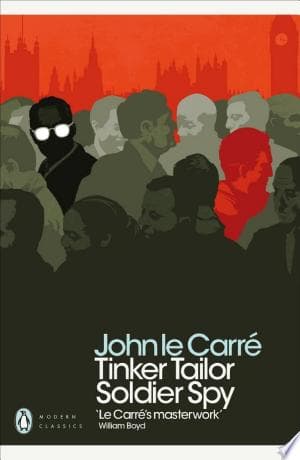
- Tinker Tailor Soldier Spy
John le Carré
4.1 (107k) average on GoodreadsFictionLe Carré's work prioritizes intricate, puzzle-like plotting, deep character studies, and moral ambiguity, often with less overt action. "The Faithful Spy" offers a more accessible, action-oriented experience, trading some of le Carré's psychological depth for faster pacing and contemporary threat realism.
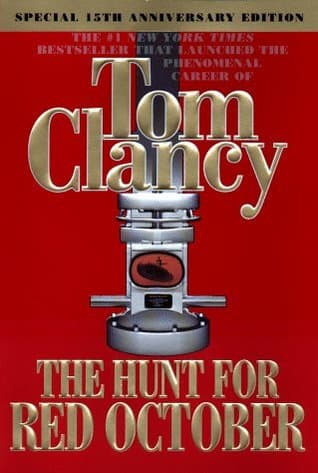
- The Hunt for Red October
Tom Clancy
4.1 (336k) average on GoodreadsThrillerClancy's novels are known for their exhaustive detail on military hardware, geopolitical strategy, and technical procedures. "The Faithful Spy" focuses more on the individual operative's visceral struggle and immediate threats, rather than extensive strategic or technological exposition, offering a more character-driven action thriller.
- Angels & Demons
Dan Brown
3.9 (2.7M) average on GoodreadsThrillerA Harvard symbologist races through Rome's ancient sites, deciphering cryptic clues to unmask the Illuminati and stop a vengeful plot to destroy the Vatican with a stolen antimatter weapon.
- Gone Girl
Gillian Flynn
4.1 (2.3M) average on GoodreadsThrillerA wife's sudden disappearance on her fifth anniversary reveals a web of lies and psychological warfare, exposing the secrets within a seemingly perfect marriage.
- The Girl on the Train
Paula Hawkins
3.9 (2.1M) average on GoodreadsThrillerA woman’s fascination with a seemingly perfect couple she watches from her daily train commute leads her into a dark investigation when she witnesses something that shatters their idyllic image.




Enjoyed the summary?
A summary gives you the shape of the book. The book itself has the detail, the examples and the voice.
Find The Faithful Spy on AmazonAs an Amazon Associate, BookBrief earns from qualifying purchases. How we're funded