
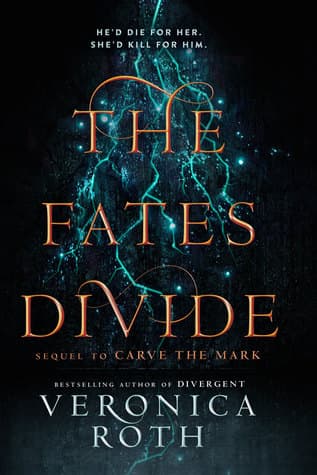
Synopsis
Covers the whole plot, including the ending.
- Difficulty
- Medium
- Pacing
- Variable
- Mood
- Epic, Suspenseful, Romantic, Hopeful, Dark
- Read it if
- You enjoy intricate world-building, high-stakes romance, and characters grappling with destiny vs. free will in a blend of fantasy and sci-fi.
- Skip it if
- You prefer standalone novels or dislike narratives focused heavily on predetermined fates and complex political intrigue.
The Fates Divide Plot Summary
Covers the whole plot, including the ending.
The Return of Lazmet Noavek
The story begins with the shocking news that Lazmet Noavek, Cyra's father and a feared tyrant thought dead, is alive and has reclaimed the Shotet throne. This throws Cyra, now known as Cyra Kereseth and living with Akos's family, into turmoil. Akos immediately worries about his own fate, as his oracle-spoken destiny dictates he will die in service to the Noavek family. Lazmet's return restarts the brutal war between the Shotet and the Thuvhesit, forcing Akos and Cyra to consider fighting against, or even killing, her father. The galaxy's political stability immediately breaks down with Lazmet's return, threatening the fragile peace Akos and Cyra had been building.
Escaping Lazmet's Grasp
After Lazmet reclaims the Shotet throne, Cyra and Akos, along with Akos's sister Cisi and their Thuvhesit allies, must flee. They become fugitives, constantly on the run from Lazmet's loyalist forces who want to capture or kill Cyra. This flight shows the immediate danger they are in and the ruthlessness of Lazmet's rule. During their escape, they rely on their intelligence and the support of sympathetic individuals, including some former Shotet who are unhappy with Lazmet's return. The journey is full of danger, forcing them to make hard choices and strengthen their resolve to stop Lazmet's war.
Forming the Alliance
Recognizing the need for a unified front against Lazmet, Cyra and Akos work to form an alliance between the Thuvhesit and other star systems, including the Ogra and the Zold. This involves intense diplomatic efforts, as they must overcome old prejudices and rivalries. Cyra, despite her Shotet heritage, uses her unique position and her reputation as a former leader to advocate for peace and cooperation. Akos, with his strategic mind and knowledge of both cultures, is important in negotiating the terms of this alliance, emphasizing the shared threat Lazmet poses to all. Their efforts meet skepticism but ultimately create a fragile coalition.
The Search for the Anchor
A recurring plot point is the search for a powerful, ancient artifact known as the 'Anchor.' Rumored to disrupt currentstreams and potentially neutralize Lazmet's power, the Anchor becomes a main goal for Cyra and Akos. Their quest takes them to various planets and involves deciphering cryptic clues and historical records. This journey tests their combined skills and resilience. The Anchor represents a glimmer of hope in their fight against Lazmet, offering a way to even the playing field against his overwhelming forces and control.
Eijeh's Fate and the Oracle Network
Akos is deeply troubled by his brother Eijeh's fate, which dictates he will be a 'sacrifice.' He learns that Lazmet has been manipulating the oracle network, twisting prophecies for his own gain, and that Eijeh's destiny is a key part of Lazmet's plan. Akos is determined to save Eijeh, even if it means defying the concept of fate. He investigates the origins of the oracle network and uncovers the extent of Lazmet's influence, realizing that the prophecies are not as unchangeable as everyone believes. This revelation adds urgency to their mission and fuels Akos's personal drive to protect his family.
Cyra's Internal Conflict
Cyra deals with immense internal conflict throughout the story, particularly concerning her father, Lazmet. Despite his tyranny, he is still her biological father, and the thought of killing him weighs heavily on her. She questions her own identity, torn between her Shotet heritage and her desire for peace. Her currentgift, which inflicts pain, is both a weapon and a burden, reflecting her inner turmoil. She fears becoming like her father, a ruthless leader, even as she strives to protect her loved ones and the galaxy. This internal battle is a central part of her character arc, showing her struggle for self-definition.
The Betrayal and the Trap
As the alliance gains momentum, they face a devastating betrayal from within their ranks, orchestrated by Lazmet's agents. This betrayal leads to a planned trap, designed to capture or eliminate key members of the resistance, especially Cyra and Akos. The heroes find themselves in a desperate situation, outnumbered and outmaneuvered. This event tests the strength of their newly formed alliance and forces them to confront the reality that trust is fragile in a time of war. The betrayal highlights Lazmet's cunning and his willingness to exploit any weakness to achieve his goals.
The Confrontation with Lazmet
The story builds to a dramatic confrontation between Cyra, Akos, and Lazmet. This battle is not just physical, but also an ideological clash, representing the fight between tyranny and freedom, fate and free will. Cyra must make the ultimate decision regarding her father, while Akos faces the prospect of fulfilling his fate. The battle is intense and brutal, showing the characters' strengths and vulnerabilities. The fate of the galaxy is at stake as they fight to dismantle Lazmet's power and end his reign of terror.
The Revelation of Fate
In a stunning twist, the true nature of Akos's and Cyra's fates is revealed. It is discovered that the oracles' prophecies, particularly Akos's death in service to the Noavek family, are not as literal or inescapable as previously believed. The 'service' and 'death' have a metaphorical meaning, tied to a larger purpose that goes beyond simple interpretation. This revelation challenges everything the characters, and the readers, thought they knew about fate and destiny. It shows that free will can play a significant role in shaping one's future, even when facing prophecy.
The Aftermath and New Beginnings
Following Lazmet Noavek's defeat, the war ends, leaving the galaxy in a state of change. The aftermath involves rebuilding, establishing new political structures, and dealing with the trauma of the conflict. Cyra and Akos, having fulfilled their roles in ending Lazmet's tyranny, now face the challenge of creating a new future for themselves and for the united peoples. The ending suggests that while the immediate threat is gone, the path to lasting peace and harmony is still long and uncertain. They must navigate a world where fate is no longer absolute, and the choices they make will define their new beginning.
Principal Figures
Cyra Noavek (Kereseth)
Protagonist
A Shotet leader with a painful currentgift, grappling with her identity and the legacy of her tyrannical father.
Cyra is a formidable Shotet warrior, now living among the Thuvhesit. Her currentgift causes excruciating pain to anyone she touches, a constant reminder of her power and isolation. She is fiercely loyal to those she loves, particularly Akos and her brother Ryzek, despite his past transgressions. Throughout the book, she struggles with her identity, torn between her heritage as a Noavek and her desire for peace and justice. Her deep love for Akos and her commitment to stopping her father drive her actions, even as she grapples with the moral complexities of potentially killing him.
Relationships: Akos Kereseth (Love interest, partner in rebellion, deep emotional bond); Lazmet Noavek (Father, tyrannical antagonist, source of great conflict); Ryzek Noavek (Brother, complex and often antagonistic relationship); Sifa (Friend and confidante)
Akos Kereseth
Protagonist
A Thuvhesit pacifist whose fate dictates he will die in service to the Noavek family, deeply in love with Cyra.
Akos is a compassionate and strategic Thuvhesit, whose currentgift allows him to disrupt others' currentgifts. He is deeply in love with Cyra, a love complicated by his oracle-spoken fate: he will die in service to the Noavek family. This prophecy hangs over him, creating constant tension and fear, especially with Lazmet's return. Akos is intelligent, resourceful, and possesses a strong moral compass. He is driven by a desire to protect his family and Cyra, and to bring an end to the war, even if it means defying his own fate. He is a skilled strategist and negotiator, often the voice of reason.
Relationships: Cyra Noavek (Love interest, partner in rebellion, deep emotional bond); Cisi Kereseth (Sister, close bond, protective); Eijeh Kereseth (Brother, desperate to save him from his fate); Lazmet Noavek (Antagonist, the embodiment of his fate's threat)
Lazmet Noavek
Antagonist
Cyra's father, a ruthless and manipulative tyrant who returns to reclaim the Shotet throne and wage war.
Lazmet Noavek is the primary antagonist, Cyra's father, and a figure of immense power and cruelty. Believed dead, his shocking return throws the galaxy into chaos as he reclaims the Shotet throne and reignites a barbaric war. He is utterly ruthless, driven by a desire for control and a warped sense of destiny. Lazmet is a master manipulator, exploiting the oracle network and prophecies to solidify his power and justify his actions. He views his children as tools to be used, showing little genuine affection. His presence casts a long shadow over Cyra, forcing her to confront the darkest aspects of her heritage.
Relationships: Cyra Noavek (Daughter, views her as a tool, target of her rebellion); Ryzek Noavek (Son, complex relationship of manipulation and shared ambition); Akos Kereseth (Enemy, the one whose fate is tied to his family)
Cisi Kereseth
Supporting
Akos's compassionate sister and a talented oracle, struggling with her own fate and the burden of prophecy.
Cisi is Akos's younger sister, a kind and empathetic Thuvhesit. She possesses a powerful currentgift that makes her a gifted oracle, capable of interpreting the currentstream. This gift is both a blessing and a burden, as she often sees glimpses of the future, including potentially devastating events. She is deeply loyal to Akos and Cyra, providing emotional support and insights into the prophecies. Cisi struggles with the weight of her responsibilities as an oracle and the fear of fulfilling a tragic fate, but she ultimately finds strength in her ability to guide and help others.
Relationships: Akos Kereseth (Brother, close bond, relies on him for protection); Cyra Noavek (Friend, trusted ally); Eijeh Kereseth (Brother, deeply concerned for his fate)
Eijeh Kereseth
Supporting
Akos's brother, whose fate as a 'sacrifice' makes him a pawn in Lazmet's schemes.
Eijeh is Akos's older brother, whose oracle-spoken fate dictates he will be a 'sacrifice.' This prophecy makes him a central figure in Lazmet's manipulative plans, as Lazmet seeks to exploit Eijeh's destiny for his own power. Eijeh is often depicted as vulnerable and manipulated, a tragic figure caught in the machinations of others. His survival and the prevention of his 'sacrifice' become a driving force for Akos. Eijeh's currentgift is connected to the currentstream, making him a sensitive and sometimes overwhelmed individual, acutely aware of the forces at play around him.
Relationships: Akos Kereseth (Brother, protected by him, manipulated by Lazmet); Cisi Kereseth (Sister, shares a bond of shared prophecy)
Ryzek Noavek
Supporting
Cyra's brother, a former tyrannical ruler now forced to confront his past and his father's return.
Ryzek is Cyra's older brother, who previously held the Shotet throne and was a tyrannical ruler in his own right. In 'The Fates Divide,' he is a more complex character, having been deposed and now forced to confront the return of his even more ruthless father, Lazmet. Ryzek is cunning and ambitious, but his past actions have left him with few allies. He is caught between his loyalty to his family (however twisted) and his own self-preservation. His relationship with Cyra is fraught with tension and resentment, but also a lingering, albeit strained, familial bond. He is a survivor, always looking for an advantage.
Relationships: Cyra Noavek (Sister, complex, antagonistic, and occasionally allied); Lazmet Noavek (Father, rival for power, manipulated by him)
Sifa
Supporting
A fiercely loyal Shotet warrior and Cyra's close friend and confidante.
Sifa is a strong and dependable Shotet warrior, fiercely loyal to Cyra. She serves as Cyra's trusted friend and confidante, offering practical advice and unwavering support. Sifa embodies the resilience and warrior spirit of the Shotet, but she also possesses a pragmatic understanding of the need for peace. She is a skilled fighter and a valuable member of the resistance against Lazmet. Her presence provides Cyra with a sense of stability and a connection to her Shotet roots, even as Cyra seeks to transcend the violence associated with them.
Relationships: Cyra Noavek (Close friend, loyal subordinate)
Isae
Mentioned
Akos and Cisi's mother, a revered oracle who sacrificed herself.
Isae is Akos and Cisi's deceased mother, a highly respected oracle whose wisdom and sacrifice heavily influence her children, particularly Cisi. Though not present in the current timeline, her legacy and the knowledge she imparted are crucial. Her understanding of the currentstream and prophecies provides a foundation for the Kereseth siblings' approach to fate. Her absence is a constant reminder of the stakes involved in their fight, and her memory serves as a guiding force for Akos and Cisi as they navigate their own destinies.
Relationships: Akos Kereseth (Son, deeply loved and respected); Cisi Kereseth (Daughter, follows in her footsteps as an oracle)
Themes & Insights
Fate vs. Free Will
The main theme is the struggle between predetermined destinies and the power of individual choice. Characters like Akos are burdened by oracle-spoken fates, with his stating he will die in service to the Noavek family. Cyra, too, is shaped by her family's legacy and her currentgift. However, the story consistently explores how characters actively fight against these prophecies, seeking to redefine their paths. The twist around the true nature of fate and Lazmet's manipulation of the oracle network suggests that destiny is not as absolute as believed, giving characters the power to create their own futures. This is clear in Akos's efforts to save Eijeh and Cyra's choice to fight her father, even if it means defying her heritage.
“Perhaps our fates are not what we are destined to become, but what we are destined to overcome.”
Identity and Belonging
Many characters deal with their sense of self and where they belong, especially Cyra. As a Shotet living among the Thuvhesit, and with a tyrannical father, she constantly questions who she is and what her name truly means. Her struggle to reconcile her Noavek heritage with her desire for peace and her love for Akos is a main part of her journey. Similarly, Akos, a pacifist, finds himself in a war, challenging his Thuvhesit upbringing. The formation of the alliance also speaks to this theme, as different peoples must find common ground and a shared identity to fight a greater evil. The book explores how one's identity is not solely defined by birth or prophecy, but by the choices made.
“I am not just my name. I am not just my current. I am the sum of my choices.”
The Nature of Power and Tyranny
Lazmet Noavek's return shows the corrupting influence of absolute power and the brutal nature of tyranny. Lazmet manipulates prophecies, exploits his children, and wages war for personal gain, showing the worst aspects of leadership. The story contrasts his oppressive rule with Cyra and Akos's efforts to unite different groups through diplomacy and shared purpose. It looks at the psychological toll of living under such a regime and the difficult choices individuals must make to resist it, even if it means fighting family. The struggle against Lazmet is a struggle against power used without empathy or justice.
“Power is not a gift. It is a burden. And it will break you if you let it.”
Love and Sacrifice
The deep romantic bond between Cyra and Akos is a central element, constantly tested by their fates and the war. Their love fuels their determination and provides hope amidst the darkness. Akos's fate, in particular, involves sacrifice, and he is willing to give his life for Cyra and his family. Cyra also faces the ultimate sacrifice in confronting her father. Beyond romantic love, the theme extends to familial love, as Akos is driven to save his brother Eijeh, and the sacrifices made by allies for the greater good. The story suggests that true love often requires deep selflessness and a willingness to endure hardship for another.
“Some loves are fated, and some are chosen. Ours was both.”
Plot Devices & Literary Techniques
Oracle-Spoken Fates
Prophecies delivered at birth that dictate a person's destiny.
This device is fundamental to the world-building and plot. At birth, every individual receives a prophecy from an oracle, outlining their future. Akos's fate to 'die in service to the Noavek family' is a constant source of tension and drives much of his decision-making. Cyra's fate is tied to her family's legacy. These fates are initially presented as inescapable, creating a strong sense of predetermined destiny. However, the narrative ultimately reveals that these prophecies can be misinterpreted, manipulated, or even subverted, becoming a catalyst for characters to assert their free will rather than simply accept their destiny. This device creates both conflict and a powerful means of character development.
Currentgifts
Unique abilities bestowed by the currentstream, varying in nature and power.
Currentgifts are a central element of the world's magic system. Each person possesses a unique ability linked to the cosmic currentstream. Cyra's currentgift, which inflicts pain, is both a weapon and a source of personal torment, defining much of her character. Akos's gift to disrupt currentgifts is crucial for fighting opponents. These gifts are not just powers but reflections of character and sometimes burdens. They serve as plot enablers, providing characters with unique tools in battle and diplomacy, while also highlighting their individual strengths and weaknesses. The manipulation of currentgifts, particularly by Lazmet, further emphasizes the theme of power and control.
The Anchor
An ancient, powerful artifact capable of disrupting currentstreams.
The Anchor functions as a classic MacGuffin, a mysterious and powerful artifact that the protagonists seek as a means to defeat the antagonist. It is rumored to have the ability to disrupt the currentstream, which could neutralize Lazmet's currentgift and his control over the oracle network. The quest for the Anchor drives a significant portion of the plot, leading characters to various locations and forcing them to overcome obstacles. While its ultimate utility might be nuanced, its pursuit provides a tangible goal for the protagonists and symbolizes their hope for a decisive victory against overwhelming odds.
The Oracle Network
A system of oracles and their interpretations of the currentstream.
The Oracle Network is the institutional framework through which fates are delivered and prophecies are interpreted. It acts as a powerful societal force, shaping the lives and decisions of individuals. However, the novel reveals that this network can be corrupted and manipulated, particularly by Lazmet, who twists prophecies to serve his tyrannical agenda. This device underscores the theme of fate versus free will, demonstrating that even seemingly divine pronouncements can be subject to human influence. The network's manipulation creates a critical conflict, as characters must discern truth from fabrication and challenge the very institutions that govern their lives.
The Fates Divide Quotes
“The world is not a place where you can be both good and powerful. It is a place where you must choose.”
“There are some things that, once broken, can never be put back together, no matter how hard you try.”
“Love is not a weakness. It is a strength that allows you to fight for what matters.”
“Sometimes the greatest betrayals come from those you trust the most.”
“We are all products of our choices, and we must live with the consequences of them.”
“Peace is not the absence of conflict, but the ability to cope with it.”
“Even in the darkest times, there is always a flicker of hope, if you only look for it.”
“The future is not set in stone. It is a path we forge with every decision we make.”
“To truly forgive is to let go of the past, not to forget it.”
“It's easy to hate your enemies, but it takes courage to understand them.”
“Sometimes, the only way to save someone is to let them go.”
“The greatest battles are not fought with weapons, but within the heart.”
“We are not defined by our circumstances, but by how we choose to respond to them.”
“Silence can be a weapon, or a shield, depending on who wields it.”
“The hardest part of growing up is realizing that not everything can be fixed.”
Quiz
10 questions on the plot and the characters. Each answer comes with a short explanation.
Question 1
What is Akos Kereseth's prophesied fate, according to the oracles?
- He will become the Shotet ruler.
- He will die in service to Cyra's family.
- He will betray Cyra Noavek.
- He will unify the Shotet and Thuvhesit people.
Show answer
B. He will die in service to Cyra's family. Akos's fate, revealed at his birth, is that he will die in service to Cyra's family, a fate that looms over his relationship with Cyra.
Question 2
Who is Lazmet Noavek in relation to Cyra Noavek?
- Her brother
- Her uncle
- Her father
- Her mentor
Show answer
C. Her father Lazmet Noavek is Cyra's father, a figure believed to be dead who later reclaims the Shotet throne.
Question 3
What significant event does Lazmet Noavek initiate upon his return?
- A peace treaty with the Thuvhesit.
- A barbaric war.
- The establishment of a new oracle system.
- A grand celebration of his return.
Show answer
B. A barbaric war. Upon his return and reclaiming the Shotet throne, Lazmet Noavek ignites a barbaric war.
Question 4
What is the central conflict or dilemma Cyra faces regarding Lazmet Noavek?
- Whether to forgive him for his past actions.
- Whether to help him expand his empire.
- Whether she must take his life to stop the war.
- Whether to join him in his quest for power.
Show answer
C. Whether she must take his life to stop the war. Cyra's desperate measure to stop Lazmet's war involves the possibility of taking his life, despite him being her father.
Question 5
How do Cyra and Akos primarily feel about their prophesied fates?
- They embrace them wholeheartedly.
- They are resigned to them but try to live fully.
- They are ruled by them and desperate to defy or understand them.
- They ignore them completely.
Show answer
C. They are ruled by them and desperate to defy or understand them. The lives of Cyra and Akos are 'ruled by their fates,' and they are 'desperate to stop him at any cost' in defiance of those fates or in understanding how they define their lives.
Question 6
What is the relationship between Akos and Cyra, despite their fates?
- They are reluctant allies.
- They are enemies forced to cooperate.
- They are in love.
- They share a platonic friendship.
Show answer
C. They are in love. The book explicitly states, 'Akos is in love with Cyra, in spite of his fate.'
Question 7
What is the nature of the oracles' pronouncements regarding fates?
- They are suggestions that can be easily changed.
- They are inescapable once determined.
- They are often wrong and misleading.
- They are only predictions for the distant future.
Show answer
B. They are inescapable once determined. The description clearly states that 'The fates, once determined, are inescapable,' setting the stage for the characters' struggles.
Question 8
The book is described as a 'chorus of hope, humor, faith, and resilience.' What does this imply about the overall tone, despite the grim premise?
- It is relentlessly bleak and tragic.
- It offers moments of light and strength amidst hardship.
- It downplays the seriousness of the conflict.
- It is primarily a comedic story.
Show answer
B. It offers moments of light and strength amidst hardship. The description highlights 'hope, humor, faith, and resilience,' indicating that even with a dark plot, the story maintains an uplifting and strong underlying tone.
Question 9
What is the 'stunning twist' mentioned in the synopsis regarding fate?
- That Akos and Cyra discover their fates were swapped at birth.
- That fate defines their lives in ways most unexpected.
- That the oracles were deliberately lying about their fates.
- That they can simply choose to ignore their fates without consequence.
Show answer
B. That fate defines their lives in ways most unexpected. The synopsis explicitly states, 'In a stunning twist, the two will discover how fate defines their lives in ways most unexpected.' This is the core of the twist described.
Question 10
The synopsis states that 'The Fates Divide' adds 'two powerful new voices.' What does this likely imply about the narrative structure compared to the previous book, 'Carve the Mark'?
- It introduces entirely new main characters.
- It features a dual or multiple-perspective narrative.
- It introduces new oracles with stronger voices.
- It means the author's writing style has changed significantly.
Show answer
B. It features a dual or multiple-perspective narrative. The phrase 'addition of two powerful new voices' in a sequel usually indicates a shift to a multi-perspective narrative, allowing readers into the minds of more characters.
The Fates Divide FAQ
What is the central conflict driving Cyra and Akos's actions in 'The Fates Divide'?
The central conflict is their desperate struggle to stop Lazmet Noavek, Cyra's tyrannical father, from igniting a barbaric war and reclaiming the Shotet throne. This personal vendetta is complicated by their pre-determined fates and their love for each other, which is threatened by Akos's prophecy of dying in service to Cyra's family.
How does Akos's fate specifically impact his relationship with Cyra and his decisions?
Akos's fate dictates that he will die in service to Cyra's family, which casts a constant shadow over his love for her and his willingness to sacrifice himself. This prophecy makes him acutely aware of the dangers he faces when confronting Lazmet, and he often grapples with the inevitability of his end, yet he remains determined to protect Cyra.
What role does Lazmet Noavek play in the story, and what are his motivations?
Lazmet Noavek is Cyra's father, a ruthless tyrant believed to be dead, who returns to reclaim the Shotet throne and wage war. His motivations are driven by power, control, and a twisted sense of familial duty, as well as a desire to subjugate the galaxy, forcing Cyra and Akos to confront him directly.
Besides Cyra and Akos, who are the 'two powerful new voices' mentioned in the synopsis, and how do they contribute?
The 'two powerful new voices' refer to Isae Benesit and Cisi Noavek. Isae provides an outsider's perspective on the Shotet-Thuvhesit conflict and adds a political dimension, while Cisi, Cyra's younger sister, offers a different look at the Noavek family legacy and becomes a key player in the unfolding events, challenging established norms.
How do the oracles and the concept of 'fates' function within the world of 'The Fates Divide'?
Oracles are individuals who can foresee and speak a person's fate at birth, and these fates are generally considered inescapable and absolute. They create a framework of destiny that characters like Cyra and Akos struggle against, influencing their choices, fears, and hopes, and often serving as a self-fulfilling prophecy.
What is the 'stunning twist' regarding fate mentioned in the synopsis, and how does it redefine the characters' understanding of their lives?
The stunning twist reveals that fates are not as rigid as perceived, and that the 'death in service' for Akos, and other prophecies, can be interpreted in unexpected ways, or even circumvented by certain actions. This redefines their understanding by suggesting agency within destiny, giving them hope and a new perspective on their predetermined paths.
Are there any subtle connections or parallels drawn between Cyra's father, Lazmet, and Cyra herself?
Yes, subtle connections are drawn, particularly concerning their shared Shotet heritage and the capacity for ruthlessness, though Cyra actively fights against it. Cyra's currentgift, the ability to inflict pain, is a dark reflection of the power and control Lazmet wields, creating an internal struggle for her to avoid becoming like him.
How do the character's 'currentgifts' play a more significant or unexpected role in this sequel compared to the first book?
Currentgifts take on a more nuanced and strategic role, not just as powers but as tools for understanding the universe's order and disorder. Cyra's pain-inducing gift becomes a crucial weapon but also a moral dilemma, while Akos's ability to nullify currentgifts is key to countering powerful adversaries and understanding the true nature of their world's magic.
What is the significance of the Shotet-Thuvhesit conflict beyond a simple tribal rivalry?
The Shotet-Thuvhesit conflict is more than a rivalry; it's a clash of ideologies and power structures, with the Shotet representing a more aggressive, fate-driven culture and the Thuvhesit valuing peace and community. It symbolizes the broader struggle between order and chaos, and how ancient grievances can be manipulated for personal gain by figures like Lazmet.
How does Cyra's internal struggle with her 'currentgift' evolve throughout 'The Fates Divide'?
Cyra's struggle intensifies as she is forced to use her pain-inflicting currentgift for increasingly brutal purposes, including confronting her father. She grapples with the fear of succumbing to its destructive nature and becoming a monster, constantly seeking to control it while also acknowledging its necessity for survival and protection.
What psychological impact does Akos's predetermined fate have on his self-worth and decision-making?
Akos's fate creates a deep sense of fatalism and self-sacrifice, leading him to believe his life is expendable in service to others, particularly Cyra. This impacts his decision-making by making him more reckless and willing to put himself in harm's way, while also fueling his desire to make his inevitable death meaningful.
How do Cyra and Akos cope with the immense pressure of their roles in the war against Lazmet?
They cope primarily through their unwavering bond and mutual support, finding solace and strength in each other. Cyra also channels her resolve into protecting those she loves, while Akos finds purpose in his loyalty and the belief that his sacrifices will ultimately save others, despite the psychological toll.
In what ways do secondary characters like Isae and Cisi contribute to the psychological depth of the narrative?
Isae, as a Thuvhesit leader, grapples with the moral complexities of war and leadership, showcasing the psychological burden of responsibility. Cisi, as a young Noavek, navigates her family's dark legacy and her own burgeoning currentgift, providing a perspective on innocence corrupted and the struggle to forge one's own identity.
Does the book ultimately argue for free will over destiny, or a more nuanced interplay between the two?
The book argues for a more nuanced interplay, suggesting that while fates exist, the interpretation and the path taken to fulfill them allow for significant free will. It implies that understanding and challenging one's fate, rather than passively accepting it, is crucial for agency and self-determination, leading to unexpected outcomes.
How does the ending of 'The Fates Divide' challenge or fulfill the expectations set by the initial prophecies?
The ending challenges initial prophecies by revealing that fates are not always literal, and that Akos's 'death in service' has a metaphorical or symbolic fulfillment, rather than a straightforward demise. This fulfills the broader theme of sacrifice and loyalty, while subverting the absolute nature of the oracles' pronouncements, offering a more hopeful resolution.
What is the overarching message about family and loyalty conveyed through Cyra's relationship with Lazmet and Akos?
The overarching message is that true family and loyalty are chosen, not merely inherited or dictated by blood. Cyra's loyalty to Akos and her chosen family triumphs over the destructive ties to her biological father, Lazmet, highlighting the power of love and shared values in forging unbreakable bonds.
How does the author use the science fiction elements (e.g., space travel, technology) to enhance the fantasy themes of fate and magic?
The author seamlessly blends science fiction with fantasy by using advanced technology and space travel to expand the scope of the world, making the universal impact of fates and currentgifts more profound. This juxtaposition creates a unique setting where ancient prophecies collide with futuristic warfare, enhancing both genres without diminishing either.
Is there a definitive 'good' and 'evil' in the conflict, or are the moral lines more blurred?
The moral lines are significantly blurred, especially concerning the Shotet and Thuvhesit cultures, where both sides have their justifications and flaws. While Lazmet Noavek is clearly depicted as a tyrannical antagonist, the conflict explores the complexities of war, leadership, and survival, challenging simplistic notions of good versus evil.
About the author

Veronica Roth is an American author best known for her young adult fiction, particularly the "Divergent" series, which includes "Divergent," "Insurgent," and "Allegiant," as well as "Four: A Divergent Story Collection." She also wrote "Carve the Mark" and its sequel, "The Fates Divide." Roth's works often explore themes of identity and choice in dystopian settings.
Similar books
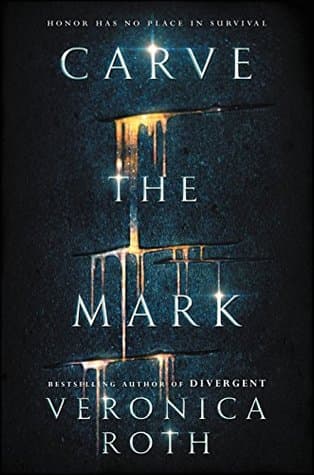
- Carve the Mark
Veronica Roth
3.8 (62k) average on GoodreadsFantasyDirect prequel, essential for understanding the world and characters.
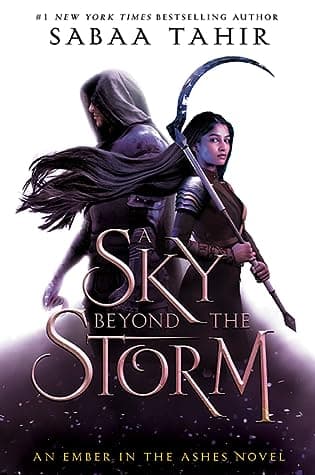
- A Sky Beyond the Storm
Sabaa Tahir
4.3 (351) average on GoodreadsFantasyFeatures high-stakes fantasy, characters burdened by destiny, and a blend of war and personal sacrifice.
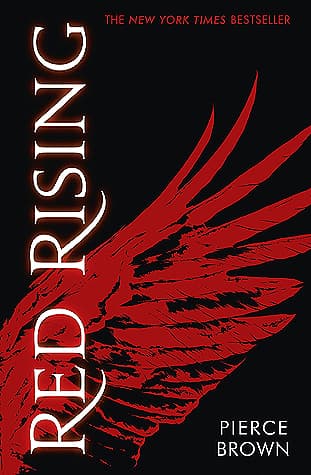
- Red Rising
Pierce Brown
4.3 (248k) average on GoodreadsFantasyExplores a futuristic society with rigid social structures, rebellion, and intense action.
- Divergent
Veronica Roth
4.2 (2.9M) average on GoodreadsFantasyBoth The Fates Divide and Roth's earlier Divergent series feature dystopian societies and young protagonists grappling with identity and rebellion. However, The Fates Divide attempts a more complex, galaxy-spanning political landscape and a deeper dive into sci-fi elements (like currentstreams and shot-silencing), whereas Divergent is more grounded in a single city's social structure. The Fates Divide struggles more with narrative focus due to its expanded scope, while Divergent maintains a tighter, albeit less unique, allegorical structure (Roth, 2011; Roth, 2018).
- The Hunger Games
Suzanne Collins
4.3 (6.4M) average on GoodreadsFantasyWhile both The Fates Divide and The Hunger Games feature young protagonists in a fight against oppressive systems, The Hunger Games excels in its allegorical power and focused critique of media and war. The Fates Divide, by contrast, disperses its critical commentary across a broader array of issues (fate, power dynamics, intergalactic conflict), which can dilute its impact. Collins' Katniss Everdeen offers a more consistently compelling and less internally conflicted hero than Roth's Cyra, whose fate-driven struggles sometimes feel externally imposed rather than organically developed (Collins, 2008; Roth, 2018).
- Harry Potter and the Sorcerer's Stone
J.K. Rowling
4.5 (7M) average on GoodreadsFantasyRescued from a miserable life under the stairs, an orphaned boy discovers he's a wizard destined for a magical school, where he uncovers a dangerous secret tied to the dark wizard who murdered his parents.



Enjoyed the summary?
A summary gives you the shape of the book. The book itself has the detail, the examples and the voice.
Find The Fates Divide on AmazonAs an Amazon Associate, BookBrief earns from qualifying purchases. How we're funded