
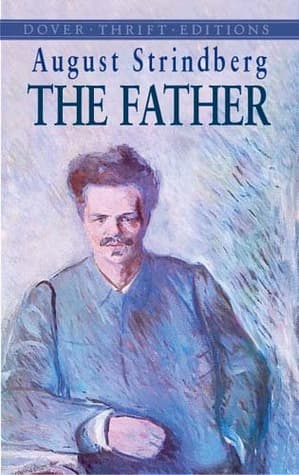
Synopsis
Covers the whole plot, including the ending.
- Difficulty
- Medium
- Pacing
- Fast
- Mood
- Dark, Intense, Psychological, Tragic
- Read it if
- You are interested in a classic psychological drama exploring intense marital conflict, gender roles, and the fragility of the human mind.
- Skip it if
- You prefer stories with clear-cut heroes or heroines, or find themes of gaslighting and mental breakdown too distressing.
The Father Plot Summary
Covers the whole plot, including the ending.
The Captain's Authority Challenged
Captain Adolf, a cavalry officer and scientist, discusses his daughter Bertha's education with the new Doctor and his wife, Laura. Adolf wants Bertha to live in the city and study art. Laura insists she stay home and be raised in her own faith, not Adolf's more secular beliefs. The Doctor, at first neutral, soon gets involved in their arguments. Adolf also learns that the wet nurse, Margaret, has spread rumors that he is not Bertha's biological father. This accusation, initially minor, deeply troubles Adolf and sets the stage for his growing conflict with Laura, as he sees it as an attack on his authority and sanity.
The Rumor of Illegitimacy
After the talk about Bertha's future, Laura skillfully manipulates Adolf. She pretends to worry about his health, suggesting he might be overworking. Then she subtly brings up the rumor of Bertha's illegitimacy, feigning distress that anyone could think such a thing. Adolf, already bothered by Margaret's earlier hint, becomes more agitated. Laura's plan is to create doubt and paranoia without directly accusing him, making him question his own sanity and grasp on reality. She knows that by making him uncertain about fatherhood, she can weaken his position and control over Bertha.
Adolf's Scientific Setback
Adolf learns that his scientific research, which he largely funded himself, has been rejected. This professional setback is a major blow to his self-esteem and financial stability. He invested his intellect and money into this work, and its failure leaves him feeling vulnerable. Laura, instead of offering support, uses this moment to advance her agenda, suggesting his scientific work is impractical and bad for the family. This supports her idea that he is unstable and cannot make good decisions, especially about Bertha's future.
The Threat of Insanity
Laura openly tells the Doctor that Adolf has a mental illness, citing his strange behavior and the research failure. She strategically places a letter, supposedly from Adolf, implying he sent a large sum of money to an unknown person. This further suggests his irrationality. Adolf, hearing parts of these talks and finding the letter, becomes extremely paranoid. He starts to question his own memory and sanity, a direct result of Laura's psychological attacks. The Doctor, influenced by Laura's consistent portrayal of Adolf, begins to consider medical intervention.
The Straitjacket Incident
Pushed to the edge by Laura's constant gaslighting and the rumors about Bertha, Adolf confronts Laura in a fit of rage. He accuses her of being a vampire and threatens her with a burning lamp. This violent outburst gives Laura the 'proof' she needs to convince the Doctor and the Pastor that Adolf is insane and dangerous. His loss of control, though provoked, confirms the story Laura has carefully built, sealing his fate as a madman in the eyes of others.
Bertha's Divided Loyalty
Bertha, caught between her parents' growing conflict, is deeply upset. She loves her father but is constantly influenced by her mother's manipulative stories. Laura uses Bertha's affection and fear to her advantage, making Bertha feel responsible for her father's supposed madness and encouraging her to side with her mother. Bertha's eventual decision to align with Laura, even if reluctantly, is a devastating blow to Adolf. He sees it as the ultimate betrayal and the loss of his only true connection. This further isolates him and reinforces his feeling of being utterly alone.
The Doctor's Diagnosis
The Doctor, having seen Adolf's increasingly strange behavior and influenced by Laura's persistent accounts, talks with the Pastor. Laura presents her carefully chosen evidence, painting Adolf as a dangerous lunatic. Despite Adolf's passionate and clear arguments, his outbursts and Laura's 'proof' lead the Doctor to conclude that Adolf is mentally unstable and needs confinement. The Doctor's diagnosis is a crucial moment, providing the official reason for Laura to take full control of Adolf's affairs and Bertha's upbringing, effectively removing Adolf.
The Wet Nurse's Betrayal
In a cruel turn, Margaret, the wet nurse who once cared for Adolf, helps Laura subdue him. She approaches Adolf with feigned sympathy, offering to help him with his coat. As he struggles, she skillfully slips a straitjacket onto him, trapping him. Adolf, weakened and confused, realizes her betrayal too late. This physical restraint, arranged by Laura through someone from his past, symbolizes his complete loss of power. It is the final, humiliating step in his downfall, cementing his helplessness.
Adolf's Final Delusions
Trapped in the straitjacket, Adolf's mind further unravels. He rants about the injustices he has suffered, the cruelty of women, and the impossibility of knowing paternity. His earlier scientific reason is completely replaced by paranoia and despair. He experiences vivid hallucinations and increasingly confused thoughts, fully embodying the madness Laura had so carefully created for him. His once powerful intellect is now fragmented, a tragic result of the psychological torture he endured. He collapses, physically and mentally broken, his spirit utterly crushed.
Laura's Victory
Adolf, completely defeated and broken, dies in the straitjacket, collapsing into Margaret's arms. Laura stands victorious, having achieved her goal of completely discrediting and incapacitating her husband. With Adolf gone, she has full control over Bertha's upbringing, the family finances, and her own life. The play ends with Laura's triumph, a chilling victory achieved through psychological manipulation and the destruction of her husband. Bertha, now solely under her mother's influence, faces a future shaped by this brutal marital battle.
Principal Figures
Captain Adolf
Protagonist
A cavalry officer and scientist who battles his wife for control and his sanity.
Captain Adolf is an intellectual, a respected officer, and a passionate amateur scientist. He values reason, truth, and scientific inquiry. He is deeply devoted to his daughter, Bertha, and wishes to guide her education and future. However, he is also proud, stubborn, and emotionally vulnerable, especially when his authority and paternity are questioned. His biggest flaw is his inability to understand or counter Laura's subtle, psychological warfare, leading to his undoing. He represents the male intellect and authority under assault.
Relationships: Laura (antagonistic, manipulative marital conflict); Bertha (loving father-daughter bond, eventually broken); Doctor (professional acquaintance, becomes an unwitting pawn in Laura's scheme); Pastor (acquaintance, initially neutral, then swayed by Laura); Margaret (Wet Nurse) (former caregiver, becomes an instrument of his downfall)
Laura
Antagonist
Adolf's manipulative wife, determined to gain control over their daughter and household.
Laura is a shrewd, calculating, and relentlessly manipulative woman. She is driven by a desire for control over her daughter, Bertha, and the family's affairs, resenting Adolf's patriarchal authority. She employs psychological warfare, gaslighting, and the subtle planting of doubt to undermine Adolf's sanity and credibility. She is emotionally cold and shows no remorse for her actions, viewing her struggle as a necessary battle for power. Her strength lies in her ability to exploit Adolf's vulnerabilities and the societal prejudices against 'mad' men.
Relationships: Captain Adolf (antagonistic, manipulative marital conflict); Bertha (possessive mother-daughter relationship, uses Bertha as a pawn); Doctor (manipulates him into diagnosing Adolf as insane); Pastor (manipulates him to support her claims); Margaret (Wet Nurse) (uses her as an instrument to subdue Adolf)
Bertha
Supporting
The Captain and Laura's daughter, caught in the middle of her parents' battle.
Bertha is a young, innocent girl who is deeply affected by her parents' conflict. She loves both her father and her mother, but is constantly pulled between their opposing desires for her future and their conflicting worldviews. She is sensitive and easily distressed, becoming a pawn in Laura's manipulative game. Her eventual siding with her mother, though heartbreaking for Adolf, is a testament to Laura's powerful influence and Bertha's fear of the escalating domestic tension. Her character highlights the destructive impact of the marital war on the child.
Relationships: Captain Adolf (loving daughter, but eventually manipulated against him); Laura (daughter, manipulated and controlled by her mother)
The Doctor
Supporting
A family friend and physician, initially neutral but swayed by Laura's influence.
The Doctor is a well-meaning but somewhat naive figure who genuinely tries to understand the domestic situation. He is a man of science, but his professional judgment is compromised by Laura's cunning manipulation. He initially respects Adolf's intellect but gradually comes to believe Laura's narrative of Adolf's insanity, influenced by her calculated 'evidence' and Adolf's own provoked outbursts. He represents the external authority figure who is easily deceived by psychological tactics, demonstrating how subjective and vulnerable even scientific judgment can be.
Relationships: Captain Adolf (professional acquaintance, becomes his diagnostician and unwitting antagonist); Laura (manipulated by her to achieve her goals)
The Pastor
Supporting
Laura's brother, a man of faith who provides moral support for Laura.
The Pastor is Laura's brother and a figure of religious authority. He offers Laura moral and emotional support, often reinforcing her perspective in the domestic disputes. He is less critical than the Doctor and more inclined to believe Laura's version of events, perhaps due to familial loyalty and a traditional view of gender roles. He represents the societal and religious institutions that, consciously or unconsciously, can be used to legitimize a woman's claims against her husband, especially in an era where women had fewer direct avenues of power.
Relationships: Laura (supportive brother); Captain Adolf (adversarial, though less directly involved than Laura)
Margaret (The Wet Nurse)
Supporting
Adolf's former wet nurse, who eventually betrays him.
Margaret is a working-class woman who served as Adolf's wet nurse in his infancy and later cares for Bertha. She is initially the source of the rumor about Bertha's paternity, though perhaps unintentionally. She is loyal to Laura and eventually becomes an instrument in Adolf's downfall, tricking him into the straitjacket. Her character highlights the insidious nature of betrayal and how even seemingly benign figures can be drawn into Laura's web of manipulation. She represents a traditional, perhaps superstitious, female influence that opposes Adolf's rationalism.
Relationships: Captain Adolf (former caregiver, becomes an instrument of his downfall); Laura (loyal servant, follows her instructions)
Nöjd
Mentioned
A soldier whose paternity dispute is discussed early in the play.
Nöjd is a soldier in Adolf's command who is involved in a paternity dispute. His case is used by Adolf to illustrate the inherent difficulty of proving fatherhood, foreshadowing his own personal crisis. Nöjd's situation serves as a dramatic device to introduce the central theme of paternity and its unknowability, which becomes the weapon Laura wields against Adolf. He is not a character who appears on stage but his story is crucial for setting the thematic groundwork.
Themes & Insights
The Battle of the Sexes
The play's main theme is the destructive conflict between men and women, especially in marriage. Laura and Adolf engage in a relentless power struggle, with Laura using psychological manipulation and social expectations to dismantle Adolf's authority and sanity. Adolf, representing male intellect and patriarchal power, is systematically undermined by Laura's cleverness. This theme appears in their disputes over Bertha's education, Adolf's scientific work, and his paternity. The play shows marriage as a battlefield where one sex must dominate the other, leading to the destruction of the weaker party.
“You are like a vampire sucking the life out of me!”
The Uncertainty of Paternity
The question of paternity is Laura's main weapon against Adolf. The play explores how fatherhood is inherently unknowable, contrasting it with the certainty of motherhood. The rumor that Adolf might not be Bertha's biological father, though never proven, drives Adolf to madness. This uncertainty challenges his identity, his rights as a father, and his hold on reality. It shows how a basic biological truth, or the lack of it, can be used to destroy a man's life and authority, making paternity a key weakness for men in the patriarchal structure.
“How can I know I am the father?”
Reason vs. Emotion/Manipulation
Adolf, a scientist, represents reason, logic, and a desire for objective truth. Laura, however, acts through emotion, intuition, and calculated manipulation. The play shows how inadequate reason is when faced with subtle psychological warfare. Adolf's attempts to use logic and facts to defend himself fail against Laura's emotional appeals, gaslighting, and the strategic planting of doubt. This theme illustrates how subjective perception and emotional manipulation can overpower objective truth, leading to a rational mind's downfall and the triumph of cunning over intellect.
“You can never tell a woman the truth.”
The Nature of Power and Control
The play is about power dynamics within a marriage. Laura's ultimate goal is to seize control: over Bertha's upbringing, the household, and Adolf's sanity. She does this by systematically disempowering Adolf, taking away his authority, his reputation, and his mental stability. The power struggle is not open physical violence but a subtle, psychological war that leaves Adolf completely broken. This theme reveals how power can be exerted through non-physical means, using weaknesses and social biases to achieve complete dominance.
“I have taken the power, and I regret nothing.”
Plot Devices & Literary Techniques
Gaslighting
Laura's psychological manipulation to make Adolf doubt his own sanity.
Laura systematically uses gaslighting throughout the play to undermine Adolf's perception of reality. She denies events, twists his words, and plants seeds of doubt about his memory and mental state. For example, she feigns concern for his 'overwork' while subtly introducing the paternity rumor, or orchestrates 'evidence' like the letter about the missing money. This constant psychological assault makes Adolf question his own sanity, an essential step in Laura's plan to have him declared insane and gain full control over their daughter and finances.
The Straitjacket
A physical symbol of Adolf's complete loss of freedom and sanity.
The straitjacket is a powerful symbolic object in the play. It represents Adolf's complete physical and mental subjugation. Its appearance signifies the culmination of Laura's psychological warfare, as it is the final, tangible means by which Adolf is stripped of his autonomy and confined as a 'madman.' The act of being tricked into wearing it by his former wet nurse, Margaret, adds a layer of cruel irony and betrayal, emphasizing his utter helplessness and the finality of his defeat at the hands of women.
The Paternity Rumor
A rumor used as a psychological weapon to destroy Adolf's identity and sanity.
The rumor, initially spread by the wet nurse Margaret, that Captain Adolf might not be Bertha's biological father, serves as the central psychological weapon in Laura's arsenal. She expertly amplifies this doubt, knowing that the inherent unknowability of paternity for men is a profound vulnerability. This rumor directly attacks Adolf's identity as a father, his patriarchal rights, and his sense of self-worth. It fuels his paranoia and contributes significantly to his mental breakdown, proving to be far more damaging than any direct accusation could have been.
The Burning Lamp
A symbol of Adolf's explosive rage and a turning point in Laura's plan.
Adolf's act of threatening Laura with a burning lamp is a pivotal moment. It symbolizes his complete loss of rational control and his descent into a primal, violent rage, directly provoked by Laura's manipulations. For Laura, this outburst is not a threat but a strategic opportunity; it provides the 'proof' she needs to convince the Doctor and the Pastor that Adolf is indeed a danger and mentally unstable. It is the visible manifestation of the madness she has carefully engineered, solidifying his diagnosis and sealing his fate.
The Father Quotes
“It is not the man who is the strongest, but the woman who is the cleverest.”
“The child is the worst enemy of the marriage.”
“You have sucked my soul out of me, and then you have thrown it away.”
“One must choose between being a man or a father.”
“You are a woman, and that is your strength.”
“To be married is to live in a perpetual state of war.”
“My brain is dissolving, my thoughts are running out.”
“Love is a game, and the woman always wins.”
“You cannot fight a ghost.”
“The strongest man is he who can bear the most.”
“Tell me, is there a God?”
“It is a struggle for life and death, and only one can survive.”
“The greatest tragedy is not to die, but to be born.”
“You have planted a doubt in my soul, and it has grown into a tree.”
Quiz
10 questions on the plot and the characters. Each answer comes with a short explanation.
Question 1
What is the central conflict that drives the plot of 'The Father'?
- A dispute over the family's financial assets.
- A philosophical debate about the nature of truth.
- The Captain's struggle to prove his paternity of Bertha.
- A disagreement about the Captain's military career.
Show answer
C. The Captain's struggle to prove his paternity of Bertha. The core of the play revolves around Laura's insidious suggestion that the Captain is not Bertha's biological father, leading to his mental breakdown.
Question 2
Which character manipulates the Captain's fears and doubts about his paternity?
- Bertha
- The Pastor
- Laura
- Dr. Östermark
Show answer
C. Laura Laura is the Captain's wife and the primary antagonist, masterfully using psychological warfare to undermine his sanity by questioning his fatherhood.
Question 3
What is the Captain's profession at the beginning of the play?
- A scientist
- A lawyer
- A military officer
- A clergyman
Show answer
C. A military officer The protagonist is referred to as 'The Captain,' indicating his military background.
Question 4
What is the primary theme explored through the 'battle of the sexes' in 'The Father'?
- The importance of mutual respect in marriage.
- The destructive power of female manipulation and male vulnerability.
- The societal pressure on men to be providers.
- The struggle for artistic freedom.
Show answer
B. The destructive power of female manipulation and male vulnerability. The play vividly portrays a ruthless struggle where the wife systematically destroys the husband's mental and emotional state, highlighting themes of female aggression and male emasculation.
Question 5
What is the Captain's main ambition for his daughter, Bertha?
- For her to become a military officer like him.
- For her to pursue a career in the arts.
- For her to be educated and pursue a path chosen by him.
- For her to marry a wealthy man and secure her future.
Show answer
C. For her to be educated and pursue a path chosen by him. The Captain wants Bertha to live with him and be educated as he desires, a point of contention with Laura who wants her to stay at home.
Question 6
Which of the following best describes the Captain's mental state by the end of the play?
- He achieves a peaceful resolution with his wife.
- He regains his authority and control over the household.
- He suffers a complete mental breakdown and is confined.
- He leaves his family to start a new life.
Show answer
C. He suffers a complete mental breakdown and is confined. Laura's relentless psychological torment drives the Captain to madness, culminating in his confinement in a straitjacket.
Question 7
What is the symbolic significance of the straitjacket used on the Captain?
- It represents his physical illness.
- It symbolizes Laura's ultimate control and the Captain's emasculation.
- It is a practical measure to prevent him from harming others.
- It signifies the family's attempt to protect him.
Show answer
B. It symbolizes Laura's ultimate control and the Captain's emasculation. The straitjacket is the physical manifestation of Laura's victory and the Captain's complete loss of agency, power, and sanity, a key symbol of his emasculation.
Question 8
How does Laura primarily undermine the Captain's authority and self-perception?
- By openly defying his orders in front of the servants.
- By constantly questioning his paternity and suggesting he is not Bertha's father.
- By having an affair with another man.
- By taking control of all the family finances.
Show answer
B. By constantly questioning his paternity and suggesting he is not Bertha's father. Laura's most potent weapon is the insidious suggestion that the Captain might not be Bertha's biological father, which directly attacks his identity and sense of purpose.
Question 9
Which philosophical or scientific conflict is subtly woven into the play's themes, as mentioned in the description?
- The debate between monarchy and democracy.
- The clashes between scientific and religious convictions.
- The argument for or against social Darwinism.
- The validity of psychoanalysis as a treatment.
Show answer
B. The clashes between scientific and religious convictions. The description explicitly states 'the clashes between scientific and religious convictions' as a theme explored in the play, adding another layer to the Captain's intellectual and emotional struggles.
Question 10
What is the ultimate fate of the Captain's scientific work and research?
- It is successfully published and acclaimed.
- It is destroyed by Laura, further contributing to his breakdown.
- He abandons it willingly to focus on his family.
- It is continued by Bertha after his incapacitation.
Show answer
B. It is destroyed by Laura, further contributing to his breakdown. Laura's destruction of the Captain's scientific papers is a crucial act of sabotage that robs him of his intellectual pursuits and further destabilizes his mental state.
The Father FAQ
What is the central conflict of 'The Father'?
The central conflict revolves around Captain Adolf, an army officer and scientist, and his wife, Laura, battling for control over their daughter Bertha's upbringing. This seemingly trivial dispute escalates into a destructive power struggle, questioning paternity and driving Adolf to madness.
Who are the main characters in the play?
The main characters are Captain Adolf, a rational and scientific military man; Laura, his manipulative and strong-willed wife; Bertha, their daughter whose future is the subject of contention; and Dr. Östermark, the family doctor who observes the unfolding tragedy.
What role does paternity play in the escalating conflict?
The question of paternity, subtly introduced by Laura, becomes a potent weapon against Adolf. By casting doubt on Bertha's true father, Laura undermines Adolf's identity, authority, and sanity, exploiting his deepest fears and insecurities.
How does the play depict the 'battle of the sexes'?
The play vividly portrays a ruthless 'battle of the sexes' where Laura systematically strips Adolf of his power and reason. She uses psychological warfare, manipulating those around them and exploiting societal norms to assert female dominance over male authority, ultimately leading to Adolf's downfall.
What is Captain Adolf's profession and how does it relate to his character?
Captain Adolf is an army officer and a scientist, deeply invested in geology and astronomy. His scientific, rational nature clashes sharply with Laura's emotional manipulation and the irrationality of the domestic sphere, making him vulnerable to attacks on his intellect and sanity.
What is the significance of the straitjacket at the end of the play?
The straitjacket symbolizes Adolf's complete mental collapse and Laura's ultimate victory. It represents his loss of freedom, reason, and identity, showing how he is literally bound and controlled by the forces that have driven him to madness, largely orchestrated by Laura.
Are there any symbolic objects or recurring motifs in the play?
Beyond the straitjacket, the lamp often symbolizes the light of reason or truth, which flickers and eventually goes out for Adolf. The concept of 'truth' itself is a motif, constantly shifting and being weaponized by Laura to undermine Adolf's reality.
How does the character of the Nurse, Margret, contribute to the plot?
Margret, Adolf's old nurse, represents a maternal figure who initially tries to protect him. However, even she is eventually swayed by Laura's influence or simply unable to resist the unfolding tragedy, highlighting the pervasive nature of Laura's power and Adolf's isolation.
What is the role of the Pastor, Laura's brother, in the conflict?
The Pastor is a relatively weak male figure, unable to effectively intervene or see through Laura's machinations. He offers some moral commentary but ultimately becomes another pawn in Laura's game, demonstrating the pervasive nature of her influence over male characters.
How does Laura's manipulation affect Captain Adolf's sense of reality?
Laura's constant questioning of paternity, coupled with subtle suggestions of Adolf's instability, systematically erodes his grasp on reality. She plants seeds of doubt and creates an environment where he can no longer trust his own perceptions, leading to paranoia and a break from sanity.
What psychological vulnerabilities does Captain Adolf exhibit?
Adolf exhibits vulnerabilities such as an over-reliance on logic, a deep need for certainty, and a fragile ego tied to his paternity and intellectual pursuits. These make him susceptible to Laura's psychological attacks, especially her insinuations about his daughter's true father.
Analyze Laura's psychological tactics in 'The Father'.
Laura employs gaslighting, emotional blackmail, and strategic alliances to isolate Adolf. She subtly introduces doubt, manipulates others' perceptions, and exploits Adolf's fears, demonstrating a masterful command of psychological warfare to achieve her objectives.
How does Bertha's relationship with her parents contribute to the psychological tension?
Bertha is caught in the middle, a pawn in her parents' war, which creates immense psychological tension. Her divided loyalties and the pressure to choose a parent contribute to Adolf's despair and highlight the destructive impact of the marital conflict on their child.
Is Laura purely evil, or is there a more nuanced interpretation of her character?
While often perceived as villainous, Laura can also be interpreted as a product of societal constraints, fighting for agency in a patriarchal world. Her actions, though destructive, might stem from a desperate need for control and recognition, making her a complex figure rather than purely evil.
Does the play offer any hope for reconciliation or resolution?
The play offers no hope for reconciliation; its trajectory is relentlessly tragic. The conflict escalates to a point of no return, culminating in Adolf's madness and Laura's absolute triumph, leaving the audience with a stark portrayal of irreconcilable differences and destruction.
How does Strindberg use the theme of science versus religion in the play?
The theme is subtly woven through Adolf's scientific pursuits clashing with Laura's more traditional or manipulative use of moral authority. Adolf seeks objective truth through science, while Laura exploits subjective beliefs and emotional appeals, highlighting the futility of reason against cunning manipulation.
Could 'The Father' be seen as a critique of marriage itself?
Yes, the play can be interpreted as a scathing critique of marriage, particularly traditional patriarchal structures. It portrays marriage not as a union, but as a battleground where individuals are stripped of their identity and sanity, suggesting its inherent potential for destruction.
What is the lasting impact or message of 'The Father' on audiences?
The lasting impact is a chilling exploration of psychological warfare within a marriage and the devastating consequences of unchecked manipulation. It forces audiences to confront uncomfortable truths about gender dynamics, power struggles, and the fragility of the human mind.
About the author
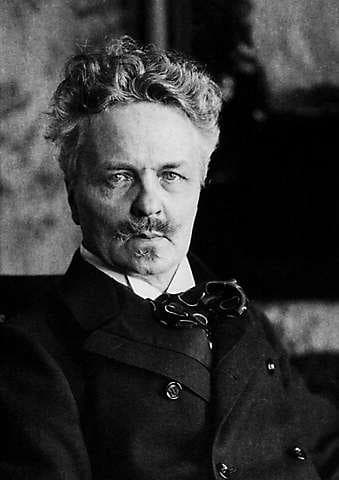
Johan August Strindberg was a Swedish playwright, novelist, poet, essayist and painter. A prolific writer who often drew directly on his personal experience, Strindberg wrote more than sixty plays and more than thirty works of fiction, autobiography, history, cultural analysis, and politics during his career, which spanned four decades. A bold experimenter and iconoclast throughout, he explored a wide range of dramatic methods and purposes, from naturalistic tragedy, monodrama, and history plays, to his anticipations of expressionist and surrealist dramatic techniques. From his earliest work, Strindberg developed innovative forms of dramatic action, language, and visual composition. He is considered the "father" of modern Swedish literature and his The Red Room (1879) has frequently been described as the first modern Swedish novel. In Sweden, Strindberg is known as an essayist, painter, poet, and especially as a novelist and playwright, but in other countries he is known mostly as a playwright.
Similar books
- A Doll's House
Henrik Ibsen
3.7 (106k) average on GoodreadsFictionExplores marital conflict and societal expectations, with a strong female character challenging norms.
- Miss Julie
August Strindberg
3.5 (11k) average on GoodreadsFictionAnother Strindberg play focusing on power dynamics and class/gender conflict within a confined setting.
- Hedda Gabler
Henrik Ibsen
3.8 (30k) average on GoodreadsFictionComparing The Father to Ibsen's Hedda Gabler reveals different facets of female power and societal confinement. Hedda, like Laura, wields significant influence over the men in her life, but her power stems from a frustrated desire for beauty and control, leading to self-destruction. Laura's power, however, is presented as more insidious and calculated, aimed directly at the emasculation and destruction of her husband. While both plays feature strong female characters in confining environments, Ibsen grants Hedda a more complex internal world of unfulfilled desires and aristocratic ennui, whereas Strindberg largely frames Laura's actions as an inherent, almost biological, drive to dominate, reinforcing a more essentialist view of gender conflict. Both plays are naturalistic, but Strindberg's naturalism in The Father leans more heavily into biological determinism and psychological pathology.
- Nineteen Eighty-Four
George Orwell
4.2 (5.5M) average on GoodreadsFictionWinston Smith dreams of truth and rebellion in a world where Big Brother watches all, but he confronts the terrifying power of a regime that controls not just actions, but thoughts.
- The Frozen River
Ariel Lawhon
4.4 (600k) average on GoodreadsFictionIn 1789 Maine, a heroic midwife's diary helps her expose a murder and get justice in a town that wants to silence her.
- A Man Called Ove
Fredrik Backman
4.4 (569k) average on GoodreadsFictionA stubborn widower, who lives by strict rules, finds his quiet world changed by a lively new family next door, making him face his past and find happiness in human connection.






Enjoyed the summary?
A summary gives you the shape of the book. The book itself has the detail, the examples and the voice.
Find The Father on AmazonAs an Amazon Associate, BookBrief earns from qualifying purchases. How we're funded