
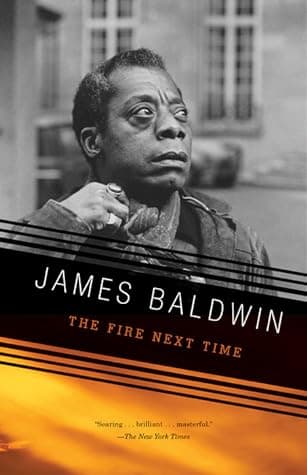
Core Idea
- Difficulty
- Medium
- Read it if
- You want to understand the profound psychological and societal impact of racism in America, appreciate the power of eloquent, impassioned prose, and explore themes of identity, faith, and justice from a deeply personal and intellectual perspective.
- Skip it if
- You are looking for a detached academic analysis or a light read, or if you are unwilling to confront uncomfortable truths about race, religion, and American history.
Key Takeaways from The Fire Next Time
The Price of Innocence
Willful ignorance of racial injustice corrodes the soul and society.
Baldwin says that American society, especially its white majority, has a dangerous 'innocence' about racial injustice. This is not simple unawareness but a deliberate refusal to see the harsh realities and history of racial oppression. This 'innocence' allows systemic racism to continue, as those who benefit from it are not held responsible. Baldwin argues that this willful blindness is morally wrong and harms the 'innocent' themselves, stopping them from fully understanding their own humanity and their nation. He insists that America can only achieve true freedom and maturity by facing this historical and current truth, no matter how painful.
“The great force of history comes from the fact that we carry it within us, are unconsciously controlled by it in many ways, and history is literally present in everything we do.”
In the book: Baldwin recounts his own experience growing up in Harlem, contrasting the harsh realities of his life with the sanitized narratives often consumed by white America. He describes the psychological toll of this 'innocence' on both the oppressed and the oppressor.
Try this: Actively seek out and engage with histories and experiences that challenge your existing worldview, especially concerning race and power. Confront personal biases and societal complicity rather than dismissing uncomfortable truths. Support educational initiatives that offer comprehensive, unvarnished accounts of history.
Related ideas: white-innocence, historical-amnesia, moral-responsibility
The Trap of Identity
Racial categories are a construct that limits human potential and understanding.
Baldwin examines the concept of 'race' as a social construct, arguing it is a destructive invention used to keep power structures in place, not a biological fact. He states that the forced identities of 'black' and 'white' limit individual growth and prevent real human connection. For Black Americans, this identity is imposed and carries the weight of centuries of oppression. For white Americans, 'white' identity is often presented as the default, hiding its constructed nature and the privileges it gives. Baldwin calls for moving past these imposed categories, advocating for recognizing shared humanity beyond racial labels. He believes true freedom comes from breaking down these artificial boundaries.
“It is not a racial problem. It is a problem of whether or not you're willing to look at your life and be responsible for it, and then to be responsible for others.”
In the book: Baldwin's personal journey of self-discovery and his struggles to define himself outside the narrow confines of what society expected of a young Black man in Harlem, as detailed in 'My Dungeon Shook'.
Try this: Challenge and deconstruct the concept of 'race' in your own thinking and conversations. Focus on individual character and shared humanity rather than making assumptions based on perceived racial identity. Advocate for policies that address systemic inequalities without reinforcing racial essentialism.
Related ideas: social-construction-of-race, identity-politics, human-dignity
Love as a Revolutionary Act
Unflinching, radical love is the only path to true liberation and societal healing.
Baldwin's idea of love is not sentimental or passive. It is a fierce, demanding force that requires deep self-awareness and a willingness to confront painful truths. He argues that true love, especially between races, means removing false ideas and recognizing the other person's full humanity, including their suffering and involvement. This love is a call to action, demanding that individuals actively work to dismantle systems of oppression that prevent genuine connection. For Baldwin, this radical love is the only choice to the destructive cycle of hatred and resentment, offering a chance for a shared, more just future where everyone can truly belong.
“For, if I am not what I've been told I am, then it means that you're not what you've been told you are either.”
In the book: His address to his nephew in 'My Dungeon Shook,' where he advises him to 'accept them, and love them' (referring to white people), not out of weakness, but out of a profound understanding of their shared humanity and the need to break cycles of hatred.
Try this: Practice empathy and seek to understand the perspectives of those different from you, even when it's challenging. Engage in difficult conversations about race and justice with an open heart, aiming for mutual understanding and growth, not just victory. Support movements and initiatives that foster genuine reconciliation and collective liberation.
Related ideas: radical-love, reconciliation, empathy
The Fire Next Time
Ignoring systemic injustice risks apocalyptic social upheaval.
The book's title, from a Black spiritual, is a clear warning: if America keeps denying the humanity of its Black citizens and refuses to dismantle its racist structures, a disaster will follow. Baldwin suggests the 'fire' is not necessarily literal destruction, but a deep societal breakdown, a spiritual and moral blaze that will consume the nation. He implies that the patience of the oppressed is not endless, and the consequences of long-lasting injustice will appear in ways that shake the foundations of American society. This is not a threat, but an observation based on his understanding of history and human nature.
“God gave Noah the rainbow sign, No more water, the fire next time!”
In the book: Baldwin’s vivid descriptions of the simmering rage and frustration within the Black community in Harlem, and his analysis of how this resentment, if left unaddressed, could erupt.
Try this: Advocate for urgent and comprehensive reforms to address racial inequality in all sectors (housing, education, justice, employment). Do not dismiss or downplay the anger and frustration of marginalized communities. Recognize that incremental change is often insufficient when fundamental justice is at stake.
Related ideas: social-unrest, prophecy, racial-justice
The Peril of the Negro Church
While a haven, the church can also perpetuate dangerous illusions and defer liberation.
Baldwin, who grew up in the church and was briefly a preacher, offers a detailed critique of its role in the Black community. He acknowledges its important function as a source of comfort, community, and leadership in a hostile world. However, he also points out its potential problems: promoting a focus on the afterlife that delays justice, encouraging passive acceptance of suffering, and sometimes reinforcing a narrow, strict worldview that stops critical thinking. He explores the tension between the church's power to sustain hope and its ability to accidentally delay real progress by encouraging resignation instead of active resistance against earthly injustices.
“The church was the only place in which a Negro boy could hope to play any role whatever and for which he need not pay any price in terms of the emasculation of his personality.”
In the book: Baldwin's deeply personal account of his own experience as a young preacher, the intoxicating power of the pulpit, and his eventual disillusionment with its limitations in addressing systemic racism.
Try this: Critically examine institutions that promise solace or hope, questioning whether they empower agency and demand justice in the present, or encourage passivity. Support faith-based organizations that are actively involved in social justice work and community organizing. Engage in self-reflection about how personal beliefs influence actions towards collective liberation.
Related ideas: black-church, spiritual-liberation, social-gospel
Beyond Integration: True Equality
Integration without fundamental change is merely superficial assimilation.
Baldwin's vision goes beyond simple integration, which he sees as possibly a new form of control where Black people are expected to become like white people. He challenges the idea that the goal is just for Black people to 'become like' white people. Instead, he advocates for a complete change of American society itself, where both Black and white people are freed from the oppressive structures and psychological burdens of racism. True equality, for Baldwin, means a complete rethinking of what it means to be American, where everyone's contributions and humanity are truly valued and shown in the nation's institutions and culture, not just tolerated.
“One cannot be in a rage and at the same time in any way whatever hope to achieve any kind of contact with the person who has caused the rage.”
In the book: His critique of the limited scope of the civil rights movement's initial demands, implying that while important, they might not go far enough to dismantle the deeper psychological and systemic roots of racism.
Try this: Advocate for systemic changes that address power imbalances, not just superficial diversity initiatives. Question whether 'integration' truly leads to equity or simply disperses marginalized groups without empowering them. Support initiatives that foster authentic cultural exchange and mutual respect, rather than one-way assimilation.
Related ideas: systemic-racism, assimilation, equity-vs-equality
The Burden of Whiteness
Racism harms white people by distorting their reality and humanity.
Baldwin argues that racism is not just a problem for Black people; it also deeply harms white people. By creating a false reality based on racial superiority and denying the truth of their nation's history, white Americans lose their full humanity. This 'burden of whiteness' creates a moral and psychological cost, trapping individuals in a state of stalled growth and stopping them from truly understanding themselves or the world. Baldwin suggests that white people cannot be truly free or fully human until they give up the false ideas of racial superiority and confront the historical and ongoing injustices they have committed or benefited from. Their freedom is tied to the freedom of Black people.
“The price of the liberation of the white people is the liberation of the black people.”
In the book: His nuanced understanding of the psychological toll of racism, not just on the oppressed but also on the oppressor, as explored through his observations of white society.
Try this: Engage in anti-racist education and self-reflection to understand the historical and ongoing benefits of whiteness. Actively challenge racist ideas and systems, even when it is uncomfortable. Recognize that dismantling racism is a project that benefits everyone, not just marginalized groups.
Related ideas: white-privilege, anti-racism, moral-cost
The Artist's Responsibility
Art must relentlessly confront truth, however uncomfortable, to foster societal awakening.
As a writer, Baldwin clearly states the artist's important role in changing society. He believes that art is not just entertainment but a tool for revealing uncomfortable truths, challenging common stories, and making individuals confront their own involvement and humanity. His own sharp, brilliant writing shows this belief, using language to examine the complexities of race, identity, and power. He sees the artist as a truth-teller, someone who must disrupt peace to awaken awareness and push for change, even if it means alienating some readers. The artist's job is to witness and express the unspoken, paving the way for real discussion and progress.
“The purpose of art is to lay bare the questions which have been hidden by the answers.”
In the book: The very existence of 'The Fire Next Time' itself, a work of art that is both deeply personal and profoundly political, demonstrating the power of literature to ignite social consciousness.
Try this: Support and engage with art that challenges the status quo and explores difficult social issues. Use your own creative expression, if applicable, to speak truth to power and foster empathy. Encourage critical engagement with media and narratives, questioning underlying assumptions and biases.
Related ideas: art-as-activism, truth-telling, social-commentary
America's Unfinished Business
The nation's promise of freedom remains unfulfilled until racial justice is achieved.
Baldwin sees the fight for racial equality as the main challenge of the American experiment. He argues that the nation's founding ideals of liberty and justice for all remain an empty promise as long as systemic racism continues. The failure to confront and correct racial injustice compromises America's moral standing and stops it from ever truly becoming the nation it claims to be. He urges Americans to deal with their history, acknowledge their current realities, and actively work toward a future where the dream of freedom is genuinely given to all citizens. This is not just a plea for Black freedom, but a call for America to finally live up to its own stated principles.
“It is not a racial problem. It is a problem of whether or not you're willing to look at your life and be responsible for it, and then to be responsible for others.”
In the book: The book was written on the centennial of the Emancipation Proclamation, highlighting the enduring gap between the legal end of slavery and the actual lived experience of freedom for Black Americans.
Try this: Actively participate in civic life, advocating for policies that promote racial equity and justice. Hold elected officials accountable for addressing systemic racism. Support organizations working to fulfill America's promise of equality for all. Understand that the fight for racial justice is fundamental to the health and integrity of the entire nation.
Related ideas: american-dream, racial-justice, civic-responsibility
The Fire Next Time Quotes
“It is not a racial problem. It is a problem of whether or not you're willing to look at a human being as a human being.”
“To be a Negro in this country and to be relatively conscious is to be in a rage almost all the time.”
“The price of the ticket is to become aware that you have been and are a part of the problem.”
“I imagine one of the reasons people cling to their hates so stubbornly is because they sense, once hate is gone, they will be forced to deal with pain.”
“You think your pain and your heartbreak are unprecedented in the history of the world, but then you read. It was books that taught me that the things that tormented me most were the very things that connected me with all the people who were alive, or who had ever been alive.”
“Love him and let him love you. Do you think anything else under heaven really matters?”
“It is a terrible thing for an innocent man to be forced to confess to a crime he has not committed.”
“The great force of history comes from the fact that we carry it within us, are unconsciously controlled by it in many ways, and history is literally present in all that we do.”
“Not everything that is faced can be changed, but nothing can be changed until it is faced.”
“The white man's unadmitted-and apparently unadmittable-guilt at the role he plays in the American tragedy.”
“The really terrible thing, old buddy, is that you must accept them. And I mean that very seriously. You must accept them and accept them and accept them, and love them. The difficulty, the bitter difficulty of this.”
“Life is a journey and it's about growing and changing and coming to terms with who you are.”
“It is not possible to be an American and not be in some way a Negro.”
Quiz
10 questions on the main ideas. Each answer comes with a short explanation.
Question 1
In 'My Dungeon Shook,' to whom is James Baldwin primarily addressing his letter?
- His younger brother, David
- His father
- His white American readers
- The leaders of the Civil Rights Movement
Show answer
A. His younger brother, David The first essay, 'My Dungeon Shook,' is explicitly framed as a letter from Baldwin to his nephew, James, on the occasion of the centennial of the Emancipation Proclamation.
Question 2
What primary warning does Baldwin give his nephew in 'My Dungeon Shook' regarding white people?
- That they are inherently evil and cannot be trusted.
- That they are trapped by their own history and fear, and should not be hated but understood.
- That they will always seek to maintain their power through violence.
- That he must always be on guard against their attempts to convert him to Christianity.
Show answer
B. That they are trapped by their own history and fear, and should not be hated but understood. Baldwin encourages his nephew not to hate white people, but to understand that they are 'trapped in a history which they do not understand and from which they cannot liberate themselves.' He argues that their innocence is a 'crime' born of fear.
Question 3
Baldwin describes his early religious experiences in Harlem. What was his initial motivation for joining the church?
- A genuine spiritual awakening and belief in God.
- To escape the dangers of the street and find a sense of belonging and power.
- To please his stepfather, who was a preacher.
- To pursue a career in gospel singing.
Show answer
B. To escape the dangers of the street and find a sense of belonging and power. Baldwin explicitly states that he joined the church initially to escape the dangers of the streets of Harlem, finding in the church a refuge and a sense of power and identity that he lacked elsewhere.
Question 4
What is Baldwin's ultimate critique of the Nation of Islam, despite finding some of their arguments compelling?
- Their rejection of Christianity was too extreme.
- Their advocacy for a separate black state was unrealistic.
- Their ideology was based on hatred and a reversal of white supremacy, rather than true liberation.
- Their leadership was corrupt and self-serving.
Show answer
C. Their ideology was based on hatred and a reversal of white supremacy, rather than true liberation. Baldwin acknowledges the Nation of Islam's appeal to disillusioned black Americans but ultimately critiques their foundation of hatred, arguing it mirrors the very white supremacy they oppose, merely reversing the roles rather than transcending them.
Question 5
Baldwin argues that the American ideal of 'innocence' regarding racial injustice is:
- A fundamental virtue that needs to be protected.
- A dangerous delusion that prevents true understanding and change.
- An understandable coping mechanism for past atrocities.
- Only applicable to those who were not directly involved in slavery.
Show answer
B. A dangerous delusion that prevents true understanding and change. Baldwin repeatedly asserts that American 'innocence' regarding its racial history is a profound and dangerous delusion, preventing white Americans from confronting the reality of their past and present complicity in injustice.
Question 6
What specific event does Baldwin recount in 'Down At The Cross' that deeply impacted his understanding of racial hatred and the limits of religious faith?
- His meeting with Elijah Muhammad.
- His experience with the police in a white neighborhood.
- The death of his stepfather.
- A particular sermon he heard in church.
Show answer
B. His experience with the police in a white neighborhood. Baldwin recounts an incident where he, as a young man, was denied service and threatened by a waitress in a restaurant in a white neighborhood, leading to a violent outburst and a profound realization about the pervasive nature of racial hatred.
Question 7
Baldwin suggests that the freedom of black people is inextricably linked to the freedom of white people because:
- White people hold all the power and must grant freedom.
- Racial injustice distorts and limits the humanity of both oppressor and oppressed.
- Black people need white allies to achieve their goals.
- They share a common economic struggle.
Show answer
B. Racial injustice distorts and limits the humanity of both oppressor and oppressed. A core argument of the book is that the dehumanization required to maintain racial injustice corrupts and limits the humanity of white people as much as it oppresses black people, meaning true liberation for one requires the liberation of the other.
Question 8
What is the significance of the title 'The Fire Next Time'?
- It refers to the literal burning of cities during race riots.
- It alludes to a spiritual judgment and reckoning, drawing from a spiritual song and biblical prophecy.
- It symbolizes the passion and intensity of the Civil Rights Movement.
- It speaks to the destructive nature of hatred.
Show answer
B. It alludes to a spiritual judgment and reckoning, drawing from a spiritual song and biblical prophecy. The title is famously drawn from a spiritual song, 'God Gave Noah the Rainbow Sign, No More Water, The Fire Next Time!' It evokes a sense of impending divine judgment and a cataclysmic reckoning if America fails to address its racial sins.
Question 9
Baldwin's ultimate call to action for Americans, both black and white, is to:
- Engage in armed revolution to overthrow racist structures.
- Achieve a radical transformation of society through love and the dismantling of racial categories.
- Establish separate but equal societies for different races.
- Focus on individual spiritual salvation rather than political action.
Show answer
B. Achieve a radical transformation of society through love and the dismantling of racial categories. Baldwin's conclusion is a powerful plea for Americans to confront their history and dismantle the very concept of race, embracing love and a shared humanity to create a truly integrated and just society. He speaks of a 'new morality' and a 'radical reconstruction of the American consciousness.'
Question 10
Which of the following best describes Baldwin's tone throughout 'The Fire Next Time'?
- Detached and academic.
- Bitter and vengeful.
- Passionate, urgent, and deeply personal, yet also analytical.
- Optimistic and naive.
Show answer
C. Passionate, urgent, and deeply personal, yet also analytical. The book is renowned for its intensely personal and passionate voice, reflecting Baldwin's own experiences and emotions, while also providing sharp intellectual analysis of American society and its racial dilemmas. It's a 'sermon, ultimatum, confession, deposition, testament, and chronicle' all at once.
The Fire Next Time FAQ
What is the main message of James Baldwin's The Fire Next Time?
The Fire Next Time implores Americans, both Black and white, to confront and dismantle the deeply entrenched legacy of racial injustice. Baldwin argues that ignoring racism is not only detrimental to Black people but also corrupts the soul of America itself, calling for a radical re-evaluation of societal structures and individual responsibility.
Does James Baldwin offer solutions to racial inequality in The Fire Next Time?
While Baldwin doesn't provide a step-by-step plan, he passionately advocates for a profound shift in consciousness and a commitment to truth. He suggests that genuine love and an honest reckoning with history are the only paths to achieving a truly just and integrated society, emphasizing the need for white Americans to shed their illusions about race.
What is the significance of the two 'letters' format in The Fire Next Time?
The book is structured as two powerful essays, 'My Dungeon Shook' (addressed to his nephew) and 'Down at the Cross' (a broader reflection on race and religion). This format allows Baldwin to explore the personal impact of racism through intimate advice, while also delivering a sweeping critique of American society and its historical failures.
How did The Fire Next Time impact the Civil Rights Movement?
Published in 1963, The Fire Next Time galvanized the nation and gave passionate voice to the emerging civil rights movement. Its stark honesty and eloquent prose resonated deeply, articulating the urgency and moral imperative for change during a pivotal moment in American history.
What is Baldwin's perspective on religion and the Nation of Islam in the book?
Baldwin explores his complex relationship with Christianity and critically examines the appeal and limitations of the Nation of Islam. While acknowledging its power in providing identity and solace to some Black Americans, he ultimately challenges its separatist ideology, advocating for a more inclusive vision of humanity.
How different is The Fire Next Time from other civil rights era non-fiction?
Unlike more policy-oriented or journalistic accounts, The Fire Next Time is distinguished by its intensely personal, provocative, and literary style. Baldwin blends memoir, sermon, and social critique, offering a deeply emotional and philosophical exploration of race that transcends mere reporting, making it a unique and enduring work.
Is The Fire Next Time still relevant today?
Absolutely. Despite being written over half a century ago, Baldwin's insights into racial injustice, identity, and the American psyche remain profoundly relevant. The systemic issues and psychological burdens he describes continue to resonate, making the book a vital text for understanding contemporary racial dynamics.
What inspired James Baldwin to write The Fire Next Time?
The book was largely inspired by the centennial of the Emancipation Proclamation in 1963, prompting Baldwin to reflect on the unfulfilled promise of freedom for Black Americans. His personal experiences growing up in Harlem and his observations of racial tensions across the country fueled his urgent call for change.
About the author
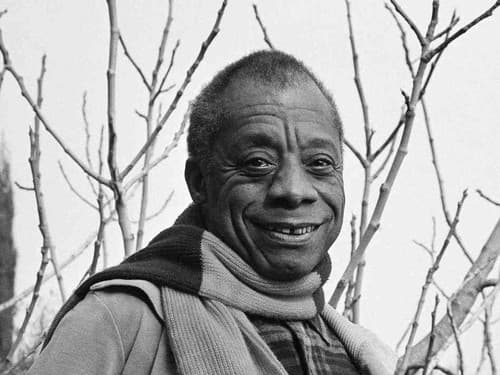
James Arthur Baldwin was an American writer. He garnered acclaim for his work across several forms, including essays, novels, plays, and poems. His first novel, Go Tell It on the Mountain, was published in 1953; decades later, Time magazine included the novel on its list of the 100 best English-language novels released from 1923 to 2005. His first essay collection, Notes of a Native Son, was published in 1955.
Similar books
- Between the World and Me
Ta-Nehisi Coates
4.4 (235k) average on GoodreadsPoliticsA modern epistolary examination of race and identity in America, deeply influenced by Baldwin's style and themes.
- Notes of a Native Son
James Baldwin
4.4 (14k) average on GoodreadsPoliticsAnother collection of Baldwin's essays exploring race, art, and American society with similar intellectual rigor.
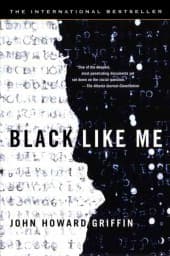
- Black Like Me
John Howard Griffin
4.1 (61k) average on GoodreadsBiographyWhile both books address racial prejudice in America, Griffin's Black Like Me (1961) offers an experiential, journalistic account from the perspective of a white man who temporarily 'passes' as Black. Baldwin, in contrast, writes from a lifelong, lived experience as a Black man, offering a deeply internal and psychological analysis of racism. Griffin's work is valuable for exposing explicit discrimination, but Baldwin delves deeper into the systemic and spiritual costs of racial division, making his critique more profound and less reliant on a performative experiment.
- 1984
George Orwell
4.2 (3.1M) average on GoodreadsPoliticsIn a future where surveillance and thought control are absolute, a man's search for truth clashes with the Party, showing that hope can be a form of rebellion.
- Animal Farm
George Orwell
4.0 (2.7M) average on GoodreadsPoliticsA farm animals' rebellion against humans turns into a pig-led dictatorship, showing how power corrupts and revolutionary ideals are betrayed.
- Freakonomics: A Rogue Economist Explores the Hidden Side of Everything
Steven D. Levitt
4.0 (709k) average on GoodreadsBusinessThis book uses economic principles to reveal the surprising incentives behind everything from drug dealing and real estate to cheating teachers and the decline of crime.



Enjoyed the summary?
A summary gives you the shape of the book. The book itself has the detail, the examples and the voice.
Find The Fire Next Time on AmazonAs an Amazon Associate, BookBrief earns from qualifying purchases. How we're funded