
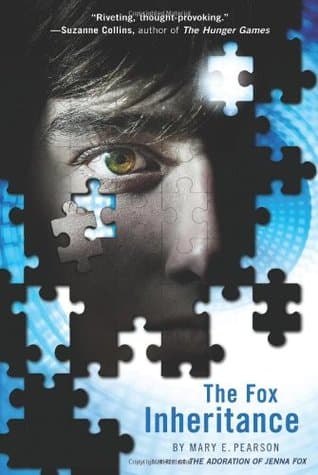
Synopsis
Covers the whole plot, including the ending.
- Difficulty
- Medium
- Pacing
- Moderate
- Mood
- Introspective, Dystopian, Hopeful, Mysterious
- Read it if
- You enjoy dystopian YA with a focus on bioethics, identity, and the meaning of humanity, following characters who are literally rebuilding their lives in a strange new future.
- Skip it if
- You prefer fantasy over science fiction or find themes of body swapping and consciousness transfer unsettling.
The Fox Inheritance Plot Summary
Covers the whole plot, including the ending.
Awakening in a New Body
Locke and Kara awaken in an unfamiliar room, disoriented and with no memory of how they got there. They discover they are in new, perfect bodies, centuries after their original accident. Their last memory is of their minds being uploaded into a neural network after a catastrophic accident that destroyed their physical forms. They immediately search for Jenna Fox, their third companion, but she is nowhere to be found. Dr. Rowen, a seemingly benevolent figure, explains that they have been 'reborn' into a future where the world has drastically changed. Locke and Kara struggle to reconcile their past memories with their present reality, feeling a sense of loss and displacement.
The Search for Jenna Fox
Driven by their deep bond, Locke and Kara press Dr. Rowen for information about Jenna. Dr. Rowen is cagey, offering vague assurances but no concrete answers. Frustrated, Locke and Kara begin to explore their new surroundings, a sterile, technologically advanced facility. They quickly realize their isolation; everyone they knew is long dead, and the world outside is alien. Their determination to find Jenna intensifies, as she represents the last link to their past and their shared identity. They begin to suspect Dr. Rowen is hiding something about Jenna's fate.
Uncovering the Truth about the Net
Through investigations and piecing together fragmented memories, Locke and Kara learn that their minds were not merely 'preserved' but were part of a vast, illegal neural network known as the 'Net.' This network housed the minds of countless individuals, a controversial practice following the Bio-Crisis. They realize their existence is a legal and ethical grey area, and that their 'reawakening' is not a simple medical procedure but a complex and potentially dangerous experiment. This revelation deepens their distrust of Dr. Rowen and the organization behind their revival.
The First Glimpse of Jenna
Locke and Kara eventually catch a glimpse of Jenna Fox, now much older and seemingly living a normal life. However, she appears to have no memory of them or their shared past in the Net. This encounter is devastating for Locke and Kara, who had held onto the hope of a reunion. Jenna's altered state raises questions about what happened to her during her time in the Net and why her memories are absent. They realize that simply finding her isn't enough; they need to understand what changed her and how to reach the Jenna they knew.
The Fox Family's Secrets
Locke and Kara begin to uncover the history of the Fox family's role in the Bio-Crisis and the subsequent preservation of their minds. They discover that Jenna's father, Dr. Fox, was a brilliant but controversial scientist who played a role in creating the technology that kept them alive. The ethical implications of their existence, and the lengths to which the Fox family went to preserve them, become clearer. This knowledge complicates their feelings towards Jenna and her family, as they grapple with the idea that their existence is a product of scientific ambition and moral ambiguity.
Joining the Resistance
Driven by their desire for answers and a growing sense of injustice, Locke and Kara eventually make contact with a resistance group that opposes the illegal practices of mind preservation and the manipulation of human consciousness. This group offers them a chance to understand their situation better and potentially find a way to help Jenna. They learn about the dangers of the existing Net and the potential for abuse by those who control it. Joining the resistance marks a shift from passive observation to active participation in a larger conflict.
Confronting Dr. Rowen
Armed with new information from the resistance, Locke and Kara confront Dr. Rowen, demanding full transparency about Jenna's condition and their own past. Under pressure, Dr. Rowen reveals that Jenna was 'reconstructed' earlier than them, but due to complications, her memories of the Net and her friends were suppressed to ensure her integration into society. She explains the risks involved in trying to restore those memories. This confession is a painful blow, confirming their fears about Jenna's altered state but also offering a glimmer of hope for her recovery.
The Plan to Restore Jenna
Determined to reunite with the Jenna they knew, Locke and Kara, with the help of the resistance, devise a plan to restore Jenna's lost memories. This involves a complex and risky procedure that could potentially harm Jenna or even erase her current self. They understand the ethical tightrope they are walking, as they are essentially attempting to overwrite a part of who Jenna has become. The decision weighs heavily on them, but their love and loyalty to Jenna compel them to take the risk, believing that her true self is worth fighting for.
The Operation and its Aftermath
The operation to restore Jenna's memories is fraught with tension and danger. Locke and Kara participate directly, using their unique connection to the Net to facilitate the process. The procedure is successful in part, as flashes of Jenna's past memories begin to surface. However, it also creates an upheaval in Jenna's mind, causing confusion and distress as her two identities clash. The immediate aftermath is not the joyful reunion they envisioned, but a period of intense struggle for Jenna as she tries to reconcile her past and present selves.
Reconciliation and New Beginnings
In the wake of the operation, Jenna slowly begins to process her restored memories, gradually understanding who Locke and Kara are and their shared history. The reunion is complex, marked by both joy and lingering pain. While their bond is rekindled, the scars of their prolonged separation and the ethical dilemmas surrounding their existence remain. The trio, now aware of the world's complexities and their unique place within it, faces an uncertain future. They must decide how to navigate their new lives, protect their identities, and advocate for others like them in a world that fears and misunderstands them.
Principal Figures
Locke
Protagonist
Jenna's loyal and determined best friend, revived centuries later.
Locke is one of the three friends whose minds were preserved after a fatal accident. Upon awakening in a new body centuries later, he is driven by an unwavering loyalty to Jenna Fox and a fierce determination to find her. He is pragmatic and often takes the lead in their investigations, questioning authority figures like Dr. Rowen. His love for Jenna is a central motivation, pushing him to take risks and challenge ethical boundaries to restore their past. He struggles with the loss of his original life and identity, finding solace only in his bond with Kara and the pursuit of Jenna.
Relationships: Jenna Fox (Best friend and love interest, deeply loyal and protective); Kara (Best friend and companion, shares a deep bond and mutual support)
Kara
Protagonist
Jenna's insightful and compassionate best friend, revived alongside Locke.
Kara is the third member of the trio, revived in a new body alongside Locke. She is often more reflective and emotionally sensitive than Locke, providing a balance to his more impulsive nature. Her compassion extends not only to Jenna but also to the broader ethical implications of their existence and the 'Net.' She grapples with the profound grief of losing her original life and the difficulty of adapting to a changed world. Kara's intelligence and intuition are crucial in piecing together the mysteries surrounding their revival and Jenna's fate. She is a loyal friend, providing emotional support and strategic insight.
Relationships: Jenna Fox (Best friend, deeply empathetic and protective); Locke (Best friend and companion, shares a deep bond and mutual support)
Jenna Fox
Supporting
The friend Locke and Kara are searching for, whose memories have been suppressed.
Jenna Fox is the catalyst for the entire story, the friend Locke and Kara are desperately searching for. She was revived earlier than them, but her memories of the 'Net' and her time with Locke and Kara were suppressed to allow her to integrate into society. Her existence is a testament to her father's controversial scientific brilliance and the ethical dilemmas of preserving consciousness. When Locke and Kara find her, she is living a seemingly normal life, unaware of her true past or her friends. Her journey involves the painful and disorienting process of reconciling her suppressed memories with her current identity.
Relationships: Locke (Best friend and love interest, her past is deeply intertwined with him); Kara (Best friend, shares a profound history and connection); Dr. Fox (her father) (Creator of the technology that saved her, complex relationship of love and resentment)
Dr. Rowen
Supporting
The scientist responsible for Locke and Kara's revival, with hidden motives.
Dr. Rowen is the enigmatic scientist who oversees Locke and Kara's awakening and initial adaptation. She presents herself as a benevolent figure, but her evasiveness and the secrets she keeps quickly make her a suspicious character. She is deeply involved in the ethical and technological complexities of mind preservation and plays a significant role in managing the aftermath of the Bio-Crisis. Her motivations are complex, driven by a desire to correct past mistakes and protect the individuals involved, even if it means withholding crucial information. She represents the scientific establishment grappling with the consequences of its own advancements.
Relationships: Locke (Overseer and reluctant informant); Kara (Overseer and reluctant informant); Dr. Fox (Colleague, shared history in the Bio-Crisis and the Net project)
Alina
Supporting
A member of the resistance against mind preservation, who aids Locke and Kara.
Alina is a key figure in the resistance movement that Locke and Kara eventually join. She is passionate about the ethical implications of mind preservation and is dedicated to exposing the abuses of the 'Net.' Alina provides Locke and Kara with crucial information, resources, and a sense of purpose beyond their personal quest. She is pragmatic and resourceful, offering a grounded perspective on the political and social landscape of their new world. Her involvement helps Locke and Kara understand the broader context of their situation and empowers them to take action.
Relationships: Locke (Ally and guide); Kara (Ally and guide)
Senator Fox (Jenna's Father)
Mentioned
Jenna's brilliant but controversial father, a pioneer in mind preservation.
Senator Fox, Jenna's father, is a pivotal figure in the backstory of the novel, though he is not present in the current timeline. He was a brilliant scientist who pioneered the technology that allowed for the preservation of minds, including Jenna's, Locke's, and Kara's. His actions, driven by a desperate love for his daughter, led to the ethical quagmire of the 'Net' and the Bio-Crisis. He represents the complex interplay of scientific ambition, parental love, and the unforeseen consequences of pushing technological boundaries. His legacy looms large over the characters' lives.
Relationships: Jenna Fox (Daughter, whose life he saved through controversial means); Dr. Rowen (Colleague, shared history in the Bio-Crisis and the Net project)
Mr. Bender
Supporting
A member of the resistance, providing technical expertise.
Mr. Bender is another member of the resistance group who possesses valuable technical expertise. He helps Locke and Kara understand the intricacies of the 'Net' and the technology behind their revival and Jenna's memory suppression. He is cautious but dedicated to the cause, offering practical solutions and insights into the digital world. His knowledge is instrumental in formulating the plan to restore Jenna's memories, highlighting the technical challenges and risks involved. He represents the practical, engineering side of the resistance efforts.
Relationships: Locke (Ally, providing technical assistance); Kara (Ally, providing technical assistance)
Themes & Insights
Identity and Self-Perception
The novel explores what constitutes a person's identity when their physical body is replaced and memories are manipulated. Locke and Kara grapple with being 'new' people in a 'new' world, questioning if they are still the same individuals without their original bodies and lives. Jenna's struggle to reconcile her suppressed past with her present self is central to this theme, as she experiences a crisis of identity when her memories are restored. The narrative asks whether identity is tied to physical form, memory, or the continuity of consciousness, particularly in the face of advanced biotechnological intervention. Their existence challenges traditional notions of what it means to be human.
“We were copies, not originals. We were the echoes of what had been, not the real thing.”
The Ethics of Technology and Science
The story explores the moral and ethical implications of advanced science, specifically mind preservation and human cloning. The creation of the 'Net' and the revival of minds raise questions about the sanctity of life, the right to personal autonomy, and the dangers of playing God. Dr. Rowen's actions, driven by a desire to preserve life but executed with questionable methods, highlight the grey areas in scientific advancement. The resistance movement directly opposes these ethical breaches, forcing characters and readers to confront the potential for abuse when technology outpaces moral guidelines. The narrative critiques the idea that if something can be done, it should be done, emphasizing the human cost.
“There are some lines that should not be crossed, no matter how noble the intention.”
Love, Loyalty, and Friendship
At its core, the novel is about the enduring power of love and loyalty. The unwavering bond between Locke, Kara, and Jenna transcends death, time, and physical transformation. Locke and Kara's entire motivation stems from their deep love for Jenna and their shared past. Their loyalty drives them to embark on a dangerous quest, risking their own newfound lives to restore Jenna's memories and reunite their trio. This theme is evident in their refusal to give up on Jenna, even when she doesn't recognize them, and their willingness to make immense sacrifices for their friendship. Their connection is the emotional anchor of the story.
“We were three, and three we would remain, no matter what the world tried to do to us.”
Grief and Loss
Locke and Kara experience grief for their lost lives, families, and the world they once knew. They awaken to a future where everyone they loved is dead, and their past is a distant memory. This sense of loss shapes their emotional landscape, making their quest for Jenna not just about friendship, but about reclaiming a piece of what they've lost. Even their 'perfect' new bodies cannot erase the pain of their past. Jenna, upon regaining her memories, also experiences a form of grief for the life she lived without her true past, and for the choices made on her behalf. The novel explores how individuals cope with loss and seek meaning in its wake.
“How do you grieve for a life that was taken from you centuries ago?”
Plot Devices & Literary Techniques
Memory Suppression and Restoration
The deliberate manipulation of a character's memories to control their identity.
This device is central to Jenna's character arc. Her memories of Locke, Kara, and her time in the 'Net' were suppressed to allow her to integrate into society. This creates a powerful narrative drive for Locke and Kara, who must find a way to restore these memories. It raises questions about the right to one's own past and the ethical implications of manipulating personal history. The act of restoring Jenna's memories is a major plot point, fraught with danger and ethical dilemmas, and its success is crucial for the resolution of the main conflict.
The 'Net' (Neural Network)
A vast digital repository of preserved human minds, the source of the protagonists' consciousness.
The 'Net' serves as both the origin of Locke, Kara, and Jenna's continued existence and a major source of conflict. It is an illegal and controversial technology that preserved their minds after their original bodies were destroyed. The existence of the 'Net' creates the futuristic setting and the ethical framework of the story, as it represents the extreme lengths to which humanity went to preserve life, with unforeseen consequences. It is also the metaphorical 'home' from which Locke and Kara emerged, making their struggle to adapt to the physical world more profound.
New Bodies and Revival
The protagonists are given genetically engineered, 'perfect' bodies after centuries of disembodied existence.
This device immediately establishes the science fiction elements of the novel and creates a profound sense of displacement for Locke and Kara. Their new bodies are unfamiliar, yet perfect, highlighting the artificiality of their existence. It forces them to confront questions of identity, as their physical form is no longer their original one. The process of revival itself is shrouded in mystery, leading to their investigation and the uncovering of ethical breaches. This device underscores the theme of what it means to be human when the body is merely a vessel.
The Fox Inheritance Quotes
“The past is a stubborn thing. It clings to you, no matter how hard you try to shake it off.”
“Sometimes you have to break a few rules to do what's right.”
“Love isn't a choice. It's a surrender.”
“There's a difference between living and just existing.”
“Hope is a dangerous thing, but it's also the only thing that keeps us going.”
“We are all products of our past, but we don't have to be prisoners of it.”
“The greatest battles are often fought within ourselves.”
“Sometimes the truth is a weapon, and sometimes it's a shield.”
“Family isn't always about blood. It's about who you choose to stand with.”
“Fear can be a powerful motivator, but courage is what truly sets us free.”
“The world is full of shadows, but even the smallest light can make a difference.”
“Not all wounds are visible, but they can still leave the deepest scars.”
“Change is inevitable. It's how we adapt that defines us.”
“Some secrets are meant to stay buried, and some are meant to be unearthed.”
Quiz
10 questions on the plot and the characters. Each answer comes with a short explanation.
Question 1
What is the primary reason Locke and Kara are 'released' after 260 years?
- The technology to grow new bodies finally became available.
- Jenna Fox found a way to bring them back.
- Their digital netherworld was becoming unstable.
- A new government regime ordered their revival.
Show answer
A. The technology to grow new bodies finally became available. Locke and Kara were kept in a digital state until the technology advanced enough to provide them with new, perfect bodies, allowing their consciousness to be transferred.
Question 2
Who is the 'Jenna Fox' that Locke and Kara encounter upon their awakening?
- Their original friend, miraculously still alive and unchanged.
- A clone of their original friend, created by a secret organization.
- The original Jenna Fox, who has been living as a disembodied consciousness in a highly advanced prosthetic body.
- A descendant of their original friend, bearing the same name.
Show answer
C. The original Jenna Fox, who has been living as a disembodied consciousness in a highly advanced prosthetic body. The Jenna Fox they meet is the original Jenna, whose consciousness was transferred into a sophisticated, advanced body after her own accident, allowing her to survive for centuries.
Question 3
What is the primary emotional challenge Locke and Kara face upon their return?
- Adjusting to new dietary restrictions and fashion trends.
- Coming to terms with the loss of everyone they knew and the drastic changes in society.
- Learning to operate the advanced technology of the new world.
- Dealing with the physical discomfort of their new bodies.
Show answer
B. Coming to terms with the loss of everyone they knew and the drastic changes in society. A major theme of the book is the profound sense of loss and alienation Locke and Kara experience, having woken up centuries later to a world where everyone they loved is gone and society has dramatically changed.
Question 4
What is the 'digital netherworld' where Locke and Kara's minds were kept?
- A virtual reality game they were playing before the accident.
- A sophisticated server system designed to preserve human consciousness.
- A dream state induced by advanced medical technology.
- A collective unconsciousness they temporarily merged with.
Show answer
B. A sophisticated server system designed to preserve human consciousness. The 'digital netherworld' refers to the advanced technological system that kept their minds alive and spinning, preserving their consciousness in a digital format for over two centuries.
Question 5
What is the nature of the 'new, perfect bodies' Locke and Kara receive?
- They are genetically engineered clones of their original bodies.
- They are sophisticated robotic constructs designed to mimic human form.
- They are original bodies that were cryogenically preserved and revived.
- They are alien bodies adapted for human consciousness.
Show answer
A. They are genetically engineered clones of their original bodies. The new bodies are genetically engineered and grown, designed to be perfect replicas or improvements upon their original forms, allowing their digital consciousness to be uploaded.
Question 6
How does the concept of identity evolve for Locke and Kara throughout the story, given their unique circumstances?
- They quickly adapt and feel entirely themselves in their new bodies, with no lingering identity issues.
- Their identity becomes solely defined by their past memories, making it difficult to form new connections.
- They grapple with questions of what constitutes a 'self' when their minds have been separated from their original bodies for so long and placed in new ones.
- They adopt entirely new identities to cope with the changed world, forgetting their past selves.
Show answer
C. They grapple with questions of what constitutes a 'self' when their minds have been separated from their original bodies for so long and placed in new ones. A central theme is the exploration of identity. Locke and Kara struggle with understanding who they are when their consciousness has been disembodied and then re-embodied, questioning the continuity of self.
Question 7
What is the significance of the phrase 'Once there were three' in the context of the story's beginning?
- It refers to the three different types of technology used to revive them.
- It establishes the core group of friends whose bond is central to the plot and their individual fates.
- It hints at a prophecy involving three chosen individuals.
- It describes the number of attempts it took to successfully revive them.
Show answer
B. It establishes the core group of friends whose bond is central to the plot and their individual fates. The phrase immediately establishes the foundational relationship between Jenna, Locke, and Kara, whose shared past and subsequent separation/reunion drive the narrative.
Question 8
How does the societal view of human consciousness and life extension differ in the future world compared to the past world of Locke and Kara?
- The future society has completely outlawed any form of life extension or consciousness transfer.
- The future society views these technologies with cautious acceptance, but they are highly regulated and often controversial.
- Life extension is commonplace and unrestricted, leading to overpopulation issues.
- Consciousness transfer is only used for military purposes, not for civilians.
Show answer
B. The future society views these technologies with cautious acceptance, but they are highly regulated and often controversial. The book explores the ethical and societal implications of such advanced technologies. The future world has developed them but grapples with the morality and legality of tampering with life and consciousness, leading to careful regulation and public debate.
Question 9
What is the primary motivation for Jenna Fox's actions in bringing Locke and Kara back?
- She wants to recreate her past life exactly as it was.
- She feels a profound loneliness and desires to reconnect with her last remaining links to her past.
- She needs their help to overthrow a tyrannical government.
- She is conducting a scientific experiment on their ability to adapt.
Show answer
B. She feels a profound loneliness and desires to reconnect with her last remaining links to her past. Jenna, having lived for centuries, experiences immense isolation. Her deep emotional bond with Locke and Kara drives her to revive them, hoping to alleviate her loneliness and rekindle their friendship.
Question 10
How does the passage of 260 years impact the relationship dynamics between Jenna, Locke, and Kara?
- Their relationships remain exactly as they were, picking up seamlessly from where they left off.
- Jenna has evolved significantly, creating a power imbalance and making it difficult for Locke and Kara to relate to her.
- Locke and Kara resent Jenna for not bringing them back sooner, causing immediate conflict.
- The time gap has made them strangers, and they show no interest in rekindling their old friendships.
Show answer
B. Jenna has evolved significantly, creating a power imbalance and making it difficult for Locke and Kara to relate to her. Jenna's 260 years of experience and adaptation to the future world, compared to Locke and Kara's sudden reawakening, create a significant divergence in their perspectives and capabilities, altering their old dynamics.
The Fox Inheritance FAQ
What is the core premise of 'The Fox Inheritance'?
The story follows Locke and Kara, two individuals whose minds were preserved digitally for 260 years after a devastating accident. They awaken in new, perfect bodies to a future world where everything they knew is gone, except for the lingering mystery of their third friend, Jenna Fox.
Who are Locke and Kara, and what is their relationship?
Locke and Kara were best friends with Jenna Fox before the accident that destroyed their original bodies. During their 260 years in the digital netherworld, they developed a deep, intertwined bond, relying on each other for companionship and shared memory in their disembodied state.
What kind of world do Locke and Kara wake up to?
They awaken to a technologically advanced future that has moved on significantly from their original time. This world is shaped by the ethical implications of bio-engineering and mind preservation, and it is governed by the rules established after the events of 'The Adoration of Jenna Fox'.
What is their primary goal upon awakening?
Initially, their primary goal is to find Jenna Fox and understand what happened to her during the centuries they were absent. They are also driven by a need to understand their own new existence and place in this unfamiliar world, grappling with their altered identities.
How does this book connect to 'The Adoration of Jenna Fox'?
'The Fox Inheritance' is a direct sequel, taking place 260 years after the events of the first book. It explores the long-term consequences of the bio-engineering and mind preservation technologies introduced in Jenna's story, particularly through the experiences of Locke and Kara.
What specific 'inheritance' are Locke and Kara dealing with?
They inherit the legacy of Jenna Fox's existence and the ethical debates it sparked, along with the physical and mental consequences of their own prolonged digital existence and subsequent re-embodiment. They are also inheriting a world shaped by the very technology that saved and altered them.
How does the concept of 'memory' play a role in their new bodies?
Their memories from before the accident and during their digital existence are crucial to their identities, but they also struggle with the disconnect between these memories and their new physical sensations. The reliability and completeness of these memories, especially concerning Jenna, become a central theme.
What is the significance of the 'Bio-Dome' and its inhabitants?
The Bio-Dome represents a controlled environment where a specific group of individuals, including Jenna, reside, living under strict conditions. Its existence hints at the ongoing societal divisions and the careful management of 'recombinant' lives in this future, suggesting a form of segregation.
Are there any subtle clues about the true nature of Jenna's existence?
Yes, there are subtle hints regarding Jenna's advanced age and the unique way her existence has continued over the centuries, far beyond normal human lifespan. Her connection to the Bio-Dome and her somewhat distant demeanor provide early clues to her altered state.
How do Locke and Kara cope with the psychological trauma of their past?
They cope by clinging to their shared memories and their bond, which was their only constant for centuries. However, their new physical sensations and the overwhelming new world force them to confront the psychological impact of their disembodied past, leading to moments of disorientation and anxiety.
What is the psychological impact of having 'perfect' bodies?
While their new bodies are physically flawless, Locke and Kara struggle with the psychological disconnect from their original, imperfect selves. They also feel the weight of expectation and the uncanny valley of being 'too perfect', which can be alienating and unsettling.
How does their long separation from humanity affect their social interactions?
Their centuries of isolation leave them socially awkward and struggling to understand the nuances of modern human interaction. They often misinterpret social cues and feel like outsiders, making it difficult to form new connections beyond their intense bond with each other.
What internal conflicts do Locke and Kara face regarding their identities?
They grapple with the fundamental question of whether they are still Locke and Kara, or if their new bodies and hundreds of years of digital existence have made them entirely new beings. This identity crisis is compounded by the loss of their original lives and the friends they once knew.
Is the ending of the book hopeful or tragic for Locke and Kara?
The ending offers a complex mix of hope and lingering melancholy. While they find a form of peace and purpose, the sacrifices made and the irreversible changes they've undergone mean their future is tinged with the weight of their past, leaving some aspects open to interpretation.
Does the book suggest that mind preservation is ultimately a good or bad thing?
The book presents a nuanced view, demonstrating both the life-saving potential and the profound ethical and psychological challenges of mind preservation. It doesn't offer a simple answer, instead exploring the long-term consequences through the lived experiences of its characters.
What is the central ethical dilemma explored in 'The Fox Inheritance'?
The central dilemma revolves around the definition of life, humanity, and the ethics of extending existence through technology. It questions at what point does a preserved mind in a new body cease to be the original person, and what are the societal responsibilities to such beings.
How does the book explore themes of love and sacrifice?
Love is depicted as enduring across centuries and through profound change, particularly the bond between Locke and Kara, and their complex love for Jenna. Sacrifice is shown through the choices made to preserve life and the personal costs endured by those who live on in altered states.
What message does the author convey about adapting to change?
The author conveys that adapting to radical change is a painful but necessary process for survival and finding meaning. Locke and Kara's journey highlights the struggle to reconcile past identities with present realities, ultimately suggesting that acceptance is key to moving forward.
About the author

Mary E. Pearson is an American author known for her works of young adult fiction. Her notable books include "The Kiss of Deception," "The Heart of Betrayal," "The Beauty of Darkness," "Dance of Thieves," "The Fox Inheritance," and "Scribbler of Dreams." Pearson's storytelling often features elements of fantasy and romance, appealing to a diverse readership.
Similar books
- Unwind
Neal Shusterman
4.2 (192k) average on GoodreadsThrillerExplores bioethical issues and the concept of 'parts' of people in a dark future.
- The Hunger Games
Suzanne Collins
4.3 (6.4M) average on GoodreadsFantasyWhile The Hunger Games excels in political commentary and action, its philosophical inquiries into identity are less central than Pearson's. Pearson's work offers a more direct and intimate exploration of personal identity and consciousness within a dystopian framework.
- Divergent
Veronica Roth
4.2 (2.9M) average on GoodreadsFantasyRoth's Divergent series addresses societal control and individual choice, but does not delve into the bioethical quandaries of consciousness transfer and bodily identity with the same specificity and depth as The Fox Inheritance. Pearson's novel focuses more intensely on the 'what makes us human' question.
- Uglies
Scott Westerfeld
3.9 (560k) average on GoodreadsFantasyPearson’s work aligns more closely with Uglies in its examination of bodily alteration and societal expectations. However, The Fox Inheritance takes a more direct and personal approach to the question of what constitutes a 'person' and the ethical implications of technological advancements on individual identity, rather than focusing on aesthetic conformity.
- Harry Potter and the Sorcerer's Stone
J.K. Rowling
4.5 (7M) average on GoodreadsFantasyRescued from a miserable life under the stairs, an orphaned boy discovers he's a wizard destined for a magical school, where he uncovers a dangerous secret tied to the dark wizard who murdered his parents.
- 1984
George Orwell
4.2 (3.1M) average on GoodreadsPoliticsIn a future where surveillance and thought control are absolute, a man's search for truth clashes with the Party, showing that hope can be a form of rebellion.





Enjoyed the summary?
A summary gives you the shape of the book. The book itself has the detail, the examples and the voice.
Find The Fox Inheritance on AmazonAs an Amazon Associate, BookBrief earns from qualifying purchases. How we're funded