

Synopsis
Covers the whole plot, including the ending.
- Difficulty
- Medium
- Pacing
- Moderate
- Mood
- Romantic, Atmospheric, Bittersweet, Hopeful
- Read it if
- You enjoy sweeping historical romances with a magical realism twist and high stakes.
- Skip it if
- You prefer straightforward historical fiction without fantasy elements or find cosmic puppet masters frustrating.
The Game of Love and Death Plot Summary
Covers the whole plot, including the ending.
The Players Are Chosen
Love and Death observe humanity, playing a game where they choose two mortals and influence their lives to see if love can win or if death will claim victory. Death has never lost. Their latest players are Flora Saudade, a jazz singer in Great Depression Seattle who wants to be an aviator, and Henry Bishop, a wealthy boy from an adoptive family, destined for college. Their paths are set to cross as Love and Death begin to manipulate events to bring them together and test their connection.
A Chance Encounter at the Club
Flora performs at a jazz club, captivating the audience. Henry, a regular who enjoys the music, is drawn to her. Despite their different backgrounds—Flora, a Black woman facing poverty and prejudice, and Henry, a white man from privilege—a spark ignites between them. Their first interaction is brief but impactful. Love notes the promising start, while Death remains confident in her victory, knowing the social obstacles ahead.
Growing Affection Amidst Adversity
Flora and Henry begin meeting regularly, their connection growing with each encounter. They share their dreams—Flora's ambition to fly and Henry's love for engineering. Their relationship is a source of joy amid the Great Depression and the racial segregation of 1930s Seattle. They have secret dates, aware of the social disapproval their interracial romance would face if public. Their love grows despite the world around them. Love and Death watch every development.
The Weight of Expectations
Henry's adoptive parents, the wealthy Bishops, expect him to marry well and secure his future, preferably to a girl from their social class, like Eleanor. They do not know about his relationship with Flora. Henry feels pressure to meet their expectations, which conflict with his feelings for Flora. He worries about disappointing his family and losing their financial support for his education, which he needs for his dreams. This external pressure tests his commitment to Flora.
Racial Tensions Escalate
Flora faces more racial discrimination and threats, especially as rumors of her relationship with a white man spread. She endures racist remarks and is shunned, risking her job at the club and her safety. The harsh realities of segregated society weigh on her, making her question the possibility and safety of her love with Henry. Death observes these growing tensions, believing that prejudice will tear them apart, proving her theory again.
A Secret Discovered
Henry's parents learn about his relationship with Flora, likely through gossip or a chance sighting. This leads to an angry confrontation. They express their disapproval and threaten to disinherit him if he does not end the relationship. They stress the social disgrace and the harm it would do to their family's reputation and Henry's future. Henry is torn between his love for Flora and the fear of losing everything he knows, including his promising career path, which Death influences.
Flora's Sacrifice
Seeing the pressure Henry is under and fearing her presence will ruin his life, Flora makes the painful decision to push him away. She believes that by sacrificing their relationship, she can protect him from his family's anger and allow him to pursue his dreams. She creates distance, hoping he will choose the path his parents want for him. This selfless act, though born of love, plays into Death's hand, as the separation seems to confirm her victory.
A Life-Altering Decision
Despite Flora's attempts to distance herself, Henry realizes he cannot live without her. He makes a choice: he rejects his family's ultimatum, choosing love over wealth and social standing. This decision costs him greatly, as he is disowned and loses access to his family's resources and his college scholarship. This defiance is a turning point in the game, surprising Death and giving Love hope, as Henry shows a new level of commitment.
Forging a New Path Together
Having chosen each other, Flora and Henry start a new, uncertain life. Henry finds work to support himself and Flora, who continues her music and aviation dreams. They face financial hardship and ongoing social prejudice, but their bond strengthens through adversity. They find support in Flora's community and other allies who admire their courage. This period shows resilience and mutual support, as they prove their love can withstand external pressures and hardships.
The Ultimate Test
As the game nears its end, Death creates a dangerous event, a life-threatening situation meant to break their spirits and claim one of them. This could be an accident, an illness, or violence from the era's racial tensions. This moment is the ultimate test of their love, pushing them to their limits. Love watches, knowing this is the moment her long losing streak could finally end or continue.
Love's Unforeseen Victory
When faced with Death's challenge, Flora and Henry's love is a strong force. Through their devotion, mutual sacrifice, and perhaps a touch of Love's intervention, they overcome the life-threatening obstacle. They emerge together, their bond stronger. This outcome signals a shift in the eternal game, as Love finally wins, showing that true love can defy Death, at least this one time.
A Legacy of Love
Having defied the odds and won the game, Flora and Henry build a fulfilling life together. Flora pursues her passion for aviation, becoming a respected pilot, while Henry uses his engineering skills to help society. Their love story becomes a quiet legend, inspiring those around them and showing the power of connection across differences. Their lives together embody love's enduring strength, changing the dynamic between Love and Death, who must now deal with the game's unprecedented outcome.
The Game of Love and Death Characters
Flora Saudade
Protagonist
A talented African-American jazz singer and aspiring aviator.
Flora is a vibrant, resilient young Black woman living in Seattle during the Great Depression. She possesses a captivating voice that earns her a living in jazz clubs, but her true passion lies in the sky, dreaming of becoming an aviator like Amelia Earhart. She is fiercely independent, intelligent, and deeply compassionate. Flora navigates a world rife with racial prejudice and economic hardship, yet she maintains an optimistic spirit and a strong sense of self. Her love for Henry challenges societal norms and forces her to confront personal and external obstacles.
Relationships: Henry Bishop (Romantic partner, deep love and mutual support); Love (entity) (Subtly influenced and championed by); Death (entity) (Target of manipulation by)
Henry Bishop
Protagonist
A privileged white young man who falls in love with Flora.
Henry is a kind, intelligent, and initially somewhat sheltered white young man from a wealthy adoptive family. He is destined for a college education and a secure future, but he feels a deeper connection to the world than his privileged upbringing suggests. He is drawn to music and engineering, and his encounter with Flora awakens a profound love that challenges his preconceived notions and the expectations of his family. He is initially conflicted but ultimately demonstrates immense courage and conviction in choosing love over status and security.
Relationships: Flora Saudade (Romantic partner, deep love and mutual sacrifice); Mr. and Mrs. Bishop (Adoptive parents, strained relationship due to his choices); Love (entity) (Subtly influenced and championed by); Death (entity) (Target of manipulation by)
Love
Supporting
An ancient, personified entity who champions love in the eternal game.
Love is an ethereal, ancient entity who, along with Death, plays an ongoing game with humanity, seeking to prove the enduring power of love. She is hopeful, passionate, and subtly influences events to bring her chosen players together and strengthen their bond. Despite her long losing streak against Death, she never gives up hope that one pair will finally prove her right. She observes Flora and Henry with a keen interest, gently nudging them towards each other and providing moments of serendipity.
Relationships: Death (Eternal rival and opponent in the game); Flora Saudade (Chosen player, her champion); Henry Bishop (Chosen player, her champion)
Death
Antagonist
An ancient, personified entity who always wins the eternal game.
Death is an ancient, cynical, and powerful entity who has an undefeated record in her game against Love. She believes that external forces, societal pressures, and human frailty will always lead to love's demise. She subtly manipulates obstacles, creates divisions, and amplifies the challenges faced by her chosen players, Flora and Henry, to ensure her continued victory. She is confident and calculating, enjoying the predictable downfall of human romance. Her observations are often laced with a dark humor and a sense of inevitability.
Relationships: Love (Eternal rival and opponent in the game); Flora Saudade (Chosen player, target of her manipulations); Henry Bishop (Chosen player, target of her manipulations)
Mr. and Mrs. Bishop
Supporting
Henry's wealthy, adoptive parents who disapprove of Flora.
The Bishops are Henry's affluent, white adoptive parents. They represent the entrenched societal norms and prejudices of the 1930s. They are deeply concerned with social standing, reputation, and ensuring Henry's 'proper' future, which includes marrying within their social circle. Their love for Henry is conditional on him adhering to their expectations, making them formidable obstacles to his relationship with Flora. They are not overtly malicious but are products of their time, prioritizing social order over genuine connection.
Relationships: Henry Bishop (Adoptive parents, strained and eventually broken relationship); Flora Saudade (Object of their disapproval and prejudice)
Eleanor
Supporting
A socially suitable girl Henry's parents hope he will marry.
Eleanor is a charming, well-connected young woman from Henry's social class, whom his parents view as the ideal match for him. She represents the path of least resistance and the conventional future Henry is expected to pursue. While not malicious, she is a symbol of the societal pressures and expectations that threaten to separate Flora and Henry. Her presence highlights the stark choice Henry faces between duty and love.
Relationships: Henry Bishop (Potential arranged marriage, unrequited interest from her side); Mr. and Mrs. Bishop (Approved potential daughter-in-law)
Auntie Rose
Supporting
Flora's supportive aunt and guardian.
Auntie Rose is Flora's loving and protective aunt, who provides a stable home and emotional support for Flora. She is a wise, resilient woman who has navigated the challenges of life as a Black woman in a segregated society. She encourages Flora's talents and dreams but also worries about her safety and well-being, especially regarding her relationship with Henry. She represents the strength and wisdom of Flora's community and offers a grounding presence.
Relationships: Flora Saudade (Aunt and guardian, loving and protective); Henry Bishop (Initially wary of, but eventually accepting of)
The Narrator (Love and Death)
Mentioned
The entities Love and Death who narrate the story.
The story is primarily narrated by the alternating voices of Love and Death, who observe, comment on, and subtly influence the events unfolding in Flora and Henry's lives. They provide an omniscient, detached-yet-invested perspective, revealing the rules of their ancient game and their personal stakes in the outcome. Their contrasting philosophies on humanity and love drive the overarching narrative and thematic exploration of the book.
Relationships: Flora Saudade (Players in their game); Henry Bishop (Players in their game)
The Game of Love and Death Themes
The Enduring Power of Love
This is the main theme, shown through Flora and Henry's relationship. Despite social prejudice, economic hardship, and family disapproval, their love lasts. The book's premise, the game between Love and Death, relies on this theme. Their sacrifices for each other, like Henry giving up his inheritance and Flora risking her safety, show that love can be stronger than external pressures and even the plans of ancient beings. Their victory over Death proves that true love is a resilient, transformative power.
“For centuries, Death had won, always. But then came Flora and Henry, and the game changed.”
Social Injustice and Prejudice
The novel shows the harsh realities of racial segregation and prejudice in 1930s Seattle. Flora, as an African-American woman, faces discrimination, from limited opportunities to direct threats. Her interracial relationship with Henry challenges these social norms, bringing danger and ostracism. Henry's wealthy adoptive family shows the class and racial biases of the era, trying to control his choices to keep their social standing. This theme highlights the obstacles that external social forces place on individual happiness and freedom, making their love an act of defiance against an unjust world.
“The world was not built for a love like theirs, but they built their own.”
Destiny vs. Free Will
The game by Love and Death asks if human lives are set or if individuals have true choice. While the entities influence events, Flora and Henry make their own choices—choices that defy expectations and the game's 'rules.' Henry choosing to leave his inheritance for Flora, and Flora choosing to fight for their love despite risks, shows that human will and individual decisions can override even ancient, cosmic forces. Their story suggests that while destiny might set the stage, free will writes the play.
“We nudge, we whisper, but in the end, they choose. And that, my dear, is where the true game lies.”
The Pursuit of Dreams and Identity
Both Flora and Henry are driven by personal dreams beyond their current situations. Flora dreams of flying and a career in aviation, an unusual path for a Black woman in her era, while also pursuing her music. Henry, despite his wealthy background, is drawn to engineering and a life different from his parents' expectations. Their individual aspirations are not pushed aside by their romance but become linked with it. Their love helps them pursue these dreams, suggesting that true partnership supports individual growth and the making of one's identity, even when facing problems.
“Her voice soared, but her soul yearned for the sky.”
Plot Devices & Literary Techniques
The Game of Love and Death
An overarching meta-narrative framework where two cosmic entities manipulate human lives.
This device serves as the primary framing mechanism for the entire story. Love and Death, personified ancient entities, select human players (Flora and Henry) and subtly influence their lives, setting up challenges to see if love can overcome all obstacles or if death will always prevail. This allows for an omniscient narrative perspective, providing commentary on human nature, love, and destiny. It heightens the stakes of Flora and Henry's romance, transforming their personal struggles into a cosmic battle, while also allowing for magical realism within a historical setting.
Alternating Omniscient Narration
The story is told by Love and Death, offering dual, biased perspectives.
The narrative voice alternates between Love and Death, each providing their own biased, yet omniscient, perspective on Flora and Henry's story. Love is hopeful and invested in their success, while Death is cynical and expects their failure. This device allows the reader to understand the 'rules' of the game, gain insight into the characters' inner thoughts, and experience the tension of the cosmic wager. It also enriches the thematic exploration of love, fate, and free will by presenting contrasting philosophical viewpoints directly to the reader.
Historical Setting (1930s Seattle)
The Great Depression and racial segregation in Seattle provide the backdrop for the story.
The specific historical setting of Seattle during the Great Depression and the era of pervasive racial segregation is a crucial plot device. It generates the primary external conflicts and challenges for Flora and Henry: economic hardship, the stark class divide, and intense racial prejudice against their interracial relationship. These societal forces are not merely background but active antagonists, manipulated by Death, that test the very limits of their love. The historical context grounds the fantastical elements in a tangible, relatable reality, making their struggle more poignant and impactful.
Symbolism of Flight and Music
Flora's dreams of aviation and her talent for jazz music represent freedom and expression.
Flora's aspirations to fly symbolize her desire for freedom, transcendence, and breaking societal barriers. Aviation, a realm traditionally dominated by white men, represents her ambition to defy limitations. Her jazz music, a genre deeply rooted in African-American culture, serves as a powerful form of self-expression, emotional connection, and a means of navigating hardship. Both flight and music represent escape, hope, and the pursuit of a life beyond the constraints imposed by her race and gender, acting as guiding lights for her and Henry.
The Game of Love and Death Quotes
“Love and Death are the two great forces. They are the warp and weft of the universe. And they are playing a game.”
“Some stories are meant to be told, no matter how much they hurt.”
“Every person is a story, and every story is a person.”
“The world is full of magic, if you only know where to look.”
“To truly live, you must be willing to risk everything, even your heart.”
“Sometimes the greatest acts of courage are the quietest ones.”
“Fate is not a road, but a river. You can steer, but you cannot stop the current.”
“We are all made of stardust and stories.”
“The past is not dead; it is not even past. It's all around us, shaping us.”
“True art doesn't just show you the world; it makes you see it differently.”
“There are a thousand ways to fall in love, and a million ways to break your heart.”
“Even in the darkest times, beauty can bloom.”
“To be truly seen is the greatest gift, and the greatest fear.”
“Sometimes the rules are made to be broken, especially when they stand in the way of what's right.”
Quiz
10 questions on the plot and the characters. Each answer comes with a short explanation.
Question 1
What are the names of the two immortal beings who orchestrate the 'Game of Love and Death'?
- Life and Fate
- Love and Death
- Hope and Despair
- Joy and Sorrow
Show answer
B. Love and Death The entire premise of the book revolves around the ancient, ongoing 'Game of Love and Death' played by the personified entities of Love and Death.
Question 2
What is Flora Saudade's primary dream or ambition?
- To become a famous jazz singer
- To become a successful fashion designer
- To become the next Amelia Earhart
- To open her own restaurant
Show answer
C. To become the next Amelia Earhart The book explicitly states that Flora 'dreams of becoming the next Amelia Earhart by day' and also sings in jazz clubs by night.
Question 3
In what city and during what historical period does the main story of Henry and Flora take place?
- New York City during the Roaring Twenties
- Seattle during the Great Depression
- Chicago during World War II
- Los Angeles during the Jazz Age
Show answer
B. Seattle during the Great Depression The summary clearly states Flora sings in 'smoky jazz clubs of Seattle' and Henry is in a wealthy adoptive family 'in the midst of the Great Depression'.
Question 4
What is the primary difference in the social backgrounds of Flora and Henry?
- Flora is from a rural farm, while Henry is from the city.
- Flora is African-American and from a working-class background, while Henry is white and from a wealthy adoptive family.
- Flora is an immigrant, while Henry is a native-born citizen.
- Flora is an orphan, while Henry lives with his biological parents.
Show answer
B. Flora is African-American and from a working-class background, while Henry is white and from a wealthy adoptive family. The text explicitly describes Flora as 'an African-American girl' and Henry as 'a white boy with his future assured—a wealthy adoptive family'.
Question 5
What is the historical outcome of the 'Game of Love and Death' prior to Henry and Flora's turn?
- Love and Death have always tied.
- Love has always won.
- Death has always won.
- The outcome is random and unpredictable.
Show answer
C. Death has always won. The summary states, 'And Death has always won. Always.' highlighting the challenge Henry and Flora face.
Question 6
What specific talent does Flora possess that she utilizes in the evenings?
- She is a talented dancer.
- She is an exceptional pilot.
- She is a gifted singer.
- She is a skilled writer.
Show answer
C. She is a gifted singer. The description states Flora 'sings in the smoky jazz clubs of Seattle by night,' indicating her talent.
Question 7
What does Henry Bishop have assured for his future, according to the book's description?
- A career in professional sports.
- A college scholarship and many opportunities.
- An inheritance from his biological family.
- A guaranteed position in his adoptive family's business.
Show answer
B. A college scholarship and many opportunities. The text mentions Henry has 'a college scholarship, and all the opportunities in the world seemingly available to him'.
Question 8
The book refers to several famous historical or mythological couples whose stories were part of the 'Game'. Which of the following is NOT mentioned?
- Antony and Cleopatra
- Romeo and Juliet
- Odysseus and Penelope
- Helen of Troy and Paris
Show answer
C. Odysseus and Penelope The summary explicitly lists Antony and Cleopatra, Helen of Troy and Paris, and Romeo and Juliet as past players. Odysseus and Penelope are not mentioned.
Question 9
What is the central thematic question posed by the 'Game of Love and Death' regarding Henry and Flora?
- Can their combined talents lead to fame and fortune?
- Can their love be strong enough to finally tip the balance against Death's historical winning streak?
- Will their differing social backgrounds prevent them from ever truly being together?
- Can they navigate the challenges of the Great Depression without losing hope?
Show answer
B. Can their love be strong enough to finally tip the balance against Death's historical winning streak? The summary asks, 'Could there ever be one time, one place, one pair whose love would truly tip the balance?' directly referring to Love and Death's competition.
Question 10
The rules of the 'Game' are set by Love and Death, but what unexpected element does the summary suggest can influence the outcome?
- Intervention from other immortal beings.
- The influence of historical events.
- When human beings make moves of their own.
- Random chance or luck.
Show answer
C. When human beings make moves of their own. The final lines before the description of Henry and Flora state, 'But when human beings make moves of their own, what happens next is anyone’s guess,' indicating human agency as a key factor.
The Game of Love and Death FAQ
What is the central premise of 'The Game of Love and Death'?
'The Game of Love and Death' centers on a cosmic game played by the personifications of Love and Death, who choose human couples throughout history to test whether love can ever truly triumph over death. The story focuses on the 1937 Seattle players, Flora Saudade and Henry Bishop, as they navigate their burgeoning romance amidst the Great Depression.
Who are the primary human protagonists, and what are their backgrounds?
The human protagonists are Flora Saudade, a talented African-American jazz singer and aspiring pilot from a working-class background, and Henry Bishop, a privileged white boy from a wealthy adoptive family with a guaranteed future. Their vastly different social standing in 1930s Seattle creates significant challenges for their relationship.
What historical period and setting does the story primarily take place in?
The story is primarily set in Seattle during the Great Depression, specifically in 1937. This historical backdrop deeply influences the characters' lives, their opportunities, and the societal prejudices they face, particularly the racial segregation and economic hardships of the era.
Who are the personified entities of Love and Death, and what are their roles?
Love and Death are ancient, powerful, and often mischievous entities who orchestrate the 'game' by selecting human couples and subtly influencing their lives. Death, typically the victor, is a cynical but compelling figure, while Love, often more hopeful, strives to finally break Death's winning streak through Flora and Henry.
How does the novel incorporate elements of historical fiction with fantasy?
The novel masterfully weaves the historical reality of 1930s Seattle, including details about jazz clubs, racial tensions, and the economic climate, with the fantastical premise of Love and Death's cosmic game. The supernatural elements are integrated subtly, often manifesting as coincidences or powerful emotions that guide the human characters' decisions.
What is the significance of Flora's dream of becoming an aviator?
Flora's dream of becoming an aviator, inspired by Amelia Earhart, symbolizes her desire for freedom, transcendence, and breaking societal barriers. It represents her ambition beyond the limitations placed on her as a Black woman in the 1930s and becomes a powerful metaphor for her quest to rise above her circumstances.
Are there any subtle allusions to other famous love stories mentioned in the book's premise?
Yes, the book's premise explicitly mentions Antony and Cleopatra, Helen of Troy and Paris, and Romeo and Juliet as past players in Love and Death's game. These references subtly foreshadow the high stakes and potential tragic outcomes for Flora and Henry, while also setting up the expectation that their story might defy this pattern.
How do Love and Death directly or indirectly influence Flora and Henry's relationship?
Love and Death influence the couple through subtle nudges, auspicious coincidences, or unfortunate events, rather than direct intervention. Love might arrange a chance meeting or inspire a moment of courage, while Death might introduce doubt, create obstacles, or tempt characters with easier paths, always angling for their chosen outcome.
What role does the jazz music scene play in the narrative?
The jazz music scene is central to Flora's identity and serves as a vibrant backdrop for much of the story. It's where Flora shines, expresses her deepest emotions, and finds a sense of belonging and power. The music itself often reflects the mood and emotional arc of the narrative, and the clubs are key meeting points.
How does the novel explore the psychological impact of societal prejudice on Flora?
The novel deeply explores the psychological impact of racial prejudice on Flora, showing her resilience and determination despite constant discrimination. She experiences microaggressions, overt racism, and limited opportunities, which fuel her ambition but also inflict emotional burdens, shaping her guardedness and her fight for recognition.
What psychological motivations drive Henry's initial connection with Flora, given his privileged background?
Henry's initial connection with Flora is driven by a genuine attraction to her talent, spirit, and authenticity, which contrasts with the superficiality he often encounters in his own privileged world. He is drawn to her strength and the raw emotion in her music, seeking a deeper connection than his sheltered life typically offers.
How do the characters of Love and Death reflect different aspects of human nature?
Love embodies humanity's capacity for hope, passion, and connection, often representing the idealism and vulnerability of human emotion. Death, conversely, reflects humanity's fears, cynicism, and the inevitability of loss, but also the sometimes-necessary end that brings change or new beginnings. They are two sides of the human experience.
In what ways do Flora and Henry's individual struggles mirror or diverge from the cosmic game being played?
Flora and Henry's individual struggles—Flora's fight against racism and poverty, Henry's search for identity beyond his family's expectations—mirror the cosmic game by showing their battle against powerful, seemingly insurmountable forces. However, their human agency and genuine emotions often diverge from the predetermined 'rules' of Love and Death.
Does the ending suggest a definitive victory for Love or Death, or something more nuanced?
The ending suggests a more nuanced outcome than a definitive victory for either Love or Death, implying that true love isn't about eternal life but about the profound impact it has and the choices made in its name. While there are sacrifices, the resilience of Flora and Henry's love creates a lasting legacy that transcends the game's traditional boundaries.
How does the novel challenge traditional notions of 'happily ever after' in romance?
The novel challenges traditional 'happily ever after' by focusing on the enduring power and meaning of love even in the face of adversity and loss, rather than simply a perfect, conflict-free conclusion. It suggests that the depth and impact of a connection can be more significant than its duration or conventional resolution, redefining what a successful love story entails.
What is the significance of the recurring motif of flight and birds throughout the story?
The motif of flight and birds, particularly through Flora's ambition to be an aviator, symbolizes freedom, aspiration, and overcoming earthly constraints. It represents the characters' desire to rise above their circumstances, escape limitations, and find a boundless space where their love can thrive, even if only metaphorically.
Could Flora and Henry have made different choices to alter the outcome of the game?
The narrative suggests that while Love and Death set the stage, Flora and Henry's human choices, driven by their free will and genuine emotions, ultimately determine the unfolding events. Their decisions, even small ones, accumulate to forge a path that defies the expected pattern, implying their agency was crucial.
What message about the nature of love and death does the book ultimately convey?
The book ultimately conveys that love is not about conquering death in a literal sense, but about its transformative power, its ability to inspire courage, and its lasting impact on individuals and the world. It suggests that even in the face of inevitable loss, love leaves an indelible mark that transcends mortality.
Similar books
- The Night Circus
Erin Morgenstern
4.0 (685k) average on GoodreadsFantasyInvolves a magical competition between two individuals whose love is central to the outcome.
- Outlander
Diana Gabaldon
4.2 (824k) average on GoodreadsFantasyEpic historical romance where the characters face immense challenges and societal pressures.
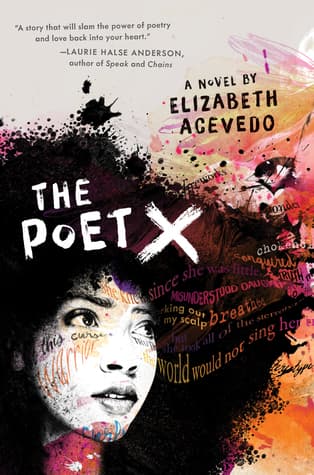
- The Poet X
Elizabeth Acevedo
4.4 (62k) average on GoodreadsYoung Adult"The Game of Love and Death" shares with "The Poet X" a strength in depicting a young person's struggle for identity and self-expression against societal and familial expectations. Both novels excel at character-driven narratives and the exploration of complex social issues, though Acevedo's work is contemporary realistic fiction while Brockenbrough's incorporates fantasy.
- The Starless Sea
Erin Morgenstern
3.9 (89k) average on GoodreadsFantasyWhile both books are fantastical, "The Starless Sea" offers a more deeply integrated and consistently explored magical system where the fantasy elements are inextricably linked to the world-building from the outset. In contrast, "The Game of Love and Death" sometimes uses its fantasy elements more as a narrative device to propel the romance, with the magical rules feeling less robustly established than Morgenstern's intricate mythologies.
- Harry Potter and the Sorcerer's Stone
J.K. Rowling
4.5 (7M) average on GoodreadsFantasyRescued from a miserable life under the stairs, an orphaned boy discovers he's a wizard destined for a magical school, where he uncovers a dangerous secret tied to the dark wizard who murdered his parents.
- The Hunger Games
Suzanne Collins
4.3 (6.4M) average on GoodreadsFantasyIn a future where children fight to the death on live television, Katniss Everdeen volunteers for the arena, turning a death sentence into a fight for survival and a spark of rebellion.





Enjoyed the summary?
A summary gives you the shape of the book. The book itself has the detail, the examples and the voice.
Find The Game of Love and Death on AmazonAs an Amazon Associate, BookBrief earns from qualifying purchases. How we're funded