
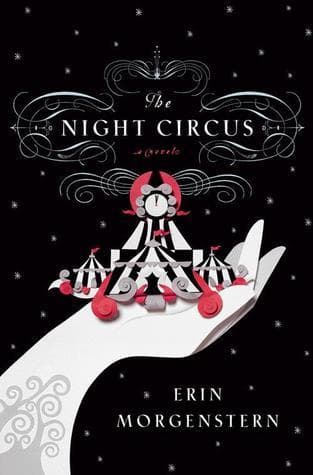
Synopsis
Covers the whole plot, including the ending.
- Difficulty
- Medium
- Pacing
- Slow
- Mood
- Atmospheric, Dreamlike, Romantic, Magical, Melancholy
- Read it if
- You love richly descriptive prose, atmospheric settings, and a slow-burn romance intertwined with a unique magic system.
- Skip it if
- You prefer fast-paced plots, clear-cut magic rules, or a more direct, less metaphorical narrative.
The Night Circus Plot Summary
Covers the whole plot, including the ending.
The Challenge is Set
In 1873, Prospero the Enchanter (Hector Bowen) faces the mysterious Mr. A.H. F.L. after a performance. Mr. F.L. proposes a 'game' — a magical competition between their students, with unknown rules and stakes, to unfold over many years. Prospero reluctantly agrees, choosing his young daughter, Celia Bowen, as his champion. Mr. F.L. finds an orphan boy, Marco Alisdair, in a London orphanage and begins his rigorous, isolated magical training. Both children are subjected to intense instruction, unaware of the other's existence or the challenge's true nature.
Le Cirque des Rêves Appears
Years later, in 1886, Le Cirque des Rêves, a black-and-white striped circus that only opens at night, appears without warning. Chandresh Lefèvre, a theatrical producer, creates it, unknowingly guided by Mr. F.L. and Prospero. The circus becomes the venue for the magical duel. Celia Bowen, now a young woman, is an illusionist, while Marco Alisdair is Chandresh's assistant. Neither initially recognizes the other as their opponent. The circus itself is a magical construct, constantly evolving with new tents and attractions, each a manifestation of the competitors' magic.
First Encounters and Unveiling
Celia creates a Wishing Tree and an Ice Garden for the circus, her magic tangible and often visible. Marco, working behind the scenes, weaves subtle enchantments into the circus, such as its spontaneous appearances and disappearances, and the intricate clock that displays time in various places. They communicate indirectly through their magical creations, leaving subtle clues for each other within the exhibits. Eventually, they meet, drawn by an undeniable pull, and through powerful magical interactions, they slowly realize they are the participants in the long-foretold challenge.
A Love Blooms Amidst Rivalry
As their magical contributions escalate and their interactions become more frequent, Celia and Marco are drawn to each other. Their shared magical understanding and unique pressures create a deep connection. They fall in love, a love that causes lights to flicker and warmth to emanate whenever they touch. This forbidden romance complicates the duel, as their bond blurs the lines of competition and cooperation. They begin to collaborate unknowingly through their magic, each building on the other's creations, making the circus even more extraordinary for its patrons, known as the 'Rêveurs'.
The Circus Family and Growing Tensions
The circus attracts an ensemble of performers and workers, including the contortionist Tsukiko, the fortune teller Isobel, and the twins Poppet and Widget, born within the circus with unique abilities. They form a close-knit family. However, the escalating magical duel between Celia and Marco takes a toll. The performers, unknowingly sustained by the magical energy of the competition, feel the effects of its intensity. Isobel, Marco's girlfriend, senses his growing affection for Celia and their magical connection, leading to heartbreak and jealousy, and she eventually leaves the circus.
Escalation and Danger
The duel between Celia and Marco becomes more intense and demanding. Prospero, Celia's father, manipulates her, pushing her to greater magical feats. Mr. F.L., more detached, observes Marco's progress. The magic within the circus grows more potent, but also more unstable. Celia, in a moment of anger at her father, accidentally causes a fire in the circus's stables, injuring Bailey, a young boy who frequently visits. This incident reveals the dangers of their uncontrolled magic and the potential harm it can inflict, forcing Celia to confront the darker side of her abilities.
The Reveal of the True Stakes
Through her own research and a cryptic conversation with Mr. F.L., Celia uncovers the true, horrifying stakes of the game: it is a duel to the death, where only one participant can survive. The loser will fade away, their life force absorbed by the winner and the circus itself. This revelation profoundly disturbs Celia, who cannot bear to harm Marco. She confronts her father, Prospero, about his deception, leading to an argument and her determination to find an alternative solution that does not involve Marco's death.
A Desperate Plan and a Sacrifice
Determined to break the cycle of the duel and save Marco, Celia devises a desperate plan. She realizes that if neither of them 'wins' or 'loses' in the traditional sense, the game might be circumvented. She plans to bind her life force to the circus itself, becoming part of its magic, effectively removing herself from the competition. Marco, after realizing the true stakes and Celia's plan, is horrified and attempts to stop her. However, he understands her resolve and, in an act of love and sacrifice, decides to join her in this magical binding, choosing to merge his own essence with hers and the circus.
The Binding and the Aftermath
In a climactic moment, Celia and Marco perform the binding ritual together. Their combined magic and life force merge with the fabric of Le Cirque des Rêves, making them immortal, ethereal caretakers of the magical world they helped create. They are no longer physically present in the same way, but their essences are intertwined with every tent, every illusion, every performance. Prospero, witnessing this, realizes the game has been broken in an unforeseen way. He himself begins to fade, his own life force inextricably linked to Celia's participation in the duel, and he vanishes, leaving behind only his top hat.
The Circus Endures
Years later, Le Cirque des Rêves continues its mysterious journey around the world, appearing and disappearing as always. It is sustained by the combined, eternal magic of Celia and Marco, who exist within its very essence, unseen but ever-present. The Rêveurs continue to flock to its gates, experiencing its wonders. Poppet and Widget, the twins, now grown, understand the truth of Celia and Marco's fate and become the new guardians of the circus, ensuring its magic endures. Bailey, the young boy who was once injured, eventually becomes part of the circus, having found his purpose within its magical embrace, and helps guide its future.
The Night Circus Characters
Celia Bowen
Protagonist
A talented illusionist bound by a magical duel, seeking connection and freedom.
Celia is the daughter of Prospero the Enchanter, trained from a young age in a precise, tangible form of magic. She is intelligent, sensitive, and deeply empathetic, yearning for genuine human connection despite her isolated upbringing. Her magic is often tied to physical creation and manipulation, making her illusions incredibly real. She struggles under the weight of her father's expectations and the deadly nature of the game, ultimately prioritizing love and life over victory.
Relationships: Prospero the Enchanter (Father and mentor, manipulative and demanding); Marco Alisdair (Rival and passionate lover); Chandresh Lefèvre (Employer and friend, unaware of her true nature)
Marco Alisdair
Protagonist
An orphaned magician with a subtle, conceptual style of magic, drawn into a dangerous competition.
Marco is an orphan taken in by Mr. A.H. F.L. and trained in a more abstract, conceptual form of magic, often weaving spells into the fabric of reality. He is intelligent, observant, and initially more detached than Celia, having grown up without a family. He works as Chandresh's assistant, unknowingly shaping the circus's magical properties from behind the scenes. His love for Celia challenges his mentor's teachings and his own understanding of the game.
Relationships: Mr. A.H. F.L. (Mentor, distant and enigmatic); Celia Bowen (Rival and passionate lover); Isobel (Girlfriend, later estranged due to his feelings for Celia)
Prospero the Enchanter (Hector Bowen)
Antagonist/Supporting
Celia's demanding and manipulative father, who initiates the magical duel.
Prospero is a renowned stage magician, arrogant and self-serving, who views magic as a performance and a means to an end. He trains Celia rigorously, pushing her to her limits, seeing her as an extension of his own ambition rather than an individual. He is ruthless in his pursuit of victory in the game, withholding crucial information from Celia and manipulating her emotions. His magic is powerful and theatrical, but ultimately destructive.
Relationships: Celia Bowen (Daughter and protégé, manipulated by him); Mr. A.H. F.L. (Rival and instigator of the game)
Mr. A.H. F.L.
Antagonist/Supporting
Marco's enigmatic and detached mentor, the other instigator of the magical duel.
Mr. A.H. F.L. is a mysterious and ancient figure, almost a force of nature, who takes Marco as his protégé. He embodies a more conceptual and less theatrical form of magic than Prospero. His motivations are obscure, driven by a desire for a pure, intellectual competition rather than personal glory. He is detached and observes the game with a philosophical interest, rarely interfering directly but always guiding Marco with subtle, often cryptic, instructions. He is an ancient being, possibly not entirely human.
Relationships: Marco Alisdair (Protégé, guided by him); Prospero the Enchanter (Rival and instigator of the game)
Chandresh Lefèvre
Supporting
The eccentric, visionary owner and creator of Le Cirque des Rêves.
Chandresh is a flamboyant and passionate theatrical producer who, unknowingly, becomes the human face and organizer of the Night Circus. He is a man of grand visions and meticulous taste, obsessed with creating a unique and wondrous experience. He is oblivious to the true magical duel unfolding beneath his nose, believing the impossible feats are merely brilliant illusions from his talented performers. He provides the structural framework for the magical competition.
Relationships: Marco Alisdair (Assistant, unknowingly a magical opponent); Celia Bowen (Performer, unknowingly a magical opponent)
Isobel
Supporting
A talented fortune teller and Marco's initial girlfriend, who senses the magical pull between him and Celia.
Isobel is a pragmatic and observant fortune teller within the circus, initially Marco's girlfriend. She has a deep connection to the circus and its subtle magic, sensing shifts and energies. She is fiercely independent and possesses a quiet strength. Her heart is broken when she realizes Marco's growing affection for Celia, leading her to leave the circus and Marco, unable to compete with a connection she cannot comprehend.
Relationships: Marco Alisdair (Girlfriend, later estranged); Tsukiko (Friend and fellow performer)
Poppet and Widget
Supporting
Twins born within the circus with unique magical abilities, who become its future guardians.
Poppet and Widget are fraternal twins born on the opening night of the circus. Poppet has the ability to see the future, often manifesting as glowing red threads. Widget has the ability to see and remember the past of objects and people. They are inseparable and embody the innocent wonder and inherent magic of the circus. They represent the future of the circus and its legacy, eventually understanding the truth of Celia and Marco's fate.
Relationships: Celia Bowen (Magical influence, seen as a maternal figure); Marco Alisdair (Magical influence, seen as a paternal figure); Bailey (Friend and fellow Rêveur)
Bailey
Supporting
A curious boy who loves the circus and eventually becomes deeply entwined with its fate.
Bailey is a young, imaginative boy from a small town who frequently visits the Night Circus, becoming one of its most devoted Rêveurs. He is observant, kind-hearted, and possesses an innate sense of wonder. He forms a bond with Poppet and Widget and is one of the few who truly understands the magic of the circus. He is indirectly affected by the duel, being injured in a magical accident caused by Celia. He eventually leaves his mundane life to join the circus permanently.
Relationships: Poppet (Friend); Widget (Friend)
The Night Circus Themes
Love vs. Competition
The novel's central conflict is the tension between the deadly magical competition and the love that grows between Celia and Marco. Their love, initially a complication, becomes the force that transcends and redefines the game. Instead of one dying, their love allows them to merge with the circus, creating a new, enduring solution. This theme is evident in their secret meetings, their collaborative magic, and their ultimate sacrifice to save each other, as seen when Celia plans to bind herself to the circus, and Marco chooses to join her.
“The game is not about winning. It is about not losing. It is about finding a way to exist.”
The Nature of Magic
The novel explores two distinct philosophies of magic, embodied by Prospero's theatrical, tangible magic and Mr. A.H. F.L.'s subtle, conceptual magic. Celia's magic is about creation and visible wonder (e.g., the Ice Garden), while Marco's is about weaving unseen enchantments into reality (e.g., the circus's appearance/disappearance). The circus itself shows how these different forms of magic, when combined, create something extraordinary. The story suggests that magic is not just about power, but about imagination, intention, and connection, reaching its peak when Celia and Marco's styles intertwine.
“The finest of the arts is the magic of the mind.”
Fate vs. Free Will
Celia and Marco are bound by a game initiated by their mentors, seemingly destined for a tragic end. However, their choices, particularly their decision to fall in love and then to defy the rules, show the power of free will. They refuse to be pawns in their mentors' game, actively seeking a third option that allows both of them to survive. This is highlighted by Celia's desperate search for an alternative to the 'death match' and Marco's decision to join her in binding themselves to the circus, thus choosing their own destiny.
“It is not a matter of choosing what is easy, or what is difficult, but what is right.”
The Power of Storytelling and Imagination
The Night Circus is a grand narrative, a continuously unfolding story created by magic and imagination. The 'Rêveurs' (dreamers) who follow the circus are essential to its existence; their belief and wonder fuel its magic. The circus thrives on the stories it tells through its attractions, and the characters, particularly Chandresh, are passionate about creating a unique experience. This theme emphasizes how shared imagination can create and sustain entire worlds, making the impossible tangible and giving meaning to existence, as seen in the enduring legacy of the circus.
“The circus arrives without warning. No announcements precede it. It is simply there, when yesterday it was not.”
Sacrifice and Immortality
The novel explores different forms of sacrifice and their relationship to immortality. The initial game demands the sacrifice of one life for the other's survival. However, Celia and Marco choose a different path: sacrificing their physical, mortal lives to become an intrinsic, immortal part of the circus. This act of self-transcendence allows their love and magic to live on eternally within the circus, contrasting with Prospero's forced sacrifice (fading away) and Mr. F.L.'s ancient, detached immortality. Their choice ensures the circus's eternal wonder.
“You may tell a tale that takes up an entire book, but the story will still come from a single idea.”
Plot Devices & Literary Techniques
The Game/Challenge
The magical duel between Celia and Marco, serving as the central conflict and narrative driver.
The 'game' is the core plot device, a lifelong magical competition between Celia and Marco orchestrated by their mentors. It provides the framework for their training, their rivalry, and their eventual love story. The unknown rules and deadly stakes create suspense and drive the characters' actions, forcing them to push the boundaries of their magic. The gradual revelation of the game's true nature, particularly the 'death match' aspect, creates a significant turning point and propels the protagonists to seek an alternative solution, ultimately shaping their destiny and the circus itself.
Le Cirque des Rêves (The Night Circus)
The magical black-and-white circus that serves as the setting and the embodiment of the magical duel.
The circus is more than just a setting; it is a living, breathing entity that functions as the stage, canvas, and ultimately, the ultimate prize/prison of the magical competition. Its black-and-white aesthetic, its nocturnal existence, and its impossible attractions are all manifestations of Celia and Marco's evolving magic. It is the physical representation of their creativity, their rivalry, and their love. The circus also acts as a repository of magic, absorbing the life force of the participants and becoming sustained by their combined essences, making it an active participant in the story rather than a passive backdrop.
The Rêveurs (Dreamers)
The devoted patrons of the circus, whose belief and wonder are integral to its magic.
The Rêveurs are the audience, the loyal followers of the circus who wear black-and-white scarves. They represent the power of belief and imagination. Their collective wonder and awe fuel the magic within the circus, making the impossible real. Their presence is a reminder that magic requires an audience to truly thrive. They are not merely observers but active participants in the circus's existence, their devotion implicitly acknowledged as a necessary component for the magic to endure, especially after Celia and Marco's binding.
The Twins (Poppet and Widget)
Characters with unique magical abilities who serve as observers, narrators, and future guardians of the circus.
Poppet and Widget, born on the circus's opening night, possess distinct magical abilities: Poppet sees the future (red threads), and Widget sees the past (memories linked to objects). They often provide glimpses into the broader magical context of the circus and the game, sometimes acting as innocent, prophetic narrators. Their unique perspective allows them to understand the deeper truths of the circus. They symbolize the continuation of the circus's magic and wonder, eventually becoming its guardians and ensuring its legacy beyond Celia and Marco's physical presence.
The Night Circus Quotes
“The circus arrives without warning. No announcements precede it. It is simply there, when yesterday it was not.”
“You may tell a story that is all about a maze, but all you are doing is walking in a maze of words.”
“It is a place where you can lose yourself and find yourself. A place where anything is possible.”
“He smiles, and it's a slow, unfolding smile, that reaches his eyes and fills them with light.”
“The finest of pleasures are those that are unexpected.”
“The world is a book, and those who do not travel read only one page.”
“The game has begun. The children are playing.”
“Even as she began to learn, she was already forgetting what it was like not to know.”
“There are two kinds of people in the world: those who dream and those who don't.”
“Sometimes the only way to get through something is to get through it.”
“It is a rare thing, to find a soulmate, and rarer still to find one in the right place at the right time.”
“The circus is a living, breathing thing.”
“He tasted like mint and magic.”
“The greatest works of art are born from the greatest passions.”
“Each tent is an entire world unto itself.”
Quiz
10 questions on the plot and the characters. Each answer comes with a short explanation.
Question 1
What is the name of the circus in 'The Night Circus'?
- The Circus of Dreams
- Le Cirque des Rêves
- The Midnight Marvel
- Cirque Fantastique
Show answer
B. Le Cirque des Rêves The circus is explicitly named 'Le Cirque des Rêves' in the book, which translates to 'The Circus of Dreams'.
Question 2
What is the primary color scheme of the circus tents and attractions?
- Red and Gold
- Purple and Silver
- Black and White
- Blue and Green
Show answer
C. Black and White The book frequently emphasizes the striking black and white aesthetic of the circus, from the tents to the performers' costumes, in contrast to typical colorful circuses.
Question 3
Who are the two main competitors in the magical duel at the heart of the story?
- Widget and Poppet
- Chandresh and Herr Thiessen
- Celia and Marco
- Isobel and Bailey
Show answer
C. Celia and Marco Celia Bowen and Marco Alisdair are the two protagonists who are unknowingly pitted against each other in the magical competition.
Question 4
What is Celia's unique magical ability or primary method of creation?
- She manipulates time and space.
- She enchants objects and illusions through direct touch and will.
- She uses spoken incantations and ancient spells.
- She communicates with spirits to manifest creations.
Show answer
B. She enchants objects and illusions through direct touch and will. Celia's magic is deeply tactile and visceral; she pours her will and essence directly into her creations, often shaping them with her hands.
Question 5
What role does Marco Alisdair primarily play within the circus itself, beyond his competition with Celia?
- He is the main illusionist performing on stage.
- He is the circus manager and organizer.
- He works as Chandresh's assistant, managing the logistics and often behind-the-scenes magic.
- He is one of the acrobats, performing daring feats.
Show answer
C. He works as Chandresh's assistant, managing the logistics and often behind-the-scenes magic. Marco works as Chandresh Lefèvre's assistant, using his magic to subtly influence the circus's creation and operation from the administrative side.
Question 6
What is the purpose of the competition between Celia and Marco, as defined by their mentors?
- To determine who is the most powerful magician in the world.
- To create the most breathtaking and immersive circus the world has ever seen.
- A duel of imagination and will, where only one contestant can ultimately survive.
- To prove the superiority of one magical lineage over another.
Show answer
C. A duel of imagination and will, where only one contestant can ultimately survive. The competition is framed as a long-standing, deadly game between their mentors, Hector Bowen and Alexander, designed to test the limits of their apprentices' magical abilities, with the understanding that only one can emerge victorious.
Question 7
What significant item does Tsukiko, the contortionist, wear that hints at her connection to the competition?
- A clockwork hummingbird pendant.
- A bracelet made of intertwined silver and black threads.
- A tattoo of a raven on her wrist.
- A ring with a moonstone setting.
Show answer
B. A bracelet made of intertwined silver and black threads. Tsukiko wears a bracelet that mirrors the intertwining fates of Celia and Marco, a detail that becomes more significant as the story progresses and her role as an observer/judge is revealed.
Question 8
What is the ultimate consequence for the competitors when the game reaches its climax?
- The loser's magic is stripped away, and they leave the circus forever.
- The winner becomes the sole proprietor of the circus, and the loser dies.
- They become permanently bound to the circus, maintaining its magic and existence.
- Their magic is merged, creating a new, more powerful entity.
Show answer
C. They become permanently bound to the circus, maintaining its magic and existence. To save each other and the circus, Celia and Marco choose to bind themselves to the circus, becoming its living heart and sustaining its magic indefinitely, effectively becoming ghosts within it.
Question 9
What role do the twins, Widget and Poppet, play in the narrative, particularly regarding the future?
- They are the new managers of the circus after Chandresh's departure.
- Widget can see glimpses of the past, and Poppet can see glimpses of the future.
- They are the children of Celia and Marco, born within the circus.
- They are the primary performers of the Illusionist's Tent.
Show answer
B. Widget can see glimpses of the past, and Poppet can see glimpses of the future. Widget and Poppet are born within the circus on a pivotal night. Widget possesses the ability to recall memories and see the past, while Poppet can sense and see glimpses of the future.
Question 10
What is the significance of the 'reveurs' (dreamers) to the circus's existence?
- They are the financial backers who fund the circus's operations.
- They are a secret society of magicians who protect the circus.
- They are devoted patrons who follow the circus, and their collective belief and devotion contribute to its magic and longevity.
- They are the original creators of the circus, who built it with ancient magic.
Show answer
C. They are devoted patrons who follow the circus, and their collective belief and devotion contribute to its magic and longevity. The 'reveurs' are the dedicated followers and fans of the circus who wear black, white, and grey. Their unwavering belief and emotional investment in the circus are essential to its magical sustenance and continued existence, as it feeds on their wonder.
The Night Circus FAQ
What is the central premise of 'The Night Circus'?
The novel centers on a magical, nocturnal circus, Le Cirque des Rêves, which serves as the hidden arena for a lifelong magical duel between two proteges, Celia Bowen and Marco Alisdair. They were unknowingly trained to compete in a game with fatal stakes, using the circus's attractions as their magical expressions, all while falling deeply in love.
Who are Celia Bowen and Marco Alisdair, and what is their relationship?
Celia Bowen is the daughter of Prospero the Enchanter and is trained in intuitive, illusion-based magic, often manipulating physical reality. Marco Alisdair is an orphan taken in by Alexander, a more ancient and subtle magician, and trained in theoretical, mental magic, often working behind the scenes. They are rivals in a magical duel but develop an intense, forbidden romance.
What is Le Cirque des Rêves, and how is it unique?
Le Cirque des Rêves, or 'The Circus of Dreams,' is a fantastical circus that appears without warning and is only open from dusk till dawn. Its tents are black and white, and each attraction, from the Ice Garden to the Cloud Maze, is a unique magical creation, often subtle and interactive, designed by Celia and Marco.
Who are the primary mentors, Prospero the Enchanter and Alexander, and what are their roles?
Prospero the Enchanter (Hector Bowen) is Celia's demanding father, who forces her into the magical competition, viewing it as a test of skill and legacy. Alexander is Marco's enigmatic mentor, an ancient, powerful figure who orchestrates the entire game, setting the rules and observing its unfolding without direct intervention.
What are the stakes of the magical duel between Celia and Marco?
Initially, Celia and Marco are unaware of the true stakes, believing it's a test of skill. However, the game is designed to continue until one competitor can no longer participate, which implies death or complete incapacitation. Their magic is linked to the circus, and its continued existence depends on their ongoing participation.
How does Bailey's storyline intertwine with the main plot?
Bailey, a young boy from a small town, becomes deeply enchanted by the circus and eventually runs away to join it. He serves as a 'rêveur' (dreamer) and later becomes crucial to the circus's survival, eventually taking on a more direct role in its magical perpetuation, guided by the remaining performers.
What is the significance of the 'rêveurs' and their red scarves?
The 'rêveurs' are devoted patrons of Le Cirque des Rêves who wear red scarves as a symbol of their connection and loyalty. They represent the audience's crucial role in sustaining the circus's magic and existence, as their belief and wonder provide energy for the magical creations.
What is the true nature of Alexander, and how does it relate to the competition?
Alexander is revealed to be a much older, possibly immortal, magical entity who has orchestrated similar duels across centuries. He sees these competitions as a way to explore and perpetuate magic, viewing the participants as pawns in a grand, ongoing magical experiment rather than individuals.
How does the magical bond between Celia and Marco affect the circus itself?
As Celia and Marco's love deepens and their magical expressions intertwine, the circus becomes a living extension of their shared magic. Their creations begin to merge and complement each other, inadvertently strengthening the circus as a whole, making it more vibrant and powerful, but also more dependent on their combined presence.
How does the 'game' reflect the psychological burdens of creative genius?
The game forces Celia and Marco to constantly push the boundaries of their creativity, but under immense pressure and without direct collaboration. This reflects the isolation and competitive aspects often faced by artists, where their creations are scrutinized and judged, sometimes to their detriment, even when born from passion.
Analyze the psychological impact of Prospero's parenting on Celia.
Prospero's cold, demanding, and manipulative parenting style instills a deep-seated need for approval and a fear of failure in Celia. She constantly strives to meet his impossible standards, leading to self-doubt and a sense of being used, which profoundly shapes her magical expression and her capacity for trust and love.
Discuss Marco's internal conflict regarding his loyalty to Alexander versus his love for Celia.
Marco is torn between his long-standing loyalty and gratitude to Alexander, who saved him from an orphanage, and his passionate, undeniable love for Celia. He struggles with the moral implications of the game and the potential harm to Celia, leading to significant internal turmoil and difficult choices about who he truly serves.
How does the circus itself act as a character with its own 'will' or influence?
The circus, through the combined magic of Celia and Marco and the belief of the 'rêveurs,' develops a palpable presence, almost a sentience. It responds to their emotions and magical contributions, growing more vibrant or subtly suffering, becoming a living entity that seems to desire its own continued existence, influencing events and connections.
Is the ending truly a 'happy' one, given the sacrifices made?
The ending is bittersweet. While Celia and Marco find a way to escape the direct, fatal terms of the game and remain together within the circus, they are essentially trapped within it, existing in a liminal state. They sacrifice their lives outside the circus and their individual identities to sustain their creation and each other, which some may view as a form of beautiful captivity rather than pure happiness.
What is the deeper meaning behind the black and white aesthetic of the circus?
The black and white aesthetic symbolizes the duality at the heart of the story: light and shadow, creation and destruction, life and death, and the two opposing magical styles of Celia and Marco. It also evokes a timeless, classic, and dreamlike quality, emphasizing the circus's separation from ordinary reality while allowing the vibrant magic within to stand out.
How does the novel explore the theme of free will versus destiny?
Celia and Marco are thrust into a predetermined duel, suggesting destiny, but their choices—particularly their decision to love and to find a third way—challenge this fate. The novel explores whether one can truly escape a path set out by others, ultimately suggesting that love and shared will can create a new, unexpected destiny.
What role does the passage of time play in the novel's narrative and themes?
The novel's non-linear narrative, jumping across different time periods, emphasizes the timeless nature of magic and the enduring quality of the circus. It also highlights how long Celia and Marco are unknowingly bound to their competition, showing the slow, gradual development of their skills, their love, and the circus itself over decades.
Could the duel have ended differently if Celia and Marco had known the rules from the start?
It's debatable. Knowing the fatal stakes might have either intensified their competition to a more destructive degree or, conversely, prompted them to seek a collaborative solution much earlier. Their ignorance allowed their magic and love to develop organically within the circus, making their eventual solution a product of their specific, unwitting journey.
About the author
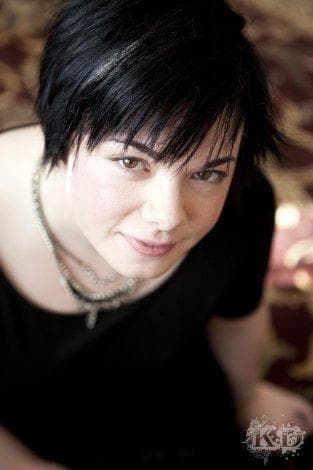
Erin Morgenstern is an American author known for her imaginative fiction. She gained recognition with her debut novel, The Night Circus, which features a magical competition between two young illusionists. Her second novel, The Starless Sea, explores themes of storytelling and adventure within a fantastical underground world.
Similar books
- Jonathan Strange & Mr Norrell
Susanna Clarke
3.8 (198k) average on GoodreadsFantasyFeatures rival magicians, historical setting, and a deep dive into the nature and consequences of magic.
- Circe
Madeline Miller
4.3 (343k) average on GoodreadsFantasyOffers beautiful prose, a strong sense of atmosphere, and a character-driven story with magical elements and romance.
- A Darker Shade of Magic
V.E. Schwab
4.1 (201k) average on GoodreadsFantasyBoth feature unique magic systems and compelling worlds. However, "A Darker Shade of Magic" offers a more action-oriented plot with a clearly defined magic system and parallel worlds, driving a faster pace. "The Night Circus" is more contemplative and atmospheric, leaving more to the imagination regarding its magic and focusing on a slower-burn narrative. Schwab's characters often have clearer external goals, while Morgenstern's are more bound by an internal, fated challenge.
- Harry Potter and the Sorcerer's Stone
J.K. Rowling
4.5 (7M) average on GoodreadsFantasyRescued from a miserable life under the stairs, an orphaned boy discovers he's a wizard destined for a magical school, where he uncovers a dangerous secret tied to the dark wizard who murdered his parents.
- The Hunger Games
Suzanne Collins
4.3 (6.4M) average on GoodreadsFantasyIn a future where children fight to the death on live television, Katniss Everdeen volunteers for the arena, turning a death sentence into a fight for survival and a spark of rebellion.
- 1984
George Orwell
4.2 (3.1M) average on GoodreadsPoliticsIn a future where surveillance and thought control are absolute, a man's search for truth clashes with the Party, showing that hope can be a form of rebellion.




Enjoyed the summary?
A summary gives you the shape of the book. The book itself has the detail, the examples and the voice.
Find The Night Circus on AmazonAs an Amazon Associate, BookBrief earns from qualifying purchases. How we're funded