
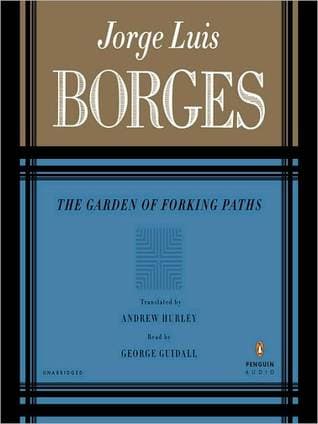
Synopsis
Covers the whole plot, including the ending.
- Difficulty
- Hard
- Pacing
- Moderate
- Mood
- Philosophical, Suspenseful, Labyrinthine, Contemplative
- Read it if
- You enjoy intricate philosophical puzzles wrapped in a spy thriller, and appreciate stories that challenge conventional notions of time and narrative.
- Skip it if
- You prefer straightforward plots with clear-cut resolutions and dislike stories that delve into abstract philosophical concepts.
The Garden of Forking Paths Plot Summary
Covers the whole plot, including the ending.
The Framing Device and Yu Tsun's Predicament
The story begins with an editor's note. It presents the narrative as a piece from the interrogation of Dr. Yu Tsun, a former English professor and Chinese spy for Germany in World War I. Yu Tsun is being chased by Captain Richard Madden, a British counter-intelligence agent. Yu Tsun just learned his contact, Viktor Runeberg, was arrested and tortured. Knowing his own capture is near, Yu Tsun realizes he has hours to tell German High Command the location of a new British artillery park. He decides his only choice is to give this information in a way that will confuse Madden and ensure delivery.
The Desperate Escape and the Name's Significance
Yu Tsun escapes a taxi and boards a train. He thinks about his ancestors, especially his great-grandfather Ts'ui Pen, a governor who gave up his position to write a long, complex novel and build a labyrinth. As he travels, Yu Tsun considers ways to share the secret. He rules out obvious methods and decides he must use an indirect, symbolic approach. The artillery park's name is 'Albert.' He concludes the only way to tell his chief this location, without being caught, is to kill a specific person named Albert. This would link the name to the secret in a British newspaper headline, which his chief would then understand.
Seeking Stephen Albert
Yu Tsun arrives at the train station and takes a taxi to Dr. Stephen Albert's house, guided by a child. He knows nothing about Albert but his name, yet he trusts his gut. The journey is tense; Yu Tsun is constantly aware of Madden's pursuit. He reaches a secluded, overgrown garden, which he immediately sees as labyrinth-like. Dr. Albert, an elderly scholar, greets him. Albert seems to have expected him, or at least a visitor interested in Ts'ui Pen.
The Revelation of Ts'ui Pen's Labyrinth
Dr. Albert, a sinologist, welcomes Yu Tsun. He explains he has spent years studying Ts'ui Pen's work. Albert reveals that Ts'ui Pen's labyrinth and his novel, 'The Garden of Forking Paths,' are the same thing. The novel is the labyrinth. It explores all possible outcomes of an event at once, where time constantly branches, creating endless parallel realities. Albert shows this by pointing out passages where characters make conflicting choices, yet all are shown as happening.
The Concept of Forking Time
Albert explains Ts'ui Pen's idea of time. Instead of a single, straight path, Ts'ui Pen believed time was a 'garden of forking paths,' a network of diverging, converging, and parallel futures. Every decision creates new branches of reality. In this view, the future is not set but an endless series of possibilities, all existing at once. Albert says Ts'ui Pen's novel reflects this, with chapters that contradict each other, not as mistakes, but as depictions of different timelines from one point.
Yu Tsun's Internal Conflict
Yu Tsun is deeply moved and intellectually stimulated by Albert's explanation. He feels a strong connection to his ancestor's brilliance and the philosophical meaning of Ts'ui Pen's work. The conversation goes beyond his immediate problem, offering a moment of pure intellectual pleasure and understanding. He briefly forgets his spy mission, lost in the beauty and complexity of Ts'ui Pen's vision. However, the approaching time and the threat of Captain Madden's arrival bring him back to his grim reality.
The Inevitable Act
As Albert finishes his explanation, Yu Tsun looks out the window and sees Captain Madden approaching. The crushing realization hits him: he must act now. The deep intellectual talk, the shared moment of understanding, must end. To tell his German chief the name 'Albert' (the British artillery park's location), Yu Tsun knows he must kill the man who just shared his ancestor's deepest secrets. The irony and tragedy are immense.
The Murder and the Arrest
With a heavy heart, knowing it is necessary, Yu Tsun pulls out his revolver and shoots Dr. Stephen Albert. The act is quick, shattering the peaceful scholarly atmosphere. Almost immediately after the shot, Captain Madden bursts in, having heard it. Yu Tsun offers no resistance and is arrested. He has succeeded in his mission, though at a terrible personal cost, knowing British newspapers will report 'Dr. Albert's' murder by 'the spy Yu Tsun,' thus sending the information to his German superiors.
The Aftermath and Yu Tsun's Justification
Yu Tsun, now in custody, knows his life is over. However, he finds a grim satisfaction knowing his message was sent. The German High Command, reading news of 'the Chinese spy Yu Tsun' murdering 'the sinologist Stephen Albert,' would immediately figure out 'Albert' was the name of the secret British artillery park. He sees his act as a necessary sacrifice for his country, a last, desperate move in a spy game where morals are less important than strategy. The story ends with Yu Tsun accepting his fate.
The Garden of Forking Paths Characters
Dr. Yu Tsun
Protagonist
A Chinese professor and German spy facing imminent capture.
Yu Tsun is a man of intellect and refined sensibilities, a former professor of English who now serves as a German spy during WWI. He is keenly aware of his heritage, particularly his great-grandfather Ts'ui Pen. Despite his dangerous profession, he possesses a philosophical mind and appreciates intellectual pursuits. He is driven by a sense of duty and a desire to prove his worth, perhaps compensating for a perceived lack of respect from his German chief. He is resourceful and determined, capable of making difficult, morally compromising decisions under extreme pressure.
Relationships: Captain Richard Madden (pursuer/adversary); Dr. Stephen Albert (victim/intellectual companion); Ts'ui Pen (great-grandfather/ancestral inspiration)
Dr. Stephen Albert
Supporting
A British sinologist and scholar of Ts'ui Pen's work.
Dr. Stephen Albert is a kind, elderly, and brilliant British sinologist. He has dedicated his life to deciphering the enigmatic legacy of Ts'ui Pen, Yu Tsun's great-grandfather. He is a man of profound intellectual curiosity and generosity, sharing his groundbreaking discoveries about Ts'ui Pen's 'Garden of Forking Paths' with Yu Tsun, unaware of his visitor's true intentions. He represents the pursuit of knowledge for its own sake and a deep understanding of complex philosophical concepts, particularly regarding time and narrative structure.
Relationships: Dr. Yu Tsun (intellectual companion/victim)
Captain Richard Madden
Antagonist
An Irish counter-intelligence agent pursuing Yu Tsun.
Captain Richard Madden is a relentless and efficient Irish counter-intelligence agent working for the British. He is Yu Tsun's primary pursuer, a symbol of the inescapable fate awaiting the spy. Madden is portrayed as cunning and determined, having already captured Yu Tsun's contact, Viktor Runeberg. He represents the forces of order and retribution in the espionage world, focused solely on his mission to apprehend the enemy agent. His presence creates the immediate urgency that drives Yu Tsun's desperate plan.
Relationships: Dr. Yu Tsun (pursuer/adversary)
Ts'ui Pen
Mentioned
Yu Tsun's great-grandfather, author of 'The Garden of Forking Paths'.
Ts'ui Pen was a brilliant and enigmatic governor who renounced his worldly position to create two seemingly disparate works: a vast, intricate novel and an equally complex labyrinth. For centuries, his novel was considered an incoherent mess, and his labyrinth was never found. Through Dr. Albert's research, Ts'ui Pen is revealed as a visionary who conceived of time as a 'garden of forking paths,' where all possible futures exist simultaneously. His work is the central philosophical and structural concept of the story.
Relationships: Dr. Yu Tsun (great-grandfather/ancestral figure); Dr. Stephen Albert (subject of study/interpreter)
Viktor Runeberg
Mentioned
Yu Tsun's fellow German spy, captured by Madden.
Viktor Runeberg is Yu Tsun's contact in the German spy network. His capture and subsequent torture at the hands of Captain Madden are the immediate catalysts for Yu Tsun's desperate plan. Runeberg's fate underscores the high stakes and brutal realities of espionage, highlighting the danger Yu Tsun faces and the urgency of his mission.
Relationships: Dr. Yu Tsun (fellow spy/contact)
The Garden of Forking Paths Themes
The Nature of Time and Reality
The main theme explores non-linear time and multiple realities. Ts'ui Pen's novel, 'The Garden of Forking Paths,' shows that all possible results of an event exist at once. Dr. Albert explains this, describing time not as a single path, but as an infinitely branching network of possibilities. The story itself, with Yu Tsun's choice to kill Albert, is just one path among many that could have happened. This deepens Borges's look at philosophy. It challenges how readers usually understand cause and effect and free will.
“In Ts'ui Pen's work, all possible outcomes occur; each one is the point of departure for other forking paths.”
Labyrinths and Mazes
Labyrinths work on many levels: a physical maze, a literary maze, and a time maze. Dr. Albert reveals that Ts'ui Pen's unbuilt labyrinth and his seemingly confusing novel are the same—a literary maze reflecting time's branching paths. Yu Tsun's desperate journey through the English countryside, searching for Albert, also becomes labyrinth-like, both physically and in his mental struggle to plan. The story itself is like a labyrinth, with its complex layers of narrative and philosophical side notes, inviting the reader to get lost in its details.
“The Garden of Forking Paths is an enormous riddle, or parable, whose theme is time.”
Duty vs. Morality
Yu Tsun faces a tough moral choice: to do his duty as a spy, he must commit a terrible act—killing an innocent man who just gave him deep intellectual insight and hospitality. His inner struggle shows the conflict between personal ethics and national loyalty or strategic needs. The story makes the reader confront the moral questions in espionage and wartime decisions, where human connection and morals are sacrificed for a larger, often abstract, cause. Yu Tsun's final act clearly shows this theme.
“I knew that the spy's name was Albert and that he had been murdered by a man named Yu Tsun.”
The Nature of Fiction and Storytelling
Borges explores the limits of storytelling through Ts'ui Pen's novel. The idea of a novel where characters make conflicting decisions, where every possible future is explored, challenges traditional linear narratives. The story implicitly asks what makes a 'complete' or 'clear' story. The editor's note also plays with the idea of fiction, presenting the narrative as a 'fragment' from a real interrogation. This blurs the lines between reality and invented story. It is a meta-narrative about creating and interpreting.
“I leave to the various futures (not to all) my garden of forking paths.”
Plot Devices & Literary Techniques
Framing Device
An editor's note introduces the narrative as a fragment of an interrogation.
The story begins with a brief editor's note, presenting Yu Tsun's confession as a 'fragment' from a larger document. This device immediately establishes a sense of verisimilitude and historical context, even though the events are fantastical. It creates an aura of authenticity and mystery, suggesting that the reader is privy to a secret, unearthed document. It also sets up the story's ending, as the 'confession' implicitly refers to the murder Yu Tsun is about to commit, adding an layer of dramatic irony from the outset.
Symbolic Action/Code
Yu Tsun's murder of Albert serves as a coded message.
The core of Yu Tsun's plan relies on a highly symbolic and indirect form of communication. Instead of transmitting the name 'Albert' through conventional means, he murders a man named Albert. This act, when reported in the British press, is intended to serve as a code for his German chief, who would understand the significance of a Chinese spy killing a man with the same name as the secret artillery park. This device is crucial for the plot's resolution and highlights the desperate ingenuity required in espionage, blurring the lines between information and violence.
Metafiction
The story comments on the nature of storytelling and its own construction.
Borges frequently employs metafiction, and 'The Garden of Forking Paths' is a prime example. The story features a novel within a story (Ts'ui Pen's 'The Garden of Forking Paths') that directly explores themes of narrative structure, time, and multiple realities. Dr. Albert's analysis of Ts'ui Pen's work can be seen as a commentary on Borges's own writing philosophy. This self-referential quality invites the reader to consider the story not just as a narrative, but as an intellectual puzzle and a meditation on the very act of creating and interpreting fiction.
Foreshadowing/Dramatic Irony
Hints of Yu Tsun's ultimate action are present from the beginning.
The editor's note at the beginning immediately informs the reader that Yu Tsun's confession concerns the 'murder of the sinologist Stephen Albert.' This creates a powerful sense of dramatic irony throughout the narrative, as the reader knows the tragic outcome long before Yu Tsun reaches Albert's house. Every interaction between Yu Tsun and Albert is tinged with this foreknowledge, making their intellectual exchange both profound and heartbreaking, as the audience is aware of the innocent man's impending doom and Yu Tsun's terrible purpose.
The Garden of Forking Paths Quotes
“I leave to the various futures (not to all) my garden of forking paths.”
“The Garden of Forking Paths is an enormous, but uncompleted, puzzle, a labyrinth that would reveal the infinite possibilities of time, not space.”
“In all fictional works, each time a man is confronted with several alternatives, he chooses one and eliminates the others; in the work of the virtually indispensable Ts'ui Pên, he chooses — simultaneously — all of them.”
“The author of an atrocious undertaking, he had to discover a name to be yelled to a city of 20,000,000 inhabitants.”
“The problem is how to make a book infinite.”
“He did not believe in a uniform, absolute time. He believed in an infinite series of times, in a growing, dizzying net of divergent, convergent and parallel times.”
“Every time he imagined a point of divergence, he would then imagine, in another branch, the other point of divergence.”
“From this we deduce that the Garden of Forking Paths is the novel, and the novel and the labyrinth are one and the same.”
“The future already exists, but in another way.”
“I had to kill him. The train was already moving.”
“An ancient Chinese secret; it must be a secret.”
“The solution to the enigma is always less spectacular than the enigma itself.”
“I foresaw that the British would decipher the name of the city, and that the Chief would be pleased.”
“He lived in a remote, almost deserted part of the country.”
Quiz
10 questions on the plot and the characters. Each answer comes with a short explanation.
Question 1
What is the protagonist's name in 'The Garden of Forking Paths'?
- Yu Tsun
- Stephen Albert
- Richard Madden
- Ts'ui Pên
Show answer
A. Yu Tsun The story follows Yu Tsun, a Chinese spy working for the Germans during World War I, as he attempts to convey crucial information.
Question 2
What is Yu Tsun's ultimate mission that he must complete before being captured by Captain Richard Madden?
- To steal classified British documents.
- To assassinate a German official.
- To transmit the name of a city targeted by British artillery.
- To decipher an ancient Chinese manuscript.
Show answer
C. To transmit the name of a city targeted by British artillery. Yu Tsun's mission is to communicate the location of a new British artillery park, specifically the city of Albert, to his German handlers.
Question 3
Who is Stephen Albert in the story?
- Yu Tsun's superior officer.
- The British agent pursuing Yu Tsun.
- A sinologist who has deciphered Ts'ui Pên's labyrinthine novel.
- The author of 'The Garden of Forking Paths'.
Show answer
C. A sinologist who has deciphered Ts'ui Pên's labyrinthine novel. Stephen Albert is a British sinologist who has dedicated his life to understanding the complex work of Yu Tsun's ancestor, Ts'ui Pên.
Question 4
What two distinct, yet related, works did Ts'ui Pên leave behind?
- A collection of poems and a historical atlas.
- A philosophical treatise and a book of proverbs.
- A labyrinth and a novel.
- A war strategy manual and a biography.
Show answer
C. A labyrinth and a novel. Ts'ui Pên's legacy consists of an actual physical labyrinth and a seemingly chaotic novel, both of which are revealed to be the same 'garden of forking paths'.
Question 5
How does Stephen Albert explain the nature of Ts'ui Pên's 'garden of forking paths'?
- It is a physical garden with multiple secret entrances and exits.
- It is a metaphor for the unpredictability of human destiny.
- It is a symbolic representation of the author's fragmented mind.
- It is a novel where all possible outcomes of an event occur simultaneously in different, diverging futures.
Show answer
D. It is a novel where all possible outcomes of an event occur simultaneously in different, diverging futures. Albert reveals that Ts'ui Pên's novel is a labyrinth of time, where every choice made by a character branches into an infinite number of alternative futures, all coexisting.
Question 6
What is the primary theme explored through the concept of Ts'ui Pên's novel?
- The futility of human ambition.
- The linear progression of history.
- The infinite possibilities and parallel universes arising from every decision.
- The importance of individual free will.
Show answer
C. The infinite possibilities and parallel universes arising from every decision. The 'garden of forking paths' is a profound exploration of branching timelines and the idea that all possible futures, resulting from every choice, exist simultaneously.
Question 7
How does Yu Tsun finally transmit his intelligence to the Germans?
- He sends a coded message through a neutral embassy.
- He writes the city's name in a newspaper advertisement.
- He murders Stephen Albert, whose name is identical to the target city.
- He uses a complex series of hand signals to a contact.
Show answer
C. He murders Stephen Albert, whose name is identical to the target city. Yu Tsun's desperate plan is to kill a man named Albert, knowing that the news of an English sinologist named Albert being murdered by a Chinese spy will be reported in the German press, thus revealing the target city's name (Albert).
Question 8
What philosophical concept is strongly implied by the structure of Ts'ui Pên's novel, as explained by Albert?
- Solipsism, the idea that only one's own mind is sure to exist.
- Determinism, where all events are predetermined and inevitable.
- Many-worlds interpretation, suggesting that every quantum measurement causes the universe to split into multiple copies.
- Existentialism, emphasizing individual existence, freedom, and responsibility.
Show answer
C. Many-worlds interpretation, suggesting that every quantum measurement causes the universe to split into multiple copies. The novel's structure, where all possible outcomes of every event occur, closely mirrors the 'many-worlds interpretation' in quantum mechanics, where the universe branches with every possible outcome of a quantum event.
Question 9
Why does Yu Tsun feel a moment of profound sadness and regret after carrying out his mission, despite its success?
- He realizes he has betrayed his own country.
- He recognizes the intellectual brilliance and kindness of Stephen Albert.
- He fears the immediate retribution from Captain Madden.
- He questions the morality of espionage in general.
Show answer
B. He recognizes the intellectual brilliance and kindness of Stephen Albert. Yu Tsun feels a deep regret because he has to murder Stephen Albert, a man he has come to respect and who has revealed profound intellectual insights to him, transforming him from a stranger to a victim.
Question 10
The story can be read as a meta-fictional commentary on the nature of storytelling itself. What aspect of storytelling does Ts'ui Pên's labyrinthine novel most directly challenge or redefine?
- The necessity of a clear protagonist and antagonist.
- The traditional linear progression of narrative time and singular plot.
- The use of descriptive language and vivid imagery.
- The importance of a definitive beginning, middle, and end.
Show answer
B. The traditional linear progression of narrative time and singular plot. Ts'ui Pên's novel, by presenting all possible outcomes and diverging futures simultaneously, fundamentally rejects the linear, singular narrative common in traditional storytelling, embracing instead a multi-faceted, branching structure.
The Garden of Forking Paths FAQ
What is the primary goal of the protagonist, Dr. Yu Tsun, at the beginning of the story?
Dr. Yu Tsun, a former professor of English and a German spy, is attempting to relay crucial information about a new British artillery park to his German superiors. He has discovered its location in Albert and needs to communicate this intelligence before Captain Richard Madden, a British agent, apprehends him.
Who is Stephen Albert, and what is his connection to Yu Tsun's great-grandfather?
Stephen Albert is a Sinologist who has dedicated his life to studying and reconstructing the labyrinthine novel and philosophical project of Yu Tsun's great-grandfather, Ts'ui Pên. Albert believes he has deciphered Ts'ui Pên's true intentions and the structure of his work, which embodies the concept of 'a garden of forking paths'.
How does Yu Tsun manage to escape Captain Madden's pursuit to reach Stephen Albert's house?
Yu Tsun boards a train, buying a ticket for a distant station, but disembarks two stops early to avoid detection. He then walks a considerable distance through the countryside to reach Stephen Albert's isolated house, hoping to find a way to transmit his message.
What is the crucial piece of information Yu Tsun needs to convey, and how does he plan to do it?
Yu Tsun needs to convey the name of the city where the new British artillery park is located: Albert. His plan is to murder Stephen Albert, knowing that the news of a Chinese spy murdering a Sinologist named Albert will be reported in the British press and thus reach his German chief, Viktor Runeberg, signaling the target.
What is the significance of the phrase 'a garden of forking paths' as explained by Stephen Albert?
Stephen Albert explains that 'a garden of forking paths' is not a physical garden, but Ts'ui Pên's novel and his vision of time. It represents a vast, intricate labyrinth where all possible futures, even contradictory ones, exist simultaneously and eternally, constantly branching and converging.
What is the historical context mentioned by Yu Tsun regarding his great-grandfather, Ts'ui Pên?
Yu Tsun mentions that Ts'ui Pên, a governor of Yunnan, abandoned his position to create two things: a vast labyrinth and a novel that was to be even more labyrinthine. He was murdered before he could complete either, leaving behind only the fragmented, seemingly incoherent manuscript of the novel.
How does Albert's understanding of Ts'ui Pên's novel resolve its apparent contradictions?
Albert realizes that the novel's contradictions and seemingly illogical shifts in plot are not errors but deliberate representations of Ts'ui Pên's philosophy of time. Each 'fork' in the narrative represents a divergent path of reality, where different outcomes of the same event coexist.
What is the symbolic connection between Ts'ui Pên's physical labyrinth and his novel?
The physical labyrinth, which was never found, is symbolically mirrored by the novel itself. The novel is the true, conceptual labyrinth, a maze of time and narrative possibilities rather than physical space. Ts'ui Pên's initial goal was to create a spatial labyrinth, but his genius led him to create a temporal one through his writing.
How does Yu Tsun rationalize his decision to murder Stephen Albert, despite their intellectual connection?
Yu Tsun rationalizes the murder as a necessary act of duty and a means to prove his loyalty and intelligence to his German chief. He sees it as the only viable path to transmit his message and redeem himself as a spy, even though he acknowledges Albert's profound genius and kindness.
What psychological impact does the concept of 'forking paths' have on Yu Tsun?
The concept of 'forking paths' initially provides Yu Tsun with a moment of intellectual and emotional catharsis, as he grapples with the weight of his singular, irreversible choice to betray Albert. It offers a fleeting glimpse into a universe where his actions might not be so absolute, yet he is ultimately bound by the exigencies of his mission.
How does Yu Tsun's identity as a Chinese man working for Germany influence his actions and motivations?
Yu Tsun's identity as a Chinese man working for Germany creates a sense of alienation and a heightened need to prove himself. He feels like an outsider, under suspicion, which intensifies his drive to succeed in his mission and make a significant contribution, even if it involves a morally reprehensible act.
Describe the emotional state of Yu Tsun in the moments leading up to and immediately after killing Albert.
Yu Tsun experiences a complex mix of admiration, regret, and grim determination. He feels a profound intellectual connection with Albert, making the act more agonizing. Immediately after, there's a sense of chilling finality and the stark realization of his irreversible choice, coupled with the grim satisfaction of having completed his mission.
What philosophical implications does Ts'ui Pên's 'garden of forking paths' have for free will versus determinism?
Ts'ui Pên's work suggests a universe where all possible outcomes and choices already exist, challenging the conventional notion of a single, linear future determined by individual free will. It implies a form of 'many-worlds' interpretation where every choice branches off into a new reality, making all actions simultaneously free and predetermined within the grand tapestry of possibilities.
Is Stephen Albert a purely innocent victim, or does his fascination with Ts'ui Pên's work implicitly draw him into the 'labyrinth' of fate?
While Albert is an innocent victim of Yu Tsun's espionage, his deep immersion in Ts'ui Pên's philosophy of branching timelines could be seen as a metaphorical 'drawing into the labyrinth.' His life's work is centered on a concept that ultimately manifests in his own death as a crucial 'fork' in Yu Tsun's path, making his demise both random and strangely fated within the story's themes.
How does the story challenge the reader's perception of time and reality?
The story profoundly challenges linear perceptions of time and reality by presenting a universe where all possibilities coexist. It forces the reader to consider that every decision, every 'fork in the path,' creates a new reality, blurring the lines between what 'is' and what 'could have been,' and suggesting an infinite, branching multiverse.
Could Yu Tsun have found another way to transmit his message without resorting to murder?
Within the constraints of the narrative, Yu Tsun believes murder is his only option, given his imminent capture and the need for a public, unambiguous signal. While other fictional possibilities might exist, the story emphasizes his desperate situation and the spy's need for a method that ensures the message's delivery and his own perceived redemption.
What is the significance of the labyrinth motif in the story, beyond Ts'ui Pên's novel?
Beyond Ts'ui Pên's novel, the labyrinth motif extends to Yu Tsun's own journey and moral dilemma. He is caught in a labyrinth of espionage, pursuit, and difficult choices, with his path leading inexorably towards a violent act. The story itself, with its nested narratives and philosophical digressions, can also be seen as a literary labyrinth for the reader.
About the author
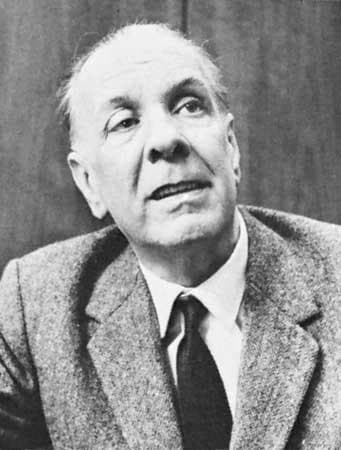
Jorge Francisco Isidoro Luis Borges Acevedo was an Argentine short-story writer, essayist, poet and translator, as well as a key figure in Spanish-language and international literature. His best-known books, Ficciones (Fictions) and El Aleph, published in the 1940s, are collections of short stories exploring themes of dreams, labyrinths, chance, infinity, archives, mirrors, fictional writers and mythology. Borges's works have contributed to philosophical literature and the fantasy genre, and have had a major influence on the magic realist movement in 20th century Latin American literature.
Similar books
- Ficciones
Jorge Luis Borges
4.4 (49k) average on GoodreadsFantasyCollection of short stories featuring similar themes of labyrinths, time, and identity.
- The Library of Babel
Jorge Luis Borges
4.4 (6k) average on GoodreadsFantasyExplores infinite possibilities and the nature of knowledge within a fantastical setting.
- Cloud Atlas
David Mitchell
4.0 (216k) average on GoodreadsLiterary FictionFeatures interconnected narratives and explores complex structures of time and destiny.
- One Hundred Years of Solitude
Gabriel García Márquez
4.1 (753k) average on GoodreadsLiterary FictionWhile both Borges and García Márquez are titans of Latin American literature and employ elements of magical realism, their approaches differ significantly. García Márquez's 'One Hundred Years of Solitude' creates a sprawling, cyclical narrative steeped in myth and folklore, focusing on the multi-generational saga of the Buendía family. Its magical realism is often organic and integrated into the fabric of daily life, creating a sense of wonder and inevitability within a linear, albeit fate-bound, timeline. In contrast, Borges's 'The Garden of Forking Paths' is far more concise and intellectually rigorous. It directly deconstructs the very notion of linear time and causality through its philosophical conceit, rather than portraying a magical reality. Borges's magic is in the idea of infinite possibilities, while García Márquez's magic is in the experience of the impossible made real. Borges's characters are often intellectual ciphers, whereas García Márquez's are deeply rooted in their emotional and historical context. As noted by critics like Menton (1974), García Márquez's world is one of exuberant creation, while Borges's is one of meticulous intellectual architecture.
- Harry Potter and the Sorcerer's Stone
J.K. Rowling
4.5 (7M) average on GoodreadsFantasyRescued from a miserable life under the stairs, an orphaned boy discovers he's a wizard destined for a magical school, where he uncovers a dangerous secret tied to the dark wizard who murdered his parents.
- The Hunger Games
Suzanne Collins
4.3 (6.4M) average on GoodreadsFantasyIn a future where children fight to the death on live television, Katniss Everdeen volunteers for the arena, turning a death sentence into a fight for survival and a spark of rebellion.




Enjoyed the summary?
A summary gives you the shape of the book. The book itself has the detail, the examples and the voice.
Find The Garden of Forking Paths on AmazonAs an Amazon Associate, BookBrief earns from qualifying purchases. How we're funded