

Synopsis
Covers the whole plot, including the ending.
- Difficulty
- Hard
- Pacing
- Variable
- Mood
- Philosophical, Epic, Thought-provoking, Adventurous, Melancholy
- Read it if
- You enjoy complex, interconnected narratives, philosophical themes about identity and humanity, and genre-bending stories that span centuries.
- Skip it if
- You prefer linear plots, easily digestible prose, or struggle with multiple narrative voices and incomplete initial story arcs.
Cloud Atlas Plot Summary
Covers the whole plot, including the ending.
The Pacific Journal of Adam Ewing
Adam Ewing, an American notary from San Francisco, keeps a journal during his journey from the Chatham Islands home in 1850. He sees the harsh treatment of Moriori natives by Maori settlers and becomes friends with Autua, a freed slave. During the trip, Ewing gets sick with a strange parasitic worm, and the ship's doctor, Henry Goose, starts treating him. Goose's treatments, however, seem to make Ewing worse. Autua, noticing Dr. Goose's suspicious actions, warns Ewing, eventually saving him from Goose's plan to poison him for his valuables. Ewing recovers and promises to dedicate his life to ending slavery, having seen the wrongs in the Chatham Islands and survived Dr. Goose's betrayal.
Letters from Zedelghem
Robert Frobisher, a poor and bisexual English composer, writes letters to his lover, Rufus Sixsmith, in 1931 from Zedelghem, Belgium. He works as an assistant to the old, sick maestro Vyvyan Ayrs, hoping to finish his main work, the 'Cloud Atlas Sextet.' Frobisher gets involved in Ayrs's household, having an affair with Ayrs's wife, Jocasta, and developing a complicated relationship with their daughter, Eva. He finds out that Ayrs is trying to steal his music, especially the 'Cloud Atlas Sextet.' Frobisher confronts Ayrs, gets beaten, finishes his sextet, and then, feeling both despair and victory, kills himself in a hotel room in Bruges.
Half-Lives: The First Luisa Rey Mystery
Luisa Rey, a determined investigative journalist in 1975 California, meets Rufus Sixsmith, an old nuclear physicist, in a hotel elevator. Sixsmith, before his apparent suicide, gives her Robert Frobisher's letters and hints at a dangerous cover-up at the Seaboard Corporation's new nuclear power plant in Swellendam. Luisa, with help from Sixsmith's niece, Megan, and later Joe Napier, a security chief, investigates the plant. She finds proof of the plant's faulty design and the corporation's plan to cause a meltdown for money. Luisa faces several attempts on her life by Lloyd Hooks, a Seaboard hitman, but eventually exposes the conspiracy with Napier's help, though Sixsmith's original report is lost.
The Ghastly Ordeal of Timothy Cavendish
Timothy Cavendish, a sixty-something publisher in present-day England, finds himself in trouble after his criminal brother, Denholme, sends him to a harsh nursing home called Aurora House. Mistaken for Denholme, Timothy is trapped by the strict Nurse Noakes and her abusive staff. He tries several escape plans, befriending other residents like Ernie. While confined, he thinks about his life, his failed publishing career, and the manuscript he is editing: 'Half-Lives: The First Luisa Rey Mystery.' Eventually, with help from some fellow residents, Timothy makes a dramatic escape from Aurora House, ending up in a remote pub where he tells his story.
An Orison of Sonmi~451
Sonmi~451, a 'fabricant' (a genetically engineered clone) server in a fast-food restaurant in Neo-Seoul, Korea, tells her life story to an archivist after being called an 'ascended' clone. First a quiet server, Sonmi is recruited by Hae-Joo Im, a member of the Union, an underground rebel group. She learns the truth about fabricants – that they are harvested for their protein after they are no longer useful. Sonmi gets advanced education, falls in love with Hae-Joo, and becomes a symbol of rebellion against the corporate-controlled society. This leads to her public broadcast of the truth about fabricants before her execution.
Sloosha's Crossin' an' Ev'rythin' After
Zachry, a goat herder in a world after the apocalypse in Hawaii, lives in a simple society called the Valley, long after 'The Fall.' Meronym, an Elder from a technologically advanced but shrinking civilization called the Prescients, visits him. Meronym seeks a star-map from the ruins of Mauna Kea. Zachry goes with her, facing dangers from the cannibalistic Kona tribe. During their journey, Meronym tells the stories of 'Sonmi~451' and the world before 'The Fall.' Zachry helps Meronym find her equipment, and they escape the Kona. Later, Zachry, now an old man, tells his grandchildren his story, having eventually left Earth with Meronym to settle a new planet.
An Orison of Sonmi~451 (Part 2)
Continuing her 'orison,' Sonmi~451 describes the end of her revolutionary journey. After escaping the corporate stronghold with Hae-Joo Im, she is taken to a hidden facility where she records her 'Declaration,' revealing the systematic use and eventual 'repurposing' of fabricants into 'Soap' (food for future fabricants). Sonmi understands that her rebellion and broadcast are part of a larger, planned strategy by the Union to awaken humanity, even if it means her death. She delivers her message to the world, becoming a martyr and a religious figure for future generations, before authorities execute her.
The Ghastly Ordeal of Timothy Cavendish (Part 2)
After his escape from Aurora House, Timothy Cavendish finds safety in a remote pub, thinking about his incredible experience. He finishes editing 'Half-Lives: The First Luisa Rey Mystery' and sees it published, surprising and delighting him. Despite his initial dislike for the manuscript, he grows to appreciate its adventurous spirit. He also makes up with his brother Denholme, though reluctantly. Timothy's time in Aurora House, while scary, forces him to face his own self-importance and the fragility of his life, leading to a deep, if late, sense of humility and a new appreciation for freedom.
Half-Lives: The First Luisa Rey Mystery (Part 2)
Luisa Rey, having survived several attempts on her life by Lloyd Hooks and his helpers, continues her investigation into the Seaboard Corporation. With help from security chief Joe Napier, she gets into the nuclear plant. They find clear proof of the faulty reactor design and the planned meltdown. Despite their success in revealing the conspiracy, Rufus Sixsmith's important report is destroyed in a fight, leaving Luisa with a moral victory but no hard evidence for public prosecution. She publishes her story, though, relying on her journalistic integrity and the testimonies she gathered to bring out the truth.
Letters from Zedelghem (Part 2)
Robert Frobisher's letters end with his artistic breakthrough and personal despair. He describes finishing his 'Cloud Atlas Sextet,' a work he believes will define his legacy. His relationship with Vyvyan Ayrs gets worse as Ayrs tries to claim credit for Frobisher's work. Frobisher, having secured the final pages of his sextet, leaves Ayrs's estate. He thinks about his difficult life, his love for Rufus Sixsmith, and his artistic goal. In a final, emotional letter, he describes his decision to take his own life in a hotel room in Bruges, having achieved his artistic purpose but unable to find peace.
The Pacific Journal of Adam Ewing (Part 2)
Adam Ewing's journal ends with his recovery and new purpose. Autua, the freed slave, saves Ewing from Dr. Goose's final, deadly dose of poison, revealing Goose's true plan to steal Ewing's belongings. Ewing, barely alive, sees Goose die and is nursed back to health. The experience changes him deeply. He thinks about how all beings are connected and the universal fight against control. He decides to return to California and dedicate his life to the abolitionist movement, understanding that true freedom and justice go beyond personal survival to the liberation of all enslaved people.
Principal Figures
Adam Ewing
Protagonist
An American notary who witnesses injustice and survives treachery in 1850
Adam Ewing is an American notary from San Francisco, a man of conscience and moral uprightness. Initially somewhat naive, he is deeply affected by the injustices he witnesses, particularly the exploitation of the Moriori people and the institution of slavery. He values fairness and truth, and his journal reflects his evolving understanding of human cruelty and kindness. His near-death experience at the hands of Dr. Goose solidifies his resolve to fight for a better world.
Relationships: Autua (Friend and savior); Dr. Henry Goose (Deceitful physician and attempted murderer)
Robert Frobisher
Protagonist
A talented but disgraced bisexual composer in 1930s Belgium
Robert Frobisher is a brilliant, rebellious, and self-destructive English composer. Disinherited by his family, he is driven by a passionate desire to create a masterpiece, the 'Cloud Atlas Sextet.' He is charismatic but also manipulative, engaging in affairs and struggling with financial hardship. His letters reveal his artistic struggles, his deep love for Rufus Sixsmith, and his cynical view of the world, ultimately leading to his tragic end.
Relationships: Rufus Sixsmith (Lover and confidant); Vyvyan Ayrs (Employer, mentor, and rival); Jocasta Ayrs (Lover)
Luisa Rey
Protagonist
A tenacious investigative journalist uncovering a nuclear conspiracy in 1970s California
Luisa Rey is a courageous and ethical journalist in 1975, driven by a strong sense of justice. She is intelligent, persistent, and unafraid to challenge powerful corporations. Her determination to expose the truth about the Seaboard Corporation's nuclear plant puts her life in grave danger, but she refuses to back down. She is a symbol of journalistic integrity and the fight against corporate corruption.
Relationships: Rufus Sixsmith (Source of information and mentor figure); Joe Napier (Ally and protector); Lloyd Hooks (Antagonist, hitman)
Timothy Cavendish
Protagonist
A bumbling vanity publisher trapped in a dystopian care home
Timothy Cavendish is a pompous, self-important, and somewhat hapless sixty-something vanity publisher. He is prone to self-pity and exaggeration, but beneath his bluster, he possesses a surprising resilience and a love for storytelling. His involuntary incarceration in Aurora House forces him to confront his own limitations and the harsh realities of life, leading to a belated but genuine appreciation for freedom and friendship.
Relationships: Denholme Cavendish (Antagonistic brother); Nurse Noakes (Antagonist, abusive nurse); Ernie (Fellow resident and friend)
Sonmi~451
Protagonist
A cloned fabricant who becomes a symbol of rebellion against corporate slavery
Sonmi~451 is a genetically engineered clone, or 'fabricant,' in a futuristic Neo-Seoul. Initially a docile server, she develops self-awareness and a profound understanding of her society's injustices. She is intelligent, empathetic, and courageous, choosing to sacrifice her life to expose the truth about fabricants and inspire a revolution. She becomes a revered deity in the post-apocalyptic future, a symbol of freedom and consciousness.
Relationships: Hae-Joo Im (Mentor, lover, and fellow rebel); The Archivist (Interrogator and recorder of her 'orison')
Zachry
Protagonist
A goat herder navigating a perilous post-apocalyptic Hawaii
Zachry is a young goat herder living in a primitive, post-apocalyptic Hawaii. He is resourceful, superstitious, and initially fearful of the outside world and the 'Old Uns' (pre-Fall civilization). He is a survivor, guided by his family's traditions and his own innate curiosity. His journey with Meronym exposes him to the stories of the past and the possibility of a different future, challenging his ingrained beliefs.
Relationships: Meronym (Mentor and companion); Older Georgie (Antagonistic brother-in-law)
Autua
Supporting
A freed slave who saves Adam Ewing's life
Autua is a freed Moriori slave who serves as a crewman on the same ship as Adam Ewing. He is observant, resourceful, and possesses a strong moral compass. Despite his own traumatic past, he demonstrates immense compassion and bravery by warning and ultimately saving Ewing from Dr. Goose's treachery. He represents the resilience of the oppressed and the power of human connection across racial divides.
Relationships: Adam Ewing (Friend and person he saves)
Rufus Sixsmith
Supporting
A nuclear physicist and a crucial link between narratives
Rufus Sixsmith is a nuclear physicist who appears in two distinct timelines: as Robert Frobisher's lover in the 1930s and as an elderly, concerned scientist in the 1970s. He is intelligent, principled, and deeply loyal. His letters from Frobisher provide a vital clue for Luisa Rey, and his integrity drives him to expose the dangers of the Seaboard Corporation, even at the cost of his own life. He embodies the enduring impact of personal relationships and the pursuit of truth.
Relationships: Robert Frobisher (Lover); Luisa Rey (Informant and catalyst for her investigation)
Dr. Henry Goose
Antagonist
A deceitful physician who attempts to murder Adam Ewing
Dr. Henry Goose is the ship's physician on Adam Ewing's voyage. He presents himself as a benevolent and knowledgeable doctor but is, in reality, a greedy and murderous individual who preys on the vulnerable. He systematically poisons Ewing to steal his valuables, representing the insidious nature of human evil and the abuse of trust. His character highlights the dark side of human nature and the dangers of unchecked avarice.
Relationships: Adam Ewing (Victim of his murderous plot)
Meronym
Supporting
A Prescient Elder who guides Zachry and preserves knowledge
Meronym is an Elder from the technologically advanced but dwindling Prescient civilization in post-apocalyptic Hawaii. She is intelligent, pragmatic, and dedicated to preserving knowledge and understanding the past. She serves as a mentor to Zachry, sharing stories of the 'Old Uns' and offering a broader perspective on history. She represents the enduring human quest for knowledge and the hope for survival and progress, even after catastrophe.
Relationships: Zachry (Protégé and companion)
Themes & Insights
Interconnectedness and Reincarnation
The novel clearly explores the idea that all lives are connected across time and space, appearing in different bodies and situations. The recurring comet birthmark on various main characters shows this most vividly, suggesting a cycle of existence and the movement of lives. The story's structure, with its nested tales and return to the start, strengthens this theme, showing how actions in one era affect others. For example, Adam Ewing's journal is read by Robert Frobisher, whose letters are read by Luisa Rey, and so on, creating a direct chain of influence and shared experience. The 'Cloud Atlas Sextet' also represents this theme with its interwoven melodies.
“Our lives are not our own. From womb to tomb, we are bound to others, past and present, and by each crime and every kindness, we birth our future.”
The Cycle of Oppression and Liberation
A main theme is the constant struggle between those who want to control and use others, and those who fight for freedom and fairness. Each story shows a different kind of control: the Moriori by the Maori and Europeans (Adam Ewing), artistic theft (Robert Frobisher), corporate greed (Luisa Rey), abuse in a care home (Timothy Cavendish), and systematic slavery (Sonmi~451). On the other hand, each main character, or a key supporting character, actively works for freedom, whether through ending slavery, exposing corruption, or starting a revolution. The cycle suggests that while the forms of control change, the human desire for freedom lasts, with each act of resistance adding to a larger, ongoing struggle.
“To be enslaved and to be free are not two states of being, but a single, endless war.”
The Power of Storytelling and Art
The novel itself shows the power of stories. Each part is a different kind of narrative – a journal, letters, a thriller manuscript, a memoir, an 'orison,' and an oral history – showing how stories shape understanding, inspire action, and keep memories alive. The 'Cloud Atlas Sextet' acts as a strong artistic link, inspiring Frobisher and later becoming a symbol of hope. The Prescients' preservation of Sonmi~451's 'orison' highlights how stories become myths and foundations for future societies. These stories allow characters, and by extension the reader, to connect with past lives and learn from history, emphasizing art's role in telling truth and building empathy.
“A book is a mirror: if an ape looks in, no apostle looks out.”
Humanity's Impact on the Environment and Future
The novel gradually shows the harm to the environment and the results of human actions across different periods. From the early industrial growth hinted at in Ewing's time, to the nuclear threat in Luisa Rey's story, and finally to Zachry's post-apocalyptic world, humanity's destructive impact is a repeated idea. 'The Fall' in Zachry's timeline is a direct result of unchecked technology and environmental neglect, serving as a clear warning. The difference between the advanced but dying Prescient civilization and the simple Valley dwellers highlights how fragile progress is and how society can collapse if people do not act responsibly.
“The greater the power, the greater the number of children whose lives will be blighted to fuel it.”
Plot Devices & Literary Techniques
Nested Narrative Structure
Six stories presented as fragments within fragments, then reversed
The novel employs a unique nested narrative structure, where each story is incomplete, interrupted by the beginning of the next, until the central story (Zachry's) is reached. The narrative then reverses, completing each story in reverse order. This structure mirrors the theme of interconnectedness, as each character encounters a 'relic' of the previous story (e.g., Ewing's journal, Frobisher's letters, Luisa Rey's manuscript), creating a literal chain that binds the timelines and characters together. It also builds suspense and encourages the reader to actively piece together the overarching plot and themes.
The Comet Birthmark
A physical symbol of a recurring soul across different lives
The comet-shaped birthmark is a subtle but powerful symbol that appears on the shoulder of various protagonists throughout the different timelines: Adam Ewing, Robert Frobisher, Luisa Rey, Timothy Cavendish, Sonmi~451, and Zachry. This physical mark serves as a visual representation of the novel's central theme of reincarnation and the transmigration of souls. It suggests that these characters are manifestations of the same soul, or a closely linked cluster of souls, experiencing different lives and struggles across centuries, reinforcing the idea that 'our lives are not our own.'
The 'Cloud Atlas Sextet'
A musical composition that transcends time and connects characters
The 'Cloud Atlas Sextet' is a fictional musical masterpiece composed by Robert Frobisher. It is described as having six interwoven voices that are distinct yet blend into a harmonious whole, mirroring the novel's own structure and themes. The sextet is heard or referenced by characters in subsequent timelines (Luisa Rey, Timothy Cavendish, Sonmi~451), acting as a powerful artistic and emotional link. It represents the enduring power of art to communicate across generations and cultures, embodying the novel's message of interconnectedness and the cyclical nature of creation.
The Archivist's Interrogation
A framing device for Sonmi~451's 'orison'
Sonmi~451's 'orison' (a recorded testimony) is framed as an interrogation by an unnamed Archivist. This device allows Sonmi to recount her entire life story from a retrospective, knowing perspective, providing a comprehensive account of her society and her role in the rebellion. The Archivist's questions guide the narrative, adding layers of context and subtly revealing the dystopian nature of Sonmi's world. This framing device also serves to emphasize the importance of historical record and the creation of a foundational myth for future generations, as her 'orison' becomes a sacred text.
Cloud Atlas Quotes
“Our lives are not our own. From womb to tomb, we are bound to others. Past and present. And by each crime and every kindness, we birth our future.”
“A half-read book is a half-finished love affair.”
“To be is to be perceived, and to be perceived is to be in time.”
“The better you know someone, the less you can say about them.”
“Truth is singular. Its 'versions' are mistruths.”
“All boundaries are conventions, waiting to be transcended. One may transcend any convention if only one can first conceive of doing so.”
“Slavery was not a race thing, it was a power thing. Us, the powerless. Them, the powerful.”
“If you don't know where you've come from, you don't know where you're going.”
“There ain't no island left for anyone. We're all on the same boat, getting tossed by the same waves.”
“The past is a foreign country; they do things differently there.”
“The world is an ocean, and we are but drops.”
“Civilization is a thin veneer over a seething barbarity.”
“Fear, greed, and a lust for power. Those are the engines of history.”
“What is an ocean but a multitude of drops?”
Quiz
10 questions on the plot and the characters. Each answer comes with a short explanation.
Question 1
In Adam Ewing's journal, what rare species of brain parasite does Dr. Goose claim to be treating Ewing for?
- Acanthamoeba
- Streptococcus
- Korean worm
- A Pacific Islander worm
Show answer
D. A Pacific Islander worm Dr. Goose claims to be treating Adam Ewing for a rare Pacific Islander worm, which is later revealed to be a ploy to slowly poison him for his valuables.
Question 2
What is the name of the sextet composed by Robert Frobisher, which gives the novel its title?
- The Pacific Sextet
- The Cloud Atlas Sextet
- An Orison of Sonmi~451
- The Eternal Recurrence
Show answer
B. The Cloud Atlas Sextet Robert Frobisher composes 'The Cloud Atlas Sextet,' a monumental piece of music that connects several narratives within the book.
Question 3
What is the primary motivation behind the corporate conspiracy Luisa Rey uncovers at the Seaboard Corporation?
- Illegal arms dealing
- Developing a new clean energy reactor that senior executives want to suppress for profit
- Drug trafficking
- Embezzlement of pension funds
Show answer
B. Developing a new clean energy reactor that senior executives want to suppress for profit Luisa Rey discovers a conspiracy to suppress a safe, new nuclear reactor technology (the 'Hy-Brasil' reactor) because it would make existing, less safe power plants obsolete and unprofitable for Seaboard.
Question 4
In Timothy Cavendish's story, where is he involuntarily confined after his escape from the Kesselring care home?
- A remote island prison
- A dilapidated apartment building in London
- The Aurora House nursing home
- A psychiatric hospital
Show answer
C. The Aurora House nursing home After his brief escape, Timothy Cavendish is recaptured and taken to the Aurora House nursing home, which is even more restrictive and difficult to escape from.
Question 5
What is the primary societal function of 'fabricants' like Sonmi~451 in the Neo-Seoul of the near future?
- To serve as political leaders
- To perform manual labor and service tasks, particularly in fast-food restaurants like Papa Song's
- To create new scientific inventions
- To entertain the populace through art and music
Show answer
B. To perform manual labor and service tasks, particularly in fast-food restaurants like Papa Song's Fabricants are genetically engineered clones designed for servitude, primarily working in service industries such as the Papa Song's diner where Sonmi~451 begins her existence.
Question 6
What is the 'Orison' that Sonmi~451 delivers, which forms the core of her narrative?
- A prayer for humanity's salvation
- A musical composition meant to inspire revolution
- A recorded testimony of her life and revelations about fabricant exploitation and the true nature of society
- A detailed plan for a new, utopian society
Show answer
C. A recorded testimony of her life and revelations about fabricant exploitation and the true nature of society Sonmi~451's 'Orison' is her recorded confession and philosophical discourse, detailing her awakening, the harsh realities of fabricant life, and the truths about human society, intended to inspire future generations.
Question 7
In the post-apocalyptic narrative of Zachry, what does the 'Prescient' civilization represent to his tribe, the Valleymen?
- Gods who abandoned humanity
- A benevolent, advanced civilization that offers aid and knowledge
- Mythical evil spirits
- A rival tribe to be feared
Show answer
B. A benevolent, advanced civilization that offers aid and knowledge The Prescients are a technologically advanced remnant of humanity who offer aid, knowledge, and protection to Zachry's tribe, contrasting with the savage Kona tribe.
Question 8
How do the interconnected narratives of 'Cloud Atlas' primarily suggest the concept of reincarnation or the transmigration of souls?
- Each character explicitly remembers their past lives through vivid dreams.
- Characters share similar physical appearances and family lineages across different eras.
- Characters possess a comet-shaped birthmark, and their stories often reflect similar struggles for freedom, truth, or justice, suggesting a recurring soul.
- They all follow the same religious doctrine that preaches reincarnation.
Show answer
C. Characters possess a comet-shaped birthmark, and their stories often reflect similar struggles for freedom, truth, or justice, suggesting a recurring soul. The recurring comet-shaped birthmark on various protagonists, along with their shared thematic struggles and moral inclinations across different timelines, strongly suggests the transmigration of a single soul or spirit.
Question 9
What is the ultimate fate of Robert Frobisher, as recounted in his letters to Sixsmith?
- He achieves international fame for his music and lives a long, prosperous life.
- He commits suicide after completing 'The Cloud Atlas Sextet' due to his financial and personal despair.
- He marries Eva van der Saar and settles down to raise a family.
- He disappears mysteriously, leaving only his musical masterpiece behind.
Show answer
B. He commits suicide after completing 'The Cloud Atlas Sextet' due to his financial and personal despair. Frobisher's letters reveal his spiral into despair and his eventual suicide after completing his magnum opus, 'The Cloud Atlas Sextet,' a tragic end to his brilliant but troubled life.
Question 10
How does the novel's unique narrative structure, moving forward through time and then backward, contribute to its central themes?
- It demonstrates how history repeats itself exactly, with no room for change.
- It highlights the cyclical nature of human history, showing how actions in one era echo or influence future and past events, and how individual choices contribute to a larger, timeless human story.
- It suggests that all events are random and disconnected, emphasizing chaos over order.
- It primarily serves to create suspense without deeper thematic meaning.
Show answer
B. It highlights the cyclical nature of human history, showing how actions in one era echo or influence future and past events, and how individual choices contribute to a larger, timeless human story. The 'nested doll' or 'matryoshka' structure, moving forward and then backward, explicitly connects the narratives and characters across time, emphasizing themes of cause and effect, the struggle for freedom, the impact of individual actions on history, and the enduring nature of the human spirit.
Cloud Atlas FAQ
What is the overarching structure of 'Cloud Atlas' and how does it contribute to the novel's themes?
The novel employs a nested, palindromic structure, with six stories presented in halves, then reversed. This 'matryoshka doll' or 'Russian doll' structure emphasizes the interconnectedness of time, cause and effect, and the recurring patterns of human nature, showing how actions in one era reverberate through others.
Who are the main characters in the six nested stories?
The main characters are Adam Ewing (1850, Pacific Journal), Robert Frobisher (1931, Letters from Zedelghem), Luisa Rey (1975, Half-Lives), Timothy Cavendish (2012, The Ghastly Ordeal of Timothy Cavendish), Sonmi~451 (2144, An Orison of Sonmi~451), and Zachry Bailey (post-apocalyptic, Sloosha's Crossin' an' Ev'rythin' After). Each character experiences a journey that subtly or overtly influences the next.
How does the narrative of Adam Ewing's journal relate to the subsequent stories?
Adam Ewing's journal serves as the initial entry point, introducing themes of colonialism, exploitation, and the struggle for moral conscience against prevailing societal norms. It is later discovered and read by Robert Frobisher, providing a direct narrative link and influencing his philosophical outlook.
What is the significance of the 'Cloud Atlas Sextet' in Robert Frobisher's story?
The 'Cloud Atlas Sextet' is a musical composition Frobisher creates, described as having six parts, each reflecting a specific character or theme. It acts as a meta-narrative device, mirroring the novel's own six-part structure and suggesting a harmonious, yet complex, interconnectedness across time and experience.
How do the birthmarks connect the different characters across the various timelines?
Several characters across different eras bear a comet-shaped birthmark on their shoulder blade. This birthmark is a recurring motif, subtly implying reincarnation or a shared soul/spirit traversing through different lives, linking Adam Ewing, Robert Frobisher, Luisa Rey, Sonmi~451, and Zachry Bailey, among others.
What is the true nature of Dr. Goose's treatment for Adam Ewing's 'brain parasite'?
Dr. Goose is not treating a parasite but is slowly poisoning Adam Ewing to steal his valuables, particularly his gold. This revelation underscores the theme of human predation and exploitation, even in seemingly benevolent relationships, and highlights the vulnerability of the trusting.
What is the 'Orison of Sonmi~451' and its cultural impact in the novel's future?
The 'Orison of Sonmi~451' is a recorded testimony given by Sonmi~451, a 'fabricant' clone, before her execution. It details her awakening to consciousness and the systemic exploitation of her kind. Her story becomes a foundational text for a future religion in Zachry's post-apocalyptic era, inspiring a fight for human dignity and freedom.
How does the character of Timothy Cavendish reflect on the nature of storytelling and truth?
Timothy Cavendish, a struggling publisher, finds himself trapped in a nursing home, a victim of circumstance and his own flawed judgment. His story, presented as a manuscript, often blurs the lines between reality and exaggeration, humorously reflecting on the subjective nature of narrative and the human desire for a good story, even at the cost of truth.
What psychological journey does Sonmi~451 undergo, and what does it represent?
Sonmi~451 evolves from a subservient, conditioned fabricant into a self-aware revolutionary. Her journey represents the awakening of consciousness, the struggle against oppressive systems, and the profound ethical questions surrounding artificial intelligence and personhood. Her ultimate sacrifice becomes a symbol of resistance.
Discuss the psychological motivations behind Zachry Bailey's internal conflict and his relationship with Meronym.
Zachry grapples with fear, superstition, and the trauma of his past, particularly the loss of his family to the Kona. His internal conflict is between clinging to old beliefs and embracing Meronym's scientific rationalism. His relationship with Meronym challenges his worldview and forces him to confront the limitations of his tribal understanding, pushing him towards a more open-minded perspective.
How does the concept of 'soul' or 'spirit' manifest across the different narratives?
While not explicitly defined, the recurring birthmark and the thematic echoes across lives suggest a transmigration of a 'soul' or essence. Characters often find themselves in analogous situations or echo the moral choices of their predecessors, implying a continuous journey of consciousness and moral evolution through different incarnations.
Is 'Cloud Atlas' ultimately optimistic or pessimistic about humanity's future?
The novel presents a complex view, arguably both. It showcases humanity's recurring patterns of violence, exploitation, and self-destruction (pessimistic). However, it also highlights acts of courage, love, compassion, and the enduring fight for justice and truth across millennia (optimistic), suggesting that while challenges persist, the potential for good also endures.
What role does language and changing communication styles play in the novel's themes?
Language evolves significantly across the narratives, from formal 19th-century prose to Frobisher's witty letters, Luisa Rey's journalistic style, Cavendish's colloquialisms, Sonmi's precise future-speak, and Zachry's devolved, fragmented dialect. This evolution highlights how communication shapes perception, power structures, and the very fabric of reality across different eras.
How does the novel explore the theme of 'predation' and its various forms?
'Cloud Atlas' consistently depicts predation in multiple forms: Dr. Goose poisoning Ewing, Frobisher exploiting Sixsmith, corporate greed in Rey's story, the 'consumer' system exploiting fabricants in Sonmi's world, and the cannibalistic Kona in Zachry's era. This recurring theme suggests that exploitation, whether physical, economic, or systemic, is a constant in human history.
What is the significance of the title 'Cloud Atlas'?
The title suggests a map or collection of transient forms, like clouds, that are constantly shifting but also interconnected and part of a larger system. It symbolizes the fleeting yet connected nature of human lives, souls, and experiences across time, hinting at the idea that individual stories are part of a grander, ever-changing pattern.
How does Luisa Rey's investigation into the Seaboard Corporation connect to the broader themes of the novel?
Luisa Rey's story exposes corporate corruption, environmental destruction, and the suppression of truth, echoing the themes of exploitation and the abuse of power seen throughout the book. Her struggle against a powerful, morally bankrupt entity reflects the individual's fight for justice against overwhelming societal forces, a battle repeated in different forms across the centuries.
What is the 'Papa Song' restaurant and its role in Sonmi~451's world?
Papa Song is a ubiquitous fast-food chain in the dystopian future of Sonmi~451. It is revealed to be a front for the systematic 'recycling' of fabricants—after their work cycle, they are processed into protein for consumption, a horrifying twist that underscores the extreme dehumanization and exploitation inherent in their society.
Discuss the philosophical implications of Sonmi~451's statement, 'Our lives are not our own. From womb to tomb, we are bound to others. Past and present. And by each crime and every kindness, we birth our future.'
This quote encapsulates the novel's core philosophy of interconnectedness and the ripple effect of actions. It suggests that individual lives are part of a larger cosmic tapestry, where every choice, good or bad, contributes to a collective destiny and shapes the future. It underscores the karmic cycle and the responsibility each individual bears.
About the author
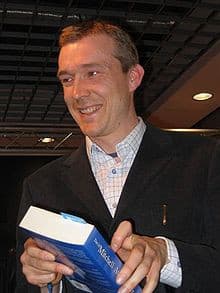
Similar books
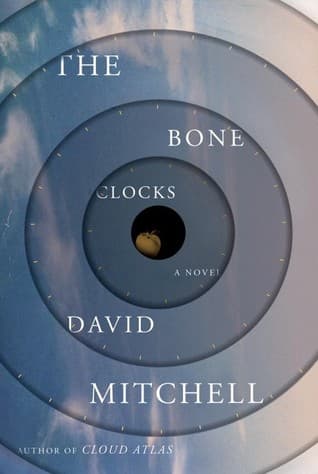
- The Bone Clocks
David Mitchell
3.8 (86k) average on GoodreadsLiterary FictionAnother ambitious, interconnected novel by the same author, exploring similar themes of reincarnation and destiny.
- One Hundred Years of Solitude
Gabriel García Márquez
4.1 (753k) average on GoodreadsLiterary FictionFeatures a multi-generational saga with a non-linear feel, exploring the cyclical nature of history and human experience.
- A Visit From the Goon Squad
Jennifer Egan
3.7 (175k) average on GoodreadsLiterary FictionUses a fragmented, interconnected structure to tell stories across different time periods and characters, exploring themes of time and change.
- The Old Man and the Sea
Ernest Hemingway
3.8 (831k) average on GoodreadsLiterary FictionA Cuban fisherman's long struggle with a giant marlin becomes a story of endurance and dignity, now retold for young adults with illustrations, phonetic guides, and writing prompts in Traditional Chinese.
- The Goldfinch
Donna Tartt
3.9 (720k) average on GoodreadsLiterary FictionHaunted by a tragic explosion and clutching a stolen Dutch masterpiece, a young orphan navigates the opulent drawing rooms of New York and the gritty underbelly of the art world, desperately seeking connection and redemption amidst a life spiraling into crime and obsession.
- Little Fires Everywhere
Celeste Ng
4.1 (713k) average on GoodreadsLiterary FictionIn Shaker Heights, an artist and her daughter move in, and their free-spirited lives clash with a rule-bound matriarch, revealing hidden conflicts beneath a perfect surface.





Enjoyed the summary?
A summary gives you the shape of the book. The book itself has the detail, the examples and the voice.
Find Cloud Atlas on AmazonAs an Amazon Associate, BookBrief earns from qualifying purchases. How we're funded