

Synopsis
Covers the whole plot, including the ending.
- Difficulty
- Easy
- Pacing
- Moderate
- Mood
- Nostalgic, Adventurous, Mildly Suspenseful, Clever
- Read it if
- You enjoy classic, straightforward mysteries with a plucky young detective and a touch of spooky atmosphere, perfect for a nostalgic read.
- Skip it if
- You prefer complex, gritty mysteries with mature themes and intricate character development, or find older children's literature too simplistic.
The Ghost of Blackwood Hall Plot Summary
Covers the whole plot, including the ending.
A Plea for Help and a Peculiar Case
Nancy Drew, a detective, is asked by Mrs. Putney to investigate her stolen jewelry, including a ruby necklace and an emerald bracelet. Mrs. Putney's story is vague, and she seems unwilling to give details, only mentioning a strange feeling of being watched and a connection to Blackwood Hall. This mansion near River Heights is known to be haunted. Nancy is curious about Mrs. Putney's odd behavior and the mystery, so she takes the case, asking her friends, Bess Marvin and George Fayne, to help her investigate the rumored ghost and missing jewels.
First Visit to Blackwood Hall
Nancy, Bess, and George visit Blackwood Hall, a rundown estate said to be haunted. They find the gates locked and the grounds messy, creating an eerie mood. Inside, through a broken window, they find dusty rooms and hear strange noises: creaking floors, rustling, and what sounds like a moan. They also notice odd shadows and cold spots. They do not find direct evidence of the stolen jewelry, but the unsettling experiences confirm the mansion's spooky reputation and make Nancy suspect that more than just ghosts are involved, strengthening her resolve to find the truth.
The Strange Behavior of Mrs. Putney
As Nancy continues her investigation, she tries to get more information from Mrs. Putney, but the older woman becomes more withdrawn and scared. Mrs. Putney refuses to talk about the theft, often changes her story, and eventually asks Nancy to drop the case, saying she received warnings from 'the spirits' not to involve outsiders. Her behavior suggests she is being controlled or threatened, and Nancy suspects the 'spirits' are human criminals. This resistance makes Nancy even more determined, as she realizes Mrs. Putney is a victim of both theft and a cruel trick designed to keep her quiet.
The Victimization of the Misses Turnpenny
Nancy learns from Mrs. Mahoney about two young women, the Misses Turnpenny (Laura and Emily), who live in New Orleans and are experiencing similar 'ghostly' events. Unseen forces are terrorizing them and have warned them against seeking help, especially from detectives. The Misses Turnpenny, like Mrs. Putney, are easily influenced by superstitions. Seeing the pattern, Nancy realizes the cases are connected and that someone is trying to take advantage of vulnerable people. This makes Nancy, Bess, and George expand their investigation beyond River Heights to New Orleans.
Arrival in New Orleans and the French Quarter
Nancy, Bess, and George travel to New Orleans, experiencing the French Quarter. They find the Misses Turnpenny's home, a charming but slightly run-down house. The sisters, Laura and Emily, are at first cautious and unwilling to speak with Nancy, having been warned by the 'spirits' against her. However, Nancy's kindness and genuine concern slowly win their trust. They tell stories of strange noises, moving objects, and voices that have convinced them their house is haunted and that evil spirits are targeting them. Nancy watches their reactions and the environment, looking for any logical explanation for the supernatural claims.
Uncovering the Hoax at the Turnpenny Residence
Staying with the Misses Turnpenny, Nancy, Bess, and George see the 'ghostly' activity themselves. They witness objects moving, hear whispers, and feel sudden drafts. However, Nancy's detective skills help her quickly realize these are not supernatural events. She finds hidden wires, trapdoors, and sound devices. For example, a 'floating' vase is pulled by a thin fishing line, and the whispers come from a gramophone hidden in a wall. This confirms her suspicion that the sisters are victims of a clever trick by criminals, meant to scare them and gain control over their money or property.
The Connection to Blackwood Hall
While investigating the Turnpenny residence, Nancy finds a piece of evidence: a hidden compartment with papers connecting it to Blackwood Hall. The documents include old letters and a floor plan of Blackwood Hall, with references to Mrs. Putney's family history and her valuable jewelry. It becomes clear that the same group of criminals is behind both the Blackwood Hall 'haunting' and the terrorizing of the Turnpenny sisters. The criminals are likely using Blackwood Hall as a base or storage, and Mrs. Putney's jewelry is part of a larger plan involving the Turnpenny family's inheritance or hidden treasures, making the plot more complex than a simple theft.
The Return to Blackwood Hall and Confrontation
With this new information, Nancy, Bess, and George return to River Heights and Blackwood Hall. They watch the mansion, seeing suspicious activity. One night, they see men entering the house, confirming their suspicions. Nancy, with Bess and George, confronts the criminals inside Blackwood Hall. A chase and struggle happen in the dark corridors of the old mansion. The criminals, realizing they are caught, try to escape, but Nancy's quick thinking leads to their capture. During the confrontation, Nancy finds Mrs. Putney's stolen jewelry, hidden in a secret compartment in the house.
Unmasking the Imposters
With the criminals caught, Nancy reveals their leader: Silas Blackwood, a distant relative of the Blackwood family, who planned the hoaxes. Silas, with his helpers, meant to scare Mrs. Putney and the Turnpenny sisters into leaving their properties or revealing hidden family valuables. He had targeted Mrs. Putney's jewelry to fund his larger plan. The 'ghosts' were elaborate disguises and mechanical tricks, designed to use the victims' beliefs and fears, allowing Silas to control their lives and inheritances without suspicion. The police are called, and the criminals are arrested.
Resolution and Relief
With the criminals arrested and the hoaxes exposed, Mrs. Putney's jewelry is returned. The Misses Turnpenny are relieved to learn their house is not haunted and they were victims of a trick. Nancy explains the tricks used to create the ghostly events, bringing clarity and peace of mind to the sisters. Both Mrs. Putney and the Turnpenny sisters thank Nancy, Bess, and George for their courage and detective work. The case ends with justice, the victims free from fear, and Nancy Drew adding another successful mystery to her record, confirming her reputation as a young detective.
The Ghost of Blackwood Hall Characters
Nancy Drew
Protagonist
A brilliant and courageous young amateur detective.
Nancy Drew is an intelligent, resourceful, and courageous young woman with a keen sense of observation and an unyielding desire for justice. She is known for her deductive reasoning, her ability to remain calm under pressure, and her unwavering determination to solve mysteries, even when faced with danger or skepticism. Her compassion for victims drives her, and she possesses a unique blend of intuition and logical thinking that allows her to see through deceptions. She is a natural leader and inspires confidence in those around her.
Relationships: Bess Marvin (Close friend and assistant detective); George Fayne (Close friend and assistant detective); Carson Drew (Father, respected attorney, supportive of her detective work); Mrs. Putney (Client, initial victim of the hoax); Laura and Emily Turnpenny (Victims of the hoax)
Bess Marvin
Supporting
Nancy's fashion-conscious, sometimes timid, but loyal best friend.
Bess Marvin is one of Nancy's best friends, often accompanying her on adventures. She is generally more timid and easily frightened than Nancy or George, particularly by spooky situations, but her loyalty to Nancy always overrides her fears. Bess is known for her love of fashion, her sweet nature, and her occasional clumsiness, which sometimes inadvertently helps or hinders the investigation. Despite her occasional apprehension, she provides moral support and often notices small details others might overlook, contributing to the overall success of the team.
Relationships: Nancy Drew (Close friend and fellow detective); George Fayne (Cousin and close friend)
George Fayne
Supporting
Nancy's athletic, practical, and courageous best friend.
George Fayne is Bess Marvin's cousin and Nancy's other best friend. She is the antithesis of Bess: athletic, practical, and tomboyish, preferring slacks to dresses. George is courageous, level-headed, and often the voice of reason among the trio. She is less prone to fear than Bess and is usually ready for action, providing a strong and reliable presence during investigations. Her practicality and physical abilities are often valuable assets, particularly in navigating difficult terrain or confronting suspects.
Relationships: Nancy Drew (Close friend and fellow detective); Bess Marvin (Cousin and close friend)
Mrs. Putney
Supporting
An elderly victim of a jewelry theft and a psychological hoax.
Mrs. Putney is an elderly woman who initially seeks Nancy's help to recover her stolen jewelry. She is a vulnerable character, easily swayed by superstition and fear, making her an ideal target for the criminals. Her peculiar and evasive behavior throughout the initial stages of the investigation stems from the psychological manipulation and threats she receives from the 'ghosts.' She is a victim not only of theft but also of a cruel hoax designed to isolate and control her. Her distress highlights the insidious nature of the criminals' plot.
Relationships: Nancy Drew (Client and detective); Silas Blackwood (Perpetrator, tormentor)
Laura Turnpenny
Supporting
One of two sisters terrorized by 'ghosts' in New Orleans.
Laura Turnpenny is one of the two sisters living in New Orleans who are being terrorized by 'ghostly' phenomena. Like Mrs. Putney, she is susceptible to superstitious beliefs and becomes increasingly fearful and withdrawn due to the elaborate hoax. She is initially hesitant to trust Nancy, having been warned against her by the supposed spirits. Her vulnerability and distress underscore the severity of the criminals' psychological manipulation, as they exploit her fear to gain control over her and her sister's lives.
Relationships: Emily Turnpenny (Sister and fellow victim); Nancy Drew (Detective who helps her)
Emily Turnpenny
Supporting
One of two sisters terrorized by 'ghosts' in New Orleans.
Emily Turnpenny is Laura's sister, also living in New Orleans and suffering from the same 'ghostly' torment. She shares her sister's fear and initial reluctance to involve Nancy Drew, having fallen prey to the criminals' warnings. Emily's experiences mirror Laura's, showing how deeply the psychological manipulation affects them both. Her relief and gratitude are palpable once Nancy exposes the truth behind the hauntings, allowing her to understand that she was a victim of human deception rather than supernatural forces.
Relationships: Laura Turnpenny (Sister and fellow victim); Nancy Drew (Detective who helps her)
Silas Blackwood
Antagonist
The mastermind behind the 'ghostly' hoaxes and thefts.
Silas Blackwood is the primary antagonist, a cunning and manipulative individual who orchestrates the elaborate 'ghostly' hoaxes at Blackwood Hall and the Turnpenny residence. He is a distant relative of the Blackwood family, driven by greed and a desire to gain control over family assets and valuables. Silas exploits the superstitious fears of his victims, using sophisticated mechanical tricks and psychological manipulation to achieve his goals. He is ruthless and deceptive, willing to terrorize vulnerable women to further his own illicit schemes.
Relationships: Nancy Drew (Opponent, detective who uncovers his plot); Mrs. Putney (Victim of his scheme); Laura and Emily Turnpenny (Victims of his scheme)
Carson Drew
Mentioned
Nancy's supportive and understanding attorney father.
Carson Drew is Nancy's father, a renowned attorney who is incredibly supportive of his daughter's detective work. While not directly involved in this specific case, his presence as a wise and loving parent provides Nancy with a stable home life and intellectual encouragement. He trusts Nancy's judgment and often offers advice when she seeks it, though she primarily works independently. He represents a grounding force in Nancy's often adventurous life.
Relationships: Nancy Drew (Daughter)
The Ghost of Blackwood Hall Themes
The Power of Deception and Superstition
The novel shows how easily people can be tricked when their fears and beliefs are used against them. The criminals create 'ghostly' hoaxes, playing on the victims' belief in the supernatural. Mrs. Putney and the Turnpenny sisters are at first scared and unable to get help, believing they are dealing with evil spirits rather than people. This theme highlights the danger of believing without question and how it can be used as a weapon, as seen in the warnings given to the victims not to trust Nancy Drew. Nancy's role is to use logic and observation to see through this deception.
“The spirits told me not to talk to anyone about it. Especially not a detective!”
Courage in the Face of Fear
Despite facing unsettling events, Nancy, Bess, and George show courage. Bess, though often shy, overcomes her fears to help Nancy, while George remains steady and practical. Nancy herself confronts dangerous criminals in a dark, supposedly haunted mansion without hesitation. This theme celebrates the bravery needed to face the unknown, to challenge perceived supernatural threats, and to stand against villains who harm the vulnerable. Their courage is not a lack of fear, but the decision to act despite it, especially when others are in trouble.
“Ghosts or not,” Nancy declared, “we’re going to get to the bottom of this!”
The Triumph of Logic and Reason
A main theme of the Nancy Drew series, this book particularly shows how logic and reason can solve mysteries that seem supernatural. Nancy carefully investigates each 'ghostly' event, looking for rational explanations instead of giving in to fear. She finds hidden wires, sound devices, and secret passages, exposing the criminals' elaborate tricks. This theme reinforces the idea that what seems unexplainable often has a human, logical explanation, and that critical thinking is vital to finding the truth and fighting deception.
“There’s always a logical explanation for everything, Bess, no matter how spooky it seems.”
Protecting the Vulnerable
Nancy's main goal in the story is to help those who cannot help themselves. Mrs. Putney and the Turnpenny sisters are older and easily manipulated, making them easy targets for criminals. Nancy takes on their cases not just for the excitement of the mystery, but out of compassion and a sense of justice for the victims. This theme highlights the responsibility of the strong to protect the weak and the importance of supporting those who are being taken advantage of or terrorized, showing Nancy's strong moral compass.
“These poor women are being terrorized. We have to help them, no matter what.”
Plot Devices & Literary Techniques
The Haunted House Trope
An abandoned mansion used to create an atmosphere of fear and mystery.
Blackwood Hall serves as the quintessential haunted house, leveraging its dilapidated state, eerie sounds, and local legends to create an atmosphere of supernatural dread. This trope is used by the criminals to deter investigators and to psychologically torment their victims. The 'haunting' provides a cover for their illicit activities, making it difficult for anyone to suspect human involvement. Nancy's investigation systematically dismantles the illusion, revealing the house as a stage for human deception rather than a dwelling for spirits.
Red Herrings
Misleading clues or events designed to distract the protagonist and reader.
The 'ghostly' phenomena themselves act as a major red herring throughout the story. The creaking noises, moving objects, and disembodied voices are all designed to make Nancy (and the reader) believe in a supernatural explanation, or at least to distract from the true human perpetrators. Mrs. Putney's initial evasiveness and the warnings from the 'spirits' also serve as red herrings, making Nancy question the victims' reliability and delaying her understanding of the full scope of the human plot.
The Double Mystery
Two seemingly separate mysteries that are eventually revealed to be connected.
The novel presents two distinct mysteries at first: Mrs. Putney's stolen jewelry and the Blackwood Hall 'haunting' in River Heights, and the 'ghostly' torment of the Turnpenny sisters in New Orleans. The connection between these two seemingly unrelated cases, particularly the shared method of 'ghostly' intimidation and the link to family valuables, serves as a crucial plot device. Nancy's ability to recognize the pattern and uncover the shared perpetrators elevates the complexity of the plot.
Hidden Compartments and Secret Passages
Concealed features used by criminals and discovered by Nancy.
Both Blackwood Hall and the Turnpenny residence feature hidden compartments and, implicitly, secret passages (or at least concealed access points). These are crucial for the criminals to carry out their hoaxes undetected, allowing them to move objects, create sounds, and hide stolen goods or incriminating documents. Nancy's discovery of these hidden features is pivotal in exposing the human agency behind the 'ghostly' activities and in recovering the stolen jewelry and evidence.
The Ghost of Blackwood Hall Quotes
“Nancy Drew felt a thrill of excitement as she drove her blue roadster along the winding country road.”
“There's a mystery here, Bess, and I intend to solve it.”
“The old house seemed to frown at her, its darkened windows like eyes staring out from a forgotten past.”
“I don't believe in ghosts, but I do believe in people who pretend to be ghosts.”
“A good detective never overlooks the smallest detail.”
“Courage isn't the absence of fear, but the triumph over it.”
“The truth always comes out, eventually.”
“Sometimes the most obvious answer is the one we least expect.”
“Teamwork makes the dream work, especially when solving mysteries.”
“A locked door only makes me more determined to find the key.”
“The past has a way of catching up with the present.”
“It's amazing what you can learn by just listening and observing.”
“Every mystery has a logical explanation, no matter how strange it seems.”
“The thrill of the chase is almost as good as solving the puzzle.”
Quiz
10 questions on the plot and the characters. Each answer comes with a short explanation.
Question 1
Who initially seeks Nancy Drew's help in recovering stolen jewelry?
- Bess Marvin
- George Fayne
- Mrs. Putney
- A police detective
Show answer
C. Mrs. Putney The story begins with Mrs. Putney approaching Nancy to help retrieve her stolen jewelry.
Question 2
What is the name of the abandoned mansion near River Heights that Nancy investigates?
- Riverbend Manor
- Blackwood Hall
- Whispering Pines
- Shadowbrook Estate
Show answer
B. Blackwood Hall Blackwood Hall is the name of the abandoned mansion that plays a central role in the mystery.
Question 3
Which two cities are the primary settings for Nancy's investigation?
- River Heights and New York City
- River Heights and Chicago
- River Heights and New Orleans
- River Heights and San Francisco
Show answer
C. River Heights and New Orleans The search for the thieves takes Nancy from River Heights to the French Quarter of New Orleans.
Question 4
Besides Mrs. Putney, who else exhibits strange behavior that complicates Nancy's investigation?
- Nancy's father, Carson Drew
- Two young women being victimized by 'spirits'
- The local police chief
- The caretaker of Blackwood Hall
Show answer
B. Two young women being victimized by 'spirits' The summary mentions that the quest is hampered by the strange behavior of Mrs. Putney and two young women being victimized by so-called spirits.
Question 5
What is the primary method the 'ghostly spirits' use to hinder Nancy's investigation?
- They physically attack Nancy.
- They steal Nancy's evidence.
- They warn the victims not to interact with Nancy Drew.
- They spread false rumors about Nancy.
Show answer
C. They warn the victims not to interact with Nancy Drew. The 'ghostly spirits' specifically warn the gullible victims not to have anything to do with Nancy Drew.
Question 6
What is the true nature of the 'spirits' plaguing the victims?
- They are genuine supernatural entities.
- They are a cruel hoax perpetrated by unseen individuals.
- They are figments of the victims' imaginations.
- They are manifestations of the victims' guilty consciences.
Show answer
B. They are a cruel hoax perpetrated by unseen individuals. Nancy must fight 'unseen perpetrators of a cruel hoax,' indicating the spirits are not real.
Question 7
Who are Nancy's two constant companions during her investigations in this book?
- Ned Nickerson and Burt Eddleton
- Bess and George
- Hannah Gruen and Carson Drew
- Helen Corning and Emily Crandall
Show answer
B. Bess and George The summary states, 'the search for the thieves takes the girl detective and her friends, Bess and George,' confirming their presence.
Question 8
What is the main challenge Nancy faces in helping the 'gullible victims'?
- Lack of physical evidence.
- Their unwillingness to trust her due to the 'spirits'' warnings.
- The victims are too far away to reach.
- Nancy does not believe the victims' stories.
Show answer
B. Their unwillingness to trust her due to the 'spirits'' warnings. The text explicitly states, 'The ghostly spirits have warned these gullible victims to not to have anything to do with Nancy Drew!' which directly hinders her help.
Question 9
What kind of crime is Nancy initially trying to solve for Mrs. Putney?
- A kidnapping
- A forgery
- Stolen jewelry
- An arson
Show answer
C. Stolen jewelry Mrs. Putney seeks Nancy's help 'in recovering her stolen jewelry,' setting the initial mystery.
Question 10
What is the overarching theme Nancy Drew must overcome to solve the mystery related to the 'ghosts'?
- The power of ancient curses.
- Supernatural forces beyond human comprehension.
- The manipulation of fear and gullibility for criminal gain.
- The limitations of modern forensic science.
Show answer
C. The manipulation of fear and gullibility for criminal gain. Nancy must expose the 'cruel hoax' and fight 'unseen perpetrators,' implying that the 'spirits' are a deceptive scheme preying on the victims' beliefs.
The Ghost of Blackwood Hall FAQ
What is the central mystery Nancy Drew investigates in 'The Ghost of Blackwood Hall'?
Nancy Drew is initially tasked with recovering stolen jewelry belonging to Mrs. Putney. However, the investigation quickly expands to expose a cruel hoax involving 'ghostly spirits' at Blackwood Hall, who are terrorizing two young women, the Turners, and attempting to deter Nancy's involvement.
Who are the primary victims of the 'ghostly spirits' at Blackwood Hall?
The primary victims are Lois and Carol Turner, two young women who have inherited Blackwood Hall. They are being manipulated and frightened by the supposed spirits, who warn them against trusting Nancy Drew and advise them to sell the property quickly.
How does Mrs. Putney's jewelry theft connect to the events at Blackwood Hall?
Mrs. Putney's stolen jewelry, particularly a valuable pearl necklace, becomes a crucial link. The investigation into its theft leads Nancy to Blackwood Hall, where she discovers the perpetrators of the 'ghostly' hoax are also involved in the jewelry theft, using the mansion as a hideout or a place to store ill-gotten gains.
What role do Bess Marvin and George Fayne play in Nancy's investigation?
Bess and George are Nancy's loyal friends and assist her throughout the investigation. They often accompany her to Blackwood Hall, help with surveillance, and provide support and occasional comic relief, though they are also sometimes targets of the 'ghostly' pranks.
Why do the 'ghostly spirits' specifically warn the victims against Nancy Drew?
The 'ghostly spirits' warn the Turner sisters against Nancy Drew because the perpetrators behind the hoax recognize Nancy's detective skills. They fear her investigation will expose their scheme, so they try to isolate their victims and prevent Nancy from gathering crucial evidence.
What is the significance of the French Quarter of New Orleans in the plot?
The French Quarter of New Orleans serves as a secondary location where Nancy follows a lead related to the stolen jewelry or the perpetrators. It provides a change of scenery and introduces new characters or clues, indicating the scope of the criminals' activities extends beyond River Heights.
How do the 'ghosts' achieve their effects at Blackwood Hall?
The 'ghosts' achieve their effects through a series of clever mechanical devices, hidden passageways, ventriloquism, and other trickery. These include moving objects, strange noises, and even projected images, all designed to appear supernatural and terrify the residents.
Are there any specific objects or clues that help Nancy unravel the mystery of the 'ghosts'?
Nancy often relies on her keen observation skills to notice inconsistencies in the 'ghostly' phenomena. She might find hidden wires, notice a faint scent, or observe a specific pattern in the 'ghosts'' appearances that suggests human intervention rather than supernatural activity, leading her to search for hidden mechanisms.
What motivates the villains to perpetrate the hoax at Blackwood Hall?
The villains are motivated by greed, specifically wanting to acquire Blackwood Hall and possibly its contents at a greatly reduced price. By terrorizing the Turner sisters, they aim to force them into selling the property quickly and cheaply, allowing the criminals to profit from its sale or from something hidden within.
How does Nancy's calm and rational approach contrast with the victims' fear?
Nancy's calm and rational approach starkly contrasts with the victims' fear by demonstrating critical thinking. While the Turners are paralyzed by supernatural dread, Nancy systematically looks for logical explanations, refusing to be swayed by appearances and focusing on tangible evidence, which ultimately exposes the hoax.
What psychological tactics do the perpetrators use to control their victims?
The perpetrators use psychological tactics such as isolation, intimidation, and gaslighting. By making the victims believe they are being haunted and that Nancy Drew is a threat, they erode the victims' trust in outsiders and their own judgment, making them more susceptible to manipulation.
How does the story explore the theme of credulity versus skepticism?
The story explores credulity versus skepticism by showcasing how easily fear and a belief in the supernatural can override logical reasoning in the victims. Nancy, representing skepticism, consistently seeks rational explanations, highlighting the importance of critical thinking in distinguishing truth from deception.
What is the broader message about appearances versus reality conveyed by the 'ghosts'?
The broader message is that appearances can be deceiving, and what seems supernatural often has a mundane, human explanation. The 'ghosts' are merely a sophisticated illusion, emphasizing that one should always look beyond surface phenomena to uncover the underlying truth.
How does 'The Ghost of Blackwood Hall' fit into the typical Nancy Drew formula?
The book fits the typical Nancy Drew formula by featuring a strong, intelligent female protagonist, complex clues, a mix of danger and adventure, and the ultimate triumph of good over evil. It also includes her loyal friends, a mysterious setting, and a clever unraveling of a seemingly impossible puzzle.
Is there a moral lesson about trusting strangers or those who claim supernatural powers?
Yes, there is a clear moral lesson about exercising caution when encountering those who claim supernatural powers, especially if their advice benefits them. The victims' gullibility and trust in the 'spirits' almost cost them their inheritance, highlighting the danger of blindly believing such claims.
How does the original text's tone compare to later revisions, if noticeable?
The original text often features slightly more elaborate descriptions and a more formal prose style compared to later revisions, which tend to be streamlined and simplified for a faster pace. While the plot remains largely similar, the narrative voice and vocabulary can feel subtly different, reflecting editorial changes over time.
What kind of legacy does Blackwood Hall itself leave in the story?
Blackwood Hall leaves a legacy as a classic haunted house setting, embodying mystery and foreboding. It serves as the perfect stage for the 'ghostly' hoax, its abandoned state and history providing a believable backdrop for the villains' machinations and Nancy's detective work, becoming almost a character in itself.
About the author
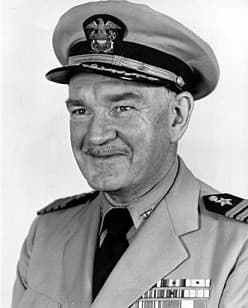
Carolyn Keene is the pseudonym for the authors of the Nancy Drew Mystery Stories series. Under this pen name, numerous authors have penned over 170 books since 1930, captivating young readers with thrilling mysteries and adventures. The series, including notable titles like "The Secret of Red Gate Farm" and "Mystery of Crocodile Island," has become a cultural phenomenon, selling millions of copies worldwide and inspiring adaptations across various media.
Similar books
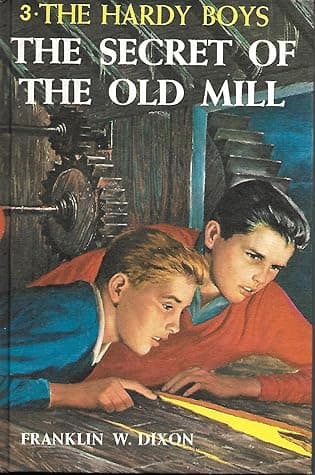
- The Secret of the Old Mill
Franklin W. Dixon
3.9 (7k) average on GoodreadsChildren'sSimilar in target audience and formulaic nature, but 'The Secret of the Old Mill' (Hardy Boys series) often features more physical action and slightly more intricate criminal schemes, appealing to a segment of young readers who prefer less cerebral and more action-oriented mysteries. Nancy Drew's approach is more focused on deduction and observation.
- Harry Potter and the Sorcerer's Stone
J.K. Rowling
4.5 (7M) average on GoodreadsFantasyRescued from a miserable life under the stairs, an orphaned boy discovers he's a wizard destined for a magical school, where he uncovers a dangerous secret tied to the dark wizard who murdered his parents.
- The Hobbit, or There and Back Again
J.R.R. Tolkien
4.3 (2.9M) average on GoodreadsFantasyA comfort-loving hobbit named Bilbo Baggins is whisked away by a mischievous wizard and a band of dwarves on an unexpected journey to reclaim stolen treasure from a fearsome dragon, discovering courage and a magical ring along the way.
- Harry Potter and the Goblet of Fire
J.K. Rowling
4.6 (2.6M) average on GoodreadsFantasyA bewildered Harry Potter, underage and thrust into a deadly Triwizard Tournament, must brave dragons, mermaids, and a resurgent dark magic to survive a year that will forever alter the wizarding world.
- Harry Potter and the Order of the Phoenix
J.K. Rowling
4.5 (2.5M) average on GoodreadsFantasyIn a year of oppressive secrets and the threat of Voldemort, Harry Potter and Dumbledore's Army secretly train for war, shown through Jim Kay and Neil Packer's dark illustrations.
- The Lightning Thief
Rick Riordan
4.3 (2M) average on GoodreadsFantasyThrust into a world of mythological monsters and divine treachery, an ordinary boy discovers he's the son of Poseidon and must embark on a perilous quest across modern America to prevent an Olympian war.





Enjoyed the summary?
A summary gives you the shape of the book. The book itself has the detail, the examples and the voice.
Find The Ghost of Blackwood Hall on AmazonAs an Amazon Associate, BookBrief earns from qualifying purchases. How we're funded