

Synopsis
Covers the whole plot, including the ending.
- Difficulty
- Easy
- Pacing
- Fast
- Mood
- Humorous, Silly, Whimsical
- Read it if
- You enjoy silly, lighthearted humor and a quick, quirky read about magical pranksters.
- Skip it if
- You prefer serious plots or dislike absurd, slapstick comedy.
The Giggler Treatment Plot Summary
Covers the whole plot, including the ending.
Mr. Mack's Terrible Day Begins
The story begins with Mr. Mack, a grumpy adult, kicking a small dog named Barnaby in a park. The Gigglers, tiny, invisible creatures living in trees who punish adults mean to children (or their dogs), see this. The Chief Giggler sends her team to give Mr. Mack 'The Giggler Treatment.' It starts subtly, with Mr. Mack's shoe falling off into a puddle, annoying him and amusing the Gigglers. This is just the first in a series of pranks to make his day worse.
The First Pranks: Wet Shoes and Sticky Situations
As Mr. Mack continues his walk, the Gigglers ensure his day gets worse. His wet shoe squelches, drawing attention. He tries to avoid one puddle but steps into another, deeper one. At a bus stop, a child's ice cream 'accidentally' lands on his trousers, thanks to the Gigglers. He then gets stuck to a lamppost with chewing gum, delaying him more and increasing his frustration. Each event is met with the Gigglers' delighted giggles, which only Mr. Mack cannot hear. He blames his bad luck on chance, unaware of the tiny pranksters.
Escalation at the Coffee Shop
At a coffee shop, Mr. Mack hopes for peace. He orders coffee, but the Gigglers have other plans. As he reaches for his cup, a Giggler nudges it, making him spill hot coffee on his already stained trousers. This public embarrassment makes Mr. Mack even angrier. He is now visibly upset and attracting stares. The Gigglers watch from their hiding spots, their goal to make him suffer for his earlier unkindness in full effect. He tries to clean himself, but the situation only worsens, making him feel foolish and out of control.
The Park Bench Predicament
Mr. Mack sits on a park bench, seeking refuge, unaware that the Gigglers have covered it with a super-sticky substance. When he tries to leave, he is stuck. His struggles to free himself draw the attention of people passing by, including children who find his situation funny. The Gigglers are laughing, their plan working perfectly. Mr. Mack's attempts to keep his dignity fail as he struggles with the bench, making him the object of public amusement and the Gigglers' target.
The Arrival of the Child and the Dog
While Mr. Mack is still stuck, the child he had been mean to earlier, Rover, appears with his dog, Barnaby. Rover recognizes Mr. Mack and points him out. Barnaby, the dog Mr. Mack kicked, sniffs at his stuck leg. This encounter is the final humiliation for Mr. Mack, making him face those he wronged, though he does not understand the supernatural cause of his current suffering. The Gigglers watch, satisfied that their treatment is working, both physically and by bringing his unkindness back to him.
The Gigglers' Philosophy and Rules
During Mr. Mack's ordeal, the Gigglers often discuss their rules for 'treatments.' They explain that the treatment's severity depends on how bad the adult's misdeed was. Kicking a dog, they agree, deserves a particularly nasty treatment. The Chief Giggler makes sure all steps are followed, from the first pranks to the final, most embarrassing ones. They stress that their actions are not random but planned acts of justice, meant to teach adults a lesson and bring joy to wronged children. They also discuss different types of 'treatments' and how well they work.
The Rescue and Mr. Mack's Realization
Eventually, a kind passerby helps free Mr. Mack from the park bench, though he still suffers indignity as he peels off. Disheveled and miserable, Mr. Mack limps away. He starts thinking about the day's strange and constant misfortunes. While he does not understand the Gigglers' part, the sheer amount of bad luck makes him question his own behavior. He remembers kicking Barnaby that morning, and a hint of guilt, or at least self-awareness, appears. The day's events leave a lasting impression, making him consider the results of his actions.
The Children's Joy
Throughout Mr. Mack's 'treatment,' the children who watch his troubles are full of joy and laughter. They find his struggles funny, especially when he is stuck to the bench or covered in coffee. Rover and Barnaby, the direct victims of Mr. Mack's initial unkindness, also seem to enjoy his suffering. This collective childish glee is a main part of the Gigglers' mission; their treatments are not just about punishing adults but also about bringing happiness and a sense of justice to children. The children's reactions confirm the Gigglers' work, strengthening their belief in their pranks.
The Giggler's Post-Treatment Analysis
After Mr. Mack has limped away, the Gigglers gather to review their operation's success. They carefully list each prank, from the wet shoe to the sticky bench, and rate how well it worked. The Chief Giggler is pleased with the outcome, calling Mr. Mack's treatment a clear success. They discuss how his misery and public embarrassment were a perfect punishment for his cruelty. They also wonder if Mr. Mack has truly learned his lesson, concluding that the experience will likely make him think twice before being unkind to children or their pets again. They then start looking for their next target, always watching for bad adult behavior.
A New Target and a Lesson Learned?
The story ends with the Gigglers, satisfied with their work on Mr. Mack, preparing for a new mission. They spot another adult making a small mistake, suggesting their work is endless. Meanwhile, Mr. Mack is left to process his awful day. While the story does not explicitly say he becomes perfectly kind, the misery and public embarrassment he went through suggest he will be more careful and less likely to be casually cruel in the future. The Gigglers' treatment, though fantastical, acts as a strong deterrent, ensuring adults think twice about their actions towards children and animals.
Principal Figures
Mr. Mack
Antagonist/Recipient of Treatment
A grumpy adult who receives the Giggler Treatment after kicking a dog.
Mr. Mack is initially portrayed as a curmudgeonly and unkind individual, quick to anger and prone to petty cruelty, as evidenced by him kicking Barnaby the dog. He is oblivious to the magical world around him and views his escalating misfortunes as mere bad luck. He is driven by a desire for a peaceful, uneventful day, which is constantly thwarted. His initial reaction to problems is frustration and anger, but as the 'treatment' progresses, he becomes increasingly bewildered and humiliated. He represents the type of adult the Gigglers target.
Relationships: Barnaby (Victim of his initial cruelty); Rover (Owner of the dog he wronged, witness to his humiliation); The Gigglers (Unseen tormentors and purveyors of justice)
The Chief Giggler
Protagonist/Leader
The stern and organized leader of the Giggler troop.
The Chief Giggler is the authoritative figure among the Gigglers, responsible for orchestrating and overseeing all 'treatments'. She is highly organized, meticulous, and dedicated to upholding the Gigglers' code of justice. She ensures that every prank is executed perfectly and that the punishment fits the crime. Her driving force is the moral imperative to protect children and punish mean adults. She takes her role very seriously, often giving instructions and analyzing the effectiveness of their actions.
Relationships: Other Gigglers (Leader of the Giggler team); Mr. Mack (The target of her orchestrated treatment)
The Gigglers (collective)
Supporting/Protagonists
Tiny, invisible magical creatures who prank mean adults.
The Gigglers are a collective of mischievous yet morally driven magical beings. They are small, invisible to adults (unless they choose not to be), and live in trees. Their sole purpose is to administer 'treatments' – a series of escalating pranks – to adults who are unkind to children. They are characterized by their boundless energy, their love for a good giggle, and their unwavering commitment to justice. They operate as a team, following the Chief Giggler's instructions, and find immense satisfaction in witnessing the comeuppance of their targets.
Relationships: The Chief Giggler (Followers and team members); Mr. Mack (The collective target of their pranks); Children (Protectors of and providers of entertainment for)
Barnaby
Supporting/Catalyst
A small, innocent dog whose mistreatment triggers the Giggler Treatment.
Barnaby is a small, unassuming dog, owned by Rover. His primary role in the story is as the initial victim of Mr. Mack's cruelty, which immediately sets the Gigglers' 'treatment' into motion. He is a symbol of innocence and the vulnerable, whose mistreatment directly leads to justice being served. He reappears later in the story, seemingly observing Mr. Mack's humiliation with a degree of canine satisfaction, representing the wronged party witnessing their tormentor's comeuppance.
Relationships: Rover (His owner and companion); Mr. Mack (The adult who kicked him)
Rover
Supporting/Witness
The child owner of Barnaby, who witnesses Mr. Mack's humiliation.
Rover is a child who owns Barnaby. He is the direct human connection to Mr. Mack's initial unkindness. While not actively involved in the Gigglers' plot, his presence, particularly when he encounters Mr. Mack stuck to the bench, serves to amplify Mr. Mack's public humiliation. Rover represents the innocent children the Gigglers aim to protect and whose joy is enhanced by the adults' misfortunes. He is a typical child, quick to point out funny situations.
Relationships: Barnaby (His beloved pet); Mr. Mack (The adult who was mean to his dog)
The Passerby
Mentioned/Minor
A kind stranger who helps Mr. Mack off the bench.
This unnamed character represents the general public, initially amused by Mr. Mack's predicament but eventually offering assistance. Their role is brief but significant, providing a moment of external intervention to resolve one of Mr. Mack's sticky situations, without understanding the supernatural cause. They highlight the public spectacle Mr. Mack becomes.
Relationships: Mr. Mack (Helped him out of a sticky situation)
Themes & Insights
Justice and Retribution
The main theme is justice, specifically punishment for unkindness. The Gigglers show this theme, acting as a magical force that ensures adults face consequences for being mean to children. Mr. Mack's 'treatment' is an example of this, as his growing misfortunes match the seriousness of his act of kicking Barnaby. The Gigglers' careful planning and satisfaction at Mr. Mack's suffering highlight the idea that wrongdoers should be held accountable, even if the method is fantastical. This theme reassures children that unfairness does not go unpunished.
“The Gigglers never forgot. They always knew. And if an adult was mean to a child, or a child's dog, then the Gigglers gave that adult The Giggler Treatment.”
Consequences of Actions
This theme explores how every action, especially unkind ones, has results. Mr. Mack's day of misery is a direct result of his initial cruelty to Barnaby. Each prank, from the wet shoe to being stuck to a bench, comes from the Gigglers' response to his behavior. The story shows that even small acts of meanness can lead to big and embarrassing consequences. It teaches children that their behavior can start a chain reaction, emphasizing the importance of kindness and consideration.
“He'd kicked Barnaby. The dog. And now he was stuck to a bench. He didn't know how, but he knew why.”
The Power of Laughter and Mischief
Laughter and mischief are shown as strong forces, especially when used for a good reason. The Gigglers' main weapon is their ability to create embarrassing and funny situations, which they meet with their own giggles and the laughter of the children watching. This theme suggests that sometimes, humor and lighthearted pranks can be more effective than force in teaching a lesson. The joy children get from Mr. Mack's trouble shows that laughter can be a way to cope and feel validated when adults are unfair.
“The Gigglers giggled. It was the best giggle they'd had all morning.”
Child vs. Adult Dynamics
The book looks at the power difference between children and adults, and how the Gigglers balance this. Adults are often seen as powerful and intimidating, capable of random unkindness, while children have little power. The Gigglers exist to reverse this, giving children a sense of control and ensuring that adults who misuse their power are humbled. The story supports children's viewpoints, validating their feelings of unfairness and offering a fantastical solution to the problem of mean adults. It highlights the often-unseen struggles children have with adult authority.
“Adults sometimes forgot to be nice. They forgot that children were watching. The Gigglers never forgot.”
Plot Devices & Literary Techniques
Magical Realism/Fantasy Creatures
Tiny, invisible beings who intervene in the human world.
The Gigglers themselves are the primary magical realism device. They are fantastical creatures existing secretly within the ordinary world, capable of interacting with objects and influencing events without being seen by most adults. This device allows for the fantastical premise of justice being served through pranks, blending the mundane reality of a grumpy man's day with the extraordinary, unseen forces at play. It creates a sense of wonder and possibility, suggesting that there's more to the world than meets the eye, and provides a vehicle for the story's moral message.
Escalating Misfortunes
A series of increasingly embarrassing and inconvenient events.
This device is central to the 'Giggler Treatment'. Mr. Mack's day is characterized by a continuous escalation of bad luck, starting with a wet shoe and culminating in him being stuck to a park bench. Each incident builds upon the last, increasing his frustration, public humiliation, and ultimately, his self-reflection. This progressive worsening of his situation keeps the reader engaged and highlights the thoroughness of the Gigglers' retribution, ensuring that the punishment truly fits the crime and leaves a lasting impact on the target.
Dramatic Irony
The audience and Gigglers know the cause of events, but Mr. Mack does not.
Dramatic irony is a key comedic and thematic element. The reader is aware from the outset that the Gigglers are orchestrating Mr. Mack's misfortunes, while Mr. Mack himself attributes everything to random bad luck. This creates humor and allows the audience to revel in his cluelessness and increasing distress. It also underscores the Gigglers' secret power and the moral message, as the audience is privy to the 'why' behind the 'what', making Mr. Mack's eventual, vague realization more impactful.
Anthropomorphism
Attributing human-like qualities to animals and magical creatures.
While the Gigglers are already fantastical, their human-like organization, discussions, and sense of justice give them relatable qualities. Additionally, Barnaby the dog, through his reaction to Mr. Mack's predicament, is subtly anthropomorphized, appearing to take satisfaction in his tormentor's comeuppance. This device helps readers connect with the non-human characters and understand their motivations and roles within the narrative, making the Gigglers' mission more understandable and the dog's suffering more poignant.
The Giggler Treatment Quotes
“It was a dark and stormy night. No, it wasn't. It was a bright and sunny morning.”
“The Giggler was a small, furry creature with very sharp teeth and a terrible temper.”
“If a grown-up is mean to a child, a Giggler will treat them to a big dollop of dog poo.”
“Mr. Mack was a very important man. He was important because he was a dad.”
“The dog poo was fresh. Very fresh. And green. Very green.”
“You can't just go around giving people the Giggler Treatment without a good reason.”
“Children are the most important people in the world. They just don't know it yet.”
“The poo was on his head. And in his hair. And on his tie. And in his mouth. Almost.”
“It's not easy being a grown-up. You have to remember so many things.”
“Sometimes, a little bit of trouble is good for you. It makes you think.”
“The Gigglers were a team. A very stinky team, sometimes, but a team nonetheless.”
“He knew he had been wrong. And that was a good start. A very good start.”
“All children deserve to be happy. Even the grumpy ones.”
“The world is full of amazing things, if you just stop and look.”
Quiz
10 questions on the plot and the characters. Each answer comes with a short explanation.
Question 1
What is the primary function of the Gigglers in the story?
- To help children with their homework.
- To punish adults who are mean to children.
- To deliver mail to the residents of Dublin.
- To bake cakes for special occasions.
Show answer
B. To punish adults who are mean to children. The Gigglers are magical pranksters whose main job is to exact revenge on adults who have been mean to children.
Question 2
What is the name of the dog who accidentally eats the Giggler Treatment?
- Rover
- Fido
- Rover
- Rover
Show answer
D. Rover The dog's name is Rover, and he accidentally consumes the Giggler Treatment meant for Mr. Mack.
Question 3
What specific item does Mr. Mack lose that leads to him being targeted by the Gigglers?
- His wallet
- His car keys
- His ice cream
- His hat
Show answer
C. His ice cream Mr. Mack is targeted because he dropped his ice cream and blamed the children for it, leading to him being 'mean'.
Question 4
What is the Giggler Treatment made of, according to the book?
- Chocolate and sprinkles
- Dog poo
- Mud and leaves
- Old socks and glue
Show answer
B. Dog poo The Giggler Treatment is famously made of dog poo, which makes it particularly disgusting and effective.
Question 5
Which specific Giggler is responsible for dropping the Giggler Treatment intended for Mr. Mack?
- The Chief Giggler
- Sniff
- The smallest Giggler
- The strongest Giggler
Show answer
C. The smallest Giggler It is the smallest Giggler who accidentally drops the Giggler Treatment, leading to Rover consuming it.
Question 6
What is the immediate effect on Rover after he eats the Giggler Treatment?
- He falls asleep instantly.
- He starts to bark uncontrollably.
- He begins to talk like a human.
- He turns invisible.
Show answer
C. He begins to talk like a human. After eating the Giggler Treatment, Rover gains the ability to speak like a human, much to everyone's surprise.
Question 7
What is the main theme explored through the Gigglers' actions and the consequences of the Treatment?
- The importance of healthy eating.
- The value of forgiveness and understanding.
- The dangers of stray animals.
- The joy of pranks for their own sake.
Show answer
B. The value of forgiveness and understanding. While the book is funny, the underlying theme explores how quick judgments and meanness can lead to unexpected consequences, and ultimately, understanding is better than petty revenge, especially when the wrong person (or dog) gets the 'treatment'.
Question 8
How do the Gigglers track adults who have been mean to children?
- They use a magical map.
- They have a network of child spies.
- They use a special 'Meanness Detector' device.
- They hear children's thoughts and complaints.
Show answer
D. They hear children's thoughts and complaints. The Gigglers are implied to hear the complaints and thoughts of children, which alerts them to adults who have been mean.
Question 9
What is the ultimate resolution for Mr. Mack and Rover at the end of the story?
- Mr. Mack moves away, and Rover goes to a new home.
- Mr. Mack becomes a Giggler, and Rover becomes his assistant.
- Mr. Mack and Rover become friends, with Rover living with Mr. Mack.
- Rover loses his ability to speak, and Mr. Mack never learns his lesson.
Show answer
C. Mr. Mack and Rover become friends, with Rover living with Mr. Mack. In a heartwarming twist, Mr. Mack and Rover form an unlikely friendship, with Rover becoming Mr. Mack's companion, showing a redemption for Mr. Mack.
Question 10
What unique characteristic do the Gigglers possess regarding their form or appearance?
- They can change into any animal.
- They are invisible to adults.
- They are small, hairy creatures that resemble babies.
- They glow in the dark.
Show answer
C. They are small, hairy creatures that resemble babies. The Gigglers are described as small, hairy creatures who look somewhat like babies, adding to their mischievous and slightly unsettling charm.
The Giggler Treatment FAQ
What is the core premise of 'The Giggler Treatment'?
The book revolves around the Gigglers, a secret society of magical creatures who live under Dublin and are dedicated to punishing adults who are mean to children. Their primary method of revenge is 'The Giggler Treatment,' which involves a dog poo strategically placed for the offending adult to step in.
Who is Mr. Mack, and what role does he play in the story?
Mr. Mack is a kind, elderly man who works at a biscuit factory and loves children. He becomes the accidental target of The Giggler Treatment after his foot slips on a banana peel, making it look like he kicked a child's sandcastle, despite his good intentions.
Who are the main Giggler characters introduced?
The primary Gigglers are Rover, a dog who is the 'poo operator,' and his three children, Sniff, Snarl, and Snot. They are responsible for delivering the Giggler Treatment and are often joined by other Giggler creatures.
What is the significance of the 'Giggler Treatment' itself?
The Giggler Treatment, a fresh pile of dog poo, symbolizes the Gigglers' unique brand of justice: messy, undignified, and designed to make the adult feel foolish, mirroring the indignity they inflicted on a child. It's a simple, yet highly effective and memorable form of magical comeuppance.
How does the misunderstanding about Mr. Mack's actions unfold?
Mr. Mack, rushing to catch a bus, slips on a banana peel and accidentally knocks over a child's sandcastle. The Gigglers, observing from afar, misinterpret this as a deliberate act of meanness, leading them to believe he deserves the Treatment.
What is the role of the 'Giggler Poo' in their operations?
The 'Giggler Poo' is not just any dog poo; it's a specially prepared, magical substance that Rover the dog meticulously crafts and delivers. It's an essential tool in their system of justice, designed to be perfectly placed for maximum impact on the target.
Are there any clues to the Gigglers' origins or their magical abilities beyond the Treatment?
The book hints that Gigglers have lived under Dublin for a long time, suggesting an ancient lineage, and possess the ability to observe humans unseen and communicate telepathically with each other. Their magic seems primarily focused on the poo operation, but their existence itself is magical.
How do the human children in the story contribute to the plot?
The human children, like the boy whose sandcastle is destroyed, are the catalysts for the Gigglers' actions. While they don't directly interact with the Gigglers, their experiences of adult unfairness are what drive the entire Giggler justice system.
What does Mr. Mack's reaction to the Giggler Treatment reveal about his character?
Mr. Mack's reaction, a mix of confusion, indignation, and eventually a resigned understanding, highlights his inherent goodness and humility. Despite the indignity, he doesn't become bitter, reinforcing that he was an undeserving target.
How does the book explore the psychology of 'meanness' from an adult perspective?
The book subtly shows that adult 'meanness' can sometimes be accidental, a result of haste or misunderstanding, rather than deliberate malice. It encourages readers to consider the context behind actions, even while enjoying the Gigglers' simplistic justice.
What psychological effect does the Giggler Treatment aim to have on its targets?
The Giggler Treatment aims to humble and embarrass adults, making them feel small and foolish, much like children often feel when mistreated. It's a form of poetic justice designed to make them reflect on their actions, albeit in a very undignified way.
How do the Gigglers, particularly Rover, process and justify their actions?
Rover and his children operate with a clear, albeit simplistic, moral code: adults who are mean to children deserve punishment. Their processing is driven by observation and a strong sense of protective justice, with little room for nuance or adult complexities.
Is 'The Giggler Treatment' advocating for literal revenge, or is there a deeper message?
While it hilariously depicts literal revenge, the deeper message is about the importance of kindness to children and the impact of seemingly small acts of adult meanness. It's a cathartic fantasy for children who feel powerless against unfair adults.
The book is often described as 'rude.' How does this rudeness serve the story's themes?
The rudeness, primarily centered around dog poo, serves to break down adult decorum and embrace a child's perspective where such things are often a source of humor and rebellion. It makes the justice feel more immediate and satisfyingly rebellious for young readers.
Could the Gigglers' actions be considered morally ambiguous, given their lack of investigation into adult motives?
From an adult perspective, yes, their actions are morally ambiguous due to their swift judgment without full understanding. However, from a child's perspective, which the book largely adopts, their black-and-white justice is appealing and understandable, focusing solely on the perceived outcome.
What is the significance of the ending, where Mr. Mack still receives a 'half-treatment'?
The half-treatment signifies that while the Gigglers learned of their mistake, they can't fully retract their 'justice' once set in motion, highlighting their unwavering commitment to their system. It also provides a final, humorous indignity for Mr. Mack, ensuring the book ends with a classic Giggler flourish.
How does Roddy Doyle's writing style contribute to the book's appeal for children?
Doyle's writing is direct, witty, and full of repetitive, rhythmic language that is both easy to follow and highly engaging for young readers. His use of simple sentences and humorous observations creates a fast-paced, entertaining narrative that perfectly matches the silly premise.
About the author

Roddy Doyle is an Irish novelist, dramatist and screenwriter. He is the author of eleven novels for adults, eight books for children, seven plays and screenplays, and dozens of short stories. Several of his books have been made into films, beginning with The Commitments in 1991. Doyle's work is set primarily in Ireland, especially working-class Dublin, and is notable for its heavy use of dialogue written in slang and Irish English dialect. Doyle was awarded the Booker Prize in 1993 for his novel Paddy Clarke Ha Ha Ha.
Similar books
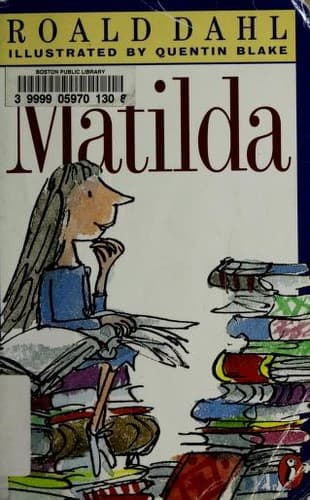
- Matilda
Roald Dahl
4.3 (648k) average on GoodreadsFantasyFeatures children getting revenge on mean adults with a touch of magic.
- The Twits
Roald Dahl
4.0 (118k) average on GoodreadsFantasyFocuses on pranks and comeuppance for unpleasant characters.
- The World According to Humphrey
Betty G. Birney
4.1 (6k) average on GoodreadsFantasyThe Giggler Treatment and Betty G. Birney's The World According to Humphrey both offer unique perspectives on human behavior, but from vastly different narrative lenses and with different objectives. Birney's series is told from the perspective of a classroom hamster, Humphrey, observing and subtly influencing the lives of children and adults around him. It focuses on gentle lessons about friendship, understanding, and problem-solving through observation and empathy, often highlighting the unseen connections between people. Doyle's book, however, is from an omniscient perspective, centered on active, direct intervention by children to correct perceived adult wrongs. While Humphrey's influence is subtle and positive, the Gigglers' 'treatment' is overt, disruptive, and initially punitive. Both books successfully engage young readers by giving agency to non-adult characters, but Humphrey promotes quiet reflection and community building, whereas The Giggler Treatment champions a more boisterous form of vigilante justice.
- Harry Potter and the Sorcerer's Stone
J.K. Rowling
4.5 (7M) average on GoodreadsFantasyRescued from a miserable life under the stairs, an orphaned boy discovers he's a wizard destined for a magical school, where he uncovers a dangerous secret tied to the dark wizard who murdered his parents.
- The Hunger Games
Suzanne Collins
4.3 (6.4M) average on GoodreadsFantasyIn a future where children fight to the death on live television, Katniss Everdeen volunteers for the arena, turning a death sentence into a fight for survival and a spark of rebellion.
- 1984
George Orwell
4.2 (3.1M) average on GoodreadsPoliticsIn a future where surveillance and thought control are absolute, a man's search for truth clashes with the Party, showing that hope can be a form of rebellion.





Enjoyed the summary?
A summary gives you the shape of the book. The book itself has the detail, the examples and the voice.
Find The Giggler Treatment on AmazonAs an Amazon Associate, BookBrief earns from qualifying purchases. How we're funded