
Synopsis
Covers the whole plot, including the ending.
- Difficulty
- Medium
- Pacing
- Moderate
- Mood
- Melancholy, Nostalgic, Poignant, Tense
- Read it if
- You appreciate classic American drama, character-driven stories about family dynamics and escapism, and plays with a strong sense of atmosphere and poetic language.
- Skip it if
- You prefer fast-paced plots, clear-cut happy endings, or stories without significant emotional weight.
The Glass Menagerie Plot Summary
Covers the whole plot, including the ending.
A Memory Play Begins
Tom Wingfield, acting as narrator and a character in the play, speaks directly to the audience. He explains that 'The Glass Menagerie' is a memory play, subjective and not strictly realistic. He introduces the setting: a cramped apartment in St. Louis during the Great Depression. He then introduces his family: his mother, Amanda Wingfield, a faded Southern belle obsessed with her past, and his sister, Laura Wingfield, a shy and delicate young woman with a limp. Tom works at a shoe warehouse, a job he dislikes, and often goes to the movies, which Amanda disapproves of.
Amanda's Southern Past and Laura's Future
The first scene inside the apartment shows the family's strained dynamics. Amanda, dressed in a faded but once elegant dress, often talks about her youth as a popular Southern belle in Blue Mountain, Mississippi, where she received seventeen gentleman callers in one afternoon. She often interrupts Tom's dinner, criticizing his eating habits and his lack of ambition. Her main concern, however, is Laura's future. Amanda wants Laura to find a husband, believing marriage is the only secure path for her daughter, who lacks practical skills and has extreme social anxiety.
Laura's Secret and Amanda's Discovery
Amanda enrolls Laura in Rubicam's Business College, hoping it will prepare her for a career or boost her confidence. However, a few weeks later, Amanda discovers that Laura has not been attending classes. Instead, Laura has been spending her days wandering in the park, visiting the zoo, or hiding in the art museum, overcome by anxiety and nausea whenever she tries to enter the classroom. When confronted, Laura tearfully admits her fear and inability to participate in the classes, showing her deep social phobia. This news upsets Amanda, who realizes Laura's prospects are even worse than she imagined.
The Glass Menagerie
After failing at business college, Laura withdraws further into her private world. Her only comfort is her collection of delicate glass animals, her 'glass menagerie.' She spends hours arranging them, polishing them, and talking to them as if they are living creatures. This collection symbolizes her fragility, uniqueness, and her escape from the harsh realities of the world. Her favorite piece is a unicorn, representing her distinctness and isolation. The glass menagerie becomes a main symbol for Laura's delicate and vulnerable nature.
Amanda's Crusade for a Caller
With Laura's career prospects gone, Amanda increases her efforts to find a husband for her daughter. She begins selling magazine subscriptions over the phone to earn extra money for Laura's dowry, despite often annoying her customers. She constantly nags Tom about his future and his responsibilities to the family, especially regarding Laura. Amanda's desperation and her relentless search for a gentleman caller for Laura create great pressure in the small apartment, fueling Tom's desire to escape and further isolating Laura.
Tom's Desire for Escape
Tom, feeling stifled by his job at the shoe warehouse and Amanda's constant nagging, yearns for a life of adventure and poetry. He often goes to the movies, seeking escape in their romanticized worlds, and spends his nights out, often drinking. His arguments with Amanda grow, ending in an outburst where he accidentally breaks some of Laura's glass animals. He confesses his desire to leave St. Louis and find his own path, but he is torn by his sense of duty towards Laura and Amanda, who depend on his small income.
The Promise of a Caller
Pressured by Amanda, Tom reluctantly agrees to bring home a 'gentleman caller' for Laura from his workplace. He chooses Jim O'Connor, a shipping clerk he knows from the warehouse. Tom remembers Jim as a popular, athletic, and charismatic figure from their high school days, someone who once called Laura 'Blue Roses' due to a mishearing of her pleurosis. Amanda is overjoyed and immediately begins elaborate preparations for Jim's visit, spending money they can ill afford on new clothes and fancy food, believing this is Laura's last chance at happiness.
The Gentleman Caller Arrives
On the evening of Jim's visit, the apartment is transformed. Amanda, wearing a girlish dress from her youth, is overly enthusiastic. Laura, however, is paralyzed with fear and refuses to come to the dinner table, claiming she is sick. She remembers Jim from high school, and his presence stirs up both embarrassment and a glimmer of excitement. Tom tries to coax her out, but she retreats to her room. Amanda, despite her disappointment, tries to maintain a cheerful facade, charming Jim with her Southern hospitality and stories of her past.
Jim and Laura's Encounter
After dinner, with the lights flickering due to a power outage, Jim finds Laura alone in the living room. He gently talks to her, recognizing her shyness and trying to draw her out. He recalls calling her 'Blue Roses' in high school and encourages her to believe in herself. He compliments her delicate glass collection and even dances with her briefly. In a tender moment, he accidentally breaks the horn off Laura's beloved glass unicorn. He then kisses her, a moment of intimacy for Laura, before confessing he is engaged to be married.
The Broken Unicorn and Broken Dreams
Jim's revelation of his engagement crushes Laura. She gives him the broken unicorn as a souvenir, symbolizing her broken dreams and the loss of her unique, idealized self. Amanda, hearing the news, is furious and upset. She confronts Tom, accusing him of playing a cruel trick on them and bringing a committed man to their home. The evening, which had held so much promise, ends in bitter disappointment and blame, leaving the Wingfield family in deeper despair than before.
Tom's Departure
Following Jim O'Connor's disastrous visit, the tension in the apartment becomes unbearable. Tom and Amanda have a final, explosive argument. Tom, unable to bear his family's expectations and the stifling atmosphere, acts on his long-held desire to escape. He leaves Amanda and Laura, departing St. Louis and beginning a life of wandering. However, even years later, as he narrates the play, Tom reveals that he can never truly escape Laura's memory. Her image, fragile and delicate like her glass figures, follows him wherever he goes.
The Glass Menagerie Characters
Tom Wingfield
Protagonist/Narrator
A restless poet trapped by family obligations, yearning for escape.
Tom is the play's narrator and a character within the memory play. He works at a shoe warehouse, a job he despises, and dreams of becoming a poet and seeing the world. He feels suffocated by his responsibilities to his mother, Amanda, and his fragile sister, Laura. His frustration often manifests in sarcastic remarks and late-night escapes to the movies or bars. He loves Laura but resents the emotional and financial burden of his family, ultimately choosing to leave.
Relationships: Amanda Wingfield (Son, often at odds with her expectations and nagging.); Laura Wingfield (Protective brother, feels responsible for her but also suffocated by her fragility.)
Amanda Wingfield
Supporting/Antagonistic
A faded Southern belle living in the past, desperately trying to secure her children's future.
Amanda is Tom and Laura's mother, a woman who clings to the memories of her glamorous youth in Blue Mountain, Mississippi. She is overbearing, often nagging, and lives in a state of denial about her family's reality. Her primary drive is to secure a husband for Laura and to maintain a semblance of respectability, despite their poverty. She is both a figure of comedy and pathos, her well-intentioned but misguided efforts often causing more harm than good.
Relationships: Tom Wingfield (Mother, constantly criticizes him but relies on him financially.); Laura Wingfield (Mother, fiercely protective but also suffocating and pushes her into uncomfortable situations.)
Laura Wingfield
Protagonist
A painfully shy and delicate young woman, finding solace in her glass menagerie.
Laura is Tom's older sister, a fragile and withdrawn young woman with a slight physical disability (a limp) that exacerbates her already crippling shyness and insecurity. She lives in her own world, finding comfort in her collection of glass animals and old phonograph records. She is deeply sensitive and easily overwhelmed by social situations. She represents the fragility and vulnerability of those who cannot adapt to the harsh realities of the world, often retreating into fantasy.
Relationships: Tom Wingfield (Sister, looks up to him and relies on him for protection, though he often feels burdened.); Amanda Wingfield (Daughter, loves her mother but is terrified of her expectations and social pressures.); Jim O'Connor (High school acquaintance and her only potential romantic interest, leading to a brief, tender connection and then heartbreak.)
Jim O'Connor
Supporting
The 'gentleman caller,' a charismatic but ultimately ordinary man from Tom's past.
Jim O'Connor is a shipping clerk at the shoe warehouse where Tom works. He was a popular, athletic, and well-liked figure in high school, where he knew both Tom and Laura (he once nicknamed Laura 'Blue Roses'). He represents the 'normal' world outside the Wingfield apartment. While kind and genuinely interested in Laura, he is also somewhat oblivious to her extreme fragility and is focused on his own aspirations and current romantic commitments. He is a symbol of both hope and the harsh reality of the outside world.
Relationships: Tom Wingfield (Colleague and former high school acquaintance.); Laura Wingfield (High school acquaintance and her only potential romantic interest, though he is already engaged.)
Mr. Wingfield
Mentioned
The absent father, a charming but irresponsible man who abandoned his family.
Mr. Wingfield is Tom and Laura's father and Amanda's husband. He abandoned the family years before the play begins, leaving them in a precarious financial situation. His only presence in the play is a large, smiling photograph on the wall. He is described as a charming man who 'fell in love with long distances.' He represents the allure of escape and the destructive impact of abandonment, foreshadowing Tom's own eventual departure.
Relationships: Amanda Wingfield (Absent husband.); Tom Wingfield (Absent father, whom Tom resembles in his longing for escape.); Laura Wingfield (Absent father.)
The Glass Menagerie Themes
The Elusiveness of Memory
The entire play is a 'memory play,' narrated by Tom. This emphasizes how subjective and often unreliable memory is. Tom admits the play is 'sentimental' and 'not realistic,' suggesting his recollections are colored by emotion, guilt, and time. Details might be exaggerated or softened, reflecting how people reconstruct their past to cope or understand. The flickering lights, gauzy curtains, and non-realistic stage directions all contribute to this dream-like quality, showing how memory distorts and idealizes the past, especially for characters like Amanda, who actively lives in her own idealized memories.
“Yes, I have tricks in my pocket, I have things up my sleeve. But I am the opposite of a stage magician. He gives you illusion that has the appearance of truth. I give you truth in the pleasant disguise of illusion.”
The Burden of Family and Responsibility
Tom is heavily burdened by his financial and emotional responsibilities to Amanda and Laura. He works a job he hates to support them, and his mother's constant nagging and expectations further stifle his desires for adventure and self-expression. His arguments with Amanda often focus on his perceived duty versus his desperate need for personal freedom. Laura's extreme fragility and dependence add another layer to this burden, making Tom feel trapped. His eventual departure, while an act of liberation for him, is also an act of abandonment, highlighting the conflict between individual aspiration and family obligation.
“I'm tired of the movies and I'm tired of all the cheap thrills and I'm tired of all the lies and I'm tired of all the pretense! I'm tired of it! I'm tired of it!”
The Fragility of Hope and Dreams
Hope and dreams are central to the play, but they are consistently shown as fragile and easily shattered. Laura's 'glass menagerie' is the most direct symbol of this theme; her delicate glass animals represent her vulnerability and the precariousness of her inner world. Amanda's dreams of a gentleman caller for Laura, and her own idealized past, are equally fragile, based on illusion and quickly broken by reality (Jim's engagement). Tom's dreams of escape and adventure are also tinged with a tragic understanding that he can never truly escape the memory of his sister, implying that even realized dreams can carry a heavy cost. The play suggests that in a harsh world, delicate hopes are rarely sustained.
“The unicorn... she would be just like all the other horses, wouldn't she?”
Escape vs. Reality
Each character in the play seeks escape from their bleak reality, though in different ways. Amanda escapes into her idealized past, constantly reliving her youth and ignoring the present. Laura retreats into her world of glass animals and old records, unable to face the outside world's demands. Tom seeks escape through movies, alcohol, and eventually, physical departure, following in his father's footsteps. The fire escape, a prominent stage element, symbolizes both a literal and metaphorical path out of the suffocating apartment. However, the play ultimately suggests that true escape is impossible, as memories and the consequences of actions continue to haunt those who leave, as seen in Tom's enduring guilt.
“I didn't go to the moon, I went much further—for time is the longest distance between two places.”
Plot Devices & Literary Techniques
The Narrator (Tom)
Tom directly addresses the audience, framing the play as a subjective memory.
Tom serves as both a character in the play and its narrator, breaking the fourth wall. This device allows him to provide exposition, offer insights into the characters' inner lives, and comment on the action from a retrospective viewpoint. By explicitly stating that it's a 'memory play,' he establishes a non-realistic tone and warns the audience that what they see is filtered through his emotions and biases, highlighting the subjective nature of truth and memory.
The Glass Menagerie (Symbol)
Laura's collection of glass animals symbolizes her fragility and unique inner world.
Laura's collection of delicate glass figures is the central symbol of the play. It represents her own extreme fragility, her vulnerability, and her retreat from the harsh realities of the world. Each animal, particularly the unicorn, symbolizes her uniqueness and her inability to conform. When the unicorn's horn breaks during her encounter with Jim, it symbolizes the shattering of her illusions and the loss of her distinct, idealized self, leaving her 'like all the other horses' – ordinary and broken.
The Fire Escape
A physical and symbolic exit from the Wingfield apartment, representing escape.
The fire escape functions as a literal exit from the apartment and a powerful symbol of escape. Tom frequently steps out onto it to smoke, signifying his longing to break free from his suffocating home life. It's also the path Jim O'Connor takes to enter and exit the apartment, bringing a brief moment of outside reality and hope. Ultimately, it is the path Tom takes for his final departure, representing his ultimate, albeit guilt-ridden, escape from his family's demands.
Lighting and Music
Non-realistic stage elements that enhance the memory play's atmosphere.
Williams frequently calls for non-realistic lighting, such as a 'dim, poetic haze,' and specific music (the 'Glass Menagerie' theme). The dim lighting often suggests memory, dreams, or heightened emotion rather than literal reality. The music underscores Laura's delicate nature and the play's melancholic tone. These elements create a dreamlike, almost ethereal atmosphere, reinforcing Tom's narration that this is a subjective memory rather than a straightforward depiction of events.
The Glass Menagerie Quotes
“Yes, I have secrets! I'll break them all into a million little pieces and then I'll scatter them to the four winds!”
“I didn't go to business college. I went to the movies.”
“The world is full of crazy people.”
“I give you truth in the pleasant guise of illusion.”
“Man is by instinct a lover, a hunter, a fighter, and none of those instincts are given much play at the warehouse!”
“He was a telephone man who fell in love with long distance.”
“I am not an old maid! I'm a spinster!”
“People go to the movies instead of moving!”
“You are the only living original in the family!”
“I'm like my father. The bastard son of a bastard!”
“Why, you're not crippled, Laura.”
“You live in a dream; you manufacture illusions!”
“Candle-light is my favorite light.”
“The play is memory. Being a memory play, it is dimly lighted, it is sentimental, it is not realistic.”
“I descended the steps of this fire escape for a last time and descended and descended until I got to the alley. I turned around and looked back and I saw the apartment again and I saw Laura.”
Quiz
10 questions on the plot and the characters. Each answer comes with a short explanation.
Question 1
Which character in 'The Glass Menagerie' works at a shoe warehouse and longs for adventure?
- Amanda Wingfield
- Tom Wingfield
- Laura Wingfield
- Jim O'Connor
Show answer
B. Tom Wingfield Tom Wingfield is the narrator and a character in the play who works at a shoe warehouse but dreams of escaping his life and becoming a sailor or writer.
Question 2
What is Laura Wingfield's primary hobby and source of comfort?
- Reading novels
- Playing the piano
- Collecting glass figurines
- Gardening
Show answer
C. Collecting glass figurines Laura's 'glass menagerie' of animal figurines is her prized possession and a symbol of her fragile, reclusive nature.
Question 3
What does Amanda Wingfield constantly reminisce about?
- Her successful business ventures
- Her glamorous acting career
- Her youth as a Southern belle with many gentlemen callers
- Her travels abroad
Show answer
C. Her youth as a Southern belle with many gentlemen callers Amanda frequently recalls her past as a popular debutante in Blue Mountain, Mississippi, and the seventeen gentlemen callers she once had.
Question 4
Why does Laura stop attending Rubicam's Business College?
- She found a job elsewhere.
- She suffered from extreme anxiety and social phobia.
- Her family could no longer afford the tuition.
- She eloped with a classmate.
Show answer
B. She suffered from extreme anxiety and social phobia. Laura's crippling shyness and anxiety led her to drop out of business college, spending her days wandering in the park or visiting the zoo instead.
Question 5
What is the primary reason Amanda pressures Tom to find a 'gentleman caller' for Laura?
- She wants Laura to experience true love.
- She believes marriage is Laura's only hope for financial security and happiness.
- She wants to relive her own youth through Laura.
- She is bored and wants social engagement.
Show answer
B. She believes marriage is Laura's only hope for financial security and happiness. Amanda, concerned about Laura's future given her disability and shyness, sees marriage as the only viable path for her daughter's security and well-being.
Question 6
What symbolic item does Jim O'Connor accidentally break during his visit?
- A porcelain doll
- Laura's phonograph
- The unicorn figurine from Laura's glass menagerie
- A window pane
Show answer
C. The unicorn figurine from Laura's glass menagerie Jim breaks the horn off Laura's favorite unicorn figurine, which Laura notes makes it 'just like all the other horses,' symbolizing her brief moment of normalcy and connection before Jim's revelation.
Question 7
What is the ultimate fate of Tom Wingfield at the end of the play?
- He marries a girl from the shoe warehouse.
- He remains trapped in the apartment with his mother and sister.
- He leaves his family and becomes a wanderer, haunted by Laura's memory.
- He achieves great success as a playwright.
Show answer
C. He leaves his family and becomes a wanderer, haunted by Laura's memory. Tom explicitly states at the end that he escaped his family but is forever haunted by Laura's image, unable to truly leave her behind.
Question 8
The play uses the theatrical device of a 'memory play.' How does this primarily affect the presentation of events?
- It ensures complete historical accuracy of all events.
- It allows for a non-linear narrative and subjective, sometimes exaggerated, recollections.
- It means all events are presented in chronological order from Tom's childhood.
- It requires the entire play to be set in a flashback.
Show answer
B. It allows for a non-linear narrative and subjective, sometimes exaggerated, recollections. As a memory play, the events are filtered through Tom's subjective memory, allowing for poetic license, non-linear progression, and a dream-like quality rather than strict realism.
Question 9
What is the primary symbolic significance of light and shadow in 'The Glass Menagerie'?
- It dictates the time of day for each scene.
- It represents the characters' public and private personas.
- It underscores the fragility of memory and the elusive nature of reality, often creating a dreamlike, non-realistic atmosphere.
- It highlights the stark contrast between the city and the countryside.
Show answer
C. It underscores the fragility of memory and the elusive nature of reality, often creating a dreamlike, non-realistic atmosphere. Williams's production notes emphasize the use of 'dim, poetic' lighting to enhance the play's dreamlike quality, reflecting Tom's subjective memory and the characters' internal states rather than objective reality.
Question 10
The absent father figure, represented by a large photograph, serves what primary thematic purpose?
- He symbolizes hope for the family's eventual reunion.
- He represents the destructive power of abandonment and the family's inability to escape their past.
- He is a constant reminder of Amanda's lost love.
- He foreshadows Tom's eventual return to the family.
Show answer
B. He represents the destructive power of abandonment and the family's inability to escape their past. The father's photograph and his story of leaving by telephone serve as a constant reminder of the abandonment that shaped the family's present circumstances and foreshadow Tom's own eventual departure, emphasizing the cyclical nature of escape and the lingering effects of absence.
The Glass Menagerie FAQ
What is the central conflict driving the Wingfield family's struggles in 'The Glass Menagerie'?
The central conflict stems from the family's inability to escape their past and face their present realities. Amanda clings to her Southern belle fantasies, Tom longs for adventure beyond his factory job, and Laura's crippling shyness prevents her from engaging with the outside world, trapping them all in a cycle of unfulfilled desires.
Who is the narrator of the play, and what is his relationship to the events portrayed?
Tom Wingfield is both the narrator and a character in the play, presenting the events as a 'memory play.' He recounts his past experiences with his mother, Amanda, and sister, Laura, from a future perspective, often reflecting on his eventual abandonment of them and his lingering guilt.
What is the significance of Laura's glass menagerie?
Laura's collection of glass animals symbolizes her fragile, isolated world and her delicate, introverted nature. It represents her escape from harsh reality and her unique, albeit vulnerable, beauty, much like the unicorn she cherishes before its horn breaks.
What role does the 'gentleman caller,' Jim O'Connor, play in the narrative?
Jim O'Connor represents a fleeting hope for Laura's future and a potential escape from her isolation. His visit, orchestrated by Amanda, briefly brings light and normalcy into the Wingfield apartment, but ultimately ends in disappointment, solidifying Laura's retreat.
How does Tom's job at the shoe factory contribute to his desire for escape?
Tom's factory job is a symbol of his mundane, suffocating reality and his entrapment. He views it as a 'coffin' from which he must escape, fueling his poetic aspirations and his ultimate decision to leave his family, much like his father before him.
What is the symbolic meaning behind the fire escape in the Wingfield apartment?
The fire escape serves as a complex symbol of both potential escape and unavoidable entrapment. Tom frequently uses it to smoke and dream of leaving, while Laura occasionally steps onto it, suggesting a brief, hesitant connection to the outside world that she ultimately cannot fully embrace.
How does the absent father figure influence the Wingfield family dynamic?
The father's abandonment casts a long shadow over the family, creating financial instability and emotional scars. His photograph and infrequent postcards serve as a constant reminder of his desertion, influencing Tom's own eventual departure and Amanda's anxieties about her children's future.
What is the significance of the unicorn in Laura's glass menagerie, particularly after its horn breaks?
The unicorn, with its unique and mythical quality, perfectly embodies Laura's distinctiveness and her inability to fit into the conventional world. When its horn breaks during Jim's visit, it symbolizes her brief moment of normalcy and connection, but also her subsequent return to her 'ordinary' and vulnerable state, shedding her specialness.
How does Amanda's past as a Southern belle affect her present-day interactions with her children?
Amanda's idealized memories of her youth as a Southern belle heavily influence her present behavior. She projects her unfulfilled desires onto Laura, pushing her towards marriage, and criticizes Tom's artistic ambitions, constantly attempting to recreate a glamorous past that never truly existed for her children.
Analyze Tom's internal conflict between his duty to his family and his personal aspirations.
Tom is torn between his filial responsibility to support Amanda and Laura and his intense yearning for adventure and a life beyond his mundane job. This conflict manifests in his frustration, his escapist trips to the movies, and his eventual, guilt-ridden decision to leave, seeking freedom but finding only a different kind of imprisonment.
Discuss Laura's social anxiety and its impact on her daily life.
Laura's severe social anxiety, manifested as crippling shyness and a slight physical disability, prevents her from engaging with the outside world. This leads to her withdrawal from business college, her reclusive lifestyle, and her reliance on her delicate glass collection as a source of comfort and escape from overwhelming social pressures.
How does the motif of 'light' and 'darkness' contribute to the play's emotional atmosphere?
The contrast between light and darkness enhances the play's melancholic and dreamlike atmosphere. The Wingfield apartment is often dimly lit, emphasizing their confined and somber existence, while moments of hope, like Jim's visit, are briefly illuminated before fading back into shadows, reflecting the family's fleeting joys.
To what extent can 'The Glass Menagerie' be considered an autobiographical play for Tennessee Williams?
'The Glass Menagerie' is deeply autobiographical, drawing heavily from Williams's own life experiences. Tom reflects Williams's own desires for artistic escape, Laura mirrors his fragile sister Rose, and Amanda is based on his demanding mother, Edwina, making the play a poignant exploration of his family dynamics.
Is Tom's departure from his family an act of selfishness or a necessary step for his survival?
Tom's departure can be debated as both selfish and necessary. While he abandons his vulnerable mother and sister, his own psychological well-being was deteriorating under the weight of their expectations. His escape, though painful, was arguably crucial for him to pursue his own identity and avoid being completely consumed by their stagnant lives.
How does the play utilize symbolism to convey the characters' inner lives and struggles?
Symbolism is central to the play, with each character having a key symbol: Laura's glass menagerie represents her fragility and escapism; Amanda's jonquils symbolize her clinging to a glamorous past; and Tom's poetry and the fire escape signify his yearning for freedom from his oppressive reality. These symbols reveal their deep-seated desires and limitations.
What is the ultimate fate of Laura after Tom's departure, as implied by the narrative?
The narrative implies that Laura remains trapped in her isolated world after Tom leaves. Without his financial support and the brief flicker of hope Jim provided, she is likely to continue her reclusive existence, perpetually tending to her glass menagerie, with her future remaining bleak and unchanged.
How does the play explore themes of memory and illusion versus reality?
The play is explicitly a 'memory play,' blurring the lines between past and present, and illusion and reality. Amanda lives in her illusions of the past, Laura finds solace in her fantasy world, and Tom reconstructs these memories, highlighting how characters often prefer the comfort of illusion over the harshness of their actual lives.
What is the significance of the Victrola in Laura's room?
The Victrola and Laura's records are another source of comfort and escape for her, much like her glass menagerie. They provide her with a private world of music where she can retreat from the demands of reality and the anxieties of social interaction, further emphasizing her introverted nature.
About the author
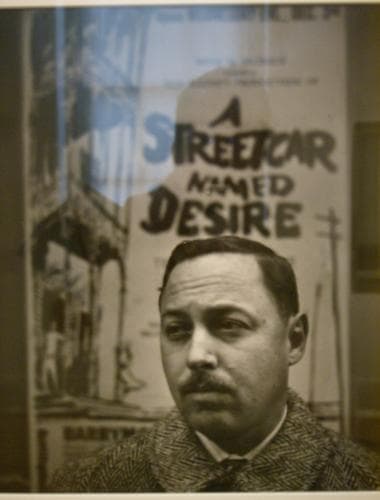
Thomas Lanier Williams III, known by his pen name Tennessee Williams, was an American playwright and screenwriter. Along with contemporaries Eugene O'Neill and Arthur Miller, he is considered among the three foremost playwrights of 20th-century American drama.
Similar books
- A Streetcar Named Desire
Tennessee Williams
4.0 (261k) average on GoodreadsFictionExplores similar themes of faded Southern gentility, illusion vs. reality, and tragic female characters in a Southern setting.
- Death of a Salesman
Arthur Miller
3.5 (186k) average on GoodreadsFictionA classic American drama dealing with family dysfunction, the American Dream, and the disillusionment of its characters.
- Nineteen Eighty-Four
George Orwell
4.2 (5.5M) average on GoodreadsFictionWinston Smith dreams of truth and rebellion in a world where Big Brother watches all, but he confronts the terrifying power of a regime that controls not just actions, but thoughts.
- The Frozen River
Ariel Lawhon
4.4 (600k) average on GoodreadsFictionIn 1789 Maine, a heroic midwife's diary helps her expose a murder and get justice in a town that wants to silence her.
- A Man Called Ove
Fredrik Backman
4.4 (569k) average on GoodreadsFictionA stubborn widower, who lives by strict rules, finds his quiet world changed by a lively new family next door, making him face his past and find happiness in human connection.
- The Art of Racing in the Rain
Garth Stein
4.2 (452k) average on GoodreadsFictionThrough the eyes of Enzo, a wise and observant dog, a race car driver's family navigates a journey of love, loss, and resilience, learning that life's most important lessons often come in the curves, not just on the straightaways.





Enjoyed the summary?
A summary gives you the shape of the book. The book itself has the detail, the examples and the voice.
Find The Glass Menagerie on AmazonAs an Amazon Associate, BookBrief earns from qualifying purchases. How we're funded