

Synopsis
Covers the whole plot, including the ending.
- Difficulty
- Medium
- Pacing
- Moderate
- Mood
- Atmospheric, Adventurous, Thought-provoking, Dark
- Read it if
- You love richly imagined fantasy worlds, morally complex characters, and stories that blend adventure with profound philosophical questions. Perfect for those who enjoy a coming-of-age journey set against a backdrop of grand, high-stakes conflict.
- Skip it if
- You prefer lighthearted fantasy without dark themes or existential dilemmas, or if you are sensitive to themes of child endangerment and experimentation.
The Golden Compass Plot Summary
Covers the whole plot, including the ending.
An Unruly Scholar and a Forbidden Glimpse
Lyra Belacqua, an adventurous orphan, lives with her daemon, Pantalaimon, at Jordan College, Oxford. She spends her days playing with other children and avoiding her studies. One evening, hidden in the Retiring Room with Pantalaimon, she listens to a meeting of the Master and Scholars. Her uncle, Lord Asriel, shows evidence of a mysterious particle called Dust, only seen in photos of the Aurora Borealis. He thinks it comes from a parallel world. He asks for money for an expedition to the North to investigate. This request is given with hesitation and secrecy. Lyra is curious, and Dust becomes an unsettling mystery.
Roger's Disappearance and Mrs. Coulter's Arrival
After Lord Asriel leaves, children start disappearing from Oxford. This includes Lyra's friend, Roger Parslow, a kitchen boy from Jordan College. People say the 'Gobblers,' or the General Oblation Board, are the kidnappers. Lyra is very upset about Roger's disappearance. During this time, Mrs. Coulter comes to Jordan College. She offers to take Lyra to London as her assistant. The Master has some doubts, but Lyra, wanting adventure and a break from college, accepts. Before she leaves, the Master secretly gives her a truth-telling device called an alethiometer, telling her to keep it hidden.
Life with Mrs. Coulter and a Frightening Discovery
In London, Lyra's life with Mrs. Coulter is exciting at first. She gets new clothes, goes to social events, and experiences a sophisticated life. But Mrs. Coulter's charm soon turns into a cold, controlling, and manipulative nature. Lyra feels more and more uneasy and alone. Mrs. Coulter's golden monkey daemon seems especially threatening. Lyra overhears talks and finds papers that show Mrs. Coulter is the head of the General Oblation Board, the group kidnapping children for experiments in the North. Horrified, Lyra realizes Mrs. Coulter plans to take her to the North for the same reason.
Escape and the Gyptian Alliance
Scared by Mrs. Coulter's true identity, Lyra escapes from her apartment. Mrs. Coulter's agents chase her, but a group of Gyptians rescues her. These river-faring people have strong ties to Jordan College. The Gyptians, led by Ma Costa, Farder Coram, and John Faa, are also looking for their children, who the Gobblers abducted. They welcome Lyra, seeing her connection to Jordan College and her knowledge of Mrs. Coulter. Lyra tells them what she knows about Mrs. Coulter and the Gobblers, which strengthens their shared goal to go north.
Learning the Alethiometer and a Prophecy
As the Gyptians get ready for their journey north, Lyra focuses on learning the alethiometer. To everyone's surprise, she shows a natural ability to read the complex device without the need for its books. This skill usually takes years to develop. Farder Coram, a wise Gyptian, helps her practice. During this time, the Gyptian elders, especially Farder Coram and John Faa, talk about an old prophecy about Lyra. They believe she will play a part in a coming conflict about Dust, which they see as a form of original sin or knowledge. Her fate is tied to the balance of the worlds.
Journey North and New Allies
The Gyptian fleet, with Lyra, goes north towards the Arctic. They meet Serafina Pekkala, the queen of the Lake Enara witch clan. She confirms the Gobblers' experimental station, Bolvangar, exists and warns of its dangers. In the port town of Trollesund, they meet Iorek Byrnison, a disgraced armored bear (panserbjørne) who lost his armor and is forced to serve others. Lyra, using her alethiometer and cleverness, helps Iorek get his armor back. He becomes fiercely loyal to her. Iorek agrees to join their expedition, making him a strong ally in their quest to rescue the children.
Rescuing Roger and the Bolvangar Facility
Iorek and the alethiometer lead the Gyptians and Lyra to Bolvangar, the research station where the Gobblers do their experiments. Lyra, disguised and with Iorek's help, gets into the facility. Inside, she finds that the Gobblers are separating children from their daemons using a procedure called 'intercision.' This leaves both child and daemon traumatized and often dead. She is happy to find Roger among the captive children. Before her own intercision, Lyra sets off the fire alarm, causing chaos and letting her lead the children in a mass escape.
Battle and an Escape to Freedom
As the children run from Bolvangar, the waiting Gyptian forces, Iorek Byrnison, and Serafina Pekkala's witches meet them. A battle starts between the Gyptians and their allies against the Tartar guards and Mrs. Coulter's agents. Iorek is very helpful; his strength changes the battle. Lyra briefly confronts Mrs. Coulter before the facility starts to fall apart from the battle. The children are safely taken out, but Lyra knows her journey is not over. She learns that her uncle, Lord Asriel, is held prisoner further north, and Roger is still in danger.
Journey to Svalbard and the Bear King
After escaping Bolvangar, Lyra, Roger, and Iorek Byrnison go to Svalbard, the kingdom of the armored bears. Lord Asriel is supposedly held there. On their way, bears loyal to Iofur Raknison, the bear king who took Iorek's throne, attack them. Lyra, quick and clever, tricks Iofur into thinking she is a daemon. She says she will make him a true king if he beats Iorek in a fight. Her trick leads to a fight between Iorek and Iofur, allowing Iorek to become king again.
Lord Asriel's Revelation and a Terrible Choice
Lyra, Roger, and Iorek finally reach Lord Asriel's research station in Svalbard. Lyra is happy to see her uncle, but he is cold and distant. He tells them his plan: to use a lot of energy, made by separating a child from their daemon, to make a hole between their world and the parallel world he found through Dust. Lyra is horrified. She realizes the real, terrible reason for his research. Lord Asriel sees Roger, a child with potential and a strong daemon, as the right sacrifice. He takes Roger. Lyra has to choose: save Roger or stop her uncle from bringing an unknown force into the worlds.
The Bridge to Another World
Lyra begs and tries to stop him, but Lord Asriel continues his experiment. He separates Roger from his daemon, Salmakia, in a violent intercision. This releases a huge amount of energy. Roger dies instantly; his daemon disappears into Dust. The energy tears a hole in the sky, creating a bridge to a parallel world, just as Asriel wanted. Without a word, Lord Asriel walks through the portal, leaving Lyra devastated by Roger's death. Lyra knows she must understand what Asriel has done and get justice for Roger. She decides to follow him into the unknown world, with Pantalaimon.
Principal Figures
Lyra Belacqua
Protagonist
A wild and cunning orphan destined to play a pivotal role in the fate of multiple worlds.
Lyra is an adventurous, often mischievous, and fiercely loyal orphan raised at Jordan College, Oxford. She possesses a remarkable ability to lie convincingly and a deep empathy for others, especially her friends. Her daemon, Pantalaimon, can take many forms, reflecting her untamed nature. Lyra is driven by curiosity, loyalty to her friends (especially Roger), and a strong sense of justice. She is initially naive about the adult world but quickly learns to navigate its dangers through her wit and courage. The alethiometer reveals her extraordinary potential.
Relationships: Pantalaimon (Her daemon and closest companion, an extension of her soul); Roger Parslow (Her best friend, whose abduction and death profoundly impact her); Lord Asriel (Her uncle (and later revealed father), a powerful and enigmatic figure); Mrs. Coulter (Her mother and antagonist, a manipulative and dangerous woman); Iorek Byrnison (A loyal armored bear ally and protector); Farder Coram (A wise Gyptian elder who guides and protects her)
Pantalaimon
Supporting
Lyra's daemon, a constantly shifting embodiment of her soul and emotions.
Pantalaimon, or 'Pan,' is Lyra's daemon, the external manifestation of her inner self. He is a crucial part of her identity, constantly changing animal forms in the early stages of the book, reflecting Lyra's youthful, unformed nature. He often acts as Lyra's conscience, expressing her fears, doubts, and affections. His inability to settle into a permanent form signifies Lyra's own lack of a fixed adult identity. Pan is fiercely protective of Lyra and shares her adventurous spirit, but also her anxieties and moral dilemmas, particularly regarding Dust and intercision.
Relationships: Lyra Belacqua (Her human, her other half, a symbiotic bond)
Lord Asriel
Antagonist/Supporting
Lyra's powerful and ruthless uncle, driven by an obsession with Dust and parallel worlds.
Lord Asriel is Lyra's formidable and enigmatic uncle, a brilliant but cold and ambitious explorer. He is obsessed with the mysterious substance called Dust and its connection to parallel universes. Asriel views conventional morality as secondary to his scientific pursuits, willing to make extreme sacrifices for his goals. His commanding presence and ruthless determination make him a force to be reckoned with. He is revealed to be Lyra's father, a fact he keeps hidden. His ultimate aim is to challenge the Authority, which he believes is tied to Dust, by opening a bridge between worlds.
Relationships: Lyra Belacqua (His daughter, though initially presented as his niece; a tool for his grander plans); Mrs. Coulter (Lyra's mother and his former lover, with whom he shares a complex and dangerous history)
Mrs. Coulter
Antagonist
Lyra's sophisticated and manipulative mother, leader of the General Oblation Board.
Mrs. Coulter is a beautiful, intelligent, and terrifyingly manipulative woman. She is the head of the General Oblation Board (the 'Gobblers') and is responsible for the abduction and intercision of children. Her golden monkey daemon is a chilling reflection of her cruel and controlling nature. Mrs. Coulter is ruthless in her pursuit of power and knowledge, particularly regarding Dust, and has a complex, often violent, relationship with Lord Asriel, who is Lyra's father and her former lover. She initially takes Lyra under her wing, but her true intentions are sinister and self-serving.
Relationships: Lyra Belacqua (Her daughter, whom she both seeks to control and, in a twisted way, protect); Lord Asriel (Lyra's father and her former lover, with whom she has a powerful, destructive connection)
Roger Parslow
Supporting
Lyra's best friend, a kitchen boy from Jordan College, whose abduction sets Lyra's journey in motion.
Roger Parslow is Lyra's closest friend at Jordan College, a cheerful and adventurous kitchen boy. His abduction by the Gobblers is the catalyst for Lyra's entire journey north. Roger represents Lyra's innocence and her connection to her old life. His simple, loyal nature makes him an ideal companion for Lyra's early adventures. His daemon is a small terrier. Roger's fate becomes a driving force for Lyra, and his eventual sacrifice is a pivotal, tragic moment that propels the story into its next phase and profoundly impacts Lyra.
Relationships: Lyra Belacqua (Her best friend and constant companion in Oxford)
Iorek Byrnison
Supporting
An exiled armored bear king who becomes Lyra's loyal protector and ally.
Iorek Byrnison is a magnificent panserbjørne, an armored bear, who was exiled from his kingdom of Svalbard and tricked out of his armor. Proud, fierce, and incredibly strong, he is initially found in Trollesund, working as a slave. Lyra helps him recover his armor, earning his unwavering loyalty and deep respect. Iorek becomes a powerful protector and a formidable warrior, fighting alongside Lyra and the Gyptians. His honor code and strength are instrumental in the battle against the Gobblers and in helping Lyra reach Lord Asriel. He eventually reclaims his rightful place as king.
Relationships: Lyra Belacqua (His human friend and the one who helped him regain his honor); Iofur Raknison (His rival and usurper of his throne)
Farder Coram
Supporting
A wise and respected elder of the Gyptian community, who guides and protects Lyra.
Farder Coram is a highly respected and wise elder among the Gyptians. He has a deep understanding of ancient lore, prophecies, and the subtle workings of the world. His daemon is a large, elegant cat. Farder Coram becomes a mentor figure to Lyra, helping her understand the alethiometer and teaching her about the importance of Dust and the unfolding cosmic conflict. He is kind, patient, and fiercely protective of Lyra, recognizing her unique destiny. His knowledge and experience are invaluable to the Gyptian expedition.
Relationships: Lyra Belacqua (Her mentor and protector); John Faa (His leader and fellow Gyptian elder); Serafina Pekkala (His past lover, a witch queen)
John Faa
Supporting
The powerful and respected Lord of the Western Gyptians, leading the search for the stolen children.
John Faa is the formidable and respected Lord of the Western Gyptians. His daemon is a black crow. He is a strong and decisive leader, deeply committed to his people and determined to rescue the Gyptian children abducted by the Gobblers. He organizes and leads the Gyptian expedition to the North, showing immense courage and strategic thinking. John Faa recognizes Lyra's importance and ensures her safety, seeing her as a key to understanding the Gobblers' operations. He embodies the Gyptian community's resilience and loyalty.
Relationships: Farder Coram (His trusted advisor and fellow Gyptian elder); Lyra Belacqua (A young girl he protects and believes in)
Serafina Pekkala
Supporting
The beautiful and powerful queen of the Lake Enara witch clan, an ancient ally of the Gyptians.
Serafina Pekkala is the queen of the Lake Enara witches, a beautiful and ancient being whose daemon, Kaisa, is a snow goose that can fly far from her body. Witches are immortal and possess powerful magic, and Serafina is a wise and formidable figure. She has a deep connection to Farder Coram from their past. Serafina becomes an ally to Lyra and the Gyptians, providing crucial information and military aid against the Gobblers and Lord Asriel. She represents a different, more ancient understanding of the world and its spiritual forces.
Relationships: Farder Coram (Her former lover and trusted friend); Lyra Belacqua (A young girl she recognizes as important to prophecy)
Themes & Insights
Identity and the Soul
Daemons are central to identity. A daemon is the physical form of a human's soul, always an animal. Until puberty, a child's daemon can change, showing their growing personality. When adult, it takes a fixed form. The 'intercision' at Bolvangar, which separates children from their daemons, is a tearing apart of the soul. It leaves both human and daemon empty and hurt. This theme shows the strong link between inner self and outer form, and the bad results of breaking that bond. It highlights the importance of the individual soul.
“For Lyra, this was the most important rule of all: you could not be parted from your daemon.”
Loss of Innocence and Growing Up
Lyra's journey is a story about growing up. She starts as a carefree child, unaware of the bad parts of her world. Her adventures make her face betrayal, cruelty, and death. Losing her friend, Roger, because of her uncle's ambition, ends her innocence. It forces her to make hard, moral choices. Daemons also show this: as Lyra faces more adult problems, Pantalaimon changes forms less often, showing he will soon settle into his final, adult shape.
“She was going to miss Roger. She was going to miss him for the rest of her life.”
The Nature of Good and Evil
The book looks at good and evil, especially through Lord Asriel and Mrs. Coulter. They do bad things for what they think are good reasons. Lord Asriel thinks he is fighting a corrupt Authority by seeking knowledge of Dust, even if it means sacrificing children. Mrs. Coulter, though cruel, also shows some motherly care for Lyra. The 'Magisterium' (the Church) is shown as a controlling force that stops knowledge. This theme questions simple ideas of good and bad. It suggests that good intentions can lead to bad results, and vice versa.
“He was a man who knew what he wanted and went for it, and what he wanted was not ignoble.”
Knowledge vs. Ignorance (and Authority)
The search for and control of knowledge are key to the story. Lord Asriel wants to understand Dust and parallel worlds, challenging the Magisterium's beliefs. The Magisterium, fearing Dust (which they call Original Sin), tries to control information and stop scientific study. This is seen in the intercision experiments, which try to prevent Dust's 'corrupting' effect. Lyra's ability to read the alethiometer, a device of pure truth, goes against this control. This makes her important in the fight for open knowledge and understanding.
“The Church, for its part, has always suppressed the study of Dust.”
Destiny and Free Will
Lyra is said to be a child of prophecy. She is meant to play a part in a big conflict. The alethiometer, which tells truths, often points to her path. But Lyra often acts on instinct, emotion, and her own cleverness. She makes choices that are not always expected. Her decision to follow Lord Asriel into the new world at the end, because of sadness and wanting answers, feels like her own choice, even if it fits a larger destiny. The book explores the balance between a foretold fate and a person's ability to choose their own way.
“This child is destined to betray.”
Plot Devices & Literary Techniques
Daemons
External manifestations of human souls, reflecting identity and emotional state.
Daemons are animal companions that are the physical embodiment of a person's soul. They are inseparable from their human, and their form reflects the human's personality. Children's daemons can change shape, symbolizing their unformed identities, while adults' daemons settle into a fixed form. Daemons allow for visible representations of inner turmoil, emotional bonds, and the devastating impact of 'intercision' (soul separation). They are a unique and fundamental aspect of the world-building, making the abstract concept of a soul tangible and vulnerable.
Alethiometer
A truth-telling device that reveals answers to any question, guided by symbolic meanings.
The alethiometer is a golden compass-like device with 36 symbols around its face, each with multiple layers of meaning. By setting three hands to specific symbols, a skilled reader can ask a question, and a fourth, oscillating hand will point to the answer. Lyra possesses an innate, intuitive ability to read it without needing the complex interpretive books, a skill that usually takes years to master. It serves as a crucial plot device, guiding Lyra's journey, revealing hidden truths, and providing exposition about Dust, prophecies, and the intentions of others.
Dust
A mysterious cosmic particle linked to consciousness, knowledge, and parallel worlds.
Dust is a fundamental, mysterious particle that Lord Asriel discovers through photographs of the Aurora. It is drawn to consciousness and is associated with knowledge, adulthood, and potentially 'Original Sin' by the Magisterium. Its existence implies parallel worlds and challenges established religious doctrines. Dust is the central scientific and theological mystery of the story, driving Asriel's research and the Magisterium's efforts to suppress it through intercision. Its nature and implications are the core conflict that propels the entire trilogy.
Parallel Worlds
The existence of multiple universes, connected through phenomena like Dust and the Aurora.
The concept of parallel worlds is introduced early on by Lord Asriel, who theorizes that Dust originates from a different universe visible through the Aurora Borealis. This device expands the scope of the narrative beyond Lyra's initial world, setting the stage for a multi-world conflict. The eventual tearing open of a gateway to another world at the end of the book is a literal manifestation of this device, directly opening the narrative to the larger cosmological stakes and future adventures across different realities.
Prophecy
Foretold events that guide characters' actions and hint at a larger destiny.
Various prophecies, particularly those concerning Lyra, are mentioned by characters like the Gyptian elders and Serafina Pekkala. These prophecies suggest Lyra is destined to play a crucial role in a looming cosmic struggle, particularly one involving 'betrayal.' This device adds a layer of epic fantasy to the story, giving Lyra's personal journey a greater, preordained significance. It creates dramatic tension around her choices and hints at the grander scale of the unfolding events, shaping the expectations of both characters and readers.
The Golden Compass Quotes
“You cannot change what you are, only what you do.”
“Tell them stories. They need the truth. You must tell them true stories, and everything will be well, just tell them stories.”
“Without stories, we wouldn't be human beings at all.”
“That's the duty of the old, to be anxious on behalf of the young. And the duty of the young is to scorn the anxiety of the old.”
“I am a bear, you see. I am not a human, and I have no daemon.”
“All the history of human life has been a struggle between wisdom and stupidity.”
“The intentions of a tool are what it does. A hammer intends to strike, a vise intends to hold.”
“We are all subject to the fates. But we must all act as if we are not, or die of despair.”
“There are some places we need to go, and we don't know why until we get there.”
“A quick death is not always the best death. A slow death can be a better one.”
“Evil is not a thing, it's a quality of action.”
“The world is full of things that don't make sense, and we have to make sense of them.”
“To be a child is to be curious, and to be curious is to be alive.”
“We have to build the Republic of Heaven where we are, because for us there is no elsewhere.”
Quiz
10 questions on the plot and the characters. Each answer comes with a short explanation.
Question 1
What is the name of Lyra's daemon in 'The Golden Compass'?
- Stelmaria
- Pantalaimon
- Kaisa
- Hester
Show answer
B. Pantalaimon Lyra's daemon is Pantalaimon, who often takes the form of an ermine or other small animals. Stelmaria is Lord Asriel's daemon, Kaisa belongs to Serafina Pekkala, and Hester is Lee Scoresby's daemon.
Question 2
What organization is responsible for kidnapping children, including Roger, in the book?
- The Magisterium
- The Gobblers
- The Gyptians
- The Witches
Show answer
B. The Gobblers The Gobblers, officially called the General Oblation Board, are kidnapping children for experiments involving severing them from their daemons. The Magisterium is the governing religious authority, the Gyptians are a nomadic group helping Lyra, and the witches are allies.
Question 3
What is the primary function of the alethiometer, or Golden Compass?
- To predict the weather
- To tell the truth
- To navigate to parallel worlds
- To control daemons
Show answer
B. To tell the truth The alethiometer is a truth-telling device that answers questions by pointing to symbols. Lyra learns to read it intuitively, which helps her uncover secrets and guide her journey.
Question 4
Why does Lyra initially travel north with Mrs. Coulter?
- To search for her uncle Asriel
- To escape the Gobblers
- To become Mrs. Coulter's assistant
- To find Roger
Show answer
C. To become Mrs. Coulter's assistant Lyra is taken in by Mrs. Coulter, who offers her a new life and an assistant role, unaware that Mrs. Coulter is the leader of the Gobblers. Lyra later escapes to find Roger and Asriel.
Question 5
What is the significance of the intercision process performed at Bolvangar?
- It strengthens the bond between humans and daemons
- It severs the connection between humans and their daemons
- It allows daemons to change form at will
- It cures diseases in children
Show answer
B. It severs the connection between humans and their daemons Intercision is a horrific experiment that cuts the link between a person and their daemon, leaving them emotionless and controlled. This is the fate the Gobblers plan for the kidnapped children.
Question 6
How does Lyra help Iorek Byrnison regain his rightful status?
- By giving him the alethiometer
- By tricking the townspeople into returning his armor
- By fighting a duel on his behalf
- By appealing to the witch clans
Show answer
B. By tricking the townspeople into returning his armor Lyra uses her cunning to trick the people of Trollesund into revealing where Iorek's armor is hidden, allowing him to reclaim it and his honor as an armored bear.
Question 7
What major theme in 'The Golden Compass' is explored through the conflict between free will and authority?
- The importance of family loyalty
- The battle between science and religion
- The value of childhood innocence
- The power of friendship
Show answer
B. The battle between science and religion The book contrasts the oppressive control of the Magisterium (representing religious authority) with the pursuit of knowledge and freedom by characters like Asriel, highlighting themes of rebellion and intellectual independence.
Question 8
What crucial discovery does Lyra make about Dust while at Bolvangar?
- It is attracted to adults but not children
- It is a source of magical energy for witches
- It can be used to heal daemons
- It is created by the alethiometer
Show answer
A. It is attracted to adults but not children Lyra learns that Dust settles on adults but not children, which is why the Gobblers are experimenting on children—to prevent them from attracting Dust as they grow up, as Dust is linked to consciousness and sin.
Question 9
In the climax, why does Lyra's decision to help Asriel ultimately betray Roger?
- She reveals Roger's location to Mrs. Coulter
- She gives Roger's daemon to the Gobblers
- She leads Roger to Asriel, who sacrifices him
- She abandons Roger to save Iorek
Show answer
C. She leads Roger to Asriel, who sacrifices him Lyra rescues Roger from Bolvangar and brings him to Asriel, not knowing that Asriel needs a child's energy to open a bridge to another world. Asriel uses Roger in a sacrificial ritual, fulfilling Lyra's unintended betrayal.
Question 10
What symbolic role does Lyra's ability to read the alethiometer play in the broader narrative?
- It represents her destiny as a prophesied child
- It shows her superiority over other characters
- It is a tool for personal gain
- It demonstrates her scientific genius
Show answer
A. It represents her destiny as a prophesied child Lyra's unique, intuitive skill with the alethiometer marks her as the chosen one in a prophecy, setting her up as a key figure in the battle against oppressive forces and the exploration of multiversal truths.
The Golden Compass FAQ
What is 'The Golden Compass' about?
The story follows Lyra Belacqua, a young girl living in a parallel Oxford, as she journeys to the Arctic North to rescue her friend Roger from the child-snatching Gobblers. Along the way, she uncovers a conspiracy involving Dust, experimental severing of children from their daemons, and her uncle Lord Asriel's plan to bridge to other worlds, forcing her to navigate treacherous alliances with witches, armored bears, and scholars.
Why should I read 'The Golden Compass'?
It's a richly imaginative fantasy that blends steampunk elements with philosophical themes about consciousness, free will, and authority. The novel features a fierce, morally complex heroine in Lyra, a unique daemon companion system that explores human psychology, and a plot full of suspense, betrayal, and epic stakes set against a vividly realized Arctic landscape.
What is the background/setting of 'The Golden Compass'?
The story is set in a parallel universe where every human has a daemon—an external manifestation of their soul in animal form. It begins in an alternate Oxford dominated by the theocratic Magisterium, then moves to the frozen North inhabited by witch clans, armored bears like Iorek Byrnison, and Tartar tribes, with technology like the alethiometer (Golden Compass) and anbaric lights blending with Victorian-era aesthetics.
What are the most memorable quotes?
Key quotes include: 'Tell them stories' (emphasizing the power of narrative), 'Without stories, we wouldn't be human beings at all' (from the narrator on Lyra's tale), and Lyra's defiant 'I'm going to rescue Roger' showcasing her determination. The alethiometer's motto 'The intention craft is to show the truth' also highlights the theme of seeking knowledge against oppression.
What writing style does the author use?
Pullman employs a third-person omniscient narrator with a lyrical, descriptive prose that vividly paints the Arctic setting and steampunk elements. The style balances adventure-paced action with philosophical depth, using accessible language for young readers while exploring complex themes like theology and consciousness through metaphors like Dust and daemons.
What minor details add significant meaning?
Lyra's ability to intuitively read the alethiometer without formal training hints at her special connection to Dust and her destined role. The subtle descriptions of daemon settling—where a child's daemon can change form but an adult's is fixed—symbolize the loss of innocence and flexibility as one matures, tying into the Gobblers' experiments to sever this bond prematurely.
What are some subtle foreshadowing moments?
Early mentions of 'Dust' as a mysterious particle foreshadow its central role in consciousness and the multiverse. Mrs. Coulter's golden monkey daemon's violent behavior hints at her cruel, controlling nature long before her involvement with the Gobblers is revealed. Roger's disappearance and Lyra's promise to find him set up the climax where she must choose between saving him and helping Asriel.
What unexpected character connections exist?
Lyra discovers that Mrs. Coulter is her mother and Lord Asriel is her father, though they kept this hidden from her. This familial tie explains Mrs. Coulter's obsessive interest in Lyra and Asriel's willingness to use her in his experiments. Additionally, the armored bear Iorek's exiled status parallels Lyra's own journey as an outsider seeking redemption and purpose.
What are unspoken character motivations?
Lord Asriel is driven by a desire to overthrow the oppressive Magisterium and explore the multiverse, but his ambition leads him to sacrifice others, including Roger, for his bridge-building experiment. Mrs. Coulter's involvement with the Gobblers stems from a twisted belief that severing children from daemons will protect them from Dust's 'sin,' masking her own hunger for power and control.
What psychological complexities do characters exhibit?
Lyra grapples with her identity as a 'savage liar' who uses deception for survival, yet grows into a loyal champion, showing how morality can be fluid in extreme circumstances. Iorek Byrnison struggles with shame over his past exile, seeking honor through protecting Lyra. Mrs. Coulter displays a chilling mix of maternal affection and ruthless cruelty, reflecting deep internal conflicts about power and purity.
What are the major emotional turning points?
Lyra's horror upon discovering the severed daemons at Bolvangar marks a shift from childish curiosity to grim determination. Her betrayal by Mrs. Coulter, who she initially trusted, hardens her resolve. The climax where she must choose between saving Roger and aiding Asriel's bridge—ultimately leading to Roger's death—forces her into a painful maturity, realizing the costs of great endeavors.
How do relationship dynamics evolve?
Lyra and Pan's bond deepens from playful companionship to a lifeline in crisis, mirroring her growing self-awareness. Her alliance with Iorek evolves from mutual need to profound loyalty, as he becomes her protector. With Mrs. Coulter, Lyra moves from naive admiration to fear and hatred, then to a complex understanding of her mother's motives, setting up future conflicts in the series.
Which parts remain ambiguous or open-ended?
The true nature of Dust is left partially unexplained, inviting interpretation as original sin, consciousness, or dark matter. The full implications of Asriel's bridge to other worlds are not resolved, leaving readers to wonder about the multiverse's structure. Lyra's ultimate destiny beyond saving Roger is hinted at but not detailed, setting up sequels.
What are controversial scenes or decisions?
The Gobblers' experiments to sever children from their daemons are deeply disturbing, depicting child abuse in a fantasy context. Asriel's sacrifice of Roger to power his bridge raises ethical debates about ends justifying means. Lyra's frequent lying and manipulation, while portrayed as necessary for survival, spark discussion about moral ambiguity in young protagonists.
'The Golden Compass' ending explained: how it ends & what it means
The book ends with Lyra witnessing Asriel use Roger's death to open a bridge to another world, revealing her parents' true roles and the vast multiverse. She decides to follow Asriel through the bridge, symbolizing her choice to pursue truth and rebellion over safety. This sets up her journey as a key figure in the battle against oppression, with themes of sacrifice and the loss of innocence.
About the author

Sir Philip Nicholas Outram Pullman is an English writer. His books include the fantasy trilogy His Dark Materials and The Good Man Jesus and the Scoundrel Christ, a fictionalised biography of Jesus. In 2008, The Times named Pullman one of the "50 greatest British writers since 1945". In a 2004 BBC poll, he was named the eleventh most influential person in British culture. He was knighted in the 2019 New Year Honours for services to literature.
Similar books
- A Wrinkle in Time
Madeleine L'Engle
4.0 (1.1M) average on GoodreadsFantasyFeatures a young protagonist on a perilous, dimension-hopping journey to save a loved one, dealing with profound cosmic forces.
- Harry Potter and the Sorcerer's Stone
J.K. Rowling
4.5 (7M) average on GoodreadsFantasyWhile both feature young protagonists discovering magical worlds, The Golden Compass is significantly more overtly philosophical and critical of real-world institutions. Rowling's magic system is more whimsical and less tied to metaphysical concepts, making Harry Potter a more straightforward escapist fantasy. Pullman's work is less about 'good vs. evil' and more about 'freedom vs. control'.
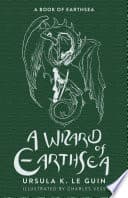
- A Wizard of Earthsea
Ursula K. Le Guin
4.0 (241k) average on GoodreadsFantasyBoth books feature young protagonists on journeys of self-discovery in richly imagined worlds. However, Le Guin's narrative is more introspective and less action-oriented, focusing on balance and consequence in magic with a more austere prose style. Pullman's work is more overtly allegorical, expansive, and character-driven, blending grand adventure with explicit philosophical inquiry rather than implicit moral lessons.
- The Hunger Games
Suzanne Collins
4.3 (6.4M) average on GoodreadsFantasyIn a future where children fight to the death on live television, Katniss Everdeen volunteers for the arena, turning a death sentence into a fight for survival and a spark of rebellion.
- 1984
George Orwell
4.2 (3.1M) average on GoodreadsPoliticsIn a future where surveillance and thought control are absolute, a man's search for truth clashes with the Party, showing that hope can be a form of rebellion.
- Divergent
Veronica Roth
4.2 (2.9M) average on GoodreadsFantasyIn a society divided by virtues, a sixteen-year-old's difference from the norm starts a rebellion that threatens her world.





Enjoyed the summary?
A summary gives you the shape of the book. The book itself has the detail, the examples and the voice.
Find The Golden Compass on AmazonAs an Amazon Associate, BookBrief earns from qualifying purchases. How we're funded