
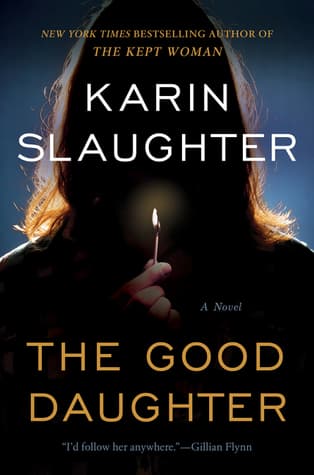
Synopsis
Covers the whole plot, including the ending.
- Difficulty
- Medium
- Pacing
- Moderate
- Mood
- Dark, Suspenseful, Gritty, Emotional
- Read it if
- You enjoy complex thrillers with dual timelines, deep family secrets, and morally ambiguous characters. Perfect for those who love intense emotional journeys alongside their mysteries.
- Skip it if
- You prefer lighthearted reads or are sensitive to graphic violence, sexual assault, and child abuse, as these themes are central to the plot.
The Good Daughter Plot Summary
Covers the whole plot, including the ending.
The Pikeville School Shooting and Charlotte's Discovery
Charlotte Quinn, a defense attorney in Pikeville, Virginia, is the first person to respond to a school shooting. She finds the shooter, Kelly Wilson, dead by suicide, and her niece, Olivia, critically wounded. The scene is chaotic. As the investigation starts, Charlotte's father, Rusty Quinn, a well-known defense lawyer, arrives. The shooting brings back traumatic memories for Charlotte of a home invasion 28 years ago that killed her mother and deeply scarred her and her sister, Samantha.
Unearthing the Past: The 1989 Home Invasion
The story goes back to 1989, describing the night the Quinn family's lives changed. Teenagers Charlotte and Samantha are home with their mother, Gamma, when two masked men break in. The intruders attack Gamma and take Charlotte and Samantha into the woods. One of the men, later identified as Dale Henry, shoots Gamma. In the woods, Charlotte escapes and runs for help, leaving Samantha behind with the other attacker, Paul Henry. Charlotte eventually returns, but the trauma of leaving Samantha and finding her mother dead haunts her for decades. Samantha is found hours later, traumatized but alive.
Samantha's Return and Pikeville's Lingering Scars
After the school shooting, Samantha Quinn, Charlotte's estranged sister, comes back to Pikeville. Samantha, now living a solitary life as 'Sam,' has avoided her past and family. Her return gets mixed reactions, especially from her father, Rusty, with whom she has a difficult relationship. Pikeville, still recovering from the school shooting, also remembers the 1989 home invasion. Samantha's presence reopens old wounds and creates talk about what really happened that night. Her solitary nature and past trauma make her a mysterious figure to her family and the community.
The Investigation and Initial Suspects
As Detective Bill Tanner leads the investigation into the school shooting, Charlotte becomes involved because her niece Olivia is in critical condition. The shooter, Kelly Wilson, is identified as a former student with a troubled past. Charlotte discovers that Kelly was exploited by a local drug dealer, Bobby Cross, who is also connected to the town's criminal element. This link starts to reveal a deeper network of corruption in Pikeville, suggesting the school shooting might be more complicated than a simple act by one disturbed person. Charlotte's legal skills and knowledge of the town become very useful.
Charlotte's Defense of Luke and the Revelation of a Secret
Charlotte defends Luke, a school janitor and former classmate, who is initially suspected of involvement in the shooting due to his criminal record and presence at the school. During her investigation, Charlotte learns that Luke actually helped children hide during the shooting, saving many lives. More importantly, she finds out Luke is her father Rusty's biological son, a secret kept for decades. This revelation adds another layer to the Quinn family and shows more of Rusty's complex, often morally questionable, personal life and connections in Pikeville.
Samantha's Fragments of Memory and the Henry Brothers
Samantha, still dealing with severe PTSD and memory loss from the 1989 attack, starts having fragmented memories and flashbacks. These memories, at first confusing, slowly form a clearer picture of what happened in the woods. She remembers details about the Henry brothers, Dale and Paul, the two attackers. It becomes clear that the official story of the home invasion, and the Henry brothers' conviction, might not be the whole truth. Samantha's effort to remember her past is painful but necessary to understand the full extent of the past crimes.
The Truth About the Henry Brothers and Rusty's Involvement
As Charlotte and Samantha reluctantly work together, they uncover the truth about the 1989 home invasion. They discover the Henry brothers, Dale and Paul, were not random criminals, but were hired by Rusty Quinn. Rusty, a ruthless defense attorney, planned the attack to scare Gamma, who was planning to leave him and expose his unethical legal practices and his involvement with a corrupt network. The 'attack' was meant to be a scare, but it escalated, leading to Gamma's murder and Samantha's abuse. This discovery shatters Charlotte's view of her father, whom she always admired.
Samantha's Confession and the Real Killer
In a confrontation, Samantha finally tells the whole truth about the 1989 attack. While Dale Henry was involved in the break-in and shooting Gamma, Samantha herself delivered the final, fatal blow to her mother. In a moment of extreme trauma and confusion, after being left alone with Paul Henry and seeing her mother suffer, Samantha, then a child, believed she was ending her mother's pain. This confession explains Samantha's decades of self-imposed exile and her deep guilt, as well as the family's unspoken secrets.
The Connection to the School Shooting and Bobby Cross
Charlotte and Samantha realize that Bobby Cross, the drug dealer connected to Kelly Wilson, also had ties to the Henry brothers and the criminal world Rusty dealt with. Bobby Cross's family had helped cover up Gamma's murder, framing the Henry brothers as the only perpetrators and hiding Rusty's role. It becomes clear that the violence in Pikeville, from the 1989 attack to the school shooting, is linked by a long-standing network of corruption and hidden agendas, with Rusty Quinn at its center. The school shooting was a tragic result of this darkness.
Confrontation and Resolution
With the full truth, Charlotte and Samantha confront Rusty. Rusty tries to manipulate and deny, but the evidence and the sisters' determination are too strong. His past and present actions finally catch up to him. The sisters, having faced their family's darkest history, begin the difficult process of healing and rebuilding their relationship. Olivia recovers from her injuries, and the Quinn family, though changed, finds a fragile path toward a future free from the secrets that have defined them. Charlotte commits to exposing Pikeville's corruption.
The Good Daughter Characters
Charlotte Quinn
Protagonist
The 'good daughter,' a defense attorney haunted by her past.
Charlotte is a meticulous and driven defense attorney who has meticulously built a life in Pikeville, following in her father's footsteps. She is deeply affected by the 1989 home invasion, carrying the guilt of having run away while her sister was left behind. She strives for order and control, often suppressing her emotions. The school shooting, and her niece's involvement, forces her to confront the traumatic memories and hidden truths of her family's past, challenging her perception of justice and her father. She is intelligent, analytical, and ultimately courageous in seeking the truth.
Relationships: Samantha Quinn (Estranged sister, later reunited); Rusty Quinn (Father, initially admired, later reviled); Gamma Quinn (Deceased mother, source of trauma); Olivia (Niece, victim of the school shooting); Bill Tanner (Detective, professional colleague); Luke (Half-brother, client, former classmate)
Samantha Quinn
Protagonist
The 'bad daughter,' a reclusive survivor of extreme trauma.
Samantha, or 'Sam,' is Charlotte's older sister, profoundly scarred by the 1989 home invasion where she was left behind and suffered severe trauma. She has lived a nomadic, reclusive life, marked by PTSD, selective amnesia, and a deep sense of guilt and shame. Her return to Pikeville after the school shooting forces her to confront her past and the fragmented memories she has suppressed for decades. She is resilient but fragile, artistic, and fiercely independent, despite her internal struggles. Her journey is about reclaiming her memory and finding a path to healing.
Relationships: Charlotte Quinn (Estranged sister, later reunited); Rusty Quinn (Father, deeply strained relationship); Gamma Quinn (Deceased mother, source of immense trauma)
Rusty Quinn
Antagonist
Pikeville's influential, morally ambiguous defense attorney and patriarch.
Rusty Quinn is Charlotte and Samantha's father, a formidable and charismatic defense attorney in Pikeville, known for his ruthless tactics and deep connections. He presents himself as a devoted family man and pillar of the community, but harbors dark secrets and a history of unethical behavior and manipulation. He orchestrated the 1989 home invasion to intimidate his wife, Gamma, and has spent decades covering up the true circumstances of her death. His desire for control and his willingness to exploit others make him a dangerous and complex antagonist.
Relationships: Charlotte Quinn (Daughter, manipulated and admired); Samantha Quinn (Daughter, estranged and feared); Gamma Quinn (Deceased wife, victim of his machinations); Luke (Biological son, hidden for decades)
Gamma Quinn
Supporting
Charlotte and Samantha's mother, whose murder is central to the plot.
Gamma Quinn is Charlotte and Samantha's mother, brutally murdered during the 1989 home invasion. Though deceased, her memory and the circumstances of her death are central to the entire narrative. She was planning to leave Rusty and expose his corrupt dealings, which led to his orchestration of the attack. Her character is revealed through the fragmented memories of her daughters and the revelations about Rusty's past. She represents the innocence lost and the truth suppressed within the Quinn family.
Relationships: Rusty Quinn (Husband, ultimately her killer); Charlotte Quinn (Daughter); Samantha Quinn (Daughter)
Olivia
Supporting
Charlotte's niece, a victim of the school shooting.
Olivia is Charlotte's niece and a victim of the Pikeville elementary school shooting, left in critical condition. Her survival and recovery are a driving force for Charlotte's involvement in the investigation and her determination to uncover the truth. She represents the innocent victims of the violence that plagues Pikeville and serves as a poignant reminder of the ripple effects of past crimes on the present.
Relationships: Charlotte Quinn (Aunt); Samantha Quinn (Aunt)
Luke
Supporting
School janitor, Charlotte's half-brother, and a hero in the shooting.
Luke is a school janitor and a former classmate of Charlotte's. Initially a suspect in the school shooting due to his past criminal record, he is later revealed to have bravely protected children during the attack. Most significantly, Charlotte discovers he is Rusty Quinn's biological son, making him her half-brother. Luke's character highlights the complex social strata of Pikeville and Rusty's hidden personal life. He is a quiet, honorable man who has been unjustly judged by society.
Relationships: Charlotte Quinn (Half-sister, client); Rusty Quinn (Biological father); Samantha Quinn (Half-sister)
Bill Tanner
Supporting
Detective investigating the school shooting.
Detective Bill Tanner is the lead investigator on the Pikeville elementary school shooting case. He is a dedicated and ethical law enforcement officer who works closely with Charlotte. While initially focused on the immediate facts of the shooting, he eventually becomes a key ally for Charlotte as she uncovers the deeper corruption and connections to the past. He represents the pursuit of justice within the legal system.
Relationships: Charlotte Quinn (Professional colleague)
Bobby Cross
Mentioned
Local drug dealer, connected to the school shooter and past crimes.
Bobby Cross is a local drug dealer and criminal figure in Pikeville. He is revealed to have exploited Kelly Wilson, the school shooter, and has deep ties to the town's criminal underworld. More significantly, his family was involved in the original cover-up of Gamma Quinn's murder, helping Rusty obscure the truth. He represents the ongoing corruption and dark underbelly of Pikeville that persists through generations.
Relationships: Kelly Wilson (Exploiter/victimizer); Rusty Quinn (Business associate in corruption)
Kelly Wilson
Mentioned
The Pikeville elementary school shooter.
Kelly Wilson is the perpetrator of the Pikeville elementary school shooting, who commits suicide at the scene. She is depicted as a troubled young woman who had been exploited by Bobby Cross. Her tragic actions serve as the catalyst for the entire narrative, forcing Charlotte to confront her past and exposing the deep-seated corruption within the town. Her story highlights the devastating consequences of exploitation and neglect.
Relationships: Bobby Cross (Exploited by)
The Good Daughter Themes
Trauma and Memory
The novel explores the lasting effects of trauma, particularly through Samantha's fragmented memories and Charlotte's hidden emotions from the 1989 home invasion. Samantha's PTSD and memory loss show how the mind deals with horrific events, while Charlotte's need for control comes from her inability to protect her sister. Remembering and confronting these memories is central to both sisters' journeys, showing how unresolved trauma can shape a life and family.
“The past was a living thing, a shadow that stretched over everything, even in the brightest sunlight.”
The Nature of Family and Secrets
The Quinn family is full of secrets, manipulation, and strained relationships. Rusty Quinn's carefully built image and the decades-long cover-up of Gamma's murder show how family can be both a source of love and betrayal. The difficult relationship between Charlotte and Samantha, and their eventual collaboration, highlights the complexities of sibling bonds formed by shared trauma. The theme explores how secrets, even those meant to protect, damage family ties and prevent healing.
“Sometimes the people you loved the most were the ones who could hurt you the deepest.”
Justice and Corruption
Pikeville is a town with corruption, where justice is often twisted by power. Rusty Quinn, as a prominent defense attorney, shows this theme, using his position to manipulate the legal system and hide his crimes. The school shooting, initially seeming like an isolated tragedy, is connected to a long-standing network of exploitation and crime. The novel questions justice when institutions are compromised and powerful individuals operate outside the law, with Charlotte ultimately fighting to expose these systemic failures.
“Justice wasn't about right or wrong. It was about who had the power.”
Identity and Self-Discovery
Both Charlotte and Samantha struggle with their identities, shaped by past trauma and their roles in the Quinn family. Charlotte, the 'good daughter,' tries to meet her father's expectations while hiding her own pain. Samantha, the 'bad daughter,' struggles to define herself apart from her trauma. Their journey to uncover the truth forces them to rethink who they are, separate from the roles given to them, leading to a more authentic sense of self, though through great pain and revelation.
“You can run from your past, but you can't outrun who you are.”
Plot Devices & Literary Techniques
Dual Timeline Narrative
Alternating chapters between the present-day and the 1989 home invasion.
The novel skillfully employs a dual timeline, alternating between the present-day investigation of the school shooting and flashbacks to the 1989 home invasion. This structure slowly reveals the interconnectedness of the two events, building suspense and allowing the reader to piece together the full truth alongside the characters. The past informs the present, gradually unraveling the long-held family secrets and the corruption that permeates Pikeville, making the revelations more impactful as the timelines converge.
Unreliable Narrator (Samantha's Memory)
Samantha's fragmented memories and PTSD create an unreliable perspective on past events.
Samantha Quinn's character serves as an unreliable narrator for the 1989 home invasion, not due to malice, but due to severe trauma, PTSD, and selective amnesia. Her fragmented memories and flashbacks are initially confusing and incomplete, leading to a gradual, painful reconstruction of the truth. This device heightens the mystery and forces the reader to question initial assumptions, mirroring the sisters' own struggle to understand what truly happened that night and the shocking truth of their mother's death.
The 'Good Daughter' Trope
Charlotte's struggle to embody the ideal daughter vs. her true self.
The title itself, 'The Good Daughter,' functions as a key plot device, directly referencing Charlotte's character. She strives to fulfill this role, adhering to her father's expectations and pursuing a career in law, often at the expense of her own emotional well-being. This trope highlights the internal conflict between external expectations and personal truth. The unraveling of her father's corruption forces Charlotte to shed this 'good daughter' façade and confront her true self, ultimately defining her own version of justice.
Pikeville as a Character
The town itself embodies the themes of secrets, corruption, and the past's grip.
Pikeville, Virginia, functions almost as a character in the novel, its small-town charm masking a deep-seated history of corruption, violence, and unspoken secrets. The town's collective memory of the 1989 home invasion and the subsequent school shooting highlight how past events continue to shape its present. The insular nature of the community allows powerful figures like Rusty Quinn to operate with impunity, and the town's unwillingness to confront its darker elements perpetuates a cycle of trauma and injustice. Pikeville embodies the idea that a place can hold as many secrets as its inhabitants.
The Good Daughter Quotes
“The past is never dead. It's not even past.”
“Sometimes the only way to survive is to become someone else.”
“Fear is a powerful motivator, but love is a stronger one.”
“Justice isn't about what's fair; it's about what's necessary.”
“The truth doesn't set you free. It just gives you more to carry.”
“In the end, we are all just stories waiting to be told.”
“Violence leaves a stain that never washes out.”
“Family isn't about blood; it's about who shows up when it matters.”
“The mind protects itself by forgetting what it cannot bear.”
“Courage isn't the absence of fear, but the decision to act in spite of it.”
“Some wounds never heal; they just become part of who you are.”
“The line between good and evil is thinner than we'd like to believe.”
“Secrets have a way of festering until they poison everything.”
“You can't outrun your past, but you can learn to live with it.”
Quiz
10 questions on the plot and the characters. Each answer comes with a short explanation.
Question 1
What traumatic event occurs at the Quinn family home twenty-eight years before the main events of the novel?
- A home invasion that kills their mother
- A fire that destroys the house
- A kidnapping of the two daughters
- A robbery where their father is shot
Show answer
A. A home invasion that kills their mother The attack on the Quinn home results in the death of the mother, devastating the family and leaving lasting trauma, particularly for Charlotte and Samantha.
Question 2
What profession does Charlotte Quinn pursue as an adult, following in her father's footsteps?
- Police officer
- Doctor
- Lawyer
- Teacher
Show answer
C. Lawyer Charlotte becomes a lawyer like her father, which is described as her being 'the ideal good daughter,' though this role is complicated by the family's past.
Question 3
In the present-day events, what role does Charlotte play when violence returns to Pikeville?
- She is the lead detective on the case
- She is the first witness on the scene
- She is the defense attorney for the accused
- She is a journalist covering the story
Show answer
B. She is the first witness on the scene Charlotte is the first witness to the new tragedy, which forces her to confront suppressed memories from the attack twenty-eight years earlier.
Question 4
What is the relationship between Charlotte and Samantha Quinn?
- Mother and daughter
- Sisters
- Cousins
- Best friends
Show answer
B. Sisters Charlotte and Samantha are sisters who experience the childhood attack together, leading to a fractured relationship as adults due to the secrets and trauma.
Question 5
Why does the new violence in Pikeville trigger Charlotte's repressed memories?
- It involves the same perpetrators as the past attack
- It occurs at the same location as the childhood trauma
- It mirrors elements of the earlier family tragedy
- It is reported by the same news outlet
Show answer
C. It mirrors elements of the earlier family tragedy The present-day violence echoes the past trauma, unleashing Charlotte's suppressed memories and forcing her to reckon with the truth about her family's attack.
Question 6
What is a key theme explored through Charlotte's character development?
- The pursuit of wealth and success
- The conflict between duty and personal truth
- The joys of small-town life
- The importance of technological innovation
Show answer
B. The conflict between duty and personal truth Charlotte grapples with being 'the good daughter' by following her father's path, while her personal trauma and the emerging truths challenge this role, highlighting themes of identity and familial obligation.
Question 7
How does the attack twenty-eight years ago affect the Quinn family's dynamics?
- It brings them closer together in grief
- It leaves them fractured and consumed by secrets
- It leads them to move away and start anew
- It inspires them to become activists against violence
Show answer
B. It leaves them fractured and consumed by secrets The family is shattered by the attack, with secrets from that night creating lasting divisions, particularly between Charlotte, Samantha, and their father.
Question 8
What is the significance of the title 'The Good Daughter' in relation to Charlotte?
- It refers to her success as a lawyer in Pikeville
- It highlights her role in solving the new crime
- It symbolizes her adherence to her father's expectations despite inner turmoil
- It describes her relationship with her sister Samantha
Show answer
C. It symbolizes her adherence to her father's expectations despite inner turmoil The title reflects Charlotte's effort to live up to her father's legacy as a lawyer, masking her trauma and the complexities of her true self, which are unraveled by the novel's events.
Question 9
In what way does the novel's structure contribute to its thriller elements?
- By using a linear timeline that builds suspense slowly
- By alternating between past and present to reveal connections and twists
- By focusing solely on courtroom drama
- By including supernatural elements to heighten fear
Show answer
B. By alternating between past and present to reveal connections and twists The novel intertwines events from twenty-eight years ago with the present-day tragedy, creating suspense as secrets are gradually uncovered and the full truth emerges.
Question 10
What ultimately happens to the secrets from the night of the family attack?
- They are buried forever with no resolution
- They are revealed through the new violence, refusing to stay hidden
- They are discovered by an unrelated third party
- They are intentionally destroyed by the family
Show answer
B. They are revealed through the new violence, refusing to stay hidden The new tragedy in Pikeville forces the long-buried secrets about the original attack to surface, driving the plot toward a climactic revelation and resolution.
The Good Daughter FAQ
What is 'The Good Daughter' about?
The novel follows Charlotte Quinn, who as a child survived a brutal attack that killed her mother and fractured her family. Twenty-eight years later, as a lawyer in her hometown of Pikeville, she becomes embroiled in a new violent crime that forces her to confront the suppressed trauma and secrets from that original attack, revealing connections between past and present.
Why should I read 'The Good Daughter'?
This thriller masterfully blends a gripping mystery with deep emotional family drama, featuring complex characters, shocking twists, and an exploration of trauma's lasting impact. Karin Slaughter's tight plotting keeps readers engaged while delivering powerful moments about survival, memory, and familial bonds.
What is the background/setting of 'The Good Daughter'?
The story unfolds primarily in Pikeville, Georgia, a small town where the Quinn family's tragedy occurred twenty-eight years earlier. The setting shifts between the original attack in the family home and woods, and the present-day Pikeville where Charlotte works as a defense attorney, with both timelines converging as secrets resurface.
What are the most memorable quotes?
Key quotes include Charlotte reflecting 'The good daughter does what she's told' highlighting her internal conflict, and her father Rusty's legal mantra 'Everyone deserves a defense' which echoes through the family's trauma. Another poignant line describes memory: 'The past isn't dead. It isn't even past.'
What writing style does Karin Slaughter use?
Slaughter employs a dual-timeline structure that alternates between the traumatic childhood attack and present-day events, building suspense through gradual revelation. Her prose is direct and visceral during violent scenes, yet nuanced in exploring psychological trauma, with legal procedural elements woven throughout the personal narrative.
What minor details add significant meaning?
The recurring motif of Charlotte's childhood teddy bear, buried during the attack and later unearthed, symbolizes repressed trauma resurfacing. Small town gossip about Rusty Quinn's controversial defense clients subtly establishes community tensions that fuel both timelines of violence.
What are some subtle foreshadowing moments?
Early references to Charlotte's 'perfect memory' that she controls through compartmentalization foreshadow her unreliable narration about the attack. Rusty's obsession with defending unpopular clients hints at deeper connections to the original crime. Samantha's physical scars are mentioned before their traumatic origin is fully revealed.
What unexpected character connections exist?
The present-day school shooting connects to perpetrators from the original attack through hidden familial relationships. Charlotte discovers that people she trusted in Pikeville were involved in both crimes, revealing how the town's secrets have been interwoven for decades.
What are unspoken character motivations?
Charlotte's drive to become a lawyer stems from unprocessed guilt over surviving when her mother died and her sister Samantha was left behind. Rusty's relentless defense of criminals masks his own guilt about failing to protect his family. Samantha's physical and emotional distance from the family conceals her resentment about being the 'left behind' sister.
What psychological complexities do characters exhibit?
Charlotte demonstrates complex PTSD through dissociation and memory suppression, yet functions as a competent attorney. Samantha shows survivor's guilt manifesting as self-destructive behavior and isolation. Rusty exhibits cognitive dissonance, passionately defending strangers' rights while neglecting his daughters' emotional needs.
What are the major emotional turning points?
The school shooting scene forces Charlotte to confront her frozen trauma responses. When Charlotte and Samantha finally discuss the attack openly, breaking decades of silence. The discovery of their mother's hidden letters revealing her perspective before death. Charlotte's realization that her 'perfect memory' has been protecting her from painful truths.
How do relationship dynamics evolve?
Charlotte and Samantha's relationship shifts from estranged sisters bound by trauma to tentative allies as they uncover the truth together. Charlotte's view of her father Rusty transforms from idolization to recognizing his flaws and complicity. Charlotte's marriage strains under the weight of resurfaced trauma before reaching new understanding.
Which parts remain ambiguous or open-ended?
The exact sequence of events during the original attack remains partially ambiguous, with different characters remembering conflicting details. The moral justification for Rusty's life choices is left for readers to judge. The novel doesn't fully resolve whether justice has been achieved or if closure is possible for trauma survivors.
What are controversial scenes or decisions?
Rusty's decision to defend obviously guilty criminals, including those connected to his family's trauma, raises ethical questions about professional duty versus personal loyalty. The graphic depiction of violence against children divides readers. Charlotte's choice to suppress memories rather than seek therapy presents debate about trauma coping mechanisms.
'The Good Daughter' ending explained: how it ends & what it means
The ending reveals that the original attack was orchestrated by someone seeking revenge against Rusty for a past legal case, connecting both timelines of violence. Charlotte accepts that her memory was fragmented by trauma rather than perfect, and she begins reconciling with Samantha. The conclusion suggests that confronting truth, however painful, is necessary for healing, even if it doesn't erase the past.
What symbolism is present in the woods scenes?
The woods where the girls were taken represent both danger and truth - the site of trauma but also where evidence and memories are buried. Charlotte's decision to run versus Samantha being left behind symbolizes their different trauma responses: flight versus freeze, which shapes their adult personalities and relationship.
How does the legal profession theme enhance the story?
The contrast between Charlotte's professional competence in court and personal dysfunction highlights how trauma compartmentalization works. Legal concepts like evidence, testimony, and defense mirror the characters' struggles with memory, truth-telling, and self-protection. The courtroom becomes a metaphor for the family's ongoing trial by memory.
What role does the small-town setting play psychologically?
Pikeville's insular nature creates a pressure cooker where secrets fester for decades, forcing characters to constantly confront reminders of their trauma. The town's collective memory and gossip become psychological antagonists, shaping how Charlotte and Samantha perceive themselves and their family's legacy.
About the author
Karin Slaughter is an American author known for her gripping fiction, particularly in the crime and thriller genres. Her notable works include "Pretty Girls," "The Good Daughter," "Triptych," "The Kept Woman," "A Faint Cold Fear," and "Criminal," which often explore complex characters and dark themes. Slaughter's storytelling has garnered a significant readership and critical attention.
Similar books
- Pretty Girls
Karin Slaughter
4.0 (177k) average on GoodreadsThrillerFeatures sisters uncovering dark family secrets and a past crime with graphic detail.
- Gone Girl
Gillian Flynn
4.1 (2.3M) average on GoodreadsThrillerExplores complex, flawed characters and a twisting narrative with shocking revelations.
- The Silent Patient
Alex Michaelides
4.1 (507k) average on GoodreadsThrillerA psychological thriller with a focus on uncovering past trauma and a surprising twist ending.
- The Secret Place
Tana French
3.9 (63k) average on GoodreadsThrillerWhile both offer atmospheric tension and mystery, Slaughter's The Good Daughter prioritizes the long-term psychological fallout of violence on individuals and families, whereas French's novel focuses more on immediate investigations within a specific community.
- The Girl on the Train
Paula Hawkins
3.9 (2.1M) average on GoodreadsThrillerHawkins' novel relies heavily on an unreliable narrator's perspective, while Slaughter's The Good Daughter offers a more objective, though fragmented, reconstruction of events through multiple perspectives and timelines, providing a different approach to truth and memory.
- Angels & Demons
Dan Brown
3.9 (2.7M) average on GoodreadsThrillerA Harvard symbologist races through Rome's ancient sites, deciphering cryptic clues to unmask the Illuminati and stop a vengeful plot to destroy the Vatican with a stolen antimatter weapon.






Enjoyed the summary?
A summary gives you the shape of the book. The book itself has the detail, the examples and the voice.
Find The Good Daughter on AmazonAs an Amazon Associate, BookBrief earns from qualifying purchases. How we're funded