

Synopsis
Covers the whole plot, including the ending.
- Difficulty
- Easy
- Pacing
- Moderate
- Mood
- Witty, Dark, Cynical, Mythic
- Read it if
- You enjoy unreliable narrators, dark humor, Norse mythology retellings, and stories told from the villain's perspective.
- Skip it if
- You prefer traditional heroic narratives or strictly accurate mythological accounts, or dislike morally ambiguous protagonists.
The Gospel of Loki Plot Summary
Covers the whole plot, including the ending.
From Chaos to Asgard: Loki's Recruitment
Loki, born of primordial Chaos, exists in a fluid state until Odin, the All-Father, notices him. Odin, who wants to bring order to the nine worlds and establish his rule, offers Loki a place in Asgard as his 'blood brother.' He promises Loki power and a break from the formlessness of Chaos. Loki is interested in the idea of structure, identity, and the chance to observe and manipulate, so he accepts. The other Æsir gods, especially Thor and Baldr, initially view him with suspicion. These gods represent the order and purity Loki lacks. Loki quickly learns Asgard's customs and hierarchies. He keeps his chaotic nature hidden under a cooperative and witty exterior. He constantly evaluates the gods' weaknesses and the limits of their rigid world.
Early Exploits and the Wall of Asgard
One of Loki's first and most important contributions to Asgard involves building its wall. A giant builder offers to build the wall quickly in exchange for the sun, the moon, and Freya's hand. The gods agree, sure he will fail. But the giant, helped by his magical stallion Svaðilfari, makes fast progress. As the deadline nears, the gods panic and demand Loki find a solution. Loki turns into a mare to distract Svaðilfari. This causes the giant to miss his deadline and lose his reward. This act saves Asgard. It also results in Loki giving birth to Sleipnir, Odin's eight-legged horse. This further solidifies his unusual and often inconvenient role among the gods.
The Theft of Idunn's Apples and the Rescue
Loki's mischievous nature often causes trouble for Asgard. On a journey with Odin and Hœnir, the giant Thiazi, disguised as an eagle, tricks them into giving him the best part of their meal. Thiazi later forces Loki to lure Idunn, the goddess of youth, and her golden apples (essential for the gods' immortality) out of Asgard. Thiazi kidnaps Idunn, and the gods begin to age fast. Loki realizes his mistake and faces the gods' anger. He uses Freya's magical falcon cloak to fly to Jotunheim. He turns Idunn into a nut and carries her back to Asgard. He barely escapes Thiazi's pursuit. Thiazi is killed by the gods upon his return.
The Creation of Treasures for the Gods
Loki, always an instigator, makes a foolish bet with the dwarf Brokkr. He claims Brokkr's brother Sindri (Eitri) cannot create treasures as great as those made by the Sons of Ivaldi (who crafted Sif's golden hair, Skidbladnir, and Gungnir). This challenge leads to the creation of some of Asgard's most famous items: Gullinbursti (Frey's golden-bristled boar), Draupnir (Odin's arm-ring that drips eight new rings every ninth night), and Mjölnir (Thor's hammer). Loki tries to ruin the dwarves' work by turning into a fly and stinging them, but they succeed. Loki tries to back out of the bet, but Brokkr demands his head. Loki argues that his neck is not part of his head, saving himself. Brokkr stitches his lips shut as punishment, temporarily silencing the trickster.
The Birth of Monsters and Family Life
Despite his life in Asgard, Loki's chaotic origins show through his family. With the giantess Angrboda, he fathers three monstrous children: Fenrisúlfr (the Fenris Wolf), Jörmungandr (the Midgard Serpent), and Hel (ruler of the underworld of the same name). The gods fear prophecies about these children and take drastic measures. Odin throws Jörmungandr into the ocean, sends Hel to rule the dead, and tries to raise Fenrisúlfr in Asgard. But the wolf grows too powerful. Loki also has two sons, Váli and Narfi, with his wife Sigyn, who stays loyal to him. These children, though often separated from him, represent Loki's link to destruction and the undoing of Odin's ordered world.
The Binding of Fenrisúlfr
Fenrisúlfr grows to a huge size and strength. The Æsir become terrified of the prophecy that he will eat Odin during Ragnarok. They try to bind him with chains, but he breaks them easily. Finally, they ask the dwarves to make Gleipnir, a magical, thin ribbon made of impossible ingredients. Fenrisúlfr is suspicious. He agrees to be bound only if one of the gods places their hand in his mouth as a pledge of good faith. Tyr, the god of war, bravely sacrifices his hand. When Fenrisúlfr realizes he has been tricked and cannot break Gleipnir, he bites off Tyr's hand. The gods secure Fenris to a rock, placing a sword in his mouth to keep his jaws open. Loki sees this cruel act against his son. This deepens his anger and sense of betrayal by the gods who claim to be his family.
Baldr's Death and the Unraveling
Baldr, the god of light and purity, has dreams of his own death. Frigg, his mother, gets promises from every living thing and object not to harm him, making him invulnerable. The gods entertain themselves by throwing weapons at him, watching them bounce off harmlessly. Loki feels more and more alienated and resentful of Baldr's universal adoration. He finds the one exception: mistletoe, which Frigg thought too small to bother with. Loki makes a dart from mistletoe. He tricks the blind god Hǫðr into throwing it at Baldr, killing him instantly. This act is the ultimate betrayal. It plunges Asgard into grief and marks an irreversible turn towards Ragnarok. Loki's role is quickly discovered. This increases the gods' hatred and their desire for revenge.
The Feast of Ægir and Loki's Taunts
After Baldr's funeral, the gods gather for a feast hosted by Ægir, the sea giant. Loki, uninvited but wanting to cause trouble, crashes the banquet. He insults every god and goddess present. He exposes their hypocrisies, sexual indiscretions, and cowardice. He reminds Odin of his reliance on magic and his past mistakes. He accuses Freya of promiscuity. He taunts Thor about his lack of wit. His accusations are mostly true. They deeply sting the gods and show the rot under Asgard's polished surface. This public shaming is the final straw. It solidifies Loki's status as an unforgivable enemy of the Æsir. Thor, returning late, silences Loki, but the damage is done. The gods' patience is gone.
Loki's Capture and Punishment
After the feast, Loki runs from the angry gods. He turns into a salmon and hides in a waterfall. But Thor and the other Æsir eventually catch him. They bring him to a cave. They brutally punish him for his crimes, especially Baldr's death. Loki's son, Váli, turns into a wolf and goes mad, tearing his brother Narfi apart. The gods then use Narfi's entrails to bind Loki to three rocks. Skadi places a poisonous serpent above his head. Its poison drips onto his face. His loyal wife, Sigyn, stays by his side. She holds a bowl to catch the venom. But whenever she empties it, the poison drips onto Loki, causing him great pain and violent shaking. This is said to cause earthquakes. This torturous imprisonment will last until Ragnarok.
The Coming of Ragnarok
Fimbulwinter, a harsh, unending winter, begins. It signals Ragnarok's approach. Loki breaks free from his bonds. He joins the forces of Chaos. He sails the ship Naglfar, made from the fingernails of the dead. He leads an army of giants and the inhabitants of Hel. He confronts the Æsir on the battlefield of Vígríðr. In the battle, Loki faces Heimdall, the guardian of the Bifrost. They duel, and both die. Loki, the trickster who brought both good and ill to Asgard, fulfills his destiny as a cause of its destruction. He returns to the Chaos from which he came, ending the age of the gods.
The Gospel of Loki Characters
Loki
Protagonist/Antagonist
The Trickster God, narrator, and instigator of change.
Loki is a complex, demon-born being of Chaos, adopted into Asgard by Odin. He is an intelligent, witty, and deeply cynical observer of the gods, constantly questioning their rigid rules and hypocrisies. While he often helps the Æsir with his cunning, he also delights in causing mischief and exposing their flaws. He yearns for acceptance but is simultaneously driven by a need to disrupt and dismantle order, fueled by a sense of being an eternal outsider. His actions, both benevolent and malevolent, are often motivated by a desire for recognition, amusement, or a perverse sense of justice. He is a master of disguise and deception, embodying the fluid nature of Chaos.
Relationships: Odin (Blood-brother, complex mentor/protégé, ultimately antagonist); Thor (Rival, reluctant ally, often target of pranks); Fenrisúlfr (Son, object of his sorrow and vengeance); Sigyn (Devoted wife, source of his only true comfort)
Odin
Antagonist/Supporting
The All-Father, King of Asgard, and Loki's blood-brother.
Odin is the powerful, one-eyed ruler of Asgard, obsessed with establishing order, knowledge, and his own dominion over the nine worlds. He is a shrewd leader, willing to make sacrifices (like his eye) for wisdom and to employ cunning (like Loki) to achieve his ends. While he initially brings Loki into Asgard, he remains wary of him, using him as a tool but never fully trusting him. He embodies the structured, often hypocritical, power Loki seeks to undermine. His ambition and desire to avert Ragnarok drive many of his decisions, including the cruel binding of Fenris.
Relationships: Loki (Blood-brother, manipulator, eventual enemy); Frigg (Wife, often exasperated by his schemes); Thor (Son, heir to his power)
Thor
Supporting
God of Thunder, strong but often naive enforcer of Asgard's will.
Thor is the mighty son of Odin, known for his immense strength, his hammer Mjölnir, and his straightforward, often blunt, nature. He is loyal to Asgard and its laws, frequently serving as the muscle to Loki's brains. While he often falls for Loki's tricks and finds him irritating, there's a grudging respect and a complex camaraderie between them, especially in their earlier adventures. Thor represents the raw, unthinking power of Asgard, often contrasting with Loki's intellectual cunning. He is protective of his realm and his fellow gods, making him a formidable opponent when Loki's mischief goes too far.
Relationships: Loki (Rival, reluctant ally, often target of pranks); Odin (Father, respected authority figure)
Freya
Supporting
Goddess of love, beauty, fertility, and war.
Freya is one of the most beautiful and desired goddesses in Asgard, known for her magic, her falcon cloak, and her independent spirit. She is often the object of giants' desires and the subject of Loki's taunts regarding her promiscuity. Despite her vanity, she is a powerful sorceress and a valuable ally when needed, notably helping Loki rescue Idunn. She often sees through Loki's deceptions more readily than other gods but also understands the underlying truths in his provocations. Her influence extends beyond beauty, encompassing aspects of war and death.
Relationships: Loki (Frequent target of his insults, occasional ally); Odin (Fellow leader, sometimes at odds with him)
Baldr
Supporting
The beautiful and beloved god of light and purity.
Baldr is universally adored by the gods and all living things, known for his beauty, grace, and purity. He is the embodiment of everything good and untainted in Asgard, making him a stark contrast to Loki's chaotic nature. His invulnerability, granted by Frigg's oaths, becomes a source of amusement for the gods until Loki discovers his single weakness. His death, orchestrated by Loki, is the catalyst for Loki's ultimate downfall and a major step towards Ragnarok, symbolizing the loss of innocence and hope in Asgard.
Relationships: Loki (His killer, the catalyst for his demise); Frigg (Devoted mother)
Sigyn
Supporting
Loki's loyal wife, who endures his punishment with him.
Sigyn is Loki's devoted and long-suffering wife. Despite his many infidelities, his chaotic nature, and the monstrous children he fathers with Angrboda, she remains steadfastly loyal to him. Her quiet endurance and unwavering presence, particularly during Loki's agonizing punishment, highlight her profound love and commitment. She represents a rare point of genuine connection and unconditional affection for Loki, a stark contrast to his transactional relationships with the other gods. Her loyalty is one of the few pure, uncorrupted elements in Loki's life.
Relationships: Loki (Devoted wife); Váli (Son, tragically killed)
Fenrisúlfr (Fenris Wolf)
Supporting/Mentioned
Loki's monstrous wolf son, bound by the gods.
Fenrisúlfr is one of Loki's three monstrous children with Angrboda, a giant wolf prophesied to devour Odin during Ragnarok. He grows to an immense size and strength, feared by all the gods. His binding by the Æsir, a cruel act involving the sacrifice of Tyr's hand, is a pivotal moment that fuels Loki's resentment and sense of injustice. Fenris represents the untamed, destructive power of Chaos, a literal manifestation of the threat to Asgard's order.
Relationships: Loki (Son, object of his sorrow and vengeance); Tyr (Lost his hand binding him)
Heimdall
Supporting
Guardian of the Bifrost, the watchful god with keen senses.
Heimdall is the ever-vigilant guardian of the Bifrost, the rainbow bridge connecting Asgard to the other realms. He possesses incredibly keen senses, able to hear grass grow and see for hundreds of miles. He is one of the few gods who truly understands and distrusts Loki from the outset, often serving as a foil to the trickster. He is destined to be Loki's final opponent at Ragnarok, signifying the clash between ultimate order/watchfulness and ultimate chaos/deception.
Relationships: Loki (Fated enemy, final opponent); Odin (Loyal servant and guardian)
Angrboda
Mentioned
Giantess, mother of Loki's monstrous children.
Angrboda is a giantess from Jotunheim and the mother of Loki's three most famous monstrous offspring: Fenrisúlfr, Jörmungandr, and Hel. Though she doesn't appear directly in much of the narrative, her existence and her children are crucial to Loki's backstory and the unfolding of Ragnarok. She represents Loki's deep connection to the chaotic, untamed forces outside of Asgardian order, and her children are physical manifestations of the prophecies that threaten the gods.
Relationships: Loki (Lover, mother of his monstrous children)
The Gospel of Loki Themes
Identity and Belonging
Loki, born of Chaos, struggles with his identity as an outsider in Asgard. Despite being Odin's blood-brother, the Æsir never truly accept him. They view him with suspicion and contempt due to his heritage and nature. This theme shows in his constant testing of boundaries, his need for recognition, and his eventual embrace of his role as the ultimate outsider leading destruction. His story is a search for a place where he can truly be himself, whether that place is the chaotic realm he came from or his chosen opposition to Asgard.
“And this is the story of how I, Loki, got my name – and how I found a place among the gods, though never quite one of them.”
Order vs. Chaos
The novel's main conflict is the struggle between Asgard's structured, often hypocritical order (Odin and the Æsir) and Chaos's fluid, disruptive force (Loki and his monstrous offspring). Odin tries to impose order and prevent Ragnarok. Loki, by his nature, constantly tries to expose the flaws in that order, showing its instabilities and falsehoods. Loki argues that Chaos counters stagnation. His actions often strip away the gods' illusions of control and perfection, forcing change.
“Order is the dream of the gods, but Chaos is the reality of everything else.”
The Nature of Truth and Narrative
The novel is Loki's 'gospel,' a counter-narrative to the 'official' history written by the victors. Loki often questions memory's reliability and storytelling's biases. He says his version of events is 'at least as true' and 'more entertaining.' This meta-narrative theme shows how history is shaped by perspective and power. Loki challenges the reader to consider that the 'villain's' account might offer a more nuanced, if self-serving, truth about events and character motivations. It shows that every story has multiple sides.
“Take it with a pinch of salt, but it’s at least as true as the official version, and, dare I say it, more entertaining.”
Consequences of Fear and Prophecy
The gods' fear of prophecies, especially those about Loki's children and Ragnarok, drives many of their cruel actions. Examples are the binding of Fenrisúlfr and the casting out of Jörmungandr and Hel. Ironically, these actions often start the events that fulfill the prophecies, creating a self-fulfilling cycle. Loki's resentment comes from seeing these injustices against his family. This fuels his desire for revenge and his role in Ragnarok. The book explores how trying to control fate often leads directly to it.
“They feared my children, so they made them monsters. And then they wondered why the monsters came to them.”
Betrayal and Resentment
Loki's journey includes a deep sense of betrayal and growing resentment towards the Æsir. Despite his contributions and his status as Odin's blood-brother, they treat him as an outsider, a scapegoat, and a tool. The binding of Fenris, the gods' glee at his misfortunes, and their refusal to accept him accumulate into a strong desire for vengeance. His planning of Baldr's death is the ultimate betrayal, but it comes from years of feeling betrayed and undervalued by the gods he was supposed to serve.
“They called me brother, but they never truly saw me as one of them. And that, dear reader, was their first mistake.”
Plot Devices & Literary Techniques
First-Person Narrator (Unreliable)
Loki's biased, witty, and self-serving account of Norse mythology.
The entire novel is told from Loki's perspective, allowing for an intimate, yet inherently biased, retelling of the Norse myths. Loki frequently breaks the fourth wall, directly addressing the reader and commenting on the 'official' versions of events. This unreliable narration is central to the book's charm and its thematic exploration of truth and narrative. It encourages the reader to question established lore and to empathize, however reluctantly, with the traditional villain, offering a fresh and often darkly humorous insight into the motivations and flaws of all characters.
Foreshadowing and Prophecy
Hints of Ragnarok and character fates woven throughout the narrative.
The impending doom of Ragnarok and the specific fates of many characters (e.g., Fenris devouring Odin, Loki killing Heimdall) are constantly foreshadowed throughout the narrative. Loki, as a being connected to Chaos and fate, often alludes to these future events, sometimes with a sense of inevitability, other times with a dark glee. This device builds suspense and imbues the seemingly episodic adventures with a larger sense of purpose and tragic destiny, emphasizing that the gods' attempts to avert fate often lead directly to its fulfillment.
Trickster Archetype
Loki embodies the classic trickster figure, challenging norms and disrupting order.
Loki perfectly embodies the trickster archetype found in many mythologies. He is a master of deception, shape-shifting, and cunning, constantly challenging authority, breaking rules, and exposing hypocrisies. His actions, whether for good or ill, often lead to unexpected outcomes and force change. He serves as a catalyst, an agent of chaos necessary to prevent stagnation, and a figure who blurs the lines between hero and villain, good and evil. His wit and subversive humor are integral to his trickster nature.
Ironic Commentary
Loki's cynical and humorous observations on the gods' flaws.
Loki's narrative is rich with ironic commentary. He frequently points out the hypocrisy, vanity, and short-sightedness of the Æsir, often through witty asides and sarcastic observations. This irony serves to undermine the traditional heroic image of the gods and highlights Loki's unique perspective as an outsider. It also provides much of the book's dark humor, allowing the reader to enjoy Loki's sharp intellect even as he commits increasingly destructive acts, making him a compelling, if morally ambiguous, protagonist.
The Gospel of Loki Quotes
“I am Loki, and I will be your guide through this tangled web of gods and monsters.”
“Trust is a fragile thing, easily broken, and once broken, never truly mended.”
“Chaos is not the enemy of order; it is its necessary counterpart.”
“A lie is often more beautiful than the truth, and far more useful.”
“The gods built their halls on a foundation of lies, and called it Asgard.”
“Freedom is an illusion, but it's an illusion worth fighting for.”
“Every story needs a villain, and I was born to play the part.”
“Love is a weakness that even the gods cannot afford.”
“The end of the world is not an event; it's a process, and we are all part of it.”
“I have been called many things: trickster, liar, monster. But never a god.”
“Power is not about strength; it's about knowing which strings to pull.”
“In the game of gods, the only rule is that there are no rules.”
“Sometimes, the greatest trick is to make them believe you have no tricks left.”
“The world is built on stories, and I am the master storyteller.”
Quiz
10 questions on the plot and the characters. Each answer comes with a short explanation.
Question 1
From which realm does Odin recruit Loki at the beginning of the novel?
- Asgard
- Midgard
- Chaos
- Jotunheim
Show answer
C. Chaos Loki is recruited by Odin from the underworld of Chaos, as described in the book's summary. This marks the start of Loki's journey among the gods.
Question 2
How does Loki describe himself in the opening of his narrative?
- A humble servant of Odin
- The misunderstood, elusive, and modest hero
- A loyal defender of Asgard
- A tragic victim of fate
Show answer
B. The misunderstood, elusive, and modest hero Loki introduces himself with irony as 'the misunderstood, the elusive, the handsome and modest hero,' setting the tone for his self-justifying and unreliable narration throughout the book.
Question 3
What is Loki's primary motivation for seeking revenge against the gods?
- They banished him to Chaos
- They never accept him as one of their own due to his demon-born nature
- They stole his magical artifacts
- They favored Thor over him
Show answer
B. They never accept him as one of their own due to his demon-born nature Loki is viewed with suspicion by the other gods because he is demon-born, and this rejection fuels his vow for revenge, a central theme in the story.
Question 4
What role does Loki primarily serve in Asgard during his years there?
- Chief warrior in battles
- The go-to man for solving problems, often through trickery
- Royal advisor on diplomacy
- Guardian of the Bifrost bridge
Show answer
B. The go-to man for solving problems, often through trickery Loki becomes the 'go-to man of Asgard,' using his cunning to handle various issues, though his methods often create as many problems as they solve.
Question 5
Which event marks Loki's ultimate betrayal of the gods, leading to the fall of Asgard?
- Stealing Thor's hammer
- Causing the death of Baldr
- His actions in the build-up to Ragnarok
- Revealing Odin's secrets to the giants
Show answer
C. His actions in the build-up to Ragnarok Loki's betrayal culminates in the events leading to Ragnarok, the apocalyptic battle that results in the fall of Asgard, as outlined in the book's summary.
Question 6
How does the book's narrative perspective influence the portrayal of Loki's story?
- It presents an objective, historical account
- It offers a third-person omniscient view of all characters
- It provides Loki's first-person, self-justifying version of events
- It focuses solely on Odin's perspective
Show answer
C. It provides Loki's first-person, self-justifying version of events The novel is told from Loki's first-person point of view, allowing him to present his side of the story as 'more entertaining' and challenging the 'official version' of Norse myths.
Question 7
What does Loki imply about the truthfulness of his narrative compared to traditional myths?
- It is completely factual and verified
- It is less true but more dramatic
- It is at least as true as the official version, but should be taken skeptically
- It is a pure fabrication for entertainment
Show answer
C. It is at least as true as the official version, but should be taken skeptically Loki admits his story is a 'tissue of lies' and advises readers to 'take it with a pinch of salt,' but claims it's 'at least as true as the official version,' highlighting the unreliable narrator theme.
Question 8
Which of Loki's epithets does he use to describe himself early in the book?
- The All-Father
- The Thunderer
- The Light-Bringer
- The Silent One
Show answer
C. The Light-Bringer Loki refers to himself as 'Loki, the Light-Bringer' in the opening, showcasing his self-aggrandizing and ironic tone as he reinterprets his role in the myths.
Question 9
In what way does the book blend genres, as indicated in the description?
- It combines science fiction with historical facts
- It merges epic fantasy with a first-person retelling of Norse myths
- It mixes horror with romantic elements
- It integrates mystery with modern settings
Show answer
B. It merges epic fantasy with a first-person retelling of Norse myths The book is described as an 'adult epic fantasy novel' that retells Norse myths from Loki's first-person perspective, blending fantasy elements with mythological historical fiction.
Question 10
What overarching theme is emphasized by Loki's journey from recruitment to fall?
- The inevitability of destiny and prophecy
- The power of loyalty and friendship among gods
- The consequences of rejection and the desire for belonging
- The triumph of order over chaos
Show answer
C. The consequences of rejection and the desire for belonging Loki's story highlights themes of alienation and revenge, as his demon-born nature leads to his rejection by the gods, driving his actions and ultimate betrayal.
The Gospel of Loki FAQ
What is 'The Gospel of Loki' about?
The novel is a first-person retelling of Norse mythology from Loki's perspective, chronicling his recruitment from Chaos by Odin, his centuries of service and trickery in Asgard, his growing resentment toward the gods who never accept him, and his eventual betrayal that leads to Ragnarok—the fall of Asgard.
Why should I read 'The Gospel of Loki'?
It offers a fresh, witty, and subversive take on Norse myths through the voice of Loki, blending fantasy, humor, and psychological depth. Joanne Harris's reimagining humanizes the trickster god while exploring themes of outsider status, revenge, and the unreliability of history.
What is the background/setting of 'The Gospel of Loki'?
The story spans from the primordial realm of Chaos, where Loki originates, to the golden halls of Asgard, and eventually to the apocalyptic events of Ragnarok. It unfolds across mythical Norse landscapes, including Midgard (Earth) and other realms, over centuries of godly conflicts.
What are the most memorable quotes from the book?
Loki's opening line—'Loki, that’s me. Loki, the Light-Bringer, the misunderstood, the elusive, the handsome and modest hero of this particular tissue of lies'—sets the tone. Another key quote reflects his outsider status: 'Demon-born, he is viewed with deepest suspicion by his fellow gods who will never accept him as one of their own.'
What writing style does Joanne Harris use in the novel?
Harris employs a first-person narrative with Loki's sarcastic, self-aggrandizing, and unreliable voice, blending modern wit with epic fantasy prose. The style is conversational and ironic, often breaking the fourth wall to challenge traditional myths.
What minor details add significant meaning to Loki's story?
Loki's repeated references to being 'demon-born' highlight his eternal otherness in Asgard. Small acts, like his clever solutions to gods' problems that are later forgotten, underscore how his contributions are dismissed, fueling his resentment.
What are some subtle foreshadowing moments in the book?
Early on, Loki's vow for revenge after being mistreated by the gods foreshadows his eventual betrayal. His knack for 'causing as many problems as he solves' hints at the chaos he will unleash during Ragnarok.
What unexpected character connections exist in the narrative?
Loki's complex relationship with Odin—as both a loyal servant and a manipulated pawn—reveals deeper ties than traditional myths suggest. His interactions with other gods, like Thor, often mask underlying alliances or rivalries that drive the plot.
What are Loki's unspoken motivations throughout the story?
Beneath his trickster facade, Loki is driven by a deep-seated desire for acceptance and recognition from the gods, which turns to bitterness when he is perpetually scorned. His actions often stem from a need to prove his worth or exact revenge for slights.
What psychological complexities does Loki exhibit?
Loki displays a mix of intelligence, vulnerability, and narcissism, using humor and deception to mask his insecurity as an outsider. His moral ambiguity—helping the gods while sabotaging them—reflects internal conflicts between loyalty and self-preservation.
What are the major emotional turning points for Loki?
Key moments include his recruitment by Odin, which initially gives him hope; repeated rejections by the gods, which harden his resentment; and the final betrayal leading to Ragnarok, where he embraces his role as an agent of chaos.
How do Loki's relationships with other gods evolve?
Loki starts with a tentative alliance with Odin, which deteriorates into manipulation and distrust. His interactions shift from cooperative problem-solving with gods like Thor to outright antagonism, culminating in his isolation and vengeance.
Which parts of the story remain ambiguous or open-ended?
The reliability of Loki's narrative is left ambiguous—readers must decide how much of his 'gospel' is truth versus manipulation. The aftermath of Ragnarok and Loki's ultimate fate are also open to interpretation.
What are controversial scenes or decisions in the book?
Loki's betrayal of the gods and his role in triggering Ragnarok are controversial, as he frames them as justified revenge. His deceptive acts, such as tricking other deities, spark debate over whether he is a victim or a villain.
'The Gospel of Loki' ending explained: how it ends & what it means
The novel ends with Loki orchestrating Ragnarok, leading to the destruction of Asgard and the gods. This symbolizes his final rejection of a world that never accepted him, suggesting themes of cyclical chaos and the subjective nature of myth.
How does the book challenge traditional Norse mythology?
By presenting Loki as the narrator, Harris subverts classic myths, portraying gods like Odin as manipulative and Loki as a sympathetic anti-hero. It questions the 'official version' of events, emphasizing perspective and bias in historical accounts.
What role does humor play in Loki's narrative?
Loki's sarcastic and self-deprecating humor serves to engage readers while masking his deeper pain and alienation. It also critiques the pompousness of the gods, making the epic tale more accessible and entertaining.
How does the theme of revenge drive the plot?
Loki's vow for revenge after being ostracized by the gods propels the story, leading to his calculated betrayals and the eventual downfall of Asgard. This theme explores how marginalization can breed destructive retaliation.
About the author

Joanne Harris is a British author known for her fiction, particularly her novel "Chocolat," which explores themes of food and community. Other notable works include "Five Quarters of the Orange," a story of family and secrets, and "Gentlemen and Players," a psychological thriller set in a boys' school. Harris's writing often blends elements of magic realism with rich character development.
Similar books
- American Gods
Neil Gaiman
4.1 (758k) average on GoodreadsFantasyExplores modern interpretations of ancient gods and mythology with a cynical edge.
- Circe
Madeline Miller
4.3 (343k) average on GoodreadsFantasyA mythological figure's story retold from their own perspective, highlighting their complex motivations and struggles.
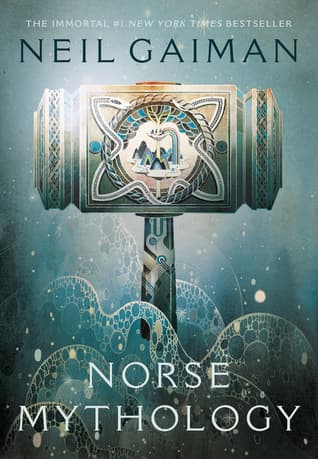
- Norse Mythology
Neil Gaiman
4.1 (215k) average on GoodreadsFantasyGaiman's work is a more traditional, faithful retelling of the Norse myths, presenting them with his characteristic storytelling flair but largely adhering to established narratives. Harris's novel actively subverts and reinterprets these myths through Loki's biased, first-person perspective, offering a critical and often cynical alternative understanding of the pantheon and its events. Gaiman aims for comprehensive myth-telling; Harris aims for myth-critique and re-imagining.
- Harry Potter and the Sorcerer's Stone
J.K. Rowling
4.5 (7M) average on GoodreadsFantasyRescued from a miserable life under the stairs, an orphaned boy discovers he's a wizard destined for a magical school, where he uncovers a dangerous secret tied to the dark wizard who murdered his parents.
- The Hunger Games
Suzanne Collins
4.3 (6.4M) average on GoodreadsFantasyIn a future where children fight to the death on live television, Katniss Everdeen volunteers for the arena, turning a death sentence into a fight for survival and a spark of rebellion.
- 1984
George Orwell
4.2 (3.1M) average on GoodreadsPoliticsIn a future where surveillance and thought control are absolute, a man's search for truth clashes with the Party, showing that hope can be a form of rebellion.





Enjoyed the summary?
A summary gives you the shape of the book. The book itself has the detail, the examples and the voice.
Find The Gospel of Loki on AmazonAs an Amazon Associate, BookBrief earns from qualifying purchases. How we're funded