
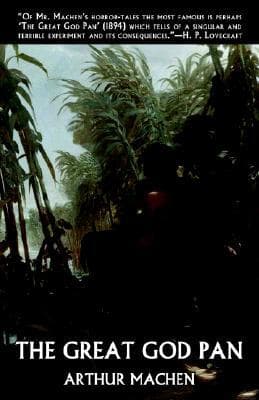
Synopsis
Covers the whole plot, including the ending.
- Difficulty
- Medium
- Pacing
- Slow
- Mood
- Atmospheric, Eerie, Philosophical, Unsettling, Dread-inducing
- Read it if
- You enjoy classic cosmic horror, philosophical tales of the uncanny, or stories where the true horror lies in what is unseen and implied.
- Skip it if
- You prefer fast-paced, action-oriented horror or clear, explicit explanations for supernatural phenomena.
The Great God Pan Plot Summary
Covers the whole plot, including the ending.
The Experiment in Dr. Raymond's Study
The story opens in the study of Dr. Raymond, a physician with an interest in the occult. He is preparing to perform a dangerous experiment on a young woman named Mary, a former governess, who is under his care. His friend, Clarke, expresses strong reservations, fearing the harm to Mary's sanity. Dr. Raymond is convinced that by making a small incision in Mary's brain, he can allow her to perceive the true reality of the world, beyond everyday perception, and perhaps even glimpse the god Pan. During the procedure, Mary experiences an ecstatic vision, uttering the name 'Pan' before collapsing into a vegetative state, her mind shattered by the revelation. Clarke is horrified by the outcome, which Dr. Raymond dismisses as a necessary sacrifice for scientific truth.
Visions in the Woods: Villiers' Encounter
Many years after the experiment, London gentleman Villiers is walking through the woods near his home when he encounters a beautiful, enigmatic woman. She seems to appear and disappear almost supernaturally, and her presence leaves him with a sense of unease, a feeling of something ancient and monstrous lurking beneath her captivating exterior. He is drawn to her despite his apprehension. This encounter is the beginning of a series of inexplicable and disturbing events in Villiers' life, as he finds himself increasingly entangled with the mysterious woman. He learns that she is known as Helen Vaughan, a figure who seems to bring an unsettling influence wherever she goes, often leading to tragic ends for those who fall under her spell.
The Case of Mr. Herbert and the Peculiar Woman
Dr. Phillips, a London physician, is called to the home of Mr. Herbert, a respectable man who has suddenly gone insane. Herbert raves about a beautiful, terrifying woman who has seduced him and revealed unspeakable horrors, driving him to the brink. Herbert eventually commits suicide in a gruesome manner, his face contorted in an expression of ultimate terror. Dr. Phillips, disturbed by the incident, tries to understand the cause of Herbert's madness. He learns that Herbert had recently become infatuated with a woman named Helen Vaughan, who had a reputation for attracting and then destroying men. The doctor begins to connect this case with other similar, unexplained suicides and mental breakdowns among London's elite.
Clarke's Investigation and the Welsh Village
Clarke, still troubled by Dr. Raymond's experiment and Mary's fate, begins to investigate the string of suicides and mental collapses gripping London. He hears whispers of a 'Helen Vaughan' and recognizes the unsettling pattern. His investigation leads him to a secluded Welsh village, where he uncovers disturbing local legends and accounts of a strange child born to a woman who had previously been 'touched' by an unspeakable entity. The villagers speak of a 'changeling' and unnatural events, hinting at a connection to the ancient, pagan forces of the land. Clarke suspects that Helen Vaughan is somehow linked to the experiment performed on Mary years ago, and that the god Pan is involved.
Helen's Early Life and Corrupting Influence
Through his inquiries in Wales, Clarke learns about Helen Vaughan's unsettling childhood. She was raised by a foster mother who experienced strange, terrifying visions and inexplicable phenomena around the girl. Animals would react with fear or unnatural fascination in her presence, and other children were either drawn to her with an unhealthy obsession or recoiled in terror. There were rumors of strange rituals and unholy rites performed in the woods, with Helen at the center. It becomes clear that Helen is not entirely human, but rather the offspring of Mary's encounter with Pan during Dr. Raymond's experiment. Her existence seems to emanate a corrupting, destructive force.
Villiers' Growing Dread and the Social Circle
Villiers, initially captivated by Helen Vaughan, begins to feel an escalating sense of dread and repulsion. He observes her interactions in London's social circles, noting how men become obsessed with her, only to descend into madness, moral degradation, or suicide. Helen, with her ethereal beauty and unsettling charm, seems to be a catalyst for their destruction. Villiers is particularly disturbed by the accounts of those who have been intimate with her, describing visions of primal, grotesque forms and a profound sense of cosmic horror. He realizes that her influence is not merely psychological but something far more ancient and supernatural, actively corrupting the souls of those around her.
The Unveiling of Helen's True Nature
Villiers and Clarke meet and share their independent investigations. Clarke reveals the details of Dr. Raymond's experiment and Mary's subsequent fate, along with the legends from the Welsh village. Villiers recounts the disturbing effects Helen has had on London society and the accounts of her victims. They slowly piece together the terrifying truth: Helen Vaughan is the monstrous offspring of Mary and the entity she glimpsed during the experiment – Pan himself. She is a being of both human and inhuman essence, a conduit for ancient, pagan forces, and her presence brings forth the primordial chaos and horror of the natural world, driving humans to madness and self-destruction.
The Pursuit and Confrontation
Driven by a desperate need to stop Helen's destructive influence, Villiers actively seeks her out. He follows her movements, observing her chilling effect on those around her. He knows he must confront her, but he also understands the immense danger. He learns that Helen has married a man named Austin, who quickly succumbs to her corrupting power, his mind and body deteriorating rapidly. Villiers, armed with the knowledge of her true nature, prepares for a final confrontation, knowing that he faces not just a woman, but a primal force of nature, a living embodiment of the Great God Pan's terrifying essence, capable of dissolving the very fabric of human sanity.
The Horrifying Transformation and Death
Villiers finally confronts Helen Vaughan. In a horrifying climax, he witnesses her undergo a series of grotesque transformations, her body shifting and dissolving through various forms – reptilian, bestial, and ultimately, an indescribable amalgamation of horrors. This physical disintegration reflects the spiritual corruption she embodies. As she writhes and changes, her true, monstrous nature is revealed, a living manifestation of the ancient god Pan. Overwhelmed by the unspeakable sight, Villiers is nevertheless determined. Helen eventually dies, dissolving into a putrid, formless mass, her end as unnatural and terrifying as her life. Her death brings an end to the immediate terror, but the cosmic horror she represented lingers.
The Aftermath and Lingering Horror
With Helen Vaughan's death, the string of suicides and madness in London ceases. Villiers is left deeply scarred by what he has witnessed, forever haunted by the revelation of the primordial forces lurking beneath the veneer of reality. Clarke, too, is profoundly affected, his scientific curiosity forever tempered by the terrifying consequences of Dr. Raymond's hubris. The book concludes with the understanding that while a particular manifestation of horror has been dealt with, the Great God Pan and the ancient, unspeakable forces he represents still exist, ever-present, just beyond the thin veil of human perception, waiting to be glimpsed again, always with devastating consequences for those who dare to look.
The Great God Pan Characters
Dr. Raymond
Supporting
A scientist obsessed with uncovering hidden realities, responsible for Mary's tragic experiment.
Dr. Raymond is a brilliant but dangerously reckless physician and occultist. He believes that by surgically altering the brain, he can allow humans to perceive the true, spiritual world beyond the mundane. His hubris and disregard for human safety lead directly to Mary's mental incapacitation and, indirectly, to the birth of Helen Vaughan. He views his experiment as a scientific triumph, a step towards unveiling cosmic truths, rather than a catastrophic act of desecration. His character embodies the dangers of unchecked scientific ambition and the pursuit of forbidden knowledge.
Relationships: Clarke (friend and moral foil); Mary (subject of his experiment)
Clarke
Supporting
Dr. Raymond's skeptical friend, who investigates the mysterious events and uncovers the truth.
Clarke is Dr. Raymond's friend and a voice of moral caution, initially horrified by the experiment on Mary. He later becomes an amateur detective, piecing together the strange occurrences in London and connecting them back to the original experiment. Clarke is intelligent and persistent, driven by a sense of unease and a desire for understanding. He represents the rational mind grappling with the irrational and ultimately serves as the primary investigator who uncovers Helen Vaughan's true lineage and the cosmic horror she embodies.
Relationships: Dr. Raymond (friend and moral conscience); Villiers (collaborator in investigation)
Mary
Supporting
The young woman whose mind is shattered by Dr. Raymond's experiment, leading to her encounter with Pan.
Mary is a young woman, a former governess, who becomes the unwitting subject of Dr. Raymond's experiment. She is presented as vulnerable and perhaps susceptible to suggestion, chosen for the procedure to 'open her eyes.' Her brief, ecstatic vision of Pan and subsequent descent into a vegetative state are the direct consequences of the experiment. Though she appears only briefly, her fate is central to the plot, as she is revealed to be the mother of Helen Vaughan, making her the tragic origin point of the story's horror. Her sacrifice is a stark warning against meddling with unknown forces.
Relationships: Dr. Raymond (experimenter and victim); Helen Vaughan (mother of)
Villiers
Protagonist
A London gentleman who encounters Helen Vaughan and becomes determined to stop her destructive influence.
Villiers is a perceptive and morally conscious London gentleman who first encounters Helen Vaughan in the woods. He is initially captivated by her beauty but quickly senses her underlying menace. As he witnesses the devastating effects she has on others, he becomes increasingly disturbed and driven to investigate her. Villiers acts as a primary point-of-view character for much of the later narrative, experiencing the direct terror of Helen's presence. He is ultimately the one who confronts Helen, bringing her reign of terror to an end, though he is left profoundly scarred by the experience.
Relationships: Helen Vaughan (antagonist and object of obsession/fear); Clarke (collaborator in investigation)
Helen Vaughan (also Mrs. Herbert, Mrs. Beaumont, Mrs. Austin)
Antagonist
The beautiful, enigmatic, and monstrous daughter of Pan, who brings madness and death to those around her.
Helen Vaughan is the central antagonist, a woman of ethereal beauty and profound evil. She is the 'child' born from Mary's encounter with Pan during Dr. Raymond's experiment. Helen possesses a supernatural allure that draws men to her, only for them to suffer madness, moral decay, or suicide after experiencing her 'revelations.' She is not merely a femme fatale but a living conduit for ancient, pagan forces, a being who dissolves the boundaries of human sanity and reveals unspeakable cosmic horrors. Her true nature is revealed through her grotesque, shifting form at the climax.
Relationships: Mary (mother); Mr. Herbert (victim/husband); Mr. Beaumont (victim/husband); Mr. Austin (victim/husband); Villiers (antagonist to)
Mr. Herbert
Mentioned
A respectable London man driven to madness and suicide by Helen Vaughan.
Mr. Herbert is one of Helen Vaughan's victims, a seemingly ordinary gentleman who becomes infatuated with her. His descent into madness and his subsequent gruesome suicide serve as an early, chilling example of Helen's destructive power. His case is investigated by Dr. Phillips and helps to establish the pattern of horror that Helen brings to London society. His fate underscores the profound and supernatural nature of the corruption Helen inflicts upon her lovers.
Relationships: Helen Vaughan (victim of)
Dr. Phillips
Supporting
A London doctor who investigates the peculiar madness and death of Mr. Herbert.
Dr. Phillips is a medical professional called to treat Mr. Herbert. His clinical observations of Herbert's madness and death, though initially baffling, contribute to the growing evidence of Helen Vaughan's sinister influence. He provides an early, grounded perspective on the inexplicable events, adding a layer of credibility to the horror before the supernatural elements are fully unveiled. His professional encounters highlight the unnatural nature of the affliction Helen causes, which defies conventional medical explanation.
Relationships: Mr. Herbert (doctor to)
Mr. Austin
Mentioned
Helen Vaughan's final husband, who quickly succumbs to her corrupting influence.
Mr. Austin is Helen Vaughan's last husband mentioned in the story. His rapid decline into physical and mental decrepitude after marrying Helen serves as further proof of her destructive nature. His fate is observed by Villiers and reinforces the pattern of ruin that follows Helen, emphasizing that her power is consistent and ultimately fatal to those who become intimate with her. He is a final, tragic example of her ability to unravel human life.
Relationships: Helen Vaughan (victim/husband of)
The Great God Pan Themes
The Veil Between Worlds and Forbidden Knowledge
This theme explores the thin barrier separating human perception from a deeper, more primal reality. Dr. Raymond's experiment is a deliberate attempt to tear this veil, driven by the desire for forbidden knowledge. The horrific consequences for Mary and the subsequent birth of Helen Vaughan demonstrate the dangers of peering beyond the mundane. The novel suggests that some truths are too vast and terrible for the human mind to comprehend, and attempting to force such revelations leads only to madness and destruction. Helen Vaughan herself embodies this shattered veil, her existence a constant reminder of the monstrous 'other' lurking just beneath the surface of civilization.
“What if there were a real world, a world of greater splendour and triumph, of intolerable ecstasy and intolerable agony?”
Cosmic Horror and the Indifferent Universe
Machen's novel is a foundational work of cosmic horror, depicting a universe where humanity is insignificant and vulnerable to ancient, indifferent forces. Pan represents this cosmic indifference and primal power, a god of nature that is neither benevolent nor malevolent in human terms, but utterly alien and destructive to human sanity. Helen Vaughan, as Pan's offspring, brings this cosmic dread into the human realm. Her victims don't just die; they are driven insane by visions of unspeakable realities, hinting at a vast, terrifying cosmos beyond human comprehension. The horror stems not just from her actions, but from the unsettling truth she reveals about existence.
“The sight of the Great God Pan is a sight of agony and terror, for it is the sight of the world as it is, not as we have made it for ourselves.”
Paganism vs. Christianity/Civilization
The story sets up a clear dichotomy between the ordered, Christian, and civilized world of Victorian London and the ancient, chaotic, and pagan forces represented by Pan. Helen Vaughan, a creature of the wild and the ancient woods, infiltrates and corrupts London's refined society, bringing a primal, pre-human horror into modern life. Her influence strips away the veneer of civilization, revealing the bestial and chaotic instincts beneath. The novel suggests that humanity's attempts to suppress or ignore its pagan past and the wildness of nature are futile, and that these forces will inevitably erupt, bringing destruction to the artificial constructs of society.
“He saw the world as a thin veil drawn over a hell of unspeakable torment.”
The Corrupting Power of the Supernatural
The central theme revolves around the idea that direct contact with the supernatural, especially that which is ancient and primal, is inherently corrupting and destructive to the human mind and soul. Mary's mind is shattered, and Helen's victims are not merely killed but spiritually tainted, driven to madness, moral degradation, and suicide by the 'revelations' she offers. This corruption is both psychological and physical, as seen in the grotesque transformations and decay of Helen's victims and her own eventual dissolution. The book argues that true evil isn't necessarily a moral choice but an inherent quality of certain otherworldly entities, which by their very nature, distort and destroy human reality.
“She was a priestess of the Great God Pan, and her mission was to reveal the horror that underlies all being.”
Plot Devices & Literary Techniques
The Unreliable Narrative/Ambiguity
Horror is often conveyed through suggestion and fragmented accounts, leaving much to the reader's imagination.
Machen frequently employs an unreliable or ambiguous narrative style. The most horrifying events, particularly Helen's 'revelations' to her victims and her final transformation, are rarely described directly. Instead, they are hinted at through the reactions of witnesses (madness, suicide, terror) or through vague, evocative language. This technique forces the reader to fill in the blanks, often imagining something far more terrifying than any explicit description could convey. It enhances the cosmic horror by suggesting that the true nature of Pan and Helen is beyond human comprehension and therefore inexpressible.
The 'Veil' Metaphor
A recurring symbol representing the barrier between mundane reality and cosmic truth.
The concept of a 'veil' is a central metaphor, representing the thin barrier that separates everyday human perception from a deeper, more profound, and often horrific spiritual reality. Dr. Raymond's experiment aims to 'lift the veil,' and Helen Vaughan's existence and actions are described as tearing or dissolving this veil for her victims. When the veil is breached, it reveals unspeakable truths associated with Pan, leading to madness and destruction. This device emphasizes the fragility of human understanding and the dangers of seeking forbidden knowledge beyond the perceived world.
The 'Changeling' Motif
Helen Vaughan's unnatural birth and monstrous nature are framed through the folklore of changelings.
The story utilizes the folklore motif of the 'changeling' to describe Helen Vaughan's origins and nature. Local Welsh villagers refer to her as such, implying she is not fully human but a supernatural entity left in place of a human child. This motif immediately establishes her as alien and inherently monstrous, born of an unholy union. It taps into ancient fears of inhuman entities infiltrating human society, reinforcing her role as a harbinger of primal, pre-human horror that cannot be understood or contained by human norms.
Escalating Horror and Indirect Revelation
The horror is gradually revealed through a series of increasingly disturbing events and fragmented accounts.
Machen builds horror not through immediate, graphic descriptions but through a gradual accumulation of unsettling incidents and indirect revelations. The story starts with a disturbing experiment, then introduces a mysterious woman whose presence causes madness and death, and only slowly, through the investigations of Clarke and Villiers, is her true, monstrous nature and connection to the experiment revealed. This slow burn, piecing together fragments of terror, creates a profound sense of dread and suspense, making the ultimate truth all the more shocking and impactful when it is finally understood.
The Great God Pan Quotes
“I tell you, Helen, I am not jesting. It is true, dreadfully true, in the face of all modern science and all modern religion.”
“The Great God Pan is dead.”
“I saw the shape of a man, but the face was the face of a beast.”
“There are sacraments of evil as well as of good about us, and we live and move to my belief in an unknown world.”
“She is not a woman; she is a horror.”
“The woods and the fields are full of strange things, and there are more things in heaven and earth than are dreamt of in our philosophy.”
“It is a horrible story, but it is true.”
“I have seen the black stars and the voids that lie between them.”
“The world is not as we see it; there are doors that open into other places.”
“Her beauty was a mask for something unspeakable.”
“We have meddled with things that should have been left alone.”
“The past is not dead; it is not even past.”
“There are things that man was not meant to know.”
“In the heart of the city, the old gods still whisper.”
Quiz
10 questions on the plot and the characters. Each answer comes with a short explanation.
Question 1
What is the primary experiment conducted by Dr. Raymond in 'The Great God Pan'?
- Creating a serum to enhance human intelligence
- Opening a woman's mind to perceive supernatural realities
- Summoning ancient gods through ritual magic
- Crossbreeding humans with animals
Show answer
B. Opening a woman's mind to perceive supernatural realities Dr. Raymond performs a brain operation on Mary, a young woman from Wales, to allow her to see beyond normal human perception, specifically to witness the god Pan, which destroys her sanity.
Question 2
What happens to the young men who encounter Helen Vaughan in London?
- They become obsessed with her and abandon their families
- They commit suicide after being disturbed by her presence
- They join a cult worshipping her as a goddess
- They develop supernatural abilities from her influence
Show answer
B. They commit suicide after being disturbed by her presence Helen's monstrous nature, as the offspring of Pan and Mary, causes such profound horror and despair in the men she interacts with that they take their own lives, as detailed in the book's investigation of the suicides.
Question 3
Who is Helen Vaughan's mother in the story?
- A wealthy socialite from London
- Mary, the woman from Wales experimented on by Dr. Raymond
- A pagan priestess who worshipped Pan
- Dr. Raymond's assistant who disappeared
Show answer
B. Mary, the woman from Wales experimented on by Dr. Raymond Helen is revealed to be the daughter of Mary, who was driven insane by Dr. Raymond's experiment to see Pan, and Pan himself, making her a hybrid creature with a terrifying influence.
Question 4
What is the ultimate fate of Helen Vaughan at the end of the story?
- She escapes to continue her reign of terror
- She transforms into a monstrous form and dies
- She is captured and imprisoned by authorities
- She reconciles with her human side and lives peacefully
Show answer
B. She transforms into a monstrous form and dies Under pressure from those investigating her, Helen undergoes a horrific transformation, reverting to a primal, shapeless state before dying, symbolizing the collapse of her monstrous existence.
Question 5
How does Dr. Raymond justify his experiment on Mary?
- He believes it will cure her of a mental illness
- He aims to prove the existence of supernatural beings
- He is paid by a secret society to conduct it
- He wants to create a new race of superhumans
Show answer
B. He aims to prove the existence of supernatural beings Dr. Raymond is driven by a scientific curiosity to demonstrate that realities beyond human perception, such as the god Pan, exist, though his experiment has catastrophic consequences.
Question 6
What role does Clarke play in the narrative?
- He is a detective investigating the suicides
- He is a friend of Dr. Raymond who documents the events
- He is Helen Vaughan's lover who betrays her
- He is a priest trying to exorcise Helen
Show answer
B. He is a friend of Dr. Raymond who documents the events Clarke serves as a narrator and investigator, piecing together the story through letters, diaries, and accounts, helping to uncover the truth behind Helen's origin and the experiment.
Question 7
Which theme is most central to 'The Great God Pan'?
- The triumph of science over superstition
- The dangers of meddling with forbidden knowledge
- The importance of family and heritage
- The beauty of nature and the pagan world
Show answer
B. The dangers of meddling with forbidden knowledge The story explores how human curiosity and scientific ambition, as seen in Dr. Raymond's experiment, can lead to horrific outcomes when probing into realms better left untouched, such as the supernatural.
Question 8
What is the significance of the title 'The Great God Pan' in relation to the plot?
- It refers to a statue that brings bad luck to its owners
- It symbolizes the primal, terrifying force behind the events
- It is the name of a secret society in the book
- It represents a benevolent nature deity worshipped by characters
Show answer
B. It symbolizes the primal, terrifying force behind the events Pan represents the ancient, chaotic forces of nature that Dr. Raymond's experiment unleashes, leading to Mary's insanity and Helen's monstrous birth, central to the horror of the story.
Question 9
How does the structure of the book contribute to its horror effect?
- It uses a linear narrative to build suspense gradually
- It employs multiple perspectives and fragmented accounts
- It features graphic descriptions of violence throughout
- It includes poetic interludes that contrast with the horror
Show answer
B. It employs multiple perspectives and fragmented accounts Machen uses epistolary and fragmented storytelling, with letters, diaries, and second-hand reports, to slowly reveal the terrifying truth, enhancing the sense of mystery and dread.
Question 10
What does Helen Vaughan's ability to drive men to suicide suggest about her nature?
- She is a skilled manipulator using psychological tricks
- Her very existence embodies a cosmic horror that shatters human sanity
- She is cursed by the gods to bring misfortune
- She uses magic spells to control their minds
Show answer
B. Her very existence embodies a cosmic horror that shatters human sanity As the offspring of Pan, Helen represents a blend of human and primordial terror; her presence inherently exposes men to realities so awful that suicide becomes their only escape, reflecting the book's theme of unspeakable horror.
The Great God Pan FAQ
What is 'The Great God Pan' about?
The story follows two interconnected narratives: first, a scientist named Dr. Raymond performs a dangerous brain operation on a young woman named Mary in Wales, attempting to open her mind to perceive the pagan god Pan, which destroys her sanity. Years later, a mysterious and alluring woman named Helen Vaughan emerges in London society, whose presence drives several young men to madness and suicide, ultimately revealing she is the monstrous offspring of Pan and Mary.
Why should I read 'The Great God Pan'?
It's a foundational work of cosmic horror that influenced writers like H.P. Lovecraft, blending Victorian gothic atmosphere with themes of forbidden knowledge, psychological terror, and the monstrous lurking beneath civilization's surface. The novel's fragmented structure and ambiguous horrors create a lingering sense of dread that has made it a classic in weird fiction.
What is the background/setting of 'The Great God Pan'?
The story unfolds in two primary settings: the rural, mystical landscape of Wales where Dr. Raymond's experiment takes place, and the sophisticated but morally fragile social circles of late Victorian London. This contrast highlights the tension between ancient, primal forces and modern society's attempts to rationalize or control them.
What are the most memorable quotes?
Key quotes include Dr. Raymond's chilling declaration, 'I will not read you the name... but it is that which is written on this paper,' hinting at unspeakable horrors, and descriptions of Helen Vaughan as having 'something wrong about her eyes' that unsettles those who meet her. The phrase 'the great god Pan is dead' is ironically invoked, suggesting his terrifying return.
What writing style does the author use?
Machen employs a fragmented, epistolary style with multiple narrators, newspaper clippings, and diary entries, which builds suspense by withholding direct descriptions of the horror. His prose is richly atmospheric, blending scientific jargon with poetic, eerie imagery to evoke a sense of creeping unease and cosmic dread.
What minor details add significant meaning?
Small details like the 'grey face' of Mary after the experiment, the recurring motif of 'something wrong' in descriptions of Helen's appearance, and the use of Latin phrases in Dr. Raymond's notes all subtly reinforce themes of corruption, hidden knowledge, and the breakdown of human sanity when confronted with the supernatural.
What are some subtle foreshadowing moments?
Early hints include Dr. Raymond's ominous warning that his experiment might show Mary 'what I may not tell you,' foreshadowing her mental destruction and Helen's birth. The suicides of young men in London are initially presented as isolated tragedies, but their connection to Helen slowly emerges, foreshadowing her monstrous nature.
What unexpected character connections exist?
The revelation that Helen Vaughan is the daughter of Mary and the god Pan ties the two seemingly separate narratives together. Additionally, characters like Clarke, who investigates the suicides, and Villiers, who confronts Helen, serve as links between the scientific and social worlds, highlighting how the horror spreads across different spheres of Victorian life.
What are unspoken character motivations?
Dr. Raymond is driven by a Faustian desire for forbidden knowledge, masking his recklessness as scientific progress. Helen Vaughan's actions suggest a deep-seated hatred for humanity, possibly inherited from her monstrous lineage, as she subtly manipulates and destroys those around her without explicit malice, reflecting a primal, alien will.
What psychological complexities do characters exhibit?
Mary's post-experiment catatonia represents a complete psychological breakdown from encountering the divine. Helen embodies a duality: superficially charming and alluring, yet inwardly monstrous, causing psychological unraveling in others through mere presence. The male characters' obsession with her reveals vulnerabilities in Victorian masculinity and rationality.
What are the major emotional turning points?
Key moments include Mary's horrific transformation after the experiment, evoking pity and terror; the first suicide linked to Helen, shifting the tone from mystery to dread; and Helen's final confrontation and death, which brings a mix of relief and lingering horror as her true form is revealed, leaving characters and readers unsettled.
How do relationship dynamics evolve?
Relationships deteriorate under Helen's influence: friendships among the young men in London turn to paranoia and despair as they succumb to her. The bond between investigators like Clarke and Villiers strengthens through shared horror, while Helen's interactions with others are marked by superficial charm that masks a predatory, isolating dynamic.
Which parts remain ambiguous or open-ended?
The exact nature of Pan and the 'experiment' is left vague, with Machen relying on suggestion rather than explicit description. Helen's motivations and the full extent of her powers are never fully explained, leaving readers to infer the horror. The aftermath of her death hints at unresolved cosmic threats, suggesting the horror may persist.
What are controversial scenes or decisions?
Dr. Raymond's non-consensual experiment on Mary, which destroys her mind, raises ethical questions about scientific hubris and the exploitation of women. Helen's seduction and destruction of young men can be interpreted as a critique of Victorian sexual repression, but also as a sensationalized portrayal of female monstrosity that sparked debate upon publication.
'The Great God Pan' ending explained: how it ends & what it means
The story concludes with Helen Vaughan's death, during which she undergoes a horrific transformation, reverting through evolutionary stages into a primordial, shapeless mass before dying. This ending suggests that confronting primal, pagan forces leads to annihilation of the self and civilization, with themes of atavism and the fragility of human identity in the face of cosmic horror.
About the author
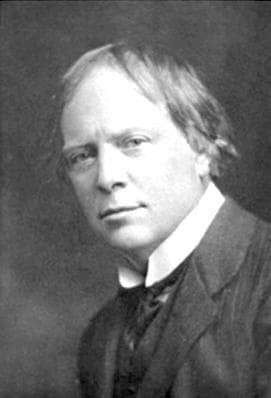
Arthur Machen was a British author known for his contributions to the horror and fantasy genres. His novella, 'The Great God Pan,' is considered a classic of supernatural horror, exploring themes of the uncanny and the hidden forces of nature. Machen's distinctive prose and mystical approach influenced many later writers in the field.
Similar books
- The Call of Cthulhu
H.P. Lovecraft
4.0 (39k) average on GoodreadsFantasyExplores cosmic horror and the destructive impact of encountering ancient, non-human entities.
- A Study in Scarlet
Arthur Conan Doyle
4.2 (324k) average on GoodreadsHistorical FictionWhile not horror, it shares the Victorian setting and a detective-like unraveling of a mysterious and dark past.
- The Turn of the Screw
Henry James
3.4 (104k) average on GoodreadsMysteryWhile both The Great God Pan and The Turn of the Screw (1898) rely heavily on psychological horror and ambiguity, Machen's work leans into cosmic, primeval forces, suggesting a reality beyond human comprehension. James's novella, conversely, grounds its horror more firmly in psychological instability and potentially unreliable narration, leaving the reader to question the reality of the supernatural events. Machen's horror is external and ancient; James's is internal and personal.
- Harry Potter and the Sorcerer's Stone
J.K. Rowling
4.5 (7M) average on GoodreadsFantasyRescued from a miserable life under the stairs, an orphaned boy discovers he's a wizard destined for a magical school, where he uncovers a dangerous secret tied to the dark wizard who murdered his parents.
- The Hunger Games
Suzanne Collins
4.3 (6.4M) average on GoodreadsFantasyIn a future where children fight to the death on live television, Katniss Everdeen volunteers for the arena, turning a death sentence into a fight for survival and a spark of rebellion.
- 1984
George Orwell
4.2 (3.1M) average on GoodreadsPoliticsIn a future where surveillance and thought control are absolute, a man's search for truth clashes with the Party, showing that hope can be a form of rebellion.





Enjoyed the summary?
A summary gives you the shape of the book. The book itself has the detail, the examples and the voice.
Find The Great God Pan on AmazonAs an Amazon Associate, BookBrief earns from qualifying purchases. How we're funded