
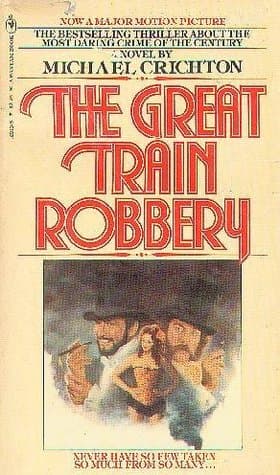
Synopsis
Covers the whole plot, including the ending.
- Difficulty
- Medium
- Pacing
- Fast
- Mood
- Suspenseful, Clever, Adventurous, Historical
- Read it if
- You enjoy meticulously plotted historical thrillers with a focus on intricate heists and a charismatic, intelligent protagonist.
- Skip it if
- You prefer fantasy or sci-fi over historical settings, or dislike stories where the protagonist is a criminal.
The Great Train Robbery Plot Summary
Covers the whole plot, including the ending.
The Plan Takes Shape
In Victorian London, the master criminal Edward Pierce plans to steal gold bullion transported by train, meant for British troops in the Crimean War. He carefully watches the gold's security, noting it is in a special safe, locked by four keys, each held by a different official. Pierce, charming and clever, knows a successful robbery needs precise timing and knowledge of the railway system, plus help from skilled, disreputable people. His first step is to learn about the transport logistics and the safe's weaknesses.
Recruiting the Accomplices
Pierce starts building his team with Robert Agar, a skilled safecracker. Agar, currently in prison, is key to Pierce's plan. Pierce arranges Agar's escape from Newgate Prison, a task needing detailed planning and bribes. Once Agar is free, Pierce tells him about the gold robbery. He also brings in Clean Willy, a young, agile person who can move through tight spaces, and Miss Miriam, Pierce's beautiful and clever mistress, who will distract targets and gather information. The team's varied skills are important for the complex operation.
Acquiring the First Key
The first key to the gold safe is held by Mr. Henry Fowler, the bank director. Pierce uses a complex plan to get an impression of Fowler's key. He uses his social connections to enter Fowler's circle, watching his habits. Miriam helps with distractions, while Agar, disguised as a servant, enters Fowler's home. Through a planned series of events, including a staged accident and a temporary key swap, Agar gets a wax impression of Fowler's key. This first success confirms Pierce's careful planning and his team's skill.
The Second Key and a Grave Mistake
The second key belongs to Mr. Edgar Trent, the railway company's general manager. Pierce creates an even more detailed plan, involving a staged dog fight and a timed interruption, to get an impression of Trent's key. During this attempt, Clean Willy, under pressure, makes a mistake: a witness sees him and later identifies him. This error brings an unexpected risk, as authorities now have a lead, endangering the operation. Pierce must take strong action to silence Willy and keep the operation secure, showing the dangerous stakes.
The Third Key and a Betrayal
The third key is held by Mr. John Simms, the railway station master, a man who likes young girls. Pierce uses Simms's weakness, with Miriam luring him into a compromising situation. While Simms is distracted, Agar gets the key impression. However, pressure grows as Inspector Bridger, a determined Scotland Yard detective, starts to suspect a large scheme. Clean Willy, fearing for his life after his earlier mistake, tries to betray Pierce to the police for protection. Pierce, expecting this, arranges Willy's death, making it look like an accident, removing a weak link and securing the operation, though brutally.
The Fourth Key: A Game of Wits
The fourth and final key is held by Mr. Bradford, the railway company's treasurer. Pierce and Agar target Bradford during a public event, a boxing match. The plan involves a choreographed series of distractions and sleight of hand to get the impression. However, Inspector Bridger, now actively investigating the missing keys, is at the same event and becomes suspicious of Pierce. A tense chase follows, with Pierce barely escaping detection while still getting the final key impression. Getting all four keys is a big step, but also means a higher risk of being discovered soon.
The Train Journey Begins
With all four keys copied, Pierce and Agar prepare for the robbery. They plan to do it during the train's journey from London to Folkestone. Pierce, disguised as a wealthy gentleman, boards the first-class carriage, while Agar, as a humble passenger, sits in a lower class. The gold is in a special luggage van, guarded by two railway employees. The train leaves, and tension rises as Pierce knows every minute brings them closer to either wealth or ruin. The complex plan depends on precise timing and clear access to the gold carriage.
The Heist on the Rails
Under cover of darkness and the train's rhythmic noise, Pierce and Agar begin their task. Agar, using his 'snake' skills, moves along the outside of the moving train to the luggage van. He then uses the copied keys to unlock the safe with the gold. Pierce, meanwhile, creates distractions in the passenger carriages to draw attention from the back of the train. Moving the heavy gold bars from the safe to their prepared hiding places on the train is hard and dangerous, needing great strength and stealth, all while the train moves quickly.
The Drop-Off and Escape
As the train nears a pre-arranged remote siding, Pierce and Agar prepare to unload the gold. They activate a mechanism that drops the gold bars from the moving train onto a waiting carriage below, driven by other accomplices. Timing is critical to avoid being seen. Once the gold is transferred, Pierce and Agar escape from the train, blending back into the crowd. They leave no immediate evidence of the robbery, intending to make it seem as if the gold simply disappeared during transit. The time after is tense, hoping their plan holds up.
The Aftermath and Investigation
The next morning, the gold's disappearance is found, causing shock in London and the British establishment. Inspector Bridger, already suspicious of Pierce, leads the investigation. Authorities are puzzled by how such a secure shipment could be breached without forced entry. Bridger, however, connects the clues, recognizing the crime's sophisticated nature and suspecting Pierce. Pressure builds on Pierce and his accomplices as police close in, carefully following every lead and witness. The robbery's initial success is overshadowed by the threat of capture.
The Pursuit of Pierce
Inspector Bridger, determined, focuses his investigation on Edward Pierce, convinced he is guilty. He questions suspects and follows every lead. Agar, after the gold is offloaded, is caught due to a mistake and his known criminal record. Under pressure, Agar eventually names Pierce. Bridger sets a trap, using Agar's confession to lure Pierce into a compromising situation. The chase becomes a high-stakes game of intellect and endurance between the detective and the criminal, ending in a dramatic confrontation.
Capture and Conviction
Despite Pierce's attempts to escape, Inspector Bridger's chase eventually corners him. Pierce is arrested, along with Miriam, and tried in a case that fascinates Victorian society. The evidence, gathered by Bridger, is strong, including Agar's testimony and details of the key impressions. Although Pierce maintains his innocence, the proof leads to his conviction. He is sentenced to penal servitude, a harsh punishment for such a crime. The Great Train Robbery, while a feat of criminal ingenuity, ends with the law winning, after a significant challenge.
Principal Figures
Edward Pierce
Protagonist
A charming and ingenious master criminal.
Edward Pierce is a man of extraordinary intellect, charisma, and cunning. He moves effortlessly between the highest echelons of Victorian society and its criminal underworld. His motivation is not solely financial; he is driven by the challenge, the thrill of outsmarting the system, and a profound sense of disdain for the established order. He is meticulous in his planning, a master of disguise, and possesses an uncanny ability to manipulate people and circumstances to his advantage. Pierce views the robbery as a grand performance, a testament to his superior wit.
Relationships: Robert Agar (Criminal associate, safecracker); Miriam (Mistress and accomplice); Clean Willy (Minor accomplice, later betrayed)
Robert Agar
Supporting
A skilled and agile safecracker.
Robert Agar is a professional 'screwsman' or safecracker, known for his exceptional skill and agility. He is resourceful and practical, providing the essential technical expertise for the robbery. Unlike Pierce, Agar is less driven by grand schemes and more by the immediate rewards and the thrill of the 'craft.' He is a street-smart individual, loyal to Pierce for the opportunities and protection he provides, but also pragmatic enough to consider his own survival when under pressure from the authorities.
Relationships: Edward Pierce (Criminal associate, partner in crime)
Miriam
Supporting
Pierce's beautiful and cunning mistress and accomplice.
Miriam is Edward Pierce's lover and a vital accomplice in the robbery. She is beautiful, intelligent, and equally cunning, possessing a sharp wit and a talent for deception. Miriam often plays the role of a seductive distraction, using her charm to disarm targets and gather crucial information. She is fiercely loyal to Pierce and fully committed to the audacious plan, enjoying the thrill and the promise of wealth. Her presence adds an element of glamour and danger to the criminal enterprise.
Relationships: Edward Pierce (Lover and accomplice)
Inspector Bridger
Antagonist
A tenacious Scotland Yard detective.
Inspector Bridger is the relentless Scotland Yard detective assigned to investigate the gold bullion disappearances. He is a meticulous, intelligent, and unyielding man, dedicated to upholding the law. Bridger possesses a keen analytical mind and an unwavering determination that allows him to piece together the seemingly disparate clues, eventually zeroing in on Pierce. He represents the forces of order and justice, providing a compelling counterpoint to Pierce's criminal genius. His pursuit of Pierce is driven by a strong sense of duty and a desire to see justice served.
Relationships: Edward Pierce (Adversary, law enforcer pursuing criminal)
Clean Willy
Supporting
A young, acrobatic 'snake' who navigates tight spaces.
Clean Willy is a young, agile, and somewhat naive 'snake' or contortionist, skilled at navigating small, confined spaces. He is brought into the scheme by Pierce for his unique physical abilities, essential for certain aspects of the key acquisition. Willy is easily intimidated and lacks the hardened resolve of Pierce or Agar. His fear and lack of experience make him a weak link in the operation, leading to a critical mistake and ultimately, his own demise. He represents the vulnerability that can exist even within a meticulously planned criminal enterprise.
Relationships: Edward Pierce (Accomplice, employer)
Mr. Henry Fowler
Mentioned
Bank director and first key holder.
Mr. Henry Fowler is a respectable and unsuspecting bank director, one of the four key holders for the gold safe. He embodies the trust placed in prominent citizens of Victorian society. His routine and social standing make him an initial target for Pierce's elaborate schemes, as Pierce must exploit the perceived security of such individuals to gain access to their keys. Fowler is unaware of the criminal machinations occurring around him, serving as a symbol of the establishment that Pierce seeks to defraud.
Mr. Edgar Trent
Mentioned
Railway company general manager and second key holder.
Mr. Edgar Trent is the general manager of the railway company, another key holder. Like Fowler, he represents the seemingly secure and established figures of the era. His key is targeted through a more complex scheme, and the attempt to acquire it leads to Clean Willy's crucial mistake, which significantly escalates the risk for Pierce's operation. Trent's unwitting involvement underscores the daring nature of the robbery, as it requires breaching the security protocols of high-ranking officials.
Mr. John Simms
Mentioned
Corrupt railway station master and third key holder.
Mr. John Simms is the station master, a man with a hidden vice for young girls, which Pierce exploits to obtain his key. Simms represents the moral failings that Pierce is adept at identifying and manipulating. His corruption makes him a vulnerable target, highlighting Pierce's ability to leverage human weaknesses for his criminal objectives. Simms's character adds a darker, more morally ambiguous layer to the social fabric that Pierce navigates and exploits.
Themes & Insights
Class and Social Stratification
The novel shows the class divisions in Victorian London, where great wealth and poverty exist together. Edward Pierce, a gentleman criminal, moves easily between both worlds, using his upper-class charm to trick the elite while relying on his underworld connections for the crime's execution. This theme is clear in how Pierce targets the wealthy, using their complacency and trust in the system. The difference between Pierce's rich life and the poor lives of his working-class accomplices like Agar and Clean Willy highlights the social inequalities that provided both reason and chance for such a crime.
“In London, the rich lived by the rich, and the poor by the poor, and only a very few, like Edward Pierce, moved easily through both worlds.”
The Allure of the Impossible
A main theme is the appeal of trying and doing the seemingly impossible. The Great Train Robbery is not just about gold; it is about the intellectual challenge and the excitement of doing a crime that defies all security. Pierce is driven by the plan's boldness and the desire to prove his intelligence and cunning. This is clear in his careful planning and his enjoyment of the steps needed to get the keys. The 'impossible' aspect makes the crime more than just theft, turning it into a grand, intellectual game for characters and readers.
“The greatest joy of all was simply to succeed, to accomplish the impossible.”
Meticulous Planning vs. Unforeseen Circumstance
The story emphasizes Pierce's detailed planning, contrasting it with unexpected events and human error. Every step of the robbery, from getting key impressions to the train journey, is carefully planned. However, events like Clean Willy being seen, or Agar's eventual capture, show that even the most perfect plan can be risked by reality and human mistakes. This theme creates tension, as the reader wonders if Pierce's elaborate plans can withstand all outside pressures.
“No plan, however perfect, could account for every variable, every human failing.”
The Nature of Justice and Law
The novel explores justice and law in Victorian society. While Pierce sees himself as a clever person challenging a complacent system, Inspector Bridger represents the relentless pursuit of justice. The story questions whether the law, with its strict rules, can truly handle a criminal as clever as Pierce. Pierce's eventual capture and conviction, despite his brilliance, affirms the law's lasting power, even if it is a hard-won victory. It also subtly questions the morality of a system that allows such wealth inequality, which might fuel such crimes.
“The law was a slow, ponderous beast, but it was relentless.”
Plot Devices & Literary Techniques
The Impossible Heist
A criminal endeavor designed to be utterly unachievable.
This device sets up the central conflict: the challenge of stealing gold from a supposedly impregnable safe on a moving train. The 'impossible' nature of the heist immediately hooks the reader, creating high stakes and a sense of wonder at how the protagonist could possibly succeed. It drives the intricate plotting and requires Pierce to overcome numerous seemingly insurmountable obstacles, pushing the boundaries of what is considered feasible within the criminal world.
The Mastermind Criminal
A protagonist of exceptional intellect and cunning who orchestrates complex schemes.
Edward Pierce embodies the mastermind criminal archetype. He is not merely a thief but an intellectual who views the crime as a grand challenge. This device allows for intricate, multi-layered plotting, extensive research, and clever misdirection. Pierce's intelligence and foresight are central to the narrative, making him a formidable opponent for the authorities and a fascinating character for the reader, who is drawn into the workings of his brilliant, albeit criminal, mind.
The MacGuffin (The Gold)
An object that serves primarily to drive the plot forward.
The gold bullion itself acts as a classic MacGuffin. While its value is immense and provides the initial motivation, the true focus of the story is not the gold per se, but the elaborate process of stealing it. The gold is the catalyst for Pierce's intricate planning, his recruitment of accomplices, and the subsequent cat-and-mouse game with Inspector Bridger. Its presence is essential, but the narrative's true interest lies in the 'how' rather than the 'what' of the theft.
The Cat-and-Mouse Game
A dynamic between a clever criminal and a relentless investigator.
This device is central to the novel's thriller aspect, establishing a compelling rivalry between Edward Pierce and Inspector Bridger. Their intellectual sparring and constant one-upmanship create suspense and tension throughout the story. The reader is kept on edge as Bridger slowly closes in on Pierce, and Pierce devises new ways to evade capture, highlighting the brilliance of both characters and making the eventual confrontation all the more impactful.
The Great Train Robbery Quotes
“The greatest pleasures of life are not so much in the possession of a thing as in the pursuit of it.”
“The secret of success is to know nothing, and then to be very clever about it.”
“There are only two kinds of people in the world, the Irish and those who wish they were.”
“Every man has his price, but some men's prices are higher than others.”
“The only difference between a madman and a genius is success.”
“It is a peculiar sensation, this living in a world of illusion, and being aware of it.”
“Crime, like disease, is a symptom. It is a symptom of social malaise.”
“The best way to rob a bank is to own one.”
“Fear is a powerful motivator, but it can also be a paralyzing one.”
“In London, it is said, there is a clock in every house, and a thief in every family.”
“The advantage of being a criminal is that you can always find work.”
“Luck is what happens when preparation meets opportunity.”
“The most dangerous animal in the world is a man with nothing to lose.”
“Every man has a weakness, and it is the job of the clever man to find it.”
Quiz
10 questions on the plot and the characters. Each answer comes with a short explanation.
Question 1
What is the primary target of Edward Pierce's 'crime of the century'?
- The Bank of England's vaults
- A fortune in gold being transported by train
- The Crown Jewels from the Tower of London
- Wealthy passengers aboard a luxury liner
Show answer
B. A fortune in gold being transported by train Edward Pierce's grand plan is to steal a large quantity of gold being transported by train, which is the central plot of the book.
Question 2
What is the name of the train company responsible for transporting the gold?
- Great Western Railway
- London and Southwestern Railway
- Midland Railway
- Caledonian Railway
Show answer
B. London and Southwestern Railway The gold is being transported by the London and Southwestern Railway, a key detail for the planning of the robbery.
Question 3
Who is Robert Agar in relation to Edward Pierce's plan?
- The chief detective investigating Pierce
- Pierce's trusted accomplice and safecracker
- A rival criminal attempting a similar heist
- The train conductor on the gold transport
Show answer
B. Pierce's trusted accomplice and safecracker Robert Agar is a crucial member of Pierce's team, known for his expertise as a 'screwsman' or safecracker, which is vital for accessing the gold.
Question 4
What specific type of key does Pierce need to acquire to access the train's luggage vans?
- The master key to the railway station
- The guard's key, which opens all luggage vans
- A unique key for the gold safe itself
- The locomotive's ignition key
Show answer
B. The guard's key, which opens all luggage vans A significant part of Pierce's plan involves obtaining a 'guard's key' or 'luggage van key,' which is a universal key for the railway's luggage compartments, through a complex process of 'flashing' or duplicating.
Question 5
What is the primary thematic tension explored in the novel, as described in the synopsis?
- The struggle between industrial progress and environmental preservation
- The stark contrast between lavish wealth and appalling poverty in Victorian London
- The conflict between scientific advancement and religious dogma
- The psychological impact of crime on the perpetrator
Show answer
B. The stark contrast between lavish wealth and appalling poverty in Victorian London The synopsis explicitly states that 'Lavish wealth and appalling poverty live side by side in Victorian London,' setting up this contrast as a key backdrop for Pierce's actions.
Question 6
What is the significance of the train's journey from London to Folkestone?
- It is the route for the royal family's annual holiday
- It is the specific route used to transport the gold for shipment abroad
- It is where Pierce plans to escape the country after the robbery
- It is the location of the main railway repair depot
Show answer
B. It is the specific route used to transport the gold for shipment abroad The gold is being transported from London to Folkestone, where it will be loaded onto a ship for export to the British troops fighting in the Crimean War, making this route crucial to Pierce's planning.
Question 7
What is the primary challenge Pierce faces in obtaining the wax impressions for the keys?
- Bribery of the key holder, who is incorruptible
- The constant vigilance and security surrounding the key holder, Mr. Fowler
- Finding the correct type of wax that won't leave residue
- The keys being chained to the key holder's person at all times
Show answer
B. The constant vigilance and security surrounding the key holder, Mr. Fowler Pierce dedicates a significant amount of time and effort to observe and manipulate Mr. Fowler, the railway manager who holds the crucial keys, due to his meticulous habits and the constant security measures.
Question 8
What role does Clean Willy play in the grand scheme?
- He is the mastermind behind the entire robbery
- He is a 'snakesman' or 'weasel' who can contort his body to access tight spaces
- He is a train engineer bribed to stop the train
- He is an informant who betrays Pierce to the police
Show answer
B. He is a 'snakesman' or 'weasel' who can contort his body to access tight spaces Clean Willy is a vital, albeit unreliable, member of the team, recruited for his ability to squeeze into confined spaces, particularly through ventilation shafts, to unlock doors from the inside.
Question 9
What is the ultimate fate of Edward Pierce at the end of the novel?
- He successfully escapes to a foreign country with the gold
- He is caught, tried, and sentenced to penal servitude in Australia
- He is killed during a confrontation with the police
- He becomes a wealthy and respected member of society
Show answer
B. He is caught, tried, and sentenced to penal servitude in Australia Despite his ingenious planning, Pierce is eventually caught and, along with Agar, is sentenced to penal servitude in Australia, a common punishment for major crimes in Victorian England.
Question 10
What historical event provides the backdrop and motivation for the gold transport?
- The Opium Wars
- The American Civil War
- The Crimean War
- The Franco-Prussian War
Show answer
C. The Crimean War The gold is being sent to support British troops fighting in the Crimean War, providing a specific historical context for the high value and urgency of the transport.
The Great Train Robbery FAQ
What is the central plot of 'The Great Train Robbery'?
The novel centers on Edward Pierce's elaborate plan to steal a large shipment of gold bullion from a moving train in Victorian England. This daring heist requires meticulous planning, the recruitment of various accomplices, and an intimate knowledge of railway operations and security measures.
Who are the main characters involved in the heist?
The primary characters are Edward Pierce, the mastermind; Robert Agar, a renowned 'screwsman' or safecracker; and Clean Willy, a contortionist who can access difficult spaces. Pierce also enlists the help of his mistress, Miriam, and various other less prominent figures.
What is the historical basis for the novel?
The novel is a fictionalized account of the real Great Gold Robbery of 1855, which saw a significant amount of gold stolen from a South Eastern Railway train. Crichton researched historical records, court documents, and railway schematics to reconstruct the event with a high degree of authenticity.
What makes Pierce's plan so ambitious and complex?
Pierce's plan is ambitious because it targets a secure gold shipment on a moving train, requiring precise timing, inside knowledge, and the manipulation of multiple individuals. He must acquire duplicate keys for the safes and the luggage vans, and then execute the transfer of gold while the train is in motion.
How does Pierce initially gain access to the train's security details?
Pierce systematically cultivates relationships with various railway employees and their associates, often through charm and bribery. He uses his social connections and an air of respectability to gather information about key locations, schedules, and the routines of the guards and conductors, particularly targeting Mr. Trent.
What is the significance of the 'screwsman' Agar's role in the robbery?
Agar is crucial because he possesses the unique skill of making duplicate keys for the safes and luggage vans. His expertise in lock-picking and key-making is indispensable, as the gold is secured in multiple locked containers, making him the only one capable of opening them without force.
How does Clean Willy contribute to the early stages of the plan?
Clean Willy, a small and agile contortionist, is instrumental in creating wax impressions of the keys. He is smuggled into various railway offices and the home of Mr. Trent to discreetly obtain the impressions needed for Agar to craft the duplicates, often by hiding in luggage or tight spaces.
What unexpected challenge arises with the dog, Snitter?
Snitter, a guard dog, poses a significant and unforeseen challenge because he is trained to attack anyone unfamiliar who enters the luggage van. Pierce and Agar must find a way to neutralize the dog without raising suspicion, eventually resorting to drugging him with chloroform.
What is Miriam's role beyond being Pierce's mistress?
Miriam is not merely a mistress; she is an active accomplice, assisting Pierce with reconnaissance, diversions, and maintaining his cover. Her charm and ability to blend into society are used to gather information and create alibis, demonstrating her intelligence and resourcefulness.
How does Pierce demonstrate his mastery of social manipulation?
Pierce masterfully manipulates individuals by exploiting their weaknesses, desires, and social standing. He uses his charm to gain trust, his wealth to bribe, and his keen understanding of human nature to predict reactions, allowing him to subtly steer people into unknowingly aiding his scheme.
What psychological traits allow Pierce to undertake such a risky venture?
Pierce possesses extreme confidence, meticulous attention to detail, and a remarkable ability to remain calm under pressure. His psychopathic tendencies allow him to disregard moral qualms and focus solely on the objective, viewing people as tools rather than individuals.
How does the novel explore the class distinctions of Victorian England?
The novel vividly portrays the stark contrast between the opulent lives of the wealthy elite, like Pierce, and the desperate poverty of the lower classes, from which many of his accomplices, like Agar and Willy, are drawn. It highlights how these class divisions create opportunities for crime and exploitation, as Pierce navigates and exploits both worlds.
What is the psychological impact of the heist on Agar?
Agar experiences significant psychological strain and fear throughout the heist, particularly as the risks escalate and the plan becomes more dangerous. Despite his criminal background, he is more prone to anxiety and less detached than Pierce, reflecting the real dangers and consequences he faces.
Is Pierce motivated solely by greed, or are there other underlying motives?
While the vast sum of gold is certainly a primary motivator, Pierce also seems driven by the thrill of the challenge, the intellectual satisfaction of executing a perfect crime, and a desire to prove his superior intellect. There's an element of hubris in his meticulous planning and a defiance of authority.
How does the novel comment on the industrial advancements of the Victorian era?
The novel uses the steam locomotive, a symbol of Victorian industrial might and progress, as the target of the crime. This highlights the vulnerability of even the most advanced systems to human ingenuity and malice, suggesting that progress, while impressive, can also be exploited.
Does the book present Pierce as a villain or an anti-hero?
Pierce is largely presented as an anti-hero. While he commits a serious crime, his intelligence, charm, and the sheer audacity of his plan often elicit admiration from the reader. The narrative focuses on the thrill of the caper rather than moral judgment, making him a compelling, if morally ambiguous, protagonist.
What is the significance of the ending, particularly Pierce's fate?
The ending sees Pierce captured and imprisoned, a stark reminder that even the most brilliant plans can fail and that justice, in some form, prevails. However, the exact details of his escape and subsequent life are left somewhat ambiguous, allowing for continued speculation about his ultimate fate and whether he truly outsmarted the system.
How does Crichton build suspense throughout the narrative?
Crichton builds suspense through meticulous detail, focusing on the intricate steps of the plan and the constant threats of discovery. He uses a ticking clock element with the train schedule, introduces unexpected obstacles like Snitter, and maintains a sense of precariousness as Pierce and Agar navigate their dangerous tasks, keeping the reader on edge.
About the author
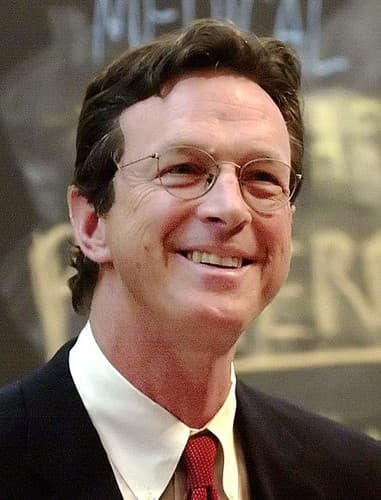
Michael Crichton was an American author and filmmaker known for his contributions to the science fiction genre. His notable works include Jurassic Park, The Andromeda Strain, Timeline, Sphere, Congo, and State of Fear, many of which explore themes of technology and its impact on society. Crichton's writing often blends scientific concepts with thrilling narratives, making him a significant figure in contemporary literature.
Similar books
- The Name of the Rose
Umberto Eco
4.1 (301k) average on GoodreadsHistorical FictionA historical mystery set in a detailed past, though 'The Great Train Robbery' is more action-oriented.
- The Andromeda Strain
Michael Crichton
3.9 (223k) average on GoodreadsThrillerAnother Crichton novel known for its detailed, procedural plotting and high stakes.
- The Alienist
Caleb Carr
4.1 (182k) average on GoodreadsFictionCarr's novel offers a vivid historical setting and complex psychological profiling, but prioritizes atmosphere and character introspection. Crichton's work, in contrast, focuses more on the intricate mechanical plotting and procedural details of a crime, making the 'how' of the heist the central intellectual puzzle.
- Angels & Demons
Dan Brown
3.9 (2.7M) average on GoodreadsThrillerA Harvard symbologist races through Rome's ancient sites, deciphering cryptic clues to unmask the Illuminati and stop a vengeful plot to destroy the Vatican with a stolen antimatter weapon.
- Gone Girl
Gillian Flynn
4.1 (2.3M) average on GoodreadsThrillerA wife's sudden disappearance on her fifth anniversary reveals a web of lies and psychological warfare, exposing the secrets within a seemingly perfect marriage.
- The Girl on the Train
Paula Hawkins
3.9 (2.1M) average on GoodreadsThrillerA woman’s fascination with a seemingly perfect couple she watches from her daily train commute leads her into a dark investigation when she witnesses something that shatters their idyllic image.





Enjoyed the summary?
A summary gives you the shape of the book. The book itself has the detail, the examples and the voice.
Find The Great Train Robbery on AmazonAs an Amazon Associate, BookBrief earns from qualifying purchases. How we're funded