
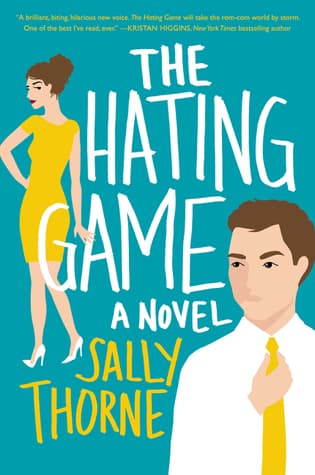
Synopsis
Covers the whole plot, including the ending.
- Difficulty
- Easy
- Pacing
- Moderate
- Mood
- Witty, Romantic, Humorous, Flirty
- Read it if
- You love a classic enemies-to-lovers trope with witty banter, high sexual tension, and a satisfying HEA.
- Skip it if
- You dislike workplace romances, misunderstandings as plot devices, or an abundance of internal monologue.
The Hating Game Plot Summary
Covers the whole plot, including the ending.
The Promotion Announcement and Escalating Rivalry
Lucy Hutton, an executive assistant at Bexley & Gamin, shares a small office with her nemesis, Joshua Templeman, also an executive assistant. Their days are filled with petty, yet intense, games like the Staring Game and the Mirror Game. Their merged companies, Bexley and Gamin, have a new CEO, Mr. Bexley, who announces an Executive Managing Director position. This role will oversee the entire publishing house, and both Lucy and Joshua are candidates. The competition immediately escalates, with the loser agreeing to resign. Lucy feels immense pressure to win, fueled by her desire to prove herself and escape Joshua's constant presence.
The Elevator Kiss and Confusing Signals
After a particularly tense day, Lucy and Joshua find themselves alone in the office elevator. The atmosphere is charged, but Lucy still thinks it's purely hostile. However, when the elevator momentarily stalls, Joshua unexpectedly leans in and kisses her. The kiss is intense and undeniable, leaving Lucy utterly bewildered and flustered. She struggles to reconcile this passionate encounter with her long-held belief that Joshua despises her. The incident throws her entire perception of their relationship into disarray, making her question if their 'hating game' was ever truly about hate.
The Sick Day and Unexpected Kindness
Lucy falls ill with the flu. To her surprise, Joshua shows up at her apartment with soup and medicine. He takes care of her, despite her protests, and even cleans her apartment. This act of genuine kindness is completely at odds with the cold, competitive Joshua she knows. Lucy is deeply touched and further confused by his behavior. His caring actions chip away at her defenses, making her wonder if his animosity was a facade. This moment shows a vulnerability in Joshua and a growing emotional connection between them, challenging Lucy's preconceived notions.
The Paintball Game and Jealousy
The company organizes a paintball outing, which Lucy reluctantly attends. During the game, Joshua is protective of Lucy, shielding her from paintballs and ensuring her safety. She also observes him interacting with other female colleagues, specifically a woman named Mindy, and finds herself experiencing an unfamiliar pang of jealousy. This realization startles Lucy, as it's the first time she's acknowledged any romantic feelings towards Joshua. The paintball game helps Lucy confront her growing attraction and the emotional complexity of their relationship.
The Dinner Date and Misunderstandings
Joshua asks Lucy on a dinner date, which she accepts with a mix of excitement and apprehension. The date is a mix of awkwardness and undeniable chemistry. They discuss their past, their families, and their ambitions, allowing each to see a more personal side of the other. However, their competitive habits and past misunderstandings still linger, leading to moments of tension and misinterpretation. Despite the underlying attraction, their history of animosity makes open communication difficult, and Lucy worries that Joshua might still be playing a game with her heart.
The Truth About the Resignation
Lucy overhears a conversation that leads her to believe Joshua plans to resign if she wins the promotion. Distraught, she confronts him, fearing he's still manipulating her. Joshua then reveals his true intention: he was planning to resign regardless of who won, if Lucy didn't get the job. He explains that he didn't want to work in an environment where she was unhappy or felt undervalued. This revelation shatters Lucy's remaining doubts about his sincerity and makes her realize the depth of his feelings for her, as he was willing to sacrifice his own career for her happiness.
The Kiss in the Rain and Mutual Confession
After the emotional revelation, Lucy chases after Joshua in the pouring rain. They share a passionate, heartfelt kiss, free from any pretense or games. In this moment, all their unspoken feelings come to the surface. Lucy confesses her love for Joshua, and he reciprocates, admitting that he's been in love with her for a long time. The kiss in the rain symbolizes a new beginning for their relationship, one built on honesty and genuine affection, finally shedding the 'hating game' they had played for so long. It is a moment of emotional release and commitment.
The Interview Day and Strategic Sabotage
The day of the final interviews for the Executive Managing Director position arrives. Joshua, despite his own qualifications, subtly sabotages his interview. He gives answers that are technically correct but not what the interviewers want to hear, effectively taking himself out of the running. He does this because he genuinely wants Lucy to succeed and knows that she truly desires the position. His actions demonstrate his selfless love for her, prioritizing her happiness and career over his own, further cementing their bond and his commitment.
Lucy Gets the Promotion
Following the interviews, Lucy receives the news that she has been offered the Executive Managing Director position. It is a moment of triumph and validation for her, the culmination of years of hard work and her unwavering belief in herself. This achievement not only grants her the professional success she craved but also signifies her personal growth, having navigated her complex relationship with Joshua to reach this point. She realizes that winning the promotion feels even sweeter with Joshua by her side, not as a rival, but as a loving partner.
A New Beginning
With Lucy in her new role and Joshua accepting a different position within the company (or starting his own venture, depending on the edition), their professional dynamic shifts. More importantly, their personal relationship blossoms. They are no longer playing games but openly communicating and supporting each other. The book concludes with them fully embracing their love, having found a way to blend their professional ambitions with their deep personal connection, proving that love can conquer even the most ingrained rivalry.
Principal Figures
Lucy Hutton
Protagonist
An ambitious and charming executive assistant who believes in kindness and perfection.
Lucy is a meticulous and outwardly cheerful executive assistant who prides herself on being liked by everyone. She is fiercely ambitious and determined to prove her worth, particularly to her intimidating rival, Joshua Templeman. Despite her 'nice girl' facade, she has a sharp wit and a surprising capacity for competitive behavior. She comes from a small-town background and deeply values her independence and career aspirations. Her internal monologue often reveals her anxieties and vulnerabilities, especially concerning Joshua.
Relationships: Joshua Templeman (Nemesis turned lover; intense rivalry evolves into deep affection and mutual respect.); Bexley & Gamin Colleagues (Generally friendly, but superficial relationships, except with her best friend, Danny.); Danny (Her trusted confidant and friend who offers support and advice.)
Joshua Templeman
Love Interest / Antagonist (initially)
The cold, efficient, and impeccably dressed executive assistant who is Lucy's chief rival.
Joshua is initially portrayed as Lucy's stoic, intimidating, and overly efficient nemesis. He is highly intelligent, detail-oriented, and seemingly emotionless, often provoking Lucy with his precise habits and cutting remarks. Beneath his cold exterior, however, lies a deeply caring and protective man, who is intensely loyal to those he loves. He is driven by a strong sense of responsibility and a desire to do things correctly, which often makes him appear rigid. His family background, particularly his strained relationship with his father, has shaped his guarded nature.
Relationships: Lucy Hutton (Nemesis turned lover; intense rivalry evolves into deep affection and mutual respect.); Richard (his father) (Strained and distant relationship, marked by a desire for approval and independence.); Patrick (his brother) (A close and supportive familial bond.)
Mr. Bexley
Supporting
The CEO of Bexley & Gamin, overseeing the merger and the promotion.
Mr. Bexley is the CEO of the newly merged Bexley & Gamin publishing house. He is the one who announces the Executive Managing Director position, setting the stage for Lucy and Joshua's direct competition. He is portrayed as a shrewd and somewhat detached businessman, focused on the success of the company. He is unaware of the personal dynamics between Lucy and Joshua, viewing them simply as two highly capable candidates for a crucial role.
Relationships: Lucy Hutton (Boss-employee relationship, generally positive perception of her work.); Joshua Templeman (Boss-employee relationship, generally positive perception of his work.)
Danny
Supporting
Lucy's best friend and confidant.
Danny is Lucy's closest friend and coworker at Bexley & Gamin. He is a kind, supportive, and often humorous presence in Lucy's life, providing her with a sounding board for her frustrations and romantic confusion about Joshua. He offers practical advice and emotional support, often seeing the truth about Lucy's feelings before she does. His role is primarily to highlight Lucy's internal struggles and provide a sense of normalcy amidst the office drama.
Relationships: Lucy Hutton (Best friends; he is her trusted confidant and emotional support.)
Helen
Supporting
A fellow executive assistant and friend of Lucy's.
Helen is another executive assistant at Bexley & Gamin and a friendly acquaintance of Lucy's. She is generally pleasant and supportive, often engaging in lighthearted office banter with Lucy. While not as close as Danny, Helen represents the wider, less competitive, and more collegial aspect of Lucy's work environment. She is a minor character whose primary function is to provide additional context for Lucy's daily life at the office.
Relationships: Lucy Hutton (Friendly colleague.)
Mindy
Mentioned
A colleague who briefly causes Lucy jealousy.
Mindy is a female colleague at Bexley & Gamin, briefly mentioned in the context of the paintball game. Lucy observes Joshua interacting with Mindy and experiences a pang of jealousy, which is a significant moment for Lucy in recognizing her own burgeoning feelings for Joshua. Mindy serves as a minor plot device to highlight Lucy's emotional development.
Relationships: Joshua Templeman (Casual colleague, briefly perceived as a romantic rival by Lucy.)
Themes & Insights
The Thin Line Between Love and Hate
This theme is central to the entire narrative. It explores how intense rivalry and animosity can mask or even evolve into deep affection. Lucy and Joshua's 'hating game' is a coping mechanism for their powerful, unspoken attraction. Their constant teasing, competition, and shared office space force them into a proximity where their true feelings can no longer be denied. The elevator kiss, the sick day, and Joshua's self-sabotage for Lucy's promotion all show how their initial 'hate' was a complex blend of fear, projection, and undeniable chemistry.
“''I hate you.' The words came out like a sigh. 'I hate you, too,' he whispered back, and then he kissed me again, harder this time, as if to prove it.”
The Power of Vulnerability and Authenticity
Both Lucy and Joshua initially present carefully constructed facades. Lucy is the 'nice girl' and Joshua is the 'cold, efficient' rival. The story progressively dismantles these walls, showing the importance of vulnerability in forming genuine connections. Lucy's insecurities about her height and her past, and Joshua's guardedness stemming from his family history, are slowly revealed. It is only when they begin to drop their defenses, like Joshua caring for Lucy when she is sick or Lucy confessing her feelings in the rain, that their relationship can truly flourish beyond the games. Their journey emphasizes that true love requires honesty and emotional openness.
“It was impossible to hate someone who knew the exact right way to make you feel safe.”
Professional Ambition vs. Personal Happiness
The promotion for Executive Managing Director is the primary external conflict, driving much of the plot. Both Lucy and Joshua are ambitious and dedicated to their careers. However, as their relationship deepens, the narrative explores the tension between achieving professional success and finding personal happiness. Joshua's willingness to step aside for Lucy's promotion, and Lucy's realization that her career triumph is sweeter with him by her side, highlight that true fulfillment often involves balancing career goals with meaningful relationships. The story suggests that ambition does not have to be a solitary pursuit, and that love can enhance, rather than hinder, personal success.
“I’d always thought winning meant being alone. I was wrong.”
Prejudice and First Impressions
The novel heavily features the idea that initial judgments can be deeply flawed and lead to significant misunderstandings. Lucy's first impression of Joshua as a cruel, meticulous monster, and Joshua's initial perception of Lucy as an annoying, overly cheerful 'smurf,' are based on superficial interactions and their own insecurities. The entire 'hating game' is built on these misinterpretations. As they spend more time together and witness each other's true character, they are forced to confront and dismantle these preconceived notions. The story reminds readers that empathy and deeper understanding are crucial to seeing people for who they truly are.
“My first impression of Joshua Templeman was that he was a beautiful, dangerous, and utterly infuriating waste of a perfectly good suit.”
Plot Devices & Literary Techniques
Enemies-to-Lovers Trope
The foundational romantic dynamic where initial animosity blossoms into deep love.
This is the primary romantic trope of the novel. Lucy and Joshua are established as bitter rivals from the outset, constantly engaging in petty games and verbal sparring. Their shared office space forces them into close proximity, where their intense 'hate' gradually reveals itself to be a cover for powerful attraction and unspoken feelings. The progression from animosity to a profound, loving relationship is central to the plot, providing both conflict and emotional payoff.
Shared Office Space
A physical constraint that forces constant interaction between the protagonists.
The small, shared office space is a crucial plot device. It acts as a pressure cooker, forcing Lucy and Joshua into unavoidable, daily contact. This constant proximity prevents them from escaping their rivalry and creates numerous opportunities for their 'games' to play out, as well as for unexpected moments of vulnerability and connection. Without this forced interaction, their relationship would likely not have developed beyond superficial animosity.
The Promotion Competition
The external conflict that drives much of the plot and raises the stakes for the protagonists.
The Executive Managing Director promotion competition serves as the main plot driver. It provides a clear objective for both Lucy and Joshua, intensifying their rivalry and adding a tangible consequence to their 'hating game' (the loser resigns). This professional contest acts as a catalyst for their personal growth and the development of their romantic relationship, as the stakes force them to confront their true feelings and priorities.
Miscommunication and Unspoken Feelings
A recurring element where characters' true intentions and emotions are initially hidden or misunderstood.
Throughout the story, much of the tension and misunderstanding between Lucy and Joshua stems from their inability or unwillingness to openly communicate their true feelings. Their 'hating game' is a form of miscommunication, where their actions and words often mask deeper emotions. Joshua's actions, like his initial coldness or his secret caretaking, are often misinterpreted by Lucy, leading to internal conflict and delaying the resolution of their romantic tension. This device highlights the journey towards authentic expression.
The Hating Game Quotes
“I'm not in love with him. I'm in love with the idea of him. I'm in love with the idea of being in love with someone like him.”
“I hate him. I hate him so much that it's almost a pleasure.”
“He's not just handsome. He's an event. He's a natural disaster.”
“Maybe this is what happens when you spend too much time hating someone. You start to see them.”
“I'm not a fan of small talk. I prefer large talk. Like, 'What's your biggest fear?' or 'What's the meaning of life?'”
“He looks at me like I'm the most interesting thing he's ever seen, and it makes me feel like I am.”
“You don't just hate someone for no reason. You hate them because they make you feel something.”
“I have a theory that people who are always smiling are hiding something.”
“Sometimes you have to be cruel to be kind. And sometimes you have to pretend to be cruel to hide how kind you really are.”
“It's a strange kind of intimacy, this hating game. It's like we're always dancing on the edge of something.”
“I don't want to just win. I want to win so hard that he never forgets it.”
“My life is a series of tiny, controlled disasters.”
“You know you love someone when you can't imagine a single day without them.”
“He doesn't just see me. He sees through me. He sees the person I want to be, and the person I'm afraid to be.”
Quiz
10 questions on the plot and the characters. Each answer comes with a short explanation.
Question 1
What is the primary reason Lucy Hutton and Joshua Templeman are trapped in a shared office together?
- They were assigned to the same new project team.
- Their respective companies merged, forcing them to share resources.
- They are co-writing a book and need to collaborate closely.
- They are both interns vying for the same limited desk space.
Show answer
B. Their respective companies merged, forcing them to share resources. The synopsis mentions they are at Bexley & Gamin, which implies their companies merged, leading to their shared office situation.
Question 2
Which of the following 'games' is explicitly mentioned in the synopsis as one Lucy and Joshua play?
- The Coffee Game
- The Silent Treatment Game
- The Mirror Game
- The Sabotage Game
Show answer
C. The Mirror Game The synopsis specifically lists 'The Staring Game. The Mirror Game. The HR Game.' as examples of their one-upmanship.
Question 3
What is the ultimate stake in the 'huge new promotion' that goes up for the taking between Lucy and Joshua?
- The loser has to pay the winner's salary for a year.
- If Lucy wins, she becomes Joshua's boss; if she loses, she resigns.
- The winner gets to move to a different city office.
- The loser has to work as the winner's personal assistant.
Show answer
B. If Lucy wins, she becomes Joshua's boss; if she loses, she resigns. The synopsis clearly states, 'If Lucy wins this game, she’ll be Joshua’s boss. If she loses, she’ll resign.'
Question 4
How does Lucy Hutton generally perceive herself and her professional image at Bexley & Gamin?
- As ruthless and competitive, always seeking to dominate.
- As charming, accommodating, and loved by everyone.
- As quiet and unassuming, preferring to work in the background.
- As rebellious and unconventional, often clashing with HR.
Show answer
B. As charming, accommodating, and loved by everyone. The synopsis states, 'She’s charming and accommodating and prides herself on being loved by everyone at Bexley & Gamin.'
Question 5
What event marks a significant turning point in Lucy's perception of Joshua, causing her to 'wonder whether she’s got Joshua Templeman all wrong'?
- Joshua unexpectedly praises her work during a team meeting.
- An innocent elevator ride ends with an earth-shattering kiss.
- She overhears Joshua defending her to another colleague.
- Joshua offers to help her with a difficult personal problem.
Show answer
B. An innocent elevator ride ends with an earth-shattering kiss. The synopsis explicitly states, 'After a perfectly innocent elevator ride ends with an earth-shattering kiss, Lucy starts to wonder whether she’s got Joshua Templeman all wrong.'
Question 6
The definition of 'Nemesis' in the synopsis includes 'A person's undoing' and 'Joshua Templeman'. What does this imply about Lucy's initial view of Joshua?
- She sees him as her greatest ally and supporter.
- She believes he is destined to cause her downfall or defeat.
- She views him as a mentor who will guide her career.
- She thinks he is a neutral party in their office dynamics.
Show answer
B. She believes he is destined to cause her downfall or defeat. The definition directly links Joshua to 'A person’s undoing,' indicating Lucy's initial belief that he is her ultimate adversary and potential downfall.
Question 7
What specific physical trait is used to describe Joshua Templeman in the synopsis, contributing to Lucy's perception of him?
- Tall and lanky
- Physically intimidating
- Slouching and disheveled
- Small and unassuming
Show answer
B. Physically intimidating The synopsis describes Joshua as 'coldly efficient, impeccably attired, physically intimidating Joshua Templeman.'
Question 8
The phrase 'addictive, ridiculous never-ending game of one-upmanship' suggests which of the following about Lucy and Joshua's relationship?
- They are constantly trying to outdo each other in a competitive, yet possibly engaging, way.
- They genuinely hate each other and avoid all interaction.
- Their interactions are always professional and strictly business-oriented.
- They are collaborating on a secret project that requires constant testing.
Show answer
A. They are constantly trying to outdo each other in a competitive, yet possibly engaging, way. One-upmanship is defined by trying to gain an advantage over someone, and 'addictive' implies they are drawn to this competitive dynamic despite (or because of) its ridiculousness.
Question 9
Lucy's sudden 'steamy dreams about Joshua, and dressing for work like she’s got a hot date' most strongly indicates what internal conflict?
- Her desire to impress her boss for the promotion.
- A developing romantic attraction to Joshua that contradicts her outward animosity.
- Her growing frustration with the office dress code.
- A new hobby of fashion design she's pursuing outside of work.
Show answer
B. A developing romantic attraction to Joshua that contradicts her outward animosity. These actions directly contradict her 'hating' Joshua and point towards an undeniable romantic interest, highlighting her internal conflict.
Question 10
The final sentence, 'Or maybe this is just another game,' suggests what overarching theme or uncertainty that will likely drive the narrative?
- The predictability of office politics and rivalries.
- The difficulty of distinguishing genuine emotion from competitive manipulation in their relationship.
- The ultimate triumph of professional ambition over personal feelings.
- The importance of maintaining professional boundaries at all costs.
Show answer
B. The difficulty of distinguishing genuine emotion from competitive manipulation in their relationship. This sentence directly questions the sincerity of their developing feelings, implying that the central conflict will be whether their romance is real or just an extension of their ongoing 'game' of one-upmanship.
The Hating Game FAQ
What is the central premise of 'The Hating Game'?
The book centers on Lucy Hutton and Joshua Templeman, executive assistants at Bexley & Gamin, who are intense workplace rivals. Their animosity is fueled by constant games of one-upmanship, but this dynamic is complicated when a new co-CEO promotion opens up, forcing them to confront their true feelings amidst their competitive 'hating game'.
Who are the main characters and what are their initial roles?
Lucy Hutton is the charming, accommodating executive assistant to one of the original CEOs, Mr. Gamin. Joshua Templeman is the coldly efficient, impeccably dressed executive assistant to the other original CEO, Mr. Bexley. They share an office and are constantly at odds.
What is at stake with the promotion mentioned in the synopsis?
A new co-CEO position is available, and both Lucy and Joshua are vying for it. The stakes are high: if Lucy wins, she will be Joshua's boss, but if she loses, she plans to resign, making their rivalry even more intense and personal.
How does the elevator scene significantly alter Lucy's perception of Joshua?
After a perfectly innocent elevator ride, Joshua unexpectedly kisses Lucy, which she describes as 'earth-shattering'. This kiss shatters her long-held belief that she hates him, making her question his true feelings and her own growing attraction.
What are some of the 'games' Lucy and Joshua play in the office?
They engage in various petty competitions, including the Staring Game, where they try to out-stare each other; the Mirror Game, where they mimic each other's actions; and the HR Game, where they try to provoke each other without crossing HR boundaries.
What is the significance of the strawberry farm in Joshua's backstory?
Joshua's family owns a strawberry farm, a detail he initially keeps hidden. It reveals a softer, more grounded side to him and highlights his desire to escape his family's expectations for him to take over, opting instead for a corporate career.
How does Lucy's height play into Joshua's actions and affections?
Joshua is highly observant of Lucy's small stature, often adjusting things like her chair, desk height, or even reaching for items for her. This seemingly small detail is an early indicator of his protective instincts and care for her, even before their feelings are openly acknowledged.
What is the 'HR game' and how does it foreshadow their deeper connection?
The 'HR game' involves Lucy and Joshua trying to annoy each other just enough to warrant an HR complaint, but without actually getting one. This constant pushing of boundaries, while frustrating, also signifies their intense focus on each other and their unspoken desire for attention from the other party.
What is the underlying psychological reason for Lucy's initial hatred of Joshua?
Lucy's 'hatred' stems from her perception of Joshua as cold, efficient, and everything she isn't – a threat to her 'nice girl' persona and her desire to be liked. She projects her insecurities about her own ambition and vulnerability onto him, creating a defensive barrier.
How does Joshua's personality contribute to the 'hating game' dynamic?
Joshua is initially perceived as stoic and unreadable, which fuels Lucy's assumptions about his dislike for her. His reserved nature and dry wit, combined with his competitive streak, make him an ideal sparring partner for Lucy, creating a cycle of provocation and reaction.
In what ways do Lucy and Joshua both use their 'games' as a form of communication?
Their games of one-upmanship, staring, and teasing serve as a subconscious way for them to interact and maintain a connection, however antagonistic. It's a safer alternative to expressing their true, confusing feelings for each other, which they both fear.
How does Lucy's internal monologue reflect her self-perception and growth?
Lucy's internal monologue is filled with self-deprecating humor and a strong desire to be seen as 'nice' and accommodating. As the story progresses, her thoughts reveal her growing confidence, her willingness to embrace her ambition, and her acceptance of her 'not-so-nice' feelings for Joshua.
Is the 'hating game' truly about hatred, or something else entirely?
The 'hating game' is ultimately a misdirection. It's a complex dance of attraction, fear of vulnerability, and a competitive outlet for two people who are deeply drawn to each other but are afraid to admit it. Their 'hatred' is a thin veil for intense romantic tension.
What is the significance of the book's title, 'The Hating Game', in relation to the overall message?
The title highlights the central conflict and the initial misunderstanding between Lucy and Joshua. It underscores the idea that sometimes what we perceive as hate can be a powerful, if convoluted, form of attraction, and that appearances can be deceiving when it comes to emotions.
How does the author use humor to explore deeper themes in the novel?
Sally Thorne uses witty banter, absurd office scenarios, and Lucy's sarcastic internal monologue to make the story engaging. This humor often masks the characters' underlying insecurities, fears of intimacy, and the challenges of navigating a competitive workplace while falling in love.
To what extent is their professional rivalry a reflection of their personal insecurities?
Their professional rivalry is a direct projection of their personal insecurities. Lucy's need to be liked and Joshua's guarded nature both contribute to their competitive dynamic. Winning the promotion isn't just about career advancement, but also about proving their worth and asserting dominance, which they believe will protect them from vulnerability.
What role does miscommunication play in prolonging the 'hating game'?
Miscommunication is a primary driver of the prolonged 'hating game.' Both Lucy and Joshua make assumptions about the other's intentions and feelings, often interpreting innocuous actions as slights or expressions of dislike. Their inability to openly communicate their true emotions perpetuates their rivalry.
About the author

Sally Thorne is an author known for her contemporary romance novels. Her debut work, The Hating Game, gained significant popularity for its witty banter and enemies-to-lovers storyline. Thorne's writing often explores themes of love and relationships within engaging narratives.
Similar books
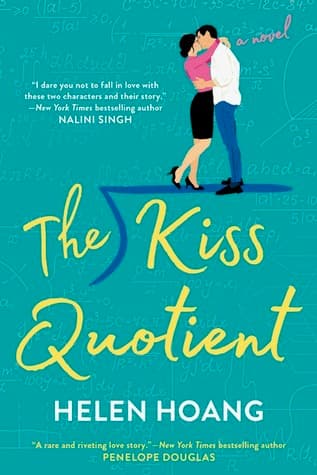
- The Kiss Quotient
Helen Hoang
3.9 (141k) average on GoodreadsRomanceFocuses on character development and a unique romantic dynamic with a heartwarming feel.
- Beach Read
Emily Henry
4.1 (86k) average on GoodreadsRomanceTwo rival authors find unexpected connection, blending humor and romance.
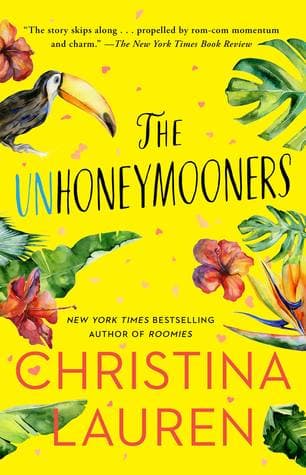
- The Unhoneymooners
Christina Lauren
4.0 (115k) average on GoodreadsRomanceBoth books utilize the enemies-to-lovers trope, but 'The Unhoneymooners' is set during a forced vacation, providing a different backdrop for the developing romance. 'The Hating Game' distinguishes itself with its sustained, high-stakes workplace tension and the detailed internal world of its protagonist, Lucy, which is a core strength.
- The Hunger Games
Suzanne Collins
4.3 (6.4M) average on GoodreadsFantasyIn a future where children fight to the death on live television, Katniss Everdeen volunteers for the arena, turning a death sentence into a fight for survival and a spark of rebellion.
- The Great Gatsby
F. Scott Fitzgerald
3.9 (3.8M) average on GoodreadsHistorical FictionIn the opulent Roaring Twenties, a mysterious millionaire's lavish parties hide his desperate, tragic pursuit of a lost love, exposing the emptiness within the American Dream.
- The Fault in Our Stars
John Green
4.2 (3.6M) average on GoodreadsYoung AdultA girl with a terminal illness finds her story rewritten when a charming boy with a similar past enters her life at a cancer support group, leading to a star-crossed romance.




Enjoyed the summary?
A summary gives you the shape of the book. The book itself has the detail, the examples and the voice.
Find The Hating Game on AmazonAs an Amazon Associate, BookBrief earns from qualifying purchases. How we're funded