

Synopsis
Covers the whole plot, including the ending.
- Difficulty
- Easy
- Pacing
- Fast
- Mood
- Humorous, Adventurous, Mythological, Lighthearted
- Read it if
- You love Greek mythology blended with modern-day adventure, enjoy humorous first-person narration, and are looking for a series with strong character development and a quest-driven plot.
- Skip it if
- You dislike middle-grade humor, prefer darker fantasy, or are not a fan of stories featuring fallen gods learning humility.
The Hidden Oracle Plot Summary
Covers the whole plot, including the ending.
Apollo's Humiliating Fall to Mortal Life
The story begins with the god Apollo falling from Olympus, without his divine powers and transformed into a gawky, acne-ridden mortal teenager named Lester Papadopoulos. He lands in a dumpster-filled alley in New York City, confused and horrified by his human body. His first encounter is with two thugs who try to mug him, but he is rescued by a young demigod named Meg McCaffrey, who uses celestial bronze swords despite her small size. Apollo, still reeling from his transformation, learns that Meg is a daughter of Demeter. He must accept her as his new master, a condition Zeus imposed for his punishment, and together they seek refuge at Camp Half-Blood, hoping to find answers and assistance.
Arrival at Camp Half-Blood and the Plight of the Oracle
Upon arriving at Camp Half-Blood, Apollo finds the camp in chaos. Demigods are disappearing, and the Oracle of Delphi, Rachel Dare, is afflicted with prophetic static, unable to give prophecies. Chiron, the camp director, explains that the disappearances and the Oracle's illness are linked to the absence of Apollo's divine influence and the rise of an ancient enemy. Apollo, despite his mortal form, is expected to help restore the Oracle and the camp's safety. He quickly realizes that regaining Zeus's favor will be harder than he first thought, especially without his godly powers and with a seemingly inexperienced demigod as his master.
The First Trial and the Grove of Dodona
Chiron assigns Apollo and Meg their first task: to find a missing demigod named Sherman Yang and investigate the source of the camp's problems. Their journey takes them to the woods surrounding Camp Half-Blood, where they encounter germ-obsessed, plague-carrying 'germ-monsters' (Keres). They also discover a hidden entrance to the subterranean labyrinth. During their search, they find a chamber that houses the remnants of the Grove of Dodona, an ancient oracle connected to talking trees. The grove is dying, and its last bits of power manifest as cryptic, often contradictory, whispers, hinting at a greater threat. They rescue Sherman, but the grove's message remains unclear.
Encounter with the Myrmekes and Leo's Return
Following a clue from the Grove of Dodona, Apollo and Meg venture deeper into the woods, where they are ambushed by Myrmekes, giant ants that collect shiny objects and have a powerful acidic bite. Meg, showing combat skills, helps Apollo fight them off. During the battle, they are rescued by Leo Valdez, riding Festus the bronze dragon, accompanied by Calypso. Leo, who had been presumed dead after the war with Gaea, explains that he and Calypso had been searching for a cure for Calypso's mortality. Their return brings hope to the struggling camp, but also raises questions about their timing and purpose.
The Beast's Influence and the Triumvirate Holdings
With Leo's help, Apollo begins to understand the larger conspiracy. They learn that the disappearances and the Oracle's silence are caused by a mysterious, ancient entity known as 'The Beast,' who operates through a mortal corporation called Triumvirate Holdings. This organization is taking control of all the ancient Oracles, including Delphi, Dodona, and the Sibylline Oracles, to prevent future prophecies and gain power. Apollo realizes that 'The Beast' is a triumvirate of Roman emperors, aiming to restore the Roman Empire and suppress the Greek demigod world. This revelation escalates the stakes, as Apollo now faces a global threat, not just a personal punishment.
Meg's Betrayal and Nero's Identity
As Apollo and Meg investigate further, a truth comes to light. During a fight with a group of Blemyes (headless monsters working for the Triumvirate), Meg's true allegiance is revealed. She is the adopted daughter of Nero, one of the three Roman emperors comprising 'The Beast.' Meg, manipulated and controlled by Nero since childhood, betrays Apollo, leading him into a trap. This betrayal deeply hurts Apollo, who had begun to trust Meg. He is captured and brought before Nero, who reveals his long-standing grudge against Apollo and his plans to eradicate the demigod world and secure his own immortality.
The Battle for the Grove of Dodona
Apollo, imprisoned by Nero, escapes with the help of some unexpected allies. He, Leo, and Calypso, along with some Camp Half-Blood demigods, launch a counterattack on Nero's headquarters, which is located beneath his penthouse in the Triumvirate Tower. Their main goal is to reclaim the Grove of Dodona, which Nero intends to destroy. A fierce battle ensues, with Apollo, despite his mortal weakness, trying to inspire and lead the demigods. He uses his musical talents to distract Nero's forces, showing his innate divine abilities even without his godly powers.
Meg's Redemption and Nero's Defeat
During the climactic battle, Meg, torn between her loyalty to Nero and her growing bond with Apollo, finally chooses to defy her abusive adoptive father. Seeing Nero's cruelty and his willingness to sacrifice anyone for his ambitions, Meg uses her demigod powers to create a growth of plants, turning the tide of the battle against Nero. Apollo, seeing Meg's change of heart, draws upon his last strength and, with Meg's assistance, defeats Nero, temporarily incapacitating him and forcing him to retreat. The immediate threat from Nero is neutralized, but the other two emperors of the Triumvirate remain at large.
The Rebirth of the Grove and the First Prophecy
With Nero defeated and the immediate danger gone, Apollo focuses on restoring the Grove of Dodona. Using his limited remaining powers and with the help of Meg and the demigods, he revives the ancient talking trees. The Grove, now fully restored, issues its first clear prophecy since Apollo's fall. The prophecy, delivered in ancient Greek, foretells a perilous journey to the American West, the need to seek out other Oracles, and the continued struggle against the remaining two emperors of the Triumvirate. This is a significant step in Apollo's quest, providing a clear path forward and a renewed sense of purpose, despite the challenges ahead.
Apollo's New Path and Farewell to Camp Half-Blood
Having completed his first trial and secured a prophecy, Apollo begins to accept his mortal limitations and responsibilities. He acknowledges Meg's bravery and loyalty, solidifying their partnership. With the Grove of Dodona restored and the Oracle of Delphi still recovering, Apollo understands that his journey is far from over. He and Meg prepare to leave Camp Half-Blood, embarking on a new quest guided by the prophecy to find the other Oracles and confront the remaining emperors. Apollo, though still wanting his godhood, has learned lessons about humility, friendship, and the meaning of heroism, setting him on a path of self-discovery and redemption.
Principal Figures
Apollo / Lester Papadopoulos
Protagonist
The former Greek god of music, poetry, healing, and archery, cast down as a mortal teenager.
Apollo, once a glorious and arrogant Olympian god, is transformed into a clumsy, acne-ridden mortal named Lester Papadopoulos as punishment from Zeus. He is initially self-absorbed, whiny, and entirely unprepared for human frailties, constantly lamenting his lost powers and divine status. Throughout the book, he slowly begins to develop empathy and courage, learning to rely on others and appreciate mortal life. He retains his love for haikus and music, often using them to express his distress or make observations. His journey is one of profound humility and self-discovery, forcing him to confront his past mistakes and re-evaluate his values.
Relationships: Zeus (Punishing father, source of his mortal predicament); Meg McCaffrey (Reluctant master and eventual friend/partner); Chiron (Mentor and camp director, offering guidance); Leo Valdez (Friend and ally in the quest); Calypso (Ally, met through Leo); Nero (Primary antagonist, Meg's abusive adoptive father)
Meg McCaffrey
Supporting
A mysterious demigod, daughter of Demeter, who becomes Apollo's master.
Meg is a small, seemingly unimpressive demigod with a penchant for green clothing and a surprisingly fierce combat style, wielding two celestial bronze swords. She is initially sullen, secretive, and easily manipulated, particularly by her abusive adoptive father, Nero. Despite her outward toughness, she is deeply vulnerable and struggles with her past trauma. Her loyalty is initially divided, but she ultimately chooses to protect Apollo and defy Nero, demonstrating immense courage and a budding sense of self-worth. Her powers, tied to plant manipulation, are surprisingly potent and vital in battle.
Relationships: Apollo (Her master, then friend and partner); Nero (Abusive adoptive father and antagonist); Demeter (Divine mother)
Chiron
Supporting
The wise centaur and activities director of Camp Half-Blood.
Chiron is the traditional, wise, and patient centaur who serves as the activities director at Camp Half-Blood. He provides guidance and support to Apollo, despite the former god's complaints and arrogance. He is a steady presence amidst the chaos, offering strategic advice and historical context. Chiron understands the gravity of Apollo's situation and the threats facing the demigod world, urging Apollo to embrace his new role and responsibility. He acts as a moral compass and a source of stability for both Apollo and the campers, embodying the enduring spirit of the demigod training ground.
Relationships: Apollo (Mentor and guide); Camp Half-Blood Demigods (Teacher and protector)
Leo Valdez
Supporting
A son of Hephaestus, mechanical genius, and former hero of Olympus, who returns from the dead.
Leo Valdez, the quick-witted and humorous son of Hephaestus, makes a dramatic return from his supposed death, flying in on Festus the bronze dragon. He brings a much-needed boost of morale and mechanical expertise to Camp Half-Blood. His playful banter and inventive solutions often cut through Apollo's self-pity. Leo is fiercely loyal to his friends and determined to help Apollo, even though he's also focused on finding a way to cure Calypso's mortality. His return symbolizes renewed hope and provides Apollo with a crucial, experienced ally in his quest.
Relationships: Calypso (Romantic partner, for whom he seeks a cure); Apollo (Friend and ally); Festus (His bronze dragon companion)
Calypso
Supporting
An immortal nymph, freed from Ogygia, now mortal and accompanying Leo.
Calypso, once an immortal nymph trapped on the island of Ogygia, now travels with Leo Valdez, having been freed from her curse. She is mortal, which is a new and sometimes frustrating experience for her, but she remains strong-willed and intelligent. She is a powerful sorceress and gardener, and her knowledge of ancient magic and herbs proves useful. Her presence adds a layer of maturity and a different perspective to the group, and she challenges Apollo's self-importance with her directness. She is committed to her relationship with Leo and adapting to the modern world.
Relationships: Leo Valdez (Romantic partner); Apollo (Ally, but also a figure from her past (Apollo once trapped her on Ogygia))
Nero
Antagonist
An insane Roman emperor, one of the Triumvirate, and Meg's abusive adoptive father.
Nero is revealed as one of the three Roman emperors comprising 'The Beast,' a powerful and ancient enemy seeking to control all Oracles. He is Meg's adoptive father and a deeply manipulative, sadistic, and mentally unstable individual. He uses emotional abuse and fear to control Meg, viewing her as a tool rather than a daughter. Nero is obsessed with power, immortality, and revenge against the gods, particularly Apollo. He operates through Triumvirate Holdings, a corporate front, and employs various monsters and mortals to achieve his goals. His theatrical cruelty and self-aggrandizing nature make him a formidable and truly despicable foe.
Relationships: Meg McCaffrey (Abusive adoptive father); Apollo (Primary target of his revenge and hatred); Commodus & Caligula (Fellow emperors in the Triumvirate (mentioned))
Rachel Elizabeth Dare
Supporting
The mortal Oracle of Delphi, currently incapacitated by prophetic static.
Rachel Elizabeth Dare is the current mortal Oracle of Delphi, chosen by Apollo. At the beginning of the book, she is suffering from 'prophetic static,' a debilitating condition that prevents her from issuing clear prophecies and causes her immense physical and mental distress. This incapacitation is a direct result of Apollo's fall and the Triumvirate's actions against the Oracles. Her condition highlights the severity of the crisis facing the demigod world and underscores the urgent need for Apollo to regain his powers and restore the Oracles. She is a loyal friend and ally, even in her weakened state.
Relationships: Apollo (Chosen by him as Oracle, friend); Camp Half-Blood Demigods (Source of prophecies)
Will Solace
Supporting
Son of Apollo, head counselor of the Apollo cabin, and skilled healer.
Will Solace is Apollo's son and the head counselor of the Apollo cabin at Camp Half-Blood. He is a kind, responsible, and highly skilled healer, often having to manage the medical needs of the entire camp. He is initially frustrated by Apollo's self-pity and demands but remains respectful and helpful. Will struggles with the loss of his father's divine presence and the increased pressure on him as the most prominent child of Apollo in the camp. He represents the positive qualities of Apollo's godly children and provides a grounding influence for his mortal father.
Relationships: Apollo (Son of Apollo); Nico di Angelo (Boyfriend (implied, becomes more explicit in later books))
Peaches
Supporting
Meg McCaffrey's friendly, albeit somewhat terrifying, karpos (grain spirit).
Peaches is a karpos, a grain spirit, summoned by Meg McCaffrey. He is a large, furry, and surprisingly sweet creature, despite being made of rotting fruit and smelling faintly of compost. Peaches is fiercely loyal to Meg and acts as her protector, though he can be quite aggressive towards anyone he perceives as a threat. His presence provides comic relief and demonstrates Meg's unique abilities. He can communicate in simple words and often expresses his affection by trying to feed people grapes or other fruit.
Relationships: Meg McCaffrey (Summoned protector and companion)
Themes & Insights
Humility and Self-Discovery
Apollo's transformation into a mortal forces him to shed his arrogance and confront his own weaknesses. Without his powers, he must learn to rely on others, experience fear and pain, and understand the value of mortal life. This journey of humility allows him to discover empathy and courage he never knew he possessed, moving beyond his self-centered divine perspective. His struggles show that true strength is not in power, but in character and compassion, a lesson he slowly begins to grasp.
“My life as a god had been one long string of glorious triumphs. My life as a mortal was turning out to be a string of one humiliation after another.”
Abuse of Power and Redemption
The novel explores the abuse of power through the actions of Zeus, who punishes Apollo excessively, and especially through Nero, who manipulates and abuses Meg. Apollo's own past arrogance as a god also represents a form of power abuse. His quest for redemption is not just about regaining his godhood, but about atoning for his past mistakes and learning to use influence responsibly. Meg's struggle to break free from Nero's control further shows the destructive nature of unchecked power and the possibility of redemption for those who choose to fight against it.
“I had been a god. I had commanded respect. Now I was a pawn in a game I didn't understand, controlled by a twelve-year-old.”
The Nature of Heroism
Apollo's journey redefines what it means to be a hero. As a god, he was powerful and celebrated, but as a mortal, he must learn that heroism is about courage, sacrifice, and protecting others, especially the vulnerable. He sees true heroism in the demigods and Meg, who fight despite their mortality. This theme contrasts the effortless power of a god with the hard-won bravery of mortals, suggesting that the latter is more meaningful. His transformation forces him to embody the qualities he once took for granted in his demigod children.
“Mortals were so fragile. So easily broken. And yet, they kept fighting. They kept hoping. It was a quality I had never truly appreciated.”
Family and Found Family
The idea of family is central, both biological and chosen. Apollo's strained relationship with Zeus drives the initial conflict, while his interactions with his divine children at Camp Half-Blood show the complexities of his godly parentage. More deeply, the book explores the 'found family' dynamic between Apollo and Meg, who initially resent each other but grow to rely on one another. Meg's tragic past with Nero, her abusive adoptive father, emphasizes the importance of choosing healthy relationships, making her eventual defiance and bond with Apollo a powerful example of the strength of chosen family.
“Nero was my father. He raised me. But he wasn't... he wasn't good to me.”
The Power of Prophecy and Fate
As the former god of prophecy, Apollo's loss of power directly impacts the Oracles, which become silent or corrupted. The plot is driven by the need to restore these Oracles and obtain new prophecies to guide the demigods. This theme explores the role of fate and predestination versus free will. While prophecies offer guidance, the characters' choices and actions determine their path. The Triumvirate's attempt to control the Oracles shows their desire to manipulate fate and suppress the future, making the restoration of prophecy a key step in resisting their tyranny.
“Without the Oracles, the future was dark. The demigods were blind.”
Plot Devices & Literary Techniques
The Mortal Body (Lester Papadopoulos)
Apollo's human form, serving as his primary punishment and catalyst for growth.
Apollo's transformation into the mortal teenager Lester Papadopoulos is the central plot device. It strips him of his divine powers, forcing him to experience human vulnerabilities like pain, fear, hunger, and acne. This physical limitation is a constant source of humiliation and frustration for Apollo, but it also compels him to develop empathy, courage, and resourcefulness. His mortal body acts as a symbol of his punishment and a vehicle for his character development, making him relatable and highlighting the contrast between his former godlike arrogance and his newfound human frailty.
The Oracles (Delphi, Dodona)
Ancient sites of prophecy, now silenced or corrupted, driving Apollo's quest.
The Oracles, particularly the Oracle of Delphi (embodied by Rachel Dare) and the Grove of Dodona, serve as key plot drivers. Their incapacitation is a direct result of Apollo's fall and the Triumvirate's machinations, creating an urgent need for Apollo to restore them. The prophecies they issue, or fail to issue, guide the characters' actions and reveal crucial information about the overarching conflict. They represent the connection between the mortal world and divine foresight, and their restoration symbolizes the hope for the future of the demigod world.
Meg's Celestial Bronze Swords
Unusual and powerful weapons, hinting at Meg's hidden abilities and importance.
Meg McCaffrey's twin celestial bronze swords are a significant plot device. Celestial bronze is a rare and powerful metal, typically wielded by experienced demigods. Meg's possession and skillful use of these swords from the very beginning hint at her extraordinary abilities and her mysterious past, setting her apart from other young demigods. They serve as a constant reminder that there is more to Meg than meets the eye, foreshadowing her true parentage and her eventual defiance of Nero. The swords are instruments of both combat and revelation.
The Triumvirate Holdings Corporation
A modern corporate front for ancient Roman emperors, symbolizing the blend of old and new threats.
Triumvirate Holdings functions as a modern-day corporate front for the ancient Roman emperors Nero, Commodus, and Caligula, collectively known as 'The Beast.' This plot device effectively blends ancient mythology with contemporary elements, showing how old enemies adapt to the modern world. The corporation's vast resources and seemingly legitimate facade allow the emperors to operate with impunity, manipulate mortals, and systematically target the Oracles. It represents a new, insidious form of threat that Apollo and the demigods must learn to combat, highlighting the challenge of fighting ancient evil in a modern setting.
Haiku Poetry
Apollo's preferred poetic form, used for narration, humor, and emotional expression.
Apollo's frequent use of haiku poetry is a distinctive literary device. While often used for comedic effect, highlighting his self-pity or observations about his mortal predicament, it also serves as a way for him to process his emotions, express his divine nature even in human form, and sometimes even deliver cryptic warnings or insights. The haikus provide a unique narrative voice, reinforcing Apollo's identity as the god of poetry and adding a layer of wit and charm to the narrative, even in dire situations.
The Hidden Oracle Quotes
“I was Apollo. I was a god. I was super hot. And I was going to die.”
“Being a god is great. Everyone loves you. Everyone worships you. You're beautiful and powerful and you never have to do chores. Being a mortal is terrible. Everyone hates you. Everyone wants to kill you. You're ugly and weak and you have to do chores.”
“Your name is Lester Papadopoulos. You are a sixteen-year-old mortal. You are no longer a god. You are no longer beautiful. You are no longer powerful. You are no longer immortal. You are just Lester.”
“The world was full of monsters. Some of them wore human faces.”
“Meg was trouble. She was a tiny, angry, green-clad package of trouble. And I was stuck with her.”
“Sometimes you have to do the right thing, even if it's terrifying.”
“I missed my godly powers. I missed my godly looks. I missed my godly life. But most of all, I missed my godly self-confidence.”
“The gods were not always fair. Sometimes, they were downright cruel.”
“There are worse things than being mortal. Like being a god who can't do anything.”
“You can't just run away from your problems, Lester. Eventually, they catch up to you.”
“The Oracle of Delphi was silent. Which meant either nothing bad was going to happen, or something *really* bad was going to happen.”
“It's never too late to try and make things right.”
“Even a god can learn new tricks. Or, in my case, old tricks I'd forgotten how to do as a mortal.”
“Sometimes, the most powerful weapon isn't a sword or a bow. It's a friend.”
Quiz
10 questions on the plot and the characters. Each answer comes with a short explanation.
Question 1
What is the very first physical sensation Apollo experiences when he lands in New York City as a human?
- A sharp headache
- A sudden hunger pang
- The feeling of falling onto garbage
- The discomfort of tight clothing
Show answer
C. The feeling of falling onto garbage Apollo lands in a dumpster in an alley, specifically noting the stench and impact of hitting garbage. This immediately establishes his new, undignified human state.
Question 2
What is the name of the demigod who first finds and helps Apollo after he falls to Earth?
- Percy Jackson
- Meg McCaffrey
- Will Solace
- Nico di Angelo
Show answer
B. Meg McCaffrey Meg McCaffrey is the first demigod Apollo encounters and she becomes his reluctant master due to her 'master's mark'.
Question 3
What is Apollo's human name after he is cast down from Olympus?
- Lester Papadopoulos
- Louis Periwinkle
- Leo Valdez
- Larry Peterson
Show answer
A. Lester Papadopoulos Zeus transforms Apollo into a mortal teenager named Lester Papadopoulos, which Apollo finds incredibly humiliating.
Question 4
What unusual item does Meg McCaffrey use as her primary weapon?
- A celestial bronze dagger
- A pair of Imperial gold gladii
- A bow and arrow
- A Stygian iron sword
Show answer
B. A pair of Imperial gold gladii Meg's weapons are two Imperial gold gladii that usually appear as normal-looking rings until she activates them. This makes her unique and dangerous.
Question 5
Why does Apollo need to seek help at Camp Half-Blood?
- To find a new divine weapon
- To hide from Zeus's wrath
- To regain his godly powers and find a way back to Olympus
- To recruit demigods for a war against other gods
Show answer
C. To regain his godly powers and find a way back to Olympus Apollo's primary goal is to regain his godly powers and return to Olympus by completing tasks set by Zeus. Camp Half-Blood is the most logical place to start his quest for help and information.
Question 6
What is the immediate consequence of Apollo being made human, beyond losing his powers?
- He becomes incredibly clumsy and uncoordinated.
- He experiences human emotions like fear and pain more intensely.
- He develops an insatiable craving for mortal food.
- He loses all memory of his past as a god.
Show answer
B. He experiences human emotions like fear and pain more intensely. A major theme of the book is Apollo's struggle with human vulnerability. He constantly complains about pain, fatigue, and fear, which were alien concepts to him as a god.
Question 7
What is the significant problem that Camp Half-Blood is facing when Apollo arrives?
- A shortage of nectar and ambrosia.
- The Oracle of Delphi has gone silent and new prophecies are not being issued.
- A major monster invasion is imminent.
- Many demigods are mysteriously disappearing.
Show answer
B. The Oracle of Delphi has gone silent and new prophecies are not being issued. The silence of the Oracle of Delphi is a central mystery and a major concern for the demigods, directly impacting their ability to get guidance and prepare for future threats.
Question 8
Who is the primary antagonist responsible for controlling Meg McCaffrey and orchestrating the problems at Camp Half-Blood?
- Ares, the god of war
- Python, the ancient serpent
- The Triumvirate Holdings, led by the Beast
- Gaea, the Earth Mother
Show answer
C. The Triumvirate Holdings, led by the Beast Meg is controlled by 'The Beast', later revealed to be the Roman Emperor Nero, who is part of the Triumvirate Holdings. They are behind the silencing of the Oracles and many other schemes.
Question 9
What is the specific type of monster that Apollo and Meg encounter in the Labyrinth beneath Camp Half-Blood, guarding the Grove of Dodona?
- Minotaurs
- Myrmekes (giant ants)
- Laistrygonian giants
- Hellhounds
Show answer
B. Myrmekes (giant ants) Apollo and Meg face a nest of Myrmekes, giant ants that collect shiny objects and were attracted to Meg's Imperial gold weapons, in the Labyrinth leading to the Grove of Dodona.
Question 10
What is the primary theme explored through Apollo's transformation into a human and his subsequent struggles?
- The importance of divine power over mortal strength.
- The corruption of power and the need for humility and empathy.
- The superiority of Greek mythology over Roman mythology.
- The inevitability of fate and prophecies.
Show answer
B. The corruption of power and the need for humility and empathy. Apollo's punishment is specifically designed to teach him humility and empathy by forcing him to experience mortal pain, fear, and weakness. He learns to rely on others and appreciate the struggles of humans and demigods, which he previously disdained.
The Hidden Oracle FAQ
What is "The Hidden Oracle" about?
"The Hidden Oracle" follows the god Apollo, who has been cast down from Olympus by Zeus and transformed into a mortal teenager named Lester Papadopoulos as punishment. Stripped of his powers, Apollo must navigate the dangers of the mortal world and Camp Half-Blood, facing ancient enemies and new prophecies, all while trying to regain his godly status.
Why should I read "The Hidden Oracle"?
You should read "The Hidden Oracle" for its unique blend of humor, Greek mythology, and adventure, seen through the eyes of a formerly arrogant god forced to confront his own humanity. It offers a fresh perspective on familiar characters from the Percy Jackson universe and introduces new challenges that resonate with themes of humility and self-discovery.
What is the background/setting of "The Hidden Oracle"?
The story begins with Apollo's abrupt fall into a dumpster in New York City, quickly moving to the familiar and beloved Camp Half-Blood on Long Island. This demigod training ground serves as Apollo's initial refuge and base of operations, but the quest soon takes him to other significant mythological locations as he seeks to restore the oracles.
What are the most memorable quotes?
One memorable quote is Apollo's internal thought, "I was once a god. Now I'm a sixteen-year-old with acne and a flabby gut." Another is Meg McCaffrey's blunt, "You're useless, Lester." These quotes perfectly capture Apollo's shock at his new mortal state and the humbling he endures.
What writing style does the author use?
Rick Riordan employs a first-person narrative from Apollo's perspective, characterized by a highly sarcastic and self-deprecating tone. The writing is fast-paced, filled with witty banter, pop culture references, and vivid descriptions, making complex mythological concepts accessible and entertaining for young adult readers.
What minor details add significant meaning?
The sudden appearance of the Triumvirate Holdings business card in Apollo's pocket, initially dismissed as a minor nuisance, quickly becomes a crucial clue to the overarching antagonists controlling the hijacked oracles. Also, the seemingly random limericks Apollo spouts often contain hidden prophetic truths or ironic commentaries on his situation.
What are some subtle foreshadowing moments?
The early mentions of the disappearing demigods and the 'Plague of Ticks' foreshadow the larger crisis facing Camp Half-Blood and the other oracles. Additionally, the mysterious 'Beast' that Meg McCaffrey constantly fears subtly hints at the true nature of her stepfather and the dark forces manipulating her.
What unexpected character connections exist?
The most unexpected connection is between Meg McCaffrey and Nero, her abusive stepfather, who is revealed to be the first Roman emperor and one of the Triumvirate. This links Meg's personal trauma directly to the grand mythological conflict Apollo must resolve, making her more than just a sidekick.
What are unspoken character motivations?
Meg McCaffrey's fierce loyalty to Nero, despite his cruelty, is driven by a profound sense of fear and a desperate hope for his approval, stemming from a childhood of manipulation and abandonment. Apollo's initial desire to regain his powers is also subtly motivated by a fear of irrelevance and the loss of his identity, rather than just escaping mortal discomfort.
What psychological complexities do characters exhibit?
Apollo, as Lester, grapples with immense psychological complexity, moving from godlike arrogance to profound vulnerability, experiencing fear, pain, and self-doubt for the first time. Meg McCaffrey displays a classic trauma response, oscillating between fierce independence and childlike dependence, particularly concerning her abuser, Nero.
What are the major emotional turning points?
A major emotional turning point is when Apollo genuinely feels physical pain and fear, such as during his encounters with the blemmyae, which forces him to confront his mortality. Another is when Meg McCaffrey briefly defies Nero's influence to save Apollo, showing a crack in her psychological conditioning and a glimmer of her true self.
How do relationship dynamics evolve?
Apollo's relationship with Percy Jackson initially mirrors his past interactions with demigods – expecting deference. However, as Apollo proves his uselessness, Percy treats him more like a peer, albeit a clumsy one, forcing Apollo to humble himself. His bond with Meg evolves from reluctant partnership to a genuine, protective friendship, as they both learn to rely on each other.
Which parts remain ambiguous or open-ended?
While the immediate threat of Nero is resolved, the larger scope of the Triumvirate Holdings and the identities of the other two emperors remain largely ambiguous, setting up future books. The precise nature of Apollo's punishment and how he will fully regain Zeus's favor is also left open-ended, hinting at a long and arduous journey.
What are controversial scenes or decisions?
Some readers might find Meg McCaffrey's initial unwavering loyalty to Nero, despite his obvious villainy and abuse, controversial or difficult to understand, though it's realistically portrayed as a trauma bond. Apollo's consistent self-pity and complaints might also be seen as excessive by some, even if they serve his character arc.
"The Hidden Oracle" ending explained: how it ends & what it means
The book ends with Apollo and Meg defeating Nero and rescuing the Waystation, securing the first hijacked oracle. However, Apollo only partially restores the Oracle of Dodona and receives a new prophecy, indicating he must find two more Oracles and face the remaining two emperors of the Triumvirate. The ending signifies that Apollo's journey to regain his godhood is far from over, and he has only taken the first step on a long path of humility and service.
About the author

Rick Riordan is an American author known for his young adult fiction, particularly in the fantasy genre. He is best known for the "Percy Jackson & the Olympians" series, which includes "The Lightning Thief," "The Sea of Monsters," "The Titan's Curse," "The Battle of the Labyrinth," and "The Last Olympian," as well as "The Lost Hero," part of the subsequent Heroes of Olympus series. His works often blend mythology with contemporary themes, appealing to a wide audience.
Similar books
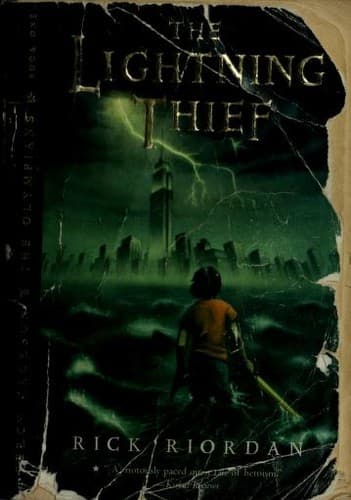
- The Lightning Thief
Rick Riordan
4.3 (2M) average on GoodreadsFantasyShares the same universe, humor, mythological basis, and target audience.
- Circe
Madeline Miller
4.3 (343k) average on GoodreadsFantasyFocuses on a powerful mythological figure experiencing a fall from grace and humanization, though for an adult audience.
- The 5th Wave
Rick Yancey
4.0 (388k) average on GoodreadsFantasyThe 5th Wave is a young adult dystopian novel with a darker tone, focusing on survival, alien invasion, and mature themes of trust and humanity in a post-apocalyptic world. The Hidden Oracle, in contrast, maintains a lighter, more optimistic tone within its fantasy framework, even amidst significant threats, and its primary focus is on mythological adventure and character growth rather than societal collapse.
- Harry Potter and the Sorcerer's Stone
J.K. Rowling
4.5 (7M) average on GoodreadsFantasyRescued from a miserable life under the stairs, an orphaned boy discovers he's a wizard destined for a magical school, where he uncovers a dangerous secret tied to the dark wizard who murdered his parents.
- The Hunger Games
Suzanne Collins
4.3 (6.4M) average on GoodreadsFantasyIn a future where children fight to the death on live television, Katniss Everdeen volunteers for the arena, turning a death sentence into a fight for survival and a spark of rebellion.
- 1984
George Orwell
4.2 (3.1M) average on GoodreadsPoliticsIn a future where surveillance and thought control are absolute, a man's search for truth clashes with the Party, showing that hope can be a form of rebellion.





Enjoyed the summary?
A summary gives you the shape of the book. The book itself has the detail, the examples and the voice.
Find The Hidden Oracle on AmazonAs an Amazon Associate, BookBrief earns from qualifying purchases. How we're funded