

Synopsis
Covers the whole plot, including the ending.
- Difficulty
- Medium
- Pacing
- Moderate
- Mood
- Atmospheric, Obsessive, Mysterious, Melancholy, Eerie
- Read it if
- You enjoy atmospheric, psychological thrillers with a strong sense of place, blending historical detail with a speculative premise, and exploring themes of obsession and escapism.
- Skip it if
- You prefer fast-paced plots with clear resolutions, dislike unreliable narrators, or are sensitive to depictions of mental deterioration.
The House on the Strand Plot Summary
Covers the whole plot, including the ending.
A Cornish Retreat and a Dangerous Proposition
Dick Young, a disillusioned Londoner, is offered a temporary stay at Kilmarth, a remote house in Cornwall, by his old university friend, Professor Magnus Lane. Magnus, a brilliant but eccentric scientist, reveals he has developed a new drug from a local fungus. He suggests Dick be his test subject, claiming the drug allows a form of 'time-travel' — specifically, experiencing past events from the exact present location. Dick, bored with his life and interested by Magnus's strong belief, agrees. He arrives at Kilmarth, a place full of history, and prepares for his first dose, unaware of the journey ahead.
First Foray into the Past
Under Magnus's watch, Dick takes the first dose of the drug. He feels a confusing shift, finding himself an invisible observer in 14th-century Kilmarth. He sees a manor house, not the ruins of his present, and meets a young woman, Isolda, and her husband, Sir Henry Champernowne. Dick sees a violent fight where Henry beats Isolda, accusing her of cheating. The scene is vivid and disturbing, leaving Dick shaken but also drawn to Isolda's beauty and struggle. He notes the landscape, clothing, and old language, confirming the drug's effect. The experience ends quickly as the drug wears off, pulling him back to the present.
The Allure of Isolda and a Developing Obsession
After his first journey, Dick feels both scared and excited. He starts researching the history of Kilmarth and the Champernowne family, finding details about Sir Henry and Lady Isolda that match what he saw. He feels increasingly drawn to Isolda, developing a strong connection to her tragic story. Magnus encourages his observations, asking for more detailed accounts. Dick begins taking the drug more often, often alone, despite Magnus's warnings about its dangers and its physical toll. He finds the modern world dull, wanting only to return to Isolda's time and understand her life.
Unveiling a Secret Love and a Fatal Plot
Through later trips, Dick learns more about Isolda's life. He discovers her secret love affair with Roger, a younger man and her cousin. He sees their hidden meetings and tender moments, which increases his fascination and protective feelings toward Isolda. Dick also observes a sinister plot by Sir Henry Champernowne, who knows about the affair and plans to kill Roger. He sees Henry conspiring with other men, discussing how to ambush Roger and make his death look like an accident. Dick, helpless as an observer, feels a growing sense of dread and urgency to understand the full tragedy.
Roger's Death and Isolda's Despair
Dick is present, though unseen, when Sir Henry's plot happens. He watches in horror as Roger is ambushed and killed, his body thrown into the river, made to look like an accidental drowning. Isolda, crushed by Roger's death, is consumed by grief. Dick sees her attempts to find comfort and understanding, her growing suspicion of Henry, and her deep sense of loss. He feels great frustration at his inability to help or talk to her, his invisible existence a torment. Each return to the present leaves him more emotionally drained and separated from his own life.
Magnus's Growing Concerns and Dick's Recklessness
Magnus becomes worried by Dick's worsening physical state and his growing obsession. He notices Dick's strange behavior, his lack of appetite, and his disinterest in anything outside the medieval past. Magnus warns Dick about the drug's potential for lasting mental harm, explaining that long-term use could lead to a complete separation from the present. However, Dick ignores these warnings, convinced that Magnus wants to control his access to Isolda. He starts hiding doses and taking the drug without Magnus's knowledge, pushing his temporal excursions further.
The Lady Eleanor and a New Threat
During his later trips, Dick notices Lady Eleanor in the medieval household. She is a calculating woman, seemingly influencing Sir Henry. Dick observes her actions, her whispers to Henry, and her desire to secure her own position and perhaps replace Isolda. He begins to suspect that Eleanor is not just a guest but a participant in the drama, possibly even encouraging Henry's cruel treatment of Isolda and his plot against Roger. Her presence adds another layer of danger to the past.
Isolda's Vengeance and Eleanor's Role
Driven by grief and a desire for revenge, Isolda poisons Sir Henry. Dick silently watches this act, seeing Isolda give the poison and Henry's painful death. He also observes Lady Eleanor's reaction, which is not shock or sorrow, but a calm composure, suggesting she knew about or was involved in the events. This shows the full extent of the betrayals within the Champernowne household. Dick realizes that Isolda, once a victim, has become an avenger, a change he finds both unsettling and understandable.
The Interruption of the Present
The arrival of Dick's estranged wife, Vita, and Magnus's wife, Jenny, at Kilmarth disrupts Dick's fragile life. They are concerned about his health and mental state, noticing his thinness, his blank stares, and his obsessive behavior. Their presence represents the modern world he has come to dislike, and their attempts to engage him are met with irritation and resistance. Dick resents their intrusion, seeing them as obstacles to his journeys into the past. He tries to act normal while secretly planning his next dose and escape.
A Tragic Accident and a Final Journey
Tragedy occurs when Magnus, driving his car, has a fatal heart attack, causing a terrible accident. This event deeply affects Dick, not only because he lost his friend but also because Magnus was the source of the drug. Desperate for one last journey, and now with no one to watch or stop him, Dick takes a large, uncontrolled dose of the remaining drug. He knows the extreme danger, but his longing for the past, especially for Isolda, overrides all caution. He hopes to find closure or a permanent escape in the medieval world.
The Blurring of Realities and a Desperate Plea
The large dose overwhelms Dick's mind. He finds himself unable to fully return to the present, or rather, the past blends into his current reality. He hallucinates medieval figures in modern Kilmarth, hears their voices, and feels their presence. His wife, Vita, and Jenny try to help him, but he is unresponsive, muttering about Isolda and events from centuries ago. He is completely lost in his delusion, his mind broken by the drug. He makes a desperate, unclear plea, perhaps to Isolda, perhaps to be freed from his torment, as the two worlds permanently merge.
The Final, Permanent Escape
In the end, Dick is completely consumed by his visions. He is found in a catatonic state, his eyes wide and unseeing, his mind seemingly trapped in the past. The story suggests he has made a permanent, though tragic, escape from his present reality into the medieval world he wanted. His physical body stays in Kilmarth, but his consciousness is lost, a victim of Magnus's experiment and his own obsession. The ending is ambiguous, leaving the reader to wonder if he found a twisted form of peace or simply went mad.
The House on the Strand Characters
Dick Young
Protagonist
Disillusioned Londoner who becomes a test subject for a time-travel drug.
Dick Young is a middle-aged man feeling unfulfilled and restless in his life and marriage. He is susceptible to new experiences, which makes him an ideal, albeit tragic, candidate for Magnus's experiment. Initially cautious, he quickly succumbs to the allure of the past, particularly the figure of Lady Isolda. His obsession grows to the point where he neglects his physical health and his present-day relationships, becoming increasingly detached and erratic. He is driven by a desire for escape and a romanticized view of the past.
Relationships: Magnus Lane (Childhood friend and scientific mentor); Vita Young (Estranged wife); Lady Isolda (Object of his obsession and unrequited love from the past)
Professor Magnus Lane
Supporting
Eccentric scientist who develops the time-travel drug and lends Kilmarth to Dick.
Magnus Lane is a brilliant but ethically ambiguous scientist, obsessed with his discovery of the time-travel drug derived from a local fungus. He is passionate about his research, sometimes to the detriment of his test subject's well-being. While he issues warnings about the drug's dangers, he also encourages Dick's detailed observations, driven by his own scientific curiosity. He is a catalyst for Dick's tragic journey, ultimately dying in an accident, leaving Dick without supervision.
Relationships: Dick Young (Friend and test subject); Jenny Lane (Wife)
Lady Isolda
Supporting
A beautiful, tragic figure from 14th-century Kilmarth who becomes Dick's obsession.
Lady Isolda is a central figure in Dick's temporal journeys, a woman from the 14th century whose life he observes. She is initially portrayed as a victim of her cruel husband, Sir Henry Champernowne, and later as a secret lover to Roger. Her beauty, vulnerability, and eventual transformation into an avenger captivate Dick. She represents the romanticized past and the focus of Dick's growing obsession, embodying both tragic innocence and fierce determination.
Relationships: Sir Henry Champernowne (Cruel husband); Roger (Secret lover)
Sir Henry Champernowne
Antagonist
Isolda's brutal 14th-century husband, who plots Roger's murder.
Sir Henry Champernowne is the cruel and violent husband of Lady Isolda. He is a formidable and menacing figure in the medieval timeline, prone to fits of rage and suspicion. His discovery of Isolda's affair leads him to plot Roger's murder. He represents the harsh realities and injustices of the medieval period, and his actions drive much of the tragic narrative observed by Dick.
Relationships: Lady Isolda (Wife); Roger (Victim of his murderous plot)
Roger
Supporting
Isolda's secret lover and cousin, murdered by Sir Henry.
Roger is a young, handsome man and Isolda's secret lover. He is portrayed as kind and devoted to Isolda, offering her solace from her harsh marriage. His clandestine affair with Isolda is a central plot point, and his tragic murder by Sir Henry is a pivotal event that fuels Isolda's desire for revenge and deepens Dick's emotional investment in the past. He represents lost love and innocence.
Relationships: Lady Isolda (Secret lover and cousin)
Vita Young
Supporting
Dick's estranged wife, concerned about his deteriorating mental state.
Vita Young is Dick's wife, from whom he is somewhat estranged. She represents the present-day reality that Dick increasingly rejects. She arrives at Kilmarth with Jenny, concerned about Dick's health and erratic behavior. Her attempts to reconnect with Dick and draw him back to reality are futile, as his mind is already too far gone into the past. She embodies the love and care that Dick pushes away.
Relationships: Dick Young (Estranged wife)
Jenny Lane
Supporting
Magnus's wife, who accompanies Vita to check on Dick.
Jenny Lane is Magnus's wife and a friend to Dick. She accompanies Vita to Kilmarth out of concern for Dick's well-being and to support her friend. She is more pragmatic and grounded than her husband, Magnus, and is worried by the implications of his scientific experiments. She acts as a voice of reason and concern, witnessing Dick's decline alongside Vita.
Relationships: Magnus Lane (Husband); Dick Young (Friend)
Lady Eleanor
Supporting
A manipulative figure in the medieval past, seemingly influencing Sir Henry.
Lady Eleanor appears later in Dick's observations of the medieval past. She is a calculating and possibly malevolent character who seems to exert a subtle but significant influence over Sir Henry Champernowne. Dick suspects her of encouraging Henry's cruelties and potentially being complicit in the plots against Isolda and Roger. She adds another layer of intrigue and darker motives to the medieval narrative.
Relationships: Sir Henry Champernowne (Manipulative associate/confidante)
The House on the Strand Themes
Obsession and Addiction
The novel shows how obsession and addiction can destroy a person. Dick Young's initial interest in Magnus's drug quickly becomes an addiction, not just to the substance, but to the past and Isolda. He neglects his health, his present life, and his relationships, becoming fully absorbed by his journeys. This theme is clear in his disregard for Magnus's warnings and his frantic drug use near the end, showing how an escape can become a trap. His longing for Isolda goes beyond reason, blurring the lines between love, fantasy, and self-destruction.
“What was real, what was not real? I knew, yet I did not know. The past had become the present, and the present was but a shadow.”
The Allure and Danger of Escapism
Escapism is a main theme, as Dick seeks comfort from his unsatisfying modern life in the vivid past. The medieval world, at first a fascinating distraction, becomes his only focus, offering a sense of purpose and romantic intensity his present lacks. However, the novel shows the dangers of such escape. By fully immersing himself in the past, Dick loses his grip on reality, pushes away those who care for him, and loses his sanity. The appeal of a seemingly more exciting past turns out to be a dangerous illusion.
“I was escaping from myself, from the dull, grey Dick Young of the twentieth century, into the colour and drama of another age.”
The Nature of Time and Reality
Du Maurier blurs the lines between past and present, challenging how the reader sees reality. The drug allows Dick to 'see' the past as if it were happening now, raising questions about how time moves and if historical events persist. As Dick's mental state worsens, the two realities merge, showing how subjective and fragile our understanding of time can be. The novel suggests that the past is not just gone but exists in some form, able to greatly affect the present, especially through a person's consciousness.
“The past was not dead, it was not even past. It was here, it was now, it was me.”
Helplessness and the Role of the Observer
Dick's role as an unseen observer in the past highlights helplessness. Despite seeing horrific events, betrayals, and murders, he cannot intervene or change history. This inability to act frustrates and torments him, especially as he develops an emotional connection to Isolda. The novel explores the psychological cost of watching tragedy without being able to change it, increasing Dick's inner conflict and contributing to his mental breakdown.
“To watch, to know, yet to be powerless to help – this was the ultimate torment.”
Science, Ethics, and Unintended Consequences
The novel subtly questions the ethics of scientific experimentation and the unexpected results of unchecked curiosity. Magnus Lane, driven by scientific ambition, develops a powerful drug without fully understanding its long-term effects on the human mind. His initial lack of concern for Dick's well-being, despite later warnings, sets the stage for the tragedy. The drug itself, a product of scientific discovery, becomes the cause of Dick's downfall, showing how scientific advancements, without ethical consideration, can cause great harm.
“He saw himself as a pioneer, a Columbus of the mind, and I, poor fool, was his ship.”
Plot Devices & Literary Techniques
The Time-Travel Drug
A fictional hallucinogenic substance that allows Dick to experience the past.
The drug, derived from a local fungus by Professor Magnus Lane, is the primary plot device that propels the narrative. It enables Dick Young to become a 'spectral' observer of 14th-century events unfolding in the exact locations of present-day Kilmarth. Its properties — vivid sensory experience, limited duration, and increasing psychological toll — are meticulously detailed. The drug serves as a literal gateway to the past, but also metaphorically represents addiction and escapism, ultimately becoming the instrument of Dick's mental collapse as he abuses its power.
Kilmarth House
The physical setting that acts as a fixed point for temporal observation.
Kilmarth is more than just a house; it's a crucial plot device that anchors Dick's temporal journeys. Its ancient stones and ruins serve as the fixed point in space from which Dick observes the past. The house itself, with its layers of history, becomes a character in its own right, a silent witness to centuries of human drama. Its present-day state contrasts sharply with its medieval grandeur, emphasizing the passage of time and the persistence of memory within its walls. The house effectively binds Dick to a specific historical narrative.
First-Person Narrative (Dick Young)
The story is told entirely from Dick's subjective and increasingly unreliable perspective.
The novel employs a first-person narrative through Dick Young's eyes, which is vital to its psychological depth. This perspective immerses the reader directly into Dick's experiences, his fascination, his growing obsession, and ultimately, his mental deterioration. As his grip on reality loosens, his narration becomes increasingly unreliable, blurring the lines between what is truly happening and what he is hallucinating. This device effectively conveys the subjective nature of his journey and heightens the sense of claustrophobia and impending madness.
Historical Research and Verification
Dick's attempts to corroborate his visions with historical records.
Initially, Dick attempts to verify his drug-induced visions by researching historical records, particularly those pertaining to the Champernowne family and Kilmarth. This plot device serves to ground the fantastical elements of the story in a semblance of reality, making the time-travel more believable. It also highlights Dick's initial scientific curiosity. However, as his obsession grows, his reliance on external verification diminishes, replaced by an uncritical acceptance of his subjective experiences, further signaling his descent into delusion.
The House on the Strand Quotes
“The past is a foreign country; they do things differently there.”
“It was not a question of going back in time, but of being there.”
“The house was a sentinel, a witness to centuries.”
“I was a ghost, and they were flesh and blood.”
“The drug was a key, unlocking doors I never knew existed.”
“Every stone, every tree, held a memory.”
“The present became a blurred, insignificant thing.”
“He lived in two worlds, and one was slowly consuming the other.”
“Their passions, their betrayals, their loves – they were as real to me as my own.”
“The line between what was real and what was imagined blurred irrevocably.”
“He was a trespasser in time, an unwanted observer.”
“The house itself seemed to breathe with the lives it had held.”
“There was a yearning in me for that other time, that simpler, harsher world.”
“Consequences, like shadows, follow every action, even those in the past.”
Quiz
10 questions on the plot and the characters. Each answer comes with a short explanation.
Question 1
What is the name of the friend who lends Dick Young the house in Cornwall and provides him with the time-traveling drug?
- Professor Alistair Finch
- Professor Magnus Lane
- Dr. Stephen Davies
- Mr. Arthur Pendelton
Show answer
B. Professor Magnus Lane Dick Young's friend and the creator of the time-traveling drug is Professor Magnus Lane, who lends him the house in Cornwall.
Question 2
What is the primary effect of the drug Magnus gives to Dick?
- It allows him to communicate with ghosts.
- It enables him to travel physically to different locations.
- It transports his consciousness back in time to Medieval Cornwall.
- It gives him prophetic visions of the future.
Show answer
C. It transports his consciousness back in time to Medieval Cornwall. The drug allows Dick to travel through time, specifically to Medieval Cornwall, while his physical body remains in the present.
Question 3
In which historical period does Dick primarily find himself when under the influence of the drug?
- Victorian England
- Roman Britain
- Medieval Cornwall
- The Elizabethan Era
Show answer
C. Medieval Cornwall The synopsis explicitly states that Dick is thrown 'all the way back into Medieval Cornwall' by the drug.
Question 4
What is Dick's initial reaction to his time-traveling experiences?
- He is frightened and immediately stops taking the drug.
- He is intrigued and finds the effects intoxicating.
- He is bored and finds the past uninteresting.
- He tries to use his knowledge of the future to alter past events.
Show answer
B. He is intrigued and finds the effects intoxicating. The synopsis states that 'its effects are intoxicating and Dick cannot resist his newfound powers,' indicating his initial fascination.
Question 5
As Dick's time journeys increase, how does his perception of the modern world change?
- He appreciates the comforts and advancements of his own time more.
- He becomes indifferent to both the past and the present.
- He begins to resent the days he must spend in the modern world.
- He tries to bring elements of the past into his present life.
Show answer
C. He begins to resent the days he must spend in the modern world. The synopsis states, 'Dick begins to resent the days he must spend in the modern world,' showing his growing detachment from his own time.
Question 6
Who is Lady Isolda, and why is she significant to Dick's time travels?
- She is a historical figure Dick researches for Magnus's project.
- She is a woman from the medieval past with whom Dick becomes infatuated.
- She is Magnus's assistant who helps monitor Dick's experiments.
- She is Dick's wife in the modern world, whom he misses.
Show answer
B. She is a woman from the medieval past with whom Dick becomes infatuated. The synopsis mentions Dick 'longing ever more fervently to get back into his world of centuries before, and the home of the beautiful Lady Isolda,' indicating his strong attraction to her.
Question 7
What is the primary danger or consequence of Dick's time-traveling, as implied by his growing obsession?
- He risks altering historical events, causing paradoxes.
- He might get stuck in the past permanently.
- He is losing his connection to and interest in his present-day life.
- The drug is physically debilitating and damaging his health.
Show answer
C. He is losing his connection to and interest in his present-day life. Dick's 'resentment' of the modern world and 'longing' for the past suggest a profound psychological detachment from his present life, which is a key theme and potential danger.
Question 8
Which of the following best describes the nature of Dick's time travel?
- He physically travels to the past and interacts with people.
- He observes the past as a non-corporeal, invisible entity.
- He travels through time only in his dreams.
- He can only travel to specific, pre-determined historical moments.
Show answer
B. He observes the past as a non-corporeal, invisible entity. The synopsis says he travels 'while staying in place,' implying his body remains in the present, and he is observing the past. This is a characteristic feature of Du Maurier's time-slip narratives, where the protagonist is an unseen observer.
Question 9
What role does the house on the Strand play in Dick's time travel?
- It is merely the location where he takes the drug, with no deeper connection.
- It serves as the fixed point from which his consciousness travels back in time.
- It is a historical landmark that he tries to preserve in the past.
- It is a portal that physically transports him to different eras.
Show answer
B. It serves as the fixed point from which his consciousness travels back in time. The house is lent to him and is the location where he takes the drug, enabling him to travel through time 'while staying in place.' This implies the house is the anchor for his journey.
Question 10
Based on the description, what literary genre element is most prominent in 'The House on the Strand' regarding Dick's experiences?
- Pure historical romance, focusing only on Lady Isolda.
- A cautionary tale about the dangers of escaping reality through artificial means.
- A scientific exploration of temporal mechanics and paradoxes.
- A spy thriller where time travel is used for espionage.
Show answer
B. A cautionary tale about the dangers of escaping reality through artificial means. Dick's growing 'resentment' of the modern world and 'longing' for the past, fueled by an 'intoxicating' drug, strongly points towards a theme of escapism and its potential dangers, making it a cautionary tale.
The House on the Strand FAQ
What is 'The House on the Strand' about?
'The House on the Strand' follows Dick Young, who, after taking a new experimental drug from his friend Professor Magnus Lane, gains the ability to time travel mentally to 14th-century Cornwall. He becomes deeply entangled in the lives of the people there, particularly the beautiful Lady Isolda and her husband Roger, while his modern life begins to unravel.
Why should I read 'The House on the Strand'?
You should read 'The House on the Strand' for its unique blend of science fiction, historical immersion, and psychological thriller. It offers a captivating narrative about escapism and obsession, as Dick's journeys into the past become increasingly vivid and dangerous, blurring the lines between reality and hallucination.
What is the background/setting of 'The House on the Strand'?
The book is set primarily in a secluded house on the Cornish coast in the late 1960s, which serves as Dick Young's base. From this modern setting, he mentally projects himself into the same geographical location in 14th-century Cornwall, experiencing the rugged landscape, medieval customs, and the lives of its inhabitants.
What are the most memorable quotes?
While specific quotes are not provided in the summary, memorable lines often revolve around Dick's increasing disorientation, his longing for the past, and the sensory details of his medieval experiences, reflecting his struggle to distinguish between the two realities.
What writing style does Daphne du Maurier use in 'The House on the Strand'?
Daphne du Maurier employs a vivid and atmospheric writing style, rich in sensory detail, making both the modern Cornish setting and the medieval past feel incredibly real. Her prose is immersive, capturing Dick's internal turmoil and the intoxicating allure of his time travels with psychological depth.
What minor details add significant meaning?
The specific details of the Cornish landscape, such as the 'strand' itself and the ancient paths, gain significant meaning as Dick realizes he is physically walking the same ground in the present that he is witnessing in the past. This constant overlap reinforces the drug's powerful connection to the land and its history.
What are some subtle foreshadowing moments?
Subtle foreshadowing occurs early on with Magnus's vague warnings about the drug's effects and Dick's initial, almost dreamlike experiences. The growing resentment Dick feels for his modern life, and his increasing obsession with Isolda, hints at the tragic blurring of realities to come.
What unexpected character connections exist?
The most unexpected connection is Dick's own direct lineage to the characters he observes in the past. As he delves deeper, he begins to realize that the medieval figures, like Roger and Isolda, are his ancestors, creating a profound and personal connection to the historical events he witnesses.
What are unspoken character motivations?
Dick's unspoken motivation is a deep-seated dissatisfaction with his modern life and possibly his marriage, making him highly susceptible to the drug's escapist allure. Magnus, too, seems driven by a desire for scientific breakthrough and perhaps a touch of hubris, disregarding the potential dangers to his friend.
What psychological complexities do characters exhibit?
Dick exhibits profound psychological complexities, battling with addiction, delusion, and a fracturing sense of identity. He struggles with cognitive dissonance as his two realities clash, leading to paranoia and an inability to function in the present, while Magnus displays a detached scientific curiosity bordering on irresponsibility.
What are the major emotional turning points?
A major emotional turning point is when Dick first witnesses a violent or tragic event in the past, making the historical reality undeniable and deeply affecting. Another is when he begins to prioritize his medieval experiences over his real-world responsibilities, alienating his wife and friends.
How do relationship dynamics evolve?
Dick's relationship with his wife deteriorates rapidly as he withdraws and becomes obsessed with the past, leading to suspicion and resentment. His relationship with Magnus shifts from friendly collaboration to one of increasing dependence and subtle manipulation, as Dick constantly seeks more of the drug.
Which parts remain ambiguous or open-ended?
The exact nature of the drug's mechanism, whether it's truly time travel or an advanced form of hallucination, remains somewhat ambiguous. The extent of Magnus's prior knowledge of the drug's full effects and his moral responsibility are also left open to interpretation.
What are controversial scenes or decisions?
A controversial decision is Magnus's choice to administer such a powerful, untested drug to a friend without fully disclosing its potential psychological ramifications. Any scenes depicting violence or sexual encounters in the medieval past, as perceived by Dick, could also be considered controversial.
The House on the Strand ending explained: how it ends & what it means
The ending sees Dick completely consumed by his medieval visions, losing his grip on reality. It's implied he suffers a fatal accident in the modern world while mentally trapped in the past, potentially falling from a cliff or succumbing to the drug's effects. This tragic conclusion signifies the ultimate danger of escapism and the devastating consequences of blurring the lines between fantasy and reality.
About the author
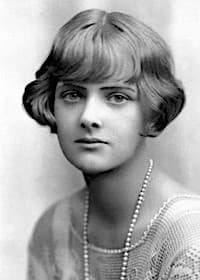
Daphne du Maurier was a celebrated English author renowned for her gothic suspense novels. Her most famous work, "Rebecca," is a classic of psychological suspense and mystery. Other notable works include "Jamaica Inn" and "The House on the Strand," solidifying her legacy as a master storyteller in the realm of atmospheric fiction.
Similar books
- Kindred
Octavia E. Butler
4.1 (5k) average on GoodreadsFantasyFeatures involuntary time travel to a dangerous past and a protagonist struggling to reconcile two realities.
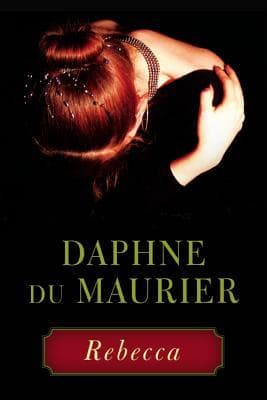
- Rebecca
Daphne du Maurier
4.2 (450k) average on GoodreadsThrillerShares du Maurier's signature atmospheric prose, sense of impending doom, and focus on psychological intensity within a grand house.
- Outlander
Diana Gabaldon
4.2 (824k) average on GoodreadsFantasyInvolves a protagonist who time travels to the past and becomes deeply involved in historical events and relationships, though 'The House on the Strand' is darker and more psychological.
- Time and Again
Jack Finney
4.0 (19k) average on GoodreadsFantasyWhile both novels feature protagonists traveling to the past, Finney's approach is generally more romanticized and nostalgic, with a focus on experiencing a simpler time. Du Maurier's The House on the Strand delves deeper into the psychological dangers and potential for personal disintegration resulting from such an experience, offering a darker, more unsettling perspective on time travel. Finney's protagonist finds love and a new life in the past, whereas du Maurier's protagonist experiences tragedy and loss of self.
- The Crystal Cave
Mary Stewart
4.1 (42k) average on GoodreadsFantasyBoth authors set mysteries within historical periods, but Stewart's focus in The Crystal Cave is primarily on a historical mystery surrounding Merlin and the Arthurian legend, with the protagonist actively solving a puzzle. Du Maurier's mystery is more internal and psychological, revolving around the protagonist's unraveling sanity and his detached observation of tragic historical events, rather than direct intervention or investigation. Stewart's work often has a more adventurous and less psychologically intense tone.
- Harry Potter and the Sorcerer's Stone
J.K. Rowling
4.5 (7M) average on GoodreadsFantasyRescued from a miserable life under the stairs, an orphaned boy discovers he's a wizard destined for a magical school, where he uncovers a dangerous secret tied to the dark wizard who murdered his parents.




Enjoyed the summary?
A summary gives you the shape of the book. The book itself has the detail, the examples and the voice.
Find The House on the Strand on AmazonAs an Amazon Associate, BookBrief earns from qualifying purchases. How we're funded