
Synopsis
Covers the whole plot, including the ending.
- Difficulty
- Easy
- Pacing
- Moderate
- Mood
- Gritty, Isolating, Resilient, Hopeful
- Read it if
- You enjoy survival stories, historical fiction set in extreme environments, or tales of unique human-animal companionship.
- Skip it if
- You prefer fast-paced action, complex character relationships, or stories with a large cast of characters.
The Iceberg Hermit Plot Summary
Covers the whole plot, including the ending.
Shipwreck and Solitude
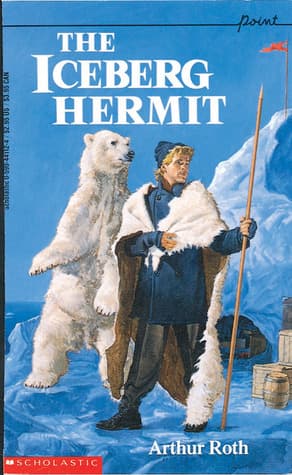
In 1757, seventeen-year-old Allan Gordon, a cabin boy aboard the whaler 'The Bonnie Mary,' is swept overboard during a violent storm in the Arctic. He clings to a floating piece of wreckage, eventually finding himself stranded on a massive iceberg. His initial despair lessens with the discovery of a small, orphaned polar bear cub, whose mother was likely killed by whalers. Allan, remembering the bear's mother, takes pity on the cub and decides to care for it, naming him 'Wee Jimmie.' This unlikely friendship becomes Allan's only comfort and hope in the vast, desolate Arctic wilderness, as he faces his isolation and the immediate need for food and shelter.
A Fight for Survival
Allan quickly understands how serious his situation is. He builds a simple shelter from ice and snow, using his limited knowledge and skills. He and Wee Jimmie learn to hunt seals and fish, which they need to survive. Allan develops a deep connection with the cub, relying on him for warmth and companionship, while Wee Jimmie depends on Allan for food and protection. Their days are a constant struggle against the weather, hunger, and the mental strain of isolation. Allan carefully records his experiences in a journal he salvaged, detailing their daily routines, observations of the Arctic wildlife, and his fading hope of rescue. He also makes a crude calendar to keep track of the days and seasons.
The Changing Seasons and Growing Bear
Months pass into a year, and Allan experiences the full cycle of Arctic seasons. The winter brings extreme cold and darkness, testing his endurance. He learns to fish through ice holes and hunt larger seals. Wee Jimmie, no longer a cub, grows into a large adult polar bear; his hunting skills are very helpful. Despite his size and power, Wee Jimmie remains loyal and affectionate towards Allan, never showing aggression. Their bond grows, changing from a boy and his pet into a unique partnership of two survivors. Allan continues to carefully document his thoughts and observations in his journal, which becomes his most important possession and a record of his sanity.
Discovery of the Shipwrecked 'Alert'
One day, while exploring a newly joined section of iceberg, Allan finds the remains of another shipwrecked vessel, the 'Alert.' Inside the ice-encased cabin, he finds the skeletal remains of a man, likely the captain, clutching a valuable brass compass. The sight is a stark reminder of his own uncertain existence but also gives him a new purpose. He carefully takes the compass, seeing its potential value if he ever returns to civilization. The discovery of the 'Alert' also gives him access to some salvageable wood and other materials, improving his living conditions slightly and giving him a renewed, though faint, glimmer of hope.
The Enigmatic Message
Among the wreckage of the 'Alert,' Allan uncovers a sealed bottle containing a cryptic message. The message, written by a previous castaway named 'J.M.,' speaks of a hidden treasure — 'the great pearl of the Arctic' — and hints at its location near a distinctive rock formation. This discovery ignites a spark of adventure and a new focus for Allan, distracting him from his monotonous existence. He studies the vague clues, wondering about J.M.'s identity and the nature of this legendary pearl. The message, while offering an intriguing mystery, also shows that others have faced similar fates in these unforgiving waters.
The Search for the Pearl
Driven by the lure of the treasure and the need for a purpose beyond just surviving, Allan works to decipher J.M.'s clues. He interprets 'the great pearl' not as a literal pearl but as a valuable walrus tusk, known for its ivory. With Wee Jimmie by his side, Allan begins to explore the vast iceberg and its surroundings more actively. Their search leads them to new dangers, including treacherous ice formations and aggressive walruses. Wee Jimmie's strength and hunting prowess are very helpful in these challenges, strengthening their shared relationship. Allan's journal entries change, reflecting his growing interest in the quest and the hope it represents.
The Walrus Ivory Discovery
After persistent searching and following the clues, Allan and Wee Jimmie finally find the 'great pearl of the Arctic.' It is not a single pearl, but a hidden cache of ancient, perfectly preserved walrus ivory, likely gathered over generations by a polar bear or a human trapper. The discovery is exciting, proving J.M.'s message and Allan's perseverance. He realizes the immense value of the ivory, understanding that if he ever makes it back to civilization, this treasure could secure his future. The ivory is too heavy to move easily, so Allan marks its location carefully, planning how he might eventually transport it.
Years of Isolation and Resilience
As more years go by, Allan’s isolation deepens, but his resilience grows. He is no longer just surviving; he has made a life for himself on the iceberg. Wee Jimmie is now a magnificent, fully grown polar bear, a silent, powerful guardian and companion. Their communication is almost telepathic, a sign of their deep bond. Allan continues to write in his journal, detailing the passage of time, the changes in the Arctic, and his unwavering hope for rescue. He often thinks about his past life and dreams of returning home, but the Arctic has become his world, and Wee Jimmie his family. He has learned to read the ice and the weather like a native.
A Glimmer of Hope: The Whaling Ship
After seven long years of solitude, a miraculous sight appears on the horizon: a whaling ship. Allan's heart leaps with disbelief and overwhelming joy. He frantically tries to signal the ship, waving makeshift flags and shouting, though he knows the distance is too great. Wee Jimmie, sensing Allan's excitement, watches intently. The ship is his only chance of returning to the world he once knew. Allan is desperate as he watches the vessel, fearing it will pass by without noticing him. He must find a way to make his presence known before this opportunity vanishes.
The Rescue and the Farewell
Through determination, Allan manages to attract the attention of the whaling ship, 'The Sea Serpent.' The crew is astonished to find a man, gaunt but alive, accompanied by a massive polar bear. Allan is brought aboard, weak but overjoyed to be rescued. However, the emotional reunion is bittersweet. He must make the agonizing decision of leaving Wee Jimmie behind. He knows Wee Jimmie, now a wild animal, cannot survive on a ship or in civilization. With a heavy heart, Allan bids a tearful farewell to his loyal companion, watching as Wee Jimmie retreats into the ice. The captain of 'The Sea Serpent' listens to Allan's incredible story, hardly believing the tale of the 'Iceberg Hermit.'
Return to Civilization and a New Beginning
Allan eventually returns to Scotland, a changed man. His story of survival, the 'Alert's' compass, and the tale of the hidden walrus ivory captivate the public. The captain of 'The Sea Serpent' helps him retrieve the ivory cache, which is very valuable. Allan uses the wealth to establish a comfortable life for himself. He publishes his journal, sharing his seven-year ordeal and the deep bond he shared with Wee Jimmie, becoming a celebrated figure. Though he never forgets the Arctic or his loyal polar bear, Allan embraces his new life, forever marked by his time as the 'Iceberg Hermit.'
Principal Figures
Allan Gordon
Protagonist
Seventeen-year-old cabin boy shipwrecked in the Arctic, who survives for seven years.
Allan is a resourceful, resilient, and determined young man. Initially a naive cabin boy, his seven years of isolation in the Arctic transform him. He develops incredible survival skills, learning to hunt, build shelter, and navigate the treacherous ice. His deep compassion is evident in his care for Wee Jimmie, and his intellectual curiosity drives him to keep a journal and solve the mystery of J.M.'s message. Despite profound loneliness, he maintains his sanity and hope, demonstrating remarkable mental fortitude. His journey is one of profound self-discovery and adaptation to the harshest of environments.
Relationships: Wee Jimmie (Deep, symbiotic companionship; mutual dependence and loyalty); J.M. (Indirect connection through a cryptic message and shared experience of being a castaway)
Wee Jimmie
Supporting
An orphaned polar bear cub who becomes Allan's loyal companion and partner in survival.
Wee Jimmie is initially a vulnerable polar bear cub, orphaned by whalers. Under Allan's care, he grows into a magnificent, powerful adult polar bear, an invaluable asset for hunting and protection. Despite his wild nature, he displays unwavering loyalty, affection, and intelligence, forming an unbreakable bond with Allan. He never harms Allan, acting as his silent guardian and friend. Wee Jimmie represents both the harsh beauty of the Arctic and the possibility of interspecies connection, becoming a symbol of Allan's survival and sanity.
Relationships: Allan Gordon (Deep, symbiotic companionship; mutual dependence and loyalty)
J.M.
Mentioned
A previous castaway whose cryptic message about a treasure guides Allan.
J.M. is a mysterious figure, known only through a message in a bottle found by Allan. He was presumably a previous castaway on the 'Alert' or another vessel, who managed to survive long enough to hide a cache of walrus ivory and leave clues to its location. His message, though brief and enigmatic, provides Allan with a crucial purpose and a sense of connection to another human being, however distant. J.M. serves as a symbolic predecessor, highlighting the perils of the Arctic and offering a glimmer of hope or a challenge from the past.
Relationships: Allan Gordon (Indirect connection through a cryptic message and shared experience of being a castaway)
Captain of 'The Bonnie Mary'
Mentioned
Allan's original captain, lost in the shipwreck.
The captain of 'The Bonnie Mary' is only briefly mentioned as the leader of the whaling ship Allan served on before the disaster. He represents Allan's connection to his previous life and the initial reason for his presence in the Arctic. His fate, along with the rest of the crew, is to perish in the shipwreck that strands Allan. His character serves to establish the context of Allan's journey and the sudden, violent rupture with his past.
Relationships: Allan Gordon (Captain-cabin boy)
Captain of 'The Sea Serpent'
Supporting
The captain of the whaling ship that rescues Allan after seven years.
The captain of 'The Sea Serpent' is a practical and initially skeptical man, representing the outside world Allan has been separated from. He is astonished by Allan's tale of survival and the presence of a polar bear. He shows compassion by rescuing Allan and later helps him retrieve the valuable walrus ivory. His actions provide the means for Allan's return to civilization and his eventual success, bridging the gap between Allan's isolated existence and his reintegration into society.
Relationships: Allan Gordon (Rescuer-rescued; later, business associate)
The Skeleton in the 'Alert'
Mentioned
The remains of a previous captain, clutching a compass.
This unnamed skeleton, found in the ice-encased cabin of the shipwrecked 'Alert,' serves as a stark memento mori for Allan. It represents the ultimate fate of many who venture into the unforgiving Arctic and underscores the fragility of life. The compass clutched in its hand becomes a valuable tool for Allan, symbolizing the transfer of knowledge and the continuity of human struggle against the elements. Its presence reinforces the theme of isolation and the harsh realities of survival.
Relationships: Allan Gordon (Symbolic predecessor and warning)
Themes & Insights
Survival and Resilience
The core theme is Allan's struggle for survival against the brutal Arctic environment. From finding food and shelter to enduring extreme cold and isolation, his endurance is constantly tested. His ability to adapt, learn new skills, and maintain hope in the face of overwhelming odds shows the human spirit. The book carefully details the practical aspects of survival, such as hunting, crafting tools, and tracking time, showing how resourcefulness and determination are key to enduring the impossible.
“Days turned into weeks, weeks into months, and still, the vast, white silence was his only companion, yet hope, a stubborn ember, refused to die.”
Human-Animal Bond
The unusual relationship between Allan and Wee Jimmie is central to the story. Their bond goes beyond species, becoming a source of mutual support, companionship, and even love. Wee Jimmie is not just a pet but a partner in survival, providing warmth, protection, and hunting assistance. Allan, in turn, cares for the bear, showing compassion and respect for the natural world. This unique friendship is important for Allan's mental and emotional well-being, preventing him from succumbing to despair and showing the deep connections possible between humans and animals.
“Wee Jimmie, his only friend in this desolate world, was more than just a bear; he was family.”
Isolation and Sanity
The theme of isolation explores the psychological cost of being utterly alone for years in a vast, empty place. Allan's journal entries show his internal struggle to maintain his sanity, to remember his past, and to hold onto hope. Wee Jimmie's presence helps combat loneliness. The story looks at how a human mind copes with no other human interaction, finding meaning in routine, observation, and working towards a goal (the treasure). It shows the importance of purpose and connection, even if that connection is with an animal.
“The silence was so profound it often felt like a physical presence, pressing in, threatening to consume his very thoughts.”
The Call of Adventure and Discovery
Beyond just surviving, Allan's journey has a sense of adventure and discovery. His exploration of the iceberg, the finding of the 'Alert,' and the quest for J.M.'s 'great pearl' give him purpose and drive beyond basic needs. These discoveries offer him hope, distract him from despair, and add layers of mystery and excitement to his otherwise monotonous existence. The pursuit of the unknown and the solving of clues turn his ordeal into a personal journey, showing humanity's desire to explore and uncover secrets.
“The message in the bottle was a lifeline, a whisper from another soul, and a promise of something more than just endless days of survival.”
Plot Devices & Literary Techniques
Allan's Journal
A written record of Allan's experiences, thoughts, and observations.
Allan's journal serves as a crucial plot device, providing direct insight into his thoughts, fears, and observations, making the narrative deeply personal and authentic. It acts as a timeline, marking the passage of days, months, and years, and documents his evolving skills and mental state. The journal is also a means for Allan to maintain his sanity, a way to externalize his experiences and prevent himself from losing touch with reality. It offers a reliable, first-person account of his incredible ordeal, making the story feel immediate and compelling.
Wee Jimmie (the Polar Bear)
A companion and symbol of the Arctic's dual nature.
Wee Jimmie is more than just a character; he functions as a multifaceted plot device. He is Allan's primary companion, preventing complete isolation and providing crucial assistance in hunting and protection. Symbolically, he represents the wild, untamed beauty and danger of the Arctic, yet also its capacity for unexpected companionship. His growth mirrors Allan's own journey of adaptation. His presence creates unique challenges and opportunities, driving parts of the plot, such as hunting expeditions and the emotional arc of their eventual separation.
The Message in a Bottle
A cryptic clue from a past castaway, leading to a hidden treasure.
The message in a bottle, left by the mysterious J.M., is a classic plot device that introduces an element of mystery and adventure. It provides Allan with a new purpose beyond mere survival, giving him a concrete goal to pursue. The clues within the message drive a significant portion of the mid-story plot, leading to the discovery of the walrus ivory. It also serves to connect Allan to another human experience of isolation, even if only indirectly, offering a psychological lifeline and a distraction from despair.
The Shipwrecked 'Alert'
A discovery that provides resources and a link to other castaways.
The discovery of the 'Alert' serves several purposes. It provides Allan with valuable salvageable materials, offering practical aid in his survival. More significantly, it provides the compass, a tangible link to civilization, and the message in a bottle, which propels the treasure hunt subplot. The skeleton within is a stark reminder of the dangers of the Arctic and the fate Allan narrowly avoided, intensifying the stakes of his own survival story. It grounds the narrative in a sense of realism and historical context.
The Iceberg Hermit Quotes
“The sea, I soon learned, was a cruel mistress, giving with one hand and taking with the other.”
“Hope, like a tiny spark, can keep a man alive in the darkest of nights.”
“A man's greatest enemy is often his own mind, when left to wander in despair.”
“The silence was so profound, it almost had a sound of its own, a deep, resonant hum.”
“Every sunrise was a victory, every sunset a reminder of another day endured.”
“I learned to read the ice as a sailor reads the stars, for it held both promise and peril.”
“The greatest wealth, I discovered, was not gold or jewels, but the warmth of a fire and a full belly.”
“Fear can be a useful companion, if it sharpens your senses and quickens your wit, but never let it master you.”
“Even in the most desolate places, life finds a way to cling on, a testament to its stubborn will.”
“The taste of fresh water, a simple thing, became a luxury beyond measure.”
“My journal became my only confidant, a silent listener to my deepest fears and fleeting hopes.”
“The past was a distant shore, and the future an uncharted sea; only the present moment truly existed.”
“A man adrift is not truly lost until he gives up the fight within himself.”
“The stars, so cold and distant, were yet a comforting presence, ancient witnesses to my solitude.”
Quiz
10 questions on the plot and the characters. Each answer comes with a short explanation.
Question 1
In what year does Allan's shipwreck occur, leading to his stranding on an iceberg?
- 1776
- 1757
- 1701
- 1800
Show answer
B. 1757 The book explicitly states that Allan is shipwrecked in 1757, setting the historical context for his struggle.
Question 2
What is the name of the orphaned polar bear cub that becomes Allan's companion?
- Snowflake
- Nanook
- Iceberg
- No specific name is given, he's referred to as 'the cub' or 'the bear'
Show answer
D. No specific name is given, he's referred to as 'the cub' or 'the bear' While the cub is a central character, the book does not give him a specific name, referring to him generally as the cub or the polar bear.
Question 3
What is Allan's primary initial method for signaling passing ships?
- Firing a salvaged pistol
- Waving a flag made from sailcloth
- Lighting a large signal fire
- Shouting loudly across the water
Show answer
B. Waving a flag made from sailcloth Allan uses a makeshift flag crafted from salvaged sailcloth as one of his earliest and most persistent attempts to attract attention from any distant ships.
Question 4
Which of the following challenges does Allan NOT face during his time on the iceberg?
- Finding fresh water
- Dealing with the extreme cold
- Protecting himself from a wolf pack
- Hunting for food
Show answer
C. Protecting himself from a wolf pack Allan faces challenges like thirst, cold, and hunger, but he does not encounter a wolf pack on the Arctic iceberg. His primary animal interactions are with his bear cub and occasional seals or birds.
Question 5
What significant skill does Allan develop out of necessity to survive and adapt to his environment?
- Advanced navigation using stars
- Building complex traps for large animals
- Learning to speak a local indigenous language
- Becoming proficient at hunting seals and birds with improvised tools
Show answer
D. Becoming proficient at hunting seals and birds with improvised tools To survive, Allan must learn to hunt and fish effectively with limited resources, adapting to his environment to secure food for himself and his bear cub.
Question 6
How does Allan primarily keep track of the passage of time while isolated?
- He has a working pocket watch from the shipwreck.
- He carves notches into a piece of wood for each day.
- He observes the cycles of the moon.
- He relies on the changing seasons and animal migrations.
Show answer
B. He carves notches into a piece of wood for each day. Allan meticulously carves notches into a piece of wood to mark each passing day, a crucial detail that highlights his determination and the psychological struggle of isolation.
Question 7
What is the overarching theme explored through Allan's relationship with the polar bear cub?
- The domestication of wild animals.
- The struggle for dominance in nature.
- The power of companionship and mutual reliance for survival.
- The dangers of befriending predators.
Show answer
C. The power of companionship and mutual reliance for survival. Their bond is central to the story, illustrating how companionship, even with a wild animal, provides emotional support and practical assistance, proving vital for both Allan and the cub's survival.
Question 8
What is the primary reason Allan initially fears the polar bear cub, despite its young age?
- He believes it will attract larger predators to their location.
- He worries it will compete with him for the scarce food resources.
- He is superstitious about polar bears.
- He is afraid of being bitten or scratched.
Show answer
B. He worries it will compete with him for the scarce food resources. In his dire situation, Allan's immediate concern is the limited availability of food, and he initially views the cub as a competitor for precious sustenance.
Question 9
What eventually happens to the iceberg Allan is stranded on, forcing him to adapt again?
- It collides with another large iceberg.
- It gradually melts and breaks apart, becoming smaller and less stable.
- It drifts into warmer waters where it quickly dissolves.
- It becomes permanently grounded on a shallow seabed.
Show answer
B. It gradually melts and breaks apart, becoming smaller and less stable. Over time, the iceberg melts and diminishes in size, constantly changing Allan's environment and posing new threats to his shelter and resources.
Question 10
What is the eventual fate of Allan and his polar bear companion?
- They are rescued by a whaling ship and brought back to civilization together.
- Allan dies on the iceberg, and the bear is left alone.
- The bear leaves Allan to find a mate, and Allan is later rescued alone.
- They find an uninhabited island and build a new life there.
Show answer
A. They are rescued by a whaling ship and brought back to civilization together. After a long and arduous struggle, Allan and his loyal polar bear companion are eventually spotted and rescued by a passing whaling ship, bringing their ordeal to an end.
The Iceberg Hermit FAQ
What is The Iceberg Hermit about?
The Iceberg Hermit chronicles the incredible survival story of seventeen-year-old Allan Gordon, who is shipwrecked in the Arctic in 1757. Stranded on a massive iceberg with only a polar bear cub he names Iceberg for companionship, Allan must use his wits and resilience to endure the harsh environment, find food, and maintain hope against seemingly insurmountable odds.
Why should I read The Iceberg Hermit?
You should read The Iceberg Hermit for its gripping tale of survival, its unique and heartwarming companionship between a boy and a polar bear, and its vivid portrayal of the brutal beauty of the Arctic. It's a testament to human endurance and the unexpected bonds that can form in the most extreme circumstances, making it a compelling read for young adults and adults alike.
What is the background/setting of The Iceberg Hermit?
The story is set in 1757, primarily in the vast and unforgiving Arctic seas. Allan Gordon's journey begins after his whaling ship, the Sea Serpent, is crushed by ice, leaving him shipwrecked on a colossal iceberg. The setting emphasizes isolation, extreme cold, and the constant struggle against nature, from hunting seals to finding fresh water.
What are the most memorable quotes?
While specific quotes aren't widely publicized, the book is remembered for its powerful descriptions of Allan's inner monologue, reflecting his determination and despair. Phrases that capture the essence often revolve around his unwavering will to live, such as 'I would not die today' or 'My life belonged to me, and I would fight for every breath.'
What writing style does the author use?
Arthur J. Roth employs a direct, descriptive, and often introspective writing style that immerses the reader in Allan's experience. The prose is clear and concise, focusing on the practicalities of survival while also delving into Allan's emotional and psychological state, making his isolation and resilience palpable.
What minor details add significant meaning?
The repeated mention of Allan's tattered journal, which he meticulously keeps despite the cold and danger, highlights his need for mental stimulation and a record of his existence, preventing him from succumbing entirely to the wilderness. The small, often overlooked details of his daily routines, like chipping ice for water or mending his clothes, underscore his unwavering commitment to survival.
What are some subtle foreshadowing moments?
Early descriptions of the unstable nature of the ice, even before the shipwreck, subtly hint at the dangers Allan will face from his shifting environment. The initial reluctance of Iceberg's mother to abandon her cub, even after being hunted, foreshadows the deep, protective bond that will develop between Allan and the orphaned cub, Iceberg.
What unexpected character connections exist?
The most unexpected and central connection is between Allan and the polar bear cub, Iceberg. Initially a potential threat or a source of despair, Iceberg becomes Allan's only companion, providing emotional support, warmth, and even practical help, evolving from a wild animal into a loyal, almost human-like friend.
What are unspoken character motivations?
Allan's unspoken motivation to survive often stems from a deep-seated refusal to let his life end meaninglessly, especially as an orphan. Beyond basic needs, he is driven by a desire to prove his resilience, not just to himself, but perhaps to the memory of his lost family or the world that left him alone, even if no one would ever know his struggle.
What psychological complexities do characters exhibit?
Allan exhibits profound psychological complexities, battling loneliness, despair, and the constant threat of madness. He frequently engages in internal monologues, debates with himself, and projects human qualities onto Iceberg, demonstrating his mind's desperate struggle to maintain sanity and purpose in extreme isolation.
What are the major emotional turning points?
A major emotional turning point is when Allan first decides to protect and care for the polar bear cub, shifting from viewing it as a potential resource to a companion. Another is when he carves a small wooden figure of a woman, symbolizing his enduring hope for rescue and human connection, preventing him from giving up entirely.
How do relationship dynamics evolve?
The relationship dynamics between Allan and Iceberg evolve from initial apprehension and necessity to deep, unconditional companionship. Initially, Allan is merely surviving alongside the cub; however, as they share hardships and rely on each other for comfort and even survival, their bond transforms into a profound, almost familial connection, transcending species.
Which parts remain ambiguous or open-ended?
The ultimate fate of Iceberg after Allan's rescue is left somewhat ambiguous; while Allan promises to return for him, the practicalities of such an endeavor are daunting. The long-term psychological impact of Allan's ordeal, beyond his immediate recovery, is also open-ended, leaving readers to ponder how such an experience would forever shape a person.
What are controversial scenes or decisions?
One potentially controversial aspect could be Allan's initial consideration of the polar bear cub as a food source before deciding to care for it. While born of extreme necessity, this moment highlights the brutal choices survival demands and challenges conventional notions of humanity in desperate situations.
The Iceberg Hermit ending explained: how it ends & what it means
The Iceberg Hermit ends with Allan Gordon finally being rescued by a passing whaling ship after years on the iceberg. He is weak but alive, and Iceberg, the polar bear, remains on the iceberg. The ending signifies the triumph of the human spirit and the power of unlikely companionship, while also acknowledging the wildness of nature by leaving Iceberg in his natural habitat, with Allan vowing to remember him always.
Similar books
- Hatchet
Gary Paulsen
3.7 (309k) average on GoodreadsChildren'sFeatures a young protagonist's survival in the wilderness after a plane crash.
- Island of the Blue Dolphins
Scott O'Dell
3.8 (292k) average on GoodreadsChildren'sA story of a young girl's solitary survival on an island with animal companionship.
- Harry Potter and the Sorcerer's Stone
J.K. Rowling
4.5 (7M) average on GoodreadsFantasyRescued from a miserable life under the stairs, an orphaned boy discovers he's a wizard destined for a magical school, where he uncovers a dangerous secret tied to the dark wizard who murdered his parents.
- The Hobbit, or There and Back Again
J.R.R. Tolkien
4.3 (2.9M) average on GoodreadsFantasyA comfort-loving hobbit named Bilbo Baggins is whisked away by a mischievous wizard and a band of dwarves on an unexpected journey to reclaim stolen treasure from a fearsome dragon, discovering courage and a magical ring along the way.
- Harry Potter and the Goblet of Fire
J.K. Rowling
4.6 (2.6M) average on GoodreadsFantasyA bewildered Harry Potter, underage and thrust into a deadly Triwizard Tournament, must brave dragons, mermaids, and a resurgent dark magic to survive a year that will forever alter the wizarding world.
- Harry Potter and the Order of the Phoenix
J.K. Rowling
4.5 (2.5M) average on GoodreadsFantasyIn a year of oppressive secrets and the threat of Voldemort, Harry Potter and Dumbledore's Army secretly train for war, shown through Jim Kay and Neil Packer's dark illustrations.





Enjoyed the summary?
A summary gives you the shape of the book. The book itself has the detail, the examples and the voice.
Find The Iceberg Hermit on AmazonAs an Amazon Associate, BookBrief earns from qualifying purchases. How we're funded