

Synopsis
Covers the whole plot, including the ending.
- Difficulty
- Medium
- Pacing
- Slow
- Mood
- Atmospheric, Mysterious, Melancholy, Romantic, Philosophical
- Read it if
- You enjoy philosophical science fiction, existential romance, and stories that blur the lines between reality and illusion.
- Skip it if
- You prefer fast-paced action, clear-cut resolutions, or stories with straightforward, traditional plot structures.
The Invention of Morel Plot Summary
Covers the whole plot, including the ending.
Arrival on the Island
The unnamed narrator, a Venezuelan political fugitive, arrives on a desolate, seemingly abandoned island in the South Pacific. He chose this island because of rumors of a mysterious, incurable disease that once plagued it, believing it would deter pursuers. He settles into a dilapidated museum-like building, noting its strange, oversized furniture and the presence of two lighthouses and a swimming pool. His initial days are spent alone, scavenging for food and exploring the peculiar, overgrown structures, all while documenting his observations in a diary. He enjoys his isolation, convinced he is the sole inhabitant.
The Appearance of Others
One evening, the narrator is shocked to discover a group of elegantly dressed people suddenly appearing near the swimming pool. They seem to be on vacation, sunbathing, swimming, and dancing. Among them is a beautiful woman the narrator calls Faustine, with whom he immediately becomes infatuated. He observes them from a distance, terrified of being discovered but equally captivated. He notes their strange habits, such as repeating the same actions day after day, and their apparent indifference to him, even when he believes he is in plain sight.
Faustine and the Silent Interactions
The narrator becomes obsessed with Faustine, watching her every move and trying to understand her. He tries to speak to her directly many times, but she never acknowledges him, appearing to look through him or simply not register his existence. He notices other strange things: the visitors never seem to eat or sleep, and their conversations are often fragmented or repeat exactly. The narrator, driven by his growing infatuation and confusion, begins to question his sanity, wondering if he is hallucinating or if the island is cursed.
The Arrival of Morel
A new person, a man named Morel, arrives on the island and immediately takes a leadership role among the group. The narrator observes that Faustine seems to have a complex relationship with Morel, showing both respect and subtle defiance. Morel often gives long, rambling speeches to the group, which the narrator overhears but struggles to understand. His arrival intensifies the narrator's unease and deepens the mystery surrounding the islanders. The narrator suspects Morel holds the key to understanding the strange reality he finds himself in.
The Unveiling of the Invention
During a particularly long speech, Morel gathers his guests and reveals the true nature of their existence. He explains that he has invented a machine capable of recording and projecting reality, capturing not just images and sounds, but sensations and even souls. The guests, including Faustine, were persuaded to participate in a week-long recording session, believing it to be a unique vacation. Morel reveals that the machine projects these recordings perpetually, creating an eternal, living replica of that week. The narrator, hidden and eavesdropping, is horrified and awestruck by this revelation.
The Nature of the Recordings
The narrator finally understands why the islanders never interacted with him: they are not real, but merely projections, eternally replaying the events of that single week. He realizes their repeated actions, their lack of reaction to him, and their strange, disembodied conversations are all consequences of being part of a perfect, yet lifeless, recording. He learns that Morel's machine draws its power from the tides and projects the images from the museum building. The realization brings both deep disappointment and a new, desperate plan to the narrator's mind.
Morel's Motivation and Sacrifice
Morel further explains his invention, describing his desire to achieve a form of immortality and to reunite with a deceased loved one. He reveals that the machine, while creating perfect replicas, also drains the life force of those being recorded, effectively killing them. Morel, along with his guests, knowingly sacrificed themselves to become part of this eternal projection. His motivation, particularly his love for Faustine, becomes clear, as he sought to preserve her existence indefinitely through his invention. This dark truth adds a layer of tragedy to the seemingly idyllic scene.
The Narrator's Desperate Plan
Consumed by his love for the projected Faustine, and understanding the machine's mechanism, the narrator forms a desperate and dangerous plan. He decides to record himself into the same week's projection, hoping to eternally exist alongside Faustine. He carefully studies the movements and conversations of the projections, particularly Faustine's, to integrate himself seamlessly into their recorded reality. He believes that by mimicking their actions and positioning himself correctly, he can become a permanent part of their artificial world, even if it means sacrificing his own life.
Attempting Integration
The narrator begins his perilous endeavor. He repeatedly positions himself in the exact locations where Faustine's projection appears, mimicking her gestures, and attempting to align his own existence with hers within the recorded loop. He endures extreme physical discomfort and mental strain, as the machine's energy field affects him. He observes the subtle shifts and repetitions of the projections, trying to find the precise moment to activate the recording device on himself to ensure his inclusion in their eternal week. His ultimate goal is to appear to Faustine as if he has always been there, sharing her reality.
The Narrator's Final Entry
In his final diary entry, the narrator describes his successful, though perilous, integration into the projection. He believes he has managed to record himself into the same week as Faustine. He acknowledges the fatal nature of Morel's invention, knowing that he will die in the process. However, he expresses a deep sense of hope and peace, believing that he will eternally exist alongside Faustine in the projected reality, even if their interaction remains a silent, artificial one. He leaves his diary as a record of his love and his sacrifice, hoping that someday, someone will understand his choice.
A Plea for the Future
The narrator's last written words are a plea to a future inventor, someone with the scientific skill to potentially manipulate Morel's machine. He hopes that this future individual might be able to merge the existing projections, specifically his own and Faustine's, allowing them to truly interact within the artificial world. He imagines a future where his silent love for Faustine can finally be returned, even if only within Morel's invention. This poignant request highlights the tragic beauty and enduring loneliness of his chosen fate, transcending the boundaries of life and death.
Principal Figures
The Narrator (Fugitive)
Protagonist
A Venezuelan political fugitive seeking refuge and ultimately, eternal love.
The unnamed narrator is an intellectual and a political fugitive, driven by a fear of persecution. He is highly observant, meticulously documenting his experiences in a diary. Initially pragmatic and self-preserving, his character transforms under the spell of Faustine's beauty. He becomes obsessed, driven by an intense, unrequited love that transcends the boundaries of reality. His actions, from hiding to ultimately sacrificing his life, are all motivated by this profound emotional attachment.
Relationships: Faustine (Obsessed, unrequited love for her projected image.); Morel (Initially fearful and suspicious, later understands and emulates his sacrifice.)
Faustine
Object of Affection / Supporting
A beautiful, enigmatic woman who is a central figure in Morel's projection.
Faustine is the beautiful, elegant woman who captivates the narrator. She is a projected image, eternally replaying a week of vacation activities. She is graceful, alluring, and seemingly oblivious to the narrator's presence, as she cannot interact with anything outside her recorded loop. Her enigmatic nature is a product of her being a projection, yet she inspires profound love and sacrifice in the narrator. Her relationship with Morel is hinted at as complex, a catalyst for his invention.
Relationships: The Narrator (Unaware object of his intense love and obsession.); Morel (The subject of Morel's ultimate sacrifice and the reason for his invention.)
Morel
Antagonist / Inventor
The brilliant, yet morally ambiguous inventor of the immortality machine.
Morel is the ingenious, driven scientist responsible for the island's strange phenomena. He is a man of grand vision, obsessed with achieving a form of immortality, primarily to preserve the image of Faustine, whom he loves. He is manipulative, convincing his friends to participate in his experiment without fully disclosing the fatal consequences. Despite his villainous act of sacrificing others, his motivations are rooted in a tragic, profound love and a desire to conquer death, making him a complex and somewhat sympathetic figure.
Relationships: Faustine (Deeply in love with her, driven to create the machine for her immortality.); The Narrator (Unaware of the narrator's existence, but his creation indirectly leads to the narrator's fate.)
Fleming
Supporting / Mentioned
One of Morel's guests, a somewhat boorish and loud projected figure.
Fleming is one of the projected guests on the island, often depicted as boisterous and somewhat rude in his interactions within the recorded loop. He is part of the recurring scenes, engaging in conversations and activities that the narrator observes. His presence helps to establish the illusion of a living group before Morel's invention is revealed, and his repetitive actions contribute to the narrator's growing confusion about the nature of the islanders.
Relationships: Morel (A friend and guest who was unknowingly sacrificed for the invention.)
The Beggar
Supporting / Mentioned
A projected character who is part of the recurring scenes on the island.
The Beggar is another one of the projected figures on the island. He appears as part of the repeated scenes, often engaging in conversations or interactions that the narrator observes. Like the other guests, he is a static recording, forever replaying his part in the week captured by Morel's machine. His inclusion adds to the diverse cast of characters making up the illusion of a living community.
Relationships: Morel (A guest who was unknowingly sacrificed for the invention.)
Themes & Insights
The Nature of Reality and Illusion
The novel constantly blurs the lines between what is real and what is perceived. The narrator initially believes the islanders are alive, only to discover they are perfect, yet lifeless, projections. This theme is central to the entire plot, as the narrator's understanding of reality is repeatedly challenged. Morel's invention forces a re-evaluation of what constitutes life, consciousness, and presence, suggesting that a perfect replica can be indistinguishable from the original, yet fundamentally different. The narrator's ultimate choice to join the illusion further complicates this, as he chooses an artificial reality over a solitary, 'real' existence.
“What does it matter if I am a copy? I shall be with Faustine.”
Eternal Love and Obsession
The driving force behind both Morel's invention and the narrator's sacrifice is an intense, obsessive love. Morel creates his machine to eternally preserve the image of Faustine, willing to sacrifice himself and others for this goal. Similarly, the narrator's love for the projected Faustine is so deep that he chooses to die and become a part of her artificial world, accepting a reality where true interaction is impossible. This theme explores the lengths to which individuals will go for love, even if it means embracing an illusion or sacrificing their own life and genuine connection.
“I am in love with a dead woman. Or, rather, with a woman who will be dead, for whom I shall die.”
Immortality and the Cost of Progress
Morel's invention is a quest for immortality, an attempt to defy death and preserve life eternally. However, this progress comes at a terrible cost: the original subjects are killed in the process of being recorded. The novel questions the ethical implications of scientific advancement when it involves the sacrifice of life and genuine human experience. Morel's desire to conquer death results not in true immortality, but in an endless, repetitive illusion, highlighting the limitations and moral dangers of pushing scientific boundaries without considering the consequences.
“We shall be immortal, not in flesh, but in image. And perhaps that is the truest immortality.”
Isolation and Solitude
The narrator begins his journey seeking isolation as a fugitive, but his solitude is paradoxically intensified by the presence of the projections. He is surrounded by people, yet utterly alone, unable to interact with them. Even after understanding their nature, his choice to join the projection is a choice for an eternal, shared solitude with Faustine, where true connection remains unattainable. The island itself, with its deserted appearance and later its illusory inhabitants, is a powerful symbol of deep isolation, both physical and existential.
“I was more alone among them than I had ever been in my life.”
Plot Devices & Literary Techniques
The Diary/First-Person Narration
The story is told through the narrator's diary entries, offering a subjective and intimate perspective.
The entire novel is presented as the narrator's diary, providing an immediate and unfiltered account of his experiences and thoughts. This device allows the reader to experience his confusion, fear, and growing obsession firsthand, mirroring his journey of discovery. The subjective nature of the diary entries also creates suspense, as the narrator's initial misinterpretations and gradual understanding of Morel's invention unfold, making the revelations more impactful. It also serves as a testament to his final act and a plea to future generations.
Morel's Invention (The Machine)
A complex device that records and perpetually projects reality, including living beings.
Morel's invention is the central plot device, driving the entire narrative. It is a machine capable of capturing and replaying a specific week of reality, including the sensations and consciousness of the people involved. This device creates the illusion of life on the island and is the source of all the strange phenomena the narrator observes. It serves as the catalyst for the narrator's transformation and his ultimate sacrifice, allowing for the exploration of themes like immortality, reality, and love at any cost. Its fatal side effect is crucial to the plot's tragic conclusion.
The Mysterious Island
A seemingly deserted island that becomes the stage for a scientific marvel and a tragic love story.
The island itself is more than just a setting; it acts as a character and a crucial plot device. Its initial reputation as a plague-ridden, deserted place attracts the fugitive narrator. Its strange, overgrown structures and the sudden appearance of the elegant vacationers create an atmosphere of surreal mystery. The island isolates the characters from the outside world, making Morel's experiment and the narrator's subsequent obsession possible. It becomes a contained universe where the boundaries of life and illusion are tested and ultimately broken.
The Repetition of Scenes
The projected characters endlessly repeat the same actions and conversations.
The constant repetition of scenes, gestures, and conversations by the islanders is a key plot device that initially confuses and then enlightens the narrator. This cyclical nature of their existence is a direct consequence of Morel's machine, which perpetually replays a single week. It serves to highlight the artificiality of their 'lives' and the limitations of their projected reality. For the narrator, observing these repetitions is crucial for understanding the invention and for planning his own integration into their loop, as he must perfectly mimic their pre-recorded existence.
The Invention of Morel Quotes
“I believe that the cinema is a total art, and that the director is the true author of the film.”
“The idea of immortality, which would be a blessing for a truly good man, becomes a grotesque punishment for the rest of us.”
“I understand that the love of an illusion is still love.”
“I was an intruder, a spectator, an invisible man in the midst of a perfect illusion.”
“Perhaps I am mad, but I prefer to be mad with hope than sane with despair.”
“The only way to reach them was to become one of them.”
“My love for Faustine became the center of my existence, the reason for my survival.”
“Morel's invention was a trap, a beautiful, perfect trap.”
“We are condemned to repeat our lives, over and over, eternally.”
“I have created an eternity, but it is an eternity without consciousness, without will.”
“The feeling of being alive, truly alive, is what we lose first in this strange existence.”
“To be alone, utterly alone, is a different kind of death.”
“The most terrible thing is not to die, but to be forgotten.”
“My existence here is a dream, a beautiful and terrifying dream.”
Quiz
10 questions on the plot and the characters. Each answer comes with a short explanation.
Question 1
Why does the narrator initially flee to the island?
- To escape a love triangle.
- To find hidden treasure.
- To avoid imprisonment for political reasons.
- To conduct scientific research.
Show answer
C. To avoid imprisonment for political reasons. The narrator is a fugitive, having been condemned to life imprisonment in his home country, and seeks refuge on the deserted island.
Question 2
What is the narrator's first encounter with the mysterious group of people on the island?
- He sees them arriving on a large ship.
- He observes them dancing near the swimming pool.
- He finds their abandoned belongings in the museum.
- He hears their voices echoing from the lighthouse.
Show answer
B. He observes them dancing near the swimming pool. The narrator first spots the group, including Faustine, dancing by the pool, which initially makes him believe they are real people invading his solitude.
Question 3
Who is the inventor of the machine that creates the illusions on the island?
- The narrator himself.
- Faustine.
- Morel.
- A group of scientists.
Show answer
C. Morel. Morel is the eccentric scientist responsible for inventing the machine that records and projects the images of the past events, creating the illusion of living people.
Question 4
What is the primary function of Morel's invention?
- To create a perfect, sustainable ecosystem.
- To record and endlessly replay a week of life, preserving it for eternity.
- To generate energy from the ocean tides.
- To project the thoughts and dreams of its users.
Show answer
B. To record and endlessly replay a week of life, preserving it for eternity. Morel's machine records a specific week of events, including the people, and then projects these recordings continuously, giving the illusion of ongoing life.
Question 5
What significant physical effect does Morel's machine have on the people it records?
- It grants them immortality.
- It causes them to gradually fade from existence.
- It kills them by draining their vital energy.
- It makes them invisible to others.
Show answer
C. It kills them by draining their vital energy. The process of being recorded by Morel's machine is fatal; it drains the life force of those subjected to it, turning them into permanent holographic projections.
Question 6
Why does the narrator decide to subject himself to Morel's machine?
- To become rich by selling the invention.
- To escape his past as a fugitive.
- To join Faustine in her eternal, recorded existence.
- To understand the scientific principles behind the machine.
Show answer
C. To join Faustine in her eternal, recorded existence. Driven by his love for Faustine and the realization that she is merely a projection, the narrator chooses to record himself, hoping to exist alongside her in the same temporal loop.
Question 7
What is the narrator's initial misconception about Faustine and the other 'guests'?
- He believes they are shipwreck survivors.
- He thinks they are part of a film crew.
- He assumes they are real people who cannot see or hear him.
- He suspects they are government agents sent to capture him.
Show answer
C. He assumes they are real people who cannot see or hear him. For a significant portion of the story, the narrator believes Faustine and the others are real, living individuals who are deliberately ignoring him, leading to his intense frustration and sense of isolation.
Question 8
What philosophical theme is most prominent in 'The Invention of Morel'?
- The pursuit of political freedom.
- The nature of reality, immortality, and the illusion of life.
- The dangers of scientific progress without ethical consideration.
- The importance of human connection in the face of isolation.
Show answer
B. The nature of reality, immortality, and the illusion of life. The novel deeply explores themes of what constitutes 'real' existence, the desire for immortality through technological means, and the blurry line between life and its perfect reproduction.
Question 9
How does the narrator attempt to interact with Faustine before he understands the nature of the projections?
- He tries to leave notes for her.
- He attempts to touch her, but his hand passes through her.
- He follows her, watches her, and tries to speak to her, but she never acknowledges him.
- He constructs a device to communicate with her.
Show answer
C. He follows her, watches her, and tries to speak to her, but she never acknowledges him. The narrator's initial interactions involve intense observation and frustrated attempts to engage Faustine verbally, which are always met with her unresponsiveness, reinforcing his belief that she is ignoring him.
Question 10
What is the ultimate fate the narrator hopes for by recording himself?
- To be reunited with his family on the mainland.
- To be remembered as a pioneer in time travel.
- To exist forever as an image alongside Faustine, even if only as an illusion.
- To warn future generations about Morel's dangerous invention.
Show answer
C. To exist forever as an image alongside Faustine, even if only as an illusion. The narrator's deepest desire is to overcome the barrier between his reality and Faustine's recorded existence, choosing to sacrifice his life to become part of her endless, looping illusion.
The Invention of Morel FAQ
What initially draws the fugitive narrator to the mysterious island?
The narrator, a fugitive from Venezuela, is drawn to the island by its reputation as a haven for criminals and its seeming desolation. He believes it to be uninhabited and free from the reach of the law, making it an ideal hiding place for him to escape his past crimes and avoid capture.
Who is Faustine, and what is her initial impact on the narrator?
Faustine is a beautiful woman the narrator observes on the island, seemingly part of a group of tourists who appear suddenly. Her enigmatic presence and the narrator's immediate infatuation with her become a central driving force for his actions, as he secretly watches her and tries to understand her behavior and the nature of the other visitors.
What strange phenomena does the narrator observe on the island related to the visitors?
The narrator observes several unsettling phenomena, including the visitors repeating the same actions and conversations daily, appearing and disappearing without conventional travel, and their indifference to his presence. He also notes a peculiar, almost dreamlike quality to their interactions and a lack of awareness of their surroundings beyond their fixed routines.
Who is Morel, and what is his role in the island's mystery?
Morel is the eccentric scientist and inventor responsible for the strange occurrences on the island. He created a machine that records and projects reality, capturing a week of his friends' lives and replaying it endlessly. He is the mastermind behind the illusion, driven by a desire to preserve a moment in time and achieve a form of immortality for himself and his beloved Faustine.
What is the 'Morel machine' and how does it function?
The Morel machine is a complex device that records and projects reality, capturing the physical and sensory experiences of a group of people for a week. It functions by converting these experiences into a form of energy that can be replayed, creating seemingly tangible, but ultimately illusory, duplicates of the original individuals. These projections are eternal repetitions of the recorded week.
How does the narrator discover the true nature of Faustine and the other visitors?
The narrator pieces together the truth through his observations of the visitors' repetitive actions, their imperviousness to his presence, and eventually by finding Morel's abandoned notes and journals. These documents detail Morel's scientific experiments, the machine's capabilities, and his motivation for creating the eternal projection, revealing that Faustine and the others are merely recordings.
What is the significance of the two suns and two moons that the narrator observes?
The two suns and two moons are a crucial clue to the artificial nature of the island's reality. They are a direct result of Morel's machine, which projects an altered or duplicated environment. This detail hints at the distorted and non-naturalistic reality the narrator has entered, foreshadowing the revelation of the island's true, engineered state.
How does the narrator attempt to join Faustine and what are the implications of his actions?
The narrator attempts to join Faustine by activating Morel's machine upon himself, believing that if he records himself interacting with the projections, he will become a part of their eternal reality. His action implies a desperate desire for love and connection, but also a profound sacrifice of his own physical existence, as he knowingly subjects himself to a process that will eventually lead to his physical death while his image lives on.
What is the ultimate fate of the narrator after he uses Morel's machine?
After using Morel's machine, the narrator's physical body deteriorates and dies, but his image, along with his interactions with Faustine and the others, becomes part of the eternal projection. He achieves a form of immortality, existing as a perpetual recording within the machine's loop, forever 'living' with Faustine in a simulated reality.
Analyze the narrator's psychological state throughout the novella, particularly his obsession with Faustine.
The narrator's psychological state is characterized by extreme isolation, paranoia, and an increasing detachment from reality. His obsession with Faustine stems from profound loneliness and a desperate need for connection, escalating into a delusional belief that he can achieve a genuine relationship with a projected image. His actions reflect a mind grappling with existential dread and seeking solace in an artificial construct.
How does the novella explore themes of loneliness and the human desire for connection?
The novella deeply explores loneliness through the narrator's isolated existence as a fugitive and his subsequent desperate pursuit of Faustine. His yearning for connection is so profound that he sacrifices his physical life to join a simulated reality, highlighting the extreme measures individuals might take to escape solitude and find belonging, even if it's an illusion.
Discuss the psychological motivations behind Morel's invention and his actions regarding Faustine.
Morel's motivations are rooted in a powerful desire to conquer death and preserve love. His invention is a desperate attempt to achieve immortality for Faustine, whom he loves deeply, and for himself, allowing them to exist eternally in a perfect, unchanging moment. This reveals a profound fear of loss and a narcissistic impulse to control reality to fulfill his personal desires.
In what ways does the narrator's perception of reality shift and blur throughout the story?
The narrator's perception of reality progressively blurs as he encounters the anomalies of the island. Initially, he struggles to reconcile what he sees with conventional understanding, but as his obsession with Faustine grows and he uncovers Morel's invention, he willingly abandons objective reality. He embraces the artificial world, choosing the illusion over the harshness of his own existence, demonstrating a complete shift in his epistemological framework.
Is the narrator's ultimate choice to join the projections an act of profound love or profound delusion?
This is debatable. While it can be seen as an act of profound, self-sacrificing love, willing to give up physical life for an eternal connection, it can also be interpreted as profound delusion. The 'love' is directed towards an illusion, and the choice represents a complete surrender to an artificial reality, driven by an inability to cope with genuine human interaction and the harshness of his own existence.
How does the novella comment on the nature of immortality and the desire to escape death?
The novella suggests that while technology might offer a form of immortality, it comes at the cost of genuine life and experience. Morel's invention provides an eternal existence, but it is a static, repetitive, and ultimately hollow one. It implies that escaping death through such means leads not to true life, but to a perpetual, unchanging imitation, raising questions about the value of such an existence.
What is the philosophical implication of the projections lacking consciousness or free will?
The fact that the projections lack consciousness or free will poses a profound philosophical question about the nature of being and reality. It suggests that even the most perfect imitation of life cannot replicate true consciousness. This highlights the distinction between appearance and essence, implying that existence without agency or genuine thought is ultimately meaningless, despite its perfect fidelity to a past moment.
How does the ending, with the narrator's plea for a future inventor to unite his consciousness with Faustine's, complicate the idea of their 'love'?
The narrator's final plea complicates the idea of their love by revealing that even in his 'immortal' state, he recognizes the fundamental incompleteness of his union with Faustine. It implies that his current existence with her is not truly satisfying because it lacks genuine interaction and shared consciousness. This suggests that his 'love' is still unfulfilled and points to the enduring human need for authentic connection beyond mere visual presence.
Discuss the novella's commentary on the relationship between technology and humanity.
The novella presents technology, specifically Morel's machine, as a powerful tool capable of blurring the lines between reality and illusion, life and death. It suggests that while technology can fulfill deep human desires like immortality and preserving love, it can also lead to self-deception and a retreat from genuine human experience. It serves as a cautionary tale about the potential for technology to create perfect, yet ultimately hollow, substitutes for reality.
How does the novella resonate with themes found in later works of science fiction and fantasy?
The novella resonates by exploring themes of virtual reality, simulated existence, the nature of consciousness, and the desire for artificial immortality, which are foundational to much modern science fiction. Its blurring of reality and illusion, and its focus on a technologically created 'other world,' anticipates concepts seen in works like 'The Matrix,' 'Westworld,' and discussions around digital consciousness, making it a prescient work for its time.
About the author
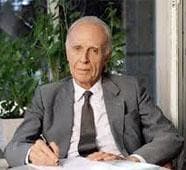
Adolfo Bioy Casares was an Argentine writer, journalist, and translator, best known for his seminal 1940 novel, 'The Invention of Morel.' A close friend and collaborator of Jorge Luis Borges, his work often explored themes of reality, fantasy, and the uncanny. His writing is characterized by its precision, elegance, and subtle philosophical depth.
Similar books
- The Turn of the Screw
Henry James
3.4 (104k) average on GoodreadsMysteryA masterclass in psychological suspense and ambiguous narrative, praised by Borges in the same breath as 'Morel'.
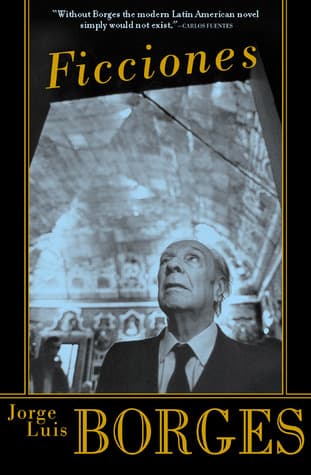
- Ficciones
Jorge Luis Borges
4.4 (49k) average on GoodreadsFantasyThe Invention of Morel shares Borges's (a close collaborator and friend of Bioy Casares) intellectual rigor and fascination with labyrinthine realities and philosophical puzzles. Both authors explore the nature of time, identity, and the boundaries of perception. However, Bioy Casares's narrative is more linear and character-driven, focusing on a single, compelling scientific premise, whereas Borges's Ficciones presents a collection of shorter, more abstract, and often metafictional tales that play with literary forms themselves. While both evoke a sense of the uncanny, Bioy Casares grounds his fantastic elements in a pseudo-scientific explanation, making it feel more like speculative fiction, while Borges often delves into purely metaphysical or symbolic realms.
- One Hundred Years of Solitude
Gabriel García Márquez
4.1 (753k) average on GoodreadsLiterary FictionWhile both novels are foundational to Latin American fantastic literature, their approaches to the fantastic differ significantly. García Márquez's One Hundred Years of Solitude is a quintessential example of magical realism, where the miraculous and mundane coexist seamlessly without explanation, deeply embedded in a rich cultural and historical tapestry. Bioy Casares, in contrast, offers a more analytical and 'scientific' fantasy, where the extraordinary events of the island are meticulously explained by Morel's invention. García Márquez builds an expansive, generational saga with a multitude of characters, whereas Bioy Casares focuses intensely on the internal world and singular obsession of his narrator, creating a more claustrophobic and psychological experience. Morel can be seen as a precursor to the genre, providing a more contained and intellectualized form of the fantastic before magical realism exploded onto the world stage.
- Harry Potter and the Sorcerer's Stone
J.K. Rowling
4.5 (7M) average on GoodreadsFantasyRescued from a miserable life under the stairs, an orphaned boy discovers he's a wizard destined for a magical school, where he uncovers a dangerous secret tied to the dark wizard who murdered his parents.
- The Hunger Games
Suzanne Collins
4.3 (6.4M) average on GoodreadsFantasyIn a future where children fight to the death on live television, Katniss Everdeen volunteers for the arena, turning a death sentence into a fight for survival and a spark of rebellion.
- 1984
George Orwell
4.2 (3.1M) average on GoodreadsPoliticsIn a future where surveillance and thought control are absolute, a man's search for truth clashes with the Party, showing that hope can be a form of rebellion.





Enjoyed the summary?
A summary gives you the shape of the book. The book itself has the detail, the examples and the voice.
Find The Invention of Morel on AmazonAs an Amazon Associate, BookBrief earns from qualifying purchases. How we're funded