
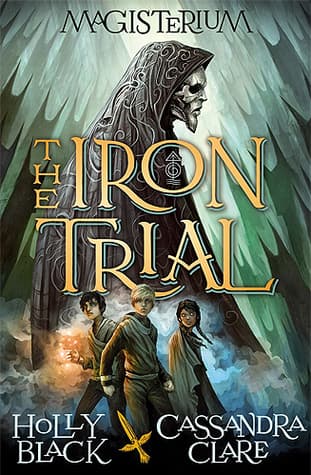
Synopsis
Covers the whole plot, including the ending.
- Difficulty
- Easy
- Pacing
- Moderate
- Mood
- Magical, Mysterious, Adventurous, Slightly Dark
- Read it if
- You enjoy magical boarding school settings with a dark twist, elemental magic, and a protagonist with a secret identity.
- Skip it if
- You prefer fantasy without a chosen one trope or a slightly darker undertone for a middle-grade story.
The Iron Trial Plot Summary
Covers the whole plot, including the ending.
The Warning and the Iron Trial
Callum Hunt, a sarcastic and often cynical eleven-year-old with a crippled leg, lives with his father, Alastair. Alastair has spent Call's entire life teaching him to distrust magic and forbidding him from ever attending the Magisterium, a secret school for mages. Despite Alastair's efforts, Call must attend the Iron Trial, tests designed to find magical talent. Call intends to fail badly, hoping to be sent home. During the trials, held in a large chamber, he purposely messes up tasks, making a chaotic mess of elemental magic. However, his clumsy and disruptive attempts to fail accidentally draw the attention of Master Rufus, a powerful mage who sees potential in Call's raw, uncontrolled power.
Acceptance and the Magisterium
After his terrible performance, Call is surprised to be among the few chosen by Master Rufus to be an apprentice. He is placed with Tamara Rajavi, a bright and disciplined mage from a famous magical family, and Aaron Stewart, an orphan who seems to have natural magic. Call still resists, remembering his father's warnings, but he has no choice. He is taken to the Magisterium, a hidden, complex school deep underground. The school is a stark, old place, full of strange creatures and difficult magic, very different from his normal life with Alastair. Call starts to feel both fear and a reluctant curiosity about this new world.
First Year and New Friendships
Call, Tamara, and Aaron begin their first year as apprentices under Master Rufus. Their initial interactions are tense; Tamara is annoyed by Call's lack of discipline, and Aaron is quiet. They learn basic elemental magic, controlling fire, water, air, and earth, often with chaotic results from Call. During one difficult lesson, they must rescue salamanders from a collapsing cavern. Working together, they succeed, showing their individual strengths and starting to form a tentative friendship. Call, despite himself, starts to feel like he belongs with his fellow apprentices, and the Magisterium slowly begins to feel less like a prison and more like a home.
The Hunt for the Chaos-ridden Wolf
During their studies, a powerful and dangerous Chaos-ridden wolf escapes its enclosure within the Magisterium. This creature, filled with uncontrolled chaos magic, is a serious threat. Master Rufus warns the students about the wolf's destructive power and the need to avoid it. However, Call, Tamara, and Aaron, driven by curiosity and a desire to prove themselves, decide to track the wolf. They follow its destructive path through the deeper caverns of the Magisterium, encountering various magical dangers and solving small puzzles. Their pursuit leads them to a fight with the creature, where they must use their combined magic to control it, showing their growing teamwork.
Jasper and the Confrontation
Jasper deWinter, another first-year apprentice from a wealthy magical family, quickly becomes Call's rival. Jasper often teases Call about his limp and perceived lack of magical talent, making him feel like an outsider. Their hostility leads to a dangerous magic fight in one of the Magisterium's training areas. Jasper uses his refined magic to attack Call, who responds with uncontrolled bursts of chaos magic. The duel quickly gets out of hand, endangering other students and attracting Master Rufus's attention. The incident highlights Call's struggle with his chaotic powers and the intense pressure he feels to fit in, or at least survive, in the magic world.
The Cave of the Devoured
Driven by curiosity and a desire to explore the Magisterium's secrets, Call, Tamara, and Aaron venture into the forbidden Cave of the Devoured, a place rumored to hold powerful and dangerous magical items. Inside, they find a chilling scene: a cavern filled with the remains of mages who died trying to control a powerful magical entity. Among the items, Call finds a small, carved knife that seems strangely familiar. He has a fleeting, disturbing vision, hinting at a connection to the cave. This experience deepens Call's unease about his place in the Magisterium and his own mysterious past, making him question everything his father told him.
The Enemy of Death and the Revelation
Call starts to gather information about the 'Enemy of Death,' a legendary dark mage who sought ultimate power through Chaos magic. He learns that the Enemy of Death was thought to have been defeated years ago, but rumors say he might return. During this time, Call confronts Master Rufus about the dangers of the Magisterium and his father's warnings. Master Rufus reveals more about the war against the Enemy of Death and hints at a deeper, personal connection between Call's family and the conflict. This conversation begins to explain Alastair's extreme fear of magic and his desperate attempts to keep Call away from the magical world, suggesting a protective reason, not just a prohibitive one.
The Chaos-ridden Puppy
During one of their unauthorized explorations, Call, Tamara, and Aaron find a small, whimpering wolf pup, clearly Chaos-ridden. The pup, with glowing eyes and erratic movements, is an offspring of the dangerous wolf they had seen before. Despite the danger of Chaos magic, Call feels an immediate, unexplainable connection to the creature. Against the rules, the trio decides to rescue and secretly care for the puppy, naming him Havoc. Havoc becomes their secret companion, a symbol of their bond and their growing willingness to challenge the rules. Call finds a strange comfort in the chaotic, untamed nature of the puppy, mirroring his own inner struggles.
The Betrayal and the Chase
Jasper, still resentful of Call and his friends, discovers Havoc. Driven by jealousy and a desire to get Call into trouble, Jasper reports the forbidden Chaos-ridden wolf pup to the masters. This betrayal leads to a frantic chase through the Magisterium as Call, Tamara, and Aaron try to protect Havoc from being captured and possibly destroyed. They use their combined magic to evade the masters and other students, showing their growing skill and teamwork under pressure. The chase is a desperate attempt to protect their secret and their pet, highlighting the deep bond they have formed and their defiance of the Magisterium's strict rules. They manage to escape into the deeper, less-patrolled tunnels.
The True Enemy and the Revelation
Cornered in the deeper parts of the Magisterium, Call, Tamara, and Aaron are confronted by Master Rufus. In a shocking turn, Master Rufus reveals the truth about Call's past. He explains that Call is not just a student, but the reincarnation of the Enemy of Death, Constantine Madden, whose soul transferred into Call's infant body after Madden's defeat. Call's crippled leg, uncontrolled chaos magic, and deep connection to Havoc are all explained as remnants of Constantine. The knife Call found in the Cave of the Devoured was Constantine's. Master Rufus, once Constantine's apprentice, had been watching Call, waiting for this truth to appear. The revelation shatters Call's understanding of himself and his world.
The Confrontation and the Choice
With his true identity revealed, Call faces a painful choice. Master Rufus, believing Constantine's evil essence is too strong to resist, tries to kill Call to prevent the Enemy of Death from fully returning. Tamara and Aaron, despite the shocking news, stand by Call, refusing to believe he is evil. They use their combined magic to defend Call against Master Rufus, creating a chaotic magic battle in the Magisterium's depths. Call, overwhelmed by the truth and sudden events, struggles to control his growing chaos magic. He must decide whether to give in to Constantine Madden's power or to fight for his own identity and the friendships he has made.
Escape and Uncertain Future
During the chaotic fight, Call, with Tamara and Aaron's help, manages to overpower Master Rufus, though with much effort. Realizing they can no longer stay safely within the Magisterium, the trio, along with Havoc, makes a desperate escape. They flee into the outside world, leaving behind the only magic home Call has known. The ending leaves Call in a difficult position, dealing with his identity as Constantine Madden, the Enemy of Death, and the deep, loving bond he shares with his friends. He is torn between the dark legacy he has inherited and the hope of making his own path, free from the past's shadows. Their future is uncertain, but their loyalty to each other is clear.
The Iron Trial Characters
Callum Hunt
Protagonist
A cynical, physically challenged boy forced into a magical world he's been taught to fear.
Callum, or Call, is an eleven-year-old boy with a crippled leg, which often makes him feel like an outsider. He is sarcastic, prone to cynicism, and initially deeply resentful of the magical world due to his father's warnings. Despite his attempts to fail, he possesses a raw, untamed magical talent, particularly with Chaos magic. He values loyalty and develops deep bonds with his friends, Tamara and Aaron, and his Chaos-ridden wolf, Havoc. His internal struggle revolves around his perceived inadequacy and the shocking truth of his identity.
Relationships: Alastair Hunt (protective but overbearing father); Tamara Rajavi (loyal friend and fellow apprentice); Aaron Stewart (best friend and fellow apprentice); Master Rufus (mentor turned antagonist); Havoc (loyal Chaos-ridden pet)
Tamara Rajavi
Supporting
A brilliant and disciplined mage from a prestigious magical family.
Tamara is an intelligent, disciplined, and highly skilled mage, coming from a respected magical family. She is initially exasperated by Call's lack of focus and Aaron's quiet nature but quickly becomes a loyal and supportive friend. She is driven by a strong sense of duty and a desire to excel, often acting as the group's moral compass and strategic thinker. Her magic is refined and controlled, contrasting with Call's chaotic abilities. She is fiercely protective of her friends and unwavering in her belief in Call, even after the shocking revelation.
Relationships: Callum Hunt (loyal friend and fellow apprentice); Aaron Stewart (loyal friend and fellow apprentice); Master Rufus (mentor)
Aaron Stewart
Supporting
An orphan with natural, effortless magical talent, destined for greatness.
Aaron is an orphan, initially quiet and unassuming, but possesses an innate and effortless talent for magic, making him a 'Makar' – a rare mage capable of wielding Chaos magic without being corrupted. He is kind-hearted, calm, and often acts as a mediator between Call and Tamara. Despite his immense power, he remains humble and grounded. He forms a deep, unwavering friendship with Call and Tamara, proving his loyalty even in the face of the most shocking revelations. His destiny is intertwined with the fate of the magical world.
Relationships: Callum Hunt (best friend and fellow apprentice); Tamara Rajavi (loyal friend and fellow apprentice); Master Rufus (mentor)
Master Rufus
Antagonist
A powerful and respected mage, Call's mentor, with a secret agenda.
Master Rufus is one of the most powerful and respected mages in the Magisterium, known for his wisdom and strict adherence to magical principles. He becomes Call's mentor, initially seeing potential in his raw talent despite Call's disastrous Iron Trial performance. He is deeply committed to protecting the magical world from the threat of the Enemy of Death, Constantine Madden, whom he once knew. His actions are driven by a profound sense of duty and a willingness to make difficult choices for the greater good, even if it means sacrificing an innocent.
Relationships: Callum Hunt (mentor turned antagonist); Tamara Rajavi (mentor); Aaron Stewart (mentor); Constantine Madden (former apprentice and archenemy)
Alastair Hunt
Supporting
Call's overprotective father who vehemently warns him against magic.
Alastair Hunt is Call's father, a former mage who left the magical world after a tragic incident. He has spent Call's entire life instilling in him a deep fear and distrust of magic, going to extreme lengths to prevent Call from ever attending the Magisterium. His overprotective nature stems from a devastating past event, the details of which are slowly revealed to be connected to the Enemy of Death. He genuinely loves Call and believes he is protecting him, even if his methods are extreme and isolating.
Relationships: Callum Hunt (father); Sarah Hunt (deceased wife)
Jasper deWinter
Supporting
A privileged and arrogant apprentice who becomes Call's rival.
Jasper is a first-year apprentice from a wealthy and influential magical family. He is arrogant, snobbish, and often uses his family's status to lord it over others. He quickly develops a strong rivalry with Call, frequently taunting him about his limp and his perceived lack of talent. While not inherently evil, his actions are driven by jealousy, insecurity, and a desire for recognition. His betrayal regarding Havoc highlights his immaturity and self-serving nature.
Relationships: Callum Hunt (rival); Tamara Rajavi (acquaintance/fellow apprentice); Aaron Stewart (acquaintance/fellow apprentice)
Havoc
Supporting
A Chaos-ridden wolf pup adopted by Call and his friends.
Havoc is a small, Chaos-ridden wolf pup, an offspring of the dangerous wolf that escaped the Magisterium. He possesses glowing eyes and exhibits chaotic, unpredictable magical bursts. Despite his dangerous nature, he is fiercely loyal to Call, Tamara, and Aaron, who rescue and secretly care for him. Havoc forms a deep, almost symbiotic bond with Call, sensing and mirroring his chaotic energy. He symbolizes the untamed and dangerous aspects of magic, as well as the unconditional loyalty found in unexpected places.
Relationships: Callum Hunt (pet/companion); Tamara Rajavi (owner/companion); Aaron Stewart (owner/companion)
Constantine Madden (The Enemy of Death)
Antagonist
The legendary dark mage whose soul resides within Call.
Constantine Madden, known as the Enemy of Death, was a powerful and infamous dark mage who sought to gain ultimate power by controlling Chaos magic and resurrecting the dead. He was believed to have been defeated years ago, but his soul was secretly transferred into the infant body of Callum Hunt. He represents the ultimate evil and the greatest threat to the magical world. His legacy casts a long shadow over Call's life, and his influence is the source of Call's uncontrolled chaos magic and his crippled leg.
Relationships: Callum Hunt (reincarnation/host); Master Rufus (former apprentice and archenemy); Sarah Hunt (victim/rival)
The Iron Trial Themes
Identity vs. Destiny
This theme explores whether people are defined by their past, their family, or their choices. Call struggles with the identity his father gives him—a non-mage—and later, the shocking truth of being Constantine Madden reborn. His journey is about choosing to define himself by his actions and loyalties, especially his bond with Tamara and Aaron, rather than giving in to the destiny his heritage suggests. The conflict with Master Rufus directly challenges Call to make this choice in the climax, forcing him to fight for who he is.
“You are not him,” Tamara said fiercely, her voice shaking. “You’re Call.”
The Nature of Good and Evil
The novel questions simple ideas of good and evil, especially through Call. His father and Master Rufus portray magic as dangerous or the Enemy of Death as purely evil, but Call's experiences show more complexity. His Chaos magic, initially feared, also connects him to Havoc and strengthens his friendships. The reveal of his identity forces him to consider if he is evil because of Constantine's soul, or if his choices and friends can define his morality. The story suggests that good and evil are not just about nature but about the choices one makes.
“Chaos,” Master Rufus said, “is not good or evil. It is merely chaos.”
Friendship and Loyalty
The bond between Call, Tamara, and Aaron is a main part of the story. Despite their initial differences and Call's difficult personality, their shared experiences at the Magisterium create a strong loyalty. This is clear when they work together to rescue salamanders, hunt the wolf, and especially when they protect Havoc. Most importantly, Tamara and Aaron stand by Call even after learning his true identity, choosing to believe in the person he is rather than the dark legacy he carries. Their friendship gives Call the strength to fight for his own identity.
“We’re a team,” Aaron said simply. “Always.”
Fear of the Unknown
Call's initial fear of magic and the Magisterium is deeply set by his father, who projects his own trauma onto Call. This fear shows as a desire to fail the Iron Trial and a constant wariness of his new surroundings. The Magisterium itself, with its hidden depths and ancient secrets, represents the unknown. As Call slowly explores and understands this world, his fear gives way to reluctant curiosity and eventually, a sense of belonging. The biggest unknown, his own identity as Constantine Madden, is the greatest fear he must face and ultimately, accept or reject.
“He’d spent his whole life being told magic was dangerous. Now he was living in it.”
Plot Devices & Literary Techniques
The Crippled Leg
A physical disability that serves as both a symbol and a clue to Call's true identity.
Call's crippled leg is a constant physical reminder of his perceived weakness and difference. It makes him feel like an outsider and fuels his sarcasm. However, it is later revealed to be a direct consequence of the battle that defeated Constantine Madden, making it a crucial clue to his identity as the Enemy of Death's reincarnation. It symbolizes the lingering effects of a past trauma and the physical manifestation of his connection to Chaos magic, transforming from a simple disability into a profound narrative indicator of his destiny.
Chaos Magic
A powerful, dangerous, and often uncontrollable form of magic.
Chaos magic is presented as the most potent and perilous form of magic, capable of both immense creation and destruction. It is associated with the Enemy of Death, Constantine Madden, and is the type of magic Call instinctively wields, often with disastrous results. It symbolizes the untamed, unpredictable forces within the magical world and within Call himself. The struggle to control Chaos magic mirrors Call's internal battle against his inherited dark nature, and the rarity of Makars (like Aaron) who can wield it safely highlights its inherent danger.
The Magisterium
A hidden, underground magical school that acts as a character and a setting.
The Magisterium is not just a school; it's a living, breathing entity, a labyrinthine underground complex filled with ancient secrets, dangers, and history. Its hidden nature emphasizes the secrecy of the magical world. The school's challenging environment forces Call to confront his fears and develop his powers, while its strict rules and hidden chambers provide the backdrop for both friendship and betrayal. It serves as a crucible for the protagonists, shaping them through its trials and ultimately becoming the stage for the climactic revelation and escape.
The Enemy of Death Prophecy/Legend
A pervasive legend about a dark mage that drives much of the plot and character motivation.
The legend of the Enemy of Death, Constantine Madden, and his defeat years ago, is a recurring plot point. It creates a sense of foreboding and shapes the actions of characters like Alastair and Master Rufus, who are deeply affected by the past war. The prophecy that the Enemy of Death might return fuels the tension and provides a looming threat. Ultimately, the legend is revealed to be directly connected to Call's identity, making it not just a backstory but the central mystery and conflict of the novel, driving the climax and setting up future installments.
The Iron Trial Quotes
“Chaos wants you to be afraid. Chaos wants you to be alone. Chaos wants you to give up.”
“I was born to be a villain. I was born to destroy the world.”
“The greatest trick the devil ever pulled was convincing the world he didn't exist.”
“Magic is not about power. It's about control.”
“Sometimes the people you think are trying to hurt you are actually trying to save you.”
“It's not what you are born, it's what you grow to be.”
“Nobody wants to be a hero, not really. It's too much responsibility.”
“The Magisterium isn't a school, it's a prison. And we're the inmates.”
“You can't choose your family, but you can choose your friends.”
“Fear is a weapon. Use it wisely.”
“Sometimes the most dangerous things look the most ordinary.”
“You don't have to be perfect to be powerful.”
“The world is full of monsters, and some of them wear human skin.”
“Being different isn't a weakness. It's a strength, if you know how to use it.”
“There are no easy answers, only hard choices.”
Quiz
10 questions on the plot and the characters. Each answer comes with a short explanation.
Question 1
What is the name of the magical school where Call is reluctantly sent?
- The Academy of Arcane Arts
- The Magisterium
- The School of Elemental Magic
- The Institute of Conjuration
Show answer
B. The Magisterium Call is sent to the Magisterium, a renowned school for mages, despite his father's warnings.
Question 2
What is the primary reason Call's father, Alastair, wants Call to fail the Iron Trial?
- He believes magic is inherently evil.
- He wants Call to live a normal, non-magical life.
- He fears Call will become like the Enemy of Death.
- He thinks Call is not talented enough for magic.
Show answer
C. He fears Call will become like the Enemy of Death. Alastair's primary fear is that Call will follow the same dark path as the Enemy of Death, given their shared circumstances.
Question 3
Which elemental affinity is Call initially assigned to during the Iron Trial?
- Fire
- Water
- Earth
- Air
Show answer
C. Earth During the Iron Trial, Call's elemental affinity is identified as earth.
Question 4
Who is Call's master at the Magisterium?
- Master Rufus
- Master North
- Master Lemuel
- Master Joseph
Show answer
A. Master Rufus Call, Tamara, and Aaron are all apprenticed to Master Rufus.
Question 5
What is the name of the Chaos-ridden wolf pup Call befriends?
- Fang
- Ripper
- Havoc
- Shadow
Show answer
C. Havoc Call finds and befriends a Chaos-ridden wolf pup he names Havoc.
Question 6
What significant physical characteristic does Call possess due to an injury in his infancy?
- A missing eye
- A permanently scarred face
- A twisted leg that causes a limp
- A magical mark on his hand
Show answer
C. A twisted leg that causes a limp Call has a twisted leg that causes him to limp, a result of an injury during the attack that killed his mother.
Question 7
What is the ultimate revelation about Call's true identity at the end of 'The Iron Trial'?
- He is a long-lost royal heir.
- He is the reincarnation of the Enemy of Death, Constantine Madden.
- He is an elemental spirit trapped in a human body.
- He is a powerful mage from a forgotten lineage.
Show answer
B. He is the reincarnation of the Enemy of Death, Constantine Madden. The shocking twist at the end reveals that Call is the reincarnation of Constantine Madden, the Enemy of Death.
Question 8
Who is the 'Enemy of Death' that Alastair constantly warns Call about?
- A powerful demon seeking to destroy the Magisterium.
- A rogue mage who tried to gain immortality through dark magic.
- A mythical creature that preys on mages.
- The ancient founder of the Magisterium who turned evil.
Show answer
B. A rogue mage who tried to gain immortality through dark magic. The Enemy of Death is Constantine Madden, a powerful mage who sought to conquer death and caused immense destruction.
Question 9
How does Call 'fail' the Iron Trial in a way that ironically leads to his acceptance into the Magisterium?
- He intentionally sabotages another student's test.
- He refuses to answer any questions from the Masters.
- He makes a chaotic display of magic, attracting Master Rufus's attention.
- He runs away from the trial, but is later found and admitted.
Show answer
C. He makes a chaotic display of magic, attracting Master Rufus's attention. Call tries to fail by making a mess and acting out, but his chaotic display of raw magic, particularly earth magic, impresses Master Rufus who sees potential.
Question 10
What is the significance of Call's connection to Chaos magic, which he struggles to control?
- It makes him exceptionally powerful in all elemental magic.
- It is a rare and dangerous form of magic that links him to the Enemy of Death.
- It allows him to communicate with magical creatures.
- It is a common side effect of having a physical disability.
Show answer
B. It is a rare and dangerous form of magic that links him to the Enemy of Death. Call's connection to Chaos magic is a key indicator of his true identity as the reincarnation of Constantine Madden, who also wielded Chaos magic.
The Iron Trial FAQ
What is the core premise of 'The Iron Trial' and why is Calland 'Call' Turner so reluctant to embrace it?
The core premise follows Callum Hunt, whose father, Alastair, has instilled in him a deep-seated fear and hatred of magic and the Magisterium school. Call is warned that succeeding at the Iron Trial, the entrance exam for the Magisterium, would lead to terrible consequences, particularly related to his mother's death and a mysterious entity known as the Enemy of Death. His reluctance stems from his father's constant warnings and his own belief that he is 'broken' due to a crippled leg.
Who are Call's primary companions at the Magisterium and what are their initial impressions of him?
Call's primary companions are Tamara Rajavi and Aaron Stewart, who become his fellow apprentices under Master Rufus. Tamara initially views Call with disdain, seeing him as lazy and disrespectful, while Aaron, despite Call's attempts to fail, sees potential and a kindred spirit in him, especially after Call saves him from a collapsing ceiling during the Iron Trial. Their dynamic starts rocky but evolves into a strong friendship.
What is the Iron Trial and how does Call attempt to fail it, only to inadvertently succeed?
The Iron Trial is the entrance examination for the Magisterium, designed to test a child's magical aptitude and control. Call attempts to fail by deliberately performing poorly, causing chaos, and generally being uncooperative. However, his raw, untrained power manifests in unexpected ways, such as accidentally saving Aaron and demonstrating latent abilities, which leads the Masters to believe he is either exceptionally gifted or a unique challenge they must accept.
Describe the Magisterium school environment. Is it a typical 'magical academy' setting?
The Magisterium is an underground, cavernous school carved into the earth, far from the typical bright and airy magical academy. It's filled with ancient runes, elemental chambers, and a sense of both wonder and danger. The environment is challenging, with difficult lessons, unpredictable magical creatures, and an emphasis on controlling raw elemental chaos, making it a far more perilous and less glamorous setting than many fantasy schools.
What is the significance of Call's wolf-pupil, Havoc, and how does he acquire him?
Havoc is a Chaos-ridden wolf-pupil, a creature imbued with raw, unpredictable magic. Call acquires him after Havoc is trapped and injured in a cavern during their Bronze Year. Call, using his innate connection to chaos magic, is able to soothe and heal Havoc, forging a deep bond that makes Havoc his loyal companion. Havoc's presence often hints at Call's own unique connection to chaos.
What is the 'Enemy of Death' and how is Call's mother connected to this figure?
The 'Enemy of Death' is the title given to the feared dark mage, Constantine Madden, who was believed to have been killed in the Magisterium War. Call's mother, Sarah, was a mage who died during the war, seemingly at the hands of Constantine. His father's warnings stem from the belief that Constantine's evil is somehow tied to Call's very existence, leading to the devastating revelation at the book's climax.
What is the true identity of Calland and the shocking revelation at the end of the book?
The shocking revelation at the end of the book is that Calland 'Call' Turner is, in fact, the reincarnation of Constantine Madden, the feared Enemy of Death. Constantine, in his dying moments, performed a forbidden soul-transfer spell, placing his soul into the body of the infant Call, who was born on the same day Constantine was 'killed.' This explains his father's extreme warnings and Call's innate connection to chaos magic.
How do the 'marks' on Call's leg and wrist, initially attributed to his birth injury, subtly foreshadow his true nature?
The 'marks' on Call's leg are not merely a birth injury but are implicitly linked to the soul transfer. The crippled leg is a physical manifestation of the trauma of the soul transfer, and the dark, web-like patterns on his skin are subtle indicators of the chaos magic that courses through him, echoing the powers and nature of Constantine Madden. These marks are a constant, physical reminder of his true, hidden identity.
What specific clues, beyond the ending, point to Call's true identity throughout the narrative?
Several clues hint at Call's true identity: his father's obsessive warnings about magic and the Magisterium, his unnatural ability to connect with and control chaos magic (especially with Havoc), his unique struggles with elemental magic, and the Masters' unusual interest in his 'unruly' potential. His aversion to following rules and his occasional flashes of dark power also subtly foreshadow the big reveal.
How does Call's physical disability (his crippled leg) influence his self-perception and interactions with others?
Call's crippled leg significantly impacts his self-perception, making him feel 'broken,' weak, and an outsider. This insecurity often manifests as cynicism, defensiveness, and a desire to prove himself, despite his attempts to fail. It also makes him empathetic to other outcasts and fuels his determination, even as it creates a physical barrier in his interactions and reinforces his belief that he is fundamentally different.
Analyze the psychological impact of Alastair's constant fear-mongering on Call's development.
Alastair's constant fear-mongering deeply ingrained a sense of dread and suspicion towards magic in Call, leading to internal conflict and self-doubt. It created a powerful cognitive dissonance as Call was drawn to magic despite his father's warnings. This psychological conditioning made Call initially resistant to friendship and trust, and it fueled his desperate attempts to fail, shaping his early personality as guarded and rebellious.
How does the trio's dynamic (Call, Tamara, Aaron) reflect different archetypes of young heroes in a magical school setting?
The trio represents distinct archetypes: Aaron is the 'chosen one' or natural talent, effortlessly excelling and embodying the hope of the Magisterium. Tamara is the diligent, rule-following prodigy, driven by lineage and ambition. Call, in contrast, is the reluctant, cynical anti-hero, embodying chaos and skepticism. Their dynamic explores themes of destiny vs. free will, innate talent vs. hard work, and the struggle between good and perceived evil.
In what ways does Call grapple with his identity, both before and after the major revelation?
Before the revelation, Call grapples with feeling like an outcast due to his leg and his father's warnings, struggling to reconcile his perceived brokenness with his burgeoning magical abilities. After discovering he is Constantine Madden, his identity crisis intensifies, forcing him to confront the terrifying possibility that he is inherently evil. He must then decide if he is defined by his soul's origin or by his own choices and actions.
Is Call truly evil due to his soul's origin, or does 'The Iron Trial' argue for nurture over nature in terms of morality?
'The Iron Trial' strongly leans towards nurture over nature, suggesting that Call's actions and choices will define him, not his soul's origin. Despite being Constantine Madden, Call exhibits empathy, loyalty to his friends, and a desire to do good. The narrative sets up a central conflict where Call must actively fight against the legacy of his past life, implying that he has the agency to forge his own moral path.
How does the concept of 'Chaos magic' differ from the other elemental magics, and what might this imply about Call's destiny?
Chaos magic is presented as raw, unpredictable, and inherently destructive, distinct from the more ordered elemental magics of fire, water, earth, and air. Its untamed nature mirrors Constantine Madden's power and reflects Call's own latent abilities. This connection to chaos implies a destiny intertwined with immense, dangerous power, suggesting Call will either master it for good or succumb to its corrupting influence, echoing the choices Constantine made.
What philosophical questions does the ending raise about identity, free will, and the nature of good and evil?
The ending forces deep philosophical questions: Is a person defined by the soul they inhabit, or by their experiences and relationships? Does free will truly exist if one carries the soul of a notorious villain? It challenges the simplistic notions of good and evil, suggesting that even someone with a dark origin can choose a different path, or conversely, that a 'good' person might be capable of great evil under different circumstances.
How does the Magisterium itself, as an institution, contribute to the themes of secrecy and moral ambiguity?
The Magisterium, with its hidden location, ancient secrets, and the Masters' guarded demeanor, embodies secrecy and moral ambiguity. Its history is fraught with conflict and dark magic, including the very existence of the Enemy of Death. The institution's willingness to keep vital information from its students, and its readiness to accept a 'broken' student like Call, highlights its complex and often questionable ethical framework.
Could Alastair's actions, though driven by love, be considered morally ambiguous or even harmful to Call?
Yes, Alastair's actions, while driven by a desperate love and desire to protect Call, are morally ambiguous and ultimately harmful. His fear-mongering and secrecy created a deeply traumatized and insecure child, hindering Call's ability to trust and develop normally. By withholding the truth, Alastair inadvertently pushed Call towards the very magic he feared, showing how well-intentioned but misguided protection can have damaging consequences.
About the author

Holly Black is an American author known for her work in young adult fantasy fiction. She is the author of "The Cruel Prince," "The Wicked King," and "The Queen of Nothing," which make up the Folk of the Air series, as well as "The Iron Trial," the first book in the Magisterium series, and "The Darkest Part of the Forest." Her stories often explore themes of magic, power, and identity.
Similar books
- Harry Potter and the Sorcerer's Stone
J.K. Rowling
4.5 (7M) average on GoodreadsFantasyMagical boarding school, young protagonists learning magic, hidden secrets, and a dark wizard antagonist.
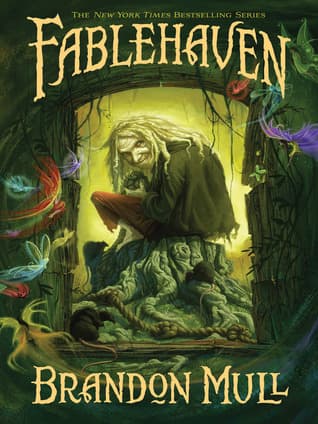
- Fablehaven
Brandon Mull
4.1 (134k) average on GoodreadsFantasyChildren discovering a secret magical world, facing mythical creatures, and uncovering a larger conflict.
- The Lightning Thief
Rick Riordan
4.3 (2M) average on GoodreadsFantasyRiordan's book offers a fast-paced, action-packed adventure rooted in Greek mythology with a distinct comedic voice. 'The Iron Trial' is generally more serious in tone, with a slower build-up and a focus on the internal struggles of its protagonist rather than external mythological quests. Percy Jackson is a more immediately heroic and relatable figure, whereas Callum is more complex and morally ambiguous, wrestling with his identity and potential for evil.
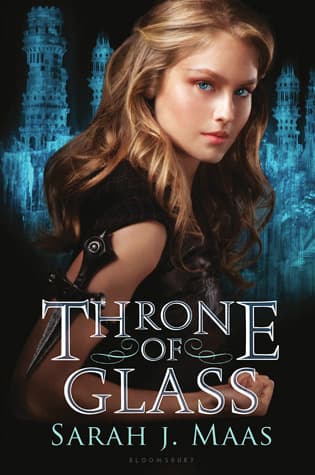
- Throne of Glass
Sarah J. Maas
4.2 (596k) average on GoodreadsFantasyWhile both are fantasy, Maas's 'Throne of Glass' is firmly YA, featuring a strong female assassin protagonist and delving into more mature themes of political intrigue, romance, and complex moral choices. 'The Iron Trial' maintains a clear children's/middle-grade fantasy structure, focusing on friendship, self-discovery within a school setting, and a more straightforward battle between good and evil, albeit with a dark twist on the 'chosen one' trope. Maas's world is often more brutal and expansive, while Black and Clare's is more contained within the school and its immediate dangers.
- The Hunger Games
Suzanne Collins
4.3 (6.4M) average on GoodreadsFantasyIn a future where children fight to the death on live television, Katniss Everdeen volunteers for the arena, turning a death sentence into a fight for survival and a spark of rebellion.
- 1984
George Orwell
4.2 (3.1M) average on GoodreadsPoliticsIn a future where surveillance and thought control are absolute, a man's search for truth clashes with the Party, showing that hope can be a form of rebellion.




Enjoyed the summary?
A summary gives you the shape of the book. The book itself has the detail, the examples and the voice.
Find The Iron Trial on AmazonAs an Amazon Associate, BookBrief earns from qualifying purchases. How we're funded