
Synopsis
Covers the whole plot, including the ending.
- Difficulty
- Easy
- Pacing
- Moderate
- Mood
- Mysterious, Romantic, Intriguing, Emotional
The Judgement Plot Summary
Covers the whole plot, including the ending.
Awakening on Earth
Ruin, an Angel of Judgment, arrives on Earth with no memory of his past, purpose, or even how to communicate. His only drive is a strong, ingrained urge to 'Judge and Execute.' He is immediately drawn to Isadore, a brilliant but socially awkward neuroscientist, the first human he meets. Unable to speak or understand human language, Ruin's presence initially alarms Isadore. He instinctively follows her, his celestial nature causing subtle disturbances around him, and a deep, inexplicable connection begins to form between them, though Ruin doesn't yet understand it.
The Molecular Binding
Driven by an unknown force, Ruin becomes inextricably linked to Isadore. Through a mysterious, almost molecular process, he is physically and emotionally bound to her. This binding is not a conscious act on his part, but a result of his initial interaction with her. He begins to absorb her memories and personality traits, slowly gaining a basic understanding of human emotions and the world. Isadore, initially terrified and confused by his silent, intense presence, gradually accepts him, sensing a deep, non-threatening quality despite his alien nature.
First Glimpses of Purpose
As Ruin spends more time with Isadore, fragmented visions and an overwhelming sense of an unfulfilled mission surface in his mind. These are not clear memories but flashes of violent acts, moral dilemmas, and the concept of 'judgment.' He understands he has a task to complete on Earth, but the details remain elusive, obscured by his amnesia and the growing distraction of his bond with Isadore. He feels an internal conflict between his mission and the growing, inexplicable attachment to the human woman who has become his anchor.
Isadore's Growing Understanding
Isadore, with her scientific mind, tries to understand Ruin through observation. She notices his unusual physical properties, his inability to speak, and how he reacts to stimuli. More importantly, she starts to feel the emotional connection forming between them, sensing his unspoken needs. She recognizes he is not human, but also not malevolent. Her scientific curiosity blends with a growing compassion, leading her to protect him and try to help him understand his own existence, even as it challenges her rational worldview.
The First Judgment
A specific event triggers Ruin's 'Judge and Execute' directive. He encounters someone whose actions are worthy of judgment by his celestial programming. Without conscious thought, Ruin executes his first judgment, showing his immense, supernatural power. This act is swift, decisive, and terrifyingly efficient, confirming his angelic nature and mission. Isadore witnesses this, solidifying her understanding that Ruin is a being of immense power with a divine purpose, and that their bond is intertwined with this dangerous destiny. This event also brings him a fleeting moment of clarity about his function.
The Conflict of Love and Duty
After his first judgment, Ruin becomes more aware of the conflict within him. His nascent feelings for Isadore grow stronger, showing as protectiveness and a deep emotional need for her presence. However, completing his mission, the reason for his existence on Earth, remains paramount. He struggles to reconcile these two opposing forces: the divine command to judge and execute, and the humanizing, binding love he feels for Isadore. He realizes his connection to her is both a comfort and an impediment to fully embracing his angelic purpose.
Seeking Answers
Driven by the urgency of his mission and the desire to understand his identity, Ruin actively seeks clues. He follows intuitive urges and fragmented visions, each leading him closer to unraveling his past and the specific tasks he must complete. Isadore, now committed to helping him, assists him in interpreting human situations and navigating the world. They encounter various individuals and situations that provide pieces of the puzzle, hinting at a larger, more complex design behind his presence on Earth, and the potential for a devastating truth.
The Revelation of His Past
Through intense experiences and recovered memories, Ruin begins to piece together the truth of his identity. He learns he is an Angel of Judgment, but his amnesia was not accidental. It was a deliberate act, possibly to protect him or facilitate his mission. The revelations are profound and disturbing, showing the true weight of his responsibilities and the harsh realities of his celestial existence. This newfound knowledge challenges his perception of himself and his bond with Isadore, forcing him to confront the difficult implications of his divine nature.
The Stakes Rise
As Ruin's memories return, he understands the full scope of his mission and the dire consequences if he fails. The judgments he must render are not merely isolated incidents but are part of a larger, critical cosmic balance. He realizes that his choices, particularly regarding his bond with Isadore, have far-reaching implications, not just for himself and her, but potentially for the fate of humanity or even higher realms. The pressure mounts as he understands that his personal desires are now in direct conflict with his universal duty, making his upcoming decisions incredibly weighty.
War on the Heart and Soul
The final revelations bring Ruin to a breaking point. The clues he has gathered, intended to clarify his mission, instead declare 'war on his heart and soul.' He discovers that completing his mission may require a sacrifice that directly conflicts with his deep love for Isadore. He is torn between his inherent, divine purpose and the deeply human connection he has forged. This internal struggle is agonizing, forcing him to choose between fulfilling his celestial duty, which could mean abandoning or even harming Isadore, and preserving their unique, binding relationship, potentially at the cost of his very essence and the cosmic order.
Principal Figures
Ruin
Protagonist
An Angel of Judgment with amnesia and a profound bond with a human.
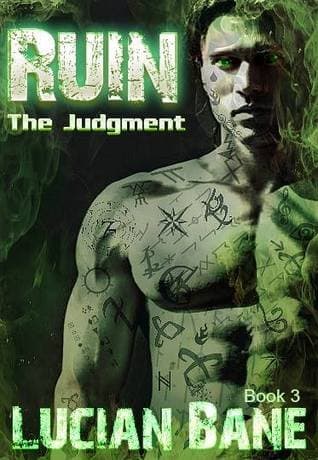
Ruin is an ancient, powerful Angel of Judgment, initially appearing on Earth with complete amnesia, knowing only an inexplicable urge to 'Judge and Execute.' He is physically imposing and possesses supernatural abilities, but is initially unable to communicate or understand human concepts. His encounters with Isadore slowly humanize him, as he absorbs her memories and emotions, developing a deep, protective love for her. He struggles to reconcile his divine, violent purpose with his burgeoning human affections, making him a conflicted and compelling figure.
Relationships: Isadore (Molecularly bound, romantic interest, emotional anchor)
Isadore
Supporting
A brilliant neuroscientist who forms an unbreakable bond with Ruin.
Isadore is an eccentric and highly intelligent neuroscientist, characterized by her OCD tendencies and analytical mind. She is the first human Ruin encounters and inadvertently becomes molecularly bound to him. Initially terrified and bewildered by his silent, powerful presence, she uses her scientific curiosity to try and understand him. Her compassion and resilience allow her to accept Ruin's otherworldly nature, and she becomes his guide and emotional anchor, helping him navigate the human world and understand his own evolving emotions, all while developing deep feelings for him.
Relationships: Ruin (Molecularly bound, romantic interest, object of scientific study and protection)
Themes & Insights
The Nature of Judgment and Justice
The novel explores the complex nature of divine judgment versus human justice. Ruin's purpose is to 'Judge and Execute,' a cold, absolute form of justice. However, his interaction with Isadore and his developing human emotions introduce shades of gray, questioning whether absolute judgment can exist without compassion or understanding. It examines whether justice is purely retributive or if there's room for mercy, and how a celestial being's understanding of right and wrong is challenged by human morality.
“He was created for one purpose, to judge. But what was judgment without understanding, without a heart to feel the weight of its consequence?”
Love as a Transformative Force
Love, particularly the bond between Ruin and Isadore, is a powerful, transformative force capable of altering even a celestial being's fundamental nature. Ruin, initially without human emotion, is profoundly changed by his connection to Isadore. Her love and presence not only humanize him but also become a central conflict to his divine mission. The theme explores how love can challenge duty, create new identities, and become a force strong enough to wage 'war on the heart and soul,' forcing impossible choices.
“Her touch was a melody he hadn't known he craved, a warmth that threatened to melt the divine ice in his veins.”
Identity and Amnesia
Identity is central, particularly through Ruin's amnesia. His lack of memory initially strips him of his past and purpose, forcing him to forge a new identity based on his present experiences, especially his bond with Isadore. As his memories slowly return, he grapples with reconciling his past, celestial identity as an Angel of Judgment with the new, emotionally complex being he has become. The novel questions whether identity is inherent or constructed, and how memory (or its absence) shapes who we are and who we are destined to be.
“Each recovered memory was a shard of a past life, cutting into the present he was building with her.”
The Conflict Between Duty and Desire
A core thematic conflict is the struggle between Ruin's divine duty and his personal desires. His mission as an Angel of Judgment is absolute, demanding unwavering commitment. However, his unexpected and deep love for Isadore creates a powerful counter-force, pulling him away from his predetermined path. This internal 'war on his heart and soul' explores the agonizing choices individuals (even celestial ones) must make when their personal happiness and the greater good are at odds, and whether true fulfillment can be found by sacrificing one for the other.
“His mission was imprinted on his soul, but her name was whispered in his heart, a defiant, human sound.”
Plot Devices & Literary Techniques
Amnesia
Ruin's initial lack of memory serves as a catalyst for his character development and plot progression.
Ruin's amnesia is a crucial plot device. It effectively resets his character, allowing him to experience the human world and develop emotions from a 'blank slate.' This facilitates his bond with Isadore without the immediate interference of his divine purpose. The gradual recovery of his memories serves as a driving force for the plot, revealing exposition about his origins and mission in carefully timed increments, building suspense and complicating his burgeoning relationship with Isadore. It also allows the reader to discover his true nature alongside him.
Molecular Binding
The unique, unbreakable physical and emotional link between Ruin and Isadore.
The 'molecular binding' between Ruin and Isadore is a unique and powerful plot device. It immediately establishes an unbreakable, supernatural connection between the protagonists, bypassing conventional relationship development. This binding explains Ruin's inability to leave Isadore, his absorption of her memories, and the deep, almost telepathic emotional resonance between them. It serves to intensify their relationship rapidly, making the stakes of Ruin's mission inherently personal, as his fate is literally intertwined with hers, creating an urgent, inescapable conflict.
Fragmented Visions/Memories
Ruin's sporadic flashes of his past and mission, guiding him forward.
Ruin's fragmented visions and memories serve as a narrative breadcrumb trail. These brief, often violent or enigmatic flashes provide him (and the reader) with tantalizing clues about his past, his purpose, and the nature of his judgments. They are not full recollections but rather symbolic or literal glimpses that propel him towards specific actions or locations, gradually piecing together the larger mystery. This device maintains suspense and allows for controlled reveals of exposition, deepening the enigma of Ruin's existence and his mission.
Quiz
10 questions on the plot and the characters. Each answer comes with a short explanation.
Question 1
What is the protagonist's name in 'The Judgement'?
- Isadore
- Lucian
- Ruin
- Bane
Show answer
C. Ruin The protagonist's name is Ruin, an Angel of Judgment.
Question 2
What is Ruin's primary function or purpose upon waking up on Earth?
- To find his lost memories
- To protect Isadore
- To Judge and Execute
- To fall in love with Isadore
Show answer
C. To Judge and Execute Ruin's core directive upon waking is to 'Judge and Execute'.
Question 3
What is Isadore's profession?
- An angel
- A neuroscientist with OCD
- A detective
- A historian
Show answer
B. A neuroscientist with OCD Isadore is described as an OCD Neuroscientist.
Question 4
How does Ruin initially connect with Isadore?
- He is assigned to protect her
- He seeks her out for information
- He wakes up near her, the first human he encounters
- They meet by accident at a celestial event
Show answer
C. He wakes up near her, the first human he encounters Ruin wakes up knowing only his directive and seeks help from Isadore, the first human he encounters.
Question 5
What is the nature of the bond that forms between Ruin and Isadore?
- A magical curse
- A professional partnership
- A molecular binding
- A telepathic link
Show answer
C. A molecular binding The text states that Ruin 'binds molecularity with the OCD Neuroscientist'.
Question 6
What is the primary conflict Ruin faces regarding his mission on Earth?
- He cannot find anyone to judge
- Isadore is preventing him from remembering his mission
- His angelic powers are weakening
- He has lost his ability to communicate
Show answer
B. Isadore is preventing him from remembering his mission Ruin has no memory of his origins and no ability to communicate initially, and Isadore seems to be preventing him from remembering his mission.
Question 7
What does the book suggest about the clues Ruin finds for his mission?
- They are straightforward and easy to follow
- They will lead him to a powerful artifact
- They will cause internal conflict and emotional turmoil
- They are designed to test his combat skills
Show answer
C. They will cause internal conflict and emotional turmoil The summary states, 'Soon, however, he discovers that the clues he gains to unravel the mysteries of his mission will declare war on his heart and soul.'
Question 8
What is implied about Ruin's mission in relation to Isadore?
- The mission is entirely separate from Isadore.
- Isadore is the target of his mission.
- The mission might, in fact, be about Isadore.
- Isadore is a distraction sent by his superiors.
Show answer
C. The mission might, in fact, be about Isadore. The text poses the question, 'But, there is a mission he's sent to accomplish and it isn't about Isadore. Or is it?' implying a potential connection.
Question 9
What does 'binds molecularity' suggest about the connection between Ruin and Isadore?
- It's a purely physical attraction.
- It's a deep, fundamental, and perhaps irreversible connection at a basic level.
- It's a temporary enchantment that will fade.
- It's a symbolic bond representing their shared purpose.
Show answer
B. It's a deep, fundamental, and perhaps irreversible connection at a basic level. The phrase 'binds molecularity' suggests a profound and intrinsic connection, implying that they are fundamentally linked at a physical or elemental level.
Question 10
What is the genre of the book 'The Judgement' by Lucian Bane?
- Science Fiction and Thriller
- Historical Fiction and Mystery
- Fantasy and Romance
- Paranormal and Horror
Show answer
C. Fantasy and Romance The book is explicitly described as 'Fantasy, Romance' in the provided text.
The Judgement FAQ
What is the plot of The Judgement by Lucian Bane?
The Judgement follows Ruin, an Angel of Judgment who wakes up on Earth with amnesia and a single directive: to Judge and Execute. He forms a bond with Isadore, a human neuroscientist, which complicates his mission and his understanding of his own existence.
Who are the main characters in The Judgement?
The main characters are Ruin, an amnesiac Angel of Judgment, and Isadore, an eccentric and intelligent human neuroscientist with OCD. Their relationship is central to the story.
What genre is The Judgement?
The Judgement is a fantasy romance novel, blending supernatural elements with a developing romantic relationship.
Is The Judgement part of a series?
Yes, The Judgement is the third book in the Ruin Series by Lucian Bane.
What kind of powers does Ruin have?
As an Angel of Judgment, Ruin has the inherent ability to Judge and Execute. The specifics of his powers and how they manifest are explored throughout the book as he regains his memory.
What is Ruin's mission on Earth?
Ruin has a specific mission to accomplish on Earth, which involves uncovering answers about his past and his purpose. However, his connection with Isadore begins to interfere with his ability to remember and complete this task.
How does Isadore influence Ruin?
Isadore, with her unique perspective as a neuroscientist, becomes molecularly bonded with Ruin. Her presence and their growing connection seem to be the key to unlocking Ruin's memories and potentially altering his mission.
Does The Judgement have a happy ending?
The book explores Ruin's internal conflict between his mission and his burgeoning feelings for Isadore, leading to a climax that will challenge his heart and soul. The ending likely resolves his immediate mission while setting up future developments.
What themes are explored in The Judgement?
The novel explores themes of memory, identity, duty versus desire, and the nature of judgment. It also delves into the complexities of human connection and love, even between an angel and a human.
Who would enjoy reading The Judgement?
Readers who enjoy fantasy romance, stories with supernatural beings, amnesiac protagonists, and strong romantic elements would likely enjoy The Judgement.
Similar books
- A Court of Thorns and Roses
Sarah J. Maas
4.2 (476k) average on GoodreadsFantasyWhile both "The Judgement" and "A Court of Thorns and Roses" feature a strong female protagonist entangled with a powerful, often morally gray male lead in a fantastical setting, Bane's work leans significantly darker and more explicitly into the 'dark romance' subgenre. Maas's series, while containing its own dark elements and possessive male characters, maintains a more traditional fantasy romance arc with clearer heroes and villains. "The Judgement" embraces ambiguity and often challenges conventional romantic tropes more directly, presenting a love that is frequently unsettling rather than purely aspirational. The world-building in Bane's novel also feels more ancient and gothic, whereas Maas's Prythian has a more vibrant, high-fantasy feel.
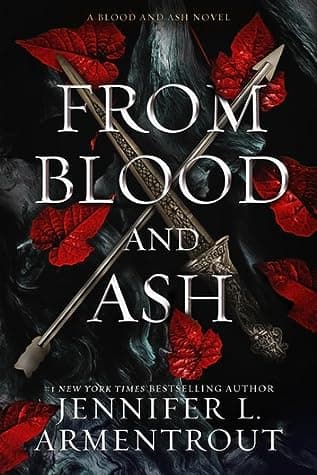
- From Blood and Ash
Jennifer L. Armentrout
4.4 (27k) average on GoodreadsFantasyBoth "The Judgement" and "From Blood and Ash" are prominent examples of popular dark fantasy romance, featuring powerful supernatural beings and intense, often possessive, romantic relationships. However, Bane's narrative in "The Judgement" delves into a more profound psychological darkness and moral ambiguity. Armentrout's series, while containing violence and mature themes, often maintains a more adventurous and action-oriented plot with a slightly lighter overall tone, despite its dark elements. The male lead in "The Judgement" exhibits a deeper, more ingrained darkness and a more complex, often disturbing, possessiveness compared to Hawke in 'From Blood and Ash,' whose possessiveness, while strong, is often framed as protective. Bane's prose also tends to be more lyrical and focused on atmosphere, while Armentrout's is more direct and fast-paced.
- Harry Potter and the Sorcerer's Stone
J.K. Rowling
4.5 (7M) average on GoodreadsFantasyRescued from a miserable life under the stairs, an orphaned boy discovers he's a wizard destined for a magical school, where he uncovers a dangerous secret tied to the dark wizard who murdered his parents.
- The Hunger Games
Suzanne Collins
4.3 (6.4M) average on GoodreadsFantasyIn a future where children fight to the death on live television, Katniss Everdeen volunteers for the arena, turning a death sentence into a fight for survival and a spark of rebellion.
- 1984
George Orwell
4.2 (3.1M) average on GoodreadsPoliticsIn a future where surveillance and thought control are absolute, a man's search for truth clashes with the Party, showing that hope can be a form of rebellion.
- Divergent
Veronica Roth
4.2 (2.9M) average on GoodreadsFantasyIn a society divided by virtues, a sixteen-year-old's difference from the norm starts a rebellion that threatens her world.





Enjoyed the summary?
A summary gives you the shape of the book. The book itself has the detail, the examples and the voice.
Find The Judgement on AmazonAs an Amazon Associate, BookBrief earns from qualifying purchases. How we're funded