

Estimated read time: 9 min read
One Sentence Summary
A seemingly mild-mannered small-town deputy sheriff descends into violence and madness as his psychopathic tendencies are gradually revealed.
Table of Contents
Introduction
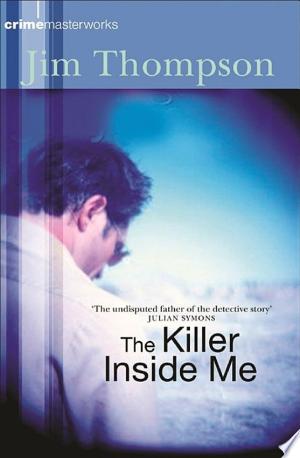
Imagine a small, sunbaked Texas town in the 1950s, where everyone knows your name—and your secrets. Or so they think. Jim Thompson’s "The Killer Inside Me" is a noir classic that pulls you into the shadowy depths of the human psyche. Published in 1952, this chilling novel is both a psychological thriller and an unsettling character study, famous for its courage to let the darkness speak for itself. Thompson’s masterpiece redefined crime fiction, making it a must-read for college students, literature enthusiasts, and anyone who’s ever wondered what evil really looks like when it wears a friendly face.
Historical Context
Set in the early 1950s, "The Killer Inside Me" reflects postwar America’s obsession with normalcy, conformity, and the dark undercurrents lurking beneath. This was a time when noir fiction flourished—think Raymond Chandler and Dashiell Hammett—but Thompson took the genre somewhere far more disturbing. The book mirrors anxieties of the era: the fear that ordinary folks could harbor extraordinary secrets, and that the American Dream could twist into a nightmare.
The story is loosely inspired by real-life cases of sociopathy and small-town scandals. Thompson, himself a product of the Great Depression and Prohibition-era America, draws on his firsthand knowledge of the South and Southwest, infusing his setting with gritty realism.
Brief Synopsis
Plot Overview
At first glance, Lou Ford is the ideal small-town deputy sheriff—polite, quiet, and deeply respected. But appearances are deceiving. Beneath his affable exterior lies a calculating, cold, and violent mind. When Lou is tasked with running a prostitute, Joyce Lakeland, out of town, their encounter triggers a chain of events that unravels his carefully constructed façade. As Lou’s murderous urges resurface, the town is rocked by a series of crimes that threaten to expose the true nature of the “killer inside” him.
Setting
The story unfolds in Central City, Texas—a dusty, isolated town where gossip spreads faster than tumbleweeds. Thompson’s Texas isn’t all rodeos and ranches; it’s a place of suffocating heat, moral ambiguity, and secrets simmering beneath the polite surface. The claustrophobic small-town atmosphere intensifies the psychological tension, making every interaction loaded with unspoken danger.
Main Characters
Here’s a handy table to keep track of the key players:
| Name | Role | Key Traits | Importance to Plot |
|---|---|---|---|
| Lou Ford | Deputy Sheriff (Protagonist) | Polite, cunning, sociopathic | Narrator; drives all major plot events |
| Joyce Lakeland | Prostitute | Bold, passionate, vulnerable | Catalyst for Lou’s violent spiral |
| Amy Stanton | Schoolteacher, Lou’s fiancée | Loyal, naive, loving | Represents Lou’s “normal” life; emotional anchor |
| Chester Conway | Wealthy contractor | Arrogant, powerful | Victim; his murder escalates the plot |
| Sheriff Bob Maples | Lou’s boss | Trusting, fatherly | Embodies small-town values; Lou’s protector |
| Tom | Lou’s foster brother | Troubled, tragic | Lou’s past; symbolic trigger for Lou’s psychosis |
Plot Summary
Let’s break down the twisted events of "The Killer Inside Me" into clear, digestible sections. No need to worry about spoilers—just enough intrigue to keep you turning the pages.
The Surface Calm
Lou Ford is the quintessential small-town lawman: always polite, impeccably mannered, and seemingly harmless. But right away, Thompson drops hints that Lou isn’t quite right. There’s a subtle menace in his thoughts, a cold detachment in his voice.
When Lou is sent to deal with local prostitute Joyce Lakeland, their meeting is charged with unspoken tension. Instead of running her out of town, Lou becomes involved with her, and their affair quickly turns violent and sadomasochistic. This relationship brings Lou’s suppressed violent impulses roaring back to life.
The First Crime
Joyce wants revenge on Chester Conway, a wealthy businessman responsible for ruining her lover’s life. Lou concocts a plan to frame Joyce and Conway for each other’s murders, disguising his actions as justice. The double-cross goes awry, and Lou’s crimes quickly spiral out of control. Each attempt to cover his tracks only pulls him deeper into suspicion, paranoia, and violence.
Community Suspicion
Despite Lou’s efforts to play the part of model citizen, cracks begin to show. Amy Stanton, Lou’s fiancée, grows uneasy but remains devoted. The townsfolk whisper, and the local authorities—especially Deputy Hendricks—start to question Lou’s involvement in the escalating violence. Tension mounts as Lou juggles his outward persona with his inner monster.
The Unraveling
As more bodies turn up and evidence mounts, Lou’s world starts to cave in. His relationships fracture, and his attempts to manipulate those around him become more desperate and erratic. The psychological portrait grows darker: Lou’s rationalizations start to sound hollow, even to himself.
The Inevitable End
Without spoiling the climax, suffice it to say that Lou’s carefully constructed world collapses in a blaze of violence and revelation. The ending is both shocking and, in its own twisted way, inevitable—a testament to Thompson’s mastery of suspense and character.
Themes and Motifs
The Duality of Human Nature
At its core, "The Killer Inside Me" asks: Can we ever really know someone? Lou embodies the terrifying idea that evil can wear a friendly face. The novel explores the tension between appearance and reality, good and evil, sanity and madness.
Sociopathy and Mental Illness
Thompson’s depiction of Lou is chillingly authentic—a clinical portrait of sociopathy before the term became mainstream. Lou’s lack of empathy, manipulativeness, and self-justification create a believable, if horrifying, antagonist.
Small-Town Hypocrisy
Central City, Texas, is a character in itself. The town’s veneer of decency masks widespread corruption, intolerance, and violence. The novel exposes the hypocrisy of a society that prefers to look the other way, even as evil festers in its midst.
Power, Sex, and Violence
Lou’s relationships—with Joyce, Amy, and others—are fraught with power struggles, sexual tension, and brutality. Thompson doesn’t shy away from the dark side of desire, showing how violence and sex can become dangerously intertwined.
The Unreliable Narrator
Lou’s first-person narration is both fascinating and disturbing. Can we trust what he tells us? Thompson uses this technique to keep readers off-balance, inviting us to question every word.
Thematic Table
| Theme | Description | Examples in Text |
|---|---|---|
| Duality of Human Nature | Good vs. evil within one person | Lou’s double life as deputy and killer |
| Sociopathy | Lack of empathy; calculated violence | Lou’s emotional detachment |
| Hypocrisy | Small-town respectability concealing corruption | Town’s reaction to violence |
| Power/Sex/Violence | Intimate relationships tied to abuse and control | Lou’s sadomasochistic affairs |
| Unreliable Narrator | Reader’s uncertainty about truth | Lou’s manipulative storytelling |
Literary Techniques and Style
Narrative Structure
Thompson uses a first-person, stream-of-consciousness style that pulls you into Lou’s warped mind. The narration is deceptively straightforward, almost folksy at times, making the violence feel even more jarring when it erupts.
Symbolism
Recurring images—mirrors, heat, darkness—underscore Lou’s internal duality and the oppressive atmosphere of Central City. The Texas landscape itself becomes a metaphor for moral desolation.
Realism and Noir
Thompson’s writing is raw, direct, and unsentimental. He avoids melodrama, instead opting for gritty realism and psychological depth. The noir tradition is alive in every shadowy alley and whispered secret.
Dialogue
The dialogue is spare, authentic, and often laced with dark humor. Thompson captures the rhythms and cadences of small-town speech, adding to the book’s realism.
Pacing
The novel moves with relentless momentum, alternating between moments of uneasy calm and explosive violence. Thompson’s tight, economical prose ensures that every word counts.
Author's Background
About Jim Thompson
Jim Thompson (1906–1977) was a prolific American writer, known for his hardboiled crime novels and screenplays. Raised in Oklahoma and Texas during the oil boom, Thompson’s early life was marked by poverty, crime, and a firsthand knowledge of corruption and violence.
Influences
Thompson was influenced by classic noir writers, but added a psychological and existential edge that set him apart. His work was often ahead of its time, exploring themes of madness, alienation, and the dark side of the American Dream.
Other Significant Works
- "Pop. 1280" – Another chilling tale of a murderous sheriff in a small town.
- "The Grifters" – Adapted into a critically acclaimed film.
- "Savage Night" – A noir classic featuring a hitman with a troubled conscience.
Impact and Legacy
Thompson’s work influenced generations of crime writers, filmmakers (notably Stanley Kubrick), and psychologists interested in the criminal mind. Today, he is considered one of the fathers of modern noir—a writer who dared to look beneath the surface and report what he saw.
Key Takeaways
- Evil can hide behind a charming smile—never judge a book, or a person, by its cover.
- Small towns aren’t always safe havens; sometimes they’re just better at hiding their skeletons.
- Psychological realism makes for terrifying reading; Thompson draws you inside the mind of a killer, and it’s not easy to leave.
- Societal complicity—the community’s refusal to see the truth—enables monsters to thrive.
- Literary innovation—Thompson’s unreliable narrator and psychological depth changed the crime genre forever.
Reader's Takeaway
Reading "The Killer Inside Me" is like staring into a dark mirror. You’re pulled along by Lou’s folksy charm, only to find yourself complicit in his crimes. Thompson’s masterpiece is both a warning and a dare: look beneath the surface, and be prepared for what you find. Emotionally, the novel is unsettling, even haunting. Intellectually, it challenges you to question easy assumptions about good and evil, sanity and madness. If you like your fiction with a side of existential dread and pitch-black humor, this book is for you.
Conclusion
Jim Thompson’s "The Killer Inside Me" isn’t just a crime novel—it’s a journey into the darkest corners of the human soul, wrapped in the deceptively ordinary trappings of small-town life. With its unforgettable narrator, searing psychological insight, and sharp critique of social hypocrisy, the book remains as relevant—and disturbing—as ever. Whether you’re a student of literature, psychology, or just a fan of gripping storytelling, Thompson’s classic will leave you questioning just how well you know the people around you. Ready to face the killer inside? Pick up the book, and see for yourself.
The Killer Inside Me FAQ
What is 'The Killer Inside Me' about?
'The Killer Inside Me' is a noir crime novel by Jim Thompson, first published in 1952. The story follows Lou Ford, a seemingly mild-mannered and dull deputy sheriff in a small Texas town who hides a dark and violent psychopathic nature.
Who is the main character in 'The Killer Inside Me'?
The main character is Lou Ford, a deputy sheriff who appears to be an average, polite small-town lawman but is actually a cunning and dangerous sociopath.
What genre is 'The Killer Inside Me'?
'The Killer Inside Me' is considered a classic example of crime fiction and psychological thriller, specifically within the noir genre.
Is 'The Killer Inside Me' based on a true story?
No, the novel is a work of fiction and is not based on real-life events or people.
What themes are explored in 'The Killer Inside Me'?
The novel explores themes such as duality of human nature, hidden evil, sociopathy, manipulation, violence, and the darkness lurking beneath the surface of everyday life.
Has 'The Killer Inside Me' been adapted into a film?
Yes, there have been two film adaptations: one in 1976 and another in 2010 starring Casey Affleck, Jessica Alba, and Kate Hudson.
Is 'The Killer Inside Me' a violent or graphic novel?
Yes, the novel is known for its disturbing psychological insight and graphic descriptions of violence, which may not be suitable for all readers.
Why is 'The Killer Inside Me' considered a classic?
The novel is regarded as a classic due to its intense psychological depth, innovative narrative style, and its unflinching portrayal of a sociopathic mind, which influenced later crime and noir fiction.
What makes Jim Thompson’s writing style unique in this novel?
Jim Thompson’s writing is notable for its gritty realism, unreliable narration, dark humor, and ability to create complex, morally ambiguous characters.



