

Synopsis
Covers the whole plot, including the ending.
- Difficulty
- Medium
- Pacing
- Moderate
- Mood
- Clever, Intricate, Classic Mystery, Intellectual
- Read it if
- You enjoy a collection of varied short mysteries tied together by a clever overarching theme, featuring a classic detective.
- Skip it if
- You prefer a single, continuous narrative rather than a series of standalone cases, or dislike short story collections.
The Labours of Hercules Plot Summary
Covers the whole plot, including the ending.
The Nemean Lion
Hercule Poirot, deciding to take on twelve cases mirroring the Labours of Hercules, begins with 'The Nemean Lion.' Lady Veronica Carlton-Sandways asks Poirot for help, upset about her kidnapped Pekinese, Shan Tung. The kidnappers demand a large ransom, and Lady Veronica suspects her chauffeur, Marius, who has since vanished. Poirot investigates the luxurious estate and talks to the staff, including the secretary and the dog's handler. He finds problems in their stories and the strange behavior of Shan Tung, who was unusually aggressive. Poirot realizes the 'kidnapping' is a cover for a more serious plot involving the sale of valuable furs, with the dog as a distraction. He uncovers a smuggling ring operating under the guise of the dog's disappearance, exposing the true 'lion' in this case.
The Lernean Hydra
Dr. Charles Oldfield approaches Poirot. His reputation is being ruined by gossip that he is responsible for the deaths of several patients. The whispers are everywhere and seem untraceable, like the multi-headed Lernean Hydra. Oldfield's wife, a former nurse, is also suspected. Poirot looks into the lives of the dead patients, including Mrs. Moncrieffe and Mrs. Harrison, and speaks with their families and friends. He sees how quickly the rumors spread, despite no real proof. Poirot realizes the gossip is a planned campaign by one person with a hidden reason, not just public opinion. He carefully traces the whispers, unmasking the true source of the poison and their hurtful plan.
The Arcadian Deer
A rich American, Mr. G. P. Bewlay, asks Poirot to find his fiancée, a beautiful young woman named Nita Valetta, who has disappeared. Bewlay says her beauty reminds him of an Arcadian Deer. Nita was last seen in a remote village in Yugoslavia. Poirot travels to the isolated village, interviewing locals, including a gruff innkeeper and a suspicious artist. He learns that Nita had charmed everyone but also seemed to have a mysterious past. Poirot uncovers a complex story involving mistaken identity, a forgotten tragedy, and a desperate attempt to escape a previous life. He finds Nita, revealing her true identity and why she disappeared, bringing peace to Bewlay.
The Erymanthian Boar
Inspector Japp asks Poirot to help find Marrascaud, a known and violent murderer who has escaped from prison. Marrascaud is thought to be hiding in a remote sanatorium in the Swiss Alps, a place known for its secrecy. Poirot travels to the snow-covered sanatorium, a place as wild and dangerous as the Erymanthian Boar. He observes the group of patients and staff, all of whom have reasons to be hidden. The air is tense with fear and suspicion, as Marrascaud is known for his ruthlessness. Poirot carefully checks alibis and reasons, realizing the killer is not who he seems. He uses his understanding of people to find Marrascaud, who has been cleverly disguised among the other patients, bringing the dangerous 'boar' to justice.
The Augean Stables
Sir George Connan, a politician, approaches Poirot. His career is about to end due to a large public scandal. The scandal involves wide corruption and financial wrongdoing within a government department, a situation so bad it is compared to the Augean Stables. Connan is innocent but has been blamed, and public opinion is against him. Poirot must untangle a web of lies, blackmail, and political moves. He interviews various government officials, journalists, and others connected to the scandal, facing resistance. Poirot systematically finds the true culprits and their complex plan to discredit Connan, clearing his name and exposing the real wrongdoers, thus 'cleaning' the stables.
The Stymphalean Birds
Poirot is invited to a ladies' finishing school in Switzerland, Campden House, by its headmistress, Miss Stoddart. She is worried about the bad influence of two unpleasant, gossiping students, Katriona and Sheila, who are causing trouble among the other girls, like the Stymphalean Birds. Poirot observes the school, noting how these two girls manipulate and torment their peers, leading to sadness and even a suicide attempt. He realizes their actions are more than childish mischief; they are planned and harmful. Poirot creates a clever plan to show their true natures and harmful influence, making a situation where the 'birds' must reveal their true, mean characters, leading to their removal from the school.
The Cretan Bull
Poirot is hired by Diana Maberly to investigate her fiancé, Hugh Chandler. She fears he is falling prey to a hereditary madness, a family curse like the Cretan Bull. Hugh’s father died in a mental institution, and Hugh himself shows increasingly strange and violent behavior, especially during a full moon. Diana is worried. Poirot travels to the Chandler family estate, a place with a long history and dark rumors. He observes Hugh and talks with other family members, including Hugh’s stepmother and a local doctor. Poirot uncovers a complex plot involving manipulation and gaslighting, designed to drive Hugh insane and take his inheritance. He exposes the real villain who is causing Hugh’s supposed madness, saving him from a tragic fate.
The Mares of Diomedes
Poirot is approached by Colonel Race, a concerned father whose daughter, Sheila, has joined a dangerous and wild group known for their parties and drug use. This group is like the wild Mares of Diomedes. Sheila has become involved with a man named Michael, who is part of this circle. Poirot goes into this social scene, observing the reckless behavior, casual drug abuse, and underlying sadness. He finds a pattern of psychological manipulation and exploitation within the group, especially by a charming but sinister figure. Poirot works to expose the person responsible for selling drugs and preying on vulnerable young people, rescuing Sheila and others from the destructive influence of this dangerous 'herd.'
The Girdle of Hippolyta
Poirot is asked by authorities to recover a valuable Rubens painting, 'The Girdle of Hippolyta,' stolen from an art exhibition in Paris. The painting is part of a larger collection, and its disappearance is a major scandal. The investigation leads Poirot into the world of art theft, a network of criminals. He travels across Europe, following clues and interviewing art dealers, collectors, and suspected criminals. Poirot discovers that the theft is linked to a larger criminal operation, and the painting is not just a stolen item but a key to a more significant illegal operation. He uses his detective skills to find the masterpiece and expose the international art group responsible for its disappearance.
The Flock of Geryon
Poirot is contacted by Miss Emmeline Clegg, an ordinary woman worried about her friend, who has joined a mysterious religious cult called 'The Flock of Geryon.' Emmeline suspects foul play as several cult members have died strangely, all leaving their money to the cult's leader, Dr. Andersen. Poirot goes into the secluded cult, pretending to be a potential member, and observes the unsettling group. He notices Dr. Andersen's hypnotic influence and his followers' complete devotion. Poirot systematically investigates the deaths, finding a pattern of poisoning and manipulation. He exposes Dr. Andersen as a calculating murderer who preys on the vulnerable, bringing down the sinister 'flock' and saving its remaining members.
The Apples of the Hesperides
Poirot is hired by a wealthy Irish art collector, Mr. Augustus Savaran, to recover a priceless golden goblet, known as the 'Apples of the Hesperides,' stolen from his collection years ago. The goblet is intricately designed and holds great sentimental and historical value. The theft happened during a party, and the culprit was never found. Poirot begins a long and complex search, following a trail that spans several countries and involves various shady characters in the art world. He looks into old records, interviews Savaran's former associates, and uncovers long-hidden secrets. Poirot eventually traces the goblet to a remote, almost mythical place, revealing a story of obsession and betrayal, and finally recovers the treasured 'apples.'
The Capture of Cerberus
Poirot’s final labour brings him to the 'Inferno' nightclub, a place of bad reputation and illegal activities, which he compares to the underworld guarded by Cerberus. He is drawn into the case by Countess Vera Rossakoff, a flamboyant figure from his past, who now owns the club. Vera claims she is worried about the club’s sinister atmosphere and the strange behavior of some of its patrons. Poirot investigates the club’s operations, uncovering a network of spying and political intrigue, with the 'Inferno' acting as a center for dangerous international dealings. He confronts the true mastermind behind the operations, a figure who uses the club to manipulate. Poirot exposes the villain, and Vera Rossakoff plays an important part in the solution, marking a memorable end to Poirot’s twelve labours.
Principal Figures
Hercule Poirot
Protagonist
The meticulous Belgian detective renowned for his 'little grey cells.'
Hercule Poirot is a retired Belgian police officer who has become a world-famous private detective. He is characterized by his fastidious nature, his perfectly groomed mustache, and his reliance on psychological insight and meticulous observation rather than physical evidence. Poirot is highly intelligent, often appearing vain but possessing a sharp mind and a deep understanding of human nature. He is driven by a desire for order and justice, and his decision to undertake the twelve labours is a final challenge to prove his intellectual prowess before fully retiring.
Relationships: Inspector Japp (Long-standing professional colleague and friend); Countess Vera Rossakoff (Former adversary, now an ambiguous ally and a figure of romantic intrigue)
Lady Veronica Carlton-Sandways
Supporting
The distraught owner of the kidnapped Pekinese, Shan Tung.
Lady Veronica is a wealthy, somewhat eccentric woman, deeply devoted to her Pekinese dog. She represents the superficial concerns that often mask deeper criminal activities in society. Her initial distress over her pet's disappearance seems genuine, but she is ultimately a pawn in a larger scheme. She is easily manipulated and somewhat naive, providing Poirot with the initial, seemingly trivial 'Nemean Lion' case.
Dr. Charles Oldfield
Supporting
A doctor whose reputation is being systematically destroyed by malicious gossip.
Dr. Oldfield is a respected physician whose life and career are being ruined by a relentless campaign of rumors and accusations. He is a victim of psychological warfare, helpless against the invisible enemy of gossip. He represents the vulnerability of individuals to public opinion and the insidious power of slander. His desperation brings Poirot into the 'Lernean Hydra' case, where Poirot must uncover the source of the poison.
Relationships: Mrs. Oldfield (His wife, also under suspicion)
Nita Valetta
Supporting
The beautiful, mysterious young woman who disappears, becoming Poirot's 'Arcadian Deer.'
Nita Valetta is an enigmatic figure, described as possessing an ethereal beauty that captivates those around her. Her disappearance is shrouded in mystery, leading Poirot on a quest to a remote Yugoslavian village. She embodies the theme of hidden identities and the desire to escape a problematic past. Her true circumstances reveal a complex personal history that she has tried to outrun.
Relationships: Mr. G. P. Bewlay (Her wealthy American fiancé)
Marrascaud
Antagonist
A dangerous and elusive murderer, the 'Erymanthian Boar' hunted by Poirot.
Marrascaud is a ruthless and violent criminal, a quintessential antagonist who represents pure danger. His escape from prison and subsequent hiding in a remote sanatorium sets the stage for a tense hunt. He is cunning and resourceful, capable of blending in and evading capture. He serves as a physical threat, contrasting with many of Poirot's more intellectual adversaries, and challenges Poirot's abilities in a more direct, perilous manner.
Relationships: Inspector Japp (The inspector who initially seeks Poirot's help in tracking him)
Sir George Connan
Supporting
A prominent politician facing ruin due to a widespread corruption scandal.
Sir George Connan is an innocent politician caught in a web of corruption and scandal. He represents the vulnerability of public figures to political machinations and the difficulty of clearing one's name when public opinion has turned. His plight forms the basis of the 'Augean Stables' case, where Poirot must clean up the moral and political mess surrounding him. He is a man of integrity unjustly accused.
Katriona and Sheila
Antagonists
Two malicious students at a finishing school, the 'Stymphalean Birds' of gossip and discord.
Katriona and Sheila are two young women who embody the destructive power of gossip, manipulation, and psychological bullying. They are the 'Stymphalean Birds' because of their ability to sow discord and unhappiness through their venomous words and actions. Their calculated cruelty highlights the darker side of human nature, even in seemingly benign settings like a finishing school. They represent a challenge for Poirot to expose their true character without direct evidence of a physical crime.
Relationships: Miss Stoddart (The headmistress of Campden House, who seeks Poirot's help)
Hugh Chandler
Supporting
A young man feared to be succumbing to a hereditary madness, the 'Cretan Bull.'
Hugh Chandler is a tragic figure, believed to be suffering from a hereditary madness that runs in his family. He exhibits erratic behavior, making him a victim of a cruel manipulation designed to drive him insane. He represents the psychological vulnerability of individuals to gaslighting and the power of suggestion. Poirot's task is to discern whether his madness is genuine or manufactured.
Relationships: Diana Maberly (His concerned fiancée, who hires Poirot)
Countess Vera Rossakoff
Supporting
A flamboyant and enigmatic former adversary, now proprietress of the 'Inferno' nightclub.
Vera Rossakoff is a recurring character in Poirot's life, a charming and theatrical Russian countess with a dubious past. She is a woman of grand gestures and questionable morals, but with a surprising loyalty to Poirot. In 'The Capture of Cerberus,' she owns the 'Inferno' nightclub, which serves as the setting for Poirot's final labour. She is a complex character, embodying both the glamorous and dangerous aspects of the underworld, and her relationship with Poirot is unique, hinting at a mutual respect and even affection.
Relationships: Hercule Poirot (A long-standing, complex relationship involving mutual respect, occasional rivalry, and a hint of romantic tension.)
Themes & Insights
Justice and Retribution
The main theme of the collection is Poirot's search for justice, often leading to punishment for the guilty. Each labour presents a unique challenge to justice, from holding a murderer accountable ('The Erymanthian Boar') to clearing an innocent man's name ('The Augean Stables'). Poirot's methods ensure that those who do wrong, whether through direct violence or subtle manipulation, face consequences, restoring balance and order. He does not just solve crimes; he fixes wrongs, often with a sense of finality.
“'Order and method,' he would say, 'those are the two great things. But also, what is justice?”
The Nature of Evil
Christie explores different kinds of evil, showing it takes many forms beyond clear violence. From malicious gossip that ruins a reputation ('The Lernean Hydra') to psychological manipulation that drives someone mad ('The Cretan Bull') or the bad influence of a cult leader ('The Flock of Geryon'), the book shows how evil can be subtle, widespread, and very damaging. It highlights that villains are not always obvious monsters but can hide behind respectable appearances or even seem charming.
“'Evil is not always a dagger in the dark. Sometimes it is a whisper, a suggestion, a poison that spreads unseen.”
Redemption and Exposure
Many cases involve exposing hidden truths and, sometimes, offering a form of freedom for the victims. Whether it's saving Sheila from a drug-filled social circle ('The Mares of Diomedes') or freeing Hugh Chandler from a manufactured madness, Poirot's investigations often lead to showing deception and saving the innocent. The theme also applies to exposing the criminals themselves, bringing their hidden actions into the light and ending their control.
“'The truth, mademoiselle, is like a strong light. It exposes all the shadows.”
The Power of Appearance vs. Reality
A repeated theme is how appearances can be misleading. Characters and situations are rarely what they seem. A kidnapped dog leads to a smuggling ring ('The Nemean Lion'), a finishing school hides mean gossips ('The Stymphalean Birds'), and a religious cult conceals murder ('The Flock of Geryon'). Poirot consistently looks past the surface, using his 'little grey cells' to uncover the hidden truths and real reasons that lie beneath careful facades. This theme shows the importance of thinking critically and not trusting things at face value.
“'It is the human heart, mademoiselle, that is the most devious labyrinth of all.”
Plot Devices & Literary Techniques
The Twelve Labours Framework
A structural device where each case mirrors a mythological Labour of Hercules.
This is the primary framing device for the entire collection. Poirot's decision to undertake twelve cases, each symbolically linked to one of the mythological Labours of Hercules, provides a unique structure. This framework allows Christie to present a diverse range of mysteries, from seemingly trivial to gravely dangerous, while maintaining thematic coherence. It also adds a layer of classical grandeur and intellectual challenge to Poirot's final cases, elevating them beyond mere crime-solving into a heroic quest for justice.
Red Herring
Misleading clues or suspects designed to divert the reader's and detective's attention.
Christie expertly employs red herrings in nearly every story. For instance, in 'The Nemean Lion,' the focus on the kidnapped dog and the missing chauffeur is a red herring for a fur smuggling operation. In 'The Lernean Hydra,' the widespread gossip is the red herring for a single, malicious orchestrator. These misdirections keep the reader guessing and highlight Poirot's ability to see through deception, focusing on the subtle details that reveal the true culprit or motive.
Closed Circle/Isolated Setting
Mysteries confined to a limited group of suspects or a secluded location.
Several of the labours utilize a closed circle of suspects or an isolated setting, intensifying the mystery and limiting the scope of the investigation. Examples include the remote sanatorium in 'The Erymanthian Boar,' the ladies' finishing school in 'The Stymphalean Birds,' the family estate in 'The Cretan Bull,' and the religious cult in 'The Flock of Geryon.' This device allows for intense character interactions and heightens the tension, as the culprit is almost certainly among the confined group.
The Labours of Hercules Quotes
“For the future, I must remember that when a woman says she has lost something, she means she has put it somewhere safe and forgotten where.”
“It is not the crime that matters, but the motive.”
“The little grey cells, they do not deceive.”
“A man who is tired of London is tired of life.”
“One must always be prepared for the unexpected.”
“The truth, it is a very peculiar thing. Sometimes it is hidden in plain sight.”
“Everyone has a secret. Some are just better at keeping them than others.”
“It is not enough to have a good brain. One must know how to use it.”
“The greatest joy for a detective is to restore order where there has been chaos.”
“Human nature, Hastings, is a very curious thing. It is full of contradictions.”
“The past is never really dead. It is always there, waiting to catch up with us.”
“Sometimes, the most innocent-looking person can be the most dangerous.”
“Logic, my friend, is a beautiful thing. It clears the mind.”
“There are times, my friend, when a little imagination is more useful than a lot of facts.”
Quiz
10 questions on the plot and the characters. Each answer comes with a short explanation.
Question 1
What prompts Hercule Poirot to undertake his 'labours'?
- A challenge from Chief Inspector Japp
- He is bored with retirement and seeks new cases.
- A comparison made by a dinner guest to the mythical Hercules.
- A personal request from the British Prime Minister.
Show answer
C. A comparison made by a dinner guest to the mythical Hercules. The introductory chapter states that a dinner guest compares Poirot's work to the labours of Hercules, which Poirot initially dislikes but then decides to embrace as a farewell to his career.
Question 2
How many cases does Hercule Poirot decide to take on as his farewell to crime solving?
- Ten
- Twelve
- Eight
- Fifteen
Show answer
B. Twelve The book explicitly states that Poirot decides to take on '12 great cases' to mirror the labours of Hercules.
Question 3
What is Hercule Poirot's initial reaction to being compared to Hercules?
- He is flattered by the comparison.
- He is amused and immediately accepts the challenge.
- He is not amused by the comparison.
- He dismisses it as a silly joke.
Show answer
C. He is not amused by the comparison. The introductory chapter mentions that 'the little Belgian is not amused' by the comparison, though he later decides to adopt the idea.
Question 4
In which case does Poirot search for a lost poet, reflecting one of Hercules's labours?
- The Girdle of Hyppolita
- The Erymanthian Boar
- The Arcadian Deer
- The Stymphalian Birds
Show answer
C. The Arcadian Deer The case 'The Arcadian Deer' involves Poirot's search for a missing young woman, which is paralleled with Hercules's pursuit of the Ceryneian Hind (often referred to as 'Arcadian Deer'). The description mentions 'searching for a lost poet' as one of the types of cases.
Question 5
Which of the following types of cases is NOT mentioned in the description as being part of Poirot's labours?
- Hunting down a particularly ferocious murderer
- Solving mysterious deaths of religious cult members
- Investigating an international espionage ring
- Saving a young would-be politician from potential blackmailers
Show answer
C. Investigating an international espionage ring The description lists 'hunting down a particularly ferocious murderer', 'solving mysterious deaths of religious cult members', and 'saving a young would-be politician from potential blackmailers' as examples of cases, but does not mention international espionage.
Question 6
What is Poirot's primary motivation for choosing to undertake these 12 cases?
- To gain more wealth and fame before retiring.
- To prove his superiority over other detectives.
- As a grand farewell to his career in crime solving.
- He is forced into it by a powerful adversary.
Show answer
C. As a grand farewell to his career in crime solving. The description states that Poirot 'makes up his mind to take on 12 great cases... as a farewell to crime solving.'
Question 7
Which specific Christie interpreter is mentioned as bringing stories like 'The Cretan Bull' and 'The Apples of the Hesperides' to life?
- David Suchet
- Hugh Fraser
- Kenneth Branagh
- Peter Ustinov
Show answer
B. Hugh Fraser The text explicitly states: 'Frequent Christie interpreter Hugh Fraser brings stories like The Cretan Bull and The Apples of the Hesperides to dazzling life.'
Question 8
The case 'The Cretan Bull' would likely involve which type of challenge for Poirot, based on the original myth?
- Investigating a series of strange disappearances in a remote village.
- Dealing with a dangerous or uncontrollable individual or situation.
- Recovering a stolen, valuable artifact from a cult.
- Solving a locked-room mystery on a ship.
Show answer
B. Dealing with a dangerous or uncontrollable individual or situation. The original Cretan Bull myth involves Hercules capturing a wild, destructive bull. This suggests a parallel in Poirot's case would involve a dangerous or uncontrollable element, possibly a person or a situation, rather than a simple disappearance or theft.
Question 9
How does Poirot's decision to take on the 12 labours reflect a broader theme in his character development, as hinted by the story's premise?
- It demonstrates his increasing desire for fame and public recognition.
- It shows his evolving belief in supernatural forces guiding his cases.
- It represents a deliberate, structured conclusion to his distinguished career, embracing a symbolic challenge.
- It indicates a shift from logical deduction to more physical methods of crime-solving.
Show answer
C. It represents a deliberate, structured conclusion to his distinguished career, embracing a symbolic challenge. The premise explicitly states he 'has already decided to retire, but makes up his mind to take on 12 great cases... as a farewell to crime solving.' This indicates a conscious, symbolic decision to cap off his career with a final, meaningful challenge, rather than a change in his core methods or motivations.
Question 10
What is the significance of the collection being published in book form in 1947, considering its structure?
- It marks a departure from Christie's usual standalone novels, focusing on short stories.
- It demonstrates a trend in post-war literature for mythologically-inspired detective fiction.
- It consolidates previously published individual short stories into a cohesive, themed collection under a single narrative framework.
- It was Christie's attempt to introduce Poirot to a younger audience through short, digestible cases.
Show answer
C. It consolidates previously published individual short stories into a cohesive, themed collection under a single narrative framework. The description states 'The Labours of Hercules comprises an even dozen mysteries' and 'The introductory chapter of the collection sets up the rest of the book.' This implies that the 'labours' are individual mysteries brought together under a unifying theme and introductory chapter, a common practice for collecting previously published short stories into a book.
The Labours of Hercules FAQ
What is the overarching premise of 'The Labours of Hercules'?
The book follows Hercule Poirot's decision to undertake twelve final cases before retirement, each meticulously chosen to mirror one of the mythological Labours of Hercules. This conceit, initially suggested by a dinner guest, compels Poirot to find cases that resonate with the ancient challenges, providing a unique structural framework for his farewell to detection.
How does the introductory chapter set the stage for the entire collection?
In the introductory chapter, Poirot, already contemplating retirement, attends a dinner party where Dr. Burton likens his career to the Labours of Hercules. Initially offended, Poirot is then inspired to accept this challenge, vowing to complete exactly twelve cases that symbolically align with the mythological tasks before he finally withdraws from the world of crime.
Can you give an example of a specific Labour and its corresponding Poirot case?
Certainly. 'The Nemean Lion' finds Poirot investigating the mysterious disappearance of a Pekinese dog, a seemingly trivial case that involves a complex web of deceit and a desperate owner, Miss Lemon's sister. Similarly, 'The Lernaean Hydra' sees him tackling a series of poison pen letters that relentlessly spread malicious rumors, leading to multiple deaths, reflecting the hydra's many heads of evil.
Who is the primary narrator or point-of-view character in these stories?
Hercule Poirot himself is the central figure and often the narrative lens through which the mysteries unfold. While some stories feature other characters' perspectives or are presented more objectively, Poirot's unique thought processes, observations, and deductions are consistently at the forefront of each case, guiding the reader.
Are there any recurring characters besides Poirot in this collection?
While Captain Hastings is absent from this particular collection, Poirot's faithful secretary, Miss Lemon, makes an appearance in 'The Nemean Lion,' where her sister's dog is the subject of the investigation. Other recurring characters from the wider Poirot canon do not play significant roles in these standalone cases.
How does 'The Cretan Bull' subtly connect to its mythological namesake beyond the obvious?
In 'The Cretan Bull,' Poirot investigates a young man's supposed madness and violent tendencies, reminiscent of the bull's destructive nature. The 'madness' is eventually revealed to be a calculated facade, a dangerous and untamed force of human manipulation rather than genuine insanity, echoing the wildness and peril of the mythical beast.
What hidden detail in 'The Apples of the Hesperides' reveals the true nature of the stolen goblet?
In 'The Apples of the Hesperides,' the initial focus is on the theft of a priceless golden goblet from a private collection. The hidden detail lies in the goblet's true history and spiritual significance, which is gradually unearthed by Poirot, revealing it to be more than just a material object but a symbol of faith and devotion, much like the mythical apples themselves.
Is there a subtle parallel between the 'Stymphalian Birds' case and the nature of gossip or rumor?
Yes, 'The Stymphalian Birds' features a group of manipulative and predatory women who prey on others' reputations and finances, creating a toxic atmosphere. This mirrors the mythological birds' destructive nature, but also subtly represents the corrosive power of gossip and malicious rumor, which can 'peck away' at individuals and society.
How does Poirot's ego and his desire for a fitting 'farewell' influence his approach to these cases?
Poirot's considerable ego is a significant motivator; he views these twelve cases as a carefully curated legacy, not just random investigations. He meticulously selects cases that not only align with the Labours but also challenge his intellect in unique ways, ensuring his final acts as a detective are truly memorable and worthy of his reputation before bowing out gracefully.
What psychological insight does 'The Girdle of Hippolyta' offer into the nature of female power or agency?
'The Girdle of Hippolyta' involves the disappearance of a young girl from a boarding school, and the case delves into the complex dynamics of female relationships, control, and manipulation. It subtly explores how women can exert power, both benign and destructive, within closed environments, reflecting the Amazonian queen's legendary authority.
How does the 'Cattle of Geryon' case explore the psychology of cult leaders and their followers?
In 'The Cattle of Geryon,' Poirot investigates a sinister religious cult, uncovering the charismatic leader's manipulative tactics and the psychological vulnerability of his followers. The story delves into the insidious ways in which individuals can be controlled and exploited under the guise of spiritual enlightenment, mirroring Geryon's powerful but dangerous herd.
Does Poirot's 'retirement' signify a psychological shift or simply a practical career change?
Poirot's 'retirement' signifies a deeper psychological shift, an attempt to find peace and closure after a lifetime immersed in human depravity. While practical, it also reflects his need to reconcile his intellectual prowess with a desire for tranquility, using these final labours as a psychological bridge to a new, less chaotic existence.
Is there an underlying critique of society or human nature present in the collection as a whole?
Yes, through the diverse cases, Christie, via Poirot, offers a consistent critique of human nature, exposing greed, envy, manipulation, and the darker impulses that drive crime. The collection collectively portrays a society riddled with moral failings, where appearances often deceive, and justice is painstakingly sought by Poirot.
How does the framing device of the Labours enhance or limit the individual mysteries?
The framing device enhances the collection by providing a cohesive and intriguing theme, challenging Christie to craft diverse plots that fit the mythological parallels. However, some might argue it occasionally limits the individual mysteries by forcing a thematic connection that might otherwise not have organically arisen, potentially making some allegories feel a bit stretched.
Could 'The Erymanthian Boar' be interpreted as a commentary on the futility of escaping one's past?
'The Erymanthian Boar' involves Poirot tracking a dangerous murderer to a remote sanatorium in the Alps, where the killer believes he has successfully hidden. The case can be interpreted as a commentary on the futility of escaping one's past or true nature, as the 'boar' of one's deeds will inevitably be hunted down, no matter how remote the refuge.
What is the significance of the final case, 'The Capture of Cerberus,' for Poirot's retirement?
'The Capture of Cerberus' involves a case set in a fashionable nightclub called 'Hell' and a dangerous woman, Alice Cunningham, who embodies its complex dangers. This final 'labour' serves as Poirot's ultimate confrontation with a modern, sophisticated form of evil, allowing him to symbolically 'tame' the guardian of the underworld before he can truly retire, having faced his last great challenge.
Do the stories collectively suggest a particular philosophy about justice or punishment?
The stories consistently uphold Poirot's unwavering belief in justice and truth, often exposing the meticulous workings of the criminal mind. While not always leading to conventional legal punishment, Poirot ensures that the truth is revealed, and a form of moral or societal justice is often meted out, reinforcing the idea that crime, eventually, does not pay.
How does Christie use the mythological allusions to deepen the characterization of the culprits?
Christie cleverly uses the mythological allusions to add layers to her culprits, subtly hinting at their monstrous, cunning, or insidious qualities. For instance, a 'Hydra' might represent a person whose lies spread uncontrollably, or a 'Stymphalian Bird' could be a predatory individual, enriching their characterization beyond simple villainy.
About the author

Dame Agatha Mary Clarissa Christie, Lady Mallowan, was an English writer known for her 66 detective novels and 14 short story collections, particularly those revolving around fictional detectives Hercule Poirot and Miss Marple. She also wrote the world's longest-running play, the murder mystery The Mousetrap, which has been performed in the West End since 1952. A writer during the "Golden Age of Detective Fiction", Christie has been called the "Queen of Crime". She also wrote six novels under the pseudonym Mary Westmacott. In 1971, she was made a Dame (DBE) by Queen Elizabeth II for her contributions to literature. Guinness World Records lists Christie as the best-selling fiction writer of all time, her novels having sold more than two billion copies.
Similar books
- The Big Four
Agatha Christie
3.6 (36k) average on GoodreadsThrillerFeatures Poirot on an international adventure with a grander scope, though a single narrative.
- Partners in Crime
Agatha Christie
3.8 (14k) average on GoodreadsMysteryA collection of short stories featuring Tommy and Tuppence Beresford, also with a thematic link (parodying other detectives).
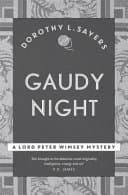
- Gaudy Night
Dorothy L. Sayers
4.2 (23k) average on GoodreadsHistorical FictionSayers' novel presents a single, extended mystery with deep psychological and philosophical exploration, focusing on character development and intellectual debate within an academic setting, contrasting sharply with Christie's episodic, plot-centric approach in 'The Labours of Hercules'.
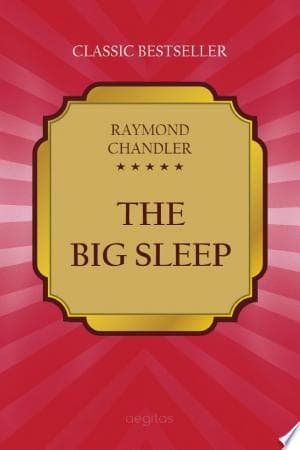
- The Big Sleep
Raymond Chandler
4.0 (126k) average on GoodreadsThrillerChandler's work exemplifies hard-boiled detective fiction, featuring a gritty, morally ambiguous world, complex character motivations, and a more visceral narrative style. This stands in contrast to Poirot's cerebral, often contained investigations and Christie's focus on intricate puzzle construction over atmospheric realism in 'The Labours of Hercules'.
- Angels & Demons
Dan Brown
3.9 (2.7M) average on GoodreadsThrillerA Harvard symbologist races through Rome's ancient sites, deciphering cryptic clues to unmask the Illuminati and stop a vengeful plot to destroy the Vatican with a stolen antimatter weapon.
- Gone Girl
Gillian Flynn
4.1 (2.3M) average on GoodreadsThrillerA wife's sudden disappearance on her fifth anniversary reveals a web of lies and psychological warfare, exposing the secrets within a seemingly perfect marriage.




Enjoyed the summary?
A summary gives you the shape of the book. The book itself has the detail, the examples and the voice.
Find The Labours of Hercules on AmazonAs an Amazon Associate, BookBrief earns from qualifying purchases. How we're funded