

Core Idea
- Difficulty
- Medium
- Read it if
- You are fascinated by extreme self-sufficiency, counter-cultural lifestyles, the American ideal of rugged individualism, or the complex psychology of individuals who defy societal norms.
- Skip it if
- You prefer straightforward narratives without delving into the ambiguities and complexities of unconventional lives, or you're not interested in detailed biographical accounts.
Key Takeaways from The Last American Man
The Myth of the Modern Man
Eustace Conway embodies a primal masculinity lost in contemporary society.
Gilbert shows Eustace Conway not just as an unusual person, but as a strong symbol challenging modern ideas of American manhood. In a society focused on consumption, comfort, and office work, Eustace offers a clear alternative: a man who builds his life directly from the land, using old skills and strong physical and mental endurance. This 'last American man' type forces a look at the perceived weakening of modern men, asking questions about the value of self-reliance, toughness, and a direct connection to nature versus the conveniences of contemporary life. He reflects what many feel men should be, but rarely achieve in a domesticated world.
“Eustace is a living, breathing anachronism, a man who has deliberately chosen to inhabit a world that most of us have long since abandoned, or perhaps never even known.”
In the book: Eustace's entire life choices, such as living in the Appalachian Mountains since age 17, building his own home, making fire with sticks, and wearing animal skins he trapped, serve as evidence of his deliberate rejection of modern societal norms.
Try this: Reflect on areas in your life where you've outsourced essential skills or comforts. Consider learning a basic survival skill (e.g., knot-tying, fire-starting) or engaging in an activity that requires physical labor and direct interaction with the natural world to cultivate a deeper sense of self-reliance and primal connection.
Related ideas: primal-masculinity, self-sufficiency, nature-connection
The Burden of Idealism
Living an uncompromising vision can isolate and alienate, even when noble.
Eustace Conway's firm commitment to his ideals—a return to nature, a rejection of materialism, and the preservation of old skills—is both his greatest strength and his deepest flaw. While inspiring, this absolute stance often leads to isolation and difficulty connecting with others who do not share his extreme dedication. His vision, though admirable, is so complete that it creates a gap between himself and the people he wants to influence. Gilbert highlights the irony that while his life is a powerful statement, its very extremity makes it hard for others to fully accept or understand, leading to a life of often lonely struggle against modern trends.
“To be Eustace Conway is to be perpetually, magnificently, and sometimes tragically, alone in his vision.”
In the book: Gilbert details Eustace's struggles with romantic relationships, his difficulties in managing his land (Turtle Island Preserve) due to a lack of consistent, like-minded help, and his often frustrated attempts to communicate his philosophy to a broader, less committed audience.
Try this: Examine your own deeply held beliefs. How can you advocate for them effectively without alienating potential allies? Consider finding common ground or scaling down your ideals into more digestible, actionable steps for others, rather than demanding full conversion to your absolute vision.
Related ideas: uncompromising-ideals, solitude, visionary-struggle
The Wilderness as a Teacher
Nature provides a harsh but essential education in resilience and self-reliance.
For Eustace Conway, the Appalachian wilderness is not just a place to live, but his ultimate school and spiritual guide. It is a demanding teacher that requires constant learning, adaptation, and a close understanding of its rhythms and dangers. Through direct interaction with nature—hunting, trapping, building, surviving—Eustace has gained unmatched practical intelligence and physical strength. This point emphasizes how the challenges of the wild remove superficial concerns, forcing a person to face their true abilities and limits, creating a deep sense of self-reliance often missing in more protected settings. It is an education in cause and effect, where mistakes have immediate, real consequences.
“The woods don't care who you are, or what you think you are. They just are. And you either adapt, or you perish.”
In the book: Gilbert recounts numerous anecdotes of Eustace's survival skills, his encyclopedic knowledge of flora and fauna, his ability to build shelter and find food in extreme conditions, and the many injuries and hardships he endured as part of his learning process in the wilderness.
Try this: Seek out opportunities to challenge yourself physically and mentally in nature. Go on a multi-day hike, learn basic bushcraft, or spend time intentionally disconnected from modern conveniences in a natural setting. Observe how these experiences reshape your perspective on comfort, necessity, and your own capabilities.
Related ideas: nature-education, resilience, bushcraft, survival-skills
The Price of Authenticity
Living truly to oneself often means rejecting societal approval and comfort.
Eustace Conway's life is a radical act of authenticity. He has deliberately chosen a path that directly opposes the mainstream American dream, prioritizing a perceived 'realness' and connection to older ways over money, social status, or even personal comfort. This choice comes at a high price: constant struggle, financial insecurity, misunderstanding from his family and society, and feeling like an outsider. Gilbert explores how true authenticity often requires great courage to defy common expectations and endure the discomfort and criticism that follow. It is a strong statement that living a life aligned with one's deepest values often means sacrificing external approval and choosing a harder, less common path.
“Eustace chose to be real. And being real, in this world, is almost always a painful, lonely business.”
In the book: Gilbert details Eustace's strained relationship with his family, who struggle to understand his choices; his perpetual lack of money despite his strenuous work; and the legal battles he faced over his land use, all stemming from his refusal to conform to societal norms.
Try this: Identify one area in your life where you feel pressured to conform or compromise your values. Take a small, deliberate step towards aligning that area more closely with your authentic self, even if it means facing minor discomfort or disapproval from others. Reflect on the feeling of liberation that comes with this authenticity.
Related ideas: authenticity, non-conformity, personal-values, societal-pressure
The Entrepreneurial Spirit of Survival
Survival in the wild, or in a niche, demands constant innovation and resourcefulness.
Beyond simply living off the land, Eustace Conway shows a remarkable entrepreneurial spirit, applied to traditional skills and self-sufficiency. He does not just survive; he actively creates, manages, and tries to spread his vision through projects like Turtle Island Preserve. This requires great ingenuity, problem-solving, and the ability to use limited resources effectively. Whether finding new ways to build structures, manage animals, or earn income through teaching, Eustace consistently shows a proactive, resourceful mindset. This point highlights that the 'last American man' is not just a passive hermit, but an active creator of his own alternative economy and lifestyle, always adapting within his chosen framework.
“He was not just surviving; he was building an empire of self-reliance, piece by painstaking piece.”
In the book: Gilbert describes Eustace's efforts to establish Turtle Island Preserve as a non-profit educational center, his diverse income streams from teaching, selling crafts, and lecturing, and his constant projects to build infrastructure on his land using traditional methods.
Try this: Think of a skill or resource you have, however small. How can you creatively leverage it to solve a problem or create value in an unconventional way? Practice 'scarcity mindset' problem-solving: given minimal resources, how would you achieve a specific goal?
Related ideas: resourcefulness, innovation, alternative-economy, self-made
The Complicated Legacy of Mentorship
Visionaries can inspire deeply but also demand intensely, creating complex relationships.
Eustace Conway, despite his solitary nature, attracts many to his cause, especially young people looking for an alternative path. He acts as a mentor, teacher, and guide, sharing valuable skills and a deep philosophy. However, Gilbert reveals the complex and often difficult nature of these relationships. Eustace's intensity, high expectations, and sometimes unpredictable personality can be overwhelming, leading to many apprentices and volunteers leaving. This point explores the dual nature of powerful mentors: their ability to change lives through their vision and knowledge, and the challenge of dealing with their demanding, sometimes uncompromising, personalities. It shows that inspiration often comes with difficulties, and that following a visionary path is rarely easy.
“To be Eustace's student was to be both endlessly inspired and eternally frustrated.”
In the book: Gilbert details the experiences of numerous apprentices at Turtle Island Preserve, their initial awe and dedication, followed by their struggles with Eustace's demanding nature, his relentless work ethic, and his often-unconventional communication style, leading many to eventually leave.
Try this: If you are a mentor, reflect on how you can inspire without overwhelming, and how to balance high expectations with empathy. If you seek mentorship, consider the 'whole package' of a mentor – their strengths and their challenging traits – and how you can best learn while maintaining your own boundaries and well-being.
Related ideas: mentorship-challenges, visionary-leadership, apprenticeship, guru-complex
The Search for Meaning Beyond Materialism
True fulfillment often lies in purpose and connection, not possessions.
At its core, Eustace Conway's life is a radical experiment in finding meaning outside consumerism. He actively rejects accumulating wealth and possessions, arguing that true freedom and fulfillment come from self-sufficiency, a deep connection to the earth, and living with purpose. Gilbert highlights how this pursuit of a 'rich' life, defined by experience and skill rather than material goods, offers a strong critique of modern society's constant push for more. It prompts readers to question their own ideas of success and happiness, suggesting that pursuing external markers often distracts from basic human needs for belonging, competence, and contribution. His life is an example of extreme voluntary simplicity.
“He chose hunger over comfort, hard work over ease, purpose over pleasure. And he called it freedom.”
In the book: Eustace's simple living conditions, his lack of conventional employment, and his consistent rhetoric against materialism and consumerism, all demonstrate his philosophical stance that meaning is found in purpose and connection, not possessions.
Try this: Conduct a 'material audit' of your own life. Identify three possessions you could live without for a month. Reflect on how much time, energy, and money you dedicate to acquiring and maintaining possessions. Explore opportunities to invest more in experiences, skills, or relationships.
Related ideas: anti-consumerism, voluntary-simplicity, purpose-driven-life, existential-meaning
The Perpetual Outsider's Paradox
To radically challenge norms is to forever exist on the fringes of society.
Eustace Conway's deliberate choice to live as a 'last American man' makes him a perpetual outsider. While he seeks to influence and inspire, his extreme lifestyle and absolute beliefs naturally separate him from the mainstream. This creates a paradox: he is a symbol of an alternative, yet his very existence makes him hard for those he wants to reach to fully understand or integrate. Gilbert explores the loneliness and misunderstanding that come with being a radical non-conformist. His life shows that while being an outsider can offer a unique perspective and a strong voice, it also means navigating a world not built for you, often leading to conflict, legal battles, and a constant fight for acceptance on his own terms.
“He was a man out of time, and out of place, even in his own time and place.”
In the book: Gilbert details Eustace's ongoing battles with local authorities over building codes and land use at Turtle Island Preserve, his struggles to maintain funding, and the general bewilderment and occasional hostility he encounters from people who don't understand his way of life.
Try this: Consider a time you felt like an outsider due to your beliefs or lifestyle. How did you navigate that feeling? Embrace your unique perspectives, but also identify strategies to bridge gaps in understanding with those who hold different views, without compromising your core values.
Related ideas: non-conformist, social-alienation, radical-lifestyle, fringe-existence
The Romanticism and Reality of Nature
Nature is beautiful and harsh; idealizing it ignores its brutal demands.
Gilbert skillfully shows the tension between the romantic ideal of returning to nature and the often harsh realities of such a life. While Eustace's existence is appealing in its simplicity and connection to the earth, Gilbert does not shy away from showing the constant physical hardship, the endless work, the injuries, the cold, and the constant threat of failure. This point challenges readers to move beyond a surface appreciation of 'going green' or 'getting back to nature' and to confront the real demands and sacrifices involved. It reminds us that nature is not just a peaceful background but a powerful, indifferent force that requires great respect, skill, and resilience to truly thrive within it, correcting any naive ideas of pastoral bliss.
“There's a romance to the idea of living in the wild, but the reality is often cold, hungry, and dangerous.”
In the book: Gilbert extensively details Eustace's numerous injuries, the constant physical labor required to maintain his homestead, the challenges of sourcing food and water, and the harsh weather conditions he endures, painting a realistic picture of wilderness living.
Try this: If you're drawn to a 'back-to-nature' ideal, research the practical challenges involved. Spend time in nature in less-than-ideal conditions (e.g., camping in the rain, hiking in the cold) to gain a more realistic understanding of its demands before romanticizing a complete lifestyle change.
Related ideas: nature-realism, wilderness-challenges, romanticism-vs-reality, survival-hardship
The Last American Man Quotes
“Eustace wasn't trying to make a statement. He was making a life.”
“Every single thing he owns, he has either made with his own hands or found in the woods.”
“The price of freedom is eternal vigilance.”
“He believes that humans were meant to live in a certain way, and he is trying to get back to that way.”
“The forest is his library, his grocery store, his hardware store, his church.”
“He doesn't want to conquer nature; he wants to participate in it.”
“He is living out a myth, a dream, a fantasy of what a man could be.”
“His entire life is a constant, exhausting, exhilarating negotiation with the natural world.”
“The world he lives in is not a retreat from modernity, but an engagement with something much older and more fundamental.”
“He is a walking, talking, breathing anachronism.”
“He wants to teach people to live with their hands, their minds, and their hearts.”
“The greatest freedom is not to do what you want, but to want what you do.”
“He built his own house, he raised his own food, he made his own tools. He was his own economy.”
“He is a man who has taken the idea of self-sufficiency to its most logical, and perhaps most extreme, conclusion.”
Quiz
10 questions on the main ideas. Each answer comes with a short explanation.
Question 1
At what age did Eustace Conway leave his family's suburban home to move to the Appalachian Mountains?
- Fifteen
- Seventeen
- Nineteen
- Twenty-one
Show answer
B. Seventeen The book states that Eustace Conway left home in 1977 at the age of seventeen.
Question 2
What is one of Eustace Conway's primary methods for making fire, as described in the book?
- Using a lighter
- Using flint and steel
- Using sticks
- Using matches
Show answer
C. Using sticks The text explicitly mentions Eustace 'making fire with sticks' as part of his lifestyle.
Question 3
According to Elizabeth Gilbert, what does Eustace Conway's character challenge in terms of American identity?
- Our assumptions about traditional American cuisine
- Our assumptions about what it is to be a modern man in America
- Our assumptions about the role of government in conservation
- Our assumptions about the history of the Appalachian Mountains
Show answer
B. Our assumptions about what it is to be a modern man in America Gilbert states that Conway's 'mythical character challenges all our assumptions about what it is to be a modern man in America.'
Question 4
What is Eustace Conway's main message or goal that he tries to convince Americans of?
- To embrace technological advancements
- To move to urban centers for better opportunities
- To give up materialistic lifestyles and return to nature
- To invest more in suburban development
Show answer
C. To give up materialistic lifestyles and return to nature The book highlights Conway's efforts to 'convince Americans to give up their materialistic lifestyles and return with him back to nature.'
Question 5
How long had Eustace Conway been living in the Appalachian Mountains at the time Elizabeth Gilbert wrote about him?
- Less than a decade
- Approximately a decade
- More than two decades
- Nearly half a century
Show answer
C. More than two decades The summary states, 'For more than two decades he has lived there,' referring to his time in the Appalachians.
Question 6
What kind of clothing does Eustace Conway wear, reflecting his chosen lifestyle?
- Modern outdoor gear
- Hand-me-down clothes from his family
- Skins from animals he has trapped
- Uniforms from a survivalist organization
Show answer
C. Skins from animals he has trapped The book describes Eustace 'wearing skins from animals he has trapped' as part of his self-sufficient existence.
Question 7
Elizabeth Gilbert portrays Eustace Conway as a 'symbol' of what collective sentiment regarding American men?
- A symbol of how men should prioritize financial success
- A symbol of men's desire for global travel and adventure
- A symbol of much we feel how our men should be, but rarely are
- A symbol of the average American male's suburban contentment
Show answer
C. A symbol of much we feel how our men should be, but rarely are Gilbert concludes that Conway 'is a symbol of much we feel how our men should be, but rarely are.'
Question 8
Considering the context of the book, what broader societal critique does Eustace Conway's chosen lifestyle inherently offer?
- A critique of the American education system
- A critique of urban planning and infrastructure
- A critique of consumerism and modern societal disconnect from nature
- A critique of traditional family structures
Show answer
C. A critique of consumerism and modern societal disconnect from nature By advocating for giving up materialistic lifestyles and returning to nature, Conway's life is a direct critique of modern consumerism and the detachment from the natural world.
Question 9
What term does Elizabeth Gilbert use to describe Eustace Conway's character in the context of challenging assumptions about modern American male identity?
- Anachronistic figure
- Sociological anomaly
- Mythical character
- Historical reenactor
Show answer
C. Mythical character Gilbert refers to Conway as a 'mythical character' when discussing how he challenges assumptions about modern American male identity.
Question 10
How does Elizabeth Gilbert's role as an acclaimed author and journalist contribute to the book's examination of Eustace Conway?
- She provides a purely objective, academic analysis without personal reflection.
- Her background allows her to frame Conway's story within a broader discussion of contemporary American male identity.
- She focuses exclusively on the historical accuracy of Conway's ancestors.
- Her primary goal is to convince readers to adopt Conway's lifestyle.
Show answer
B. Her background allows her to frame Conway's story within a broader discussion of contemporary American male identity. As an acclaimed author and journalist, Gilbert is uniquely positioned to explore and frame Conway's individual story as a broader 'rousing examination of contemporary American male identity.'
The Last American Man FAQ
What is 'The Last American Man' about?
'The Last American Man' is a non-fiction book by Elizabeth Gilbert that explores the life of Eustace Conway, a man who left modern society at 17 to live off the land in the Appalachian Mountains. Gilbert uses Conway's story to examine contemporary American male identity and our relationship with nature and materialism.
Who is Eustace Conway?
Eustace Conway is the central figure of the book, a real-life individual who, in 1977, moved to the Appalachian Mountains to live a self-sufficient, primitive lifestyle. He is known for making fire with sticks, wearing animal skins, and advocating for a return to nature away from materialistic culture.
Does Eustace Conway's lifestyle work in modern America?
The book explores the complexities and challenges of Eustace Conway's commitment to a primitive lifestyle within modern America. While he has sustained himself for decades, the narrative delves into both the practicalities and the philosophical implications of his choices, prompting readers to consider their own relationship with society.
How does 'The Last American Man' differ from other biographies or memoirs?
Unlike traditional biographies, 'The Last American Man' uses Eustace Conway's life not just as a chronological account but as a lens through which Elizabeth Gilbert examines broader themes of American male identity, environmentalism, and societal values. It blends biographical detail with cultural commentary and Gilbert's own reflections.
What is the significance of Eustace Conway's character?
Gilbert presents Conway as a mythical character who challenges conventional assumptions about what it means to be a modern man in America. He symbolizes a longing for self-reliance and connection to nature that many feel is missing in contemporary society, representing an idealized yet often unattainable male archetype.
Is 'The Last American Man' a call to abandon modern life?
While the book details Eustace Conway's rejection of modern materialism, it is not necessarily a literal call for all readers to abandon their lives. Instead, it encourages reflection on our values, consumerism, and the potential benefits of reconnecting with nature and self-sufficiency, even in small ways.
What themes are explored in 'The Last American Man'?
Key themes include American male identity, the allure and challenges of living off the grid, environmentalism, materialism versus self-sufficiency, the search for authenticity, and the tension between individual freedom and societal expectations. Gilbert uses Conway's journey to illuminate these broader cultural discussions.
How does Elizabeth Gilbert portray Eustace Conway?
Gilbert portrays Eustace Conway with a nuanced perspective, acknowledging both his remarkable dedication and the complexities, contradictions, and sometimes frustrating aspects of his personality and mission. She presents him as a compelling, larger-than-life figure who provokes thought and discussion.
About the author

Elizabeth Gilbert is an American author known for her works that explore themes of self-discovery and creativity. Her notable books include "Eat, Pray, Love," a memoir about her journey of personal growth, "City of Girls," a novel set in 1940s New York, and "Big Magic: Creative Living Beyond Fear," which offers insights into the creative process. Other significant works include "The Signature of All Things" and "The Last American Man."
Similar books
- Into the Wild
Jon Krakauer
3.7 (2k) average on GoodreadsFantasyExplores a young man's radical rejection of society and quest for meaning in the wilderness, with tragic consequences.
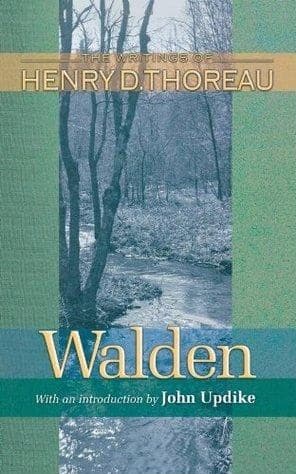
- Walden
Henry David Thoreau
3.8 (158k) average on GoodreadsBiographyA classic account of living simply and self-sufficiently in nature, reflecting on society and individualism.
- Educated
Tara Westover
4.5 (796k) average on GoodreadsBiographyA memoir about growing up in an isolated, survivalist family and the struggle for self-definition and education.
- Eat, Pray, Love
Elizabeth Gilbert
3.6 (1.5M) average on GoodreadsLifestyleA heartbroken writer leaves her conventional life for a year-long global search for pleasure in Italy, spiritual devotion in India, and unexpected love and balance in Bali.
- Wild: From Lost to Found on the Pacific Crest Trail
Cheryl Strayed
4.0 (615k) average on GoodreadsLifestyleAfter losing her mother and her marriage, a young woman impulsively hikes over a thousand miles of the Pacific Crest Trail alone, finding strength and healing in the unforgiving wilderness.
- Into Thin Air: A Personal Account of the Mount Everest Disaster
Jon Krakauer
4.2 (395k) average on GoodreadsLifestyleOn May 10, 1996, ambition and a sudden, violent storm turned Mount Everest into a deadly trap, leaving Jon Krakauer to tell the harrowing story of a disaster that took lives and shattered climbers' dreams.





Enjoyed the summary?
A summary gives you the shape of the book. The book itself has the detail, the examples and the voice.
Find The Last American Man on AmazonAs an Amazon Associate, BookBrief earns from qualifying purchases. How we're funded