

Core Idea
- Difficulty
- Easy
Key Takeaways from Wild
Grief's Uncharted Territory
Profound loss can propel radical self-discovery, even if the path is arduous and unplanned.
Strayed's journey on the PCT is less about the trail and more about her internal grief. The sudden death of her mother, whom she calls the 'love of her life,' shatters her sense of self and purpose. This loss unravels her marriage, family dynamics, and personal identity. The trail becomes a place where she confronts her sorrow, making her process emotions she had previously numbed with reckless behavior. This takeaway shows how extreme emotional pain can lead to an equally extreme, yet ultimately healing, personal quest.
“I was a tornado of grief, a grief that had no end. I was a child who had lost her mother, and I was a woman who had lost her way.”
In the book: The narrative consistently ties her physical struggles on the PCT directly to her emotional state, recounting flashbacks of her mother's illness and death and the subsequent dissolution of her family.
Try this: When facing overwhelming loss, consider unconventional or physically demanding methods of processing grief, allowing the body to participate in the healing process alongside the mind.
The Weight of the Pack
Metaphorically and literally, shedding unnecessary burdens is crucial for progress.
Strayed begins her hike with 'Monster,' a heavy, poorly packed backpack. This physical burden is a metaphor for the emotional weight she carries: unresolved grief, guilt, regret, and the wreckage of her relationships. As she discards items from her pack—books, extra clothing, a heavy shovel—she also lets go of emotional dead weight. This is one of the book's best insights, showing that true progress, both on a trail and in life, often means deliberately and sometimes painfully letting things go.
“I knew what I was doing was insane. I knew I was going to be carrying a pack that weighed more than I did, practically.”
In the book: Her detailed descriptions of the 'Monster' pack and the recurring theme of its weight, alongside specific instances of her mailing items home or discarding them.
Try this: Identify areas in your life where you are carrying metaphorical 'heavy packs'—unnecessary commitments, resentments, or possessions—and intentionally work to shed them to create space for forward movement.
The Kindness of Strangers
Despite profound isolation, unexpected human connection provides vital sustenance.
While Strayed's hike is a solo journey, she meets other hikers and 'trail angels.' These interactions, though brief, offer moments of rest, shared humanity, and practical help—food, water, advice, and emotional support. From the older woman who gives her a ride to the trail, to fellow hikers who share stories and laughter, these connections remind Strayed that she is not alone. This theme shows that even in independent pursuits, the human need for connection is essential for survival and well-being.
“The kindness of strangers, I thought, it’s a phrase that’s said so often it’s become a cliché, but it was true, it was true, it was true.”
In the book: Specific anecdotes like the couple who give her water in the desert, the 'trail angels' leaving supplies, and her interactions with other PCT hikers like 'Albert' and 'Greg.'
Try this: Actively seek and appreciate small acts of kindness from others, recognizing their profound impact, and be open to offering help to those you encounter on their own difficult paths.
Resilience Forged in Adversity
Physical and mental suffering on the trail builds an unshakeable inner strength.
Strayed faces constant physical challenges: heat, cold, hunger, thirst, injuries (especially her painful feet), and the monotony of walking for months. Her mental strength is tested by loneliness, fear, and self-doubt. The book details her internal battles, where giving up seems like the only rational choice. Yet, each obstacle overcome, each painful step endured, replaces her vulnerability with a sense of accomplishment and self-worth. This transformation shows how pushing past limits, even when driven by desperation, can unlock great inner strength.
“I was strong. I was a hiker. I was a woman who had lost her mother and found her way.”
In the book: Her graphic descriptions of her blistered, bloody feet; her struggles with hunger and dehydration; and her internal monologues about quitting versus continuing.
Try this: Embrace difficult challenges as opportunities to build resilience, recognizing that pushing through discomfort can reveal hidden strengths and a deeper capacity for endurance.
The Power of Narrative and Memory
Recalling and reframing past experiences is essential for healing and self-understanding.
As Strayed walks, her mind is full of memories—her mother, her childhood, her failed marriage, and her self-destructive behavior. The trail's solitude gives her space to revisit these moments, not as passive memories but as active narratives she begins to understand and reframe. She grapples with guilt, regret, and 'what-ifs,' eventually integrating these pieces of her past into a more coherent and forgiving understanding of herself. This internal processing is as important to her healing as the physical act of walking, showing how actively engaging with one's personal history can be therapeutic.
“I was a woman with a backpack, a woman with a past, a woman with a future that was as blank as the pages of a new book.”
In the book: The frequent flashbacks and internal monologues that intersperse the present-day narrative, detailing her past relationships and emotional struggles.
Try this: Dedicate time to reflective practices like journaling or meditation to consciously revisit and re-evaluate past experiences, allowing for new perspectives and emotional resolution.
Nature as Healer
Immersion in the wild offers profound spiritual and psychological restoration.
The PCT, with its varied landscapes, acts as a silent, powerful therapist. From California's deserts to Oregon's forests, nature becomes both a mirror and a balm for Strayed's fractured mind. Nature's vastness and indifference diminish her self-pity and put her suffering into perspective. The repetitive walking, constant exposure to the elements, and the beauty of her surroundings create a meditative state that allows for deep introspection and eventual peace. This is the book's central argument for nature's restorative power, suggesting that sometimes, to find ourselves, we must first get lost in something larger than ourselves.
“The wilderness had a way of stripping me bare, of forcing me to face myself in a way I never had before.”
In the book: Her lyrical descriptions of the landscapes, the sensory details of the wind, sun, and rain, and her explicit statements about feeling 'healed' by the natural world.
Try this: Regularly seek out opportunities for deep immersion in nature, even if it's just a local park or forest, to allow its restorative effects to quiet the mind and foster self-connection.
The Imperfection of Self-Improvement
Growth is messy and non-linear, not a pristine transformation.
Unlike many inspirational memoirs, 'Wild' does not show a clean, linear path of self-improvement. Strayed is often crude, makes poor decisions, and struggles intensely. Her internal thoughts are full of self-doubt and despair. She does not finish the trail as a perfectly reformed person, but as someone who has accepted her imperfections and found a way to carry them with grace. This portrayal of personal growth is refreshing and realistic, showing that healing is not about getting rid of flaws but about integrating them into a stronger, more authentic self. Some readers might want a more explicit guide for transformation, but the book's authenticity is its strength.
“I was a mess. A beautiful mess. And I was walking on. That was the point.”
In the book: Her admitted promiscuity, drug use, and moments of intense anger and self-pity, even while on the trail, demonstrate her imperfect journey.
Try this: Release the pressure to achieve perfect self-improvement; instead, embrace the messiness of growth, recognizing that progress often involves setbacks and a acceptance of one's ongoing imperfections.
Finding Purpose in Action
Committing to a difficult, tangible goal can re-anchor a life adrift.
Before the PCT, Strayed's life lacked direction, marked by impulsive decisions and a general sense of being lost. The decision to hike the PCT, despite its initial recklessness, gives her a concrete, though massive, goal. This singular focus—putting one foot in front of the other, day after day—gives her life structure and purpose when everything else has crumbled. The physical act of walking becomes a metaphor for moving forward through life's challenges, teaching her the value of perseverance and the satisfaction of achieving a difficult objective. This is the book's strongest insight into the practical side of recovery.
“I was going to walk myself into a new life. One step at a time.”
In the book: Her detailed daily logs of mileage, the constant focus on resupply points, and her unwavering commitment to reaching the Bridge of the Gods, despite immense pain.
Try this: When feeling lost or overwhelmed, identify a clear, challenging, and actionable goal to focus your energy on, allowing the pursuit of that goal to provide structure and meaning.
The Unpredictability of Life's Path
Embracing uncertainty and adapting to unforeseen circumstances is key to navigating life.
Strayed's journey is full of unpredictability: unexpected snow, dangerous river crossings, running out of water, encountering wildlife, and navigating confusing trail markers. Her initial lack of experience means she is constantly learning, making mistakes, and adapting. This mirrors life's unpredictable nature, especially when dealing with profound loss. The trail forces her to let go of control and embrace the unknown, teaching her to trust her instincts and improvise. This takeaway emphasizes that while planning is important, true mastery comes from the ability to respond flexibly and resourcefully to whatever challenges arise.
“The trail was a thousand miles of pure unpredictability. And I was learning to live with it.”
In the book: Her detailed accounts of navigating snowfields, struggling with river crossings, and making critical decisions about water and food rationing based on unforeseen conditions.
Try this: Cultivate flexibility and adaptability in your approach to life's challenges, practicing mindfulness to respond to unexpected events rather than rigidly adhering to initial plans.
The End is Just the Beginning
Completing a monumental journey marks a transformation, not a final destination.
Reaching the Bridge of the Gods, the symbolic end of her PCT section, is not a magical solution to all of Strayed's problems, but the culmination of a personal transformation. She does not return to a perfectly healed life, but to one she is now equipped to build and live authentically. The physical journey ends, but the internal journey of integration and self-discovery continues. This takeaway highlights that significant achievements, while transformative, are stepping stones to ongoing growth, rather than definitive endpoints. The 'found' aspect of the title refers not to finding a lost object, but to finding a lost self, ready to embark on a new chapter.
“I was not a girl anymore. I was a woman. And I was home.”
In the book: Her reflections on her changed perspective and sense of self at the end of the hike, and her subsequent decision to write about her experience, signaling a new direction in her life.
Try this: View significant accomplishments as catalysts for new beginnings and continued personal evolution, rather than as ultimate conclusions, always seeking the next step in your ongoing journey.
Quiz
10 questions on the main ideas. Each answer comes with a short explanation.
Question 1
What event prompted Cheryl Strayed to decide to hike the Pacific Crest Trail?
- She wanted to escape a bad relationship.
- Her mother's death and the subsequent scattering of her family and destruction of her marriage.
- She was seeking a new career path.
- She lost a bet with a friend.
Show answer
B. Her mother's death and the subsequent scattering of her family and destruction of her marriage. The text explicitly states that in the wake of her mother's death, her family scattered and her marriage was destroyed, leading to her decision.
Question 2
How much experience did Cheryl Strayed have with hiking or training before embarking on the Pacific Crest Trail hike?
- She was an experienced thru-hiker with years of training.
- She had completed several shorter trails to prepare.
- She had no experience or training.
- She had some basic camping experience but no formal training.
Show answer
C. She had no experience or training. The book description clearly states, 'With no experience or training, driven only by blind will, she would hike more than a thousand miles.'
Question 3
What was the primary motivation mentioned for Cheryl's impulsive decision to hike the PCT?
- A desire for adventure and exploration.
- To prove to herself and others that she could.
- She felt she had 'nothing more to lose'.
- A promise she made to her mother.
Show answer
C. She felt she had 'nothing more to lose'. The text states, 'Four years later, with nothing more to lose, she made the most impulsive decision of her life.'
Question 4
Which geographical areas did the Pacific Crest Trail hike traverse, according to the provided text?
- California, Oregon, and Washington State.
- Nevada, Utah, and Idaho.
- Arizona, California, and New Mexico.
- Oregon, Washington, and British Columbia.
Show answer
A. California, Oregon, and Washington State. The text specifies the trail went 'from the Mojave Desert through California and Oregon to Washington State'.
Question 5
What is the approximate length of the Pacific Crest Trail hike described in the book?
- Hundreds of miles.
- Exactly one thousand miles.
- More than a thousand miles.
- Thousands of miles.
Show answer
C. More than a thousand miles. The description mentions she would 'hike more than a thousand miles of the Pacific Crest Trail'.
Question 6
The book 'Wild' is described as a:
- Fiction novel.
- Historical account.
- Fantasy adventure.
- Memoir.
Show answer
D. Memoir. The genre is explicitly listed as 'Biography, Memoir'.
Question 7
Which of the following characteristics are used to describe Cheryl Strayed's storytelling in 'Wild'?
- Dry and factual.
- Suspenseful and stylish, with warmth and humor.
- Detached and analytical.
- Overly sentimental and dramatic.
Show answer
B. Suspenseful and stylish, with warmth and humor. The text states, 'Told with suspense and style, sparkling with warmth and humor...'.
Question 8
What was the ultimate outcome of Cheryl Strayed's journey on the Pacific Crest Trail, as described in the summary?
- She became disillusioned and gave up on her dreams.
- She found financial success and a new career.
- The journey maddened, strengthened, and ultimately healed her.
- She realized she was not cut out for solo adventures.
Show answer
C. The journey maddened, strengthened, and ultimately healed her. The summary concludes by saying the journey 'maddened, strengthened, and ultimately healed her'.
Question 9
The phrase 'driven only by blind will' suggests that Cheryl's decision to hike the PCT was primarily fueled by:
- A meticulously planned strategy.
- Rational decision-making and preparation.
- An intense, perhaps irrational, determination.
- The support and encouragement of experienced mentors.
Show answer
C. An intense, perhaps irrational, determination. 'Blind will' implies a strong, almost unthinking determination, contrasting with careful planning or rational thought.
Question 10
Considering the context of her personal losses and the arduous nature of the hike, what does the phrase 'nothing more to lose' imply about Cheryl's state of mind?
- She had achieved all her life goals.
- She was financially secure and content.
- She felt she had reached a point of extreme emotional or personal devastation.
- She was looking forward to a period of relaxation and ease.
Show answer
C. She felt she had reached a point of extreme emotional or personal devastation. Coupled with the description of her mother's death and destroyed marriage, 'nothing more to lose' signifies a deep sense of despair and a feeling that she had hit rock bottom.
Wild FAQ
What is Wild by Cheryl Strayed about?
Wild is a memoir by Cheryl Strayed detailing her solo hike along the Pacific Crest Trail after a period of personal tragedy. It explores themes of loss, resilience, and self-discovery as she navigates the challenges of the trail and her own internal struggles.
What is the Pacific Crest Trail?
The Pacific Crest Trail (PCT) is a long-distance hiking trail that runs roughly 2,650 miles (4,265 kilometers) between the U.S. borders with Mexico and Canada. It traverses diverse landscapes, including deserts, forests, and mountains, across California, Oregon, and Washington.
Why did Cheryl Strayed hike the PCT?
Cheryl Strayed decided to hike the PCT impulsively after experiencing the death of her mother, the dissolution of her family, and the end of her marriage. She felt she had nothing left to lose and sought a transformative challenge.
Did Cheryl Strayed have hiking experience before the PCT?
No, Cheryl Strayed had no prior hiking experience or training before embarking on the Pacific Crest Trail. Her decision was driven by sheer will and a desire to push her limits.
What are the main themes in Wild?
The main themes in Wild include grief, loss, healing, resilience, self-reliance, and the transformative power of nature and physical challenges. It's a story about confronting personal demons and finding strength in solitude.
Is Wild a true story?
Yes, Wild is a true story and a memoir. It is Cheryl Strayed's personal account of her experiences hiking the Pacific Crest Trail.
What kind of challenges did Cheryl face on the PCT?
Cheryl faced numerous challenges, including extreme weather, difficult terrain, physical exhaustion, lack of experience, and her own emotional and mental struggles. She also dealt with the isolation and dangers inherent in solo hiking.
How long did it take Cheryl to hike the PCT?
Cheryl Strayed hiked approximately 1,100 miles of the Pacific Crest Trail. While the book doesn't specify the exact duration of her hike, the journey took place over several months.
What is the tone of Wild?
The tone of Wild is often described as raw, honest, and introspective, but it is also infused with warmth, humor, and moments of profound beauty. Strayed's writing style is engaging and powerful.
Is Wild a good book for people interested in hiking?
Yes, Wild is highly recommended for people interested in hiking, especially long-distance trails. It offers a realistic, albeit challenging, portrayal of the PCT experience and the mental fortitude required for such a journey.
About the author

Cheryl Strayed is the author of the critically acclaimed memoir "Wild: From Lost to Found on the Pacific Crest Trail," which was adapted into an Oscar-nominated film. She also penned the bestselling books "Tiny Beautiful Things" and "Brave Enough." Strayed is a former columnist for The Washington Post's "Dear Sugar" advice column and a contributing editor for "The Sun" magazine.
Similar books
- A Walk in the Woods: Rediscovering America on the Appalachian Trail
Bill Bryson
4.1 (346k) average on GoodreadsLifestyleWhile both "Wild" and "A Walk in the Woods" chronicle long-distance trail hikes, their tones and purposes differ significantly. Bryson's book is primarily a humorous and informative account of the Appalachian Trail, focusing on its history, ecology, and the comical misadventures of himself and his hiking partner. It's rich in factual detail and witty observations. "Wild," in contrast, is deeply personal and emotionally driven, using the PCT as a vehicle for profound psychological transformation. While Bryson seeks to understand the trail and its place in American culture, Strayed seeks to understand herself and heal from personal trauma. Bryson's narrative is observational and often detached, whereas Strayed's is immersive and intensely intimate.
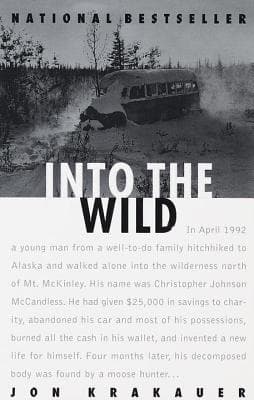
- Into the Wild
Jon Krakauer
3.7 (2k) average on GoodreadsFantasy"Wild" and "Into the Wild" both explore individuals seeking escape and self-discovery in the wilderness, but they diverge dramatically in outcome and perspective. Krakauer's book is a journalistic investigation into the life and death of Christopher McCandless, a young man who ventured into the Alaskan wilderness with tragic results. It's a cautionary tale, examining themes of idealism, hubris, and the unforgiving nature of the wild. Strayed's journey, while challenging, ultimately leads to survival and profound personal growth. While both protagonists exhibit a strong desire for independence and a rejection of societal norms, Strayed's narrative is one of overcoming adversity and finding a way back to life, whereas McCandless's is one of ultimate sacrifice. Krakauer's approach is objective and analytical, while Strayed's is subjective and experiential.
- Eat, Pray, Love
Elizabeth Gilbert
3.6 (1.5M) average on GoodreadsLifestyleA heartbroken writer leaves her conventional life for a year-long global search for pleasure in Italy, spiritual devotion in India, and unexpected love and balance in Bali.
- Into Thin Air: A Personal Account of the Mount Everest Disaster
Jon Krakauer
4.2 (395k) average on GoodreadsLifestyleOn May 10, 1996, ambition and a sudden, violent storm turned Mount Everest into a deadly trap, leaving Jon Krakauer to tell the harrowing story of a disaster that took lives and shattered climbers' dreams.
- On The Road
Jack Kerouac
3.6 (349k) average on GoodreadsLifestyleDean Moriarty and Sal Paradise go on a wild, cross-country trip with jazz, drugs, and a desperate search for meaning on America's post-war roads.
- Three Cups of Tea: One Man's Mission to Promote Peace ... One School at a Time
Greg Mortenson
3.6 (326k) average on GoodreadsLifestyleA lost mountaineer's promise to build a school for impoverished villagers grows into a decade-long, dangerous effort to educate girls in Taliban territory, showing one person's dedication can build peace.





Enjoyed the summary?
A summary gives you the shape of the book. The book itself has the detail, the examples and the voice.
Find Wild on AmazonAs an Amazon Associate, BookBrief earns from qualifying purchases. How we're funded