
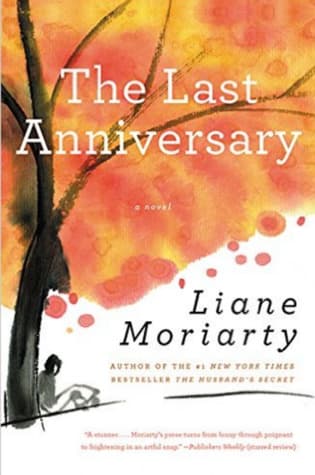
Synopsis
Covers the whole plot, including the ending.
- Difficulty
- Easy
- Pacing
- Moderate
- Mood
- Intriguing, Humorous, Heartwarming, Mysterious
- Read it if
- You enjoy character-driven mysteries with a strong focus on family dynamics, quirky characters, and a touch of romance, all set in a charming island community.
- Skip it if
- You prefer fast-paced thrillers or mysteries with clear-cut villains and less emphasis on domestic drama and personal growth.
The Last Anniversary Plot Summary
Covers the whole plot, including the ending.
An Unexpected Inheritance and a Mysterious Island
Sophie Honeywell, a single woman in her late thirties, gets an unexpected letter. It says she inherited Connie Gordon's house on Scribbly Gum Island. Connie was the sister of Thomas Gordon's grandmother, and Thomas was Sophie's ex-boyfriend, whom she regrets leaving years ago. The island is known for the unsolved Munro Baby mystery from 1959, where a baby, Alice, was found alone after her parents, Hugo and Electra Munro, disappeared. The island now has the remaining Gordon family: Thomas, his wife Sylvia, his grandmother Rose, his cousin Grace and her husband Callum and their two daughters, and his cousin Margie and her husband Lyle. Sophie, interested in the mystery and a chance to change her life, decides to move to the old house on Scribbly Gum Island. The Gordon family reacts with initial surprise and mixed feelings.
Settling into Island Life and Family Secrets
Sophie arrives on Scribbly Gum Island and immediately experiences the Gordon family's unusual ways. She meets the elegant but quiet Rose, the seemingly perfect Grace who secretly plans to leave, and the plain Margie who has her own strange secrets. Thomas and his wife Sylvia also live on the island. Sophie finds herself reconnecting with Thomas, which brings back old feelings. The islanders are obsessed with the Munro Baby mystery. Sophie quickly learns that Connie, who left her the house, was a key person in the mystery's long-standing story, being one of the first to find the baby. As Sophie starts renovating Connie's house, she finds old letters, photographs, and journals that suggest deeper links between the Gordon family and the Munro tragedy. This indicates the official story might not be complete.
Grace's Desperate Plan Unfolds
Grace, who appears to have a perfect life with her husband Callum and their two daughters, Gabi and Lola, secretly plans to disappear completely. She has saved money, bought a new identity, and arranged for a boat to take her away, leaving everything behind. She feels trapped and overwhelmed by motherhood and marriage, wanting individual freedom she believes she has lost. She tells her aunt Rose her plan. Rose is shocked but eventually understands. Grace's desperation shows a darker side beneath the island's calm surface, revealing that even content lives can hide deep unhappiness and a wish to escape.
Margie's Secret Pact and Financial Woes
Margie, often overlooked and feeling inferior to her glamorous cousin Grace, has money problems. Her husband, Lyle, made bad investments, and they are deep in debt. Margie has secretly agreed to sell a valuable painting belonging to the family, a painting once owned by Hugo Munro. This deal with a mysterious stranger adds more complexity to the family's secrets. Margie acts out of a desperate wish to protect her family and solve their financial issues, even if it means betraying family trust. Her story shows desperation and how far people will go for loved ones, contrasting with Grace's more self-focused pursuit of freedom.
Sophie's Growing Connection to the Past
As Sophie continues to look through Connie's things, she finds more direct evidence linking the Gordon family to the Munro Baby mystery. She discovers old photographs, diary entries, and letters that suggest Connie, Rose, and Verity (Thomas's deceased mother) knew more about the Munros' disappearance than they ever said. The mystery becomes less about a random unsolved case and more about a deeply hidden family secret. Sophie's renovation project accidentally brings up old memories and worries among the Gordons, especially Rose, who gets more upset by Sophie's questions. Sophie also finds herself growing closer to Thomas again, despite his marriage, which complicates her personal life alongside her detective work.
The Truth About the Munro Baby
During a very intense talk, the elderly Rose finally breaks down and tells the truth about the Munro Baby mystery. She confesses that she is Alice Munro, the baby found alone. Her biological parents, Hugo and Electra Munro, were murdered by Connie Gordon. Connie, who had a secret romantic obsession with Hugo, became angry when he rejected her and was about to leave Electra for another woman. In a fit of passion and jealousy, Connie killed them both. Rose was then raised by the Gordon family, who kept the secret to protect Connie and themselves from scandal and legal trouble. This discovery shatters the long-held story of the mysterious disappearance and explains the Gordon family's deep secrets and worries about the case.
Connie's Motive and the Family's Complicity
Rose explains Connie's dark secret in more detail. She says Connie was deeply in love with Hugo Munro. When Connie found out he planned to leave Electra, not for her, but for another woman, her jealousy and possessiveness led to murder. After killing Hugo and Electra, Connie brought baby Alice (Rose) back to the Gordon house. The rest of the family, including Rose's adoptive parents and Verity, were horrified. However, they decided to cover up the crime to protect Connie and prevent a scandal that would ruin their lives. They raised Alice as their own, never telling her the truth until now. This reveals the deep moral compromises the family made and the heavy burden of a secret carried for decades, affecting generations.
Grace's Escape and Its Aftermath
Grace begins her planned escape. She leaves her daughters a note, planning to board a boat and disappear. However, her plan fails when Callum, who suspected something, follows her. A dramatic confrontation happens, and Grace faces the reality of what she is doing and the pain she would cause her children. The intensity of the situation, plus the Munro mystery revelation, makes Grace rethink her choices. She realizes that true freedom might not mean physical escape but confronting her unhappiness and finding ways to combine her desire for individuality with her responsibilities as a mother. She decides to stay, starting the difficult process of fixing her life and relationship with Callum.
Margie's Painting and Resolution
Margie's plan to sell the valuable Munro painting moves forward, but the buyer is less trustworthy than she hoped. The painting, a key piece of evidence in the Munro mystery, is almost lost. However, with the truth about the Munro mystery now out, the painting's meaning changes. It is eventually returned. The family, now dealing with their shared trauma, supports Margie. The financial stress on Margie and Lyle is solved, not by selling the painting, but by a collective effort and new honesty within the family. Margie finds a sense of belonging and worth she lacked, realizing her family values her and she doesn't need desperate measures to feel worthy.
Sophie's New Beginning and Self-Discovery
With the Munro mystery solved and the Gordon family healing, Sophie thinks about her own life. She realizes her initial attraction to Thomas was tied to a past she needed to let go of. While she still cares for him, she understands he is not her future. Instead, Sophie finds new purpose and independence on Scribbly Gum Island. She decides to stay, embracing her new home and its unique community. She starts a small business, using her skills to help others, and makes new friends. Sophie learns that her 'fairy-tale ending' doesn't need a man to complete it, but rather self-acceptance, courage, and creating a life that truly fulfills her, on her own terms.
Principal Figures
Sophie Honeywell
Protagonist
A single woman who inherits a house on Scribbly Gum Island, seeking a new direction in life.
Sophie is in her late thirties, often feeling stuck and regretful about past romantic decisions, particularly breaking up with Thomas Gordon. She is observant, empathetic, and possesses a quiet determination. Her inheritance of Connie's house acts as a catalyst for her to confront her own stagnation and delve into the island's secrets. She is initially drawn to the idea of rekindling things with Thomas, but ultimately finds her own path to happiness and independence. She is a keen observer of human nature and becomes the primary investigator of the Munro mystery, piecing together clues from Connie's house.
Relationships: Thomas Gordon (Ex-boyfriend, complicated feelings); Connie Gordon (Great-aunt, benefactor, source of mystery); Grace Gordon (Cousin-in-law, friend); Margie Gordon (Cousin-in-law, friend)
Thomas Gordon
Supporting
Sophie's ex-boyfriend, now married to Sylvia, living on Scribbly Gum Island.
Thomas is a kind, somewhat melancholic man, married to Sylvia. He was deeply hurt by Sophie's past rejection and carries a quiet sadness. He is a responsible and loving father to his children. While there's an undeniable spark between him and Sophie upon her return, he remains committed to his family. He represents a 'what if' for Sophie, but also a stable, if somewhat resigned, life he has built. He is part of the generation removed from the direct secret but still affected by the family's unspoken history.
Relationships: Sophie Honeywell (Ex-boyfriend, object of her regret); Sylvia Gordon (Wife); Rose Gordon (Grandmother)
Grace Gordon
Supporting
A beautiful young mother planning a secret escape from her seemingly perfect life.
Grace appears to have it all: a loving husband, two beautiful daughters, and a comfortable life. However, beneath the surface, she feels suffocated and trapped by the demands of motherhood and domesticity. She meticulously plans to abandon her family and start a new life under a different identity, driven by a deep yearning for individuality and freedom. Her storyline explores the pressures on women and the conflict between personal desires and societal expectations. She is a complex character whose actions, though extreme, stem from a relatable sense of overwhelm.
Relationships: Callum (Husband); Gabi & Lola (Daughters); Rose Gordon (Aunt); Sophie Honeywell (Cousin-in-law, friend)
Margie Gordon
Supporting
A frumpy housewife secretly selling a valuable painting to solve her family's financial problems.
Margie often feels overshadowed and unappreciated within the Gordon family. She is struggling with her husband Lyle's poor financial decisions, leading to significant debt. Desperate to protect her family, she secretly arranges to sell a valuable painting once owned by Hugo Munro. Margie is kind-hearted but insecure, and her actions are driven by a deep sense of loyalty and a desire to prove her worth. Her story highlights the quiet struggles many individuals face and the lengths they will go to for their loved ones.
Relationships: Lyle (Husband); Rose Gordon (Cousin-in-law); Sophie Honeywell (Cousin-in-law, friend)
Rose Gordon
Supporting
The elderly matriarch of the Gordon family, who holds the key to the Munro Baby mystery.
Rose is initially portrayed as a dreamy, somewhat eccentric old woman, but she carries the heaviest burden of the Gordon family's secret. She is revealed to be Alice Munro, the 'Munro Baby,' who was adopted and raised by the Gordons after her parents' murder. Her quiet demeanor hides decades of trauma and complicity in the cover-up. She is fiercely protective of her family and has lived with the weight of the truth for most of her life. Her eventual confession is the turning point of the entire mystery.
Relationships: Connie Gordon (Adoptive aunt, murderer of her biological parents); Thomas Gordon (Grandson); Grace Gordon (Adoptive niece); Margie Gordon (Adoptive niece-in-law)
Connie Gordon
Mentioned/Catalyst
Sophie's benefactor and the true murderer in the Munro Baby mystery.
Connie is deceased before the start of the novel, but her presence is felt throughout as the owner of the inherited house and a central figure in the Munro Baby mystery. She was Rose's adoptive aunt and the biological sister of Verity, Thomas's mother. Connie was a complex and passionate woman, secretly obsessed with Hugo Munro. Her jealousy and rage led her to murder Hugo and Electra Munro, initiating the decades-long cover-up. Her legacy is the house, the mystery, and the profound impact she had on the Gordon family.
Relationships: Rose Gordon (Adoptive aunt, murderer of Rose's biological parents); Hugo Munro (Object of unrequited love)
Sylvia Gordon
Supporting
Thomas Gordon's wife, a travel agent.
Sylvia is Thomas's wife, whom he married a year after Sophie broke his heart. She is practical and somewhat reserved, aware of the history between Thomas and Sophie, which makes their interactions a bit tense. She is a devoted wife and mother, representing the life Thomas chose after Sophie. Her presence highlights Sophie's lingering regrets and the reality that Thomas has moved on.
Relationships: Thomas Gordon (Wife); Sophie Honeywell (Husband's ex-girlfriend)
Callum
Supporting
Grace's devoted but oblivious husband.
Callum is Grace's husband and the father of their two daughters. He is a loving and dedicated family man, generally unaware of the depth of Grace's unhappiness and her secret plans to leave. He represents the well-meaning partner who struggles to understand the complexities of his wife's inner world. His eventual discovery of Grace's plan leads to a painful but necessary confrontation, forcing them both to address their marital issues.
Relationships: Grace Gordon (Husband); Gabi & Lola (Daughters)
Lyle
Supporting
Margie's husband, whose poor financial decisions cause distress.
Lyle is Margie's husband, whose failed business ventures and poor financial management have plunged their family into debt. He is well-meaning but somewhat inept, relying on Margie to navigate their financial difficulties. His actions are the catalyst for Margie's desperate plan to sell the painting, highlighting the strain financial pressures can put on relationships and individual integrity.
Relationships: Margie Gordon (Husband)
Hugo Munro
Mentioned
The murdered father of Alice Munro (Rose) and Connie's unrequited love.
Hugo Munro is a central figure in the mystery, though he is deceased before the novel begins. He was the charming and attractive father of Alice Munro and the object of Connie Gordon's intense, unrequited affection. His decision to leave his wife, Electra, for another woman, not Connie, ultimately led to his and Electra's murder at Connie's hands. His story is pieced together through old letters and recollections, revealing him as the catalyst for the entire tragedy.
Relationships: Electra Munro (Wife, co-victim); Connie Gordon (Obsessed admirer, murderer)
Themes & Insights
Identity and Self-Discovery
The novel looks at how characters define themselves and find personal happiness. Sophie, feeling lost, uses the inheritance to redefine her life beyond past regrets and find her own path on the island. Grace struggles with her identity as a mother versus her desire for individual freedom, leading her to consider leaving her family. Rose's entire identity rests on a lie, and her confession lets her finally live honestly. The characters' journeys show how people constantly change and the courage needed to embrace one's true desires.
“Sometimes you have to stop waiting around -- and come up with your own fairy-tale ending.”
Secrets and Their Consequences
The entire plot centers on the decades-old Munro Baby mystery secret, which has greatly shaped the Gordon family. Connie's murder secret has long-lasting effects, influencing Rose's identity, family dynamics, and collective anxieties. Grace and Margie also keep important secrets—Grace's escape plan and Margie's painting sale—showing how secrets, even with good intentions, can isolate people and lead to desperate actions. The novel shows that while secrets can protect, they ultimately create huge burdens and prevent real connection and healing.
“Secrets were like that. They sat in the corners of your mind, like dusty old furniture, until someone came along and started moving things around.”
The Nature of Family
The Gordon family is complex and unusual, connected by love and a devastating secret. The novel examines the sacrifices, loyalties, and betrayals within a family. It shows how family members protect each other even when facing terrible crimes, but also how such protection can lead to decades of suffering. Grace's struggle with motherhood and Margie's efforts to save her family's finances highlight the different pressures in family life. Ultimately, the book suggests that families, though flawed and complicated, also offer fundamental support and belonging.
“Families were like that, weren't they? They were like old houses, full of strange angles and unexpected secrets.”
Regret and Second Chances
Sophie's story is largely driven by her regret over breaking up with Thomas and her wish for a second chance at love. Her move to Scribbly Gum Island is partly an attempt to revisit this past. However, the novel shows that true second chances are not always about rekindling old relationships but about creating new opportunities for growth and happiness. Grace's attempt to escape and her decision to stay also show a desire for a second chance at a fulfilling life, within her existing situation. The book suggests that while regret is a strong emotion, it can also lead to positive change.
“You couldn't go back and change the beginning, but you could start where you were and change the ending.”
The Illusion of Perfection
Grace's seemingly perfect life, with her beautiful family and comfortable home, is a clear example of this theme. Beneath the surface, she is deeply unhappy and plans a drastic escape. The calm setting of Scribbly Gum Island itself, with its pretty charm, hides a dark, violent history. The Munro Baby mystery, first presented as a romantic disappearance, is revealed to be a brutal murder. The novel consistently uncovers layers of outward appearances to show the complex, often messy, realities of human experience and relationships.
“Everyone had secrets, didn't they? Even the people who looked as if they had nothing to hide.”
Plot Devices & Literary Techniques
The Unsolved Mystery
The Munro Baby mystery serves as the central enigma driving the plot.
The famously unsolved Munro Baby mystery from 1959 is the core narrative device that draws Sophie to Scribbly Gum Island and provides the overarching tension of the novel. It acts as a hook, intriguing the reader and propelling Sophie's investigation. The mystery isn't just a plot device for suspense; it's deeply intertwined with the Gordon family's history, secrets, and current dynamics, revealing how a single past event can shape generations. Its eventual resolution unearths long-buried truths and forces the characters to confront their past.
The Inherited House
Connie's house acts as a physical conduit for uncovering family secrets.
The dilapidated house Sophie inherits from Connie Gordon is more than just a setting; it's a treasure trove of clues. As Sophie renovates and explores the house, she uncovers old letters, journals, photographs, and hidden compartments that slowly reveal the truth about Connie's involvement in the Munro mystery. The house itself symbolizes the layers of family history and secrets, with each discovery in its walls bringing Sophie closer to the truth, making it an active participant in the plot's unfolding.
Multiple Perspectives/Interweaving Narratives
The story shifts focus between Sophie, Grace, and Margie, providing diverse insights.
While Sophie is the primary protagonist, the narrative frequently shifts perspective to Grace and Margie. This device allows the reader to understand the internal struggles and secret plans of these supporting characters in parallel with Sophie's investigation. It enriches the themes of individual identity and the hidden lives people lead, demonstrating that every character, even those seemingly peripheral, has a complex inner world and significant plot contributions. This interweaving creates a richer tapestry of island life and increases dramatic irony as the reader learns secrets before other characters.
Symbolism of the Island
Scribbly Gum Island represents both refuge and entrapment, beauty and hidden darkness.
Scribbly Gum Island is a potent symbol. On one hand, it's a picturesque, seemingly idyllic escape that offers Sophie a fresh start and a sense of community. On the other, it represents a place of entrapment for Grace, a site of buried secrets, and a constant reminder of the Munro tragedy that defines the Gordon family. The island's isolation both protects the family's secrets and intensifies the pressures on its inhabitants. Its beauty masks a dark history, reflecting the novel's theme of the illusion of perfection.
The Last Anniversary Quotes
“Sometimes you have to accept that you can't control everything, and just let life happen.”
“A secret is only a secret if no one knows it.”
“Family is not just about blood; it's about who is there for you when you need them.”
“Love doesn't always come in the package you expect.”
“The past has a way of shaping the present, whether we like it or not.”
“Happiness can be found in the most ordinary moments.”
“We all have our own versions of the truth.”
“Sometimes the bravest thing you can do is ask for help.”
“A place can hold as many memories as a person.”
“Forgiveness is a gift you give yourself.”
“Life is full of surprises, and not all of them are bad.”
“The heart has its own reasons, which reason does not know.”
“Every family has its own unique rhythm and chaos.”
“Sometimes the questions are more important than the answers.”
Quiz
10 questions on the plot and the characters. Each answer comes with a short explanation.
Question 1
What unexpected inheritance brings Sophie Honeywell back into contact with Thomas Gordon?
- A large sum of money from Thomas's grandmother
- Thomas's aunt Connie's house on Scribbly Gum Island
- A collection of valuable paintings from the Munro family
- A travel agency business previously owned by Thomas's wife
Show answer
B. Thomas's aunt Connie's house on Scribbly Gum Island Sophie inherits Aunt Connie's house on Scribbly Gum Island, which reconnects her with Thomas Gordon since Connie was his aunt. This inheritance sets the main plot in motion as Sophie moves to the island.
Question 2
What famous unsolved mystery is associated with Scribbly Gum Island?
- The disappearance of a wealthy heiress in the 1920s
- The Munro Baby mystery
- A series of unexplained fires in the 1970s
- The theft of valuable island artifacts
Show answer
B. The Munro Baby mystery Scribbly Gum Island is home to the famously unsolved Munro Baby mystery, which forms a central backdrop to the story and influences the island's residents.
Question 3
Why did Sophie Honeywell break up with Thomas Gordon originally?
- She discovered he was cheating on her with his travel agent
- She felt he was too perfect and she wasn't ready for commitment
- She wanted to focus on her career and travel the world
- Her family disapproved of him due to a family feud
Show answer
B. She felt he was too perfect and she wasn't ready for commitment Sophie broke Thomas's heart on the day he was to propose because she felt he was the perfect boyfriend but she wasn't ready for that level of commitment, leading to years of regret.
Question 4
What is Grace, a young mother on the island, secretly planning?
- To write a novel about the Munro Baby mystery
- A shocking escape from her perfect life
- To start a business selling island crafts
- To reconcile with her estranged husband
Show answer
B. A shocking escape from her perfect life Grace appears to have a perfect life but is feverishly planning a shocking escape, revealing the theme of hidden dissatisfaction beneath surface appearances.
Question 5
What unusual pact has Margie, a frumpy housewife, made?
- To never leave Scribbly Gum Island
- To keep the Munro Baby mystery a secret forever
- With a stranger
- To adopt a child from overseas
Show answer
C. With a stranger Margie has made a pact with a stranger, adding to the web of secrets among the island's unconventional family members.
Question 6
What does Aunt Rose wonder about as she reflects on her life?
- If she should reveal the truth about the Munro Baby
- If it's time she started making her own decisions
- Whether to sell her share of the island property
- How to help Sophie and Thomas reconcile
Show answer
B. If it's time she started making her own decisions Dreamy Aunt Rose wonders if maybe it's about time she started making her own decisions, highlighting themes of autonomy and self-discovery.
Question 7
How does Sophie's perspective on her life change during her time on Scribbly Gum Island?
- She realizes she must stop waiting around and create her own happy ending
- She decides to permanently leave the island and travel the world
- She becomes determined to solve the Munro Baby mystery alone
- She accepts that she will always be single and content with that
Show answer
A. She realizes she must stop waiting around and create her own happy ending Sophie discovers that sometimes you have to stop waiting around and come up with your own fairy-tale ending, representing a key character growth arc.
Question 8
What occupation did Thomas Gordon's wife have when he married her after Sophie?
- She was a nurse
- She was a teacher
- She was a travel agent
- She was a journalist
Show answer
C. She was a travel agent A year after Sophie broke up with him, Thomas married his travel agent, which adds to Sophie's regret and the romantic tension in the story.
Question 9
Which of the following best describes a central theme explored through the island's residents?
- The importance of preserving family traditions at all costs
- The contrast between public appearances and private realities
- The dangers of isolation in remote communities
- The inevitability of fate in determining relationships
Show answer
B. The contrast between public appearances and private realities Characters like Grace, Margie, and others have secrets that contrast with their outward lives, exploring themes of hidden truths and personal authenticity.
Question 10
What literary connection is mentioned between this book and the author's earlier work?
- It is a direct sequel to 'Three Wishes' with overlapping characters
- It combines similar elements like sharp wit and eccentric characters as in 'Three Wishes'
- It revisits the same setting as 'The Husband's Secret'
- It continues the mystery plot from 'Big Little Lies'
Show answer
B. It combines similar elements like sharp wit and eccentric characters as in 'Three Wishes' The description notes that, as in her debut novel 'Three Wishes', Moriarty combines sharp wit, lovable eccentric characters, and a page-turning story.
The Last Anniversary FAQ
What is 'The Last Anniversary' about?
The novel follows Sophie Honeywell, who inherits a house on Scribbly Gum Island from her ex-boyfriend's aunt, Connie. As Sophie moves to the island, she becomes entangled with the eccentric Munro family, who are connected to the unsolved 'Munro Baby' mystery, while navigating her own romantic regrets and the secrets of island residents like Grace, Margie, and Aunt Rose.
Why should I read 'The Last Anniversary'?
It's a compelling blend of mystery, romance, and family drama with Moriarty's signature wit and relatable characters. The unsolved Munro Baby mystery adds intrigue, while Sophie's journey of self-discovery and the island's quirky secrets keep the plot engaging and emotionally resonant.
What is the background/setting of 'The Last Anniversary'?
The story is set on Scribbly Gum Island, a fictional Australian island known for the unsolved Munro Baby mystery, where a baby was found abandoned decades earlier. The island's isolated, close-knit community and the Munro family's unconventional dynamics create a rich backdrop for the characters' secrets and relationships.
What are the most memorable quotes?
Key quotes include Sophie's reflection, 'Sometimes you have to stop waiting around—and come up with your own fairy-tale ending,' and insights on secrets like, 'Everyone has a secret on Scribbly Gum Island.' These capture the themes of self-empowerment and hidden truths central to the story.
What writing style does the author use?
Liane Moriarty employs a witty, conversational style with multiple third-person perspectives, blending humor with emotional depth. Her narrative shifts between characters like Sophie, Grace, and Margie, revealing their inner thoughts and secrets while maintaining a page-turning pace with subtle suspense.
What minor details add significant meaning?
Small details like the 'Munro Baby' mystery artifacts in Connie's house and the island's scribbly gum trees symbolize hidden histories and personal growth. Sophie's inherited house represents her second chance at life, while Grace's meticulous escape plans hint at deeper dissatisfaction beneath her perfect facade.
What are some subtle foreshadowing moments?
Early mentions of the Munro Baby mystery foreshadow its connection to the Munro family's secrets. Sophie's initial hesitation about the island hints at the upheaval to come, and Grace's restless behavior subtly predicts her shocking escape from her seemingly ideal life.
What unexpected character connections exist?
Sophie's link to Thomas Gordon through his aunt Connie ties her to the Munro family's past. The Munro Baby mystery eventually reveals hidden familial ties among island residents, and Margie's pact with a stranger connects to broader themes of secrecy and redemption in the community.
What are unspoken character motivations?
Sophie is motivated by a fear of repeating past romantic mistakes and a desire for belonging. Grace's need to escape stems from unspoken pressures of motherhood and perfection, while Margie's pact reveals a longing for validation beyond her frumpy housewife identity.
What psychological complexities do characters exhibit?
Sophie grapples with regret and self-doubt after letting Thomas go. Grace shows a conflict between societal expectations and personal fulfillment, leading to her planned escape. Aunt Rose's passivity masks a deep-seated fear of change, reflecting themes of autonomy and aging.
What are the major emotional turning points?
Key moments include Sophie deciding to move to the island, which sparks her transformation; Grace's realization that she must leave her family; and the revelation of the Munro Baby mystery's truth, which forces characters to confront their pasts and redefine their futures.
How do relationship dynamics evolve?
Sophie's relationship with the Munro family shifts from outsider to integral member as secrets unfold. Her dynamic with Thomas evolves from regret to closure, while Grace's marriage deteriorates as she plans her escape, highlighting tensions between duty and desire.
Which parts remain ambiguous or open-ended?
The full resolution of the Munro Baby mystery leaves some historical details open to interpretation. Grace's ultimate fate after her escape is not fully detailed, and certain character futures, like Margie's post-pact life, are hinted at but not explicitly concluded.
What are controversial scenes or decisions?
Grace's decision to abandon her family for freedom sparks debate on motherhood and responsibility. Sophie's inheritance of Connie's house, despite her tenuous connection to Thomas, raises questions about fairness and fate. The handling of the Munro Baby mystery's truth can be seen as either redemptive or unsettling.
'The Last Anniversary' ending explained: how it ends & what it means
The ending resolves with Sophie finding closure with Thomas and embracing a new romantic possibility, symbolizing self-made happiness. The Munro Baby mystery is solved, revealing family secrets that bring the characters together. It underscores themes that fairy-tale endings are crafted through personal agency, not fate.
About the author

Liane Moriarty is an Australian author known for her contemporary fiction that often explores complex relationships and personal secrets. Her notable works include "Big Little Lies," "The Husband's Secret," "What Alice Forgot," "Nine Perfect Strangers," "Truly Madly Guilty," and "The Hypnotist's Love Story." Moriarty's writing has garnered significant attention and has been adapted into various television series.
Similar books
- Big Little Lies
Liane Moriarty
4.3 (748k) average on GoodreadsThrillerFeatures an ensemble cast of women, family secrets, and a central mystery with a focus on suburban life.
- Truly Madly Guilty
Liane Moriarty
3.6 (237k) average on GoodreadsThrillerExplores the aftermath of a single event that impacts multiple families, revealing secrets and personal struggles.
- The House at Riverton
Kate Morton
3.9 (103k) average on GoodreadsHistorical FictionBoth novels feature a contemporary protagonist uncovering a long-buried family mystery. However, Moriarty's style is more contemporary and focuses on modern domestic life, while Morton employs a more historical and gothic approach, often relying on a single, older narrator's recollections.
- Gone Girl
Gillian Flynn
4.1 (2.3M) average on GoodreadsThrillerWhile both are domestic mysteries, Moriarty's The Last Anniversary offers a less dark and more hopeful exploration of human relationships and secrets, often infused with humor and ultimately providing a sense of resolution. Flynn's work, in contrast, delves into much darker psychological territory, focusing on manipulation and often ending with ambiguity and a bleaker view of humanity.
- Angels & Demons
Dan Brown
3.9 (2.7M) average on GoodreadsThrillerA Harvard symbologist races through Rome's ancient sites, deciphering cryptic clues to unmask the Illuminati and stop a vengeful plot to destroy the Vatican with a stolen antimatter weapon.
- The Girl on the Train
Paula Hawkins
3.9 (2.1M) average on GoodreadsThrillerA woman’s fascination with a seemingly perfect couple she watches from her daily train commute leads her into a dark investigation when she witnesses something that shatters their idyllic image.




Enjoyed the summary?
A summary gives you the shape of the book. The book itself has the detail, the examples and the voice.
Find The Last Anniversary on AmazonAs an Amazon Associate, BookBrief earns from qualifying purchases. How we're funded