
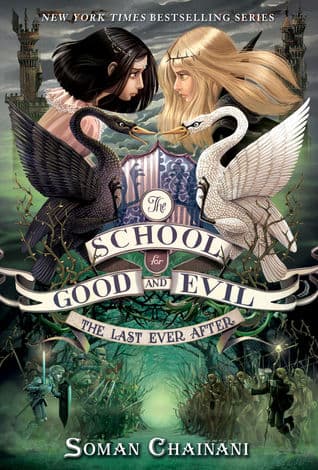
Synopsis
Covers the whole plot, including the ending.
- Difficulty
- Medium
- Pacing
- Variable
- Mood
- Dark, Adventurous, Romantic, Suspenseful, Thought-provoking
- Read it if
- You love dark fairy tale retellings, complex female friendships, and stories where the lines between good and evil are constantly challenged.
- Skip it if
- You prefer straightforward fairy tales with clear-cut heroes and villains, or aren't a fan of love triangles and character moral ambiguity.
The Last Ever After Plot Summary
Covers the whole plot, including the ending.
The Princess and the School Master
After 'A World Without Princes,' Agatha and Tedros return to Gavaldon, seemingly to live their 'Ever After.' Agatha, however, feels an emptiness and unease, sensing something is wrong. Meanwhile, Sophie lives in the School for Good, now the School for Girls, with the young School Master, Rafal. She believes she has found her happy ending, but Rafal is distant and busy, constantly fighting the growing darkness that threatens the fairy tale world. He struggles to keep the balance between Good and Evil, which the previous book's ending, separating boys and girls into opposing schools, severely disrupted.
A World Without Princes, Revisited
Agatha becomes more worried about the imbalance and Gavaldon's fading magic. She realizes that separating boys and girls has caused a catastrophic chain reaction. She finds that the School for Evil, now the School for Boys, has reopened, but its students are no longer the princes she knew. Instead, they are grotesque, beast-like creatures, driven by primal instincts and a desire for blood. This change is a direct result of the School Master's decision to divide the sexes, corrupting the core of Good and Evil and turning potential heroes into villains.
Agatha's Quest for Balance
Realizing the world is collapsing, Agatha, with a reluctant Tedros and a few loyal girls from the School for Good, decides to enter the School for Boys. Her goal is to understand what happened and find a way to restore balance. Tedros, though at first angry at Agatha for choosing Sophie over him, must face the monstrous state of his former classmates and the seriousness of the situation. Their journey is dangerous, as the forest itself has become a twisted, threatening place, reflecting the world's decaying magic.
Sophie's Despair and Rafal's Secret
Sophie, at first happy with Rafal, grows increasingly suspicious of his behavior. She discovers that he is not truly in love with her but is using her to keep his own power and the schools as they are. Rafal reveals his ultimate plan: to erase all existing fairy tales and create a new, 'perfect' Ever After where he is the only author. He believes that by destroying the old stories, he can prevent pain and disappointment, but in doing so, he threatens to destroy the very fabric of their world and everyone's identities.
The Return of the Coven
As the world falls further into chaos, the Coven of Witches, led by powerful figures from the past, reappears. These witches, once defeated and banished, are now stronger because of the imbalance of Good and Evil. They seek to rewrite their own stories, turning past defeats into victories and getting revenge on those who wronged them. Their return adds more complexity and danger to Agatha and Sophie's quest, as the girls find themselves fighting not only the School Master's twisted vision but also the vengeful spirits of history.
Agatha's Alliance with the Boys
Inside the corrupted School for Boys, Agatha and Tedros try to talk to the monstrous students. They realize that the boys' true selves are still trapped beneath their beastly appearances. They discover that the boys' transformation is not permanent but requires an act of true love and sacrifice to break the curse. This forces Tedros to confront his own biases and his responsibility for his former friends, while Agatha's strong belief in Good struggles against the overwhelming evidence of Evil's victory.
Sophie's Betrayal and Redemption
Sophie, having fully understood Rafal's manipulation and the danger he poses, makes a key decision. She realizes her true loyalty is to Agatha and to preserving their world, not to a twisted version of an Ever After. She turns against Rafal, using her unique connection to both Good and Evil to try and stop his plans. This moment is a turning point in Sophie's character arc, as she moves past her self-serving desires to a more selfless path, fighting for the greater good.
The Battle for Storybook Endings
The story's climax sees Agatha, Sophie, Tedros, and their allies facing Rafal in a desperate battle to stop him from erasing all existing fairy tales. Rafal's power is immense, as he holds the pen that writes and unwrites destinies. The fight is not just physical; it is a struggle over the meaning of storytelling and Ever After. Characters from various fairy tales, both Good and Evil, are drawn into the conflict, their fates uncertain as Rafal tries to rewrite their histories.
The Pen and the Choice
During the battle, Sophie and Agatha discover that the only way to defeat Rafal and save their world is to make a final choice about the 'Storian' – the magical pen that writes all stories. This choice is deeply personal and involves sacrificing their own desires for a perfect Ever After to restore balance. The decision forces them to confront their past mistakes, their complicated friendship, and their individual destinies, ultimately determining if the world will be saved or lost forever to Rafal's twisted vision.
A New Beginning, or an Endless Loop?
The choice Sophie and Agatha make causes a big shift in the fairy tale world. While not everyone gets their desired 'Ever After' in the traditional sense, a new balance is set, and Rafal's threat is removed. The ending is bittersweet, showing life's complexities and the idea that true happiness does not always come as a perfect, pre-written story. It leaves room for future possibilities, suggesting that self-discovery and friendship are more important than any predetermined ending.
Principal Figures
Agatha
Protagonist
The pragmatic Gavaldon girl who yearns for a true Ever After.
Agatha is a pragmatic and cynical girl from Gavaldon, initially an outcast due to her perceived 'witchy' appearance. Despite her outward gruffness, she possesses a deep capacity for love, loyalty, and a strong moral compass. She values true friendship and is often the voice of reason and courage. Her primary motivation is to find a genuine Ever After, not just for herself, but for her friends and the balance of their world. She struggles with her identity, often feeling caught between the worlds of Good and Evil, and her love for both Tedros and Sophie.
Relationships: Sophie (Best friend, complex bond of love and rivalry); Tedros (Love interest, prince, complicated romance); Rafal (Antagonist, former love interest for Sophie)
Sophie
Protagonist
The beautiful girl from Gavaldon obsessed with being a princess.
Sophie is a beautiful, initially vain, and self-centered girl from Gavaldon, obsessed with fairy tales and becoming a princess. She is driven by a desire for beauty, adoration, and a perfect Ever After, often at the expense of others. Despite her flaws, she possesses a powerful, albeit sometimes misguided, connection to both Good and Evil, making her a formidable force. Her journey is one of self-discovery, learning that true beauty and happiness come from within and from selfless acts, rather than external validation or a pre-written destiny.
Relationships: Agatha (Best friend, complex bond of love and rivalry); Rafal (Love interest, antagonist, manipulative relationship); Tedros (Former love interest, rival for Agatha's affection)
Rafal (The School Master)
Antagonist
The young, manipulative School Master who seeks to rewrite all stories.
Rafal is the young, handsome School Master, the son of the original School Master and the embodiment of the Storian's will. He is driven by a desire to 'fix' the fairy tale world, which he perceives as broken and full of endless suffering. His methods, however, are extreme and manipulative; he believes that erasing and rewriting all stories is the only path to a perfect Ever After. He uses Sophie's affection and powerful connection to Evil to further his own agenda, revealing a deeply flawed and dangerous understanding of love and destiny.
Relationships: Sophie (Love interest, manipulative relationship); Agatha (Opponent, obstacle to his plans)
Tedros
Supporting
The Prince of Camelot, torn between duty and his feelings for Agatha.
Tedros is the Prince of Camelot, son of King Arthur, and a student at the School for Good. He is brave, honorable, and initially somewhat arrogant, believing firmly in the traditional roles of princes and princesses. He is deeply in love with Agatha, but their relationship is constantly tested by external forces and his own insecurities. In 'The Last Ever After,' he struggles with the corruption of his former classmates and his role in a world where the lines between Good and Evil have blurred. He learns to see beyond superficial appearances and embrace a more nuanced understanding of heroism.
Relationships: Agatha (Love interest, complicated romance); Sophie (Former love interest, rival for Agatha's affection); Hort (Complicated friendship/rivalry)
Hort
Supporting
A half-werewolf student from the School for Evil, loyal to Sophie.
Hort is a half-werewolf student from the School for Evil, known for his unrequited crush on Sophie. Despite his initial 'Evil' alignment and often bumbling nature, he possesses a good heart and unwavering loyalty, especially to Sophie. He struggles with his identity and his place in the world, often feeling like an outcast even among the Nevers. In this book, he is one of the corrupted boys, but his underlying goodness and connection to Sophie provide a glimmer of hope for their redemption.
Relationships: Sophie (Unrequited love, loyal follower); Agatha (Ally, grudging respect)
Dot
Supporting
A kind-hearted girl from the School for Evil, obsessed with sweets.
Dot is a student from the School for Evil, characterized by her immense love for sweets and her generally kind, if sometimes naive, nature. Despite being a 'Never,' she often acts more like a 'Good' character, demonstrating compassion and friendship. She is one of Sophie and Agatha's loyal friends and often provides comic relief, but also surprising moments of wisdom. Her presence highlights the idea that true character isn't defined by one's school or label.
Kiko
Supporting
A beautiful and vain Ever girl, loyal to Sophie.
Kiko is one of Sophie's initial friends from the School for Good, known for her beauty and slightly vain personality. She embodies the classic 'Ever' archetype, concerned with appearances and princess-like behavior. While not a central figure in the main conflict, she represents the girls who are initially content with the School for Girls but eventually come to realize the flaws in this new world order.
The Coven
Antagonists
A group of powerful, vengeful witches from the past.
The Coven is a group of ancient and powerful witches, resurrected or empowered by the imbalance in the fairy tale world. They represent the vengeful spirits of past villains who seek to rewrite their own stories and claim their Ever Afters, often through destructive means. They add another layer of threat to the narrative, embodying the idea that history can repeat itself if not properly balanced. Their presence forces the protagonists to confront not just new evils, but the enduring power of old grudges.
Relationships: Rafal (Allies of convenience, but ultimately competing for control); Agatha & Sophie (Enemies)
Themes & Insights
The Nature of 'Ever After'
The book explores what 'Ever After' truly means. Sophie first thinks it is about being a beautiful princess with a prince, while Agatha wants a simpler, real happiness. Rafal's twisted idea of a 'perfect' Ever After, achieved by erasing all stories, forces a re-evaluation. The story suggests that true Ever After is not a pre-written, perfect ending, but a continuous journey of choice, sacrifice, and real connection, even if it is messy. This is clear in Sophie's choice to fight Rafal, sacrificing her dream of a perfect prince to save her friend and the world, and Agatha's realization that love and friendship are more lasting than any fairy tale ending.
“'An Ever After isn't a destination. It's a choice.”
The Power of Choice vs. Destiny
A central theme is the conflict between predetermined destiny (written by the Storian) and individual choice. Characters constantly fight against the expectations of their fairy tale roles. Rafal tries to remove all choice by rewriting stories, while Sophie and Agatha's journey is about taking control of their own narratives. Sophie's decision to betray Rafal, despite their romance, is a strong act of choice, as is Agatha's willingness to sacrifice her own happiness for the greater good. The book argues that true heroism is choosing one's path, even if it differs from the 'script.'
“The Storian doesn't write your story. You do.”
The Balance of Good and Evil
The novel highlights the crucial connection between Good and Evil, arguing that neither can exist without the other. Separating boys and girls into different schools, meant to create 'pure' Good and Evil, instead causes corruption and imbalance. The boys become monstrous without the girls' calming influence, and the girls' world becomes stagnant and incomplete. The return of the Coven and the overall decay of the fairy tale world show that a healthy system needs both forces in harmony, not in total opposition. The main characters' quest is largely about restoring this delicate balance.
“Good needs Evil, and Evil needs Good. Without one, the other withers and dies.”
Friendship and Love in Many Forms
The complex friendship between Sophie and Agatha is the emotional center of the series, and this book deeply explores its lasting power. Their bond goes beyond romantic love and challenges traditional fairy tale ideas. While romantic relationships (Agatha-Tedros, Sophie-Rafal) are present, the story ultimately prioritizes the strength of their platonic, yet deeply connected, bond. Their willingness to sacrifice for each other, despite past betrayals and rivalries, shows that love comes in many forms, and friendship can be the most powerful force for change and salvation. This is shown in their final joint decision, which is rooted in their shared history and love.
“It wasn't a prince who saved her. It was her best friend.”
Identity and Self-Acceptance
Characters deal with their identities, often feeling limited by their roles as 'Ever' or 'Never.' Sophie struggles with her natural leanings towards Evil despite wanting a Good Ever After, while Agatha constantly questions if she truly belongs in either world. The boys' transformation into monsters forces them to confront their own definitions of self and what it means to be a hero or a villain. The journey towards self-acceptance, embracing one's true nature rather than conforming to outside expectations, is a key element, especially for Sophie's redemption.
“You are who you choose to be, not who the Storian says you are.”
Plot Devices & Literary Techniques
The Storian
The magical pen that writes all fairy tale stories.
The Storian is the omnipotent magical pen that records and dictates the destinies of all fairy tale characters. It serves as a literal manifestation of destiny and the overarching narrative. In 'The Last Ever After,' it becomes a central plot device as Rafal wields its power to rewrite and erase stories, making it a weapon of ultimate control. The protagonists' goal is not just to defeat Rafal, but to reclaim the Storian's rightful, impartial function and prevent the destruction of all existing narratives, thereby asserting the importance of free will over predetermined fate.
The School Master's Locket
A locket containing the School Master's heart, symbolizing his power and vulnerability.
The School Master's locket, which contains his heart, is a crucial plot device that represents Rafal's power and his ultimate weakness. Its existence is a secret Sophie uncovers, and it becomes the key to potentially defeating him. The locket symbolizes the source of his life and magic, and its vulnerability highlights that even the most powerful villains have a core weakness. It also represents a piece of the original School Master, hinting at the enduring legacy and cyclical nature of power and corruption within the schools.
The Corrupted Forest
The once magical woods become a dangerous, twisted reflection of the world's imbalance.
The Woods Beyond, once a path between worlds and a place of magical encounter, becomes a corrupted and dangerous landscape. This serves as an environmental plot device, reflecting the decaying state of the fairy tale world due to the imbalance of Good and Evil. Its twisted trees, menacing creatures, and treacherous paths physically embody the narrative's central conflict. Navigating the corrupted forest becomes a perilous journey for Agatha and her allies, symbolizing the internal and external struggles they face in a world that has lost its way and become a distorted version of its former self.
The 'Ever After' Test
A magical trial designed to reveal a character's true Ever After.
The 'Ever After' Test is a magical trial or series of challenges that characters must undergo, designed to reveal their true, destined Ever After. This device acts as both a narrative driver and a thematic exploration. It forces characters to confront their deepest desires and fears, often revealing that their perceived 'Ever After' is not what they truly need or are meant for. In 'The Last Ever After,' the idea of an 'Ever After' is constantly challenged and redefined, making any such test a potentially misleading or manipulative tool, especially under Rafal's influence. It underscores the theme that true happiness is not externally granted but internally chosen.
The Last Ever After Quotes
“Every villain is a hero in his own story.”
“The price of a happy ending is the battle that earns it.”
“Good and Evil are two sides of the same coin, and sometimes, it's hard to tell which is which.”
“A true princess doesn't need a prince to save her. She saves herself.”
“Love isn't about finding the perfect person, it's about seeing an imperfect person perfectly.”
“The greatest stories aren't about what happens, but about who it happens to.”
“Sometimes, the only way to find your true path is to get lost.”
“Fairy tales don't tell children that dragons exist. Children already know that dragons exist. Fairy tales tell children that dragons can be killed.”
“No one is born evil. They just choose the wrong path, again and again.”
“The End is just the beginning of a new story.”
“What makes a hero isn't the power they have, but the choices they make.”
“The world isn't black and white. It's a million shades of gray.”
“Sometimes, the greatest strength is knowing when to ask for help.”
“A true story never really ends, it just waits for someone new to tell it.”
Quiz
10 questions on the plot and the characters. Each answer comes with a short explanation.
Question 1
At the beginning of 'The Last Ever After', where does Agatha find herself after the events of 'A World Without Princes'?
- In the School for Good, reunited with Sophie
- Back in Gavaldon with Tedros
- In the School for Evil, training as a villain
- In the Endless Woods, searching for a way back
Show answer
B. Back in Gavaldon with Tedros After the events of 'A World Without Princes', Agatha was whisked back to Gavaldon with Tedros, while Sophie stayed behind with the School Master.
Question 2
Who does Sophie stay with at the end of 'A World Without Princes' and the beginning of 'The Last Ever After'?
- Tedros
- Hort
- The beautiful young School Master
- Her original family in Gavaldon
Show answer
C. The beautiful young School Master The synopsis states that Sophie stayed behind with the beautiful young School Master after Agatha returned to Gavaldon.
Question 3
What primary change has occurred in the balance of the world as Sophie and Agatha are separated?
- Good has become overwhelmingly dominant
- The School Master has restored order
- Evil has taken over and villains are changing their tales
- A new School for Balance has been established
Show answer
C. Evil has taken over and villains are changing their tales The synopsis clearly states, 'With the girls apart, Evil has taken over and the villains of the past have come back to change their tales and turn the world of Good and Evil upside down.'
Question 4
The central conflict of 'The Last Ever After' involves Sophie and Agatha fighting against what two forces?
- The School Master and the Dean of Evil
- The past and the present
- Good and Evil themselves, as abstract concepts
- Each other, as their friendship is tested further
Show answer
B. The past and the present The synopsis states they 'fight the past as well as the present to find the perfect end to their story.'
Question 5
What is the primary motivation for Sophie and Agatha in 'The Last Ever After'?
- To become the new deans of their respective schools
- To prevent the School Master from gaining more power
- To rewrite their own story and others' to find a perfect end
- To escape the Endless Woods and return to Gavaldon permanently
Show answer
C. To rewrite their own story and others' to find a perfect end The synopsis mentions 'their story begs to be re-written' and that they are fighting to 'find the perfect end to their story.'
Question 6
How does the separation of Sophie and Agatha impact the broader fairy tale world?
- It leads to a new era of peace and harmony.
- It causes the Storian to stop writing stories altogether.
- It allows past villains to return and alter their own tales.
- It strengthens the bond between readers and their favorite characters.
Show answer
C. It allows past villains to return and alter their own tales. The synopsis explicitly states, 'With the girls apart, Evil has taken over and the villains of the past have come back to change their tales and turn the world of Good and Evil upside down.'
Question 7
What is the relationship status of Sophie and Agatha at the very beginning of 'The Last Ever After'?
- They are best friends, closer than ever.
- They are engaged in an active conflict against each other.
- They are former best friends who have gone their separate ways.
- They have reconciled and are working together in secret.
Show answer
C. They are former best friends who have gone their separate ways. The synopsis clearly states, 'As A World Without Princes closed, the end was written and former best friends Sophie and Agatha went their separate ways.'
Question 8
The title 'The Last Ever After' hints at a significant thematic exploration. What concept is most likely being challenged or redefined in this book?
- The nature of true heroism and villainy.
- The traditional idea of a definitive, happy fairy tale ending.
- The power dynamics between students and the School Master.
- The importance of friendship over romantic love.
Show answer
B. The traditional idea of a definitive, happy fairy tale ending. The title 'The Last Ever After' directly plays on the common fairy tale trope 'happily ever after,' suggesting that the concept of a fixed, perfect ending is being questioned or brought to a conclusion in a new way.
Question 9
Given the description, what literary device is central to the plot development of 'The Last Ever After' regarding the villains?
- Foreshadowing, predicting future events.
- Metaphor, using symbolism to convey meaning.
- Retconning, altering previously established facts or narratives.
- Allegory, representing abstract ideas through characters.
Show answer
C. Retconning, altering previously established facts or narratives. The synopsis states 'the villains of the past have come back to change their tales,' which is a form of retconning, where existing narratives are altered or rewritten.
Question 10
How does the author promise to expand the scope of the series in 'The Last Ever After' compared to previous installments?
- By focusing solely on the internal struggles of Sophie and Agatha.
- By introducing completely new characters and settings with no ties to the past.
- By delivering 'more action, adventure, laughter, romance and fairy tale twists and turns'.
- By shifting the genre entirely to a dark fantasy thriller.
Show answer
C. By delivering 'more action, adventure, laughter, romance and fairy tale twists and turns'. The final sentence of the synopsis explicitly promises, 'This extraordinary new journey delivers more action, adventure, laughter, romance and fairy tale twists and turns than you could ever dream of!'
The Last Ever After FAQ
What is the central conflict driving the plot of 'The Last Ever After'?
The central conflict revolves around Sophie and Agatha, now separated, realizing their 'happily ever afters' are incomplete and that Evil is gaining power, corrupting existing fairy tales. They must reconcile their past and present choices to restore balance to the School for Good and Evil and the wider Endless Woods.
Where do Sophie and Agatha find themselves at the beginning of this book, following the events of 'A World Without Princes'?
At the start of 'The Last Ever After', Agatha has returned to Gavaldon with Tedros, living what seems like a traditional princess's life. Sophie, conversely, remains at the School for Good and Evil, having chosen to stay with the young School Master, believing she has found her true love and place of power.
How does the rise of Evil manifest in the Endless Woods, and what specific threats does it pose?
Evil manifests as villains from past fairy tales returning, actively rewriting their stories to achieve villainous triumphs, and corrupting the very fabric of Good and Evil. This poses a threat not just to the School, but to the existence of happy endings and the established order of the fairy tale world.
What are the primary motivations for Sophie and Agatha to reunite, despite their previous separation?
Sophie and Agatha are motivated to reunite by the realization that their individual 'happy endings' are unfulfilling and the growing threat of Evil. They come to understand that their bond, though complicated, is crucial to restoring balance and preventing the complete collapse of the fairy tale world, which is actively being rewritten by villains.
Who is the 'young School Master' that Sophie chooses to stay with, and what is his significance to the series?
The 'young School Master' is Rafal, the son of the original School Master and the embodiment of the Storian. He represents the ever-present temptation of power and the blurred lines between Good and Evil, having manipulated events to draw Sophie to his side and further his own agenda for the Endless Woods.
Are there any clues in previous books about the true nature of the 'villains of the past' returning?
Previous books hinted at the cyclical nature of fairy tales and the power of the Storian to rewrite destiny. The reappearance of past villains suggests that the narrative itself is breaking down, possibly due to Rafal's influence or the instability caused by Sophie and Agatha's unresolved story, allowing old narratives to resurface and challenge the present.
How does the author use the concept of 'story' and 'endings' to foreshadow the events of 'The Last Ever After'?
The author consistently emphasizes the power of the Storian and the idea that true love can rewrite stories, as seen with Sophie and Agatha's initial journey. The title 'The Last Ever After' directly challenges the traditional 'happily ever after,' suggesting that even established endings can be temporary or need to be fought for, hinting at the instability of their world.
How does Sophie's initial choice to stay with the School Master reflect her underlying psychological needs and fears?
Sophie's choice reflects her deep-seated need for love, validation, and power, often at the expense of genuine connection. Her fear of being truly 'Evil' yet craving the attention and grandeur associated with it, leads her to embrace a powerful, albeit potentially dangerous, partner who promises her a unique and significant role.
Analyze Agatha's journey in Gavaldon with Tedros – does it fulfill her desires, and what psychological conflicts arise?
Agatha's journey in Gavaldon with Tedros initially seems to fulfill her desire for a normal, peaceful life and a traditional happy ending. However, psychological conflicts arise as she feels a void, realizing that her true story and purpose are intertwined with Sophie and the School, and that a 'normal' life isn't necessarily her truest path.
How does the relationship between Sophie and Agatha evolve psychologically in this book, especially after their separation?
After their separation, Sophie and Agatha's relationship undergoes significant psychological evolution. They are forced to confront their individual identities apart from each other, realizing the extent of their codependency and the profound impact they have on each other's destinies, ultimately leading to a more mature, albeit still complex, understanding of their bond.
What is the psychological impact of the 'villains of the past' returning on the students and faculty of the School for Good and Evil?
The return of past villains creates widespread fear, confusion, and a crisis of identity among the students and faculty. It challenges their understanding of established fairy tale norms, forcing them to question the very definitions of Good and Evil, and whether their own 'ever afters' are truly secure or can be rewritten.
Is 'The Last Ever After' truly the final book in the series, or does its title hint at a more metaphorical 'end'?
While 'The Last Ever After' serves as the conclusion to the original trilogy, its title is more metaphorical, referring to the ultimate resolution of Sophie and Agatha's initial story arc and the fate of their 'ever after.' It resolves major plotlines but doesn't necessarily preclude further stories set in the Endless Woods, as the series did continue.
How does the book challenge traditional fairy tale tropes regarding 'good' and 'evil' roles, and 'true love'?
The book deeply challenges traditional tropes by showing that 'Good' characters can be flawed and 'Evil' characters can have sympathetic motivations. It redefines 'true love' beyond romantic partners, suggesting it can be found in profound friendships like Sophie and Agatha's, and questions whether any ending is truly final or fixed.
What is the significance of the School Master's role in the overall narrative – is he purely antagonist or something more complex?
The School Master, Rafal, is far more complex than a pure antagonist. He embodies the duality of Good and Evil, representing the Storian's will and the allure of power. His actions, while seemingly villainous, are driven by a twisted desire to restore balance and rewrite the Endless Woods' destiny, making him a morally ambiguous figure.
How does the book explore the theme of destiny versus free will through Sophie and Agatha's choices?
The book extensively explores destiny versus free will, particularly through Sophie and Agatha. While the Storian seemingly dictates their paths, their choices, especially their decisions to deviate from expected roles and their complicated bond, constantly challenge and ultimately reshape their destinies, proving that individual agency can defy pre-written narratives.
What message does 'The Last Ever After' convey about the nature of friendship, particularly between Sophie and Agatha?
The book conveys that friendship, especially one as deep and complex as Sophie and Agatha's, can be the most powerful force in the Endless Woods. It suggests that true friendship involves accepting flaws, enduring separation, and ultimately choosing each other, even over romantic love or personal ambition, as the key to a true 'ever after.'
In what ways does this installment deepen the world-building of the Endless Woods and its magical rules?
This installment significantly deepens world-building by revealing more about the Storian's immense power, the cyclical nature of fairy tales, and how the balance between Good and Evil directly impacts the reality of the Endless Woods. It establishes that the very narratives of the world are mutable and tied to the choices of its inhabitants.
How do the 'new' versions of old fairy tales impact the understanding of the established lore in the series?
The 'new' versions of old fairy tales fundamentally recontextualize the established lore by demonstrating that fairy tales are not static. They highlight that narratives can be manipulated, and that a single 'truth' is subjective. This forces readers and characters to question everything they thought they knew about the classic stories and their own world.
About the author
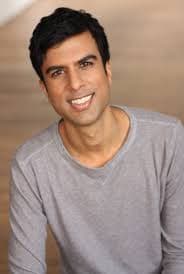
Soman Chainani is an author known for his fantasy series, "The School for Good and Evil." His works include "A World Without Princes," "The Last Ever After," "Quests for Glory," "One True King," and "A Crystal of Time," which explore themes of friendship, adventure, and the complexities of good and evil. Chainani's storytelling has garnered a dedicated readership.
Similar books
- Uprooted
Naomi Novik
4.1 (167k) average on GoodreadsFantasyExplores dark magic, a strong female protagonist, and the twisting of traditional fairy tale elements.
- A World Without Princes
Soman Chainani
4.1 (26k) average on GoodreadsFantasyAs the direct predecessor, The Last Ever After builds upon the world and themes established in A World Without Princes. It continues the exploration of a gender-segregated world and the consequences of a missing balance, directly addressing and attempting to resolve the conflicts introduced in the second book. The Last Ever After intensifies the stakes and character development, particularly for Sophie and Agatha, pushing their individual arcs to more extreme conclusions while retaining the core satirical tone. However, The Last Ever After introduces a greater sense of despair and the potential for an endless loop, moving beyond the more definitive resolution sought in A World Without Princes.
- Harry Potter and the Sorcerer's Stone
J.K. Rowling
4.5 (7M) average on GoodreadsFantasyRescued from a miserable life under the stairs, an orphaned boy discovers he's a wizard destined for a magical school, where he uncovers a dangerous secret tied to the dark wizard who murdered his parents.
- The Hunger Games
Suzanne Collins
4.3 (6.4M) average on GoodreadsFantasyIn a future where children fight to the death on live television, Katniss Everdeen volunteers for the arena, turning a death sentence into a fight for survival and a spark of rebellion.
- 1984
George Orwell
4.2 (3.1M) average on GoodreadsPoliticsIn a future where surveillance and thought control are absolute, a man's search for truth clashes with the Party, showing that hope can be a form of rebellion.
- Divergent
Veronica Roth
4.2 (2.9M) average on GoodreadsFantasyIn a society divided by virtues, a sixteen-year-old's difference from the norm starts a rebellion that threatens her world.





Enjoyed the summary?
A summary gives you the shape of the book. The book itself has the detail, the examples and the voice.
Find The Last Ever After on AmazonAs an Amazon Associate, BookBrief earns from qualifying purchases. How we're funded